This article contains advertising. My booking links are routed through a partner that adds commission tracking automatically, so if you book through one I earn a commission from the provider, at no extra cost to you. It never affects what I recommend. Affiliate disclosure
Golf and the Cotswolds are a natural pairing. Where else can you play a clifftop-feeling course nearly a thousand feet up with views stretching to the Welsh mountains, tackle a historic common where the only hazards are grazing cattle and wandering ramblers, then retire to a country-house hotel for a spa and a fine dinner? The Cotswolds may not be a flashy championship-resort destination, but for sheer character, scenery and variety, the region offers some of the most enjoyable and good-value golf in England. This is your guide to playing it.

Below you will find the best clubs and courses, the wonderfully eccentric common-land golf that makes this area unique, the resorts for a proper golf break, and all the practical advice you need to play as a visitor. Whether you are a low-handicapper chasing a memorable round or a family fancying a relaxed nine holes, the Cotswolds have a course with your name on the first tee.
Why play golf in the Cotswolds?
The appeal of Cotswold golf is, above all, the setting. Courses are draped across rolling hills, perched on breezy escarpment tops and tucked into wooded valleys, so almost every round comes with a side order of spectacular scenery. The variety is a big part of the charm, too: you can play immaculate parkland one day, exposed downland the next, and ancient open common the day after, each offering a completely different test and feel.
Just as importantly, Cotswold clubs tend to be friendly, traditional and welcoming to visitors, and green fees are often very reasonable compared with the big-name resorts elsewhere. The region is also compact, so you can easily play several different courses in a few days, and there is endless else to do for non-golfing partners. Golf slots beautifully into the wider menu of Cotswolds outdoor activities, and pairs especially well with a relaxing country break.
The great clubs and courses
The Cotswolds are dotted with excellent members’ clubs that warmly welcome visiting golfers. Pride of place for scenery goes to Broadway Golf Club, established in 1895 and set high on Willersey Hill at nearly 900 feet above sea level, with breathtaking views across the Vale of Evesham towards the Malvern Hills and the Black Mountains of Wales — it is worth playing for the panorama alone. Down in the south, Cirencester Golf Club is a quietly excellent parkland course with fast fairways and slick greens that simply gets on with offering a really solid game in lovely surroundings.

There are plenty more to discover. Naunton Downs offers a challenging downland test amid beautiful countryside near the heart of the region; Cotswold Hills, near Cheltenham, brings an undulating parkland layout with slick greens that asks real questions of your swing; and there are characterful courses at Burford, Chipping Norton and Lilley Brook among many others. Wherever you play, you are rarely far from a honey-stone clubhouse, a warm welcome and a fine view.
Minchinhampton: three courses and grazing cows
If any club captures the spirit of Cotswold golf, it is Minchinhampton, founded in 1889 and one of very few clubs in England to boast three full-length 18-hole courses. The two newer parkland courses, Avening and Cherington, are fine, modern tests in their own right, but it is the Old Course that steals everyone’s heart.
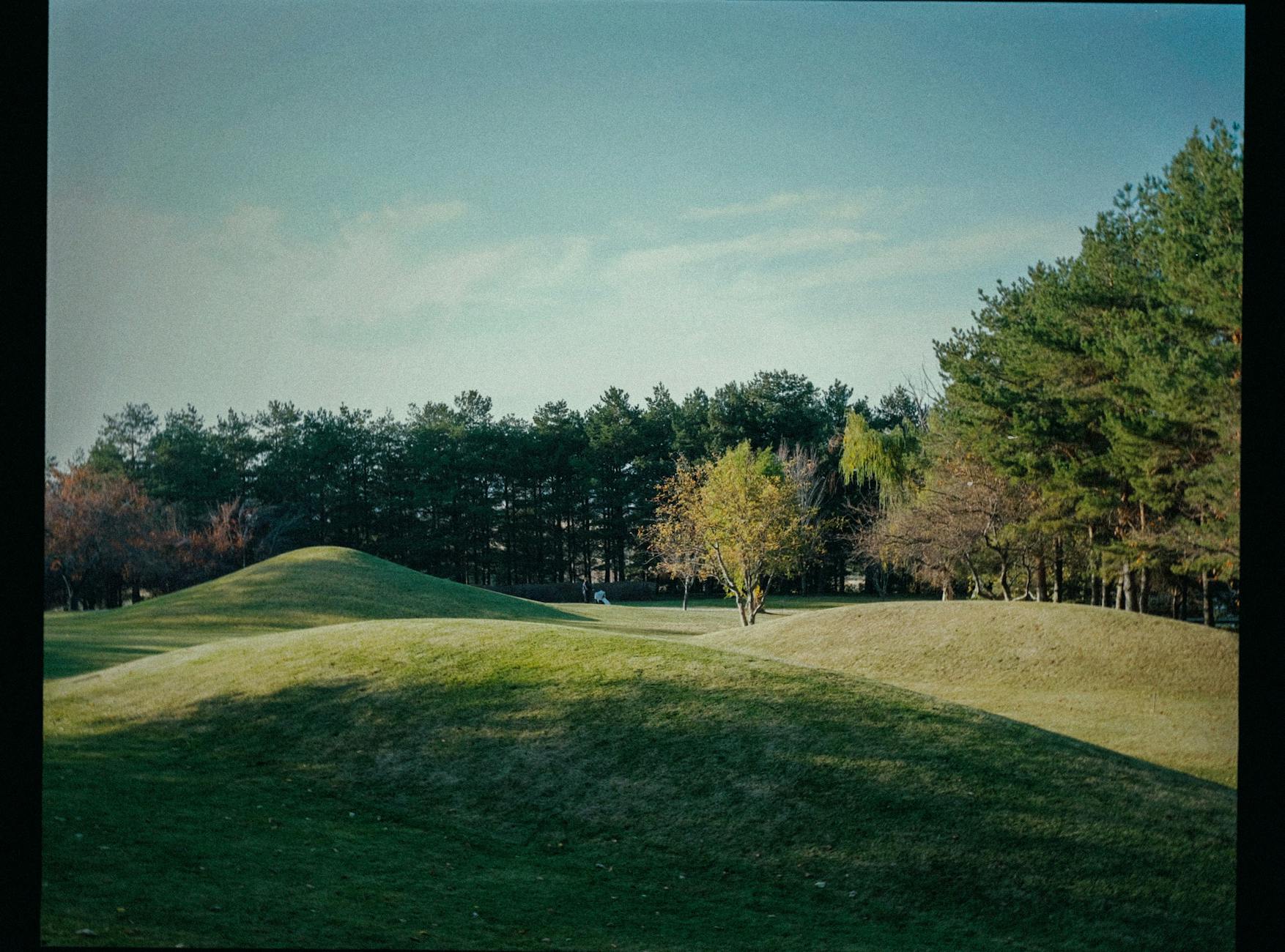
Laid out on Minchinhampton Common in 1889, the Old Course is golf in its purest, most natural form: there are no bunkers, just the land as it lies, with fairways and greens cut from open common grazed by cattle and crossed by walkers exercising their right to roam. Playing here, dodging cowpats and tipping your cap to ramblers, with the wind whistling across the high common, is a gloriously eccentric and quintessentially English experience — and a reminder that golf began on exactly this kind of rough, open ground.
Common-land golf: a Cotswold quirk
Minchinhampton’s Old Course is not alone. The Cotswolds are home to a delightful handful of courses laid out on open common land, where golfers share the turf with grazing animals, dog walkers and picnickers, and which are among the most characterful and scenic places to play in the country. They are a living link to the origins of the game.
Cleeve Hill, set on the common at the highest point of the Cotswolds above Cheltenham, is rated among England’s top 100 courses, with funky holes, huge views and a wild, exposed character all its own. Painswick, on Painswick Beacon, is perhaps the most gloriously bonkers course in the region, with blind par threes, wildly undulating fairways and ancient hillfort earthworks, all shared with walkers enjoying the breathtaking scenery. Playing these courses requires good etiquette — give way to walkers and never disturb the livestock — but the reward is golf with a sense of freedom and history you will find almost nowhere else. They sit within the protected Cotswolds National Landscape, which adds to their unspoilt charm.
Golf resorts and breaks
If you would rather stay, play and be pampered all in one place, the Cotswolds have some excellent golf hotels. Tewkesbury Park, on the northern edge of the region, is a family-owned hotel, golf and leisure resort set in 176 acres of parkland with panoramic views over the Severn Valley to the Welsh mountains and Malverns; its parkland course, redesigned by the leading amateur Peter McEvoy, is kept in immaculate condition and makes a perfect base for a golf break.
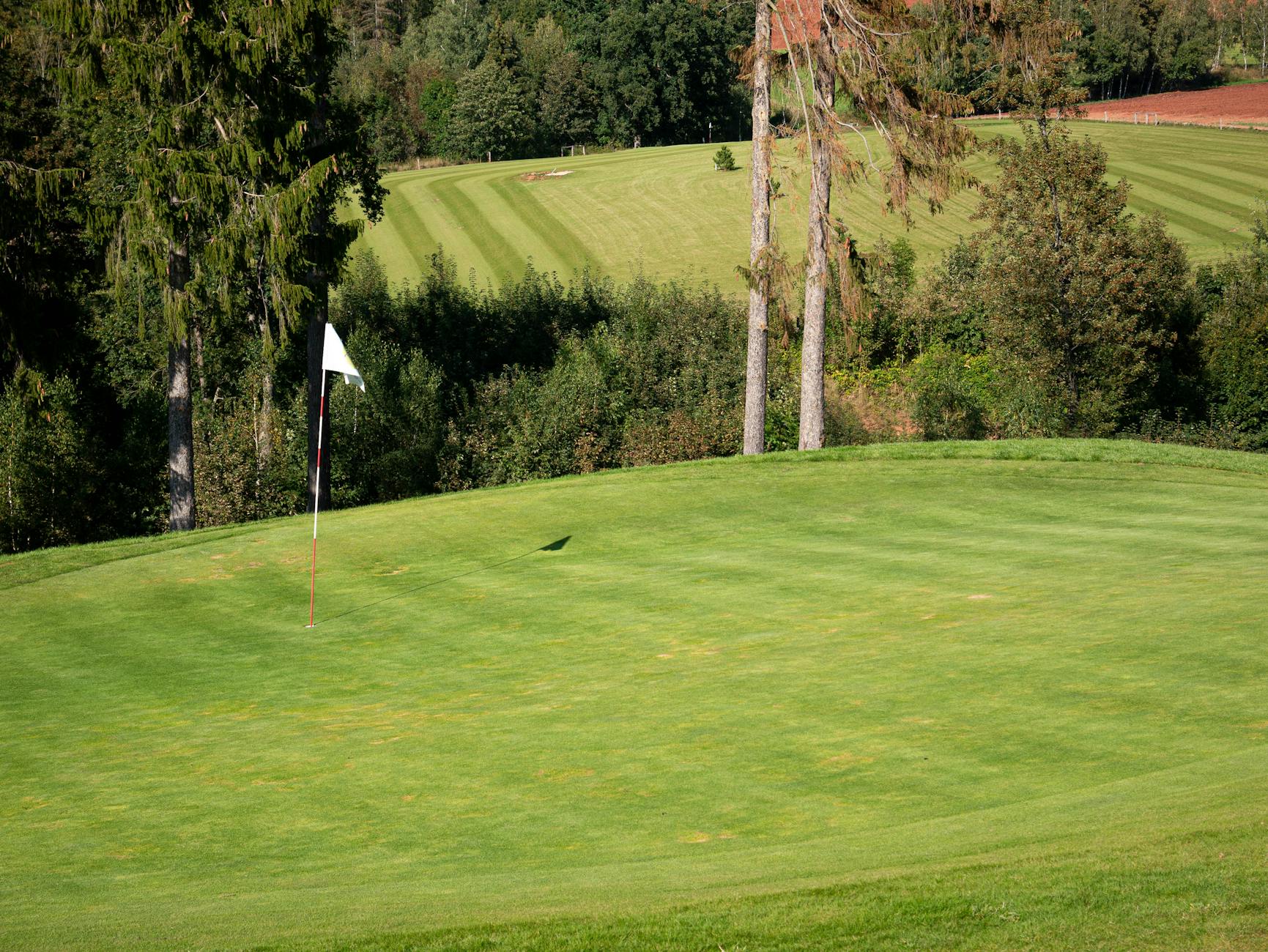
Nearby, the Hilton Puckrup Hall offers a championship-length par-70 course alongside a hotel with a spa, gym and indoor pool, so you can golf hard by day and unwind by night without leaving the grounds. Stay-and-play packages at these and other hotels make organising a golf break wonderfully easy, and combining a round or two with a spa treatment is a brilliant way to keep a mixed group happy — see our guide to Cotswolds spa hotels for the pampering side of things.
Playing as a visitor
The good news for travelling golfers is that most Cotswold clubs welcome visitors, and playing a round is usually straightforward. The key is to book a tee time in advance, as many clubs reserve certain days or times for members and competitions, and visitor availability can be limited at weekends. A quick call or online booking will sort you out and avoid disappointment.
Green fees vary from very affordable at the common-land and smaller clubs to a little more at the resort courses, and some clubs offer twilight rates for a cheaper evening round. Be aware that many traditional clubs maintain a dress code on the course and in the clubhouse, so pack accordingly. The common courses such as Minchinhampton’s Old, Cleeve Hill and Painswick are generally the most accessible and informal, and a wonderful introduction to the region’s golf.
Golf for beginners and families
You do not need to be a seasoned player to enjoy golf in the Cotswolds. Several clubs and centres offer pay-and-play access, shorter par-three courses, driving ranges and practice facilities where beginners can find their feet without committing to a full round, and most clubs have a professional offering lessons for all ages and abilities. It is a great place to take up the game or to get the children started.
For a more light-hearted, family-friendly take on hitting a ball into a hole, you will also find adventure golf and crazy-golf courses at various attractions around the region, which are huge fun for younger children and require no skill or kit at all. Whether you want serious tuition or a giggly round of mini-golf, there is something to suit every member of the family.
A short history of Cotswold golf
Golf has deep roots in these hills. Many of the region’s clubs were founded in the great Victorian golf boom of the late 19th century — Minchinhampton in 1889, Painswick around 1891, Broadway in 1895 — making them some of the older established clubs in England. It is no accident that several began life on common land: the open, close-cropped, fast-draining turf of the Cotswold commons, grazed short by sheep and cattle, was perfect for laying out rough-and-ready courses in the early days, much as the original links did on the Scottish coast.
That heritage gives Cotswold golf a wonderful sense of continuity. Playing the Old Course at Minchinhampton or the heights of Cleeve Hill, you are walking fairways trodden by golfers for well over a century, on land used by the community for far longer. The clubhouses, often handsome old buildings full of honours boards and history, add to the timeless feel, and many clubs take real pride in their long traditions while still offering a warm, modern welcome.
It is a reminder, too, that golf here has always been part of the wider landscape rather than carved separately out of it — a theme that runs right through the way the Cotswolds balance recreation, farming and nature on the same ground.
Parkland, downland or common: choosing your course
One of the joys of golfing here is the contrast between the different styles of course, and it helps to know what to expect. Parkland courses, such as Cirencester, Cotswold Hills and the resort layout at Tewkesbury Park, are the classic manicured experience: tree-lined fairways, defined bunkers, lush greens and a sheltered, well-groomed feel. They tend to be more forgiving and are a good bet when the weather is rough.
Downland and common courses are a different beast altogether: more exposed, often firmer and faster underfoot, with springy turf, big views and the wind very much in play. Broadway, Naunton Downs and the common courses at Minchinhampton, Cleeve Hill and Painswick fall into this camp, offering a wilder, more natural and more weather-dependent round. Trying both styles on the same trip is the perfect way to appreciate the variety of Cotswold golf — and to test every club in your bag.
Where to stay for a golf break
If golf is the focus of your trip, the dedicated golf hotels such as Tewkesbury Park and Hilton Puckrup Hall are the easiest option, putting a course, comfortable rooms, a restaurant and often a spa all in one place. They are particularly handy for groups and societies, and their stay-and-play packages take the hassle out of organising everything.
Alternatively, basing yourself in a central market town such as Cheltenham, Cirencester, Stow-on-the-Wold or Broadway puts a good spread of courses within easy reach, while letting you enjoy the region’s pubs, restaurants and sights in the evenings. Because the Cotswolds are so compact, you are never far from the next tee, so you can happily mix a parkland round near your base one day with a windswept common course a short drive away the next.
Beyond the fairway: making a trip of it
What makes a Cotswold golf break so appealing is everything that surrounds the golf. Few golfing destinations come wrapped in such beautiful countryside, with such a wealth of pretty villages, historic houses, fine pubs and good food on the doorstep, which makes the region ideal for a mixed group where not everyone plays. Non-golfing partners and families have endless ways to fill a happy day while you are on the course.
The combination of golf and pampering is especially popular: a round in the morning, a spa treatment in the afternoon and a great dinner in the evening makes for a thoroughly indulgent break. Add the region’s gentle pace and warm welcomes, and a Cotswolds golf trip becomes about far more than the score on your card — it is a proper, restorative escape that happens to include some wonderful golf.
Tips for a Cotswolds golf trip
A few pointers for a smooth golfing break. Book your tee times ahead and check each club’s visitor policy and dress code before you arrive. Remember that many Cotswold courses are hilly and exposed, so they can be a proper walk and the weather can change quickly up on the tops — pack waterproofs, layers and decent shoes, and consider a buggy if walking the steeper courses is a concern.
Because the region is compact, it is easy to play a different course each day, so consider a multi-course itinerary to sample the variety, from manicured parkland to wild common. Build in time for the region’s other pleasures — a spa, a great pub lunch, a wander round a pretty village — and you have the makings of a perfect golf-and-leisure break. Societies and groups are well catered for too, with many clubs and hotels offering packages.
One final thought: do not let a poor card spoil the experience. On courses as scenic as these, where you might pause on a tee to watch a buzzard wheel over the valley or a herd of cattle amble across the fairway, the golf is only half the pleasure. Some of my most memorable rounds in the Cotswolds have been the ones where I played dreadfully but could not stop grinning at the views. Relax, soak up the surroundings, and treat every round here as a walk through glorious countryside that happens to involve a few swings of a club.
Frequently asked questions about golf in the Cotswolds
What is the best golf course in the Cotswolds?
It depends on what you want. Broadway Golf Club is famous for its elevated position and stunning views, Cleeve Hill is an England Top 100 common-land course, and Minchinhampton offers three courses including the historic, bunkerless Old Course. Cirencester and Naunton Downs are excellent for a solid, scenic round, while Tewkesbury Park is a top choice for a resort break.
Can visitors play golf in the Cotswolds?
Yes, most Cotswold clubs welcome visiting golfers. It is best to book a tee time in advance, as some days and times are reserved for members and competitions, especially at weekends. Green fees are generally good value, and the common-land courses such as Minchinhampton’s Old, Cleeve Hill and Painswick are particularly accessible and informal.
Are there golf courses with cattle on them?
Yes — it is a charming Cotswold quirk. Several courses are laid out on open common land grazed by cattle and used by walkers, most famously the Old Course at Minchinhampton (founded 1889, with no bunkers), plus Cleeve Hill and Painswick. Golfers share the turf with livestock and ramblers, which makes for a wonderfully natural, old-fashioned round.
Are there golf resorts in the Cotswolds?
Yes. Tewkesbury Park is a family-owned hotel and golf resort with a fine parkland course and panoramic views, and the Hilton Puckrup Hall offers a championship par-70 course with an on-site spa and pool. Both offer stay-and-play packages, making them ideal bases for a Cotswolds golf break, often combined with spa and leisure facilities.
From a windswept round high on the common to a pampered resort break, golf in the Cotswolds is full of character, scenery and surprises — and far more welcoming and affordable than you might expect. Bring your clubs, book a few tee times, and enjoy playing through some of the loveliest countryside in England. To plan more ways to get active, see our guide to Cotswolds outdoor activities, or for the pampering side of a golf break, our guide to Cotswolds spa hotels. For the same landscape from a very different angle, see our guide to hot air ballooning over the Cotswolds. If the rest of the party would rather stretch than swing, see our guide to Cotswolds yoga and wellness retreats. For a base within easy reach of the first tee, see our guide to Cotswolds pubs with rooms.
For golf with a genuinely odd set of local rules, play the old course on Minchinhampton Common. The fairways are public common land, so walkers have right of way across them, kite-fliers set up on the rough and from mid-May the commoners’ cattle graze wherever they please. Our Nailsworth and Minchinhampton guide covers the rest of that corner — the Iron Age Bulwarks, the inn out on the common and the bakery queue in the valley below.


