This article contains advertising. My booking links are routed through a partner that adds commission tracking automatically, so if you book through one I earn a commission from the provider, at no extra cost to you. It never affects what I recommend. Affiliate disclosure
On a Saturday morning in Nailsworth the queue for bread starts before the bakery door opens, and it is mostly locals: people with dogs, people with prams, a man in cycling Lycra who has clearly freewheeled down the hill for a sourdough loaf and is going to regret the climb home. That queue is the best introduction to Nailsworth Cotswolds life you will get. This is a working valley town that happens to eat very well, not a honeypot village arranged for coach parties, and it has no interest in pretending otherwise.
Up the hill, a steep mile and a half away, Minchinhampton is its opposite in almost every way. Nailsworth sits in a wooded bowl where three valleys meet; Minchinhampton stands on the open plateau above, an old wool town with a pillared market house and a church with a spire that was cut short in the sixteenth century. Between and around them lies Minchinhampton Common, about 600 acres of rough, wind-bitten grassland where cattle wander across the roads in summer and Iron Age earthworks run through the golf course. Put the three together and you have one of the best days out in the southern Cotswolds — and one that very few first-time visitors ever find.
Both belong to the quieter, steeper, more lived-in side of the region covered in our guide to the Cotswold towns, alongside their bigger neighbour Stroud.
Nailsworth and Minchinhampton at a glance
| Nailsworth | Minchinhampton | |
|---|---|---|
| Setting | Valley bottom, where three steep valleys meet | Hilltop plateau, on the edge of a 600-acre common |
| Best for | Food, coffee, independent shops, a proper pub lunch | Open walking, big views, archaeology, kite-flying |
| Main draws | Hobbs House Bakery, Egypt Mill, Ruskin Mill, the Weighbridge Inn | The Market House, Holy Trinity church, the Bulwarks, Tom Long’s Post |
| Cost to visit | Free — you pay for lunch | Free — the common is open access, cared for by the National Trust |
| Nearest station | Stroud, about 4 miles | Stroud, about 3.5 miles |
| Typical double room | £100–£160 mid-range in the area | Mostly self-catering cottages and inns |
| Time needed | Two or three hours, more if lunch runs long | Half a day with a walk on the common |
Checked September 2026 — confirm opening times before you travel, particularly out of season.
Why these two belong together
They are different enough that you could spend a morning in one and feel you had changed county by the afternoon. Nailsworth is enclosed and busy, its streets running along the bottom of the valley and then climbing, very sharply, up every side. Minchinhampton is exposed and still. On a clear day from the common you can see across the Severn Vale to the Welsh hills; on a wet one you can barely see the car you left twenty yards away.
What joins them is the land in between. The common spreads across the plateau between the two, and the footpaths that drop off its southern and western edges come down into Nailsworth through beech woods and old weavers’ hamlets. That makes them a natural walking pair: lunch at one end, a long stride across the grass, tea at the other. It is also why they suit people who have already done Bibury and Bourton and want to see what the region is like when nobody is performing it for them.
Nailsworth: a mill town that learned to cook
Nailsworth grew rich on water. The Nailsworth Stream and its tributaries come down fast from the plateau, and for several centuries that fall powered mill after mill, fulling and finishing the broadcloth that made the Stroud valleys famous. The wool trade that built the churches of the northern Cotswolds had a very different, far more industrial face down here — our history of the Cotswold wool trade covers that shift from sheep to machinery.
Many of the mills survive, converted to flats, workshops and restaurants. Egypt Mill, now a hotel, sits by the stream right in town. Ruskin Mill, a short walk up the Horsley road, is home to an educational charity and a café. Dunkirk Mill, a mile or so north towards Woodchester, keeps a restored waterwheel and textile machinery and opens to visitors on a limited number of days each year — check the Stroudwater Textile Trust’s calendar before making a special trip.
The town’s other famous resident was the poet W. H. Davies, the self-described “super-tramp” who had crossed America on freight trains before settling in Nailsworth in the 1930s. He died here in 1940. There is a plaque, and there is the pleasing thought that the man who asked what life was worth if we had no time to stand and stare ended his days in a town where most people still do.
Where to eat and drink in Nailsworth
This is the section most people come for, and it deserves the space. For a town of its size Nailsworth has an unusually serious food culture, built largely on independent businesses that have been here for years rather than the latest opening.
- Hobbs House Bakery, 4 George Street. The Herbert family bakery — Tom and Henry Herbert were Channel 4’s Fabulous Baker Brothers — with bread, cakes and good coffee at the front and a bistro built around a wood-fired oven and their own butchery. It is a B Corp business and it is busy for good reason. Go early for the bread; book for a sit-down lunch at weekends.
- The Britannia, Cossack Square. The town-centre pub-restaurant, with snugs, log fires and a large open-plan dining room. Reliable rather than thrilling, and the easiest place to feed a mixed group without booking a week ahead. Cossack Square, incidentally, has a story attached to its name, and nobody in town quite agrees what it is.
- Egypt Mill. A converted sixteenth-century mill beside the stream, with rooms, a restaurant and a terrace. Good for a long lunch in an interesting building.
- Ruskin Mill Café. Mostly vegetarian cooking in an old mill building, with a balcony over the gardens and ponds and produce from the gardens the students tend. Salads, grains, quiches, cakes — generous, seasonal and a lovely place to sit. Hours are shorter than a commercial café’s, so check before walking up.
- The Weighbridge Inn, on the Avening road at Longfords, just outside town. Low ceilings, an open fire, keys hanging from the bar ceiling and the famous 2-in-1 pie — one dish, half pie filling and half cauliflower cheese. It is the kind of pub people drive half an hour for, and on a Sunday you will need to book.
- Williams, in the centre near the clock tower, a long-standing Nailsworth name that regulars rate highly.
If you are building a café crawl rather than a lunch, our guide to the best cafés in the Cotswolds puts Nailsworth’s coffee in regional context, and it holds up well.
Forest Green Rovers, the vegan football club
Up on the hill at Forest Green, above the town, is The New Lawn, home of Forest Green Rovers — the world’s first vegan football club, backed by the green-energy entrepreneur Dale Vince. Everything sold in the ground is plant-based, the pitch has been run on organic principles and the club has made a point of its environmental credentials for over a decade. Whatever league they are in when you visit, a home match is an entertaining, slightly surreal afternoon, and the pies are better than at most grounds. On match days the lanes around Forest Green fill with parked cars, so if you are only in town for lunch, check the fixture list first.
Shopping, briefly
Nailsworth’s shops are small, independent and mostly clustered around George Street, Fountain Street and the clock tower: gifts, clothes, homeware, a good deli trade and a monthly farmers’ market (check the date before you go). It is pleasant browsing rather than a destination in its own right; for the region’s serious shopping towns see our guide to the Cotswold market towns, and for picnic supplies the best farm shops in the Cotswolds.
Minchinhampton: the wool town on the hill
Minchinhampton was the more important of the two for most of its history. Its name records its medieval owners — the “minchin” were nuns, the abbey of Holy Trinity at Caen in Normandy, who held the manor after the Conquest — and it prospered on the same wool and cloth that later filled the valleys below. When the industry moved down to the water, Minchinhampton was left behind, which is exactly why it still looks the way it does.
The Market House and Market Square
The centrepiece is the Market House, built in 1698: a stone upper storey carried on sturdy pillars, with an open space beneath where wool was once weighed and sold. It still works as a community hall, and on a quiet weekday the little square around it, with the Crown Inn on one side and a run of honey-coloured houses on the others, is one of the most unspoilt in the southern Cotswolds. There is no souvenir shop, no tearoom queue and usually no coach. That is the appeal and also the limit: you will see the town centre properly in half an hour.
Holy Trinity and its cut-down spire
From anywhere on the common you will notice that the church tower looks oddly unfinished. It is. Holy Trinity’s spire was taken down in the sixteenth century, apparently because it had become unsafe, and the tower was capped with a stone coronet instead. The result is a distinctive silhouette that has become the town’s emblem. Inside, the south transept is the part to see — a fourteenth-century space with fine window tracery and effigies, much grander than the rest of the church suggests.
The royal neighbours
Just south-east of the town lies Gatcombe Park, the estate of the Princess Royal. It is a private home and there is nothing to see from the road beyond walls and trees, but it goes some way to explaining why the pubs round here are used to horsey conversation and why the lanes towards Avening carry the occasional very well-kept horsebox.
Minchinhampton Common
This is the real reason to come up the hill. The common is about 600 acres of open grassland across the top of the plateau and down its slopes, cared for by the National Trust alongside its neighbour, Rodborough Common. There are no fences to speak of, no paths you have to stick to and no admission charge. You park, get out and walk in whatever direction the wind allows.
The grass is kept short by grazing rather than mowing. Local commoners — people who hold ancient rights to graze stock here — turn their cattle out onto the common each spring, traditionally from 13 May, and the herds stay until autumn. Cattle, the odd donkey and sometimes horses roam free, including across the roads, which carry cattle grids and are best driven slowly. In practice the animals are placid and used to people, but give cows with calves a wide berth and keep dogs close.
That grazing is what makes the common special for wildlife. The short, flower-rich turf supports orchids and other limestone grassland plants in early summer, and skylarks sing over it from spring onwards. Go on a still June evening and it is hard to think of a better place in the region to be.
The Bulwarks and the older landscape
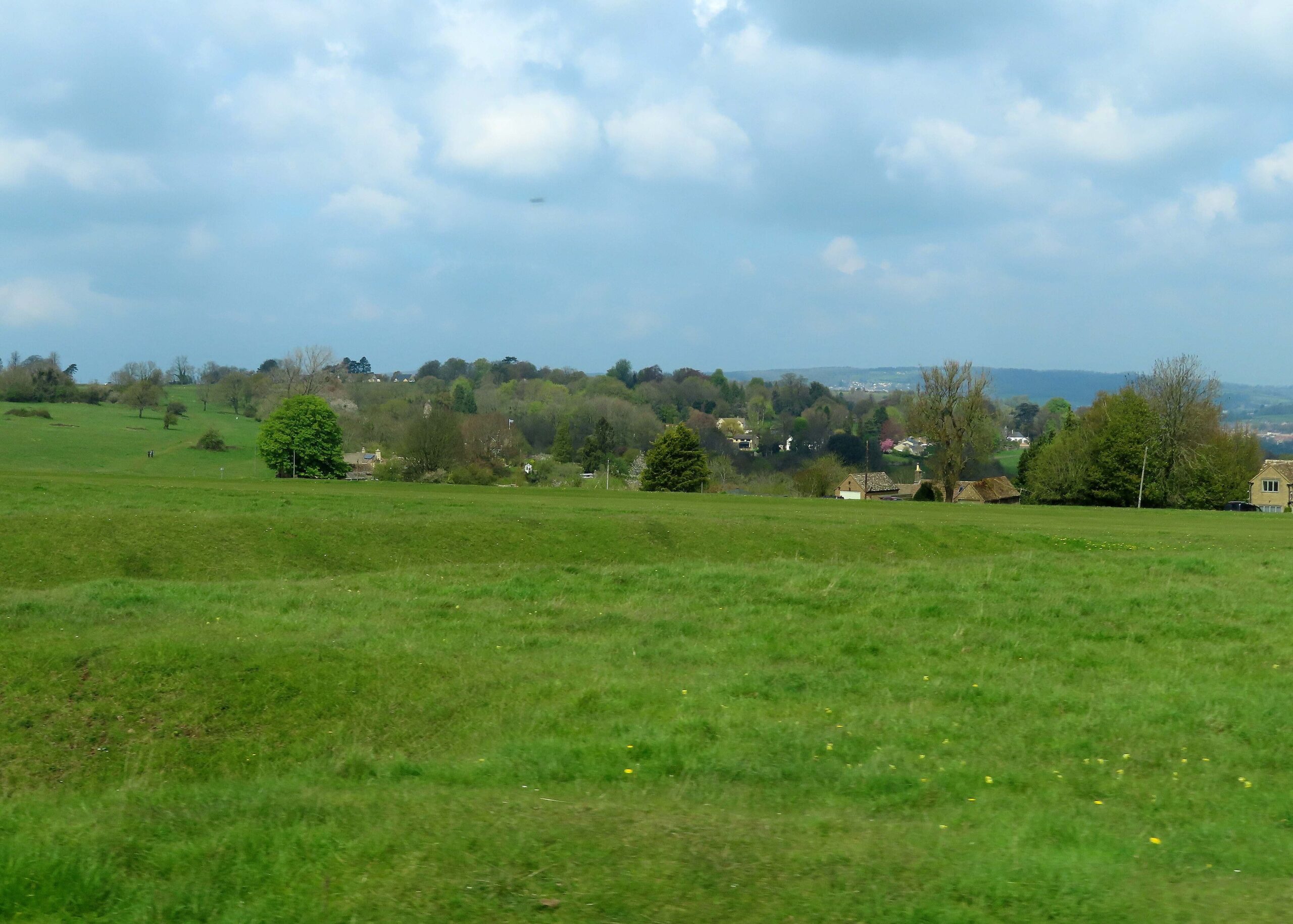
The common is one of the most important archaeological landscapes in Gloucestershire, although you need to look to see it. Prehistoric field systems, burial mounds and the long bank-and-ditch of the Bulwarks all survive under the turf, preserved precisely because the land was never ploughed. The Bulwarks are thought to be late Iron Age, a defensive earthwork cutting off the plateau, and they are much more impressive in low evening light, when the shadows pick out the banks, than at midday.
At the centre of the common, where five small roads meet, stands Tom Long’s Post. Local tradition says Tom Long was a highwayman — or a suicide, depending on who is telling it — buried at the crossroads. The current post is a white signpost rather than anything sinister, but it is the natural meeting point and the easiest landmark for navigating.
Golf on the common
Minchinhampton Golf Club’s old course is laid out across the common itself, which is public land. That means walkers have the right to cross the fairways, cattle graze them in summer and golfers have to play around both. It is one of the more unusual courses in England and quite a sight on a busy morning; if you are walking, look out for play and wait for a group to hit before crossing. Our guide to golf in the Cotswolds covers the club’s other courses and the region’s more conventional options.
Rodborough Common next door
Rodborough Common, over the road to the north-west, is Minchinhampton’s twin — similar open grassland but with steeper edges and even bigger views down into Stroud and the Frome valley. On the edge of it, Winstones has been making ice cream for about a century, and a cone from there eaten on the lip of the escarpment is one of the cheap small pleasures of the south Cotswolds.
Walking between Nailsworth and Minchinhampton
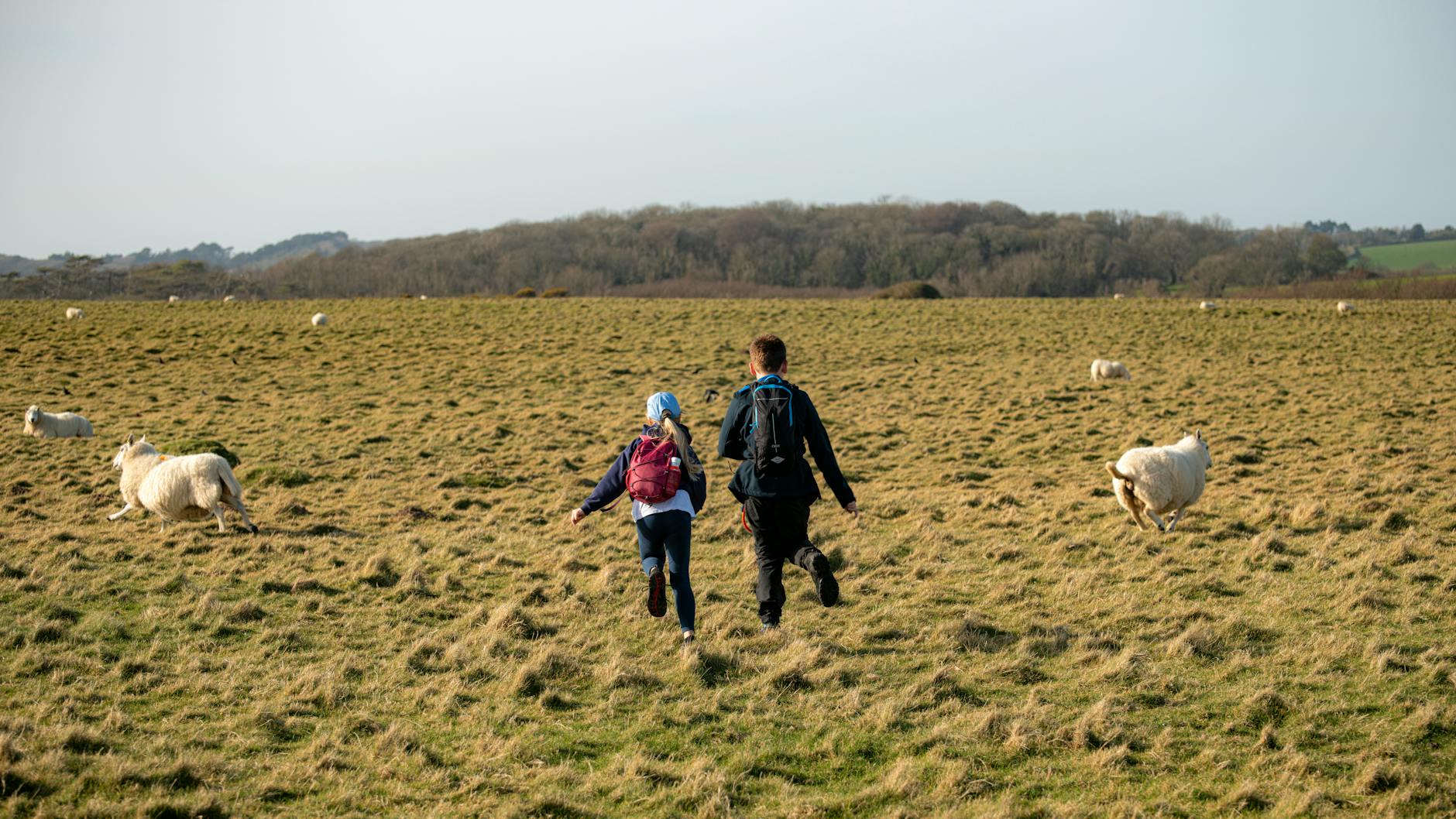
The best way to see both places is on foot, in a loop of about five miles that takes three hours with stops. Start in Nailsworth, where the car parking is easier. Climb out of town by the lanes and footpaths to the east, up through the hamlets of Watledge and Box — this is the hard part, steep for the first mile, and on a warm day you will feel it — and emerge onto the southern edge of the common. Cross the grass north to Minchinhampton for a look at the Market House and the church, then swing west across the open common past the Bulwarks and Tom Long’s Post before dropping back down into the valley through Amberley and the woods above Nailsworth.
It is not waymarked as a single route, so take an OS Explorer map (sheet 168 covers the area) or a mapping app. The descent at the end is steep and can be muddy under the trees from October to April; decent boots matter more than they would on the flat walks around Bourton.
- Distance: roughly 5 miles / 8 km, with about an hour of stiff climbing.
- Refreshments: Nailsworth at both ends; the Crown Inn in Minchinhampton; the Old Lodge, an inn set out on the common itself; the Amberley Inn on the descent.
- Dogs: welcome, but keep them on a lead near the cattle from May to autumn and near ground-nesting birds in spring.
- Best time: late afternoon, when the light across the common is at its best and you finish near a pub.
For shorter or gentler options, our dog-friendly walks in the Cotswolds include routes suited to this corner, and the wider Cotswolds walking guide explains how the southern hills compare with the gentler north.
More to see and do nearby
- Woodchester Park, just north of Nailsworth, is a National Trust valley of lakes and woods with an unfinished Victorian Gothic mansion at its heart. The bluebells in late April are among the best in the region, and the mansion — abandoned mid-build in the 1870s — opens on selected days; check before you go. Our guide to Cotswold woodland walks has more on the park.
- The Stroud Valleys Trail follows the old Nailsworth branch railway, closed to passengers in the 1940s, for about five miles to Stonehouse. It is flat, traffic-free and good for families on bikes or buggies — one of the few genuinely flat routes in the Five Valleys. See our cycling guide for more.
- Stroud, four miles north, has the famous Saturday farmers’ market and a very different, arty energy. Our Stroud guide covers it.
- Tetbury, about six miles south-east, is the royal-adjacent antiques town and a much more polished day out — see our Tetbury guide.
- Painswick, the “Queen of the Cotswolds”, is about eight miles north on the other side of Stroud and pairs well with Nailsworth on a two-day stay. Our Painswick guide has the details.
Getting there and getting around
By train
The nearest station is Stroud, on the line from London Paddington via Swindon and Kemble. Journeys from London take around an hour and a half, depending on the service and whether you need to change at Swindon. From Stroud it is about four miles to Nailsworth; a taxi takes around fifteen minutes. Our guide to the Cotswolds by train explains how the stations link up.
By bus
Stagecoach buses link Stroud and Nailsworth, and some services continue to Minchinhampton. Frequencies drop in the evenings and on Sundays, and routes in the Stroud area have been reorganised more than once in recent years, so check the current timetable before you set out rather than relying on a number you have seen online.
By car
Nailsworth sits on the A46 between Stroud and Bath, with the M5 about fifteen minutes away at junction 13. The town has several car parks within a few minutes’ walk of the centre. On the common there are informal parking areas around the edges and a car park by the reservoir on Culver Hill with room for around fifty cars; the National Trust keeps its common car parks open from dawn until dusk. The lanes between the two are narrow, steep and in places single-track, so allow more time than the distance suggests.
Where to stay
Neither place has much in the way of big hotels, which is part of the charm. Egypt Mill in Nailsworth offers rooms in the old mill buildings, and there are inns with rooms dotted around the common and in the villages nearby. Most visitors who stay locally take a self-catering cottage in Nailsworth, Amberley or Minchinhampton — the terraces of old weavers’ cottages on the valley sides make excellent bases, though check the parking situation before you book, as many have none. Expect to pay around £100–£160 a night for a mid-range double in the area, somewhat less than you would pay in Tetbury or the north Cotswolds.
If you would rather be based somewhere with more going on in the evenings, Stroud is ten minutes away by car and has a wider choice of places to eat after 9pm.
Is it worth the trip?
For a first visit to the Cotswolds, honestly, probably not as your main destination. Nailsworth is not pretty in the chocolate-box sense — it has a busy main road running through it, some unremarkable modern buildings and none of the golden-stone set pieces you have seen on postcards. Minchinhampton is lovely but small, and you will have seen the town in half an hour.
But for a second or third visit, or for anyone who cares more about food and walking than about photographing thatched cottages, this pair is one of the best-value days in the region. The common is a genuinely wild-feeling place, completely free, and almost never crowded. The bakery and pubs are the real thing. And there is something very pleasant about a part of the Cotswolds where the people in the café are there because they live there.
Avoid a sunny Sunday afternoon on the common if you dislike company — it is where half of Stroud goes to fly kites — and avoid Forest Green match days if you only want a quiet lunch in Nailsworth.
A day in Nailsworth and Minchinhampton
| Time | What to do |
|---|---|
| 09:00 | Coffee and pastry at Hobbs House Bakery; buy lunch-bread while it’s still there |
| 10:00 | Browse George Street and Fountain Street, then walk up to Ruskin Mill |
| 11:00 | Climb out through Watledge and Box onto Minchinhampton Common |
| 12:30 | Minchinhampton: the Market House, Holy Trinity, lunch at the Crown |
| 14:00 | Walk west across the common to the Bulwarks and Tom Long’s Post |
| 15:30 | Drop down through Amberley to Nailsworth |
| 17:00 | A drink at Egypt Mill, then dinner in town or a short drive to the Weighbridge Inn |
Frequently asked questions about Nailsworth and Minchinhampton
Is Nailsworth in the Cotswolds?
Yes. Nailsworth is in Gloucestershire, in Stroud District, and lies within the Cotswolds National Landscape. It sits at the steeper, more wooded south-western edge of the region, which feels quite different from the rolling wolds of the north.
How far is Minchinhampton from Nailsworth?
About two to three miles by road, depending on the route, and roughly a mile and a half on foot by the steepest paths. The common’s southern edge comes within a short, stiff climb of Nailsworth’s centre.
Is Minchinhampton Common free to visit?
Yes. It is open-access common land cared for by the National Trust, with no admission charge. You can walk anywhere on it, though you should keep dogs under close control when cattle are grazing, from mid-May until autumn.
Can you see cattle on Minchinhampton Common?
Usually from 13 May until the autumn, when local commoners graze their cattle across the common, including over the roads. Drive slowly, especially around blind corners and dips, and never feed the animals.
What is Nailsworth known for?
Its food — Hobbs House Bakery in particular — its old cloth mills, Forest Green Rovers, the vegan football club, and its position as a gateway to Minchinhampton Common and Woodchester Park.
Can you visit Nailsworth without a car?
Yes. Take the train to Stroud and a bus or taxi from there. Once in town, Nailsworth is walkable, and the common is reachable on foot — just be ready for the climb.
If this corner suits you, carry on to Stroud for the Saturday market and Tetbury for antiques and royal-adjacent polish, or cross the county line to Malmesbury for half an abbey and a riverside walk. For the pubs that make a walk like this worthwhile, see our round-up of the best pubs in the Cotswolds, and for the full regional picture, start with the Cotswold towns guide.
Photo Credits
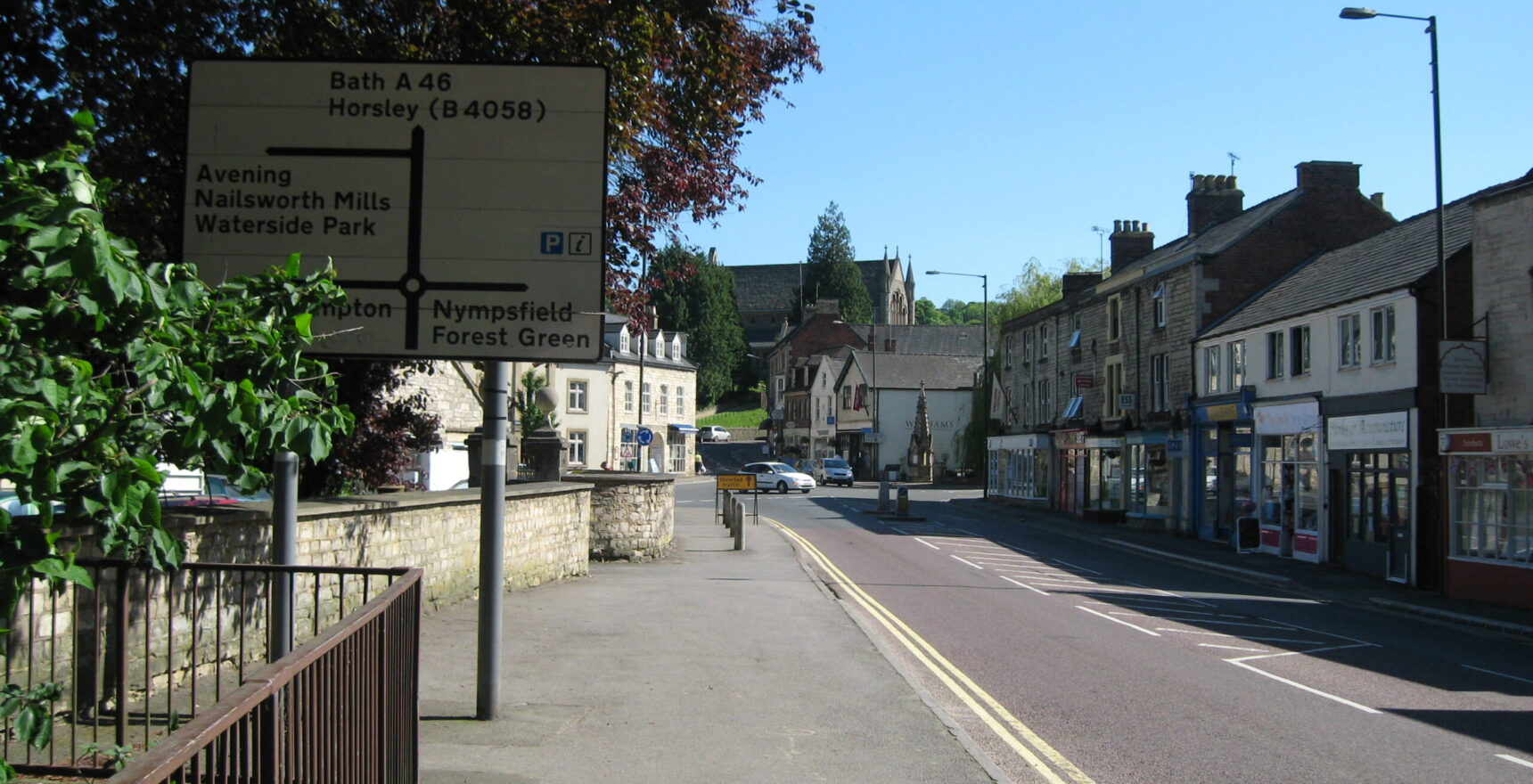
Nailsworth town centre and clock tower from the Bath Road: A46 Bath Road – Nailsworth, Gloucestershire – geograph.org.uk – 4000995 by Martin Richard Phelan, CC BY-SA 2.0, via Wikimedia Commons.
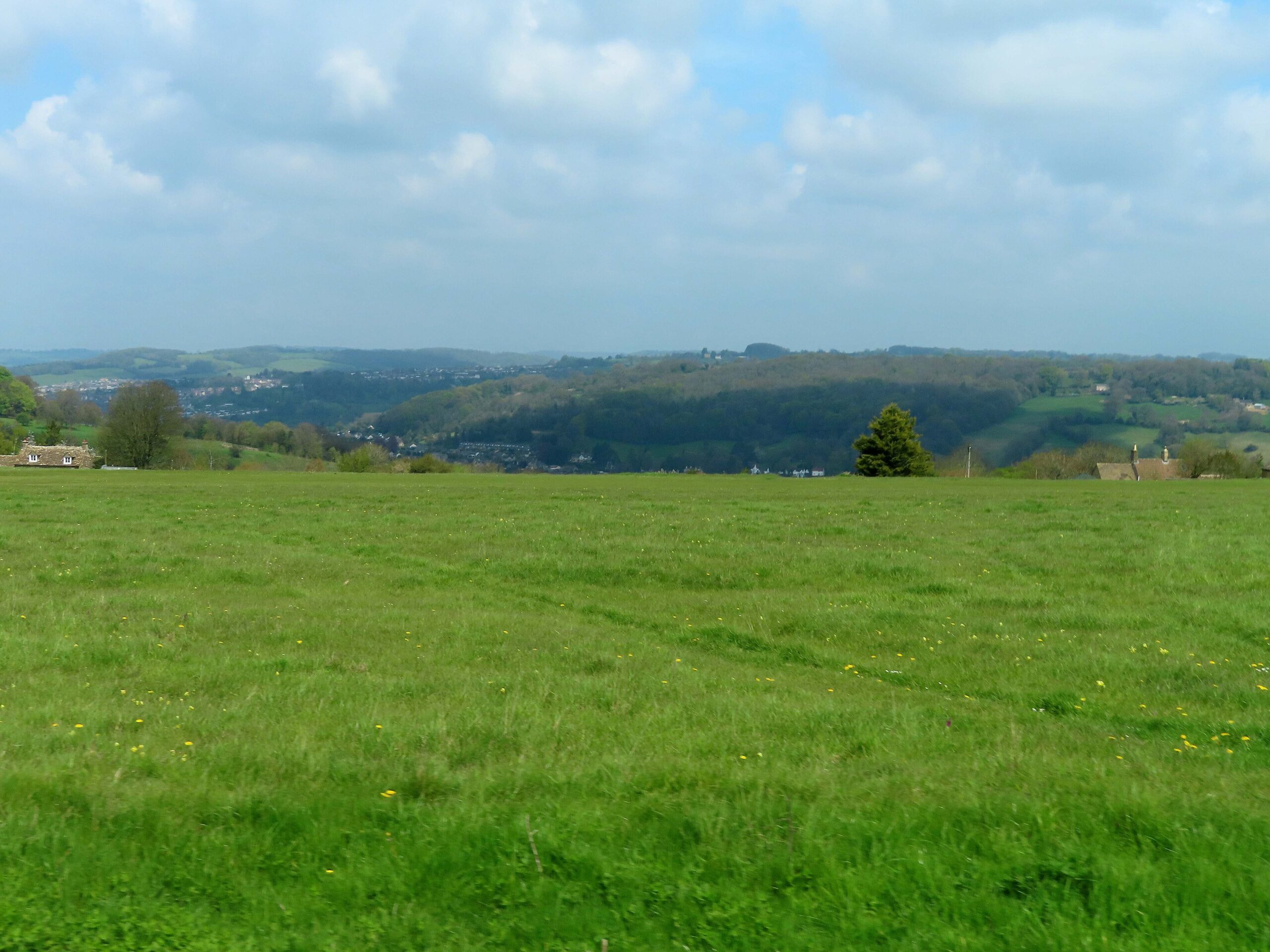
Minchinhampton Common looking over the Stroud valleys: Minchinhampton Common – geograph.org.uk – 7481401 by Steve Daniels, CC BY-SA 2.0, via Wikimedia Commons.
The Bulwarks earthworks on Minchinhampton Common: Earthworks on Minchinhampton Common – geograph.org.uk – 7481390 by Steve Daniels, CC BY-SA 2.0, via Wikimedia Commons.
Leave a Reply