This article contains advertising. My booking links are routed through a partner that adds commission tracking automatically, so if you book through one I earn a commission from the provider, at no extra cost to you. It never affects what I recommend. Affiliate disclosure
“You need a car for the Cotswolds.” It is the received wisdom, and it is not quite true. While a car certainly makes life easier, you absolutely can explore this beautiful region without one, and doing so has real upsides: no parking battles in the honeypot villages, no worry about narrow lanes, and the simple pleasure of letting the train and bus do the work while you watch the countryside roll by. It takes a little more planning, but it is genuinely rewarding.
This guide is an honest, practical look at getting around the Cotswolds car-free: the trains and buses, the bookable Robin minibus, cycling, taxis and walking between villages. I will be straight about which areas are easy without a car and which are hard, so you can plan a realistic trip. It works alongside our complete guide to getting to and around the Cotswolds and our guide to the Cotswolds bus routes.

Trains: The Backbone of Car-Free Travel
Trains are the foundation of any car-free Cotswolds trip. The Cotswold Line (London Paddington–Oxford–Worcester) has stations at Charlbury, Kingham, Moreton-in-Marsh and Honeybourne, while the Golden Valley line serves Kemble, Stroud and Cheltenham Spa. Of these, Moreton-in-Marsh is the star for car-free visitors: it is a walkable market town and the hub of the local bus network.
The key is to choose a base that sits on the rail network and has good onward connections. Moreton-in-Marsh, Cheltenham, Stroud, Charlbury and Kingham all work, with Moreton the best all-rounder for reaching the classic villages. From a well-chosen base, you can reach a great deal by combining the train with the local buses below. Our guide to the Cotswolds by train covers every station and route.
Buses: Linking the Towns and Villages
The bus network is better than many visitors expect, especially along the main corridors. The flagship route is the Pulhams 801, which runs roughly hourly, Sundays included, between Cheltenham, Bourton-on-the-Water, Stow-on-the-Wold, Moreton-in-Marsh and Chipping Norton, calling at Moreton’s railway station. The 606 links Cheltenham with Winchcombe, Broadway and Chipping Campden, Stagecoach services connect Cheltenham, Cirencester and Stroud, and Pulhams’ X52 runs from Cheltenham through Northleach and Burford to Oxford.
Thanks to the national £3 single fare cap (in place until 31 December 2026, then £2 through 2027), most bus journeys on participating services are cheap, and day tickets such as the Pulhams Cotswold Zone or Stagecoach Gold DayRider offer good value for a day of hopping between villages. The main thing to watch is frequency: services thin out in the evenings, and some routes, such as the 606, do not run on Sundays, so always check timetables in advance. Our dedicated Cotswolds bus routes guide lists the key services.

The Robin: A Bookable Minibus for the Tricky Bits
One of the most useful tools for car-free travel is The Robin, a demand-responsive minibus run by Gloucestershire County Council. Rather than following a fixed route, you book it like a shared taxi, and it will take you between villages within its zone, which covers the North and South Cotswolds, including hard-to-reach spots like Bibury and the Slaughters. It runs roughly 7am to 7pm Monday to Saturday, with fares capped at a low few pounds per journey.
You book via the app, website or phone, from two weeks ahead to about an hour before you travel. The big caveat is that The Robin covers Gloucestershire only, so it cannot take you into Oxfordshire (it does not serve Burford, for example). But within its area it is a brilliant way to reach the villages the scheduled buses miss, and it transforms what is possible without a car. It is well worth building into your plans for the quieter corners.
Cycling and E-Bikes
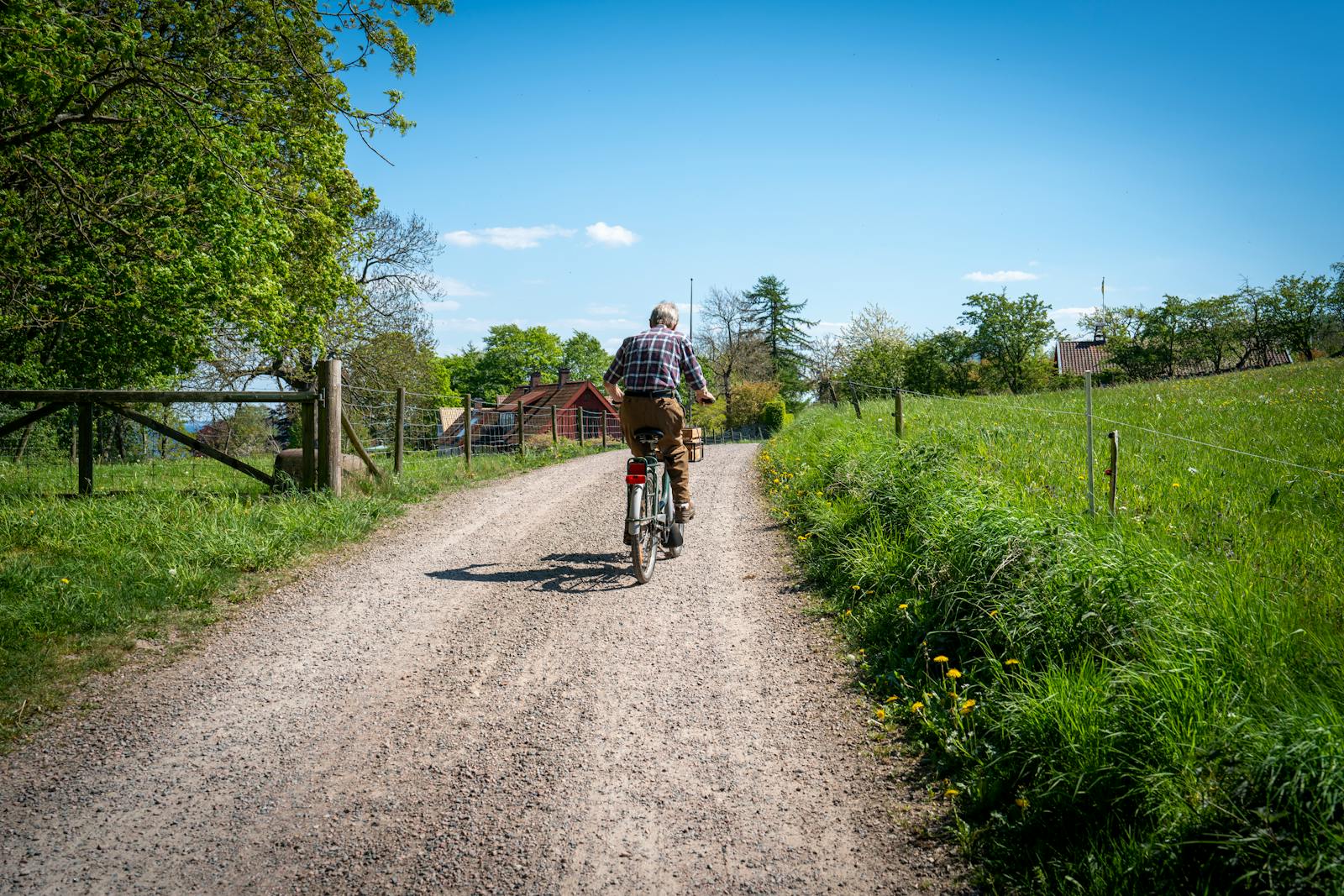
For the more active, cycling is a wonderful way to link villages under your own steam, and electric bikes make light work of the Cotswold hills. Hire is available in Moreton-in-Marsh and Bourton-on-the-Water, with e-bikes typically around £55 to £60 a day including helmet, lock and lights, and some firms will deliver to your accommodation. From a base like Moreton, you can pedal out to a string of villages and back in a day.
The quiet lanes are mostly pleasant for cycling, though they can be narrow and undulating, so plan a route that suits your fitness and stick to lanes rather than the busier A-roads where you can. Combining a train to a station town with bike hire is a great car-free formula, letting you reach the countryside by rail and explore it by bike. It is also one of the most enjoyable ways to experience the landscape at a gentle pace.

Walking Between Villages and Taxis
Some of the best car-free experiences involve no transport at all. The Cotswolds is laced with footpaths, and several villages are an easy, scenic walk apart. The flat path from Bourton-on-the-Water to the Slaughters is the classic, while a stretch of the Cotswold Way links Chipping Campden and Broadway over Dover’s Hill and Broadway Tower, and if you want to walk one way and ride back, check the 606 timetable for Broadway journeys (it does not run on Sundays).
For the gaps that buses and walks do not cover, taxis are the backstop. You cannot hail one in the street, so pre-book, especially in the evenings and on Sundays when demand outstrips supply. Taxis are particularly handy from rural stations like Kingham to reach nearby villages. Used sparingly to bridge awkward connections, a taxi keeps a car-free trip flexible without the cost of hiring a car. Our guides to walking and hiking have plenty of village-to-village routes.
Which Areas Are Easy, and Which Are Hard
Let me be honest about where car-free travel flows and where it struggles, because it makes all the difference to planning. Genuinely easy are the rail-connected towns and the villages on the main bus routes: Moreton-in-Marsh, Stow-on-the-Wold, Bourton-on-the-Water, Cheltenham, Winchcombe, Cirencester, Chipping Campden and Broadway are all well served, as are Charlbury and Kingham by train. Around these, you can plan a satisfying trip with confidence.
Harder are the famously photogenic but poorly connected spots. Bibury has only the infrequent 855 bus (plus The Robin), the Slaughters are best reached on foot from Bourton, and Castle Combe, over on the Wiltshire side, is reached by Faresaver’s 95 and 95A buses from Chippenham. Remote hamlets and anywhere needing a Sunday connection can be very tricky. The trick is to build your trip around the easy places and use The Robin, walks or a taxi to dip into the harder ones.
A Sample Car-Free Itinerary
Here is how a relaxed car-free few days might look, based in Moreton-in-Marsh. Day one: arrive by train, settle in, and explore Moreton on foot, timing it for the Tuesday market if you can. Day two: take the 801 bus to Stow-on-the-Wold and Bourton-on-the-Water, with a walk to the Slaughters from Bourton, returning by bus in the late afternoon.
Day three: hire an e-bike in Moreton and pedal out to the quieter villages, or book The Robin to reach Bibury for its famous Arlington Row. Day four: take the train onward to Cheltenham or Charlbury for a change of scene, or catch the 606 from the Cheltenham direction to Broadway and Chipping Campden. Slotting the train, the 801, The Robin and a bike together like this lets you see a great deal of the Cotswolds without ever needing a car.
Money-Saving Tickets and Passes
A few tickets can save you money once you are exploring. The national £3 single fare cap (in place until 31 December 2026, then £2 through 2027) keeps individual bus journeys cheap, but if you are making several hops in a day, a day ticket is better value: the Pulhams Cotswold Zone adult day pass (£8 in the Pulhams app, £8.50 on the bus) covers Bourton, Stow and Moreton, while the Stagecoach Gold DayRider covers Stagecoach routes across the area, so check Stagecoach’s site for its current price. Both beat buying singles for a busy day.
For days that combine train and bus, the Cotswolds Discoverer one-day pass can be worthwhile, though note it covers Stagecoach buses rather than Pulhams, so it does not reach Bourton, Stow or Chipping Campden, an important limitation worth understanding before you buy. We compare it in detail in our guide to the Cotswolds Discoverer pass. For pure bus days, the capped fares and operator day tickets are usually the cheaper choice.
Apps and Tools for Planning
Good planning tools take the stress out of car-free travel. National Public Transport Information (formerly Traveline South West) is the go-to journey planner for local bus and rail timetables. The Pulhams app gives live bus tracking and sells tickets, while the Stagecoach app covers their services. For The Robin, the dedicated app handles bookings.
It is also worth downloading offline maps and your train operator’s app for live running information, as rural mobile signal can be patchy. A little homework the night before, checking the first and last buses, the connection times and any Sunday reductions, makes the day itself run smoothly. Once you have the rhythm of the timetables, car-free travel quickly becomes second nature, and you will wonder why you ever worried about parking.
Tips for a Smooth Car-Free Trip
A handful of habits make all the difference. Always check timetables in advance and note the last bus or train back, as missing it in a rural village can be a real problem. Travel light, so you can manage the walk between station and accommodation, and choose somewhere central to your chosen base. Build in buffer time for connections rather than relying on tight changes, and have a backup such as a taxi number saved.
Finally, embrace the slower pace. Car-free travel rewards those who are not in a rush, who enjoy the bus ride through the hills and the walk between villages as part of the experience rather than a means to an end. The Cotswolds is a place to savour, and seeing it without a car, at the speed of a country bus or a bicycle, is arguably truer to its gentle spirit. For inspiration on where to walk, see our walking and hiking guide.
Arriving Car-Free From Further Afield
Getting to the Cotswolds without a car is easy from all directions. From London, direct GWR trains reach Moreton-in-Marsh, Kemble and Cheltenham; from Birmingham and the north, change at Oxford for the Cotswold Line or take a direct train to Cheltenham; and from Bristol and the south-west, trains run to Cheltenham and Kemble. Overseas visitors flying in can reach the region by train from Birmingham Airport or by National Express coach from Heathrow and Bristol airports.
Once you arrive at your chosen station, the local network takes over. This means you can plan a completely car-free trip door to door, from your home city to a Cotswold village, using trains and buses throughout. Our guides to London to the Cotswolds and the nearest airports set out the arrival options in detail, including the coach links from the airports.
Car-Free With Families and Dogs
Travelling car-free works well for families too, with children often delighted by the train and bus rides, and the Family & Friends Railcard keeping costs down. Choose a central base within walking distance of shops, cafés and a bus stop, plan shorter days to suit small legs, and you can have a wonderful car-free family holiday. A buggy is manageable on the buses, though the older village pavements can be uneven.
Dogs travel free on the trains and are welcome on most local buses and in many pubs and cafés, so a car-free trip with a dog is entirely feasible and the walks between villages are a joy for a four-legged companion. Whatever your party, the key is the same: pick a well-connected base, lean on the train, the 801 and The Robin, and fill in with walking, cycling and the occasional taxi. For dog-friendly routes, see our guide to dog-friendly walks in the Cotswolds.
For all that a car has its conveniences, a thoughtfully planned car-free trip proves that you really do not need one to fall for the Cotswolds. With the train as your spine and the buses, bikes and The Robin filling in the rest, the region opens up beautifully, at a pace that lets you actually enjoy it.
It is worth booking accommodation that advertises itself as walker- or visitor-friendly and asking the owners about the nearest bus stop and the local taxi firms when you reserve; the people who run Cotswold B&Bs and inns are used to car-free guests and are often a mine of practical local advice on connections and timings.
Car-free travel also happens to be the greener way to see the Cotswolds, treading more lightly on the very landscape and villages that make the region so special, which feels especially fitting in a place this beautiful. With a sensible plan and a relaxed attitude, leaving the car behind can become one of the most enjoyable and rewarding ways to experience the region at its own gentle pace.
Frequently Asked Questions
Can you visit the Cotswolds without a car?
Yes. By combining trains, the Pulhams 801 and other buses, the bookable Robin minibus, cycling, walking and the occasional taxi, you can explore much of the Cotswolds car-free. It takes more planning, and some remote villages are harder to reach, but it is very doable.
What is the best base for a car-free Cotswolds trip?
Moreton-in-Marsh is the best all-round base: it has a railway station in town and the hourly 801 bus to Stow, Bourton and Cheltenham. Cheltenham, Stroud, Charlbury and Kingham also work well as rail-connected bases.
How do I get to Bibury without a car?
Bibury is one of the hardest villages to reach car-free. The infrequent 855 bus links it with Bourton and Cirencester, or you can book The Robin minibus within its Gloucestershire zone. Guided tours are the most reliable way to include Bibury.
Are Cotswold buses reliable on Sundays?
Evening services are reduced, and some routes do not run on Sundays at all. The 801 runs hourly on Sundays, but the 606 and other village routes do not, so always check timetables and plan around them for weekend travel.
What is The Robin minibus?
The Robin is a bookable, demand-responsive minibus run by Gloucestershire County Council, covering the North and South Cotswolds. You book it like a shared taxi via app, website or phone, and it reaches villages the scheduled buses miss, though it does not serve Oxfordshire.
Leave the Car at Home
Exploring the Cotswolds without a car is not only possible, it can be a real pleasure, freeing you from parking stress and letting you travel slowly through the landscape. Pick a rail-connected base, master the bus timetables and The Robin, and fill in the gaps with cycling, walking and the odd taxi. For more, see our guides to the Cotswolds bus routes and the Cotswolds Discoverer pass. If you do end up hiring a car for part of the trip, our guide to driving in the Cotswolds covers the routes and the parking.