This article contains advertising. My booking links are routed through a partner that adds commission tracking automatically, so if you book through one I earn a commission from the provider, at no extra cost to you. It never affects what I recommend. Affiliate disclosure
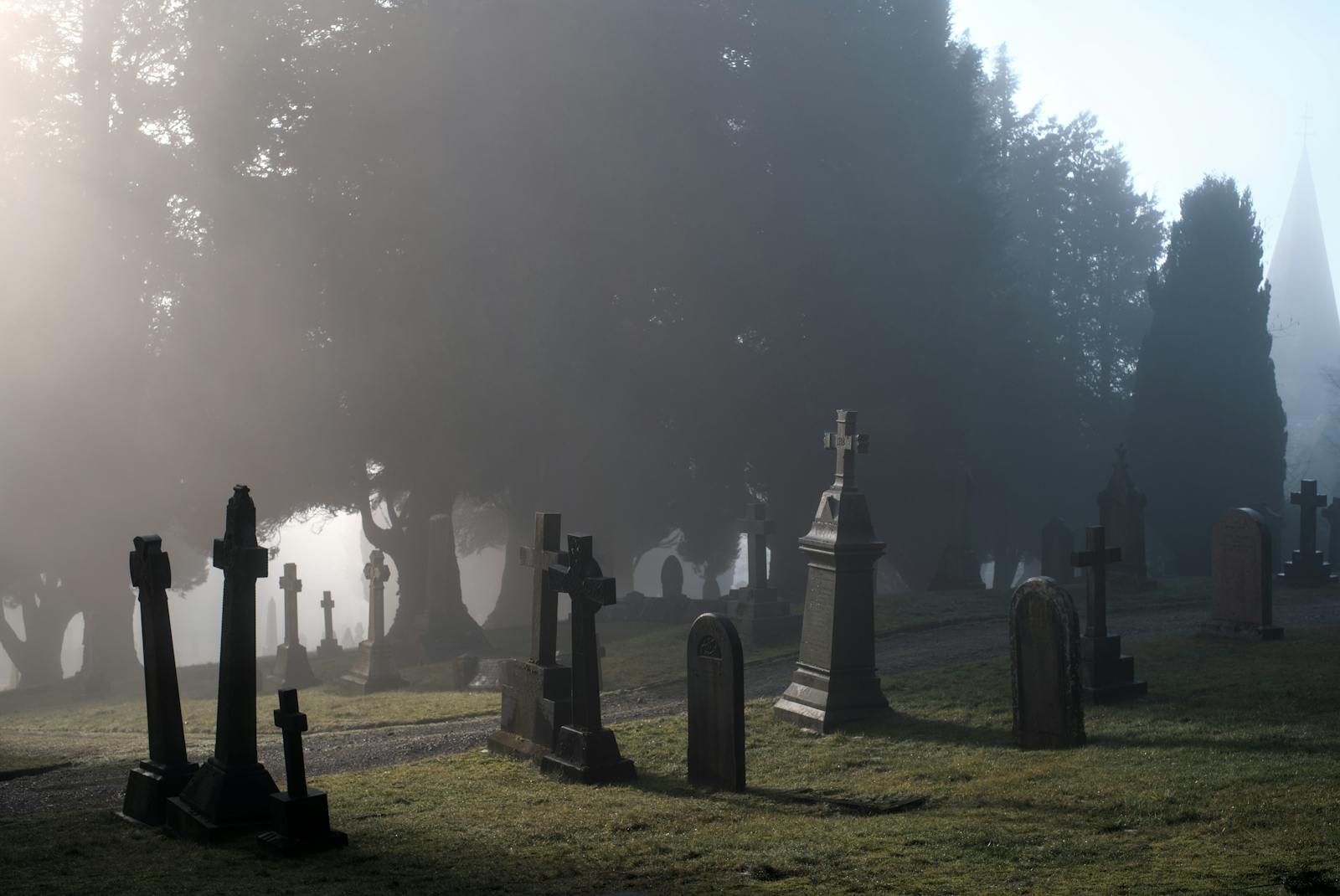
The Cotswolds you see on a sunny afternoon — all honey-stone cottages and tea rooms and contented sheep — has a shadow side that only really shows itself after dark. Linger in a churchyard as the light fades, walk past a ruined manor in the river mist, or stand among ancient stones as the wind gets up, and you begin to understand why this gentle region is also one of the most haunted corners of England. Centuries of history leave their ghosts, and the Cotswolds have history to spare.
Whether or not you believe a word of it, the ghost stories and legends of the Cotswolds are wonderful — spine-tingling, strange and often genuinely old. This guide gathers the spookiest of them: the most haunted village in England, a former inn said to be crawling with spirits, a king turned to stone by a witch, and a nobleman who starved to death in a secret room. I have also included where to take a ghost walk and how to plan your own atmospheric after-dark wander. Bring a torch, and maybe a friend.
Prestbury: England’s most haunted village
Just outside Cheltenham lies the pretty village of Prestbury, which carries an unusual claim to fame: it is widely reckoned to be the most haunted village in England, vying only with Pluckley in Kent for the title. For such a peaceful-looking place, it has an extraordinary roll-call of resident phantoms, and the locals tell their tales with a mixture of pride and unease.
The most famous is the Black Abbot, the hooded figure of a monk who is said to appear chiefly at Christmas, Easter and on All Souls’ Day. He keeps stubbornly to the same route, drifting out of the parish church, across the churchyard, through the grounds of the old priory and finally vanishing into the wall of a High Street cottage, where he is said to announce himself by noisily moving things about in the attic. He is not alone. Prestbury also has its phantom horsemen, whose galloping hooves are heard clattering through the village at night, and a tragic female spirit said to be a woman who died trying to save her children from a fire. Little wonder that the village is a favourite haunt, so to speak, of organised ghost tours.
The Ancient Ram Inn: the most haunted building in England?
If you want the single most notorious haunted spot in the Cotswolds, head to Wotton-under-Edge and the Ancient Ram Inn. This remarkable timber-and-stone building is the oldest in the town, with origins traditionally dated to 1145, and its owners have long billed it as “the most haunted building in England,” home to as many as twenty spirits. Once an inn, it is now a private house and a magnet for paranormal investigators from around the world.
The stories attached to it are genuinely chilling. The most feared room is the Bishop’s Room, the scene of reported possessions and, it is said, numerous exorcisms over the years. The first room visitors meet, the so-called Men’s Kitchen, is reputed to stand on a pagan burial ground, where the sound of a crying baby is said to be heard. The late owner, John Humphries, who lived there for half a century, claimed an array of unsettling encounters, and the inn has featured on television ghost-hunting shows including Most Haunted and Ghost Adventures. It is not a cosy pub you can pop into for a pint — today it opens for organised ghost hunts and tours — but as a piece of dark Cotswold folklore it has no equal.
The Rollright Stones: a king, a witch and uncountable stones
High on the hills near Long Compton, on the Oxfordshire-Warwickshire border, stand the Rollright Stones, an ancient and atmospheric group of prehistoric monuments steeped in one of England’s best folk legends. There are three parts to them: a stone circle called the King’s Men, a solitary monolith called the King Stone, and a huddle of stones known as the Whispering Knights. And there is a marvellous story to explain them all.
According to legend, a would-be king was marching across the country when he met a witch, who challenged him: “Seven long strides shalt thou take, and if Long Compton thou canst see, King of England thou shalt be.” Confidently, the king strode forward — but as he reached the brow of the hill, a mound rose up to block his view. Cackling, the witch turned him to stone where he stood, his soldiers became the circle of the King’s Men, and a knot of knights who had hung back to plot against him were frozen as the Whispering Knights. The witch, it is said, became an elder tree, still lurking in the hedgerow.
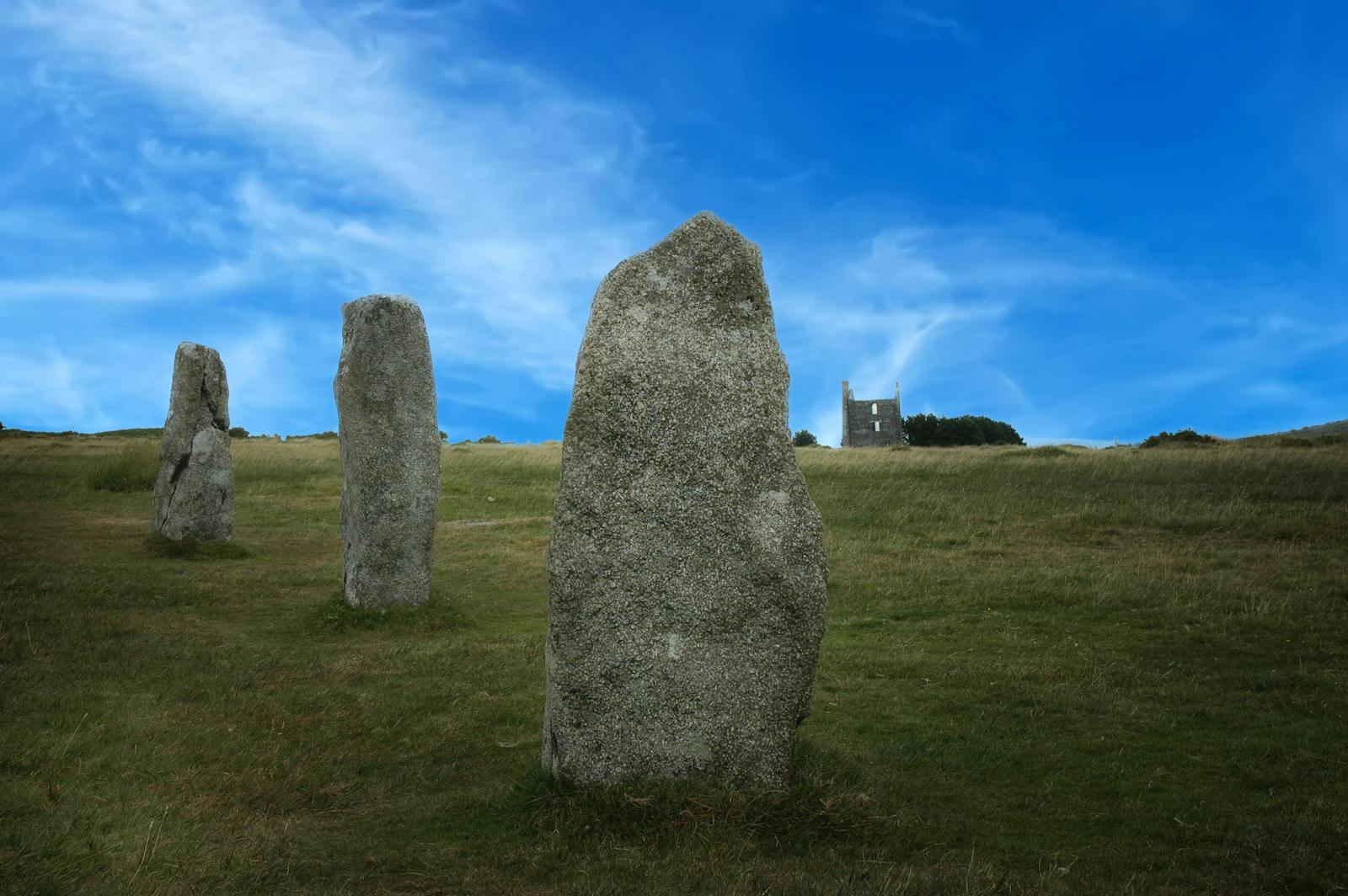
The legends do not stop there. It is famously said to be impossible to count the King’s Men: no one, the tale runs, can count the stones three times and arrive at the same number, and anyone who manages it will have their heart’s desire granted. Whatever the truth, the stones are a wonderfully eerie place to visit, especially in the low light of early morning or dusk, and they make a perfect spooky detour near Chipping Norton.
Minster Lovell Hall: the man who starved in a secret room
Few ruins anywhere are as romantic, or as grimly haunted, as Minster Lovell Hall, whose graceful broken arches stand beside the River Windrush in one of the loveliest spots in the Cotswolds. The story behind its most famous ghost is the stuff of nightmares. Francis Lovell, a leading supporter of King Richard III, vanished after the Yorkist defeat at the Battle of Stoke Field in 1487, and legend holds that he fled here and hid himself in a secret underground room, known only to a single trusted servant who brought him food.
Then the servant died suddenly — and with him died the secret. Lovell, locked away and unable to escape, is said to have slowly starved to death in his hidden vault. The chilling coda came in 1708, when workmen renovating the hall reportedly broke into a concealed chamber and found a skeleton seated at a table, with a book, pen and paper before it and the bones of a dog at its feet. True or not, the tale has given the ruins a powerful reputation: visitors speak of ghostly groans, footsteps and the rustle of papers, and some claim to have glimpsed Lovell himself pacing the ruins in a cloak. The site is free to visit and utterly atmospheric, especially in autumn mist.
Minster Lovell has a second dark legend, too. It is one of several English houses claimed as the setting for the chilling tale of the “Mistletoe Bough” — the story of a young bride who, during a game of hide-and-seek on her wedding day, concealed herself in a heavy oak chest, only for the lid to lock shut. No one could find her, and her body was supposedly discovered decades later, still in her wedding dress. Whether the tale truly belongs here or simply attached itself to the romantic ruins, it has deepened Minster Lovell’s reputation as a place where joy turned, in an instant, to horror.
Haunted houses and castles
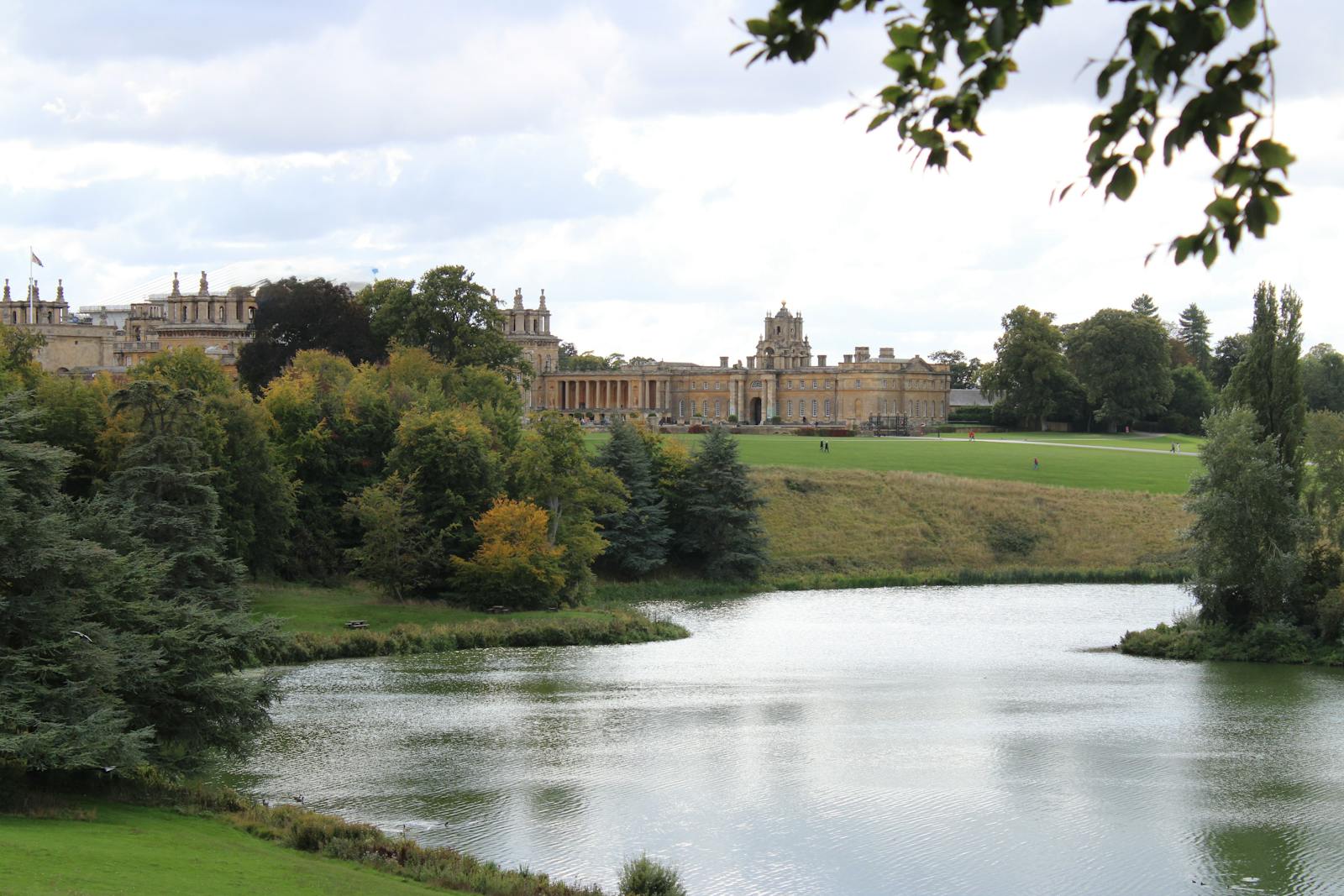
The grand houses of the Cotswolds have their share of restless spirits, too — you can read about many of them in our guide to Cotswolds stately homes. At Berkeley Castle, where King Edward II was imprisoned and, by tradition, murdered in 1327, some say his agonised screams can still be heard echoing from the cell. Woodchester Mansion, the great Victorian house abandoned mid-construction, is a celebrated venue for ghost hunts, its unfinished rooms thick with atmosphere and rumour.
Chavenage House, near Tetbury, comes with a famous legend of a ghostly coach that carries away the soul of a doomed Civil War Roundhead. Sudeley Castle is said to be visited by the gentle spirit of Katherine Parr, Henry VIII’s widow who is buried there, while the romantic Owlpen Manor has its own tradition of a royal ghost said to be Queen Margaret of Anjou. Whether these tales are history, hearsay or a little of both, they add a delicious shiver to a house visit, particularly as the afternoon light begins to fade.
Legends, lore and the spookier side of the hills
Beyond the headline hauntings, the Cotswolds are threaded with older, stranger lore. This is a deeply ancient landscape, dotted with prehistoric long barrows, Iron Age hillforts and lonely standing stones, and such places have always attracted tales of the uncanny — of witches, fairies and the restless dead. Many Cotswold churchyards are linked to “coffin paths,” the old routes along which the dead were carried to burial, and more than one village has its own quiet ghost story passed down the generations.
It is the atmosphere, as much as any specific spectre, that gets under your skin. There is something about a Cotswold lane at dusk — the deep hush, the dark beech woods, the ancient stone glowing faintly in the gloaming — that makes even the most rational visitor walk a little quicker. The region wears its long history lightly in daylight, but at night you can feel the weight of all those centuries pressing in, and the line between folklore and the prickle on the back of your neck grows pleasingly thin.
Witch marks and haunted inns
Look closely at the old buildings of the Cotswolds and you may spot evidence of a very real historical fear of the supernatural. Scratched into beams, fireplaces and doorways of many ancient houses, churches and inns are “witch marks,” also called apotropaic marks — daisy-wheel patterns, interlinked circles and tangled lines deliberately carved to trap or ward off evil spirits. Far from idle graffiti, these were a serious form of spiritual insurance, made by people who genuinely believed that witches and demons might slip in through any opening.
One of the most charming examples survives at the Fleece Inn at Bretforton, a medieval longhouse pub now cared for by the National Trust, where white “witches’ circles” were traditionally chalked onto the hearthstones to stop witches from coming down the chimney — and are still maintained today. It is a lovely reminder that, for centuries, fear of the dark was woven into daily life.
The region’s old coaching inns carry plenty of ghost stories of their own. The historic Lygon Arms in Broadway, where both King Charles I and Oliver Cromwell are said to have stayed during the Civil War, is among several venerable Cotswold hostelries with tales of unexplained footsteps and shadowy figures. Settling in by the fire of a centuries-old inn, with the wind rattling the windows and the landlord happy to share a ghost story or two, is one of the great pleasures of a spooky Cotswold evening.
Ghost walks and spooky things to do
If you would like your shivers guided and explained, there are good options. Organised ghost tours operate in the Cotswolds — Prestbury, unsurprisingly, is a focal point — led by storytellers who know the local legends inside out and will happily scare you witless on a dark evening. The Ancient Ram Inn and Woodchester Mansion both host organised paranormal nights and ghost hunts for those who want a properly immersive, sleepless experience.
For something gentler, simply timing a visit for autumn does most of the work. The season of mists and early dusks transforms the ruined halls and old churchyards, and the run-up to Halloween often brings special events, lantern-lit walks and themed evenings across the region. Pair a spooky afternoon with a cosy evening in one of the region’s centuries-old inns — many with their own ghost stories — and you have a perfect day; our guide to historic Cotswolds pubs is the ideal companion, and there is more in our roundup of the best pubs in the Cotswolds.
Planning a spooky after-dark walk
Some of the most atmospheric Cotswold experiences cost nothing at all: a dusk stroll among the ruins of Minster Lovell Hall, a twilight visit to the Rollright Stones, or a slow circuit of an old village churchyard as the light goes. If you fancy creating your own ghostly outing, a few sensible tips will keep it fun rather than foolhardy. Take a good torch and a charged phone, tell someone where you are going, wear sturdy footwear for uneven ground, and check that any site you visit is open and accessible after dark — some ruins and stones lie on private land or have set opening hours.
Above all, be respectful. Many of these places are working churchyards, private homes or fragile ancient monuments, so tread lightly, take only photographs and leave everything as you found it. The Cotswolds’ ghosts, real or imagined, have had centuries of peace; the least we can do is not disturb the stones they rest among.
Frequently asked questions about haunted Cotswolds
What is the most haunted place in the Cotswolds?
The Ancient Ram Inn at Wotton-under-Edge is the most famous, billed by its owners as the most haunted building in England, with around twenty reputed ghosts. The village of Prestbury, near Cheltenham, is also celebrated as one of England’s most haunted villages, while Minster Lovell Hall and the Rollright Stones are among the most atmospheric haunted sites to visit.
Why is Prestbury said to be so haunted?
Prestbury has an unusually large collection of long-standing ghost legends, the best known being the Black Abbot, a hooded monk said to appear around Christmas, Easter and All Souls’ Day. The village also has tales of phantom horsemen and other spirits, which together have earned it a reputation as one of the most haunted villages in England.
Can you visit the Rollright Stones?
Yes. The Rollright Stones, near Long Compton on the edge of the Cotswolds, are open to visitors for a small admission, looked after by a charitable trust. They are wonderfully atmospheric, especially at dawn or dusk, and come with a famous legend of a king and his army turned to stone by a witch — plus the belief that the stones cannot be reliably counted.
Are there ghost walks in the Cotswolds?
Yes. Guided ghost tours run in the region, particularly around Prestbury, and venues such as the Ancient Ram Inn and Woodchester Mansion host organised ghost hunts and paranormal nights. Autumn and the period around Halloween are the best times, when many places lay on special spooky events and lantern-lit walks.
The haunted Cotswolds are proof that even the prettiest landscape has its shadows — and that its long, dramatic past is never quite as far away as it seems. To carry the after-dark theme into a warm and welcoming setting, read our guide to the most historic pubs in the Cotswolds, several with ghost stories of their own, or return to the pillar guide on Cotswolds history and heritage for the real events behind the legends. For history that is unsettling for entirely different reasons, see our guide to Roman Cotswolds. Autumn is the season to do this properly — see our guide to the Cotswolds in autumn.