This article contains advertising. My booking links are routed through a partner that adds commission tracking automatically, so if you book through one I earn a commission from the provider, at no extra cost to you. It never affects what I recommend. Affiliate disclosure
There is no better place to feel the history of the Cotswolds than from a settle by the fire in an ancient inn, pint in hand, low beams an inch above your head, the flagstones worn into hollows by five hundred years of boots. The pub is the beating heart of the Cotswold village, and many of them are genuinely, astonishingly old — older than the country houses, older than most of the churches’ fittings, old enough to have sheltered wool merchants, drovers, highwaymen and kings. To drink in one is to take your place in a line of travellers stretching back to the Middle Ages.
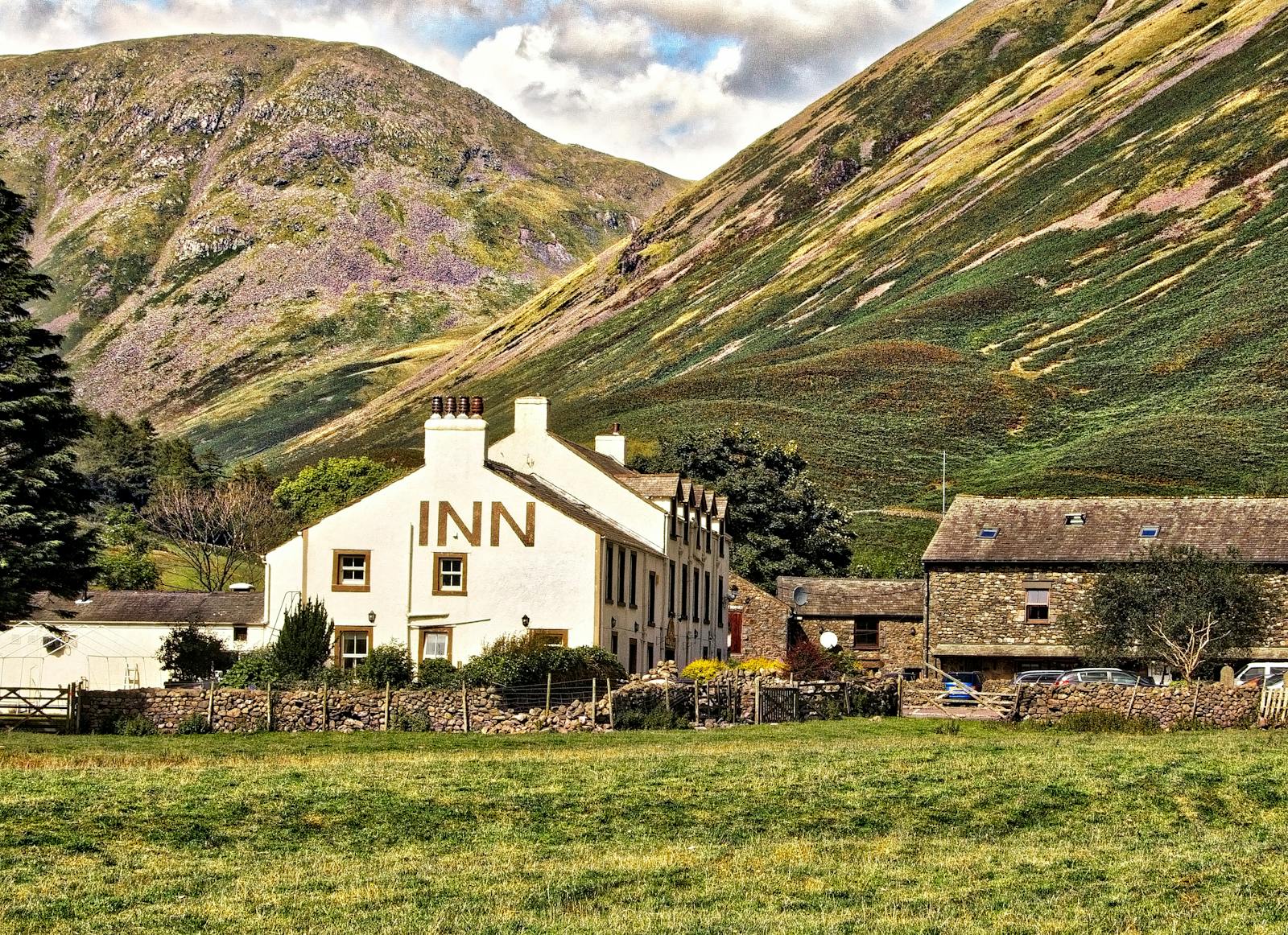
This is a guide to the most historic pubs and inns of the Cotswolds: the one that claims to be the oldest in all England, the coaching inn where a king and his nemesis both slept, the towns where the Civil War spilled blood in the streets, and the timber-framed survivors that have been pulling pints since Tudor times. I will also tell you how to spot a genuinely ancient pub and how to plan a heritage pub crawl of your own. Mind your head on the way in.
A short history of the Cotswold inn
The Cotswolds’ wealth of old inns is no accident; it grew directly out of the region’s history as a place of trade and travel. The medieval wool trade filled the roads with merchants moving between the prosperous wool towns, and they needed somewhere to eat, sleep and rest their horses. Later, in the great age of the stagecoach in the 17th and 18th centuries, the Cotswolds sat astride important routes between London, Oxford, Gloucester and Worcester, and a network of coaching inns sprang up to service the traffic, each with its archway into a cobbled yard, its stables and its bustle of arrivals and departures.
Add in the drovers who walked livestock to market along the old green lanes, and the ordinary village alehouses where locals have always gathered, and you have the rich layering of pub history that survives today. Many of the buildings began life for some other purpose entirely — a hospice, a farmhouse, a wool merchant’s hall — before settling into their long careers as inns. That deep history is exactly what you can still feel in the worn stone and blackened beams.
The Porch House, Stow: England’s oldest inn?
No pub in the Cotswolds makes a bolder claim than the Porch House in Stow-on-the-Wold, whose sign proudly announces it as “England’s Oldest Inn, c.947 AD.” The romantic story holds that it was founded as a hospice in the 10th century by a Saxon nobleman and later run by the Knights Hospitaller, and the building has appeared in the Guinness Book of Records as Britain’s oldest pub. Some of its timbers have reportedly been carbon-dated to around the year 1000, which is genuinely ancient by any measure.
It is only fair to say that historians treat the precise 947 date with healthy scepticism — Stow itself does not seem to have developed as a town until after the Norman Conquest, and the founding legend rests on shaky Victorian foundations. But whatever the exact year, the Porch House is unquestionably a very old and atmospheric building, full of crooked beams and uneven floors, with apotropaic “witch marks” carved near the fireplace to ward off evil spirits — a detail that ties neatly into our guide to the haunted Cotswolds. Oldest in England or not, it is a wonderful place for a pint and a ponder.
The Lygon Arms, Broadway: kings, Cromwell and coaching
For sheer historical pedigree, few places rival the Lygon Arms in Broadway. First recorded in 1532 as the White Hart Inn, when it was owned by a local wool merchant, it grew into one of the great coaching inns of the Cotswolds, serving the steady traffic between the wool towns. Its Tudor frontage and rambling, beam-filled interior have welcomed travellers for the best part of five centuries.
Its place in history, though, was secured by the Civil War. King Charles I is said to have met his supporters here, and the inn’s grand King Charles I Suite still bears his coat of arms. Extraordinarily, his great adversary slept here too: Oliver Cromwell stayed at the inn on 2 September 1651, the very night before the decisive Battle of Worcester that effectively ended the war. The pub took its present name only in the 1820s, after General William Lygon, a Waterloo veteran, bought the surrounding estate, and his butler renamed it in the family’s honour. Today it is a luxurious hotel, but the sense of history is undimmed.
The Civil War in the Cotswold towns
That Civil War connection is no coincidence, because the Cotswolds saw real fighting. On 21 March 1646, the last battle of the First English Civil War was fought just outside Stow-on-the-Wold, when the final Royalist field army, cobbled together by the veteran commander Sir Jacob Astley, was defeated by Parliament’s New Model Army. Local tradition holds that blood ran down the gutters of Stow’s market square, and the captured Royalist soldiers — said to number around 1,500 — were herded into St Edward’s Church and held there overnight before being marched off to Gloucester.
You can still feel that history in Stow today. The handsome St Edward’s Church — whose famous north door, flanked by two ancient yew trees, is often said to have inspired the doors of Tolkien’s Middle-earth — contains a monument to a young Royalist captain killed in the battle. The town’s old inns around the square, several of them centuries old, would have stood through it all, and raising a glass in one of them, knowing what unfolded just yards away, gives an ordinary pint a surprising weight of meaning.
The coaching inns of Burford
If any single town captures the romance of the old coaching inn, it is Burford, whose steep, handsome High Street sweeps down to the River Windrush lined with ancient hostelries. Burford sat on important routes across the southern Cotswolds, and its inns did a roaring trade in the coaching era. Several still welcome guests today, and their dates tell the story: the Bull opened as a coaching inn in 1536, the Highway Inn dates from the 15th century, and the Bay Tree and the Lamb both occupy 16th-century buildings of mellow Cotswold stone.
Stepping into one of these is the easiest possible way to time-travel. The thick walls, the inglenook fireplaces, the low doorways and uneven floors all speak of an age when a journey was measured in days and an inn was a genuine refuge from the road. Order a local ale, find a seat near the fire, and it takes very little imagination to picture the muddy, weary travellers who sat in exactly the same spot four hundred years ago.
Timber-framed survivors: the Fleece and the Falkland Arms
Two village pubs deserve special mention for their sheer, unspoilt antiquity. The Fleece Inn at Bretforton, on the northern edge of the Cotswolds, began life as a medieval farmhouse and is now a rare survival cared for by the National Trust. Its low, timber-framed rooms, flagstone floors and pewter collection feel barely changed in centuries, and the white “witches’ circles” still chalked on the hearth to keep evil from coming down the chimney are a charming link to a more superstitious age. The pub is also famous for its traditional asparagus auctions each spring.
Over on the Oxfordshire side, the Falkland Arms at Great Tew is the very picture of an ancient English country pub: a 16th-century gem of golden stone and thatch, set in one of the prettiest estate villages in the region. With its settles, its flagstones, its impressive range of real ales and its old-fashioned love of pipe tobacco and snuff, it feels like a pub that time forgot, in the very best way. Both are reminders that the Cotswolds’ humbler village locals can be every bit as historic as the grand coaching inns.
The breweries behind the pints
Part of what makes a historic Cotswold pub so satisfying is the chance to drink a properly local ale, and the region is lucky enough to have two wonderfully old-fashioned breweries supplying many of its inns. Near the northern edge of the Cotswolds stands Hook Norton Brewery, founded in 1849 and still run by the same family, housed in a magnificent Victorian “tower brewery” where the brewing process flows down through the floors by gravity. It is one of the finest surviving examples of its kind in the country, and well worth a tour.
Even more idyllic is Donnington Brewery, tucked away near Stow-on-the-Wold in a former water mill on a lake, where the wheel still helps power the brewing. Founded in the 1860s, Donnington owns a cluster of impossibly pretty stone pubs across the surrounding villages, and ordering a pint of its ale in one of them, brewed barely a few miles away by water power, is about as authentically Cotswold as a drink can get. You can find out more in our guide to Cotswolds breweries and distilleries.
More historic inns to seek out
The pubs above are only the headline acts. Half the joy of the Cotswolds is stumbling on a centuries-old village local you have never heard of, and there are dozens to discover. The Swan at Bibury, a creeper-clad former coaching inn beside the River Coln, occupies one of the most photographed spots in England. The New Inn at Coln St Aldwyns and the King’s Head at Bledington are classic old village inns facing peaceful greens, while the Snowshill Arms, perched in its hilltop village near Broadway, rewards walkers with honest ale and glorious views.
Further south, the Bell at Sapperton sits at the heart of Arts and Crafts country, and the old inns around Stow’s market square — several of them coaching-era survivors — make the town a natural base for an evening or two. The beauty of these places is that they are still living locals, full of dogs, ramblers and regulars, rather than museum pieces. Wherever you are staying in the Cotswolds, the chances are a pub with several centuries of stories is only a short stroll away.
How to spot a genuinely ancient pub
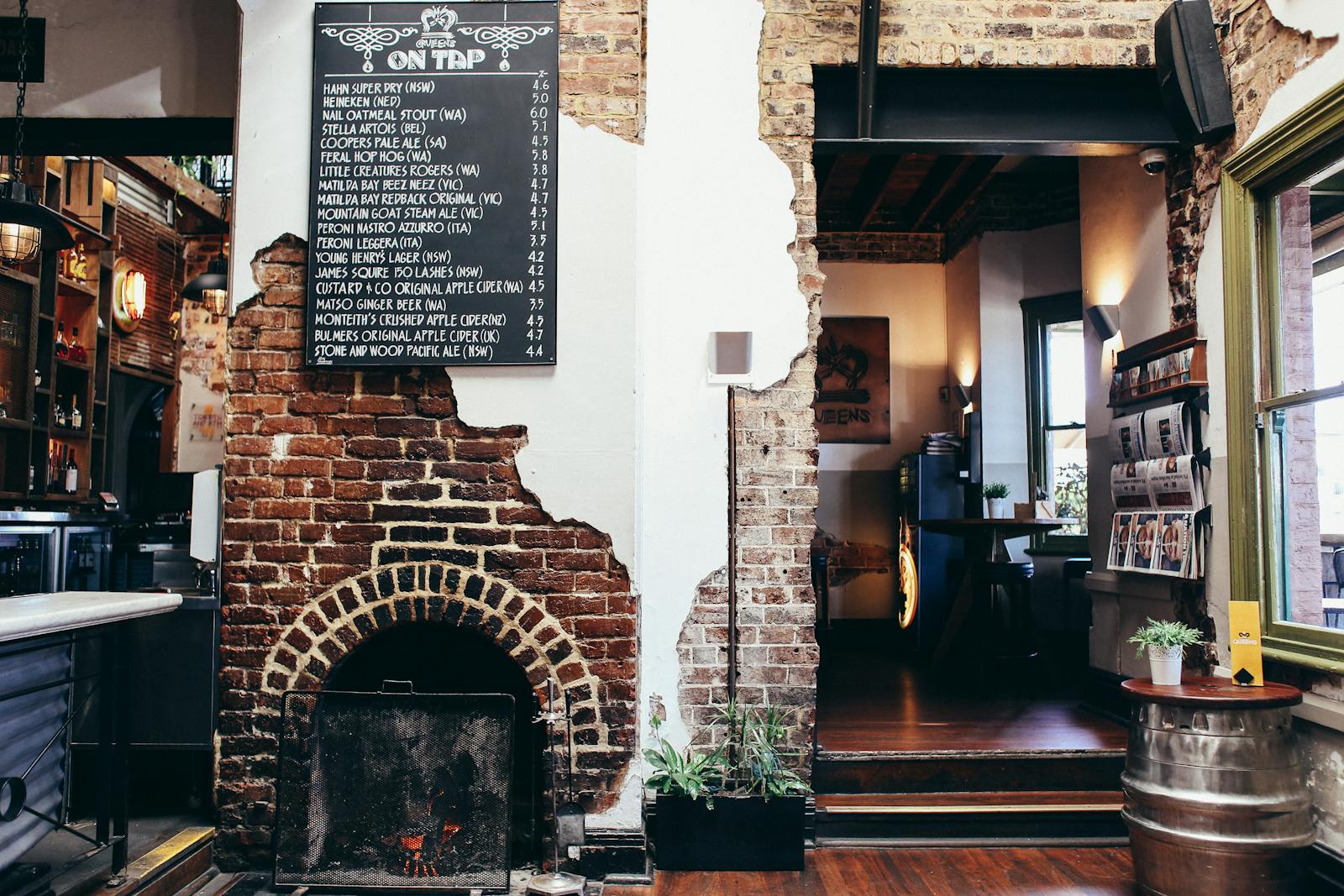
Part of the fun of a Cotswold pub is reading its age in its fabric. A few tell-tale signs mark out a truly old inn: heavy, low oak beams (often reused from old ships or barns), worn flagstone or stone-slab floors, a vast inglenook fireplace big enough to sit inside, thick stone walls with deep window reveals, and doorways built for shorter ancestors. Many genuine old inns also retain a coaching archway leading to a former stable yard, or carry a date stone above the door.
Look out, too, for the witch marks and scorch marks sometimes found near hearths and doorways — deliberate medieval and Tudor protection against fire and evil — and for the ghost stories that so many old pubs proudly maintain. A roaring fire, a flagged floor, a beam-hung bar and a resident phantom or two is just about the perfect combination, and the Cotswolds deliver it again and again.
Planning a historic pub crawl
A leisurely tour of the Cotswolds’ historic pubs is one of the most enjoyable ways to soak up the region, but a little planning helps. Many of these inns are also restaurants and hotels and can get busy, so it is worth booking ahead if you want to eat, especially at weekends and in summer. If you plan to sample the ales properly, do the sensible thing and walk between village pubs or arrange a driver — many of the loveliest old inns sit at the start or end of a gorgeous footpath, and a pub walk is a Cotswold institution in its own right.
Try to spread your visits across a few different towns to get the full range — the grand coaching inns of Broadway and Burford, the historic squares of Stow, and a humble thatched local like the Falkland Arms — and you will see how varied the tradition really is. For more recommendations on where to eat and drink well, our guide to the best pubs in the Cotswolds is the ideal companion to this more historical tour.
One last suggestion: if you possibly can, spend a night in one. Many of these ancient inns still let rooms, and there is something deeply special about sleeping under a low beamed ceiling in a building that has put up travellers for four or five hundred years, then coming down to breakfast in a flagstoned bar where a fire crackled the evening before. A historic Cotswold inn is not just somewhere to visit; at its best it is a small, warm chapter of living history that you get to step inside for a while. Pair it with one of the region’s many pub walks and you will have the Cotswolds, past and present, all in a single perfect day.
Frequently asked questions about historic Cotswolds pubs
What is the oldest pub in the Cotswolds?
The Porch House in Stow-on-the-Wold claims to be the oldest inn in England, with a sign dating it to around 947 AD and some timbers reportedly carbon-dated to about 1000 AD. Historians dispute the exact date, but it is undeniably one of the oldest and most atmospheric pubs in the region. Several other Cotswold inns date from the 15th and 16th centuries.
Which Cotswolds pub has Civil War history?
The Lygon Arms in Broadway is the most famous: King Charles I met supporters there, and Oliver Cromwell stayed the night before the Battle of Worcester in 1651. Stow-on-the-Wold, where the last battle of the First Civil War was fought in 1646, is also steeped in the conflict, with around 1,500 prisoners held in its parish church after the fighting.
Are the Cotswolds’ historic pubs still open to visit?
Yes. Most remain working pubs, restaurants or hotels, including the Lygon Arms, the Porch House, the National Trust’s Fleece Inn at Bretforton, the Falkland Arms at Great Tew, and the old coaching inns of Burford. Many serve food and offer rooms, so they make excellent bases as well as atmospheric places for a drink.
What makes a Cotswold pub historic?
Look for low oak beams, worn flagstone floors, vast inglenook fireplaces, thick stone walls and low doorways, plus features like a coaching archway, a date stone, or carved witch marks near the hearth. Many also have long-standing ghost stories. These details mark out inns that have served travellers for several centuries.
The historic pubs of the Cotswolds are living museums you can drink in — warm, welcoming places where the region’s whole story, from the wool trade to the Civil War, is written in the beams and the flagstones. After a day exploring the hills, there is nowhere better to end up. For their spookier side, read our guide to the haunted Cotswolds, or step back to the pillar guide on Cotswolds history and heritage to see how every pint connects to a thousand years of the past.