This article contains advertising. My booking links are routed through a partner that adds commission tracking automatically, so if you book through one I earn a commission from the provider, at no extra cost to you. It never affects what I recommend. Affiliate disclosure
Broadway gets its name from the obvious thing: the broad way that runs through it. The High Street here is unusually wide, lined with horse chestnuts and an almost unbroken parade of honey-stone buildings, many of them old coaching inns from the days when this was a staging post on the road between London and Worcester. It is one of the most handsome village streets in England, and it has earned its nickname, the Jewel of the Cotswolds, more honestly than most.
What lifts Broadway above a pretty street, though, is what surrounds it. Up on the escarpment stands Broadway Tower, on Broadway Hill, the second-highest point in the Cotswolds, with views that on a clear day reach into Wales. There is a restored steam railway, a serious design museum, good galleries and some genuinely excellent places to eat. Broadway is busy and not cheap, but it carries its popularity well, and it makes one of the best bases in the northern Cotswolds. Here is how to make the most of it.
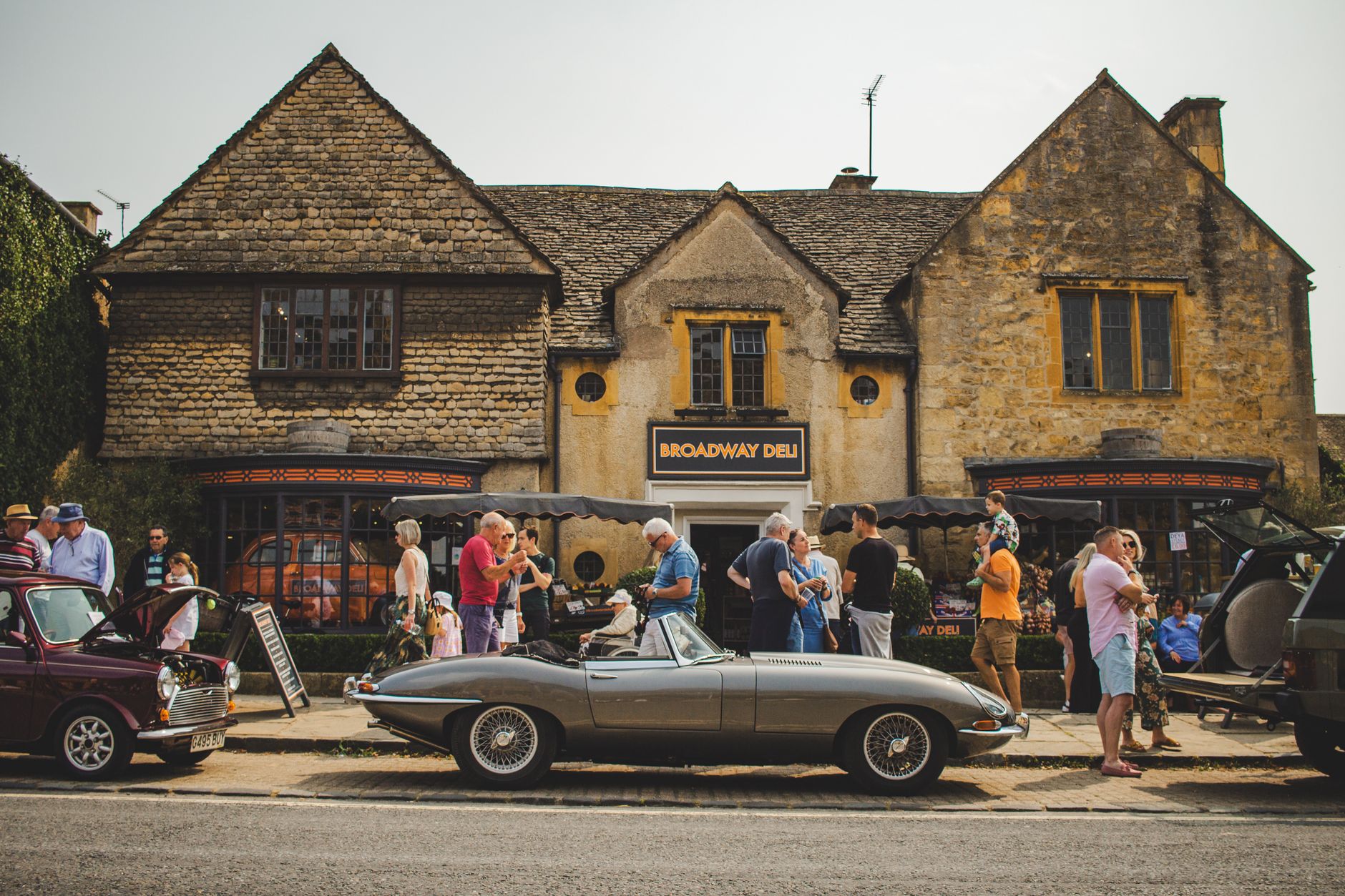
The famous High Street
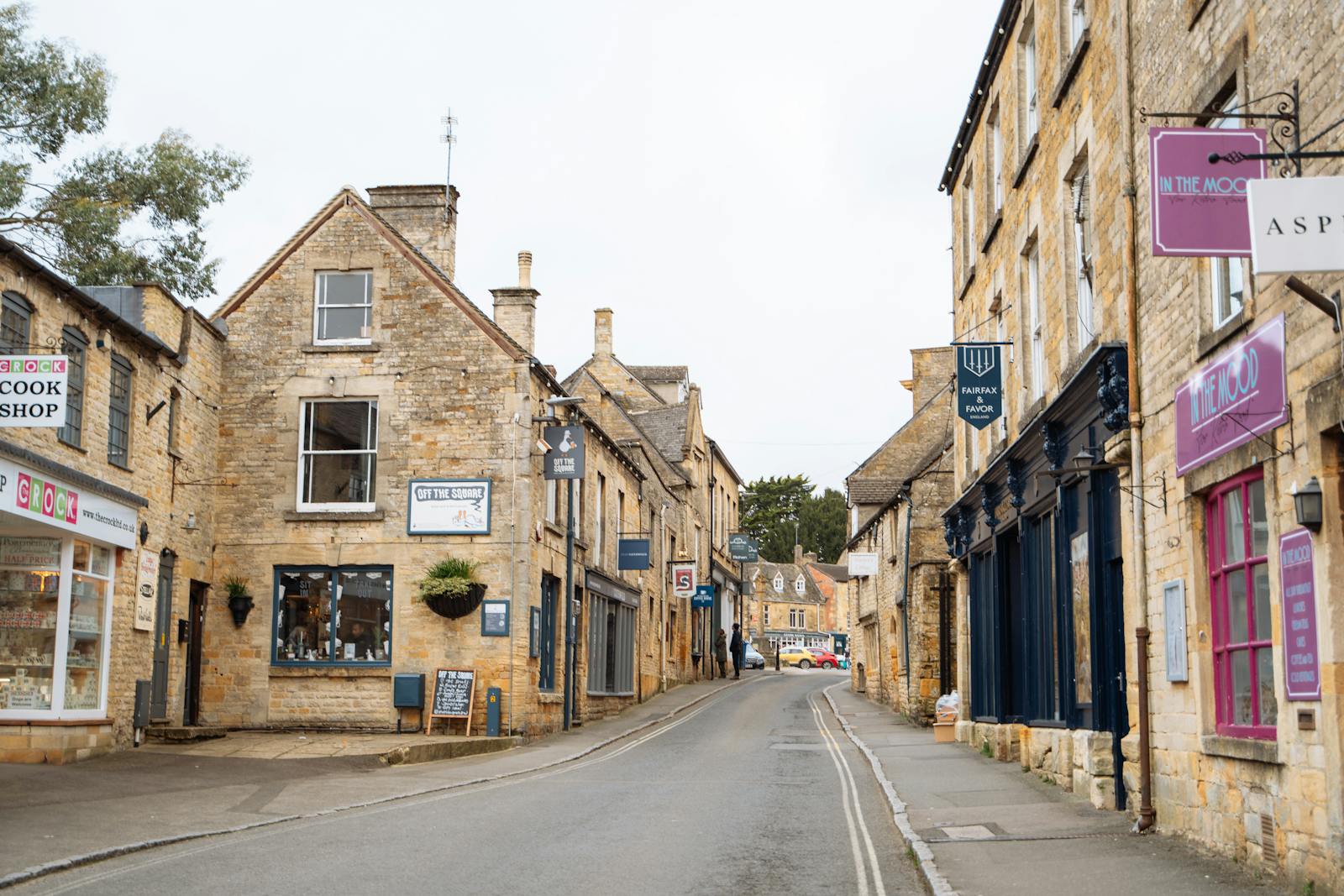
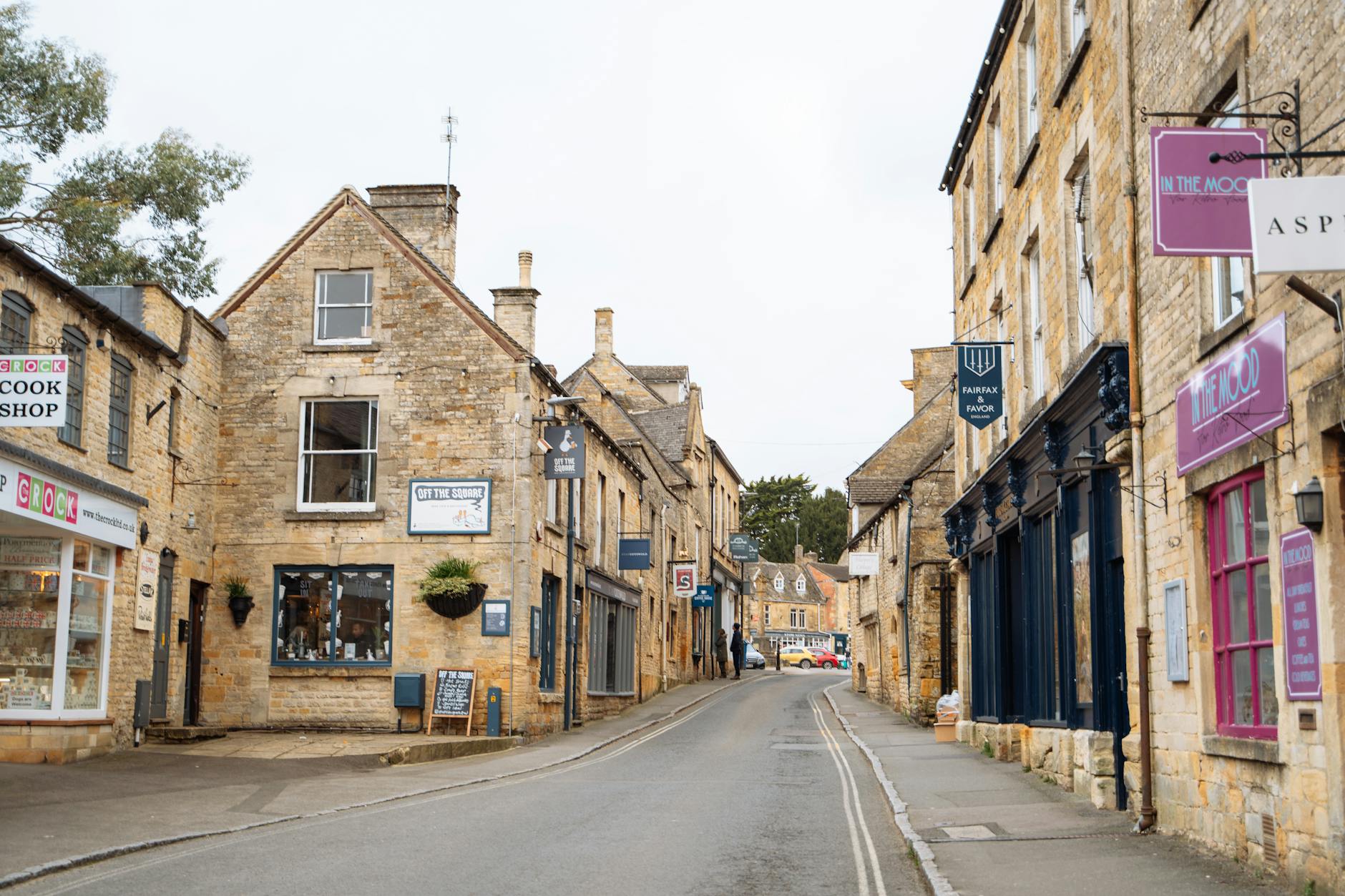
Broadway’s wide main road gives the whole village an open, generous feel that sets it apart from the tight lanes of many Cotswold villages. The street is lined with mature horse chestnuts and a long run of stone buildings in every shade of gold, from pale cream to deep amber, many dating from the village’s heyday as a coaching stop in the seventeenth and eighteenth centuries. Grand old inns sit alongside former merchants’ houses and cottages with immaculate front gardens.
The High Street is a destination in itself, and the shops are a cut above the usual tourist fare. Browsing the galleries, antique dealers, bookshops and artisan food shops is one of the real pleasures here, reflecting the village’s long association with artists, makers and designers. It is the kind of street where you can happily lose a couple of hours without setting foot in a single tea room, though plenty of those are on hand too. Broadway features prominently in our roundup of the prettiest villages in the Cotswolds.
Broadway Tower
Broadway Tower is the landmark that everyone pictures, a striking Saxon-style folly on the escarpment above the village. It was designed by the architect James Wyatt in 1794 and built in 1798–1799 for the 6th Earl of Coventry. One theory is that he wanted his wife to be able to see a beacon lit on the hill from their house miles away. Standing at over 1,000 feet above sea level, near the second-highest point in the Cotswolds, it commands an enormous panorama; on a clear day the view runs across the Vale of Evesham to the Malverns and the mountains of Wales beyond.
The tower has had a colourful life. In the late nineteenth century it served as a country retreat for William Morris, Edward Burne-Jones and Dante Gabriel Rossetti, leading lights of the Arts and Crafts and Pre-Raphaelite movements, who drew inspiration from the surrounding hills. Later it housed a printing press, and during the Cold War a nuclear monitoring bunker was built in the grounds, which you can now visit. At the time of writing, the tower and its museum cost around £14 for adults, with reduced rates for children, and a grounds-only ticket is a few pounds if you just want the view and the red deer that roam the parkland. Allow an hour or two, plus the walk up from the village if you are doing it on foot.
The Gloucestershire Warwickshire Steam Railway
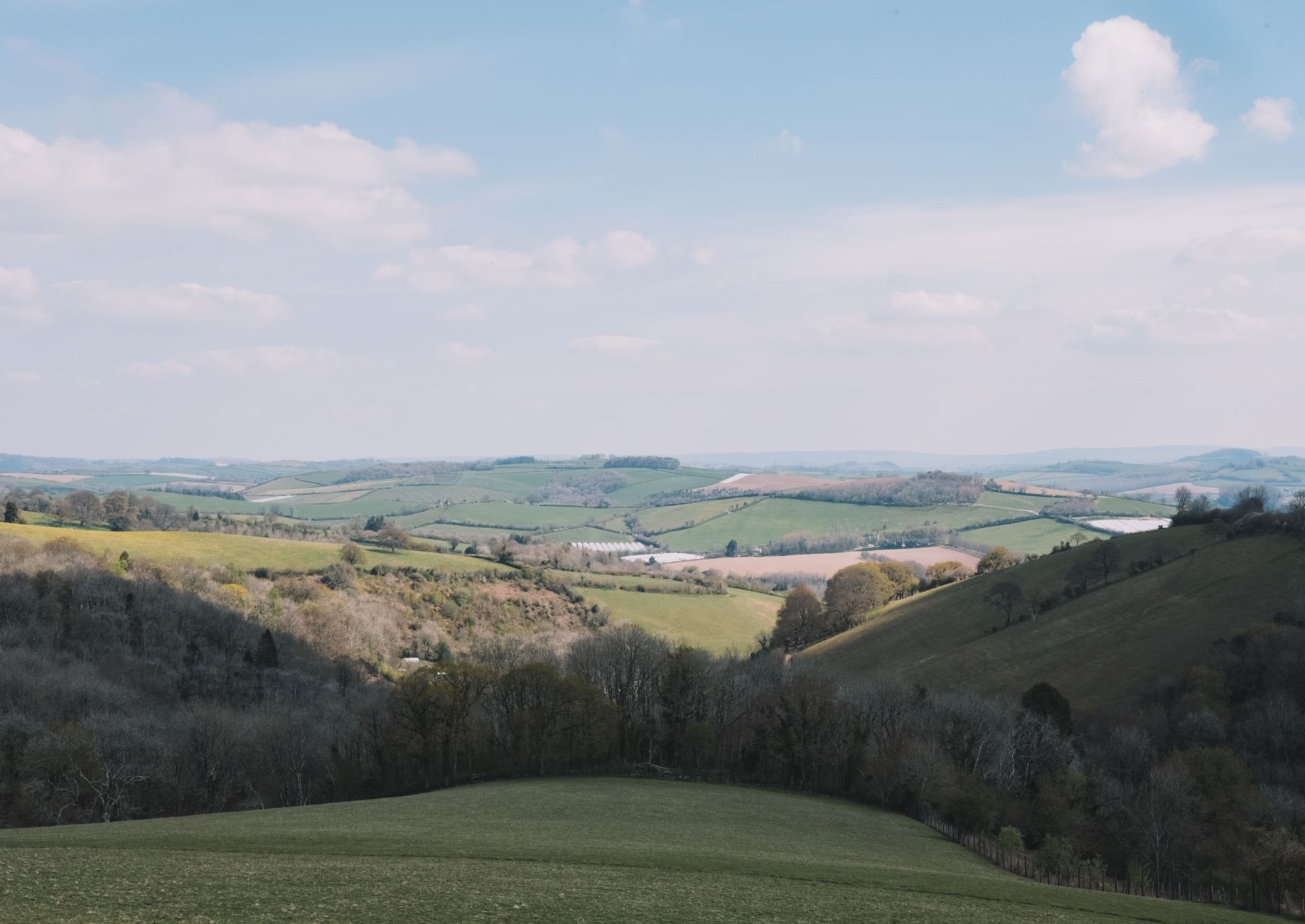
For a slower way to see the countryside, the Gloucestershire Warwickshire Steam Railway runs restored steam and diesel trains along a beautifully scenic line. From Broadway’s lovingly rebuilt station the route runs roughly fourteen miles south through Toddington and Winchcombe to Cheltenham Racecourse, passing rolling farmland, woods and the long Greet Tunnel on the way. A return trip takes around an hour and a half.
Trains run from spring through to late autumn, with most services on Tuesdays, Wednesdays, weekends and bank holidays, so check the timetable before you build a day around it. There are special events through the year, from wartime weekends to children’s days out and Santa specials in December. Broadway station has a cafe and shop and is a pleasant stop in its own right. If you are travelling with children, it slots neatly into a family holiday in the area.
Gordon Russell and Broadway’s design heritage
Broadway has a creative streak that runs deeper than its galleries, and the Gordon Russell Design Museum tells that story well. Sir Gordon Russell, one of the most influential British furniture designers of the twentieth century, moved here as a boy when his father bought the Lygon Arms, and went on to build a major furniture workshop in the village that eventually employed a couple of hundred craftsmen. The museum, in his original workshop just off the High Street, displays a fine collection of his work alongside changing exhibitions on design and making, and adult entry is £8, with children under 16 and students free. Tickets allow repeat visits for a year.
That heritage is no accident. From the late nineteenth century Broadway drew a remarkable cast of artists and writers, among them William Morris, the composer Edward Elgar, the novelists J.M. Barrie and Henry James, and the American painter John Singer Sargent. The galleries, workshops and museum on the High Street today are the living end of that tradition. For more on the region’s past, see our guide to Cotswolds history and heritage.
St Eadburgha’s Church and the Broadway Museum
Set a little apart from the village down a quiet lane, St Eadburgha’s Church is the older of Broadway’s two churches and well worth the short walk. Dedicated to a seventh-century Anglo-Saxon saint, it dates mainly from the twelfth and fourteenth centuries, with Perpendicular Gothic windows and a peaceful churchyard looking towards Broadway Tower. It is a calm, atmospheric spot away from the High Street bustle.
On the High Street itself, the Broadway Museum and Art Gallery occupies the seventeenth-century Tudor House, once a coaching inn on the London road. Worth knowing: this opened in 2013 in partnership with Oxford’s Ashmolean and was known for a time as the Ashmolean Museum Broadway, but it has been the Broadway Museum and Art Gallery since 2017, so older guidebooks and signs naming the Ashmolean are out of date. Inside you will find changing exhibitions and a permanent collection touching on the village’s coaching, wool and railway past.
Shopping and galleries
Broadway has one of the finest collections of independent shops and galleries in the region, and for many visitors the shopping is the main event. There are well-regarded art galleries showing British painting and sculpture, several good antique dealers, specialist bookshops, and food shops selling local cheese, charcuterie and preserves that make far better souvenirs than the usual fridge magnets. It is a place to browse slowly, and the quality is high enough that serious collectors make the trip specially.
If shopping is high on your list, Broadway sits comfortably alongside Stow-on-the-Wold and Burford as one of the best villages in the Cotswolds for it. Our guide to Cotswolds shopping, markets and antiques rounds up where to go across the region, and our guide to Stow-on-the-Wold covers the area’s antiques capital just up the road.
The best walks from Broadway
Broadway sits right at the foot of the Cotswold escarpment, which makes it one of the best walking bases in the region, with the Cotswold Way National Trail passing straight through the village. The classic outing is the four-mile circuit up to Broadway Tower, a moderate walk with some steep sections, climbing steadily through farmland to a magnificent view at the top before looping back. Allow two to three hours with time at the tower; it is a proper hill walk, so wear suitable footwear.
For something longer, the six-mile stretch of the Cotswold Way from Broadway to Chipping Campden follows the escarpment ridge over Dover’s Hill, with sweeping views over the Vale of Evesham, and is one of the finest sections of the whole trail; you can return by bus or taxi. A gentler four-mile circular leads across farmland to the hidden village of Snowshill, home to an extraordinary National Trust manor. For routes graded by distance and effort, see our guide to walking and hiking in the Cotswolds, and read on about quiet Snowshill if you fancy the detour.
A short history of Broadway
Broadway’s roots reach back to Roman times, with the old road known as Ryknild Street running close by. By the Middle Ages it had grown into a prosperous settlement on the wealth of the Cotswold wool trade, with great flocks of sheep driven along that broad main street on market days and wool merchants building the fine stone houses that survive today.
Its fortunes were transformed again in the coaching era of the seventeenth and eighteenth centuries, when its position on the road between London and Worcester made it a vital stop. Grand inns, the Lygon Arms among them, were built or extended to handle the stream of travellers, and the village became one of the best-known staging posts in England; the Lygon counts both Oliver Cromwell and King Charles I among its historic guests. Then, in the late nineteenth century, the artists arrived, and Broadway reinvented itself once more as a haven for the Arts and Crafts movement, a creative reputation it has never quite lost.
Where to eat and drink
Broadway eats well across the range. Russell’s, in Sir Gordon Russell’s former furniture showroom on the High Street, is the standout, with comfortable bedrooms above if you want to stay. The Lygon Arms offers refined brasserie dining in one of England’s most historic hotels, with lovely courtyard tables in summer, and Morris and Brown is the spot for good coffee, brunch and a light lunch.
For a traditional pub, the Crown and Trumpet is a friendly seventeenth-century inn just off the green, with real ales, hearty plates and the occasional bit of live music. Several tea rooms along the High Street do a proper cream tea for a mid-afternoon stop. Book ahead for the smarter places at weekends, when Broadway fills up. Our roundups of the best pubs in the Cotswolds and the wider Cotswolds food and drink scene cover more across the area.
Where to stay
Broadway has some of the best accommodation in the Cotswolds. The Lygon Arms is the grande dame, a sixteenth-century coaching inn turned luxury hotel with a spa and a barrel-vaulted great hall. There are characterful smaller hotels on and around the green, stylish rooms above Russell’s, and a good spread of bed and breakfasts from around £80 to £100 a night, plus self-catering cottages through local agencies. It is a village that suits an overnight stay, partly because the High Street is at its loveliest once the day-trippers have left.
Because it sits so well for the northern Cotswolds, Broadway makes an excellent base for a few days. To compare areas and budgets across the region, see our guide to where to stay in the Cotswolds.
Getting there and parking
Broadway sits on the A44 between Evesham and Moreton-in-Marsh, in the northern Cotswolds. By car it is roughly two hours from London via the M40, about forty minutes from Cheltenham and half an hour from Stratford-upon-Avon. The nearest mainline station is Moreton-in-Marsh, around eight miles away on the line from London Paddington, and you can also arrive in style by steam on the GWSR from Cheltenham Racecourse. Local buses connect Broadway with Moreton, Chipping Campden and Evesham.
Parking is more straightforward here than in the tighter villages. There is a pay-and-display car park on Leamington Road, a short walk from the High Street, and some on-street parking on the High Street itself that fills quickly. Charges are reasonable and the main car park usually copes outside peak holiday periods, but arrive before 10am on a summer weekend for the best choice. For the bigger picture on trains, buses and driving, see our guide to getting to and around the Cotswolds.
How long to spend and the best time to visit
You can enjoy the High Street, the shops and a meal in half a day. Add the walk or drive up to Broadway Tower and you have a full day, and with the steam railway, Snowshill Manor and the design museum in the mix, two days based in or near the village is easily justified. Broadway also works as a hub for the northern Cotswolds, with Chipping Campden, Stow-on-the-Wold and Snowshill all close by.
As for timing, late spring and early autumn give you the best balance of decent weather and thinner crowds, while high summer is busiest and the High Street can be slow with traffic. Winter is quiet and atmospheric, especially with the tower museum and the pubs to duck into. Our month-by-month guide to the best time to visit the Cotswolds goes through the year in detail, and to weave Broadway into a wider route, our Cotswolds itineraries map out days that flow.
Day trips and nearby attractions
Broadway’s position makes it a strong springboard for the northern Cotswolds. Snowshill, a short way to the south, is home to Snowshill Manor, the National Trust house crammed with the eccentric collector Charles Wade’s objects, from Samurai armour to old bicycles, and well worth the short trip. Chipping Campden, with what many consider the finest High Street in England and the start of the Cotswold Way, is a ten-minute drive or a memorable ridge walk away.
A little further out, the antiques and pubs of Stow-on-the-Wold, the market town of Moreton-in-Marsh and the great houses and gardens of the Vale of Evesham are all within easy reach, as is Stratford-upon-Avon for a dose of Shakespeare. Garden lovers can aim for Hidcote and Kiftsgate near Chipping Campden, two of the best gardens in the country. With a car you could comfortably base yourself in Broadway for several days and never run short of places to go.
Making the most of Broadway
Broadway rewards a little forethought. If the tower is your priority, decide early whether you want to drive up or walk, because the four-mile circuit is a proper hill walk and not something to start on a whim in the wrong shoes. Pair the tower with the steam railway only after checking its running days, since the trains do not run daily, and you can easily build a frustrating gap into your plans otherwise. The High Street, by contrast, is forgiving: you can stroll it without booking, though each shop and business keeps its own hours, so check before a special trip.
Be realistic about cost and crowds. This is one of the more polished and popular villages in the Cotswolds, so the smarter hotels and restaurants are priced to match, and the High Street can be slow with traffic on a summer Saturday. None of that is a reason to stay away; it just means an early start, a booked lunch and a willingness to walk a little take the edge off the busiest days. Do that, and Broadway delivers comfortably on its billing.
Frequently Asked Questions
Why is Broadway called the Jewel of the Cotswolds?
The nickname reflects Broadway’s unusually wide, tree-lined High Street, lined with a near-unbroken run of elegant honey-stone buildings, together with the drama of Broadway Tower above the village and its long history as a centre for artists and designers. Few villages combine all three so well.
Is Broadway Tower worth visiting?
Yes, for the view alone. From over 1,000 feet up the panorama stretches across the Vale of Evesham to the Malverns and Wales on a clear day. The tower museum and the Cold War nuclear bunker in the grounds add interest, and there is a herd of red deer in the parkland. A grounds-only ticket is available if you just want the view.
Is there still an Ashmolean museum in Broadway?
Not under that name. The museum in Tudor House opened in partnership with Oxford’s Ashmolean in 2013 and was for a time called the Ashmolean Museum Broadway, but it has been the Broadway Museum and Art Gallery since 2017. Older signs and guidebooks naming the Ashmolean are simply out of date.
How do you get up to Broadway Tower?
You can drive up and park near the tower, or walk the four-mile circular route from the village, a moderate walk with some steep sections through farmland on the Cotswold Way. The walk takes two to three hours with time at the top and rewards the effort with the best of the view.
How long should you spend in Broadway?
Half a day covers the High Street, the shops and lunch. A full day lets you add Broadway Tower, and with the steam railway, the design museum and nearby Snowshill, two days based in the village is easily filled. It also makes a fine base for the wider northern Cotswolds.
Related guides
Broadway is one of many in our roundup of the prettiest villages in the Cotswolds. To plan the wider trip, start with our complete guide to visiting the Cotswolds, then pair Broadway with nearby Stow-on-the-Wold or the quiet manor village of Snowshill a short drive away.