This article contains advertising. My booking links are routed through a partner that adds commission tracking automatically, so if you book through one I earn a commission from the provider, at no extra cost to you. It never affects what I recommend. Affiliate disclosure
Stand in the middle of Northleach today and you would never guess that this quiet little town was once one of the richest places in Europe. There is a butcher, a deli, a handful of houses the colour of clotted cream, and a church so improbably grand it looks as though it wandered in from a cathedral city and forgot to leave. That church is the clue. The whole of the Cotswolds is, in a sense, a monument built on the back of a sheep, and once you understand the wool trade you start to see its fingerprints everywhere — in the towns, the churches, the manor houses, even the name of the region itself.
I have spent years wandering these hills, and the thing I keep coming back to is how completely a single commodity shaped a landscape. For roughly three centuries, between the 1200s and the 1500s, English wool was the most valuable export in the country, and the finest English wool came from right here. The money it generated did not just make a few merchants comfortable; it rebuilt entire towns in stone, funded soaring churches, and tied a string of obscure Gloucestershire market squares directly into the trading networks of Florence, Bruges and Calais. This is the story of how that happened, and where you can still go to stand inside it.
The clue is in the name: what “Cotswold” actually means
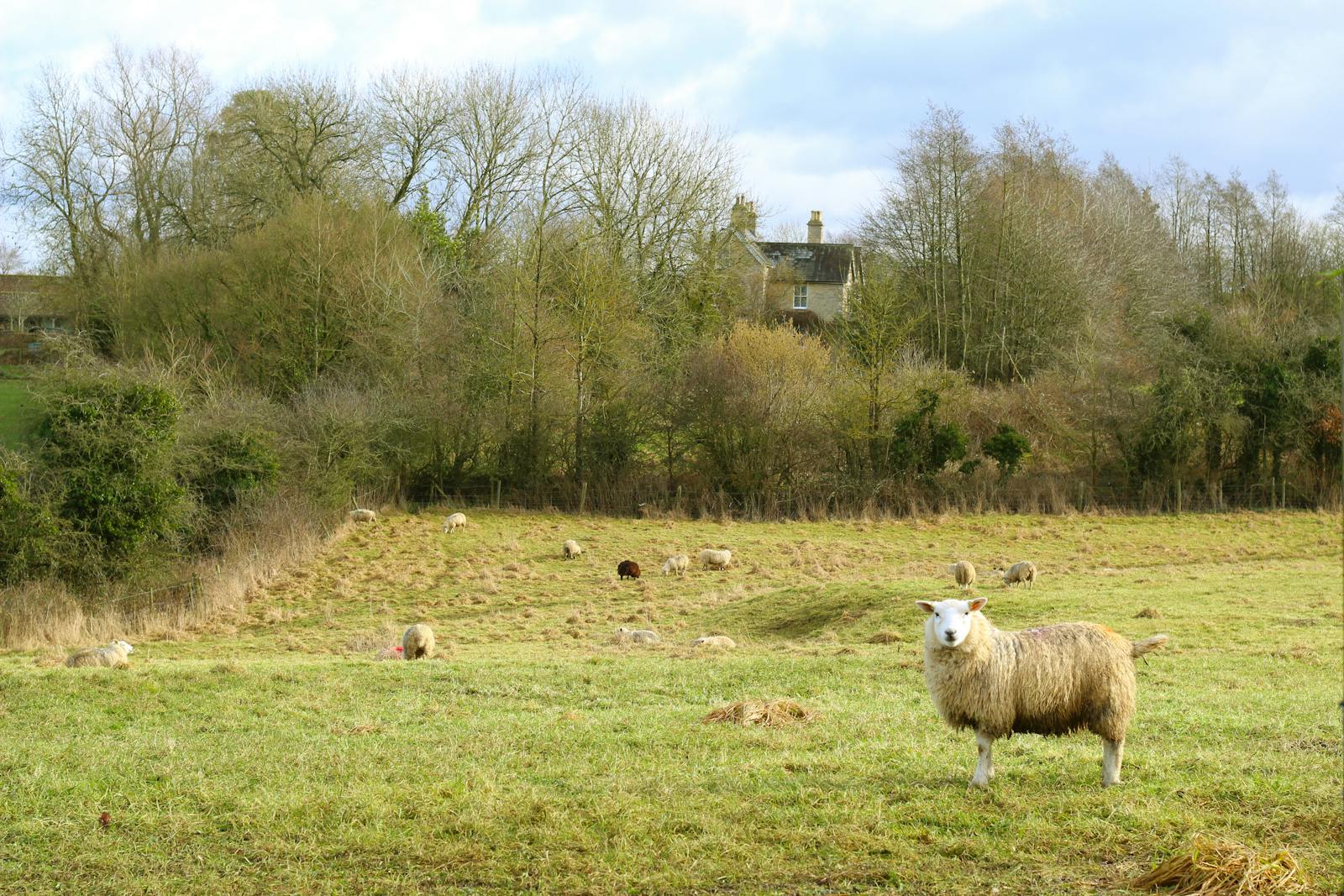
Before we get to the money, it is worth pausing on the word itself, because it tells you the whole story in miniature. The most widely accepted explanation is that “Cotswold” comes from two Old English elements: cot, meaning a sheep enclosure or shelter, and wold, meaning a high, open, rolling upland. Put them together and you have, quite literally, “the sheep enclosures on the hills.” The region was named for its sheep long before anyone thought to call it pretty.
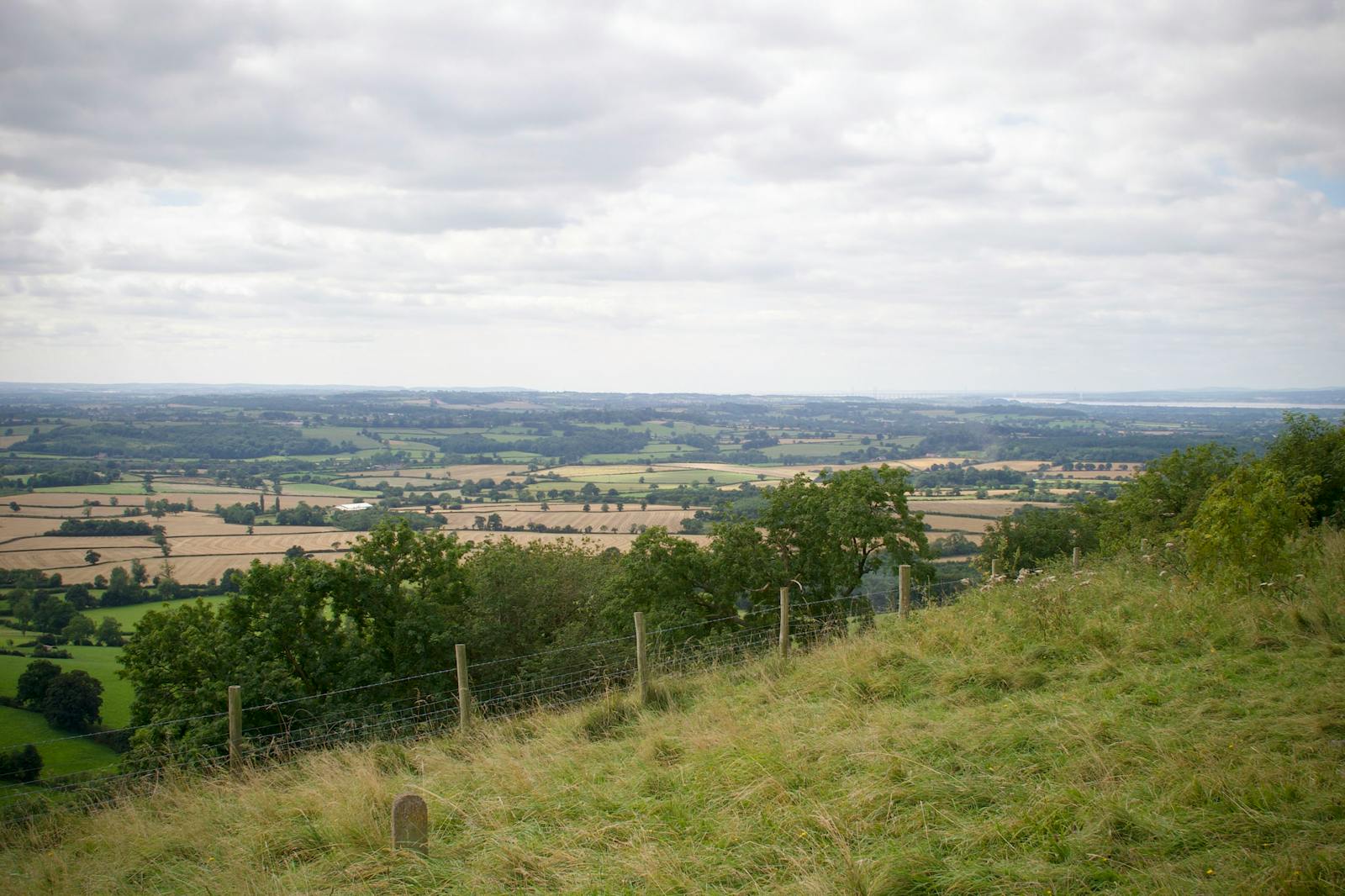
And the geography mattered enormously. The Cotswolds are essentially one great tilted slab of limestone, dropping in a steep escarpment to the west and rolling away in gentle dip slopes to the east. Those thin, free-draining soils over rock are hopeless for intensive arable farming but ideal for grazing sheep across wide, breezy commons. After the Norman Conquest of 1066, landowners worked out that the hills were worth far more under fleece than under the plough, and the great flocks began to spread across the wolds. If you want to understand why the buildings look the way they do, it is worth reading our guide to Cotswold stone architecture alongside this one — the wealth and the stone are two halves of the same story.
The Cotswold Lion: the sheep that built a region
Not all sheep are equal, and medieval buyers knew it. The local breed, the Cotswold, grew so large and carried such a long, heavy, curling fleece that it earned a wonderful nickname: the “Cotswold Lion.” The name nods to the shaggy mane of wool around the animal’s head and to its impressive size, and the fleece itself was sometimes called the “golden fleece” — not because of its colour, though there is a faint honeyed tint to it, but because of the staggering wealth it produced.
What made Cotswold wool so prized was a combination of length, lustre and strength. The fleece grows fast — eight to twelve inches in a year — and the staple is long, glossy and almost mohair-like, which made it superb for the hard-wearing worsted cloths that continental weavers wanted. There is a 12th-century saying that sums up its reputation better than any modern marketing department could manage: “In Europe the best wool is English, and in England the best wool is Cotswold.” Italian and Flemish merchants believed it utterly, and they were prepared to pay handsomely.

It is one of the quiet ironies of the region that the very breed that made it famous nearly vanished. Faster-growing, more disease-resistant breeds eventually superseded the Cotswold Lion, and by the 20th century numbers had fallen dangerously low. Happily the breed survives today, championed by the Rare Breeds Survival Trust and kept in small flocks across the hills — you can meet genuine Cotswold Lions, all flopping fringe and amiable bulk, at the Cotswold Farm Park, which was founded precisely to save breeds like this from extinction.
The merchants who turned fleece into fortunes
Wool money did not stay evenly spread. It pooled around a class of men called woolmen — the middlemen who bought fleeces from farmers across the hills, graded and packed them, and sold them on to the exporters. The most successful of these woolmen became extraordinarily rich, and because the medieval rich liked to be remembered, they left us their names carved in brass and stone.
The most celebrated of them all is William Grevel of Chipping Campden, who died in 1401. His memorial brass in the parish church describes him, in confident Latin, as flos mercatorum lanarum totius Anglie — “the flower of the wool merchants of all England.” That is not modest phrasing; it borrows the kind of language usually reserved for knights and princes, which tells you exactly how these men saw themselves. Grevel was the leading purchaser of Cotswold wool of his day, a citizen of London as well as Campden, and wealthy enough to buy up manors across the surrounding countryside. His house on Campden’s High Street, Grevel House, still stands, complete with a beautiful two-storey bay window, and is one of the oldest houses in the town.
Then there is John Tame of Fairford, who died in 1500, a man whose business headquarters were at Cirencester and whose flocks grazed across huge tracts of land. Tame poured his fortune into rebuilding the church of St Mary at Fairford, and he did something almost unheard of: he designed the church specifically to house a complete set of stained-glass windows. Twenty-eight of them survive, made in the early 1500s and attributed to Barnard Flower, the Flemish glazier who also worked for King Henry VII. It is the most complete set of medieval stained glass in any English parish church, and it exists because one wool merchant wanted to be remembered in colour and light.
Northleach, meanwhile, has the brasses. The woolmen buried in its church — Thomas and John Fortey, John Taylour, William Midwinter, Robert Serche and Thomas Bushe among them — left behind one of the finest collections of memorial brasses in the country. Look closely and you will see the men standing with their feet resting on woolpacks and sheep, each marked with their personal “woolmark,” a kind of medieval branding used to identify whose fleeces were whose. Thomas Bushe’s brass even carries the arms of the Staple of Calais and a little carved rebus — a sheep lying beneath a bush — punning on his own name. These were proud, commercially sophisticated people, and they wanted you to know it.
How the trade actually worked: woolmen, staplers and Calais
It is easy to imagine the medieval wool trade as a romantic affair of shepherds and spinning wheels, but in truth it was a tightly regulated international business, taxed and controlled by the Crown because it was simply too lucrative to leave alone. Raw fleeces were collected by the local woolmen, then sold on to the Merchants of the Staple, a powerful company of exporters granted a royal monopoly by King Edward III in the 1340s.
The clever, controlling twist was the “staple” system itself. By law, almost all English wool destined for the continent had to pass through a single designated port, and from 1363 that port was Calais, which England then held. Funnelling the entire trade through one town made it gloriously easy to tax: every sack that crossed the Channel paid a hefty export duty straight into the royal treasury, helping to fund, among other things, the wars with France. The Cotswold woolmen sat one rung below the staplers in this chain, but the demand was so strong, and the margins so good, that they grew rich all the same.
To grasp the scale, consider Northleach. In the 15th century this was a town of perhaps fewer than 400 people, and yet it was plugged directly into the economic heart of Europe, its wool ending up on Florentine and Flemish looms. It is genuinely difficult, standing in the sleepy square today, to reconcile that with what you are looking at — which is rather the point of visiting.
Prayers in stone: the great wool churches
If you want a single, unmissable expression of what wool money built, look up at the churches. The merchants were devout, or at least anxious about the next world, and they spent lavishly on rebuilding their parish churches in the hope of shortening their time in purgatory and securing their memory on earth. The result is a string of buildings far too grand for the modest towns that contain them — the “wool churches” of the Cotswolds.

The finest examples form an easy itinerary in their own right. Cirencester has the magnificent St John the Baptist, with its showy three-storey south porch built right onto the market place. Northleach and Chipping Campden both have soaring, light-filled “Perpendicular Gothic” churches paid for almost entirely by wool. Fairford has John Tame’s miraculous glass. Add in smaller gems at Lechlade, Winchcombe and beyond, and you have a tour of late-medieval ambition in golden limestone. I have written a dedicated guide to the Cotswolds wool churches if you want to plan a proper day around them, with opening details and what to look for inside each one.
The Woolsack: wool at the very seat of power
Here is my favourite detail of the whole story, because it shows how deep wool ran in the national imagination. In the 14th century King Edward III ordered that his Lord Chancellor should sit, while presiding over the House of Lords, on a large bale of wool. It was meant as a permanent, visible reminder of where the country’s wealth came from. That seat — the Woolsack — is still there in the House of Lords today, now occupied by the Lord Speaker.
There is a lovely postscript, too. When the Woolsack was opened up in 1938 it was found, embarrassingly, to be stuffed with horsehair. When it was remade it was properly re-stuffed with wool, drawn from across the British Isles and a number of Commonwealth countries, restoring a little dignity to a very old symbol. Every time the upper house of Parliament sits, it is, in a quiet way, still sitting on a Cotswold sheep.
The long goodbye: why the wool boom ended
No boom lasts forever. The first big shift came when England stopped simply exporting raw wool and started weaving its own cloth, capturing more of the value at home. For a while this actually benefited the region, and Cotswold towns like Stroud became important centres of high-quality cloth, especially the scarlet “Stroudwater” broadcloth famous for military uniforms. But the centre of gravity was already moving.
The decisive blow was the Industrial Revolution, and the reason was, once again, geography. The new steam-powered mills of the 18th and 19th centuries needed coal and fast water, and the northern counties — the Pennines, the West Riding of Yorkshire around Leeds and Bradford — had both in abundance. The Cotswold streams that had once turned the fulling mills simply could not compete with the vast new factories of the north. Some local merchants pivoted cleverly, and the village of Blockley, for instance, reinvented itself for a time around silk mills. But broadly, the industrial wave passed the Cotswolds by.
And this, in a beautiful irony, is exactly why the Cotswolds look the way they do now. Because the money drained away just as the rest of the country was tearing down its old towns and throwing up brick terraces and factory chimneys, the Cotswolds were left poor, rural and untouched. The honey-coloured towns were never modernised because nobody could afford to modernise them. The region was, in effect, accidentally preserved — frozen at the high point of its wool-built glory. The very poverty that followed the boom is the reason we have the picture-postcard villages today.
Where to walk in the footsteps of the wool trade today
The wonderful thing about all this history is that it is not locked away in a museum case — it is the streets you walk down. If you would like to make a day of it, here are the places where the wool story is most vivid, and which I would happily send any friend to.
- Northleach — The “Cathedral of the Cotswolds,” St Peter and St Paul, plus the country’s finest collection of woolmen’s brasses with their woolpacks and sheep. Quiet, unspoilt and deeply atmospheric.
- Chipping Campden — Grevel House on the High Street, the magnificent wool church, and the 17th-century Market Hall. The whole curving High Street is essentially a wool-trade time capsule; see our full Chipping Campden guide.
- Cirencester — Once the “Capital of the Cotswolds,” with its enormous parish church fronting the market place. The town’s Roman past as Corinium runs even deeper, which you can explore in our guide to Roman Cotswolds.
- Fairford — St Mary’s and John Tame’s complete set of 28 medieval stained-glass windows, unmatched anywhere in the country.
- Cotswold Farm Park — To meet living Cotswold Lions and understand why this peculiar, magnificent sheep mattered so much.
A gentle tip from experience: do these towns slowly, and go inside the churches rather than just photographing them from the green. The exteriors are lovely, but the wool merchants spent their money on the insides — the brasses, the glass, the soaring naves — and that is where the human story really lives.
Frequently asked questions about the Cotswolds wool trade
Why was the Cotswolds so important to the wool trade?
The thin limestone soils and wide, breezy uplands of the Cotswolds were ideal for grazing large flocks of sheep, and the local Cotswold breed produced an exceptionally long, lustrous, strong fleece. Between roughly the 13th and 16th centuries, this wool was regarded as the finest in Europe and was exported in huge quantities to weaving centres in Flanders and Italy, making the region one of the wealthiest in medieval England.
What is a “wool church”?
A wool church is a grand medieval church funded by the profits of the wool trade, usually far larger and more ornate than the size of its town would suggest. Wealthy woolmen and cloth merchants paid to rebuild their parish churches both as acts of piety and as lasting memorials. The finest Cotswold examples are at Cirencester, Northleach, Chipping Campden and Fairford.
What is the Cotswold Lion?
The Cotswold Lion is the nickname for the Cotswold breed of sheep, a large animal with a long, curling, golden-tinged fleece. The name refers to its size and the shaggy “mane” of wool around its head. Once the backbone of the English wool trade, the breed nearly died out but survives today as a rare breed and can be seen at farms such as the Cotswold Farm Park.
Why did the Cotswolds wool trade decline?
The trade declined as England shifted from exporting raw wool to weaving cloth, and then, decisively, with the Industrial Revolution. The new steam-powered mills needed coal and fast-flowing water, which the northern counties around Leeds and Bradford had in abundance and the Cotswolds did not. Industry moved north, the region grew poor and rural, and — as a happy accident — its medieval towns were left beautifully preserved.
Where can I see the wool trade history in the Cotswolds today?
Start with the wool towns of Northleach, Chipping Campden, Cirencester and Fairford, all within easy reach of one another. Visit the wool churches and their brasses, see Grevel House in Chipping Campden, and meet living Cotswold Lion sheep at the Cotswold Farm Park. For the bigger picture, our pillar guide to Cotswolds history and heritage ties the wool story into the wider sweep of the region’s past.
Wool is the thread — forgive me — that runs through everything else in the Cotswolds. Once you have seen it, you cannot unsee it: the grandeur of the churches, the confidence of the merchant houses, the strange completeness of towns that simply stopped growing five hundred years ago. It all comes back to a hardy hill sheep with a magnificent fringe, and to the men who grew rich on its fleece. To carry on the story, head next to our guide on the finest wool churches, or step further back in time to the Roman Cotswolds.
The eastern towns sold fleece; one town in the west turned it into cloth, and the difference still shows in the buildings. Stroudwater Scarlet went into British army uniforms for two centuries and the same mills later wove snooker baize and tennis-ball cloth — the story, and the mill valleys it built, are in our Stroud guide.