This article contains advertising. My booking links are routed through a partner that adds commission tracking automatically, so if you book through one I earn a commission from the provider, at no extra cost to you. It never affects what I recommend. Affiliate disclosure
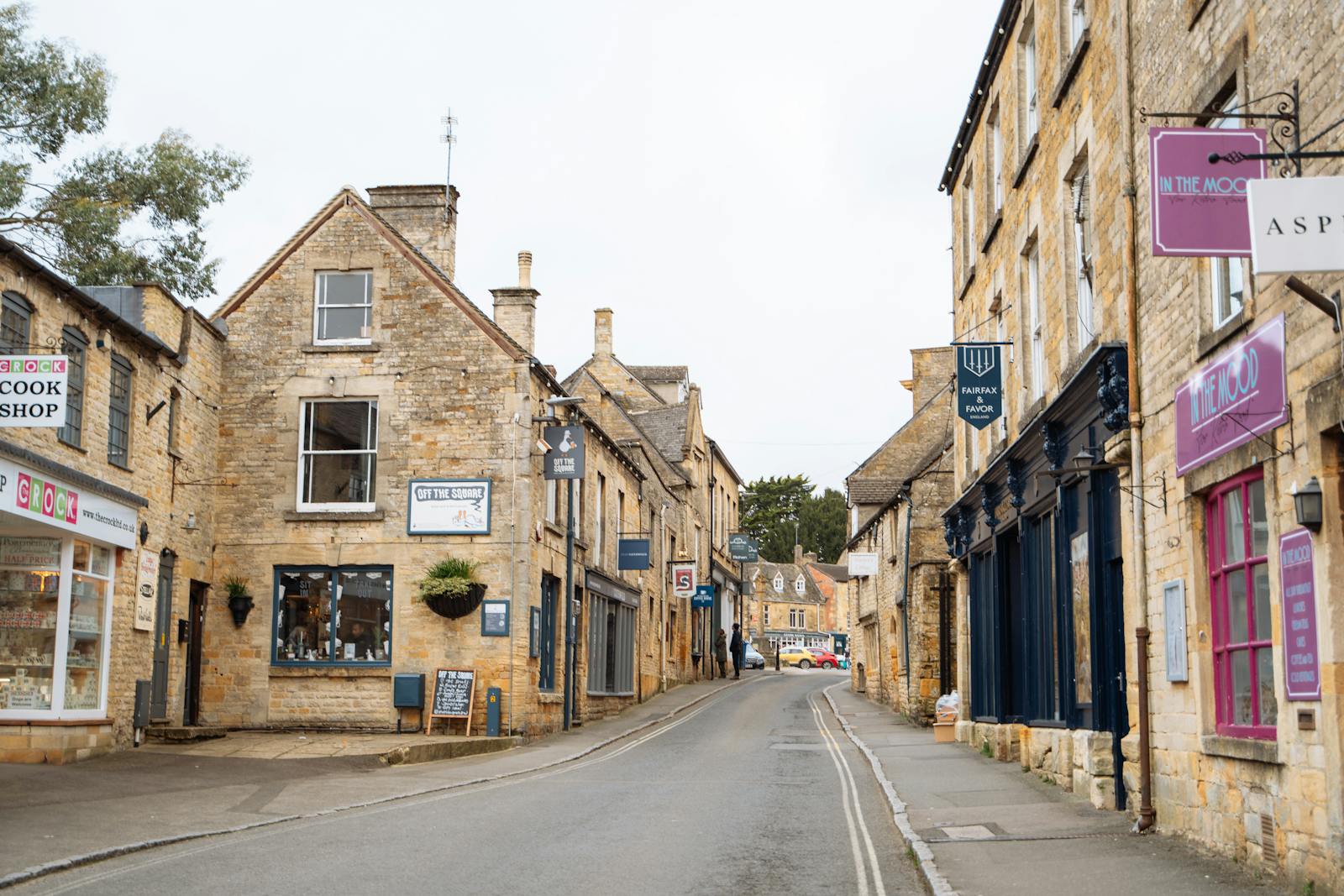
There is a moment, walking into Chipping Campden from either end, when the High Street opens up in front of you and you simply stop. It curves away in a long, gentle arc, half a mile of honey-gold stone, no two buildings quite alike and not a single jarring note among them. The architectural writer who called it the most beautiful village street in England was not exaggerating for effect. Where many Cotswold villages charm you with cottages, Campden does something grander: it shows you what serious medieval wool money built, and how well it has lasted.
This is a town that rewards a slow day. There is the seventeenth-century Market Hall standing in the middle of the street, one of the finest wool churches in the country at the southern end, a genuine living tradition of craftsmanship, and the official start of the Cotswold Way pointing north towards the hills. Come for the street, stay for the rest, and you will understand why people who know the Cotswolds well rate Campden near the very top.

The finest high street in England
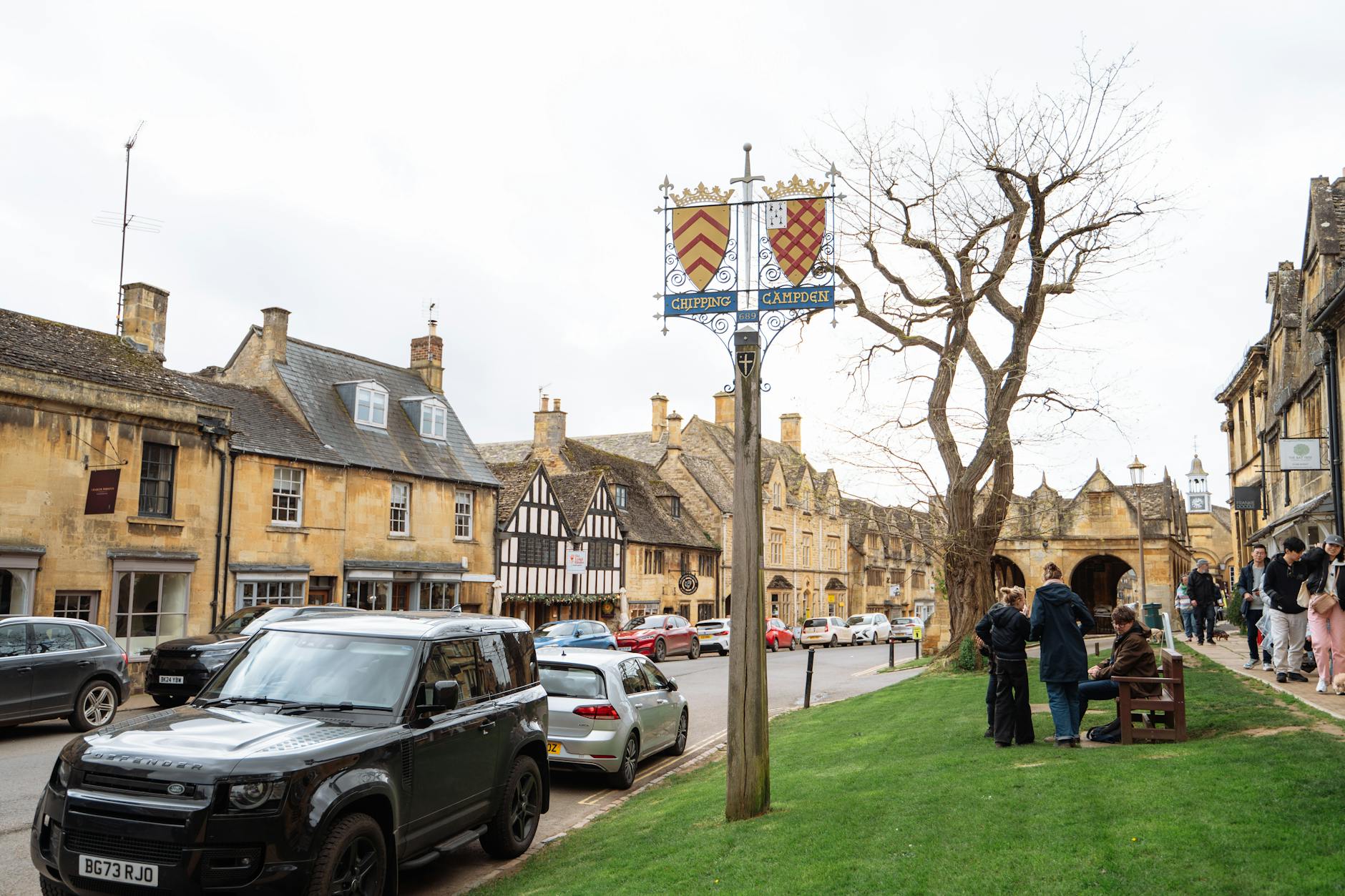
The High Street is the whole point of Campden, so give it time. Walk its length and you pass an unbroken run of buildings spanning roughly three centuries, from medieval merchants’ houses with stone-mullioned windows to elegant later frontages, all built from the same warm local limestone and all the better for sitting shoulder to shoulder. The gentle curve is part of the magic; you never see the whole street at once, so there is always another handsome stretch revealing itself as you go.
The name gives away the town’s origins. “Chipping” comes from the Old English ceaping, meaning a market, and from the late thirteenth century Campden was one of the most important wool markets in England. Buyers came from as far as Italy and Flanders for the long, lustrous fleece of the Cotswold sheep, the so-called Cotswold Lion, and the wealth that flowed through the town is written into its stone. Keep an eye out for Grevel’s House, dated to around 1380 and reckoned the finest surviving medieval merchant’s house in the Cotswolds. It was built for William Grevel, whose memorial brass in the church describes him, with no false modesty, as “the flower of the wool merchants of all England”.
Look out too for the long row of almshouses near the church, the old Woolstaplers’ Hall where fleeces were once weighed and graded, and the dozens of small details that reward an upward glance: date-stones, carved doorways and the worn evidence of centuries of trade. For the wider story of how wool made and shaped these towns, our guide to Cotswolds history and heritage is a good companion read.
The Market Hall
Standing on its own island in the middle of the High Street is Campden’s most photographed building, the Market Hall. It was given to the town in 1627 by Sir Baptist Hicks, a fabulously rich London merchant who left his mark all over Campden, and it was built so that traders selling butter, cheese, poultry and the like could do business under cover. With its open stone arches, worn flagstone floor and steep gabled roof, it is one of the loveliest small Jacobean buildings in England, and it still functions as the natural meeting point and resting spot it always was.
It came perilously close to vanishing. In the 1940s the hall was in danger of being sold off, dismantled and shipped stone by stone to the United States, a fate that befell more than one English landmark in that era. The townspeople rallied, raised the money to keep it, and handed it to the National Trust, which looks after it today. Sit on the worn steps for ten minutes and watch Campden go by; it is free, and it is the best seat in town.
St James’ Church
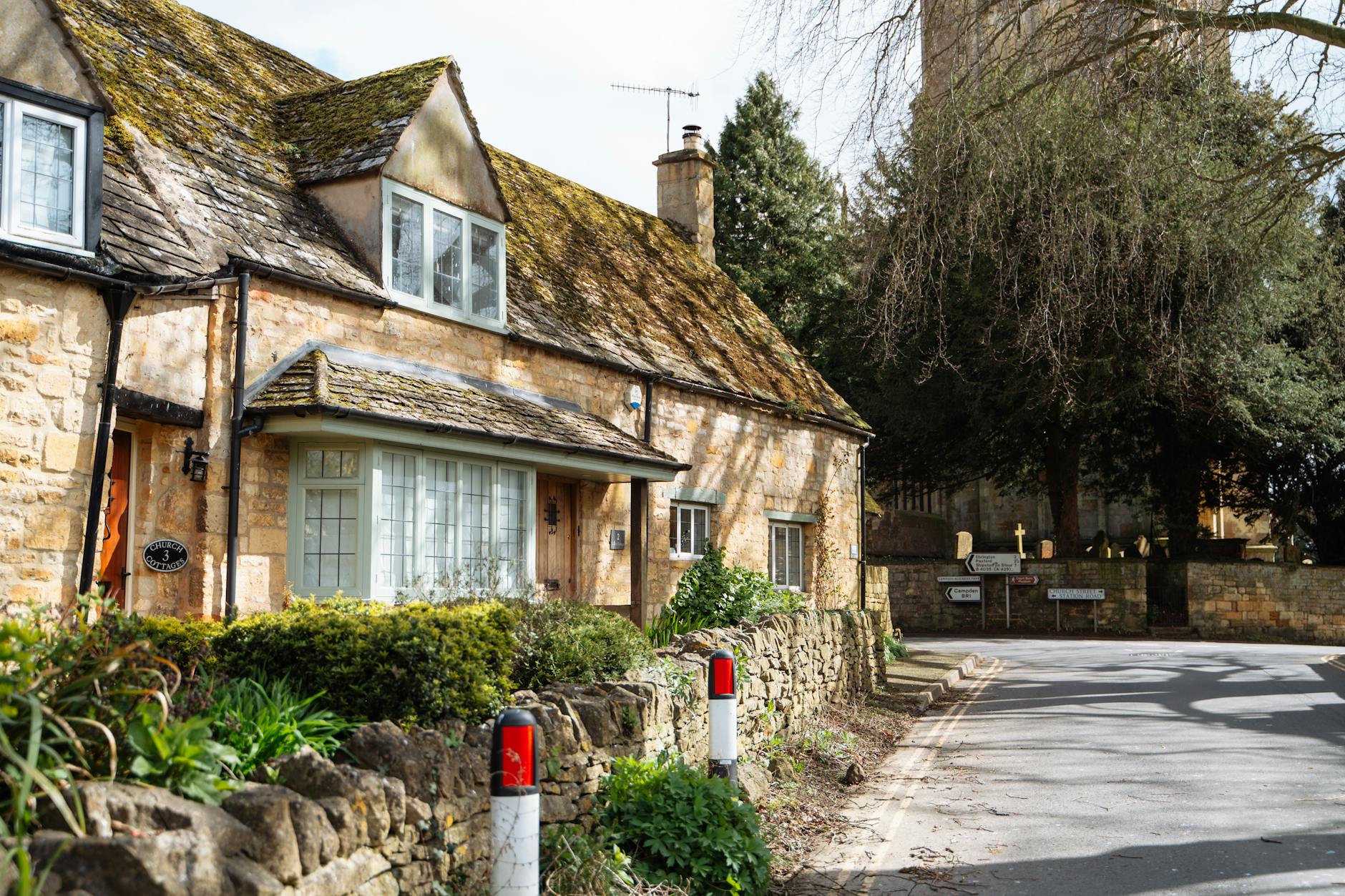
At the southern end of the High Street, set a little apart down Church Street, St James’ is one of the great wool churches of the Cotswolds, the kind of building where you can see exactly how medieval prosperity was turned into stone and glass. There is Norman work in its bones, from around 1180, but the soaring nave and tall pinnacled tower were rebuilt in grand Perpendicular Gothic style in the fifteenth century on the proceeds of the wool trade. The tower in particular is a landmark for miles around.
Inside, the church holds one of the finest collections of monumental brasses in England, including the great brass of William Grevel and his wife. Seek out the rare medieval altar hangings, among the oldest church textiles to survive anywhere in the country, and the elaborate canopied tomb of Sir Baptist Hicks and his wife, a piece of Jacobean swagger that rather sums up the man. Entry is free and the church is usually open through the day. It is a fitting place to end a walk down the street that all this wool money built.
Arts and Crafts: the Guild of Handicraft and the silversmiths
Campden’s second great chapter is about making things by hand. In 1902 the designer and social reformer C.R. Ashbee moved his Guild of Handicraft out of the East End of London to this quiet Cotswold town, bringing some fifty craftsmen and their families to set up workshops in the old silk mill on Sheep Street. They made beautiful metalwork, jewellery and furniture in the Arts and Crafts spirit, and although the Guild itself folded in 1908, the seed it planted never quite died.
The legacy is still here and still working. Hart’s Silversmiths, descended directly from the original Guild, has been making silver by hand in the same Sheep Street workshop for over a century; you can often watch the craftspeople at the bench, which is a rare and rather moving thing to see. The Court Barn Museum, near the church, tells the story of Ashbee and the wider craft tradition with displays of silver, furniture and design. Several independent makers and galleries keep the same flame alive around the town, which gives Campden a creative undercurrent that sets it apart from prettier-but-emptier villages.
Sir Baptist Hicks and the burnt manor
You cannot get far in Campden without bumping into the name Hicks. Sir Baptist Hicks, later Viscount Campden, was a London silk merchant of enormous wealth who poured money into the town in the early seventeenth century: the Market Hall was his gift, as were the dignified almshouses below the church, and he built himself a grand Jacobean mansion, Old Campden House, beside St James’. It was said to be one of the finest houses in England of its day. Its life was short and dramatic. During the Civil War, in 1645, the house was deliberately burnt by Royalist forces to stop it falling into enemy hands, and only fragments survive. The ornate gateway and a pair of banqueting-house lodges still stand at the end of Church Street, handsome ghosts of what was lost, and Hicks himself lies under that swaggering canopied tomb inside the church.
The start of the Cotswold Way and Dover’s Hill
Near the Market Hall, a low marker stone set into the ground marks the official start of the Cotswold Way, the 102-mile National Trail that runs along the Cotswold escarpment all the way to Bath. Even if you have no intention of walking the whole thing, the first mile or so is one of the best short walks in the area. Head north out of town and the path climbs to Dover’s Hill, a great natural amphitheatre on the edge of the escarpment, with the ground falling away to a huge view over the Vale of Evesham to the Malvern Hills and, on a clear day, the Welsh border country beyond.
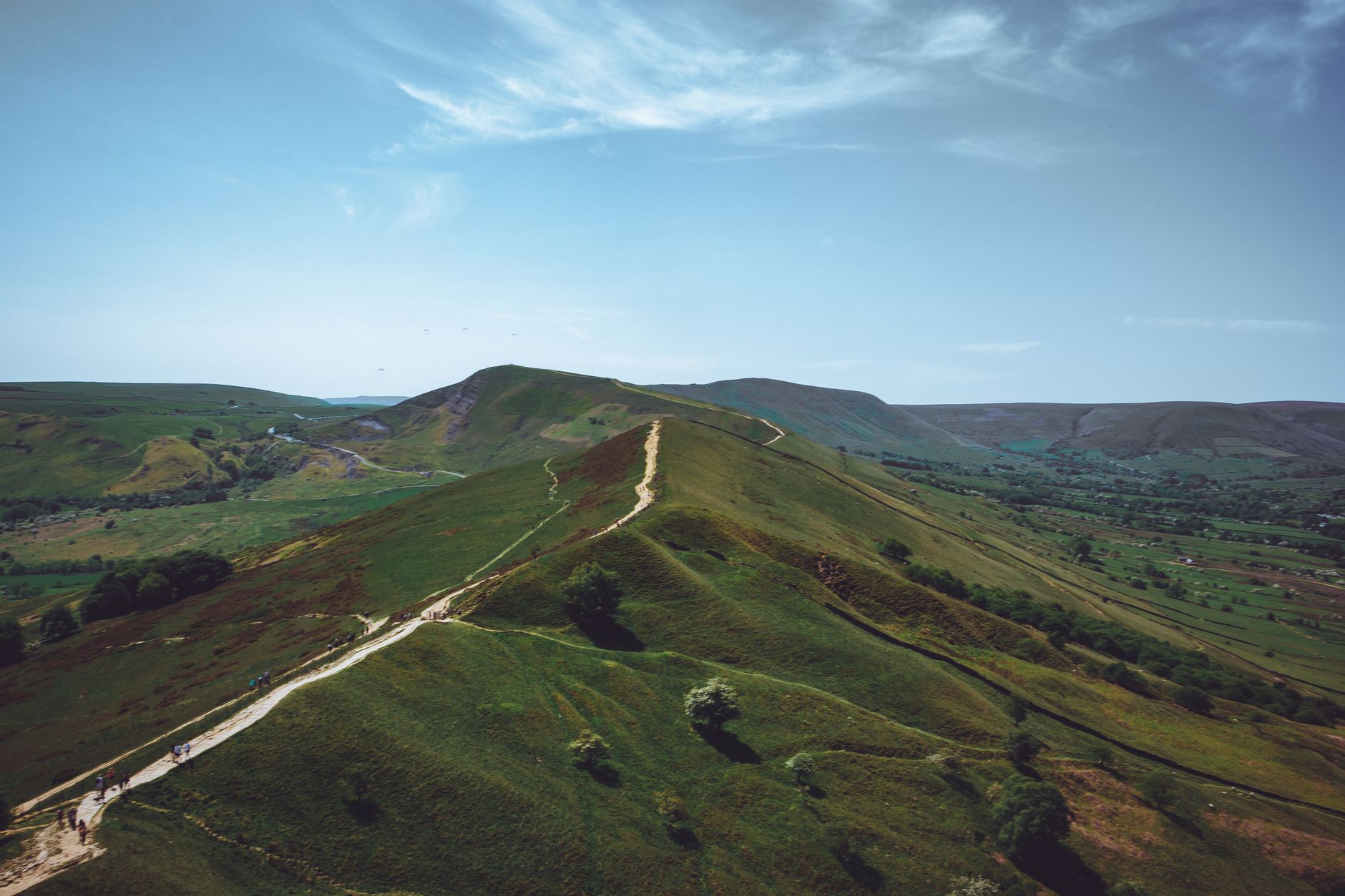
Dover’s Hill, now National Trust land and open all year, is also the home of one of the most gloriously odd events in the English calendar. The Cotswold Olimpick Games were first staged here in 1612 by a flamboyant local lawyer, Robert Dover, with the blessing of King James I, and they are a celebration of country sports at their most eccentric. The headline contest is the World Shin-Kicking Championship, which is precisely what it sounds like: two competitors in shepherds’ smocks gripping each other’s collars and kicking each other’s shins until one gives way, shins padded only with straw. There is tug-of-war, there are races, and the evening ends with a hilltop bonfire, fireworks and a torchlit procession back down into town. The Games were revived in 1963 after a long gap and now take place each year on the last Friday of May; in 2026 that is Friday 29 May. For more seasonal happenings, see our guide to Cotswolds events and festivals.
Walks from Chipping Campden
Dover’s Hill circular
The classic short walk is a circuit of around four miles up to Dover’s Hill on the first stretch of the Cotswold Way, returning by quiet lanes and field paths. It takes a couple of hours at an easy pace and gives you the best of the views without committing to the full trail. It is the ideal way to sample the Cotswold Way and decide whether the rest of it tempts you.
Chipping Campden to Broadway
For a proper day on the escarpment, the six-mile stretch of the Cotswold Way to Broadway is superb, running along the ridge past Dover’s Hill and on towards Broadway Tower, with long views the whole way. It is linear, so plan a bus or taxi back, or arrange to be collected. To plan longer outings, our guide to walking and hiking in the Cotswolds covers routes for every level.
Chipping Campden to Ebrington
A gentler three-mile loop heads out across the fields to the quiet village of Ebrington, where the well-regarded Ebrington Arms makes a fine turnaround point for a pint or lunch. It is an uncrowded walk through classic farmland and a good antidote if the High Street is busy.
Gardens near Campden: Hidcote and Kiftsgate
Within a few miles of the town lie two of the most celebrated gardens in England, sitting almost next door to one another above the village of Mickleton. Hidcote, now in the care of the National Trust, is one of the most influential Arts and Crafts gardens ever made, a series of linked “garden rooms” divided by clipped hedges and packed with rare planting, created by Lawrence Johnston, born in Paris to American parents and later a British citizen, in the early twentieth century. Just down the lane, the privately owned Kiftsgate Court takes a very different, more painterly approach across its steep hillside terraces, and is famous among gardeners for its enormous Kiftsgate rose. At busy times it is worth booking ahead, and Hidcote can get full on summer weekends. For more, see our roundup of the best gardens in the Cotswolds.
Where to eat and drink
For a small town, Campden eats remarkably well. At the smarter end, the kitchen at the centre of town has built a strong reputation for modern British tasting menus, and there is good Mediterranean and Greek cooking to be had on the High Street if you fancy something different. For pub food in a historic setting, the Eight Bells is a fourteenth-century inn near the church with a lovely courtyard garden and a genuinely good kitchen, while the Volunteer Inn is the more down-to-earth local for a well-kept pint.
Campden also does a proper afternoon tea. Badgers Hall, in a fifteenth-century stone house on the High Street, has a long-standing reputation for scones, cakes and a pot of something restorative, and there is good coffee and a pastry to be found a few doors along. As always in the Cotswolds, book ahead at weekends and check opening days off-season. For more ideas, our guides to the best pubs in the Cotswolds and the region’s best afternoon tea point you to plenty more.
Where to stay
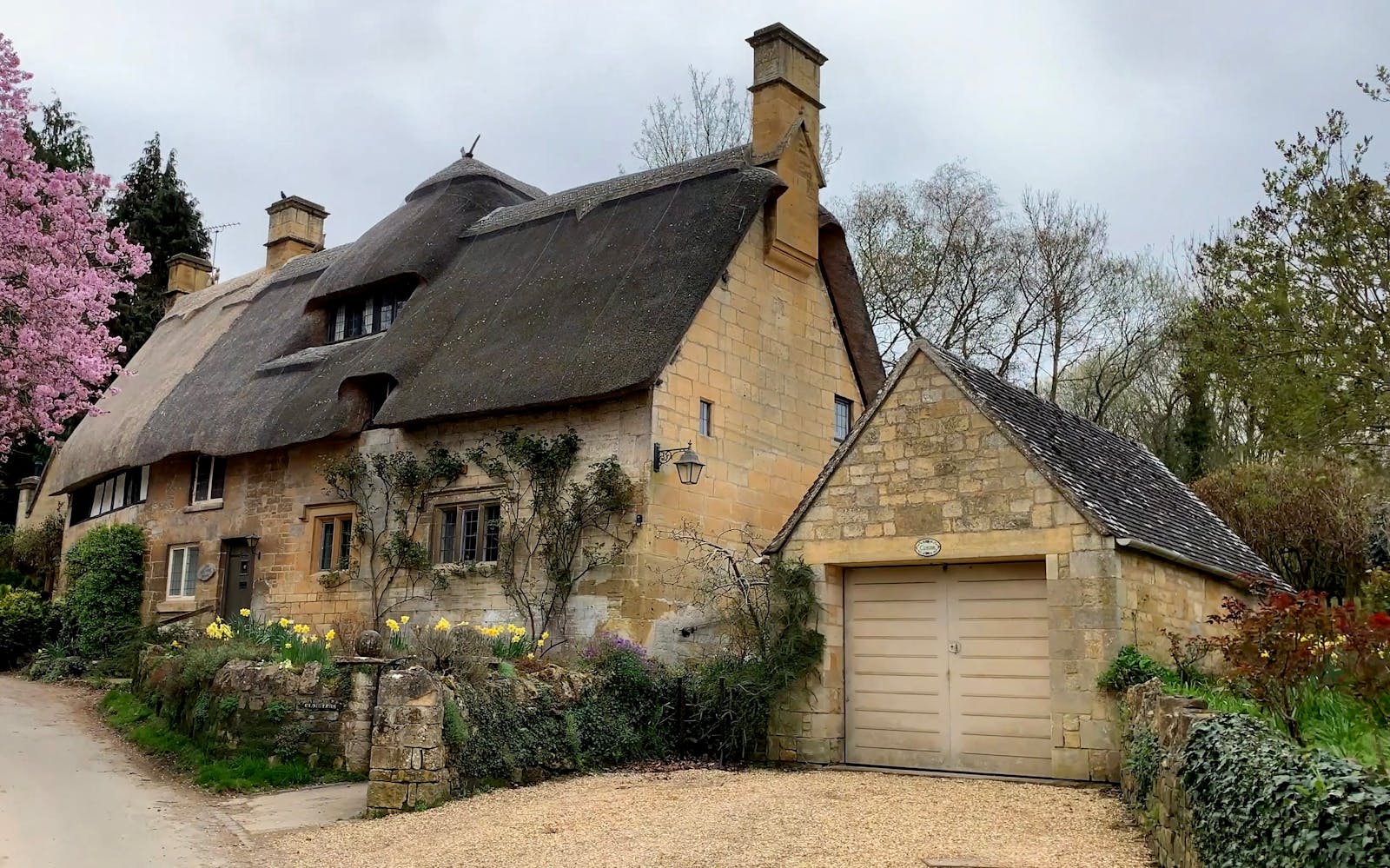
Campden makes one of the best bases in the northern Cotswolds, particularly if you fancy walking the Cotswold Way, since this is where it begins. There are characterful old coaching inns offering rooms right on the High Street, a handful of smart small hotels, and a good spread of bed and breakfasts and self-catering cottages tucked down the side lanes and in the surrounding hamlets. Staying overnight also lets you have the High Street to yourself in the early morning and the evening, once the day visitors have gone, which is when it is at its most magical.
From here you are well placed for the whole northern corner of the region: Broadway, Stow-on-the-Wold and the eccentric hilltop village of Snowshill are all close by. To compare areas before booking, our guide to where to stay in the Cotswolds breaks the region down by character and budget.
How to get to Chipping Campden
Campden sits at the northern tip of the Cotswolds, just off the B4081 near the A44. By car it is around two hours from London via the M40, about 35 minutes from Stratford-upon-Avon and roughly 45 minutes from Cheltenham. The nearest railway station is Moreton-in-Marsh, about seven miles away on the line from London Paddington, with buses linking Moreton, Campden and Broadway, though services thin out in the evenings and on Sundays. For the full picture on trains, buses and driving, see our guide to getting to and around the Cotswolds.
Parking
There is a pay-and-display car park on Back Ends, a couple of minutes’ walk from the High Street, which is usually your best option and rarely completely full. There is some on-street parking on the High Street itself, but it is limited and turns over slowly, so do not count on it at busy times. As with most Cotswold towns, an earlier start makes life easier on summer weekends.
How long to spend, and the best time to visit
You can take in the High Street, the Market Hall and the church in two or three hours, but add the Dover’s Hill walk, a gentle browse of the craft workshops and a proper lunch and you have a full and satisfying day. Campden also makes an excellent base for two or three nights, with the gardens, the escarpment walks and the neighbouring villages all within easy reach.
Late spring and early summer are lovely, with the gardens at their best and long light on the stone, though the Olimpick Games weekend in late May brings a happy crowd. Autumn is quieter and the escarpment beechwoods turn beautifully. Even in poor weather, the church, the museum and a warm pub will fill a rewarding few hours. For help planning around the calendar, our guide to the best time to visit the Cotswolds goes through it month by month.
Frequently Asked Questions
Why is Chipping Campden’s High Street so famous?
It is one of the most complete and unspoilt medieval wool-town streetscapes in England, a gently curving half-mile of honey-coloured stone buildings spanning three centuries, with almost no jarring modern intrusions. The grandeur of the architecture reflects the wealth the town drew from the medieval wool trade, and the whole street is widely regarded as the finest of its kind in the country.
Is Chipping Campden the start of the Cotswold Way?
Yes. A marker stone near the Market Hall marks the official start (or finish) of the Cotswold Way, the 102-mile National Trail that runs along the escarpment to Bath. The first section north to Dover’s Hill, about a mile, is a popular short walk with superb views even if you are not tackling the full trail.
What are the Cotswold Olimpick Games?
They are an eccentric celebration of traditional country sports held on Dover’s Hill, first staged in 1612 and revived in 1963. The most famous event is the World Shin-Kicking Championship, alongside tug-of-war, races and an evening of bonfire, fireworks and a torchlit procession into town. The Games take place each year on the last Friday of May, which in 2026 is 29 May.
Can you watch silversmiths working in Chipping Campden?
Yes. Hart’s Silversmiths, descended from C.R. Ashbee’s Guild of Handicraft which came to the town in 1902, still makes silver by hand in its original Sheep Street workshop, and you can often see the craftspeople at work. The nearby Court Barn Museum tells the wider story of the town’s Arts and Crafts heritage.
How far is Hidcote Garden from Chipping Campden?
Hidcote, one of England’s most influential Arts and Crafts gardens, lies a few miles north of the town near Mickleton, with the privately owned Kiftsgate Court Gardens right beside it. Both are easy to combine with a visit to Campden; booking ahead is wise at busy times, as Hidcote in particular can fill on summer weekends.
Related guides
Chipping Campden is one of many in our roundup of the prettiest villages in the Cotswolds. To plan the wider trip, start with our complete guide to visiting the Cotswolds, then pair Campden with the hilltop town of Stow-on-the-Wold, neighbouring Broadway or the gentler charms of Painswick, the Queen of the Cotswolds, for a fuller itinerary.