This article contains advertising. My booking links are routed through a partner that adds commission tracking automatically, so if you book through one I earn a commission from the provider, at no extra cost to you. It never affects what I recommend. Affiliate disclosure
The first time you walk into the parish church at Northleach, your sense of scale takes a moment to recalibrate. The town outside is tiny — a single broad street, a market square, a few hundred souls. And yet here, soaring above you, is a building of cathedral-like ambition: a great west tower, a wide nave flooded with light, a roofline bristling with pinnacles. It feels, frankly, like a mistake, as though someone delivered the wrong church to the wrong town. It is not a mistake. It is wool.
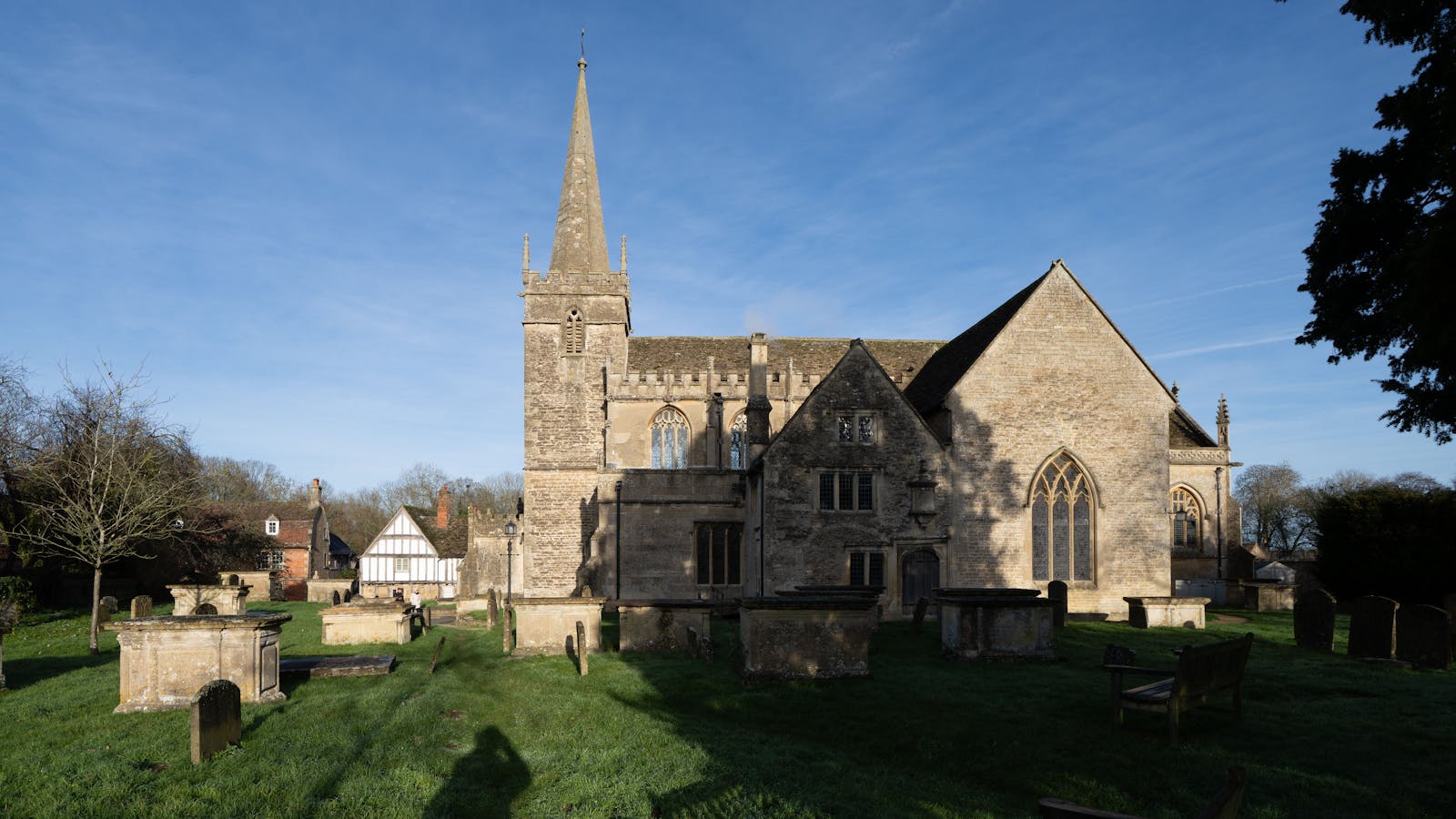
The “wool churches” of the Cotswolds are among the most rewarding things to visit in the whole region, and yet many people drive straight past them on their way to the photogenic villages. That is a shame, because these buildings are the most spectacular surviving evidence of the medieval wool boom that made this corner of England astonishingly rich. They were paid for, quite literally, by sheep — and the merchants who built them wanted you to be impressed five centuries later. You will be. This guide covers the finest of them, what to look for inside, and how to plan a day around them.
What exactly is a “wool church”?
A wool church is, simply, a medieval church rebuilt or massively enlarged using money made from the wool trade. As I explain in our guide to the Cotswolds wool trade, between roughly the 13th and 16th centuries Cotswold fleece was the most prized in Europe, and the merchants who dealt in it grew enormously wealthy. Much of that wealth went, in the end, into stone — specifically, into glorifying the parish church.
The motives were a blend of the pious and the worldly. These were devout times, and a rich man genuinely feared for his soul; endowing a church, paying for masses and building a chantry chapel were thought to shorten one’s stay in purgatory. But there was vanity in it too. A magnificent church was a permanent advertisement of a family’s success, and the merchants made sure their names, their tombs and their personal “woolmarks” were worked into the fabric for all eternity. The result is a string of churches far grander than their little towns could ever justify — prayers and pride, fused in golden limestone.
Almost all of them were rebuilt in the same architectural style: Perpendicular Gothic, the last great phase of English medieval architecture, which ran from the late 1300s to the early 1500s. It is defined by strong vertical lines, slender stone tracery, and above all by huge windows — because the whole point, in an age before electric light, was to fill these great spaces with daylight. To stand inside a Cotswold wool church on a bright morning is to understand exactly what the masons were chasing.
How to read a wool church: what to look for
Half the pleasure of visiting these churches is knowing what you are looking at. A few minutes spent learning the vocabulary will transform a wool church from “a nice old building” into a richly legible document of medieval life. Here are the features I always point out to friends.

- The great window over the chancel arch. A signature of Cotswold wool churches is an enormous window set high above the arch leading into the chancel, flooding the nave with light. It is a rarity in English parish churches and a real local hallmark — look for it especially at Northleach and Chipping Campden.
- Memorial brasses. These engraved metal plates, set into the floor, often show the woolman himself standing with his feet resting on a woolpack or a sheep, stamped with his individual woolmark. Northleach has one of the finest collections in England.
- The clerestory. The upper row of windows running along the top of the nave wall, another device for letting in light, and a sign of a wealthy rebuild.
- Angel roofs and carved timber. Look up. Many wool churches have spectacular oak roofs studded with carved angels, bosses and heraldic shields.
- Misericords. In some churches the choir stalls have hinged seats with little carvings on the underside — humorous, grotesque or domestic scenes that the medieval craftsmen clearly enjoyed making.
- Chantry chapels and merchant tombs. Side chapels endowed by wealthy families so that masses could be said for their souls, often containing their elaborate tombs.
Cirencester: St John the Baptist, the grandest of them all
If you visit only one wool church, make it Cirencester. St John the Baptist is one of the largest parish churches in all of England, so big that it is sometimes mistaken for a small cathedral, and it dominates the market place of the town that was once the “Capital of the Cotswolds.” Cirencester’s wealth ran deep — this was the great Roman town of Corinium long before the wool boom, a story I tell in our guide to Roman Cotswolds.
The church’s showpiece is its magnificent three-storey south porch, built around 1500 and fronting straight onto the market square. With its delicate fan vaulting, oriel windows and crenellated parapets, it is one of the finest church porches in the country — grand enough that it later served for a time as the town hall. Inside, don’t miss the soaring nave, the “wineglass” pulpit (a rare survival from before the Reformation), and the famous Boleyn Cup, a silver-gilt cup made in 1535 that is associated with Anne Boleyn and was later given to the church. It is a building that simply does not stop rewarding a slow, careful look.
Northleach: the “Cathedral of the Cotswolds”
Northleach’s St Peter and St Paul is my personal favourite, partly because of that startling contrast between the modest town and the magnificent church, and partly because of its brasses. Largely rebuilt in the Perpendicular style in the 15th century, it has a commanding west tower, a beautifully proportioned and decorative south porch, and that wonderful great window above the chancel arch that pours light into the nave.
But the treasures here are underfoot. The memorial brasses of Northleach’s woolmen — the Fortey family, John Taylour, William Midwinter, Thomas Bushe and others — form one of the finest collections of medieval brasses in the country. Look for the merchants standing on their woolpacks and sheep, each marked with the woolmark that once identified their fleeces in the international market. These are not anonymous saints; they are real businessmen, proud of their trade, asking to be remembered. The church is generally open daily through the day, and it is free to enter, though a donation is very much appreciated and deserved.
Chipping Campden: St James and its 120-foot tower
The wool church at Chipping Campden announces itself from miles away: St James has a superb pinnacled tower rising some 120 feet above the surrounding fields. The nave was rebuilt in grand Perpendicular style around 1490 at the height of the town’s wool prosperity, and it shares that distinctive great window above the chancel arch that floods the interior with light.
Inside, look up to admire the fine timber roof, and seek out the rare 15th-century misericords and the merchant tombs — including memorials to the wool dynasty whose money built so much of the town. The most famous of Campden’s woolmen, William Grevel, “the flower of the wool merchants of all England,” is commemorated here with one of the great brasses of the age. Combine the church with a wander down Campden’s curving High Street and you have the single best half-day for understanding what wool wealth actually built.
Fairford: St Mary and a miracle of medieval glass
Fairford’s St Mary is a wool church with a unique and astonishing claim: it possesses the only complete set of medieval stained glass to survive in any parish church in England. Twenty-eight windows, made in the early 1500s and attributed to the King’s glazier Barnard Flower, tell the entire Christian story in glowing colour, from Eve and the prophets to the dramatic Last Judgement that fills the great west window — complete with a memorably grotesque blue devil shovelling the damned into hell.
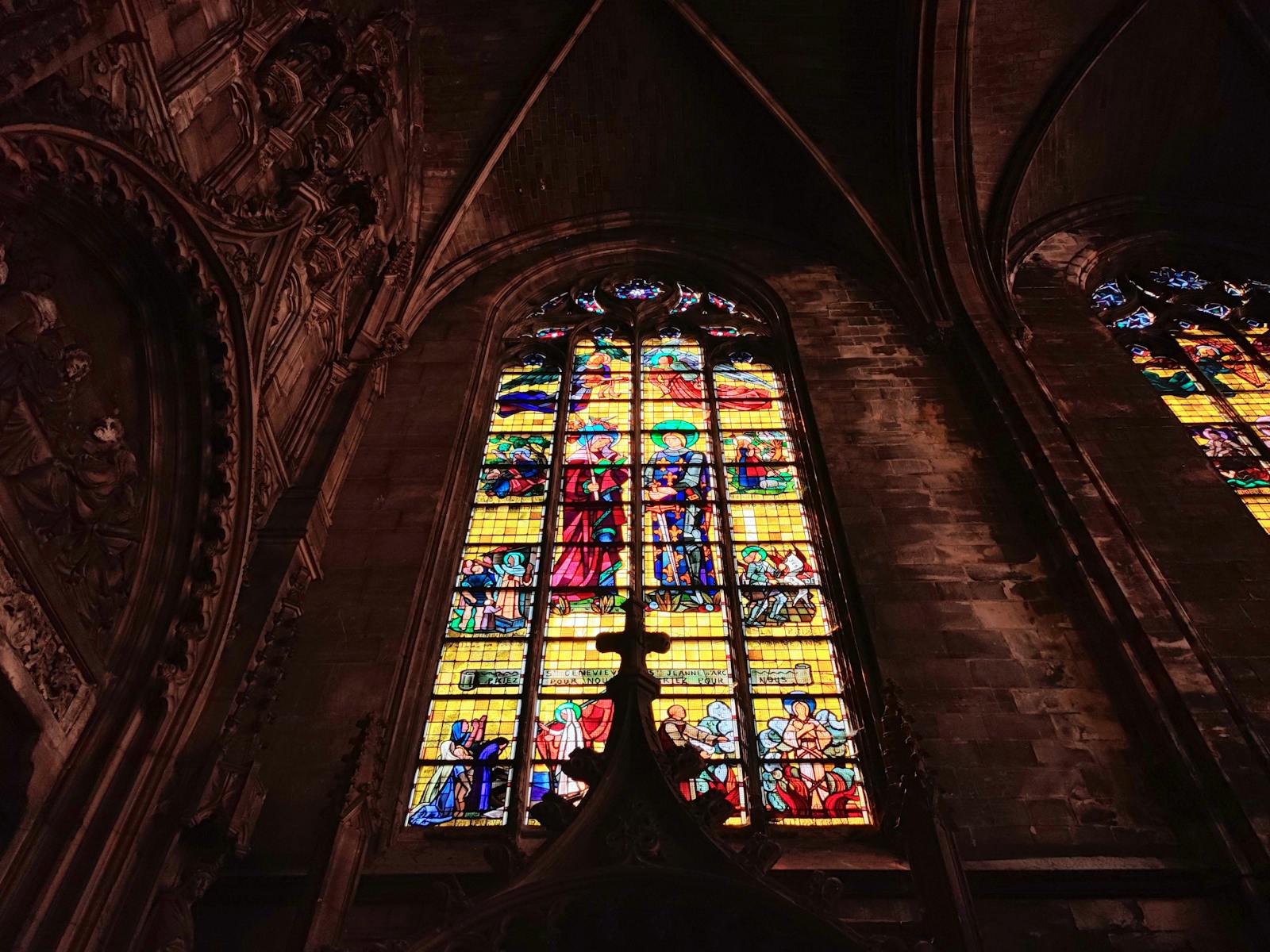
The church exists in this form because of one man, the wool merchant John Tame, who died in 1500. Tame rebuilt St Mary specifically to house his glass — the building was, in effect, designed around the windows rather than the other way round. That the glass survived the Reformation, the Civil War and the centuries since is little short of miraculous, and on a sunny day, when the colours come alive across the stone floor, you understand why people travel a long way to see it. It is, for my money, one of the most moving interiors in the whole of England.
More churches worth a detour
The “big four” above are the headline acts, but the Cotswolds are thick with wonderful churches, and some of the smaller ones have a character all their own. If you have time, weave a few of these into your travels.
- Burford — St John the Baptist. A grand church in one of the loveliest small towns in the region, with a memorable Renaissance monument to Sir Lawrence Tanfield and graffiti left by Civil War prisoners. Pair it with our Burford guide.
- Winchcombe — St Peter. A handsome 15th-century church best known for the riotous parade of around forty grotesques and gargoyles around its roofline, some demonic, some clearly caricatures of real local worthies.
- Painswick — St Mary. Famous less for the building than for its extraordinary churchyard, with its clipped yew trees and remarkable collection of carved “table tombs.” Look, too, for damage said to date from a Civil War skirmish. See our Painswick guide.
- Lechlade — St Lawrence. A graceful wool-era church whose quiet churchyard is said to have inspired a poem by the young Percy Bysshe Shelley.

Planning a Cotswolds wool churches tour
The good news is that the great wool churches sit reasonably close together, so a satisfying tour is very doable. A classic route strings together Cirencester, Northleach, Fairford and Chipping Campden, with smaller churches slotted in as you go. With your own car you could see three or four properly in a full day, but I would honestly rather see two slowly than four in a rush — these are buildings that reward lingering. For ideas on combining them with villages and other sights, our Cotswolds itineraries are a useful starting point.
A few practical courtesies. Most parish churches are free to enter and open during daylight hours, but they are still working places of worship, so check for service times and keep your voice low. Photography is usually fine without flash, but look for any signs. And please do drop something in the donation box — the upkeep of these enormous medieval buildings falls on tiny congregations, and your coins are part of what keeps them open and glowing for the next visitor. Many have an honesty stall selling guidebooks far better than anything I can fit here.
How the wool churches survived the centuries
It is worth pausing on a small miracle: that these buildings are still here at all, and still recognisably medieval. The Reformation of the 16th century was brutal to England’s churches. Chantry chapels were dissolved, the masses the merchants had paid for were abolished, statues were smashed, colourful wall paintings were whitewashed and most medieval stained glass was destroyed as idolatrous. That Fairford kept its complete set of windows through all this — and through the Civil War a century later, when Puritan soldiers took particular delight in shattering “popish” glass — is genuinely extraordinary, and the result of a good deal of luck and quiet local protection.
The churches faced a gentler threat in the 19th century, when enthusiastic Victorian “restorers” swept through England’s parishes, sometimes improving and sometimes obliterating medieval work in the name of tidiness. The Cotswold wool churches came through better than most, partly because the region was poor and unfashionable by then — the same accidental poverty that preserved the villages also spared the churches from over-zealous modernising. What you see today is, by and large, the genuine late-medieval article, weathered but intact.
One last piece of advice, learned from many visits. Time your churches for light. The whole architectural project of a wool church was about daylight pouring through those vast Perpendicular windows, so a bright morning or a clear late afternoon shows them at their best — the stone warms, the glass glows, and the great window over the chancel arch does exactly what its builders intended. On a grey day the interiors can feel cold and dim; on a sunlit one they are transcendent. It costs nothing to check the forecast and plan accordingly, and it makes all the difference.
Frequently asked questions about Cotswolds wool churches
What are the Cotswolds wool churches?
They are grand medieval parish churches rebuilt or enlarged with money made from the medieval wool trade. Wealthy wool merchants funded them as acts of piety and as lasting memorials, producing buildings far larger and more ornate than their small towns would otherwise have. The finest examples are at Cirencester, Northleach, Chipping Campden and Fairford.
Which is the best Cotswolds wool church to visit?
Cirencester’s St John the Baptist is the grandest and is unmissable for its three-storey fan-vaulted porch. Fairford is essential for its complete set of medieval stained glass, while Northleach offers the finest medieval brasses and the most striking contrast between town and church. Chipping Campden combines a magnificent church with a wonderful wool-trade High Street. If you can, see at least two.
Are the wool churches free to visit?
Yes, almost all are free to enter and open during daylight hours, though donations are warmly welcomed and genuinely needed to maintain these vast historic buildings. They remain active places of worship, so it is worth checking service times before you visit.
Why are they called wool churches?
Because they were paid for by the profits of the wool trade. From roughly the 13th to the 16th centuries, Cotswold wool was the most valuable in Europe, and the merchants who traded it directed much of their fortune into rebuilding their parish churches in the grand Perpendicular Gothic style. You can read the full story in our guide to the Cotswolds wool trade.
These churches are, to me, the truest portrait of the medieval Cotswolds: ambitious, devout, commercially brilliant and quietly competitive. They have outlasted the trade that built them by five hundred years, and they will likely outlast us all. To carry the story onward, read about the honey-coloured Cotswold stone the masons used, or return to our pillar guide to Cotswolds history and heritage for the wider sweep of the region’s past.
The grandest of them all stands over a market square rather than a village green. St John Baptist at Cirencester is the largest parish church in Gloucestershire, and its three-storey porch was built by the townspeople as a town hall in a long argument with the abbey next door — the story is in our Cirencester guide.
If you only go inside one of them, make it the one in the smallest town. Northleach’s St Peter and St Paul is so far out of scale with the place around it that it is called the Cathedral of the Cotswolds, and its floor holds the finest collection of merchant brasses in England — wool men standing on woolsacks and sheep. Our Northleach guide has the detail.
The odd one out on this list is not a wool church at all but half a Norman abbey, saved when a Tudor clothier bought the monastery and handed the nave back to the town. Malmesbury’s south porch carries Romanesque carving as good as anything in Britain and costs a donation — see our Malmesbury guide.