This article contains advertising. My booking links are routed through a partner that adds commission tracking automatically, so if you book through one I earn a commission from the provider, at no extra cost to you. It never affects what I recommend. Affiliate disclosure
Let me be honest from the start: the Cotswolds is not a cheap destination. Its popularity, its pretty villages and its concentration of luxury hotels mean accommodation here tends to cost more than in many parts of England. But that does not mean a Cotswolds trip is off-limits if you are watching the pennies. With a little know-how, you can enjoy this beautiful region on a budget, from hostels and campsites to affordable pub rooms and clever booking tricks, and spend your savings on cream teas and country pubs instead.
This guide rounds up the best budget accommodation in the Cotswolds and the smartest ways to keep costs down, including an important update on the area’s youth hostels. Some of the region’s greatest pleasures, the villages, the walks, the views, are free, so where you save on a bed, you gain elsewhere. It works alongside our guides to where to stay in the Cotswolds and the Cotswolds on a budget.
How to Do the Cotswolds on a Budget
The single biggest money-saver is to adjust your expectations about where and when to stay. Accommodation is most expensive in the prettiest northern villages and at weekends in peak season, so the budget traveller’s strategy is simple: stay just outside the honeypots, travel midweek or in the quieter months, and be flexible about the type of accommodation. Do that, and the savings add up quickly.
The cheapest options are camping and hostel dorms, followed by budget chain hotels in the surrounding towns, group self-catering split across several people, and affordable pub rooms and B&Bs. It is also worth remembering that you do not need to stay in a famous village to enjoy one: basing yourself a few miles away, or in a larger town like Cheltenham or Cirencester, can dramatically cut costs while keeping everything within easy reach.
Hostels in the Cotswolds (and an Important Update)
First, a crucial update that many older guides get wrong: the YHA hostel in Stow-on-the-Wold has closed, and the building on the market square is now a boutique hotel, The Stag at Stow. If you have read that you can get a cheap hostel bed in Stow, that information is out of date.
The good news is that the YHA still operates nearby. YHA Cotswolds, based at The Barrel Store in Cirencester, is the main hostel within the region, offering a mix of dorm beds and private rooms (including family ensuite rooms) with a self-catering kitchen and free Wi-Fi, all in a central, walkable town. On the western edge, YHA Slimbridge (the “Wild Goose Lodge”) sits beside the canal near the famous wetland centre and has ensuite and family rooms. Independent budget options are limited, with Cheltenham, Cirencester and Stroud holding most of the cheaper beds, so book ahead.

Campsites and Caravan Parks
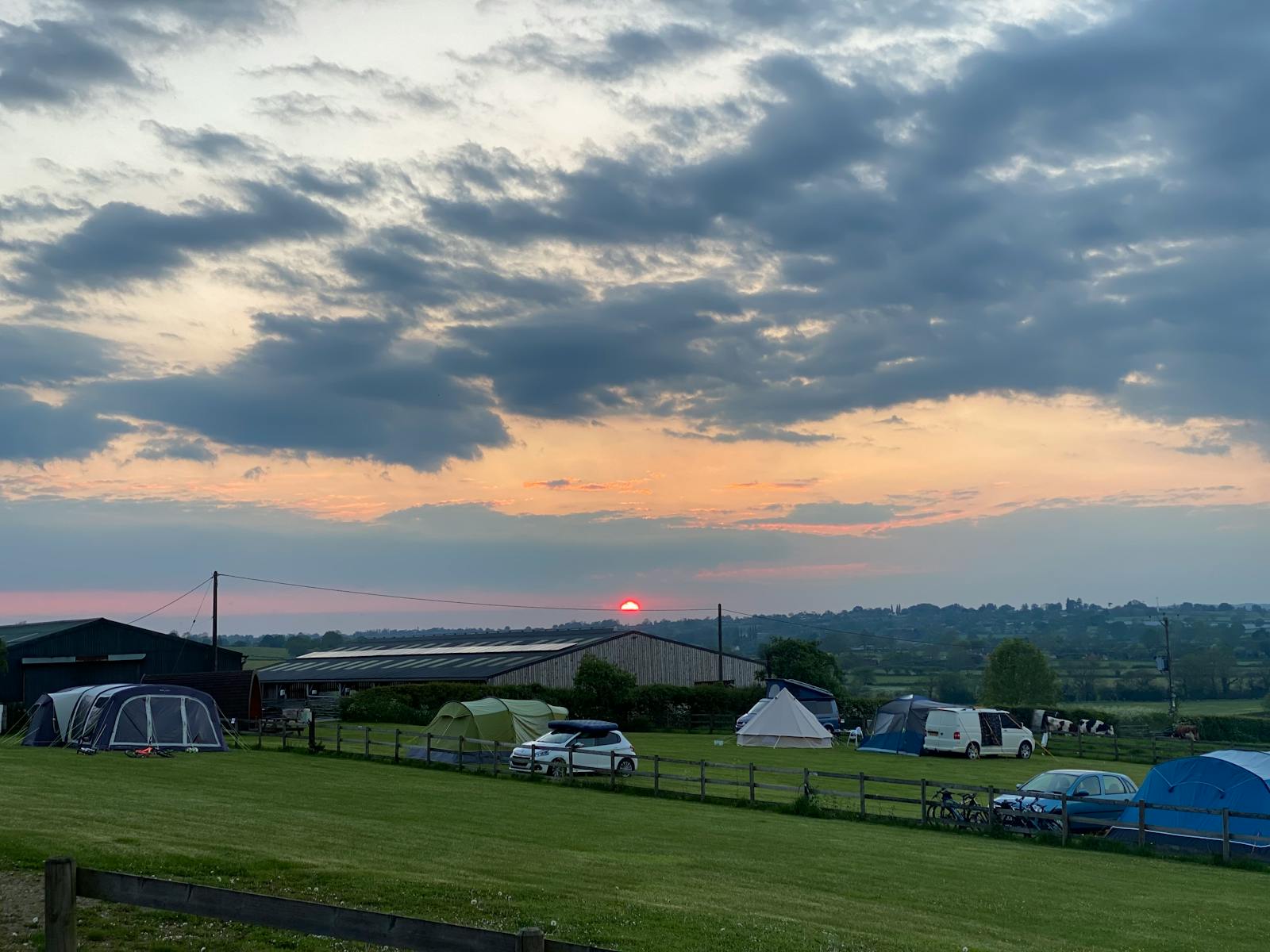
Camping is the cheapest way to stay in the Cotswolds, and the countryside setting makes it a pleasure rather than a compromise. Around Charlbury in the east, Cotswold View Caravan & Camping Park offers grass and hardstanding pitches plus wooden pods, with a shop, heated washrooms and family facilities, while the nearby Cotswolds Camping at Charlbury is a small, peaceful independent site with pods and barns as well as pitches. Near Cirencester, the Cirencester Park site (a Caravan and Motorhome Club site set in the Bathurst Estate parkland) is open to non-members and gives free pedestrian access into Cirencester Park.
There are also smaller, often seasonal campsites near popular bases such as Bourton-on-the-Water and Moreton-in-Marsh, though these can be small operations, so check opening dates and facilities before you travel. Useful directories for finding and comparing sites include Pitchup, Cool Camping, the Caravan and Motorhome Club and the Camping and Caravanning Club. For more comfort while keeping costs reasonable, a camping pod or simple glamping pitch bridges the gap between a tent and a room, as our guide to glamping in the Cotswolds explains.
Affordable B&Bs and Pub Rooms
While the Cotswolds is not a budget B&B paradise, you can still find reasonably priced rooms if you look beyond the most famous villages and book early. Simple village B&Bs and farmhouse stays, and the cheaper end of the pubs-with-rooms, offer the best value, often including a hearty cooked breakfast in the price. Historic coaching inns in the market towns, such as Moreton-in-Marsh, sometimes have well-priced rooms, particularly midweek and out of season.
The key is to be flexible and to book ahead, as the cheapest rooms go first. A B&B a few miles from a honeypot, or in a less-visited village, can cost considerably less than one in Broadway or Bourton while still putting you within easy reach. Our guide to the best B&Bs and guesthouses in the Cotswolds has more on finding good-value rooms.

Budget Chain Hotels Near the Cotswolds
One of the most reliable ways to keep costs down is to stay in a budget chain hotel on the edge of the region and drive or bus in. Premier Inn and Travelodge have hotels in and around Cheltenham, Cirencester and Witney, offering predictable, affordable rooms, especially when booked well in advance. They lack the chocolate-box charm of a village inn, but they free up your budget for the experiences that matter, and from these towns the famous villages are an easy day trip.
Cheltenham in particular makes a great budget-friendly base, combining affordable accommodation with a walkable centre, its own railway station, plenty of restaurants and easy access to the western Cotswolds. Treating one of these larger towns as your base, rather than an expensive village, is one of the smartest moves a budget traveller can make.
Visiting Car-Free on a Budget
Car hire, fuel and parking all add up, so travelling car-free can save a budget traveller a surprising amount. The trick is to base yourself in Moreton-in-Marsh, the only town within the Cotswolds with its own mainline station, reached directly from London Paddington and Oxford. From there, the Pulhams 801 bus links to Stow-on-the-Wold, Bourton-on-the-Water and Cheltenham, letting you explore the central villages without a car.
Do check current timetables, as rural buses run roughly hourly on weekdays, less often on Sundays, and tend to stop by early evening, so plan your return journeys carefully. Combining train and bus with plenty of walking is not only cheaper but also a lovely, low-stress way to see the region. Our guide to getting to and around the Cotswolds has the full details.
Money-Saving Tips
- Travel off-peak: spring and autumn, and midweek nights, are far cheaper than summer weekends and school holidays.
- Stay just outside the honeypots: a base in Cheltenham, Cirencester, Moreton or a lesser-known village costs less and is often only a short hop from the famous spots.
- Self-cater as a group: splitting a cottage or lodge between several people often beats per-room hotel rates.
- Camp or glamp: a tent or camping pod is the cheapest bed of all, with the countryside as your back garden.
- Use a YHA membership: it gives a discount on hostel rates, and private YHA rooms suit families and couples too.
- Book direct and early: the cheapest rooms and pitches sell out first, and booking direct can beat the online travel agents.
Glamping Pods and Bunkhouses: Budget With a Roof
If a tent feels like a step too far but a hotel is out of budget, a camping pod or bunkhouse is the perfect middle ground. Camping pods, small insulated wooden cabins found at many Cotswold campsites, give you a solid roof, a comfortable base and often heating and electricity, at a fraction of the price of a hotel room. They are ideal for couples and small families who want a bit more comfort than canvas without the cost of glamping at the luxury end.
Bunkhouses and camping barns, while less common in the Cotswolds than in more mountainous regions, occasionally crop up and offer cheap, simple dormitory-style beds, particularly useful for groups and walkers. The Independent Hostels network is a good place to look for these. Either way, you get a roof over your head and a budget-friendly base, with the countryside on your doorstep, bridging the gap between camping and a proper room.
Best Areas for Budget Travellers
Where you base yourself has a big impact on cost. The larger towns on the edges of the region, Cheltenham, Cirencester and Stroud, offer the best value, with budget chains, hostels and cheaper B&Bs, plus the bonus of good transport links and plenty of free things to see. Moreton-in-Marsh is the budget traveller’s friend in the north, thanks to its railway station and bus links, even if its accommodation is not dirt cheap.
By contrast, the famous small villages, Broadway, Bourton, the Slaughters and Bibury, are where prices peak, so they are best enjoyed as day trips from a cheaper base rather than as places to stay. The beauty of the Cotswolds being relatively compact is that you can sleep affordably on the edge and still spend your days in the prettiest spots. Our guide to the best areas to stay in the Cotswolds can help you weigh up the options.
Eating Well on a Budget
Accommodation is not the only place to save. Self-catering, even partially, makes a big difference: stock up at a supermarket in one of the larger towns, or treat a farm shop or market as both a meal source and an experience, and you can eat very well for far less than dining out every night. Picnics are a particular joy in the Cotswolds, with countless beautiful spots to spread a rug, from village greens to hilltop viewpoints.
When you do eat out, the country pubs generally offer better value than the smart restaurants, and many serve generous, hearty food at fair prices. Look out for midweek deals and set menus, and remember that a pub lunch is usually cheaper than the equivalent dinner. Our guide to Cotswolds food and drink has more on eating well without overspending.
Filling Your Days for Free
Here is the best news for the budget traveller: the Cotswolds’ single greatest attraction, its scenery, is entirely free. Wandering the honey-stone villages, walking the hills and the Cotswold Way, exploring the great “wool churches”, browsing the markets and soaking up the views all cost nothing. A trip here can be packed with memorable experiences without spending a penny on entry fees, which is exactly why it suits a tight budget so well.
Spend your money where it counts, perhaps one special meal or a single paid attraction, and fill the rest of your days with the free pleasures that make the Cotswolds special. Our dedicated guide to free things to do in the Cotswolds is full of ideas, from scenic walks and wild swimming to free museums and markets.
Budget Travel Through the Seasons
Timing is everything for budget travel. The shoulder seasons of spring and autumn, and the quieter winter months outside Christmas, offer the lowest prices and the smallest crowds, while still showing the countryside at its best, frosty hills, golden leaves and snowdrops all have their own appeal. Summer and school holidays are the most expensive and busiest, so avoid them if you can, or book a long way ahead.
Midweek nights are almost always cheaper than weekends across every type of accommodation, so a Tuesday-to-Thursday break can cost noticeably less than a Friday-to-Sunday one. If your dates are flexible, a little juggling of the calendar can save a surprising amount. Our month-by-month guide to the best time to visit the Cotswolds can help you find the sweet spot between good weather and good value.
Booking Smart to Save More
A few booking habits can shave a surprising amount off the cost of a trip. Book as far ahead as you can for the cheapest rooms, pitches and chain-hotel rates, which are typically released at their lowest prices and rise as availability shrinks. Compare booking directly with the property against the online travel agents, as direct rates are sometimes lower and may include perks. And keep an eye out for last-minute deals in the quieter months, when campsites, hostels and hotels may discount unsold space.
For groups and families, the maths of splitting a self-catering cottage or a cluster of pitches often beats paying per room, while a YHA membership pays for itself quickly if you plan to use the hostels. Being flexible on both dates and location gives you the most room to find a bargain, so approach the search with an open mind rather than a fixed village in mind.
Is the Cotswolds Worth It on a Budget?
Absolutely. While the Cotswolds will never be the cheapest region in England, the things that make it special, the timeless villages, the rolling hills, the sense of stepping back in time, are open to everyone, whatever their budget. A camping or hostel trip here, filled with free walks, village wanders and the odd pub lunch, can be every bit as memorable as a luxury escape, and arguably more so.
The trick is simply to spend wisely: save on where you sleep, embrace the free pleasures, and put your money towards the experiences that matter most to you. Do that, and you will come home with a pocket full of change and a head full of Cotswold memories. To start planning, browse our guides to the best things to do in the Cotswolds and our Cotswolds itineraries.
Frequently Asked Questions
Is there still a YHA hostel in Stow-on-the-Wold?
No. The former YHA Stow-on-the-Wold has closed, and the building is now The Stag at Stow hotel. The YHA instead operates YHA Cotswolds (The Barrel Store) in Cirencester and YHA Slimbridge on the western edge of the region.
What’s the cheapest way to stay in the Cotswolds?
Camping and hostel dorms are the cheapest, followed by budget chain hotels in nearby towns and group self-catering split across several people. Always book early for peak dates, as the cheapest options go first.
Can I visit the Cotswolds without a car on a budget?
Yes. Take the train to Moreton-in-Marsh, then the Pulhams 801 bus to Stow, Bourton and beyond, which saves on car hire, fuel and parking. Check timetables, as rural buses are limited and many do not run on Sundays.
Are there campsites near Bourton-on-the-Water and Moreton-in-Marsh?
Yes, there are smaller campsites near both, plus larger parks around Charlbury and the Caravan and Motorhome Club site at Cirencester Park. Some are small and seasonal, so confirm opening dates and facilities before travelling.
When is the cheapest time to visit the Cotswolds?
Midweek in the shoulder seasons, spring and autumn, outside the school holidays, typically offers the lowest accommodation rates and the quietest villages, while the countryside still looks beautiful.
Plan an Affordable Cotswolds Trip
The Cotswolds may have a reputation for expense, but with a campsite or hostel, a budget base just outside the honeypots, and a few clever savings, a wonderful trip is well within reach. Pair affordable accommodation with the region’s many free things to do, and explore our guide to the Cotswolds on a budget for even more ways to keep costs down.