This article contains advertising. My booking links are routed through a partner that adds commission tracking automatically, so if you book through one I earn a commission from the provider, at no extra cost to you. It never affects what I recommend. Affiliate disclosure
In the 1880s William Morris, the designer who shaped the Arts and Crafts movement, called Bibury the most beautiful village in England. The line has been doing the village’s marketing ever since. Sit on the bank of the River Coln on a quiet morning, with the weavers’ cottages of Arlington Row glowing across the water meadow, and it is hard to mount much of an argument against him.
The catch is that Bibury is no secret. A village of roughly 700 residents now draws as many as 20,000 visitors on a busy summer weekend, and the narrow lanes were never built for it. Parking is tight, the coach situation has changed, and at midday in August the famous view comes with a crowd attached. None of that need spoil your visit. Come early or out of season, give the place a couple of unhurried hours, and Bibury is every bit as lovely as the passport photograph suggests.
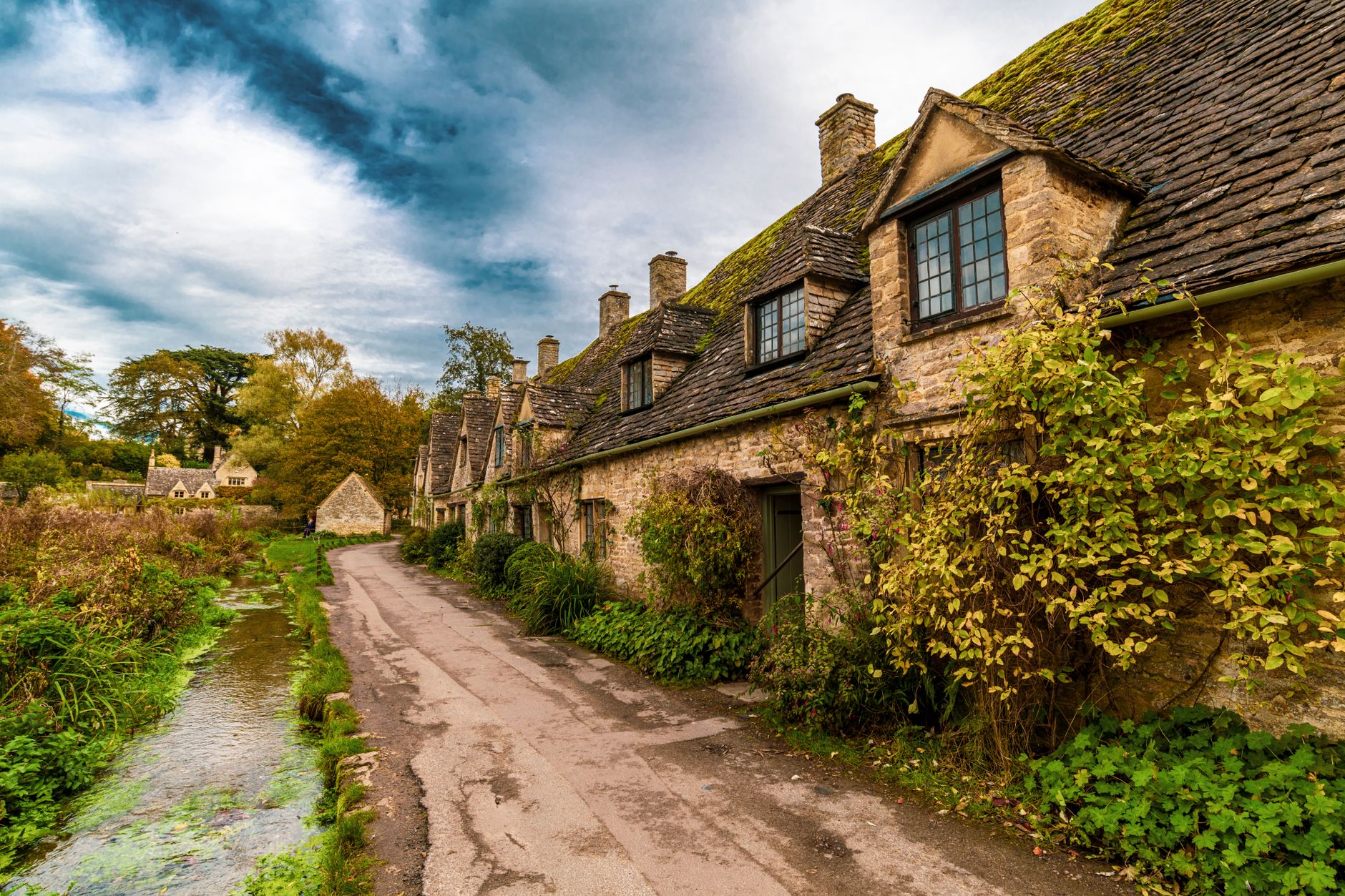
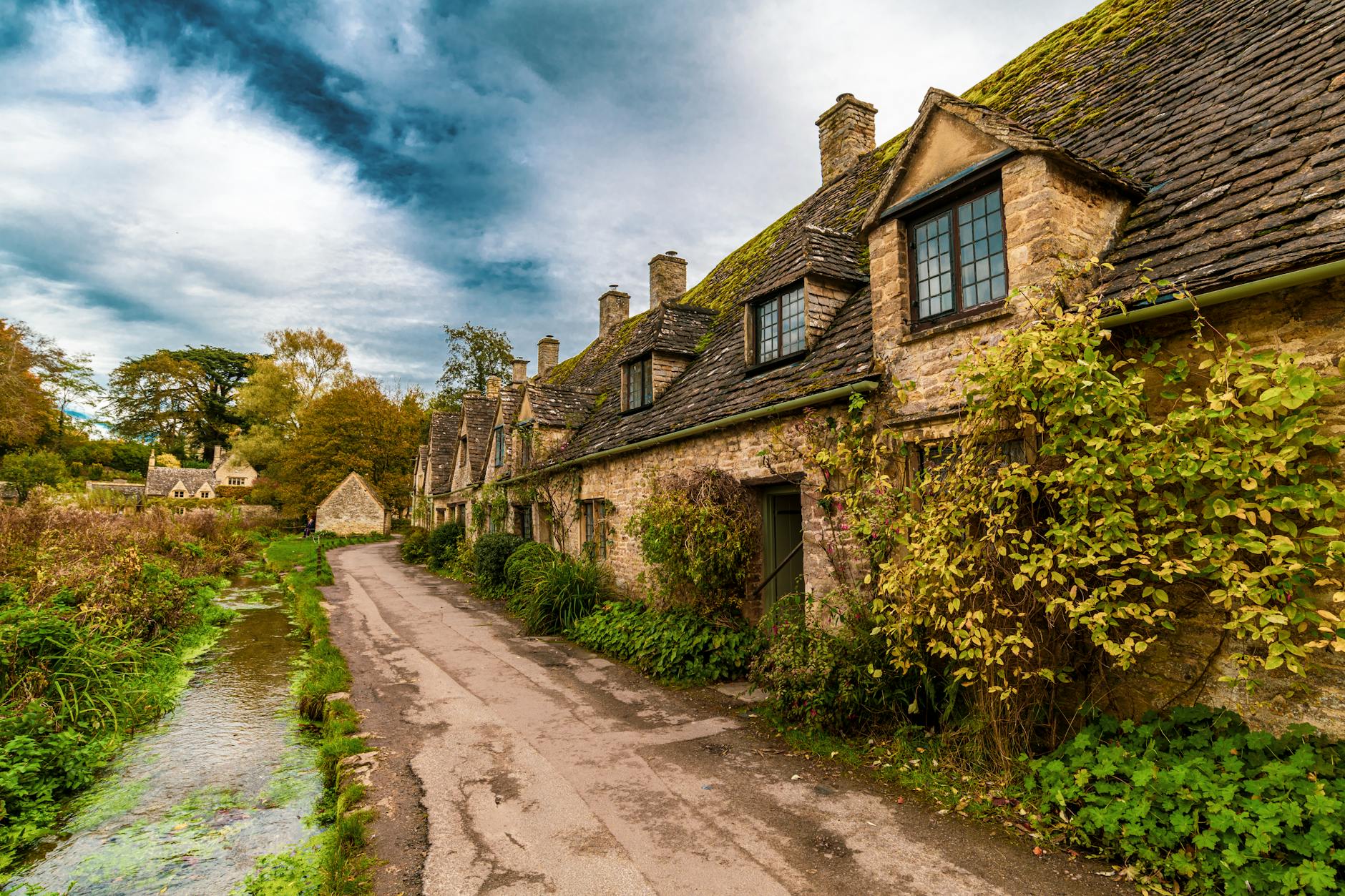
Arlington Row, the most photographed cottages in England
Arlington Row is the reason most people come, and it earns the attention. The terrace of steep-gabled stone cottages began life around 1380 as a monastic wool store, and was converted into weavers’ homes in the seventeenth century. The cloth they wove was carried across the water meadow in front, known as Rack Isle, to be cleaned and thickened at the mill. That short, visible supply chain is still legible in the village’s layout, which is part of what makes Bibury feel so unusually intact.
The cottages belong to the National Trust now and remain lived-in homes, with one or two let as holiday cottages. The row is well known enough to have appeared inside the British passport, which makes it, in a small way, an official face of the country. The classic photograph is taken from the far side of Rack Isle, looking back at the gable ends; early morning or the last hour of light gives you both the best colour on the stone and the fewest people. Keep your voice down and resist peering through windows, because people genuinely live here.
Bibury sits near the top of nearly every list of the prettiest villages in the Cotswolds, and Arlington Row is the single image that put it there. For the best angles and times of day across the region, it features in our guide to the finest Cotswolds photography spots.
Bibury Trout Farm
Founded in 1902 by the naturalist Arthur Severn, Bibury Trout Farm is one of the oldest working trout farms in the country and an easy hour or two with children. Fed by the spring-clear waters of the Coln, it raises brown trout that go on to stock rivers across the region. You can feed the fish, watch them at every stage of growth, browse the farm shop for fresh and smoked trout, and on busier days try a round of crazy golf or, weather permitting, catch your own.
At the time of writing the shop, cafe and farm open from 9am to 5pm, with the catch-your-own fishing running from roughly 10am to 4.30pm, last rods at 4pm. Admission is around £9.50 for adults and £8 for children aged three to fifteen, with a family ticket about £49.50. Worth flagging: parking here costs around £10, so if you are visiting both the farm and the village, factor that in rather than expecting it to double as free village parking. Dogs are welcome on leads.
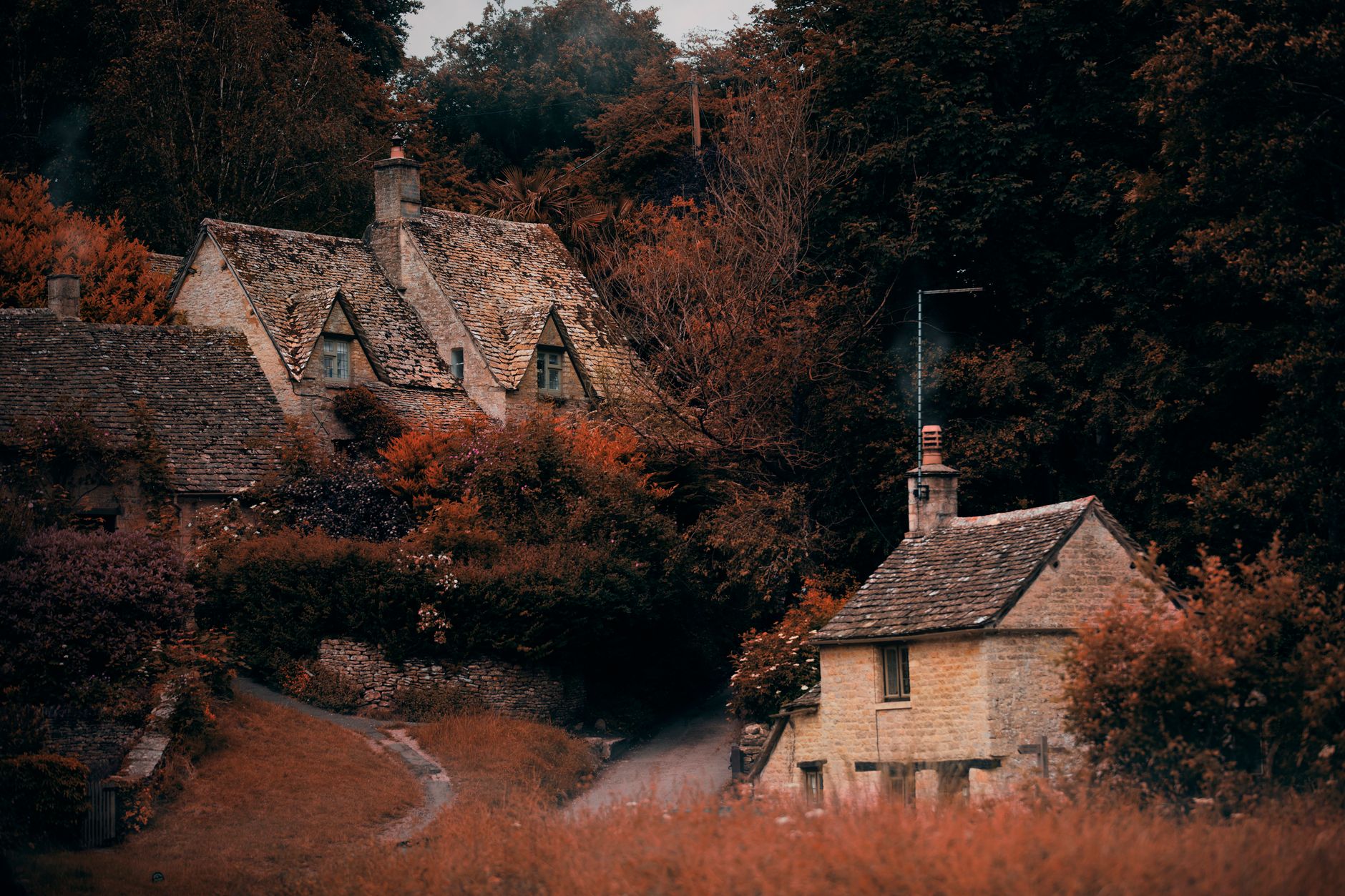
St Mary’s Church and Rack Isle
A short stroll from the river, St Mary’s Church is older than almost anything else in the village. Its origins are Saxon, it appears in the Domesday survey of 1086, and the building today blends Saxon, Norman and later medieval work. Step inside for the Norman chancel arch, some fine medieval memorial brasses and a set of stained-glass windows, then wander the churchyard with its weathered table tombs and old yews. Entry is free, and the church is usually open in daylight hours.
Between Arlington Row and the road lies Rack Isle, the marshy water meadow where woven cloth was once hung on racks to dry, which is where the name comes from. Today it is a small nature reserve managed for wildflowers and wildlife. Look for kingfishers along the channels, grey wagtails bobbing on the stones and trout holding in the clear water. It is the foreground to the famous view, and it does a lot of quiet ecological work besides.
The River Coln and Arlington Mill
The Coln is one of the purest chalk streams in England, and simply walking beside it is among Bibury’s greatest pleasures. The water runs so clear you can usually spot trout holding steady beneath the bridges. A gentle stroll takes you north towards the trout farm, or south on the footpath towards Coln St Aldwyns, a quieter neighbouring village a mile and a half downstream. The paths are flat and suit all abilities.
At the northern end of Arlington Row stands Arlington Mill, a handsome seventeenth-century building that once processed the cottagers’ cloth. Over the years it has served as a museum and gallery, though its opening arrangements vary, so treat any visit inside as a bonus. From the outside, the mill and its pond are photogenic and worth pausing over on the way through.
The best walks from Bibury
Bibury sits in the Coln Valley, some of the quietest walking country in the Cotswolds, and the moment you leave the centre you leave the crowds with it. The most rewarding short outing is the three-mile circular to Coln St Aldwyns, following the river south to a peaceful village with an excellent pub before looping back on field paths and lanes. It is flat, well signed and takes around an hour and a half at an easy pace, which makes it ideal for families.
For a little more, a four-mile loop heads north through the hamlet of Ablington, where the writer J. Arthur Gibbs lived and produced his much-loved account of country life, A Cotswold Village. Longer still, a five-mile walk crosses the wolds to Barnsley, famous for the gardens at Barnsley House created by the great plantswoman Rosemary Verey, with a fine dining pub to reward you at the end. For routes graded by distance and effort, see our guide to walking and hiking in the Cotswolds.
A short history of Bibury
Bibury’s story runs back well over a thousand years. It appears in the Domesday Book of 1086 as Becheberie, a settlement of modest farming importance, and the Saxon fabric in St Mary’s points to a community here from at least the eighth or ninth century. The land and church were held in turn by St Mary’s Priory at Worcester and then Osney Abbey near Oxford, until the Dissolution of the Monasteries in 1540.
Like the rest of the Cotswolds, Bibury grew on wool. Arlington Row was built as a monastic wool store in the fourteenth century and turned over to weavers in the sixteen hundreds, by which time the region was among the wealthiest cloth-producing areas in Europe. When the trade faded the village slipped into a long, quiet agricultural sleep, which is precisely why so much of it survives. Then William Morris and the Arts and Crafts movement rediscovered it in the late nineteenth century, the trout farm opened in 1902, and motoring tourism did the rest. Our guide to Cotswolds history and heritage tells the wider wool-town story.
Where to eat and drink
Eating options inside Bibury are limited, but the quality is high. The Swan, a former coaching inn right on the Coln, is the obvious choice for a proper lunch, an afternoon tea or a drink in the garden, and the riverside setting is hard to beat. The trout farm cafe does lighter lunches, teas and, naturally, trout. Beyond those, you are better off walking or driving a short way out.
The neighbouring village of Coln St Aldwyns, a mile and a half south, has a well-regarded gastropub, and Barnsley, four miles off, is home to one of the best dining pubs in the Cotswolds. Book ahead at weekends wherever you choose, as tables go quickly in summer. If you are building a food-led trip, our roundups of the best pubs in the Cotswolds and the wider Cotswolds food and drink scene point you further afield.
Where to stay
The headline address in the village is the Swan, a comfortable former coaching inn with elegant rooms overlooking the river, ideal if you want to enjoy Bibury in the empty hours before the day-trippers arrive. For something genuinely unusual, the National Trust lets one or two of the Arlington Row cottages as holiday accommodation, which is a rare chance to sleep inside one of the most photographed buildings in England. Otherwise, bed and breakfasts and self-catering cottages are scattered through the surrounding lanes and villages.
Staying nearby also solves the parking problem at a stroke, since you can walk in early and late rather than competing for a daytime space. To weigh up areas and budgets across the region, see our guide to where to stay in the Cotswolds.
Getting there and the parking question
Bibury sits on the B4425 between Cirencester, about seven miles to the south-west, and Burford, around ten miles east. By car it is roughly an hour and forty minutes from London via the M4 and A419, and about half an hour from Cheltenham. The nearest railway station is Kemble, some fourteen miles away on the line from London Paddington, from where you would need a taxi. Bus services exist but are sparse, so most visitors arrive by car.
Parking is genuinely the hardest part of a Bibury visit, and it has tightened recently. The roadside coach bays in the village centre were closed in 2025 on safety grounds, with coaches now dropping and collecting passengers rather than parking, and some of the spaces opposite the trout farm have been taken out of use as part of that trial. Public parking is limited to a handful of council bays opposite the trout farm and along The Street, plus the paid trout farm car park. The honest advice is to arrive before 10am, avoid the narrow lanes if they are already full, and never block residents’ access. For the bigger picture on trains, buses and driving, see our guide to getting to and around the Cotswolds.
The best time to visit Bibury
Bibury is beautiful in every season, but the season you choose shapes the day enormously. Spring brings wildflowers to the meadows and green to the valley with thinner crowds. Summer is the prettiest and by far the busiest, so aim for early morning or the last of the evening light. Autumn turns the trees and warms the stone, and is my own favourite time here. Winter is quietest of all, with the chance of frost on Arlington Row for atmospheric photographs, though some facilities cut their hours. Our month-by-month guide to the best time to visit the Cotswolds goes through the year in detail.
If you take one thing from this guide, make it the timing. The gap between Bibury at 8am and Bibury at 1pm in August is the difference between a serene Cotswold idyll and a car park with a view. The village has not changed; the crowd has.
Combining Bibury with nearby villages
Bibury is compact, so it pairs naturally with other stops to make a full day. Cirencester, the handsome capital of the south Cotswolds with its Roman past and Saturday markets, is twenty minutes away. Burford, with its famous sloping High Street and antique shops, lies a similar distance east, and our guide to Burford makes a good next read. For another contender for the prettiest-village crown, the film-set perfection of Castle Combe is well worth the longer drive south.
With a little more time, you can loop Bibury together with Bourton-on-the-Water and the Slaughters for a classic central-Cotswolds circuit; our Bourton-on-the-Water guide covers that side of the region. To fit several villages into a sensible route without doubling back, our Cotswolds itineraries map out days that flow.
Bibury’s fame, and how to enjoy it responsibly
Few small villages carry as much cultural weight as Bibury. Beyond the William Morris seal of approval and the British passport cameo, Arlington Row has appeared in films and on countless calendars, biscuit tins and screen savers, and in recent years it has become a fixture of social media, drawing visitors from across the world who arrive with a single photograph in mind. That fame is a double-edged thing. It keeps the village on the map and supports the businesses that survive on tourism, but it also concentrates huge numbers of people into a handful of narrow lanes that were laid out for packhorses, not coaches.
The good news is that visiting well is easy and costs you nothing. Come early or late, park considerately or not at all, walk rather than drive the short distances, and spend a little money in the village while you are here so the place sees some benefit from your visit. Treat the cottages as homes rather than a backdrop, give residents room to get on with their day, and take your litter away with you. Bibury rewards the considerate visitor with exactly the scene they came for, minus the guilt.
What to expect in a typical visit
For a first visit with limited time, here is how I would shape a couple of hours. Park early near the trout farm or walk in from accommodation nearby, then take the photograph of Arlington Row from across Rack Isle before the light hardens and the crowds build. Wander up to St Mary’s Church for ten quiet minutes, drop back down to follow the Coln a little way south, then reward yourself with coffee at the Swan or a plate of trout at the farm cafe. That sequence gives you the headline view, a touch of history, the river and a sit-down, all before the day-trip rush peaks around lunchtime.
If you have longer, add the walk to Coln St Aldwyns or Ablington, which empties out within a few hundred yards of the village and shows you the soft, watery countryside that made this corner of the Cotswolds so prosperous in the wool years. Bibury is small, but it is not shallow; the more slowly you take it, the more it gives back.
Frequently Asked Questions
Why is Bibury called the most beautiful village in England?
The phrase comes from William Morris, who visited in the 1880s and gave the village the label that has stuck ever since. It reflects the unusually intact group of honey-stone cottages at Arlington Row, the clear River Coln and the surrounding meadows, all of which survive much as they looked centuries ago.
How long do you need in Bibury?
Two to three hours covers Arlington Row, the church and the trout farm. Add a riverside walk to Coln St Aldwyns and a pub lunch and you have a relaxed half to full day. Because the village is small, many visitors combine it with Cirencester or Burford.
Where can you park in Bibury?
Parking is limited and has tightened recently. There are a few council bays opposite the trout farm and along The Street, plus the paid trout farm car park at around £10. Coach bays in the centre were closed in 2025. Arrive before 10am for the best chance of a space and never block residents’ access.
Is Bibury Trout Farm worth visiting?
Yes, especially with children. You can feed the fish, see them at every stage, buy fresh and smoked trout and, weather permitting, catch your own. Allow an hour or two. Check current opening hours and prices before you travel, as both change seasonally.
Can you go inside the Arlington Row cottages?
No. The cottages are private homes owned by the National Trust and are not open to look around, though one or two are let as holiday accommodation. Please admire and photograph them from Rack Isle and the lane, and keep noise down out of respect for the residents.
Related guides
Bibury is one of many in our roundup of the prettiest villages in the Cotswolds. To plan the wider trip, start with our complete guide to visiting the Cotswolds, then pair Bibury with riverside Bourton-on-the-Water or the picture-perfect Castle Combe for a fuller day out.