This article contains advertising. My booking links are routed through a partner that adds commission tracking automatically, so if you book through one I earn a commission from the provider, at no extra cost to you. It never affects what I recommend. Affiliate disclosure
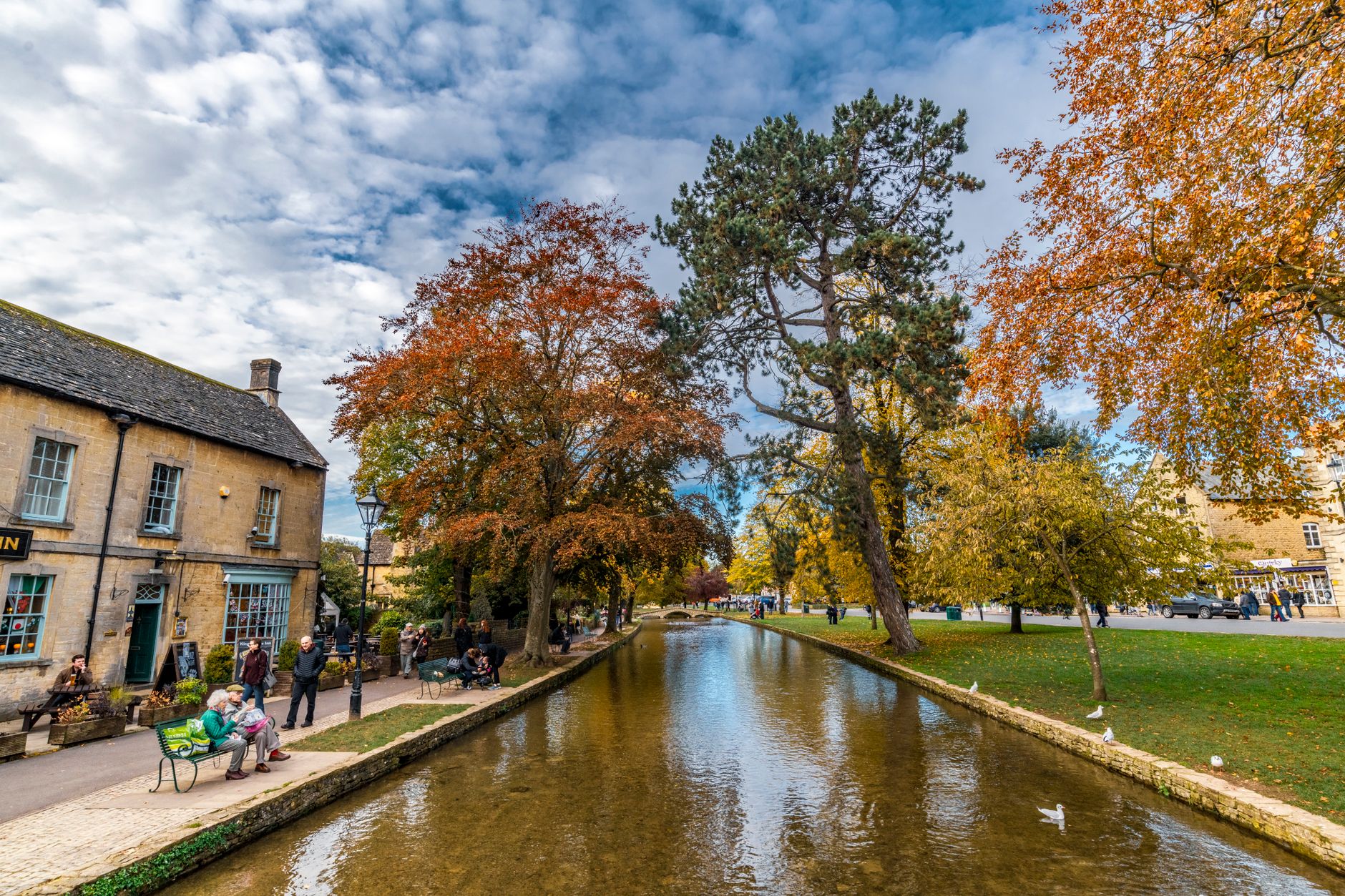
Bourton-on-the-Water is the village most people picture when they picture the Cotswolds. The River Windrush runs straight through the middle of it, shallow and clear, crossed by a handful of low stone bridges that have earned the place its nickname, the Venice of the Cotswolds. It is a generous comparison, since the Windrush is rarely deeper than your shins, but stand on the green on a still morning and you can see where it comes from.
It is also a very popular village, and there is no point pretending otherwise. Around 300,000 people visit every year, the coaches start arriving mid-morning, and on an August weekend the riverbank can feel more like a beach than a backwater. The trick is knowing how to handle that, which this guide will help you do. Come early, look beyond the High Street, and Bourton repays the effort with paddling, penguins, proper walks and some genuinely good places to eat.
The Windrush, the bridges and the green
The heart of Bourton is the long, tree-shaded green that runs either side of the Windrush. Five low bridges cross the river as it passes through the village, and they are older than they look. The earliest, Mill Bridge, dates from 1654; High Bridge followed in 1756 and Paynes Bridge in 1776, with the New Bridge (1911) and the Coronation footbridge (1953) added in the twentieth century. They are graceful, flat and just high enough to lean on while you watch the ducks work the current.
What sets Bourton apart from tighter Cotswold villages is space. The green is wide, the horse chestnuts and limes are mature, and the honey-coloured buildings step back from the water rather than crowding it. That openness is exactly why it works as a family day out: children can paddle in the shallow river, there is room to spread a picnic blanket, and you are never far from an ice cream. It is also why the crowds are so visible. There is nowhere for them to hide, so the village can feel rammed at noon and almost empty by six.
My advice is simple. Arrive before ten or after four, and the difference is night and day. Early on, the light is soft on the stone, the river is yours, and you can photograph the bridges without a stranger in shot. Bourton is one of the standout names among the prettiest villages in the Cotswolds, and seeing it at the right hour is the single best thing you can do to enjoy it.
Birdland Park and Gardens
Birdland is Bourton’s most surprising attraction, and its best. Set in nine acres on the edge of the village, beside and partly over the Windrush, it is home to over 500 birds. The headline act is a group of king penguins, the only ones in England, kept alongside a noisier huddle of Humboldt penguins. There are flamingos, pelicans, cranes, owls and a walk-through enclosure or two, plus a Jurassic-themed dinosaur trail that small children tend to love more than the birds.
Aim to be there for the penguin feed, which at the time of writing runs at 3pm daily and is genuinely good fun. Birdland is open daily from 10am to 5pm, with last entry at 4pm, and is shut on Christmas Eve and Christmas Day. Booked online, admission is £13.95 for adults and £10.50 for children aged 3 to 15, plus a £1.50 booking fee, or £14.95 and £11.50 at the gate, with under-threes free. Prices creep up, so check the official site before you set off. Allow an hour and a half to do it justice.
The Model Village and the Motoring Museum
Behind the Old New Inn sits the village’s quirkiest sight: a one-ninth scale model of Bourton itself, built from the same local stone by local craftsmen in the 1930s, opened in 1937 and now listed in its own right. It is the only Grade II-listed model village in the country, and the detail is the draw, right down to a tiny model of the model within the model, repeating into the distance. It takes about half an hour to wander and costs around £5 for adults. Children find it oddly thrilling to stand giant over a perfect little Bourton.
A few steps away, in an old water mill on the Windrush, the Cotswold Motoring Museum packs in vintage cars, motorbikes, caravans, enamel signs and a vast hoard of old toys. For a generation of British visitors the real pull is Brum, the little yellow car from the children’s television series, who lives here. Check the museum’s own website for opening days and hours; it makes a reliable indoor hour when the weather turns. If you are travelling with little ones, it slots neatly into a family holiday in the area.
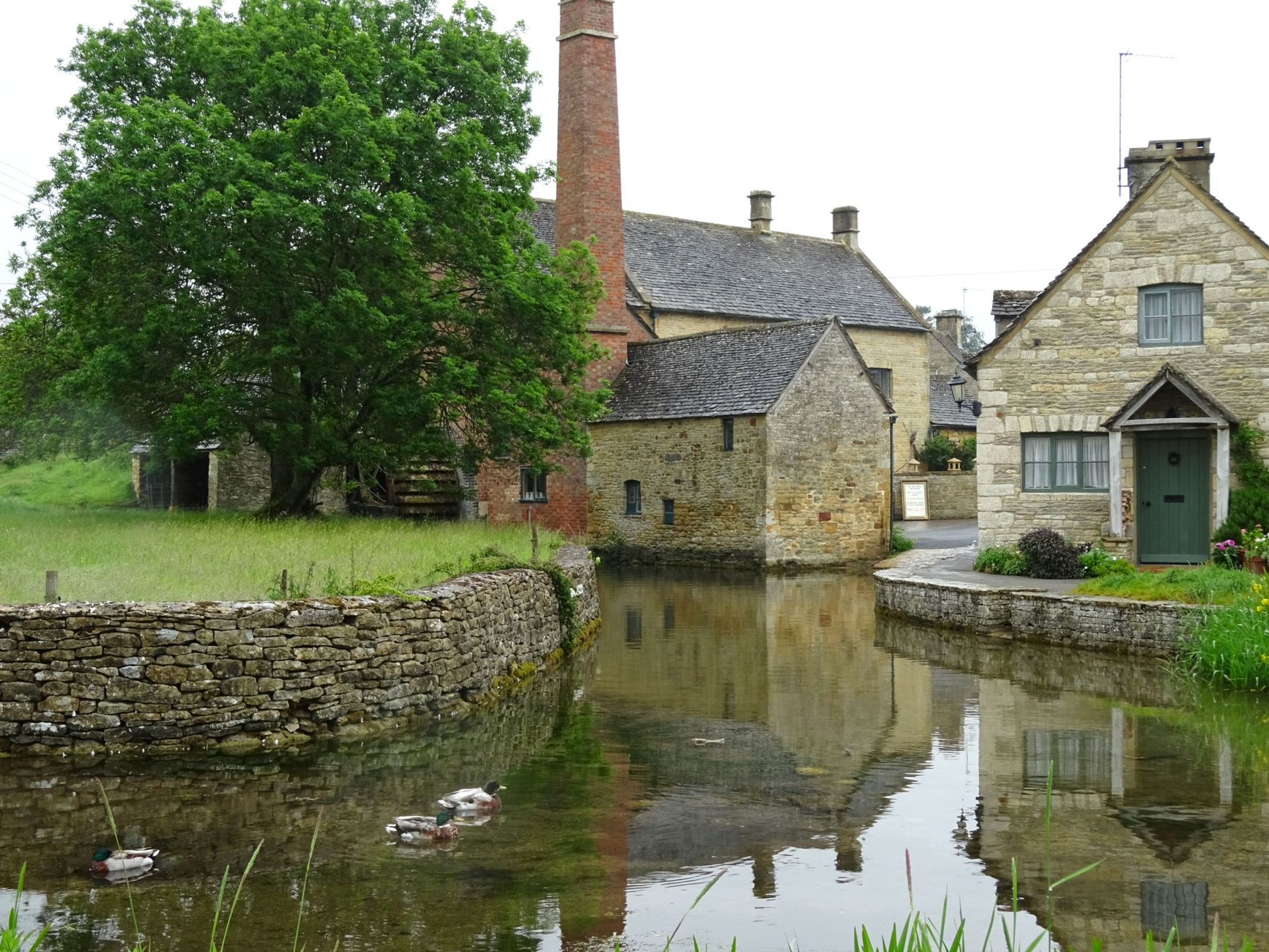
More to do: maze, model railway and a nature reserve
Bourton crams a remarkable amount into a small footprint. The Dragonfly Maze is a proper yew hedge puzzle with a clever twist: solve the clues hidden along the way and you earn the right to claim a golden dragonfly at the centre. It keeps children busy for the better part of an hour and is more absorbing than it sounds. The Model Railway Exhibition, tucked behind a shop on the High Street, runs dozens of trains across detailed layouts in different scales and is a dependable wet-weather standby.
For something quieter, walk ten minutes out to Greystones Farm, a Gloucestershire Wildlife Trust reserve on the River Eye with wildflower meadows, a discovery barn and the grassy ramparts of an Iron Age settlement. It is a useful reminder that the countryside starts the moment you leave the green. Our guide to free things to do in the Cotswolds is worth a look in a village where the paid attractions add up quickly.
St Lawrence’s Church and a little history
Just off the main drag, St Lawrence’s Church is worth five quiet minutes. It carries fabric from the medieval period, including a Norman chancel arch and a rare crypt, under a later Georgian tower that gives it an unusual silhouette for the Cotswolds. The churchyard is a calm spot a stone’s throw from the crowds.
Bourton is far older than its tea rooms suggest. There was Iron Age and Roman settlement here, helped by the Fosse Way, the great Roman road that runs dead straight nearby, and a Roman villa has been found close to the village. In the twentieth century it reinvented itself for tourism, with the Model Village opening in 1937 and Birdland following in the 1950s. For the wider story, our guide to Cotswolds history and heritage sets it all in context.
The best walks from Bourton
The single best reason to linger in Bourton is the walk to the Slaughters, and it is rightly one of the most popular in the whole region. A flat, easy route of around four miles loops out along the Windrush and the River Eye through water meadows to Lower Slaughter and Upper Slaughter, two of the loveliest and least spoiled villages in the Cotswolds. Allow two to three hours with time to dawdle, and you can stretch it towards Naunton for a longer day. The full route, and what to look for along the way, is covered in our guide to the Slaughters.
For something quieter underfoot, a three-mile circuit to Wyck Rissington takes you across farmland to a tiny village with a Norman church and a Gustav Holst connection; the composer was briefly organist here. Longer still, the Windrush Way runs roughly fourteen miles down from the hills near Cutsdean to Bourton, and the stretch in from the Guitings is a beauty if you can arrange a lift back. For routes graded by effort, see our guide to walking and hiking in the Cotswolds.
Where to eat and drink
Bourton eats better than a honeypot village has any right to, though you do need to pick carefully and book at weekends. The Rose Tree sits right on the river and does honest British cooking, with Cotswold lamb and a proper Sunday roast; the terrace is the prize in summer. The Kingsbridge is a welcoming riverside pub for a pint and a plate of something hearty, and Smiths of Bourton is the go-to for a good burger, though expect a wait at peak times.
For something lighter, the Bakery on the Water does excellent bread, pastries and a quick lunch you can carry to the green, and there are tea rooms and at least one serious ice cream counter to keep children happy. Options are good but finite, so midweek and off-season some places trim their hours. If you are planning a food-led trip, our guides to the best pubs in the Cotswolds and the wider Cotswolds food and drink scene point you well beyond the village.
Where to stay in and around Bourton
Staying over is the smartest way to enjoy Bourton, because you get the village in the golden hours when the day-trippers have gone. Several handsome hotels sit right on the water, including a couple in eighteenth-century stone with gardens running down to the Windrush, alongside a good spread of bed and breakfasts on the village edge, typically from around £90 to £130 a night. Self-catering cottages are plentiful in and around the village if you want a base for a few days.
Because Bourton sits roughly in the middle of the Cotswolds, it makes an excellent hub: Stow, the Slaughters, Northleach and Burford are all close, and you can reach Cheltenham or Moreton in well under an hour. To weigh up areas before booking, our guide to where to stay in the Cotswolds breaks the region down by character and budget, and self-caterers will find plenty of options across the surrounding villages.
Getting there and parking
Bourton sits on the A429, the old Fosse Way, between Stow-on-the-Wold and Northleach. By car it is roughly an hour and three-quarters from London, about forty-five minutes from Oxford and forty from Cheltenham. The nearest railway station is Moreton-in-Marsh, around seven miles away on the line from London Paddington, and the 801 bus links the two several times a day. Without a car, basing yourself at Moreton and bussing in is very doable.
Parking is the usual Cotswold headache. The main car parks are on Station Road and Rissington Road, both a short walk from the centre and charging a few pounds for the day, with an overflow field opening near the petrol station at peak times. Rissington Road charges from 10am to 8pm every day, bank holidays included, so an early arrival, before the coaches, is the better plan. For the bigger picture on trains, buses and driving, see our guide to getting to and around the Cotswolds.
The best time to visit Bourton
Bourton is a year-round village, but the season changes the experience completely. Expect crowds in the summer holidays, especially at weekends and on bank holidays, when the coaches and the heat arrive together. May, June and September give you warm-enough weather with noticeably fewer people, and are my pick for a first visit. Winter is the quiet secret: cold, crisp mornings with mist on the river, cosy tea rooms, and the bridges almost to yourself. For a month-by-month steer, our guide to the best time to visit the Cotswolds goes through the year in detail.
Whenever you come, time of day matters more than time of year. The crowds follow a predictable rhythm, thick from late morning to mid-afternoon and thin at either end, so plan your river time around the edges of the day.
Football in the River and other traditions
If you want to see Bourton at its most gloriously daft, come on August bank holiday Monday for the Football in the River match. For more than a century, two teams of Bourton Rovers players have splashed out a game of football in the Windrush itself, ankle-deep, watched by hundreds packed along the banks. It lasts about half an hour, kicks off in the early afternoon, and raises money for the local club. It is chaotic, very wet and completely charming.
The village keeps a busy calendar otherwise, with a summer carnival, regular markets, a Christmas lights switch-on and various craft and charity events through the year. For what is on across the region and when, our guide to Cotswolds events and festivals is the place to plan around.
Day trips and nearby attractions
Bourton’s central position makes it a fine springboard. Stow-on-the-Wold, four miles north and the Cotswolds’ antiques capital, is an easy hop, while the Slaughters are barely a mile or two away on foot. Northleach, a beautifully unspoiled wool town, and Burford, with its famous sloping High Street, are both within a short drive; our guide to Burford is a good next read if you are touring east.
Families have two strong options close by. Cotswold Farm Park, Adam Henson’s rare-breeds farm from Countryfile, is about six miles away and a brilliant half-day; see our Cotswold Farm Park guide for what to expect. A little further, the Cotswold Wildlife Park near Burford is one of the best days out in the region. History-minded visitors can reach Sudeley Castle at Winchcombe within half an hour. To fit it all together sensibly, our Cotswolds itineraries weave Bourton into manageable days.
Shopping and browsing the village
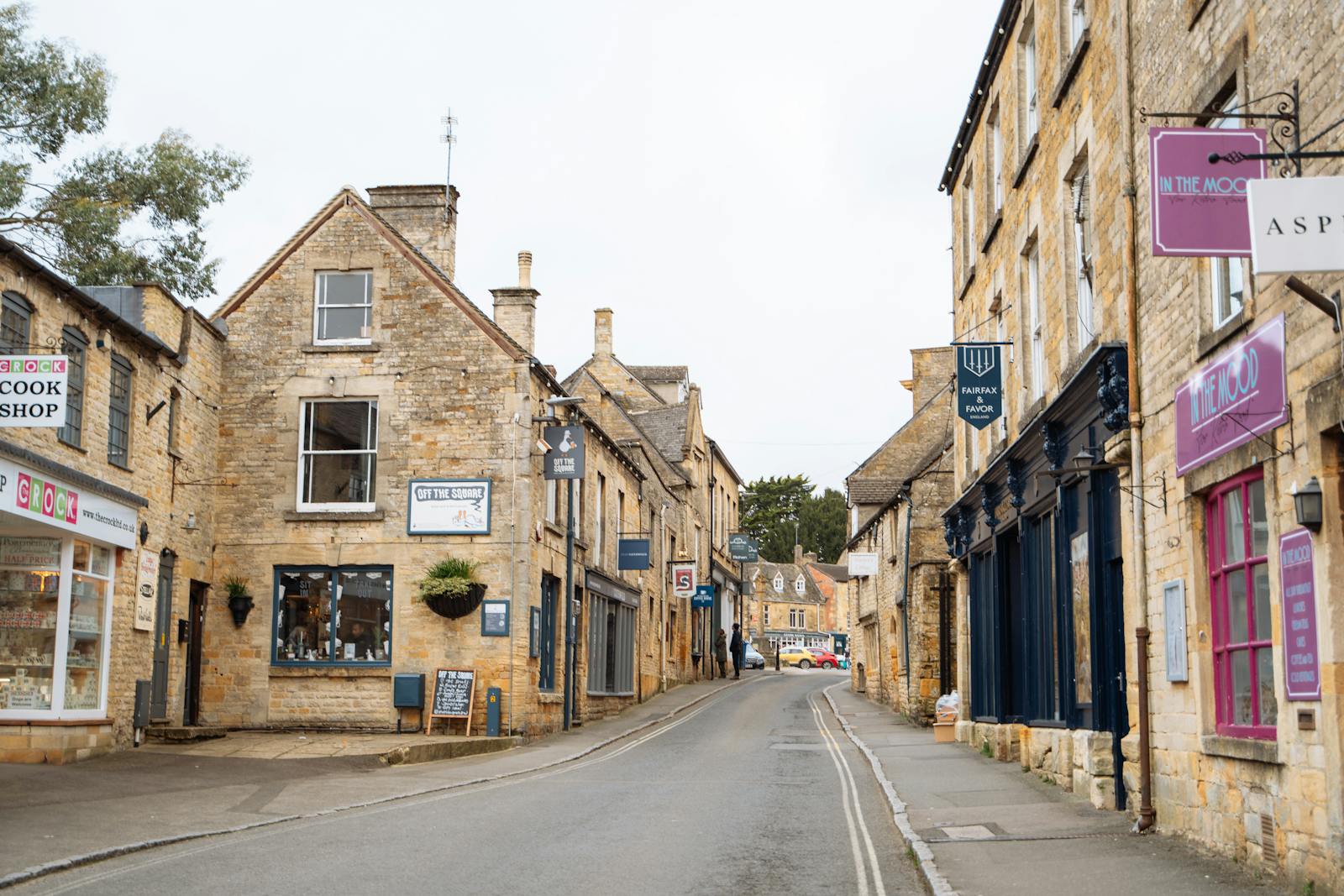
The High Street and the lanes off it carry the usual mix you would expect in a village this popular, from traditional sweet shops and fudge counters to outdoor-clothing stores and Cotswold gift boutiques. There is genuine quality among it if you look: a couple of good antique dealers, small craft galleries, and shops selling local cheese, preserves and other edible souvenirs that make better presents than another tea towel. Take the side lanes rather than just the main parade and you will find the more interesting corners.
Be realistic about what Bourton is, though. It leans more towards the souvenir end of the spectrum than, say, the antiques of Stow or the galleries of Broadway, so set your expectations accordingly. If serious shopping is the point of your trip, the antique-rich towns of Stow and Burford will serve you better than Bourton.
Making the most of a short visit
If Bourton is only a stop on a wider tour and you have a couple of hours rather than a day, here is how I would spend them. Park at Rissington Road, walk straight down to the green and cross a bridge or two while the river is quiet. Give yourself twenty minutes for the Model Village, then either head into Birdland for the penguins or strike out on the first mile of the Slaughters path, which leaves the crowds behind almost immediately. Finish with coffee and a pastry from the bakery, eaten on the grass by the water.
That plan gives you the bridges, one proper attraction, a taste of the countryside and a sit-down, all without joining the midday crush on the High Street. The mistake most day-trippers make is to arrive at noon, queue for lunch, shuffle along the busiest stretch and leave underwhelmed. Do it in reverse, early or late, and Bourton makes far more sense.
Frequently Asked Questions
Is Bourton-on-the-Water worth visiting despite the crowds?
Yes, provided you plan around the crowds rather than ignore them. Arrive before 10am or after 4pm, walk out to the Slaughters, and you will see why the village is so loved. At peak midday in summer it can feel overrun, so timing is everything.
Can you paddle in the River Windrush at Bourton?
You can. The Windrush is shallow and gentle through the village, usually no more than ankle to shin deep in summer, and paddling is a long-standing local tradition. Bring a towel, find a spot on the green, and keep an eye on younger children near the bridges.
How long should you spend in Bourton-on-the-Water?
Half a day covers the river, the bridges and one or two attractions. A full day lets you add Birdland or the Model Village and walk to the Slaughters and back. As a base for the central Cotswolds, two or three nights is ideal.
Where should you park in Bourton-on-the-Water?
The Station Road and Rissington Road car parks are both a short walk from the centre and charge a few pounds a day, with an overflow field at busy times. Rissington Road charges from 10am to 8pm every day, bank holidays included, so arrive early.
What is the Football in the River at Bourton?
It is a century-old tradition held on August bank holiday Monday, when two local teams play a short football match in the River Windrush itself. The game lasts around half an hour, draws big crowds to the banks and raises money for Bourton Rovers.
Related guides
Bourton is one of many in our roundup of the prettiest villages in the Cotswolds. To plan the wider trip, start with our complete guide to visiting the Cotswolds, then pair Bourton with nearby Bibury and its weavers’ cottages, or read on about the quiet Slaughters a short walk away.