This article contains advertising. My booking links are routed through a partner that adds commission tracking automatically, so if you book through one I earn a commission from the provider, at no extra cost to you. It never affects what I recommend. Affiliate disclosure
Pull into a lay-by on the high wold between Northleach and Stow on a clear, moonless night in January, switch off the engine and the headlights, and give your eyes a quarter of an hour. The sky fills in by degrees: first the bright winter stars of Orion and the Plough, then the fainter ones scattered between them, and finally, if there is no haze, a pale, grainy band of light arching overhead from one horizon to the other. That is the Milky Way, which most people in Britain never see from home, and it is the stargazing Cotswolds locals take for granted — one of the least-advertised pleasures of a winter break here, and one that costs nothing at all.
It helps to be honest about what the Cotswolds can offer. This is not a national park or an official dark sky reserve, and the hills are ringed by the glow of Cheltenham, Gloucester, Swindon, Oxford and, further off, Birmingham. But the thinly populated heart of the region is genuinely dark, there are two official Dark Sky Discovery Sites, and a local astronomy society runs friendly sessions for beginners. This guide covers where to go, when, what you will see through the year, how to photograph it, and how to turn a night under the stars into a proper night away.
The best stargazing spots in the Cotswolds at a glance
| Spot | Why go | Watch out for |
|---|---|---|
| The Rollright Stones, near Chipping Norton | Official Dark Sky Discovery Site; a prehistoric stone circle under open sky | Respect the site’s guidance on access after dark; quiet lane parking only |
| Aunt Phoebe’s Recreation Ground, Long Compton | Official Dark Sky Discovery Site in the heart of a village | Some village lighting; be considerate of neighbours |
| The high wold around Northleach | Some of the darkest, emptiest country in the region | Farm traffic; park only in proper lay-bys |
| Cleeve Common | Highest ground in the Cotswolds, with wide horizons | Cheltenham’s glow to the west; exposed and very cold in winter |
| Broadway Tower ridge | High, open ridge with long views north and east | Lights of the Vale of Evesham to the north |
| Escarpment viewpoints such as Coaley Peak | Dramatic views over the lights of the Severn Vale | Not dark to the west; check whether car parks close at dusk |
Site details checked October 2026. Many commons, country parks and National Trust car parks close at dusk, so always check where you can legally park after dark before you set out.
How dark are Cotswold skies, really?
Darker than most of southern England, and not as dark as the wild uplands. When CPRE, the countryside charity, mapped light pollution across England from satellite images, the Cotswolds ranked thirteenth among the country’s protected landscapes for dark skies. The Cotswolds National Landscape has a formal policy on tranquillity and dark skies, and back in 2016 its board was exploring a bid for International Dark Sky Reserve status — but no such designation exists today. The nearest official reserves are Cranborne Chase on the Dorset–Wiltshire border, Exmoor, and Bannau Brycheiniog (the Brecon Beacons) in Wales.
In practice, the Cotswolds work like this. The western escarpment looks straight down on the lights of the Severn Vale, the M5 and the cities, so it is spectacular at dusk but never truly dark in that direction. The further east and south you go across the high, empty wold — away from the towns and the main roads — the darker it gets, and on a clear, moonless night in the middle of the region the Milky Way is easy to see with the naked eye. The villages themselves, even small ones, have enough lighting to wash out the fainter stars, so the rule is simple: drive ten minutes out of the village and up onto the open plateau.
Where to go stargazing in the Cotswolds
The Rollright Stones
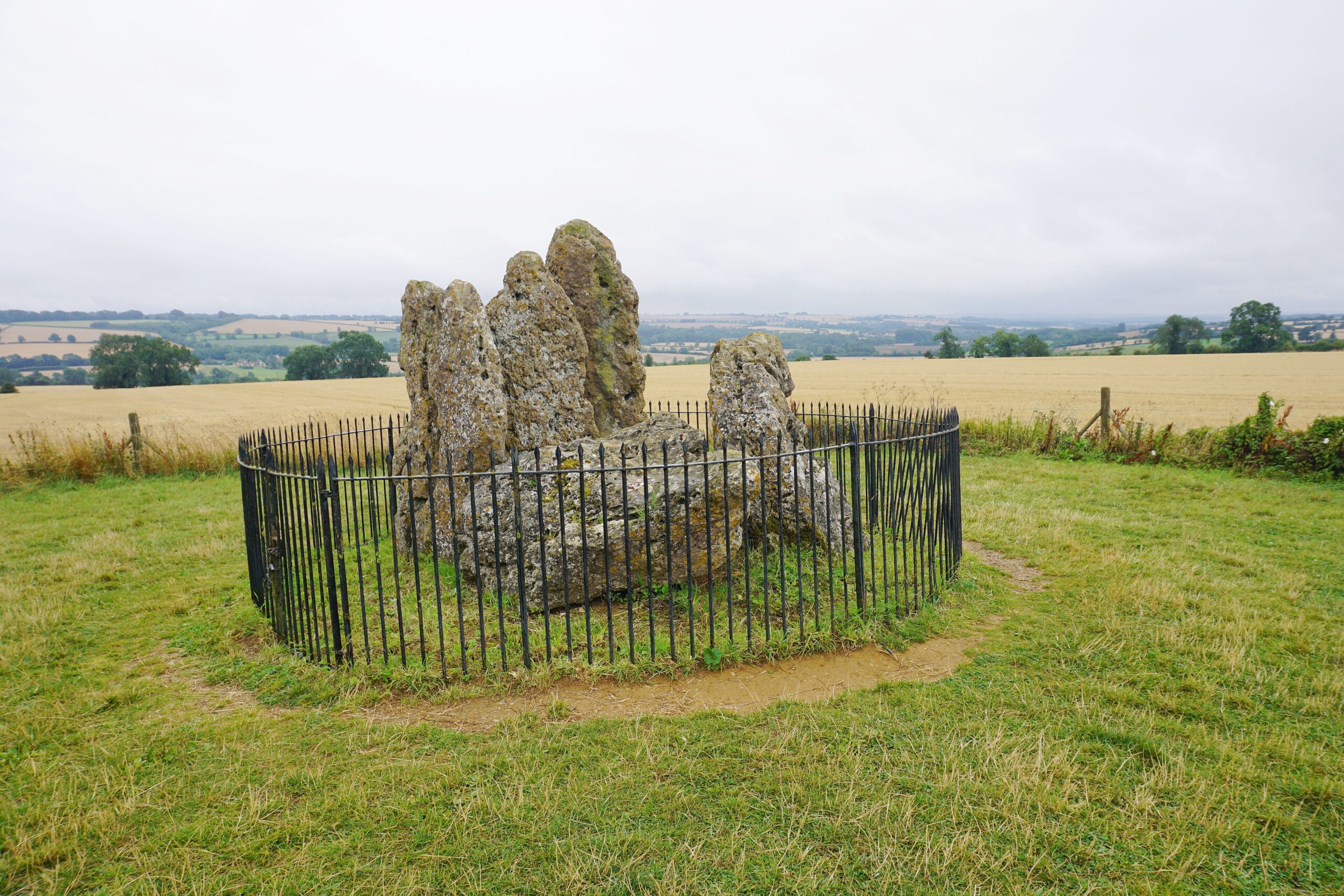
The Rollright Stones, on the ridge between Chipping Norton and Long Compton, are the obvious first choice: an official Dark Sky Discovery Site and one of the most atmospheric places in England to watch the stars come out. The site has three parts — the King’s Men, a weathered stone circle more than 4,000 years old; the King Stone, a single standing stone across the lane; and the Whispering Knights, the remains of an even older burial chamber. Local legend says a witch turned an ambitious king and his army to stone here, and on a still, frosty night with the circle silhouetted against the stars it is easy to see how the story took hold.
The stones are looked after by a small charitable trust, and the site is a scheduled ancient monument, so follow any notices about access after dark, park considerately on the lane and leave no trace. Northern and eastern horizons are reasonably dark; the glow of Chipping Norton sits to the south-east. Our Chipping Norton guide covers the town, its pubs and the rest of the area.
Long Compton
Just over the hill in Warwickshire, Aunt Phoebe’s Recreation Ground in the centre of Long Compton is the region’s second Dark Sky Discovery Site. It is a good choice for families, because it is easy to reach and on flat, safe ground, and on a good night the Milky Way is visible overhead. It is a village recreation ground, so keep noise and torches down and respect the neighbours.
The high wold around Northleach
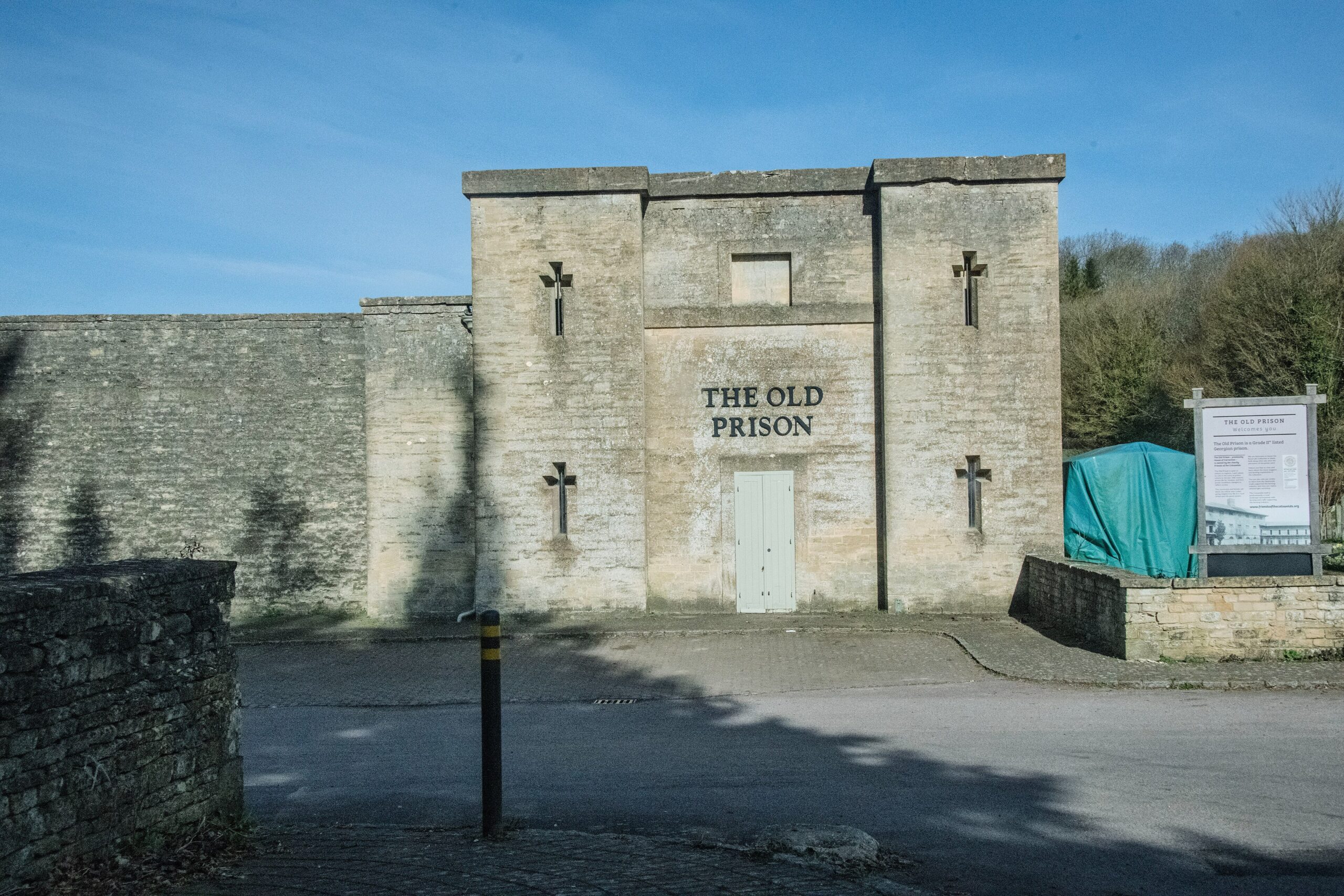
The rolling plateau between Northleach, Stow-on-the-Wold and Burford, and on towards the Windrush valley, is some of the emptiest country in the Cotswolds, with few villages, no towns and long sightlines. On a clear, moonless night it is about as dark as the region gets. There is no single spot to aim for: the trick is to find a safe lay-by or a wide verge on a quiet lane, well away from village lights, and pull completely off the road. Never block a field gateway — farm machinery uses them at all hours. The Old Prison at Northleach, an eighteenth-century house of correction that later became a visitor centre, has hosted public stargazing evenings run by the Chipping Norton Amateur Astronomy Group, which tells you something about the quality of the sky.
Cleeve Common
At 330 metres, Cleeve Hill is the highest point in the Cotswolds, and the common on top gives you huge, open horizons to the north, east and south. The catch is Cheltenham, which spreads its glow across the western sky below the scarp. Use Cleeve for the eastern sky and for spectacular dusk views over the town as the lights come on, and dress for it: the top of the common can be several degrees colder and a great deal windier than the town. Check where you can legally park after dark before you go.
Broadway Tower and the northern ridge
The ridge around Broadway Tower and Snowshill, at the northern end of the Cotswolds, is high and open, with long views across the Vale of Evesham. The vale’s towns and glasshouses light up the northern horizon, so it is not the darkest site, but the sky overhead and to the east is good, and the folly makes a fine silhouette for night photography. Broadway Tower itself is a paid attraction with daytime opening hours, so after dark stick to public rights of way and legal roadside parking.
The escarpment viewpoints
Coaley Peak, Haresfield Beacon, Crickley Hill and Painswick Beacon all look west over the Severn Vale, and after dark the view is not of stars but of lights: Gloucester, Stroud and the villages strung out below, the Severn shining faintly beyond and, on a clear night, the hills of Wales on the skyline. It is a wonderful place to watch dusk turn to night, and the eastern sky behind you darkens nicely. Some country park car parks along the escarpment close at dusk, so check before you go.
When to go stargazing in the Cotswolds
- Pick your moon. The week either side of the new moon gives the darkest skies. A full moon washes out all but the brightest stars, although it makes a lovely night walk.
- Autumn and winter are best. From October to March the nights are long and dark by early evening, which suits families as well as serious observers. In midwinter it is properly dark well before 19:00.
- Midsummer is the hardest time. From late May to mid-July, the sky in southern England never gets fully dark, even at midnight. August and September bring the darkness back, along with warm nights and the summer Milky Way.
- Watch the weather. The clearest nights often follow a cold front, when the air is fresh and dry. Hazy, humid summer nights are disappointing; crisp, frosty winter nights are superb.
For what else is going on in the colder months, see our guide to the Cotswolds in winter, and for monthly temperatures our Cotswolds weather guide.
What you can see in the Cotswolds night sky through the year
| Season | Naked eye and binoculars | Meteor showers |
|---|---|---|
| Winter (December–February) | Orion and its nebula, the Pleiades, Taurus, Gemini, the winter Milky Way through Cassiopeia and Auriga | Geminids (mid-December), the year’s best; Quadrantids (early January) |
| Spring (March–May) | The Plough high overhead, Leo and the spring galaxies for telescope owners | Lyrids (late April) |
| Summer (June–August) | The Summer Triangle, the Milky Way rising in the south-east in late summer, noctilucent clouds glowing blue in June and July twilight | Perseids (peak around 12–13 August) |
| Autumn (September–November) | The Milky Way overhead in the evening, the Andromeda Galaxy as a faint smudge to the naked eye from dark sites | Orionids (late October), Leonids (mid-November) |
Planets wander through all of these, and the International Space Station crosses the sky as a bright, steady, fast-moving light on many evenings; a free app will tell you when to look.
Can you see the northern lights from the Cotswolds?
Occasionally, yes. During the strong geomagnetic storms of 2024, the aurora was seen and photographed right across southern England, the Cotswolds included, and the Sun stays lively for several years after the peak of its cycle. To give yourself a chance, sign up for alerts from AuroraWatch UK, head for high ground with a dark northern horizon when an alert is issued, and point your phone camera north: phone sensors often pick up the colour of a faint aurora before your eyes do.
Stargazing events and astronomy clubs
The easiest way to start is with people who know what they are looking at. The Cotswold Astronomical Society runs informal, beginner-friendly stargazing sessions at Deer Park Archers on Shurdington Road, Cheltenham, usually on the last Sunday of each month except December. A small fee is charged on the door and refunded if you join the society, and members will happily help you set up a telescope if you bring one along. Check the society’s listings for the current dates and times, which shift with the seasons. The Chipping Norton Amateur Astronomy Group has also run public stargazing nights in the north Cotswolds, including at Northleach.
A beginner’s kit list
- Warm clothes. More than you think: hat, gloves, thick socks and a layer more than you would wear for a walk. You will be standing still on a cold hill for an hour or more.
- A red torch. White light ruins your night vision, which takes twenty to thirty minutes to develop fully. Red light does not. Many phones have a red-screen mode.
- Binoculars. An ordinary pair of 7×50 or 10×50 binoculars shows hundreds of stars you cannot see with the naked eye, the craters of the Moon and the moons of Jupiter. They are a better first purchase than a cheap telescope.
- A star map or app. A planisphere or a free sky-map app will help you find your way around.
- Something to lie on. A reclining camping chair or a foam mat and blanket save your neck.
- A flask. Hot chocolate is traditional.
Stay safe on country lanes at night: park well off the road, wear something reflective if you are walking, and tell someone where you are going if you are heading somewhere remote alone.
Photographing the night sky in the Cotswolds
The Cotswolds are made for astrophotography with a foreground: a stone circle, a lone tree on the wold, a field barn or a church tower under the Milky Way. You need a camera that allows manual settings, a sturdy tripod and the widest, fastest lens you own.
- Starting settings: aperture as wide as it will go, ISO 1600–3200, and an exposure of 15–25 seconds. Longer than that and the stars start to trail with a wide lens.
- Focus manually on a bright star or planet using your screen’s magnified live view; autofocus will not cope.
- Use a two-second timer or a remote release so pressing the button does not shake the camera.
- Be kind with light. If others are observing, do not “light paint” the stones or flash torches around — it ruins everyone’s night vision.
- Phones can do it too. Recent phones have night modes that produce surprisingly good results from a tripod or a steady wall.
Our guide to Cotswolds photography spots has locations that work by day and night.
Making a night of it: where to stay and eat
The best stargazing trips combine a good dinner with a short drive — or, better, no drive at all. A pub supper in a village on the wold, followed by ten minutes up the lane to a dark lay-by, makes a perfect winter evening, but someone has to stay sober to drive. The answer is to stay somewhere dark: a cottage on a farm, a shepherd’s hut, or a glamping site well away from the villages, where you can simply step outside. Ask about outdoor lighting when you book — some rural properties are lit up like car parks. Our guides to glamping in the Cotswolds, holiday cottages and pubs with rooms cover the options, and the high wold around Northleach, Sherborne and the Windrush valley is the place to look.

Winter is also the cheapest time to stay, with log fires, quiet villages and long dark evenings that suit stargazing perfectly. Combine a clear night with a frosty morning walk and a pub lunch and you have one of the best short breaks the Cotswolds can offer.
Frequently asked questions about stargazing in the Cotswolds
Where is the best place for stargazing in the Cotswolds?
The Rollright Stones and Long Compton’s recreation ground are the official Dark Sky Discovery Sites. For the darkest skies overall, head for quiet lay-bys on the high wold around Northleach, away from towns and villages.
Is the Cotswolds a dark sky reserve?
No. The Cotswolds National Landscape has a policy to protect its dark skies, but it has no International Dark Sky Reserve status. The nearest reserves are Cranborne Chase, Exmoor and the Brecon Beacons.
Can you see the Milky Way from the Cotswolds?
Yes, on clear, moonless nights from the darker parts of the region, especially in autumn, winter and late summer. You need to be well away from village and town lights and give your eyes twenty minutes to adjust.
When is the best time of year for stargazing in the Cotswolds?
From October to March, when the nights are long and dark early. Avoid the weeks around midsummer, when the sky never gets fully dark, and plan around the new moon.
Can you see the northern lights in the Cotswolds?
Occasionally, during strong geomagnetic storms like those of 2024. Sign up for aurora alerts and look north from high ground, using your phone camera to pick up the colour.
Are there stargazing events in the Cotswolds?
Yes. The Cotswold Astronomical Society runs low-cost beginners’ sessions in Cheltenham on the last Sunday of most months, and local astronomy groups hold occasional public stargazing nights.
The night sky is the last chapter of the wild Cotswolds. For the wildlife you might meet on the way — barn owls quartering the fields, badgers on the lanes, bats over the rivers — see our guide to Cotswolds wildlife and nature, and for a winter break built around long, dark evenings, our guides to the Cotswolds in winter and romantic Cotswolds.
Several of the best stargazing spots double as daytime nature reserves. Crickley Hill and Coaley Peak look out over the Severn Vale, Cleeve Common has the biggest skies in the region, and the commons above Stroud are full of orchids and skylarks by day. Our guide to the best nature reserves in the Cotswolds covers them all.
Photo Credits
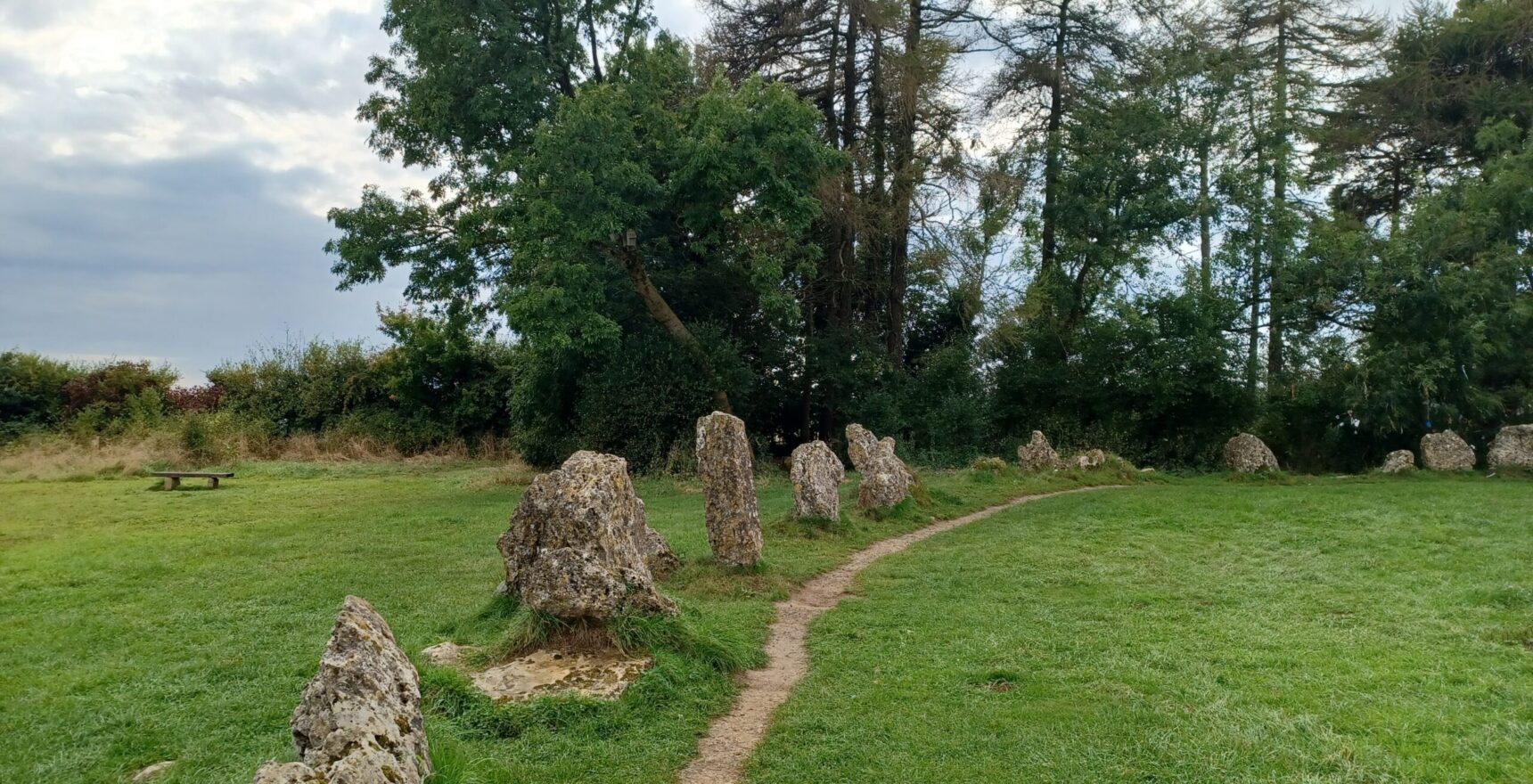
The King’s Men stone circle at the Rollright Stones: Rollright – Rollright Stones – 20240921145703 by Simon Burchell, CC BY-SA 4.0, via Wikimedia Commons.
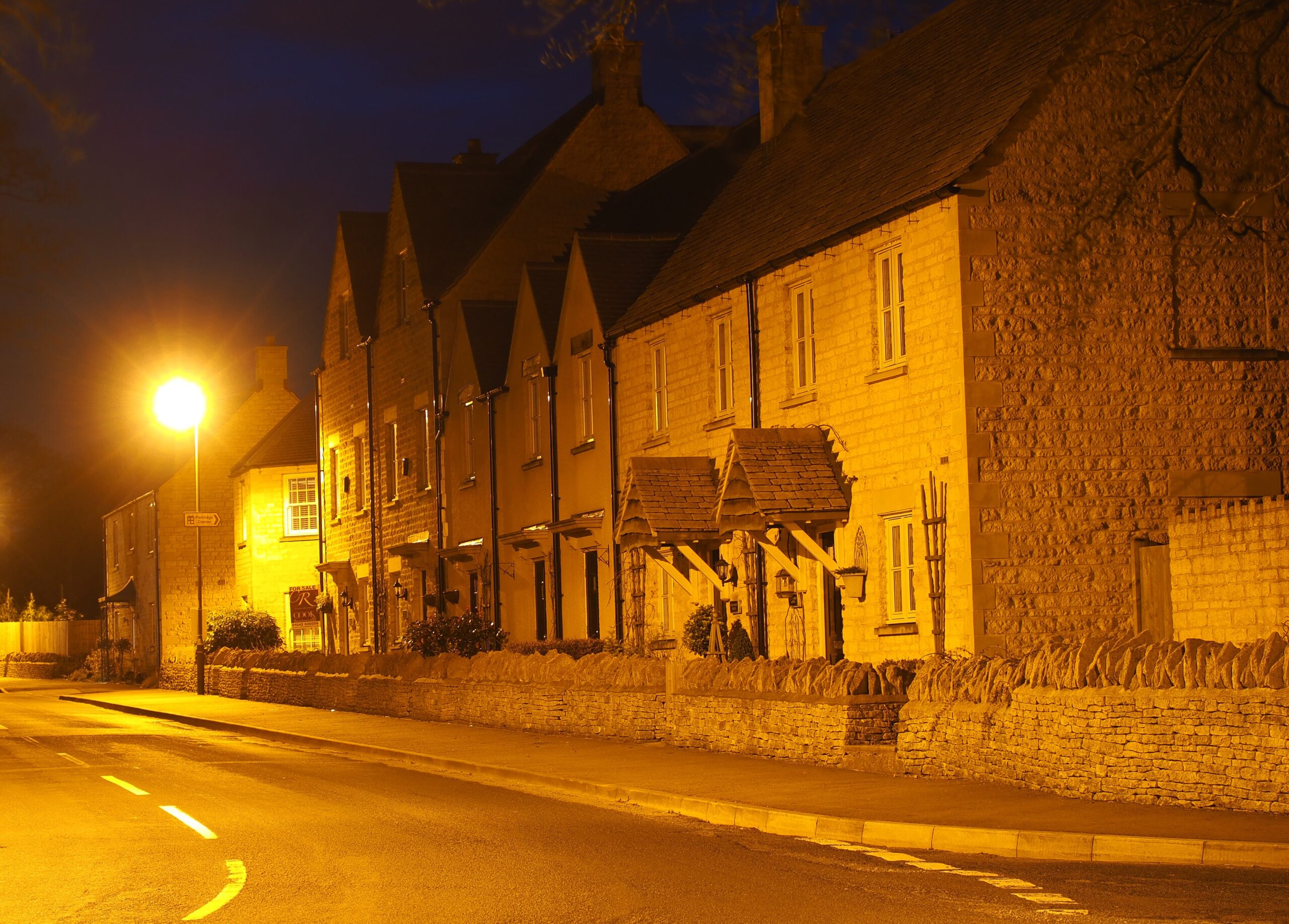
Birdlip at night: New Birdlip Housing at Night – geograph.org.uk – 4911186 by Andy Beecroft, CC BY-SA 2.0, via Wikimedia Commons.
The Whispering Knights at Rollright: Whispering Knights – geograph.org.uk – 4775602 by Bill Boaden, CC BY-SA 2.0, via Wikimedia Commons.
The Old Prison at Northleach: Northleach , The Old Prison – geograph.org.uk – 8009104 by Lewis Clarke, CC BY-SA 2.0, via Wikimedia Commons.
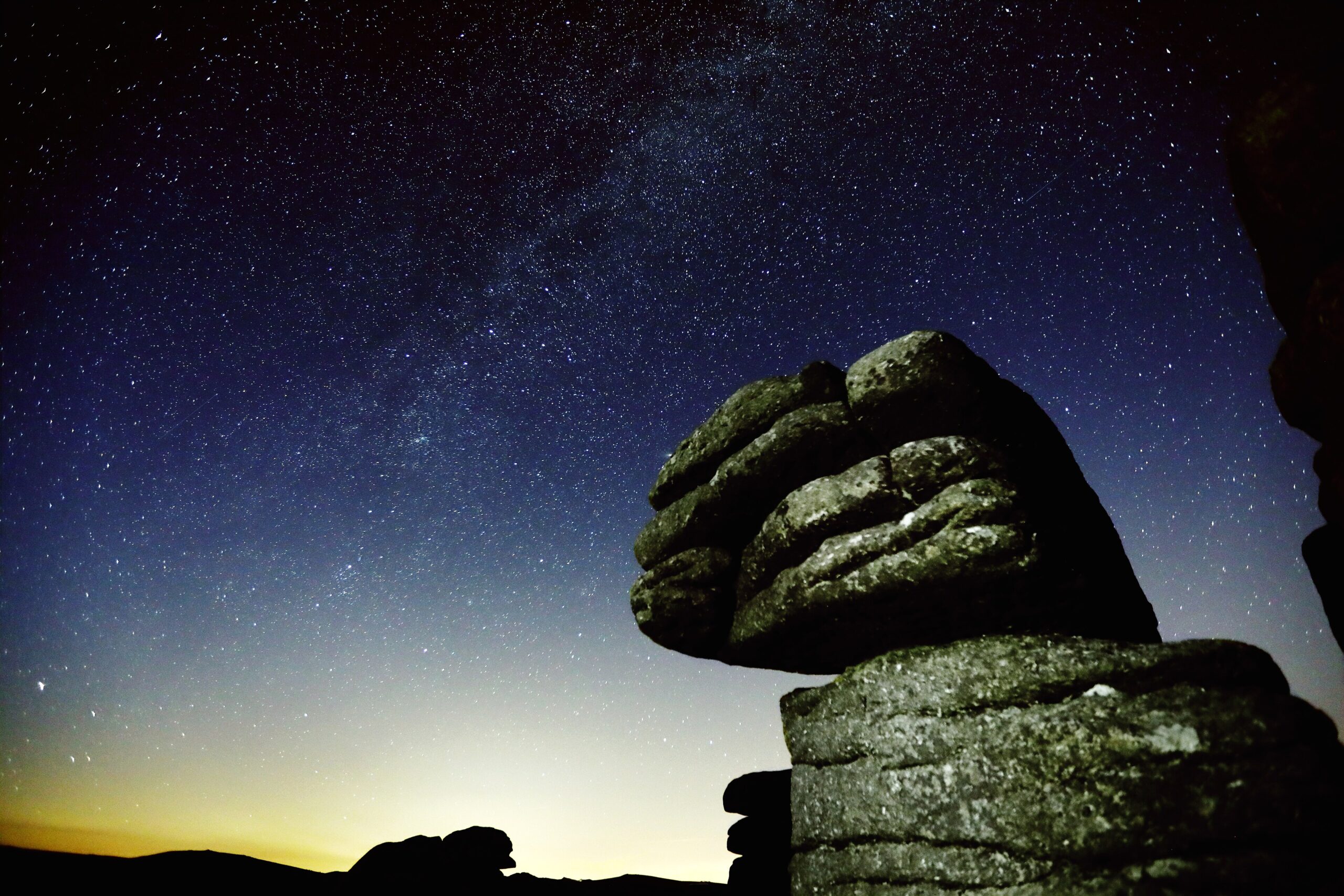
The Milky Way over Dartmoor: The Milky Way Over Dartmoor (30887912658) by Charlie Marshall from Bristol UK, United Kingdom, CC BY 2.0, via Wikimedia Commons.
Leave a Reply