This article contains advertising. My booking links are routed through a partner that adds commission tracking automatically, so if you book through one I earn a commission from the provider, at no extra cost to you. It never affects what I recommend. Affiliate disclosure
Few places in England are as effortlessly photogenic as the Cotswolds. Honey-coloured cottages, mirror-still rivers, ancient churchyards and big escarpment skies mean you can barely point a camera without finding a frame worth keeping. But the difference between a snapshot and a truly memorable image usually comes down to two things: being in the right spot, and being there at the right time. After years of chasing the light around these hills, I have learned where both line up.
This guide to the best Cotswolds photography spots rounds up the most rewarding locations, from the world-famous icons to quieter corners the crowds miss, with specific advice on the best time of day and season to shoot each one. I have also added a section on beating the crowds and a few words on etiquette, because many of these beautiful scenes are people’s homes. On a phone or a full-frame camera, these are the views to seek out among all the things to do in the Cotswolds.
The Icons: Bibury, Castle Combe & Bourton
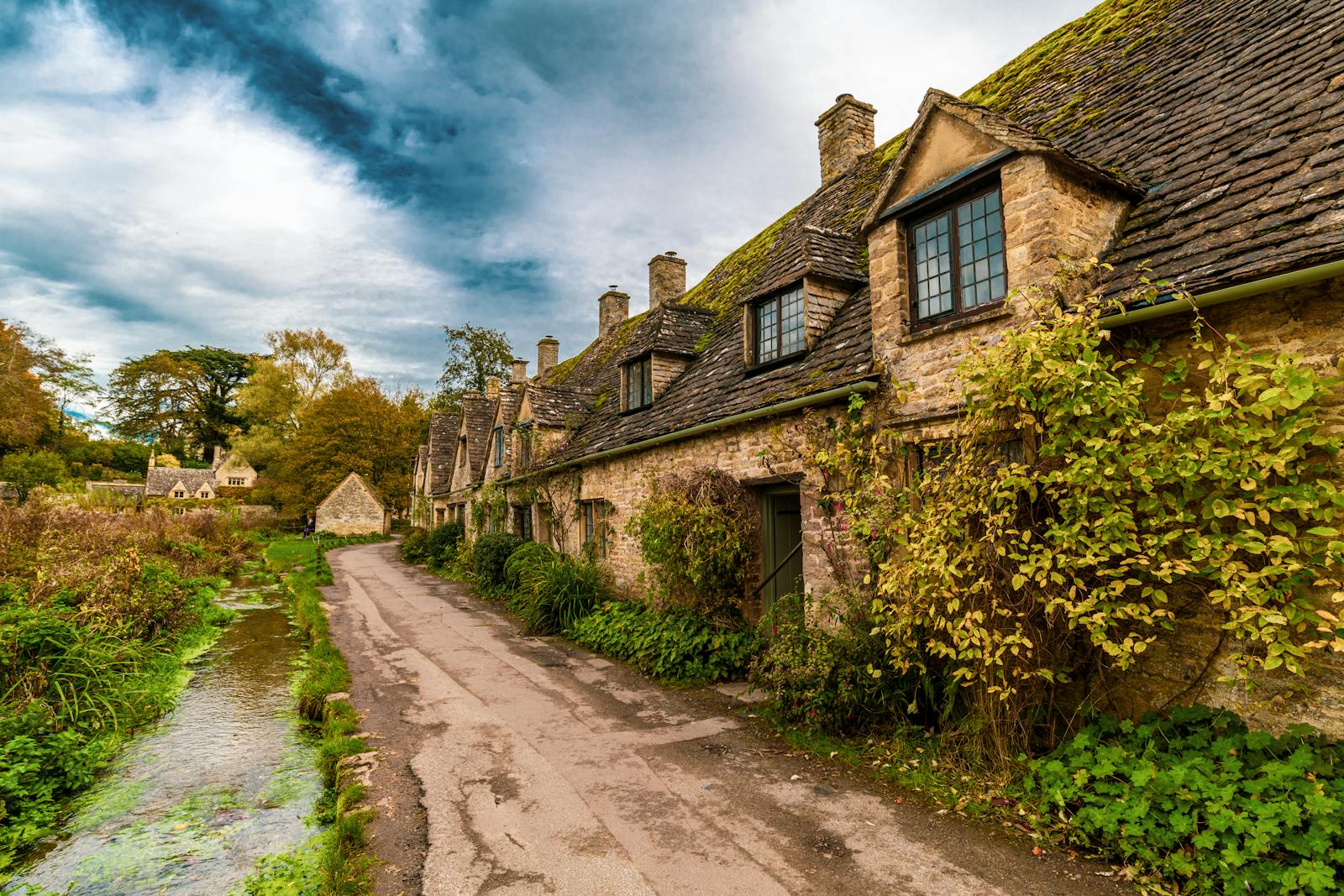
Start with the classics, the scenes that made the Cotswolds famous. Arlington Row in Bibury is the most photographed spot of all, a terrace of 14th-century weavers’ cottages so iconic it appears inside the UK passport. The classic shot is the angled view of the cottage row from across the water-meadow; aim for morning light, when the sun falls on the cottage fronts, and arrive early because Bibury gets extremely busy (note that the village has recently tightened parking and coach restrictions, so plan ahead). While you are there, the River Coln, its little bridge and the ivy-clad Swan Hotel are lovely too.
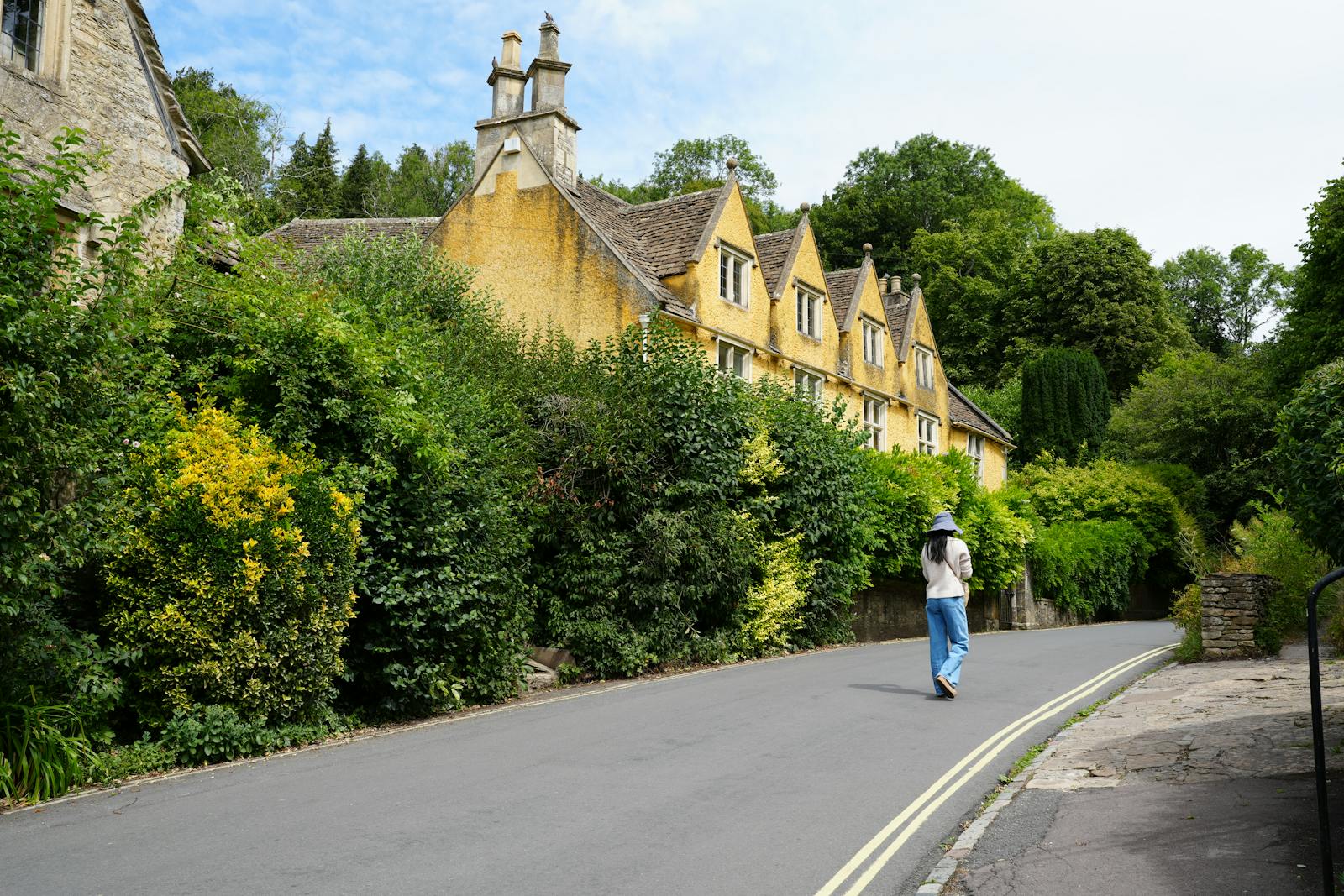
Castle Combe, often called England’s prettiest village, is the second great icon. With no aerials, streetlights or modern intrusions, the view up The Street from the little bridge over the By Brook is timeless, and especially atmospheric in autumn or early-morning mist. Third is Bourton-on-the-Water, the “Venice of the Cotswolds”, where the low stone bridges over the River Windrush make beautifully symmetrical compositions, best shot at sunrise before the crowds arrive.
Storybook Doors & Churchyards
Some of the Cotswolds’ most atmospheric photographs are found in its churchyards. The most famous is the “Tolkien door” at St Edward’s Church in Stow-on-the-Wold: the church’s north door, flanked by two ancient yew trees that have grown around the frame, with a lantern hanging above. It is widely rumoured (though unproven) to have inspired the Doors of Durin in The Lord of the Rings. Shoot it in the morning, as harsh afternoon sun falls directly on the door and blows out the highlights; you may need to wait your turn for a clear frame.
In Painswick, the churchyard of St Mary’s is famous for its avenues of around 99 immaculately clipped yew trees, sculptural and wonderful in soft, overcast light or early sun. Visit in late winter and the nearby Rococo Garden adds a carpet of snowdrops to the mix.
Big Skies & Viewpoints
For landscape photographers, the Cotswold escarpment delivers the drama. Broadway Tower, a hilltop folly above the village of Broadway, stands on the second-highest point in the Cotswolds with views said to reach 16 counties. Shoot the tower against a sunrise or sunset sky, and look out for the deer that roam its parkland at golden hour.
For the widest panoramas of all, head to Cleeve Hill, the highest point in the Cotswolds, where the escarpment falls away towards Cheltenham, the Severn Vale and, on a clear day, the distant hills of Wales. It is superb at sunrise and sunset, and sits right on the Cotswold Way, one of the great routes in our guide to walking and hiking in the Cotswolds. Both spots reward checking the forecast: clear, crisp days give the longest views, while mist pooling in the valleys at dawn creates real magic, so it is worth reading up on Cotswolds weather before you set the alarm.
Mills, Rivers & Reflections
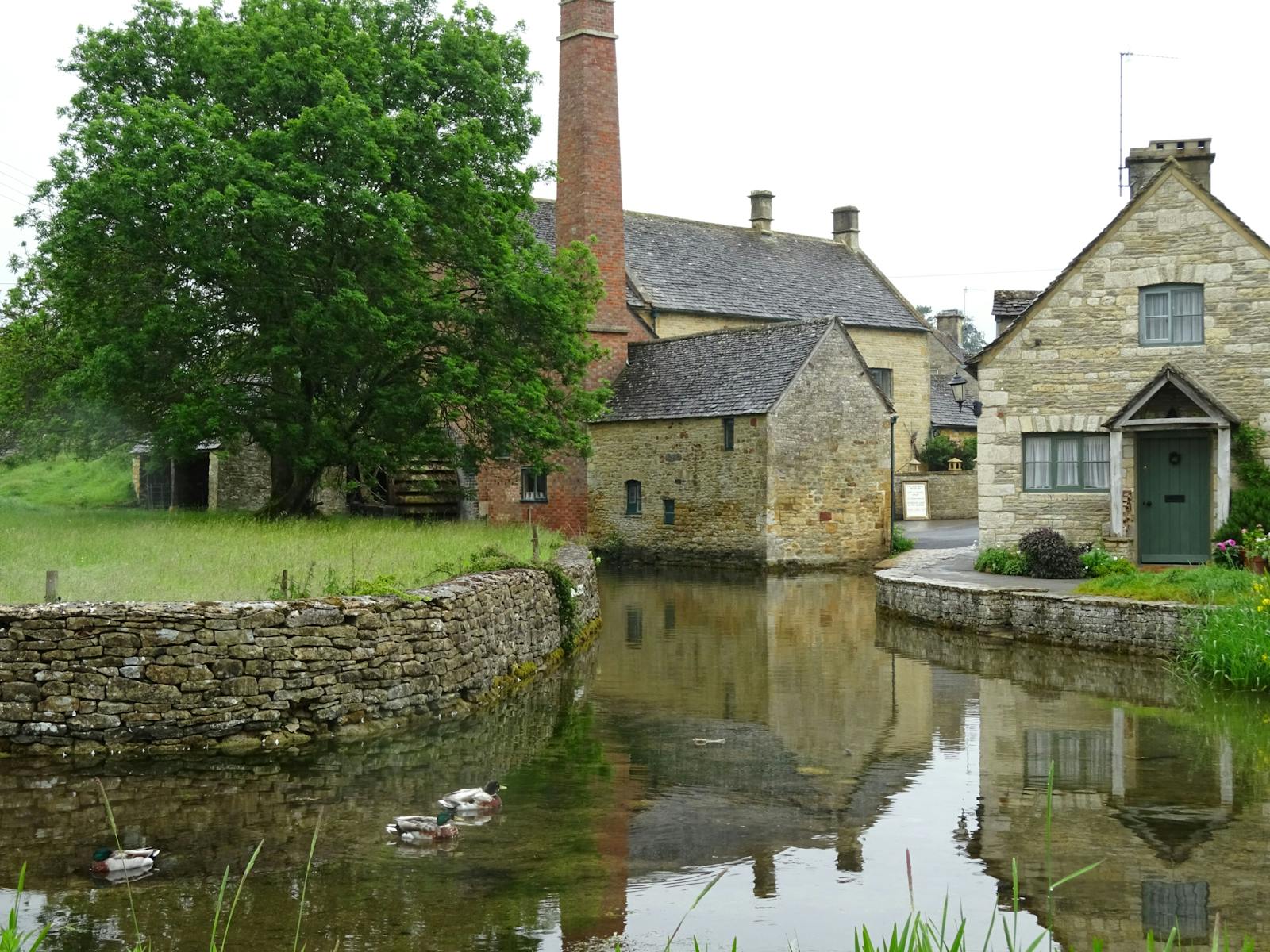
Water is your friend in the Cotswolds, and the region’s mills and rivers offer some of its most peaceful images. Lower Slaughter, one of the prettiest and most photographed villages of all, has a 19th-century watermill with a redbrick chimney reflected in the gentle River Eye, plus a string of little stone footbridges and cottages along the water. Shoot it in the morning, when it is quieter and the light is soft, and walk the riverside path up to Upper Slaughter for more; our guide to the Slaughters has the details.
For a “hidden Cotswolds” feel away from the crowds, follow the meandering River Coln through the quiet hamlets of the Coln Valley, such as Ablington and Coln St Aldwyns, where you can capture classic village-and-river scenes in peace.
Market Towns & Seasonal Colour
The market towns offer wonderful architectural detail. In Chipping Campden, frame the long, curving high street through the arches of the 1627 Market Hall, beautiful when golden-hour light warms the limestone. In Tetbury, the steep, cobbled Chipping Steps, lined with former weavers’ cottages, make a striking composition, best shot early or late to avoid both people and harsh light.
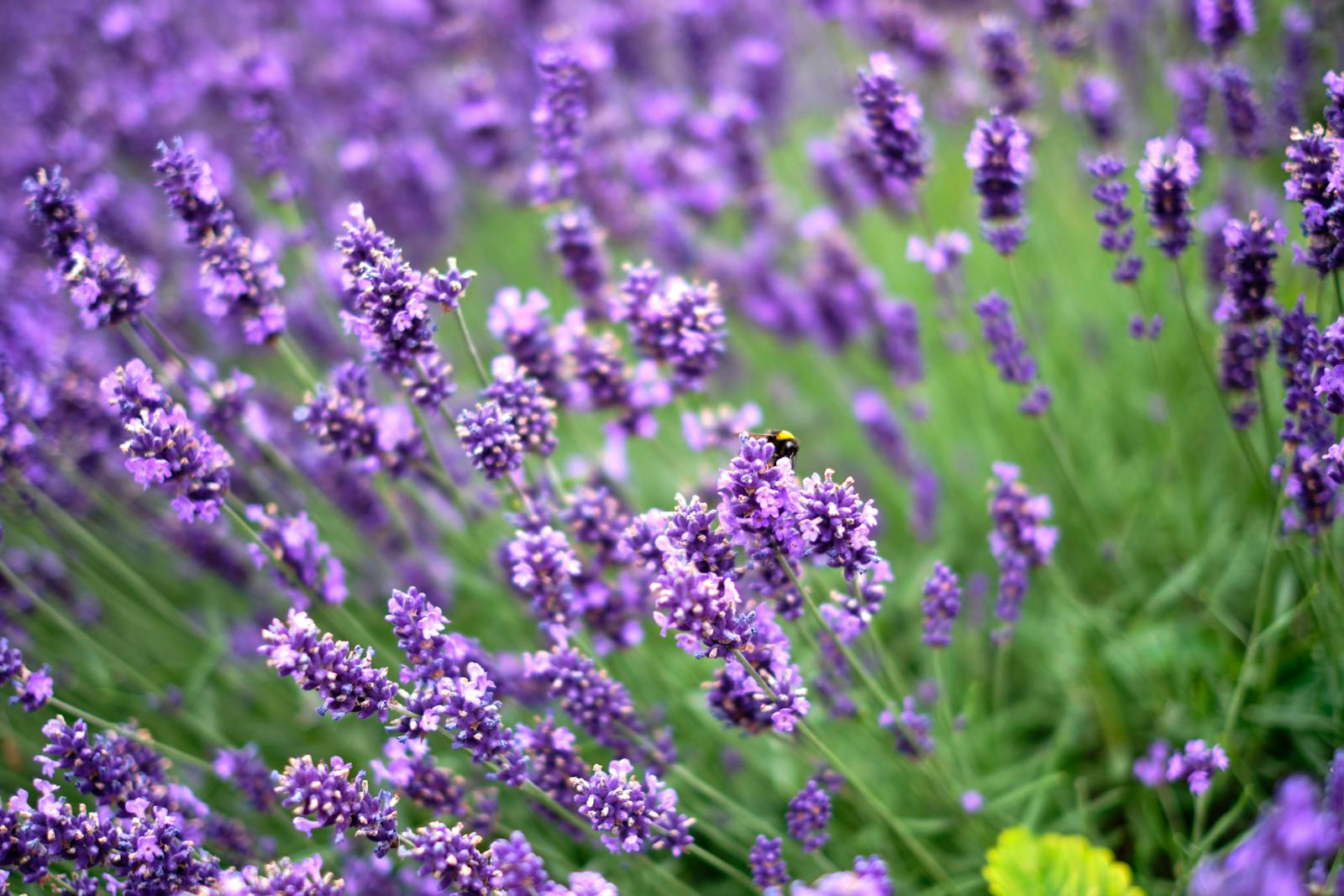
For a hit of seasonal colour, time a summer visit to Cotswold Lavender near Snowshill, where rows of purple lavender lead the eye towards the hills. The fields are open roughly from mid-June to early August, with peak bloom in mid-to-late July; go early for soft light and empty rows, and note that drones are not permitted. For more on timing your trip around the seasons, see our guide to the best time to visit the Cotswolds.
How to Beat the Crowds
The single best piece of advice I can give is to shoot at sunrise. The honeypot villages like Bibury, Bourton and Castle Combe are blissfully empty in the first hour of daylight, the light is soft and golden, and you will have those famous scenes almost to yourself. Failing that, visit midweek and out of peak season; autumn and winter mornings, with low sun and the chance of mist or frost, are my favourite times of all.
It also pays to seek out the quieter alternatives: West Street rather than the main view in Castle Combe, the Coln Valley hamlets rather than Bibury itself, or Upper Slaughter rather than Lower. You can plan a whole dawn route linking nearby spots, and our guide to the prettiest villages in the Cotswolds will help you find more.
Photography Etiquette
One gentle but important point: almost all of these picture-perfect scenes are real, lived-in places. The cottages of Arlington Row and a hundred other villages are people’s homes, not film sets. So please be considerate: do not block private driveways or lanes, never enter gardens or peer through windows for a shot, keep noise down at dawn, and follow any local parking rules. A little courtesy keeps these places welcoming for photographers and residents alike, and it is the surest way to keep them open to all of us.
More Hidden Photo Spots
Once you have the icons in the bag, the Cotswolds rewards those who go looking for quieter frames. A few of my favourites:
- Snowshill village — a perfect, unspoilt hilltop village that featured in Bridget Jones; lovely in soft morning light. See our Snowshill guide.
- Bibury’s Rack Isle & the River Coln — the water-meadow opposite Arlington Row, beautiful in autumn when mist hangs over the river.
- Bourton House Garden — for garden and topiary photography away from the crowds.
- Minster Lovell ruins — atmospheric riverside ruins of a medieval manor on the eastern edge of the region.
- The Coln valley churches — tiny, ancient churches in hamlets like Coln Rogers and Coln St Dennis, often completely empty.
A Sunrise Photo Route
If you are serious about beating the crowds, build a dawn route that chains a few nearby spots while the light is at its best and the lanes are empty. One of my favourites in the central Cotswolds starts before sunrise at Bibury’s Arlington Row, when you can have the most famous view in the region entirely to yourself. From there, drive the short distance into the quiet Coln Valley for misty river scenes, then head north to Lower Slaughter for the mill and its reflections, finishing at the Tolkien door in Stow-on-the-Wold while the morning light is still soft on its yews.
The whole loop can be done in a morning and delivers a memory card full of crowd-free images before most visitors have finished breakfast. Check sunrise times in advance, factor in short drives between stops, and always have a plan for where to park considerately at that early hour. A flask of coffee and a head torch in winter complete the kit.
Gear, Settings & Practical Tips
You do not need expensive equipment to take wonderful Cotswold photographs, but a few simple habits make a big difference. A wide-angle lens is great for sweeping village streets and landscapes, while a short telephoto helps you isolate details and compress those layered escarpment views. A tripod is invaluable at dawn and dusk for sharp low-light shots and for capturing silky water at the mills and weirs.
For settings, shoot in the golden hours just after sunrise and before sunset for that warm, flattering light on the honey-coloured stone, and use a small aperture (a higher f-number) to keep both foreground and background sharp in landscapes. A polarising filter cuts glare and deepens skies and water reflections beautifully. And if you only take one tip away, make it this: turn up early. The combination of soft light and empty streets is worth far more than any piece of kit. Phone photographers can apply exactly the same principles, using the grid, tapping to set exposure, and shooting at the edges of the day.
A Seasonal Photography Calendar
The Cotswolds offers a different palette in every season, so it pays to know what to shoot when. Late winter (January and February) is snowdrop season, at its best in the churchyards and at Painswick Rococo Garden, and frosty, misty mornings on the escarpment can be magical. Spring brings blossom to the lanes, bluebells to the woods and fresh green to the hills. Summer is the time for the purple lavender rows near Snowshill and long golden evenings, though it is also the busiest season at the honeypots.
Autumn may be the most photogenic season of all, with golden light, fewer crowds, and the trees turning fiery at Westonbirt Arboretum, Batsford and along the wooded valleys. Mist pooling in the valleys at dawn is a particular autumn treat. Planning your trip around these seasonal highlights, using our guide to the best time to visit the Cotswolds, will give your photographs that extra something.
Drones & Knowing the Rules
A quick but important practical note for the modern photographer: drones are restricted or banned in many of these locations, including over villages, at National Trust sites and at attractions such as the Cotswold Lavender fields. Always check the rules before you fly, follow the Civil Aviation Authority’s guidance, and never fly over people, private property or livestock without permission. The same spirit of consideration applies to tripods and large groups: be mindful of where you set up so you are not blocking pavements, lanes or doorways.
Get these basics right and you can photograph freely and responsibly, helping to keep these beautiful places open and welcoming to photographers for years to come.
Composition Tips for Cotswold Scenes
The Cotswolds almost composes itself, but a few classic techniques will lift your images further. Use the leading lines of a village street, a river or a dry-stone wall to draw the eye into the frame, and look for natural frames such as the arches of Chipping Campden’s Market Hall or an overhanging branch to add depth. With the honey-coloured stone, a low sun raking across the buildings reveals texture beautifully, so shoot along the street rather than straight at it where you can.
For the rivers and mills, get low to capture reflections in still water, and be patient: waiting a few minutes for a person to walk into shot, or out of it, can make all the difference. And do not forget the details; a climbing rose around a blue cottage door, a weathered signpost or a flock of sheep on a misty hillside can be just as evocative as the grand view.
After the Shoot: Editing & Sharing
A light touch in editing usually serves Cotswold images best. The natural palette of honey stone, green hills and soft English light is lovely on its own, so resist the urge to over-saturate; gentle adjustments to exposure, contrast and warmth are usually all that is needed to make a photo sing. If you shoot in RAW, you will have far more latitude to recover detail in bright skies and shadowy lanes.
When you share your shots, a quick tag of the location helps others discover these places, but do consider the impact of overtourism on the smaller villages, some of which are already struggling with the sheer number of visitors. Celebrating the quieter alternatives, and reminding people to visit respectfully, is a small way photographers can help keep the Cotswolds special. For more on planning a responsible trip, see our guide to the prettiest villages in the Cotswolds.
Frequently Asked Questions
Where is the most photographed spot in the Cotswolds?
Arlington Row in Bibury, a row of 14th-century weavers’ cottages, is the most photographed scene in the Cotswolds and even features inside the UK passport. Arrive at sunrise for the best light and the fewest people.
What is the best time of day to photograph the Cotswolds?
Sunrise and the golden hour just after dawn are best. The light is warm and soft, and you will beat the coach crowds at honeypots like Bibury and Bourton-on-the-Water. Late afternoon golden hour is also excellent for west-facing scenes.
When can I photograph the Cotswolds lavender fields?
Cotswold Lavender near Snowshill is usually open from mid-June to early August, with peak purple bloom in mid-to-late July. Go early for the best light and quietest rows, and note that drones are not allowed.
Is the “Hobbit door” in Stow-on-the-Wold real?
Yes. It is the north door of St Edward’s Church, framed by two ancient yew trees. The popular idea that it inspired Tolkien’s Doors of Moria is a charming rumour rather than proven fact, but it makes a wonderful photograph either way.
How do I photograph the Cotswolds without crowds?
Arrive at sunrise, visit midweek or in autumn and winter, and choose quieter alternatives such as the Coln Valley hamlets, Upper Slaughter or West Street in Castle Combe instead of the busiest honeypots.
Start Shooting
With a little planning around the light and the seasons, the Cotswolds will fill your camera roll with images to treasure. Pair this with our guides to the prettiest villages and the 50 best things to do in the Cotswolds to build the perfect photography trip. Almost all of these viewpoints cost nothing to reach, and our roundup of free things to do in the Cotswolds lists plenty more.
For photographers, Lacock is close to a pilgrimage: the village where Fox Talbot made the earliest surviving negative in 1835, and one of the most filmed in Britain. Go at nine, when the car park opens, and shoot the ford on Nethercote Hill and the timber-framed corner of East Street before anyone else arrives. Our Lacock village guide has the details.