This article contains advertising. My booking links are routed through a partner that adds commission tracking automatically, so if you book through one I earn a commission from the provider, at no extra cost to you. It never affects what I recommend. Affiliate disclosure
Some time in the second half of October, the beech hangers on the escarpment above Painswick turn a colour that is hard to describe without sounding like a paint chart — not quite copper, not quite gold, and lit from behind by a low sun so that whole hillsides seem to glow from the inside. Drive the lanes between Cranham and Sheepscombe on a still, bright morning that week and you will see people pulled into every lay-by, simply staring. That is the secret of the best Cotswolds autumn colour: the famous arboretums are spectacular, but some of the finest displays in the region are in the wild beechwoods and old estate parks, and many of them cost nothing to see.
This guide covers both. It starts with when the colour usually peaks and why some years are better than others, then works through Westonbirt and Batsford, the escarpment beechwoods, Cirencester Park and the villages, with prices, parking and an honest view of the crowds. There are five walks built around the colour, tips for photographing it, and a few other autumn sights worth adding to the trip.
Where to see autumn colour in the Cotswolds at a glance
| Place | What it is | Usual peak | Cost | Best for |
|---|---|---|---|---|
| Westonbirt, the National Arboretum | Forestry England arboretum near Tetbury | Mid to late October | Peak autumn pricing, 25 September to 15 November 2026: adult £19 on weekdays, £22 at weekends and bank holidays; book admission in advance | The big show — Japanese maples by the hundred |
| Batsford Arboretum | 60-acre arboretum near Moreton-in-Marsh | Mid-October to mid-November | £10.90 adults (£12 with Gift Aid) | Maples, cherries and sorbus, without the Westonbirt crowds |
| Cotswold Commons and Beechwoods | Beech hangers around Cranham, Buckholt and Cooper’s Hill | Late October to early November | Free; roadside parking | Wild beech colour and fungi |
| Woodchester Park | National Trust wooded valley with five lakes, near Stroud | Late October | Free entry; parking £4 for non-members | Reflections in the lakes |
| Cirencester Park | Bathurst Estate parkland and beech avenues | Late October | Day pass for non-locals, £4 adults, £2 children | Long, level walks under great avenues |
| The escarpment viewpoints | Haresfield Beacon, Coaley Peak, Crickley Hill | Late October | Free | Wooded slopes and misty vale views |
| The villages | Bibury, Burford, Bourton-on-the-Water, Castle Combe | Early to mid October | Free | Scarlet creepers on golden stone |
Prices and opening times checked October 2026; Westonbirt’s figures are its 2026 peak autumn rates, and the estate and arboretum prices change each year — confirm before you travel.
When does autumn colour peak in the Cotswolds?
In most years the colour builds through October and peaks in the second half of the month, with the beechwoods often holding on into the first week of November. It does not all happen at once, which is good news if your dates are fixed. The cherries, sorbus and some of the early maples turn first, from the start of October; the Japanese maples that make Westonbirt and Batsford famous usually peak from the middle of the month; the beeches on the escarpment come next, turning from green to copper over a fortnight; and the oaks are last of all, still bronze when everything else has dropped.
Weather decides how good a year it will be. The brightest displays follow a sunny, dry early autumn with cold, clear nights, which concentrate the reds and oranges in the leaves. A mild, wet autumn gives a more muted show, and a single October gale can strip a beechwood in a night. At Cirencester, average October temperatures (Met Office, 1991–2020) run from a high of about 14°C to a low of about 7°C, so dress for chilly mornings even when the afternoons are pleasant. The arboretums post regular colour updates through the season, which are worth checking before a long drive.
Westonbirt, the National Arboretum
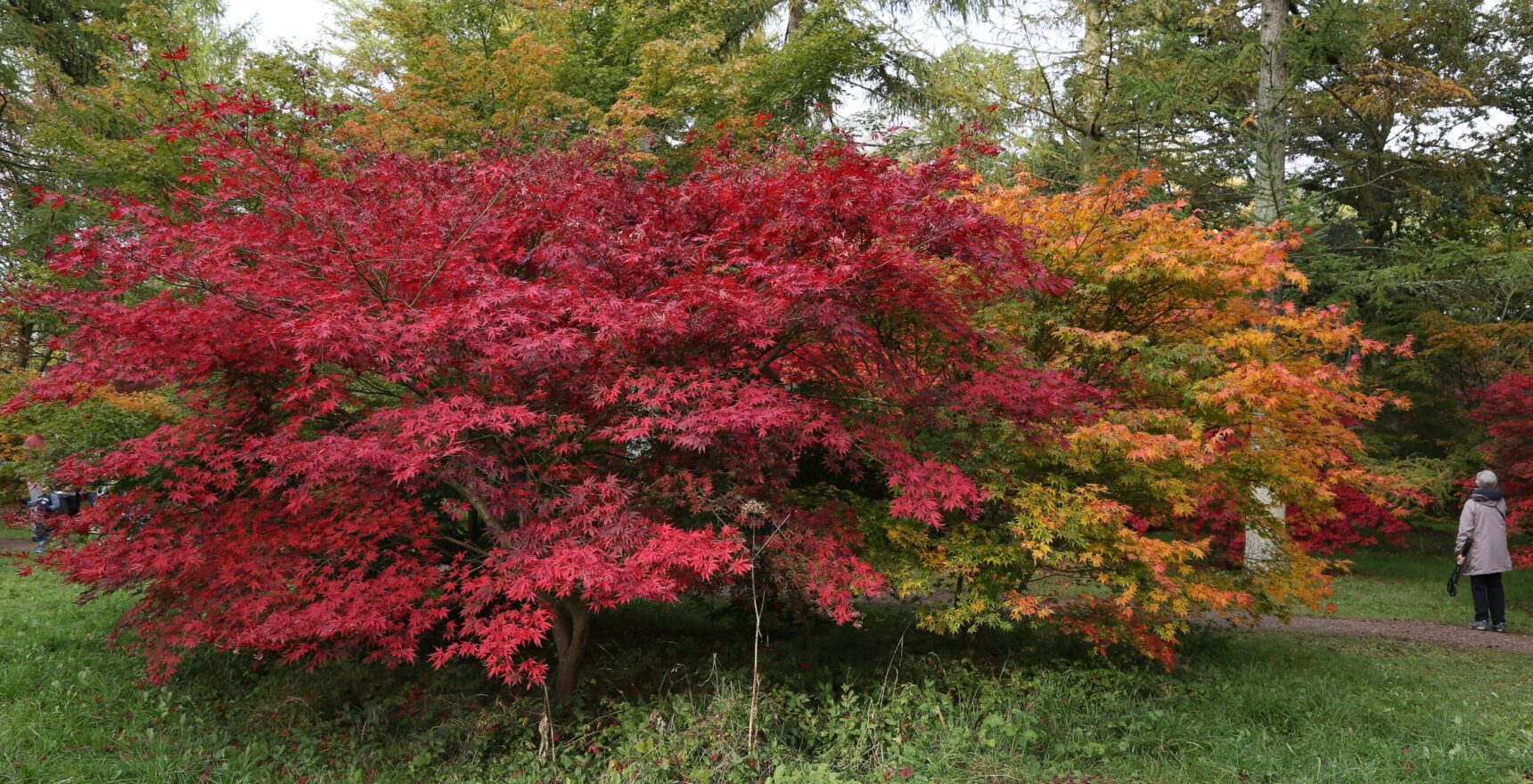
Westonbirt, near Tetbury, is the most famous place in Britain for autumn colour, and in a good year it lives up to the billing. Forestry England looks after a collection of thousands of trees from around the world, split between two areas: the Old Arboretum, laid out by the Holford family in the nineteenth century with long vistas and specimen trees, and Silk Wood, a larger working woodland with the Acer Glade at its heart. In the second half of October, the hundreds of Japanese maples there turn scarlet, crimson, orange and gold all at once, and the effect is genuinely extraordinary. The treetop walkway lets you look down into the canopy.
The catch is everyone else. Autumn is Westonbirt’s peak season, with higher prices from 25 September to 15 November 2026: an adult ticket is £19 on weekdays and £22 at weekends and bank holidays, with children aged 5–18 £5 and under-5s free. Book admission in advance to guarantee entry. The arboretum opens at 9:00, with last admission at 16:30. A weekday visit as soon as the gates open is a completely different experience from a Sunday afternoon in half term. Dogs are welcome in Silk Wood but not in the Old Arboretum. Our Westonbirt Arboretum guide covers tickets, the best routes and the rest of the year.
Batsford Arboretum
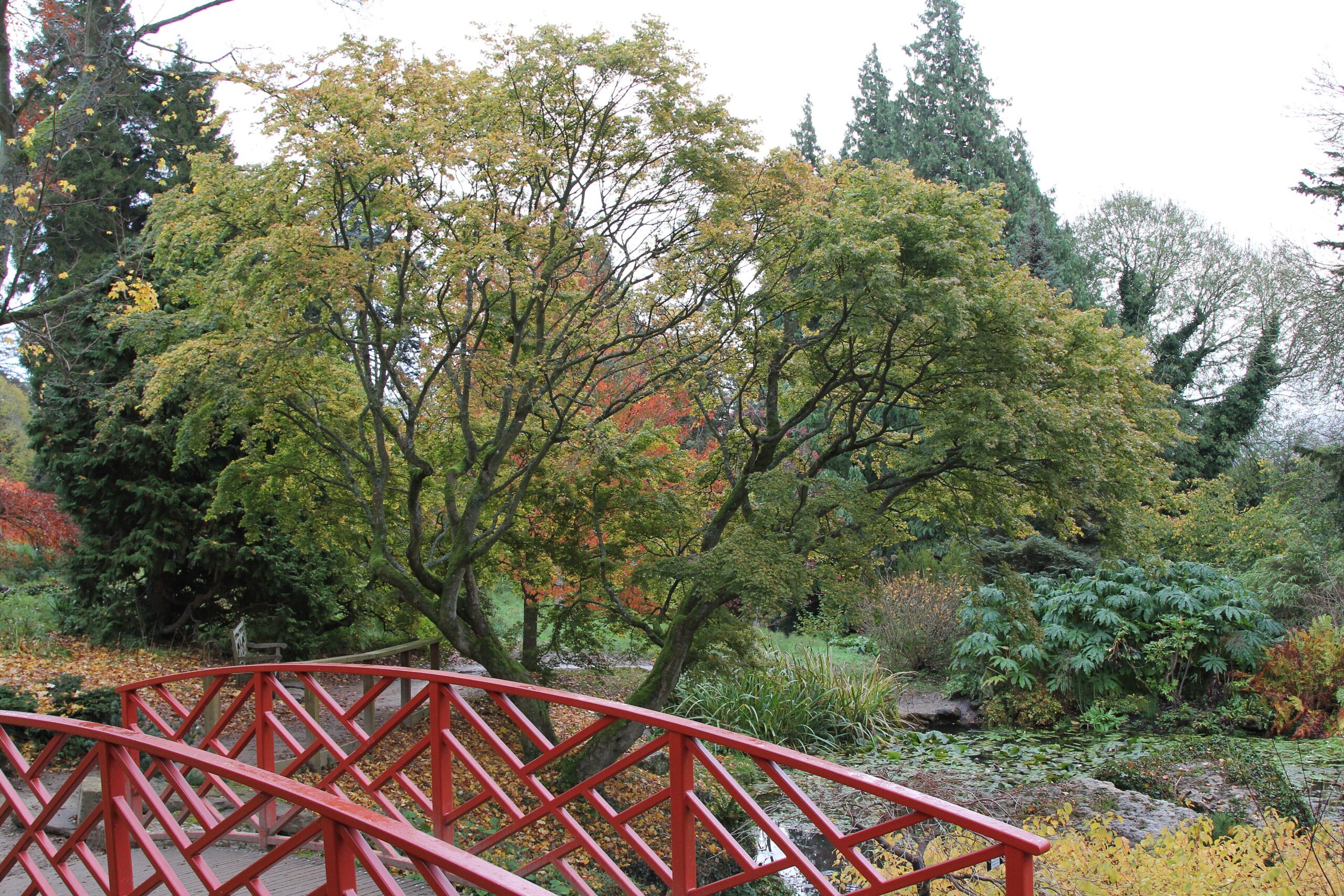
Batsford, a mile and a half from Moreton-in-Marsh, is the north Cotswolds’ answer to Westonbirt: smaller, steeper, quieter and, at £10.90 for adults (£12 with Gift Aid), considerably cheaper. Its 60 acres were laid out in the 1880s by Bertie Mitford, later Lord Redesdale — grandfather of the famous Mitford sisters — after years as a diplomat in Japan, and the Japanese influence still runs through the planting. The autumn show runs from mid-October to mid-November, led by the Japanese maples and backed up by sorbus, euonymus and flowering cherries, all on a hillside with views across the vale towards Moreton.
The arboretum opens Monday to Saturday from 9:30 to 17:00 and on Sundays from 10:00 to 17:00, with last entry at 16:00 daily, so check before visiting on a bank holiday. The visitor centre, with its café, garden centre and gift shop, is free to enter — you only pay to go into the arboretum itself — and the Cotswold Falconry Centre is next door. Our honest view: if you live nearer the north Cotswolds, or you have already seen Westonbirt, Batsford is the better autumn morning, and it combines easily with lunch in Moreton-in-Marsh or Stow-on-the-Wold. See our Moreton-in-Marsh guide for the town.
The beech hangers of the escarpment
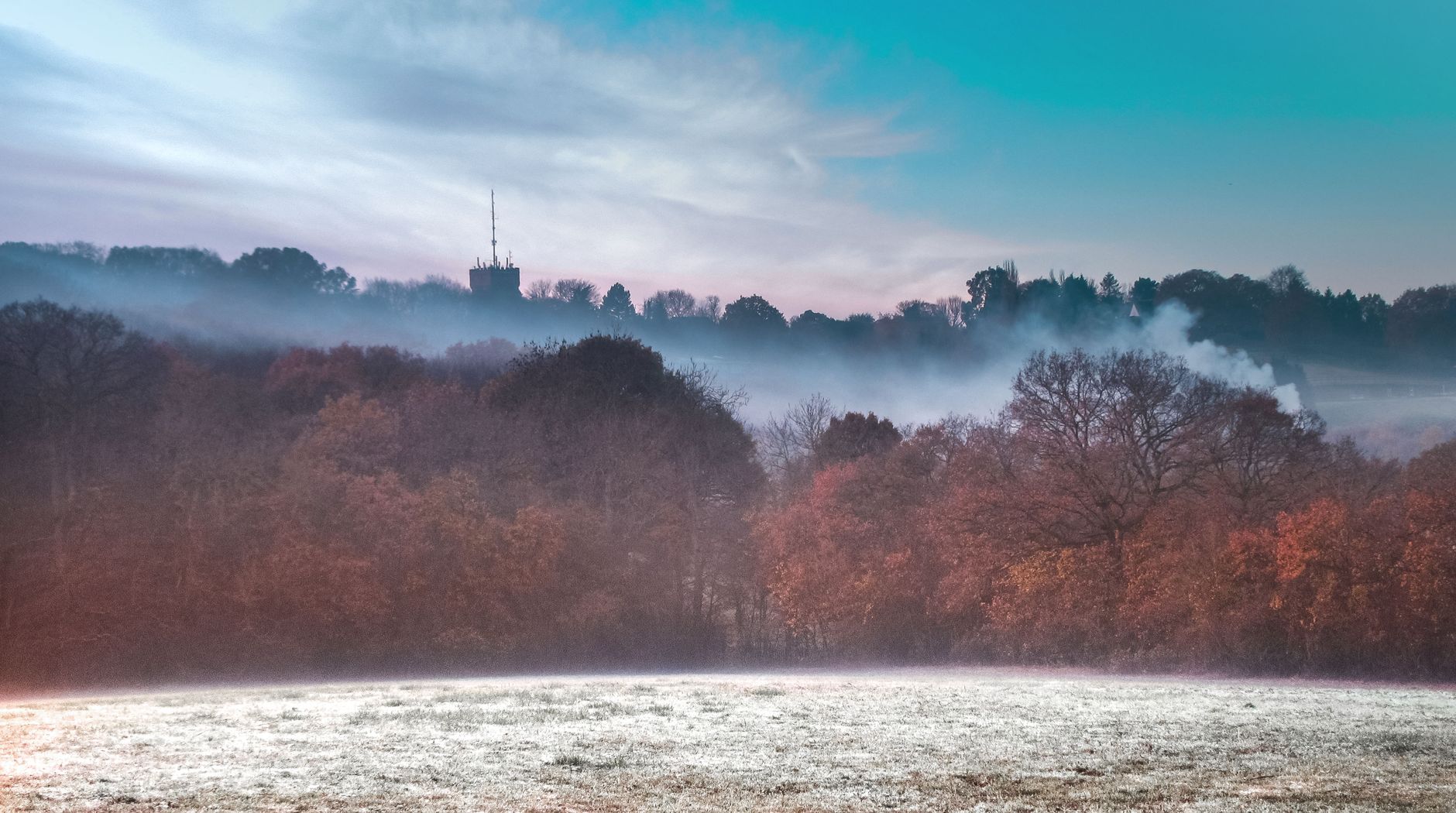
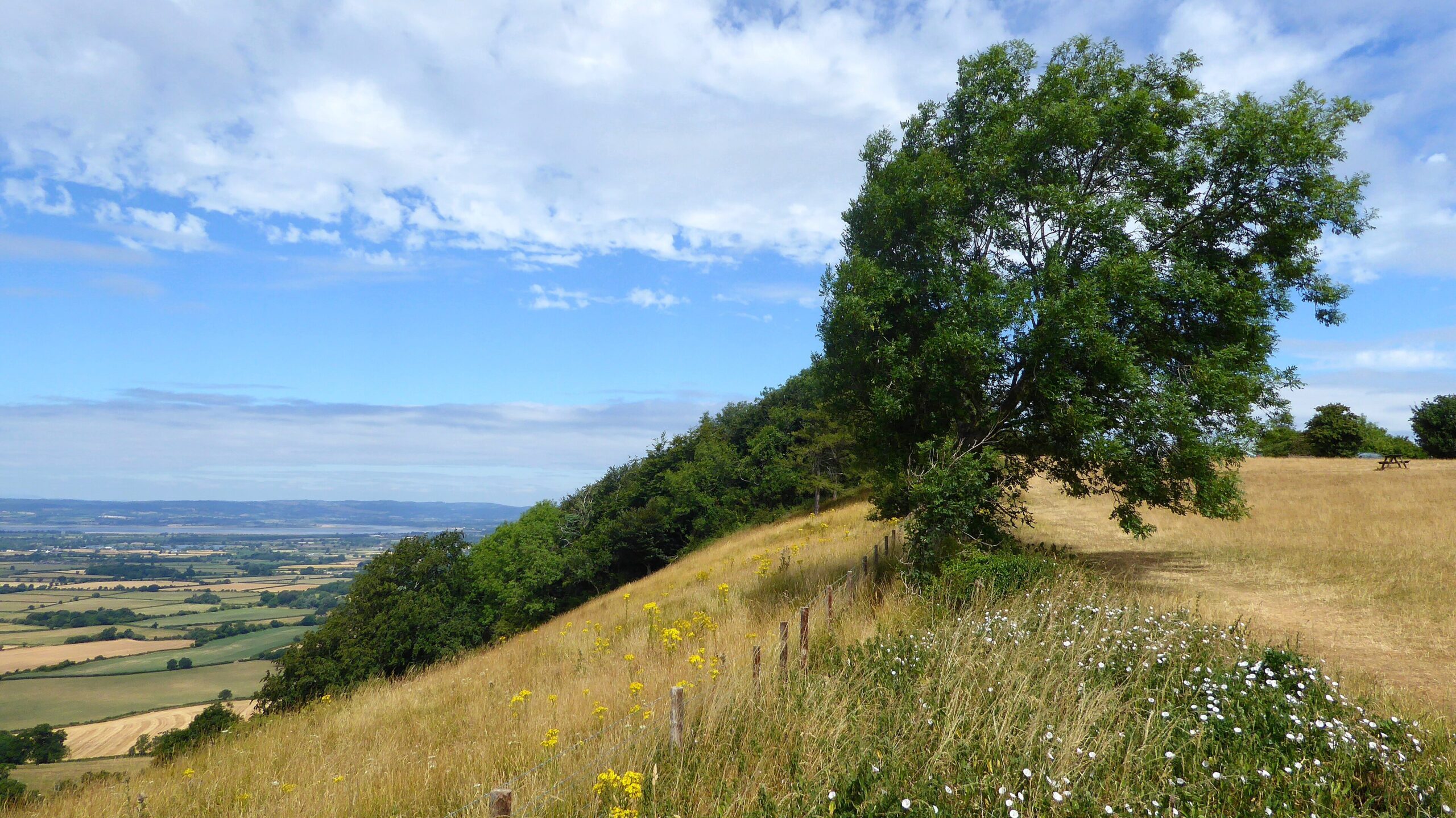
The arboretums are planted; the beechwoods on the western edge of the Cotswolds are not, and in late October they put on a show that rivals anything at Westonbirt. Beech grows superbly on the limestone of the escarpment, and from Cheltenham south to Wotton-under-Edge the steep slopes are hung with it. When it turns, the woods glow copper and gold from the inside, the ground fills with fallen leaves, and the views out over the Severn Vale are framed by colour.
Cranham, Buckholt and Cooper’s Hill
The woods between Painswick, Cranham and Cooper’s Hill form part of the Cotswold Commons and Beechwoods National Nature Reserve, and they are the heart of the escarpment’s autumn colour. Buckholt Wood is especially noted for its fungi, with more than 780 species recorded, and in a damp October the woodland floor is studded with them. Park considerately in Cranham or in the lay-bys along the Painswick road and wander; the Cotswold Way runs right through. Look, but do not pick — this is a nature reserve.
Woodchester Park
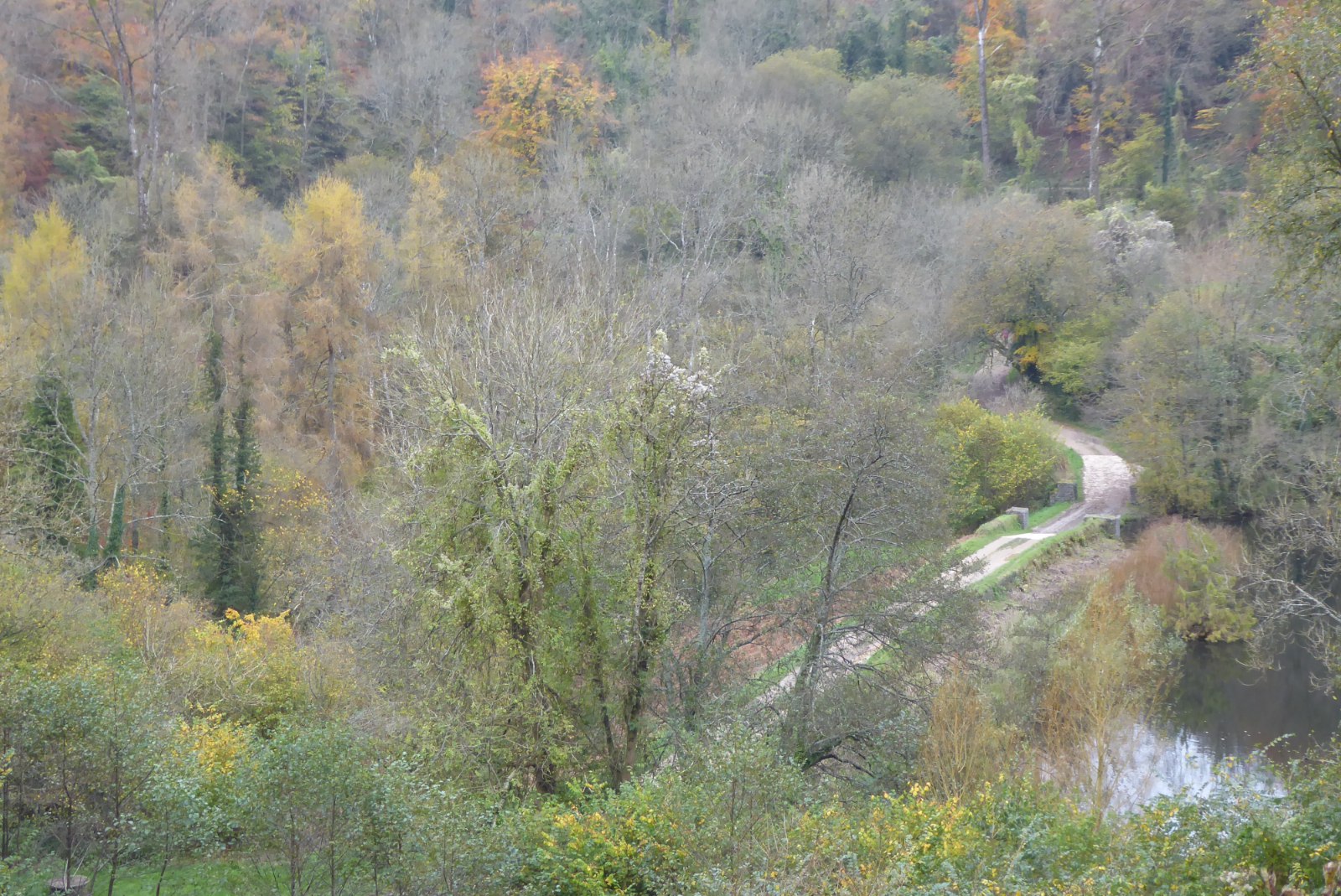
Woodchester, a hidden National Trust valley south of Stroud, combines beechwoods with a chain of five lakes, and on a still day the autumn colour doubles in the water. Park at Tinkley Gate or Buckholt (free for National Trust members, charged for non-members; check the National Trust’s Woodchester Park page for the current charge) and walk down through the woods to the lakes and the unfinished Victorian mansion at the bottom. Be ready for the climb back up.
Standish Wood, Haresfield Beacon and Coaley Peak
Further south, Standish Wood and Haresfield Beacon give you beechwood and a huge view in one short walk, and Coaley Peak, near Nympsfield, is a picnic site and viewpoint where the wooded scarp falls away towards the Severn. On a cold, clear morning, mist often fills the vale below while the escarpment sits in sunshine — one of the great autumn sights of the Cotswolds. Our guide to the Cotswold Way covers every section of the escarpment, and our guide to bluebell woods in the Cotswolds has parking details for several of the same woods.
Cirencester Park
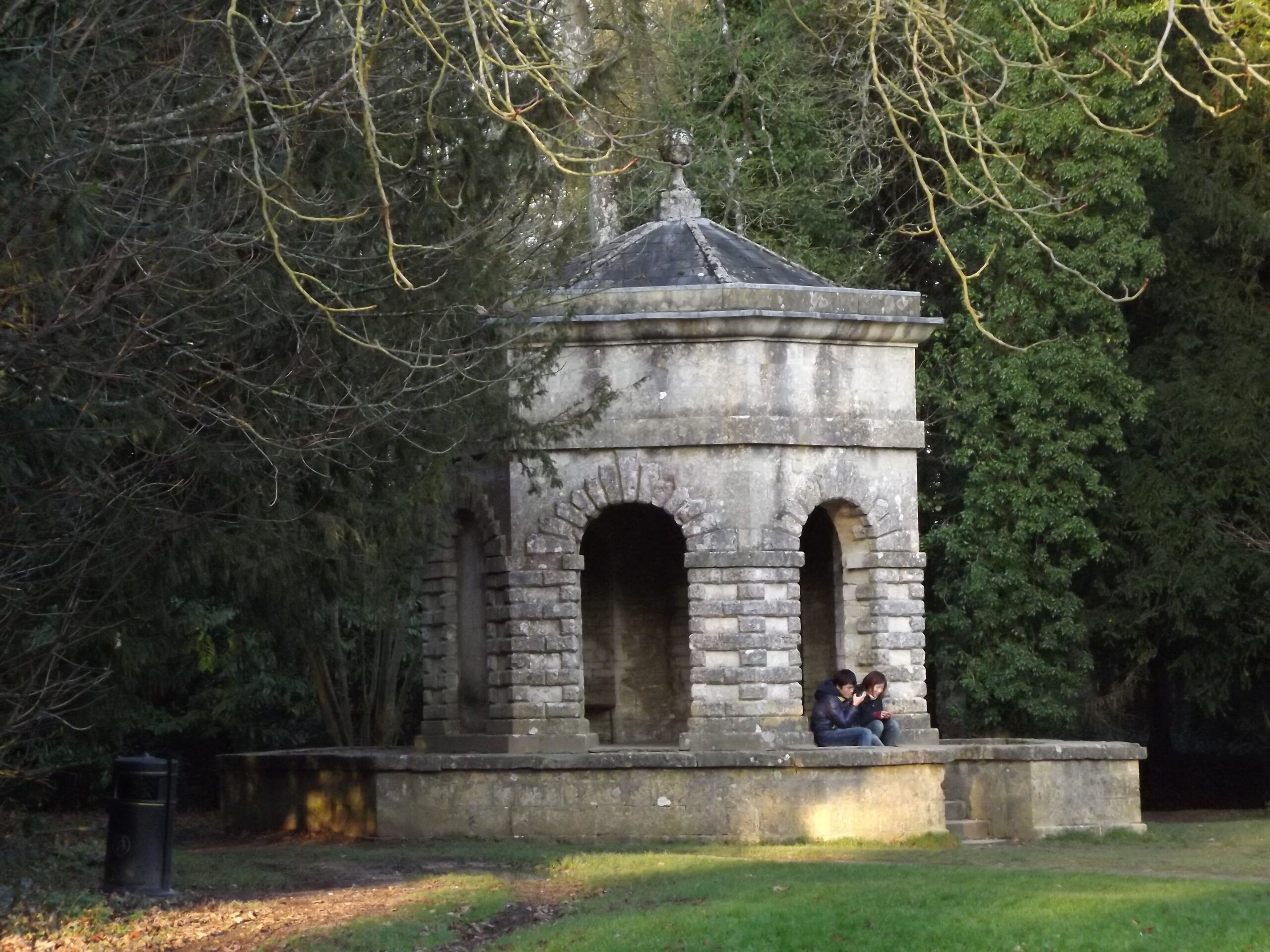
The Bathurst Estate’s park, on the western edge of Cirencester, is one of the great eighteenth-century landscapes in England: miles of rides and avenues cut through beech and chestnut woodland, with follies and long vistas, laid out by the first Earl Bathurst with advice from his friend Alexander Pope. In autumn the beech avenues turn into tunnels of gold, and the long, level Broad Ride makes for an easy walk of any length you like.
Day visitors can enter at Cecily Hill or Windsor Walk from 10:00 to 17:00, with last entry at 16:30 (annual and community passholders have access from 8:00), and you can walk in straight from the town centre through the Cecily Hill gates onto the Broad Avenue. Visitors who do not live locally need a day pass — £4 for adults and £2 for children — which can be bought online or at the Cecily Hill and Windsor Walk ticket offices. Dogs are welcome but must be kept on a lead where shown and under close control, because this is a working estate with livestock and protected wildlife. Our Cirencester guide covers the town.
Autumn colour in the villages
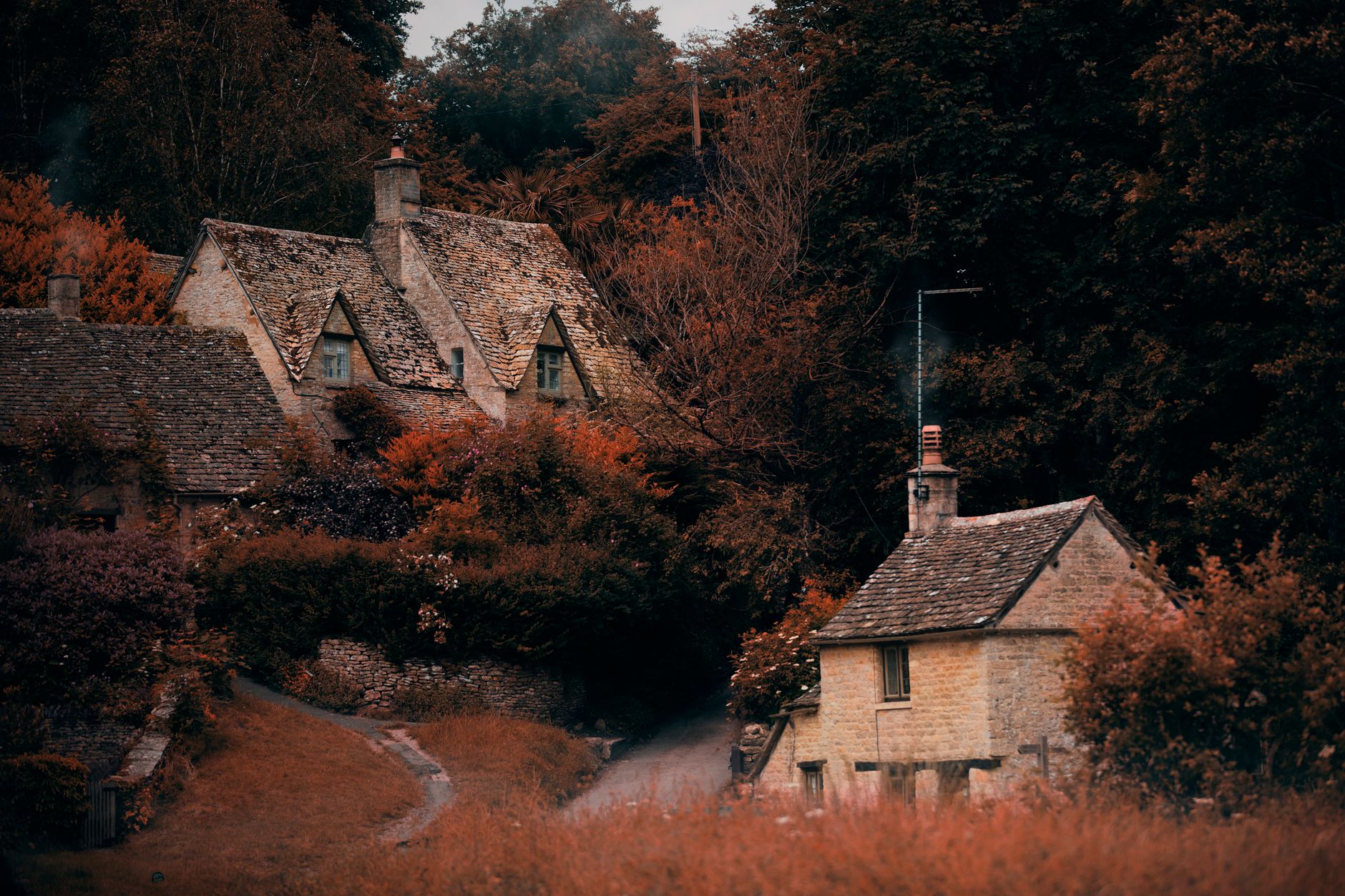
The villages are at their prettiest a little earlier than the woods, in the first half of October, when the Virginia creeper and Boston ivy on the cottages turn scarlet against the golden stone and the trees along the rivers start to colour. Bibury’s Arlington Row and the River Coln, Burford’s sloping High Street, the trees along the Windrush in Bourton-on-the-Water and the stream through Castle Combe are all at their best now — and, after the summer crowds, far easier to enjoy. Go early: by mid-morning on an October weekend, Bibury and Bourton are busy again.
Parks, deer and gardens
- Blenheim Palace — Capability Brown’s lake and the ancient oaks of the park are beautiful in autumn, but a Park and Gardens ticket is £31 for an adult online (£34 on the day). Worth it if you are visiting the palace anyway; expensive for colour alone. Our Blenheim Palace guide has the details.
- Broadway Tower — the parkland round the tower holds a herd of red deer, and the October rut adds roaring stags to the autumn views from the second-highest point on the Cotswold ridge.
- Dyrham Park — the National Trust’s hillside deer park near Bath, with fallow deer and big old trees, is at its best in October.
For gardens open through the autumn, see our round-up of the best gardens in the Cotswolds.
Five of the best autumn walks in the Cotswolds
1. The Cranham beechwoods
From Cranham, follow the paths and the Cotswold Way through Buckholt Wood towards Cooper’s Hill and back through the woods to the village — a loop of a couple of hours through the finest beech colour in the region, with fungi everywhere after rain.
2. Woodchester’s lakes
Walk down from Tinkley Gate through the woods to the lakes and the mansion, then back up the other side of the valley. Allow two hours, and wear boots: the paths are muddy by late October.
3. Cirencester Park’s Broad Ride
Enter at Cecily Hill and follow the Broad Avenue and Broad Ride as far west as you like, returning by the woodland rides. Level, easy and good with children or dogs on leads.
4. The escarpment from Haresfield Beacon
Walk the Cotswold Way through Standish Wood to Haresfield Beacon and back, ideally on a misty morning when the vale is full and the beeches catch the first sun.
5. Moreton-in-Marsh to Batsford
Walk the mile and a half from Moreton to Batsford Arboretum, spend the morning among the maples, and come back for lunch. It is the most car-free autumn colour trip in the region, since Moreton has direct trains from London Paddington and Oxford.
For more routes, see our Cotswolds walking guide and our pick of circular walks in the Cotswolds.
How to photograph Cotswold autumn colour
- Shoot into the light. Backlit leaves glow; front-lit ones look flat. Late afternoon sun through a beech canopy is the classic Cotswold autumn image.
- Use overcast days in the woods. Soft, even light saturates colour under trees and avoids the harsh patches of sun and shade that cameras struggle with.
- Get up for the mist. On still mornings after a cold night, mist fills the valleys and the Severn Vale. Be on the escarpment at sunrise.
- Look for reflections. Woodchester’s lakes, Blenheim’s lake and the Windrush and Coln all double the colour on a calm day.
- Use a polarising filter. It cuts the glare on wet leaves and deepens the colour noticeably.
- Do not forget the details. A single maple leaf on a dark path, or a cluster of fungi, can say more than a wide view.
Our guide to Cotswolds photography spots has the viewpoints and the best times of day.
Other autumn sights to look out for
Leaf colour is the headline, but an October walk in the Cotswolds turns up plenty more if you keep your eyes open.
- Fungi. After rain, the beechwoods around Cranham, Buckholt and Woodchester fill with them, from tiny bonnets on fallen twigs to bracket fungi the size of dinner plates. Photograph them, but do not pick on nature reserves — and never eat anything you have not had identified by an expert, because several of the deadliest British species grow here.
- The deer rut. Red deer at Broadway Tower and fallow deer at Dyrham Park are at their most dramatic in October. Watch from a distance; rutting males are unpredictable.
- Winter thrushes. Fieldfares and redwings arrive from Scandinavia during October and November and strip the hawthorn berries from the hedges in noisy flocks.
- Hedgerow colour. Look for the shocking-pink fruits of spindle, a native relative of the euonymus at Batsford, along with rosehips, haws and sloes. Old country lore says not to pick blackberries after Michaelmas, at the end of September — by October they are past their best anyway.
- Mist and inversions. On still, cold mornings the Severn Vale and the deeper valleys fill with mist while the hilltops sit in sunshine. Coaley Peak, Haresfield Beacon and Crickley Hill are the places to be at dawn.
Making the most of an autumn trip
October is one of the best months to visit the Cotswolds: the summer crowds have gone, the pubs light their fires, and the countryside is at its most beautiful. October half term is the exception, when the arboretums and the honeypot villages are as busy as in summer. Westonbirt and Batsford are an hour apart by car, so most people pick one; if you want both, base yourself centrally around Cirencester or Stow. For the southern woods and Westonbirt, Tetbury and the Stroud valleys make ideal bases — see our Tetbury guide — and for Batsford, Moreton or Stow. Our guide to the Cotswolds in autumn covers events, food and what else is on, and our where to stay guide covers every area.
Frequently asked questions about autumn colour in the Cotswolds
When is the best time to see autumn colour in the Cotswolds?
Usually the second half of October, with the arboretums’ Japanese maples peaking from mid-month and the escarpment beechwoods holding on into early November. A sunny early autumn with cold nights gives the brightest colours.
Is Westonbirt worth visiting in autumn?
Yes — it is one of the finest autumn colour displays in Britain. But peak autumn rates apply from 25 September to 15 November 2026, with higher adult prices at weekends and bank holidays, and it is wise to book admission in advance. Go on a weekday morning if you can.
Westonbirt or Batsford for autumn colour?
Westonbirt for scale and sheer spectacle; Batsford for a smaller, quieter, cheaper visit with excellent maples. If you are staying in the north Cotswolds, Batsford is the easier choice.
Where can I see autumn colour in the Cotswolds for free?
The beechwoods of the Cotswold Commons and Beechwoods reserve around Cranham, Standish Wood and Haresfield Beacon, Coaley Peak and the river valleys around the villages are all free. Woodchester Park is a good option too, though parking there is charged for non-members of the National Trust.
Can you take dogs to Westonbirt in autumn?
Dogs are welcome in Silk Wood, which includes the Acer Glade, but not in the Old Arboretum. Keep them on a lead where signs ask you to.
Autumn is one chapter of the Cotswold year. For the fungi, deer, migrating thrushes and the rest of the region’s wildlife through the seasons, see our guide to Cotswolds wildlife and nature; for spring’s equivalent show, our guide to the bluebell woods; and for the woods themselves at any time of year, our round-up of Cotswold woodland walks.
Photo Credits
Japanese maples in red and orange at Westonbirt Arboretum: Autumn 2015 at Westonbirt Arboretum (21907819453) by x70tjw, CC BY-SA 2.0, via Wikimedia Commons.
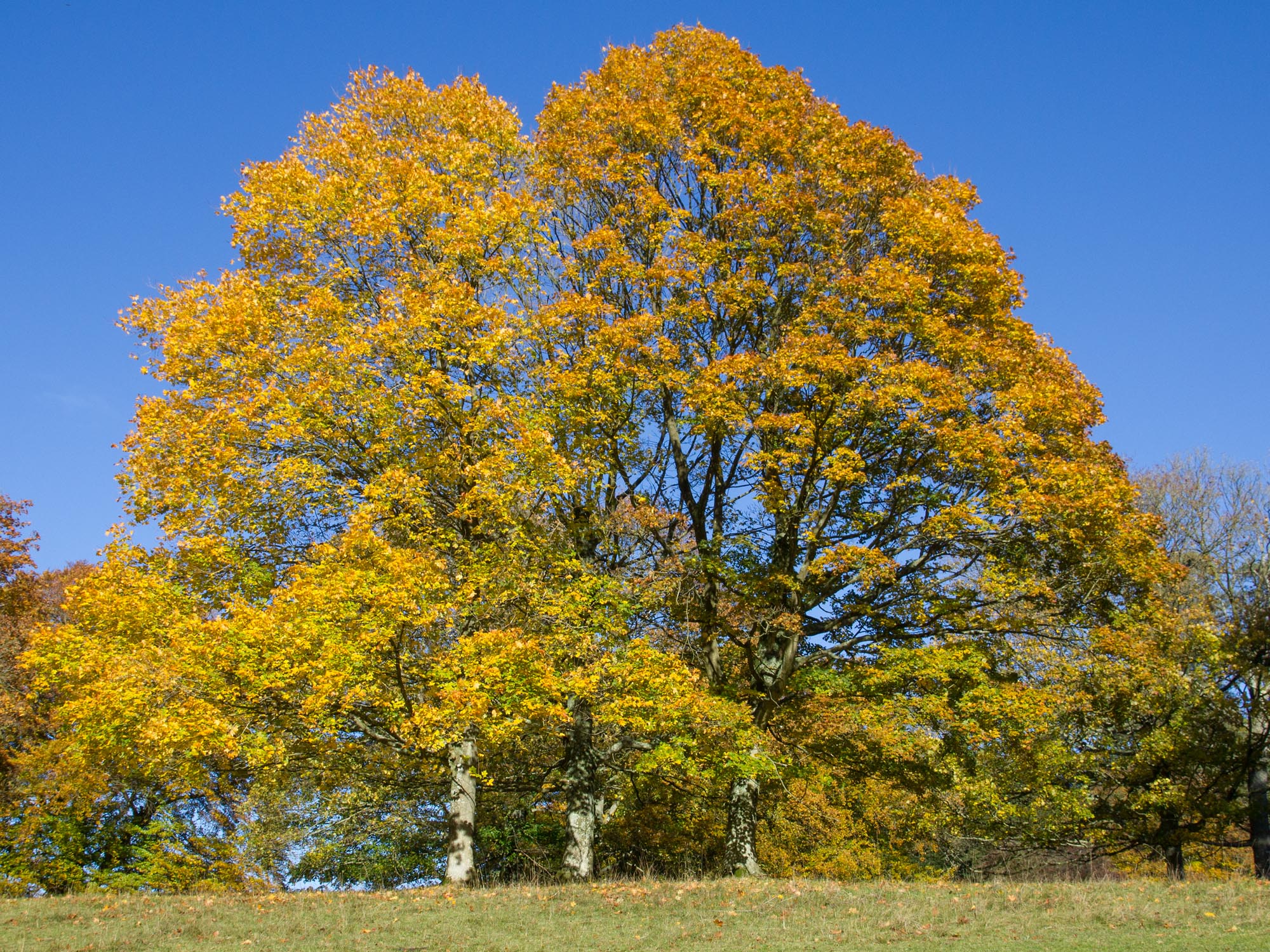
A golden tree in autumn at Westonbirt Arboretum: Autumn colours at Westonbirt Arboretum – geograph.org.uk – 3738184 by David P Howard, CC BY-SA 2.0, via Wikimedia Commons.
The Japanese bridge at Batsford Arboretum: Batsford Arboretum, Gloucestershire-8308339014 by Mark Kent, CC BY-SA 2.0, via Wikimedia Commons.
Woodchester Park in autumn: Dam in Woodchester Park – geograph.org.uk – 7921185 by Philip Halling, CC BY-SA 2.0, via Wikimedia Commons.
The Hexagon folly in Cirencester Park: Hexagon, Grotto in Cirencester Park – geograph.org.uk – 2745296 by Colin Smith, CC BY-SA 2.0, via Wikimedia Commons.
Leave a Reply