This article contains advertising. My booking links are routed through a partner that adds commission tracking automatically, so if you book through one I earn a commission from the provider, at no extra cost to you. It never affects what I recommend. Affiliate disclosure
Drive the A40 over the top of the wolds between Northleach and Cheltenham on a still morning and sooner or later a red kite will drift across the windscreen, forked tail twisting like a rudder as it works the verge. A generation ago you had to go to mid-Wales or the Chilterns to see one. Now they hang over the high Cotswolds so routinely that the farmers barely look up. That turnaround is a good first lesson in Cotswolds wildlife: the region is far wilder than its tea-room reputation suggests, but most of what lives here is a field, a wood or a steep bank away from the places the coaches stop.
Behind the honey-stone villages are beechwoods holding hundreds of species of fungi, limestone commons where fifteen kinds of orchid flower in a good June, spring-fed rivers with wild brown trout and kingfishers, and a sprawl of old gravel pits that fill with ducks every winter. This guide is the map to all of it: the habitats and what lives in each, the reserves and commons worth driving to, a month-by-month calendar, and the practical things — parking, dogs, cattle, ticks, which places are better at 7am than at noon — that nobody mentions until you are standing at a locked gate.
The wild Cotswolds at a glance
| Habitat | Best places | Best months | What to look for | Cost |
|---|---|---|---|---|
| Limestone grassland and commons | Rodborough and Minchinhampton Commons, Cleeve Common, Crickley Hill, Daneway Banks | May–August | Orchids, cowslips, wild thyme, blue butterflies (including the large blue), skylarks | Free to walk; National Trust car parks free for members |
| Beechwoods and ancient woodland | Cranham, Buckholt and Cooper’s Hill woods; Woodchester Park; Siccaridge Wood | April–May; October–November | Bluebells, wild garlic, fungi, tawny owls, autumn colour | Free; Woodchester parking £4 for non-members |
| Rivers and water meadows | The Windrush, Coln, Evenlode and Churn; North Meadow at Cricklade | April–September | Kingfishers, otter signs, brown trout, mayfly, snake’s-head fritillaries | Free |
| Lakes and wetlands | The Cotswold Lakes (formerly Cotswold Water Park) | November–February; May–August | Wintering ducks and grebes; hobbies and dragonflies in summer | Free hides at some reserves; parking varies |
| Farmland, hedges and walls | The high wold between Stow, Northleach and Burford | March for hares; all year for raptors | Brown hares, red kites, buzzards, yellowhammers, barn owls at dusk | Free |
| Deer parks and veteran trees | Broadway Tower, Dyrham Park, Blenheim | October for the rut | Red and fallow deer, ancient oaks | Paid entry |
| Arboretums and snowdrop gardens | Westonbirt, Batsford, Colesbourne, Painswick Rococo Garden | February; October | Snowdrops, maples, autumn colour | Paid entry |
Parking charges and opening details checked October 2026 — confirm before you travel, as reserve access and car park prices change from year to year.
Why the Cotswolds are wilder than they look
Everything here starts with the stone. The Cotswolds are a tilted slab of Jurassic limestone: a steep escarpment on the western side, looking out over the Severn Vale towards Wales, and a long, gentle dip slope running east and south-east towards the Thames. Two consequences matter for wildlife. The first is that limestone makes thin, dry, poor soil, and poor soil is exactly what wildflowers need — the grasses that smother everything on rich farmland cannot get going, so dozens of smaller plants share the space. The second is that the scarp is too steep to plough. While the rolling top of the wold was turned over to barley and sheep, the hangers and banks along its edge stayed as woodland or grazed common, and that is where most of the region’s richest habitat survives today.
Water does the rest. Rain soaks into the limestone and comes out lower down as springs, which is why Cotswold rivers run clear and cold and why so many villages sit in valley bottoms beside them. The Windrush, Coln, Churn, Leach and Evenlode all drain south-east to the Thames, which itself rises in a field near Kemble. On the other side of the watershed, the streams of the Stroud valleys tumble west to the Severn, cutting the deep wooded combes that make the south-western Cotswolds feel so different from the open north.
The whole area — about 787 square miles, from just outside Bath to the edge of Stratford-upon-Avon — is protected as the Cotswolds National Landscape, the largest in England (it was known as an Area of Outstanding Natural Beauty until the national rebrand of 2023, and both names are still in use; our guide to the Cotswolds National Landscape explains what the designation does and does not do). It is not a national park, and there is no wilderness here. Every acre is farmed, grazed, managed or owned by someone, and most of the wild places are wild because people work hard to keep them so: commoners’ cattle on the grassland, coppice workers in the woods, volunteers hacking scrub off the banks every winter. That is worth knowing before you go, because it explains the gates, the fences, the grazing animals and the occasional sign asking you to stay on the path.
Limestone grassland: orchids, thyme and rare blue butterflies
If the Cotswolds have one habitat that matters on a national scale, it is this. Around half of the country’s remaining flower-rich Jurassic limestone grassland lies inside the Cotswolds National Landscape. Most of the old sheepwalk that once covered the hills was ploughed in the twentieth century, and what survives is concentrated on commons, steep banks and nature reserves — which makes it easy to find if you know where to look. A good site can hold more than a hundred species of wildflowers and grasses, and on the best of them you can count a dozen kinds of plant in a single square metre of turf.
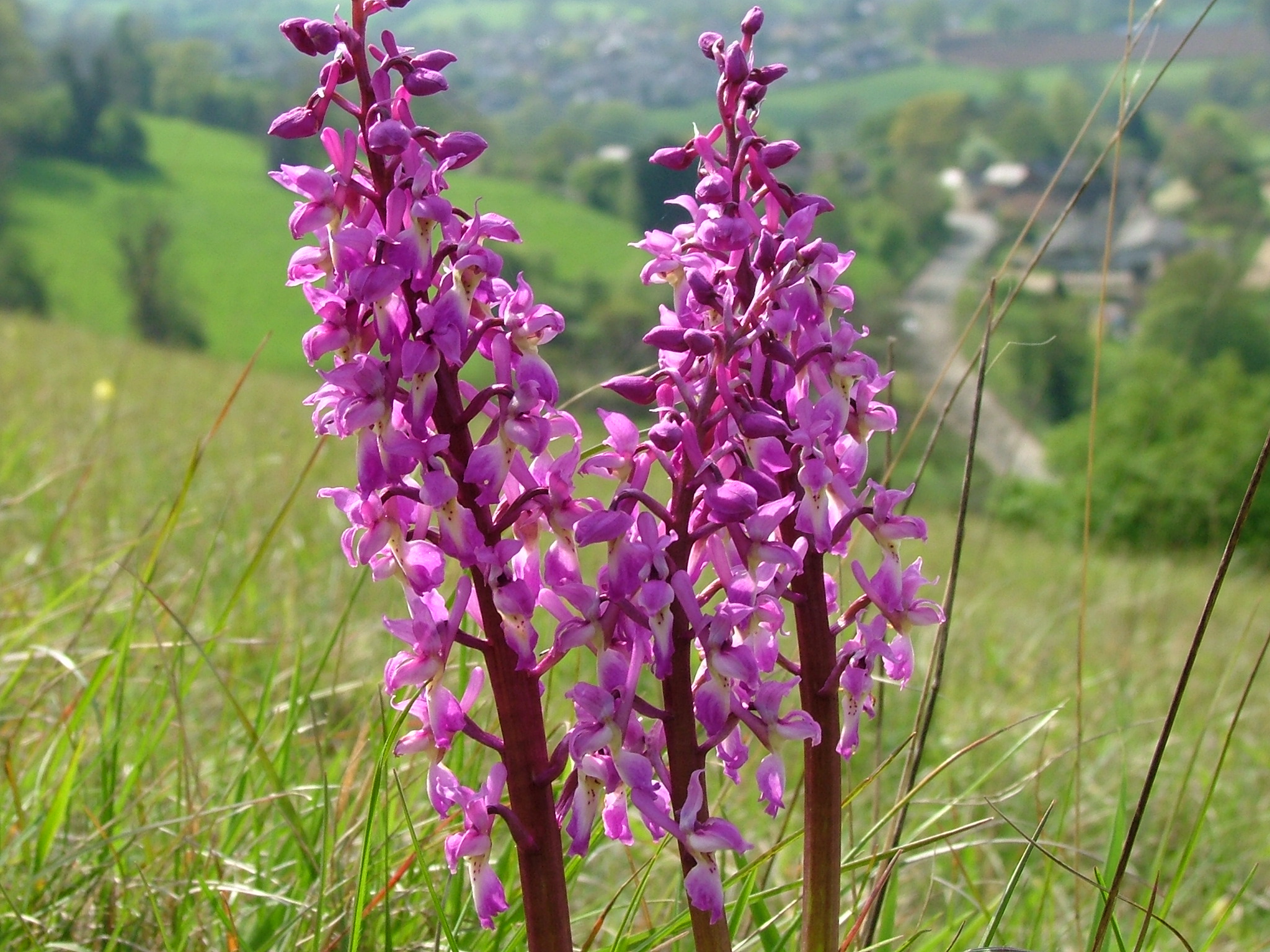
Spring starts with cowslips in April and early purple orchids in April and May. June is the peak: bee, pyramidal, fragrant and common spotted orchids, yellow rattle, bird’s-foot trefoil and the first wild thyme. High summer brings marjoram, knapweed and harebells, and with them the butterflies — marbled whites in July, chalkhill blues from late July into August, and on a handful of sites the small blue, dingy skipper, green hairstreak and the scarce Duke of Burgundy, which flies in May. Skylarks sing over all of it from March onwards, and on warm nights in late June and July female glow-worms light up the grass on some of the old banks.
Rodborough and Minchinhampton Commons
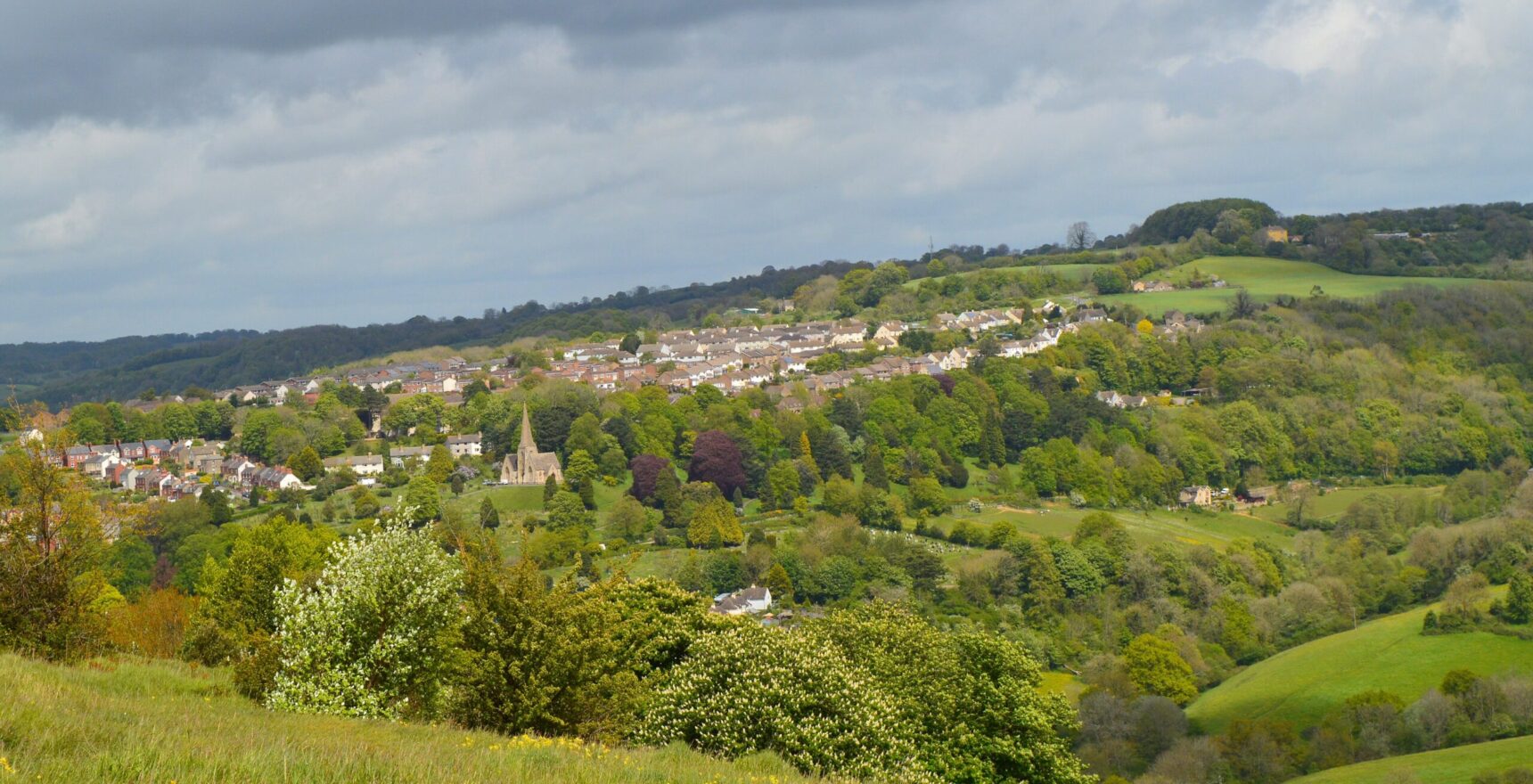
The two great commons above Stroud and Nailsworth are owned by the National Trust and between them make up the easiest big stretch of limestone grassland to explore. You can park on the edge, walk straight out onto open turf and have views over the Golden Valley and the Severn within five minutes. Rodborough is the better of the two for wildflowers and butterflies; Minchinhampton, with its Iron Age earthworks and prehistoric barrows, is wider, wilder-feeling and better for a long leg-stretch.
Rodborough has also been the scene of one of the great conservation stories of recent years. The large blue butterfly became extinct in Britain in 1979 and has been brought back to a handful of carefully managed sites. Its life cycle is absurdly specific — the caterpillar feeds on wild thyme or marjoram, then tricks a particular species of red ant into carrying it into the nest, where it spends the winter eating the ants’ grubs. In August 2019, after five years spent preparing the ground with exactly the right mix of short turf, thyme, marjoram and ants, around 1,100 large blue larvae were released on Rodborough Common. About 750 adults emerged the following summer, the first to breed there in roughly 150 years.
The commons are grazed. From mid-May, after the traditional Marking Day on 13 May, commoners’ cattle — plus a few horses and donkeys — roam freely across Minchinhampton and Rodborough, including over the roads. Drive slowly, close gates behind you, and keep dogs close; our guide to Nailsworth and Minchinhampton covers the pubs, the bakery and the walks off the common.
Daneway Banks and Siccaridge Wood
If you want to actually see a large blue, Daneway Banks is the place. This small reserve near Sapperton, run by Gloucestershire Wildlife Trust with the Royal Entomological Society, supplied many of the caterpillars for Rodborough and is now the most reliable place in the country to see the butterfly in flight. The butterflies fly from around mid-June into early July, and only in sunshine — on a grey, windy day you can walk the whole bank and see nothing at all, so pick a warm, still day and go from mid-morning onwards. Other butterflies are easier: in July the bank is busy with marbled whites, skippers and meadow browns.
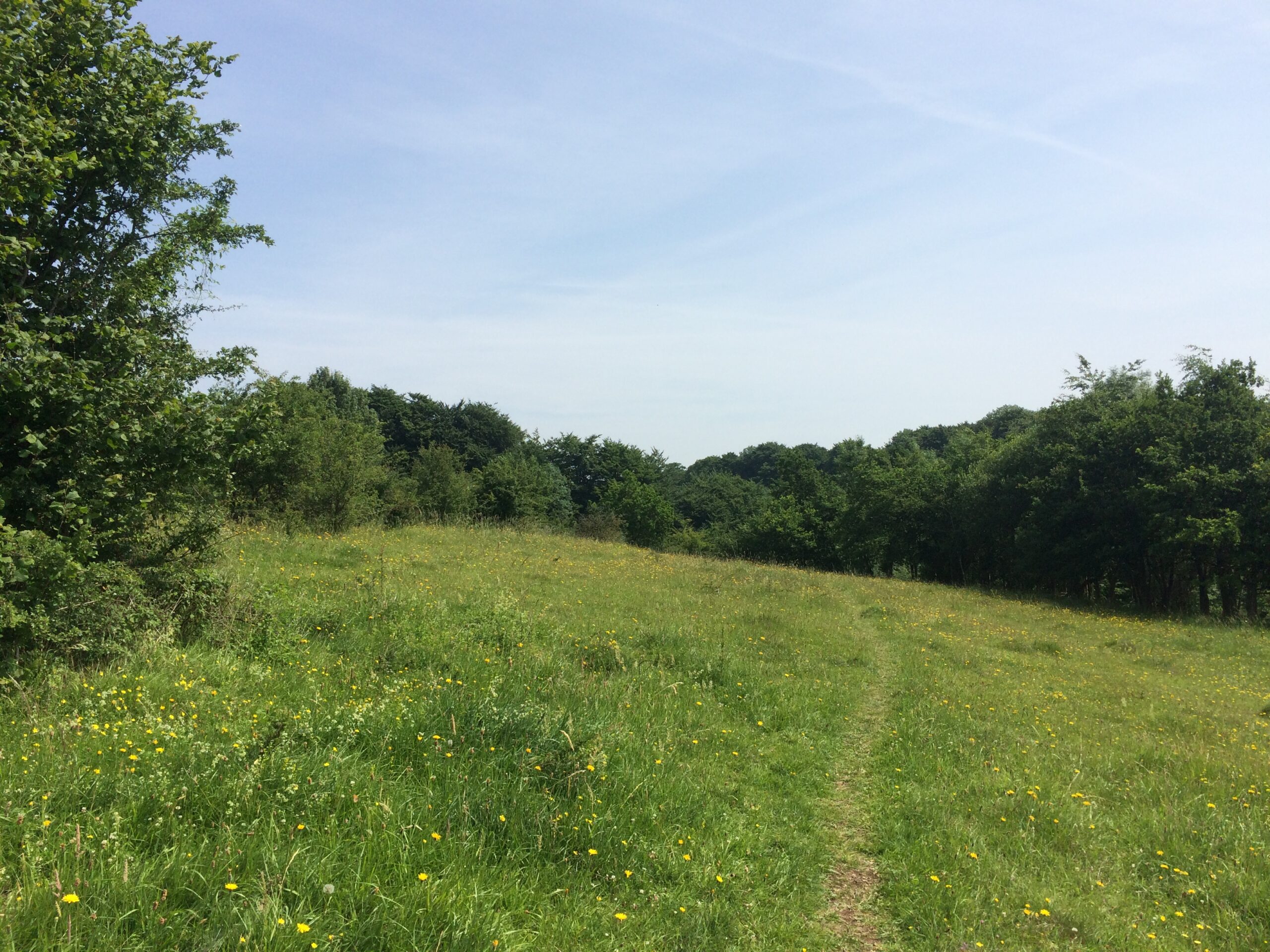
Close by, Siccaridge Wood is an old coppiced woodland running down towards the derelict Thames and Severn Canal. It is one of the better bluebell woods in this corner of the Cotswolds in late April, and the two reserves together make a lovely half-day loop from Sapperton. Parking is very limited, and the lanes are narrow — arrive early, park considerately and do not block gateways.
Cleeve Common
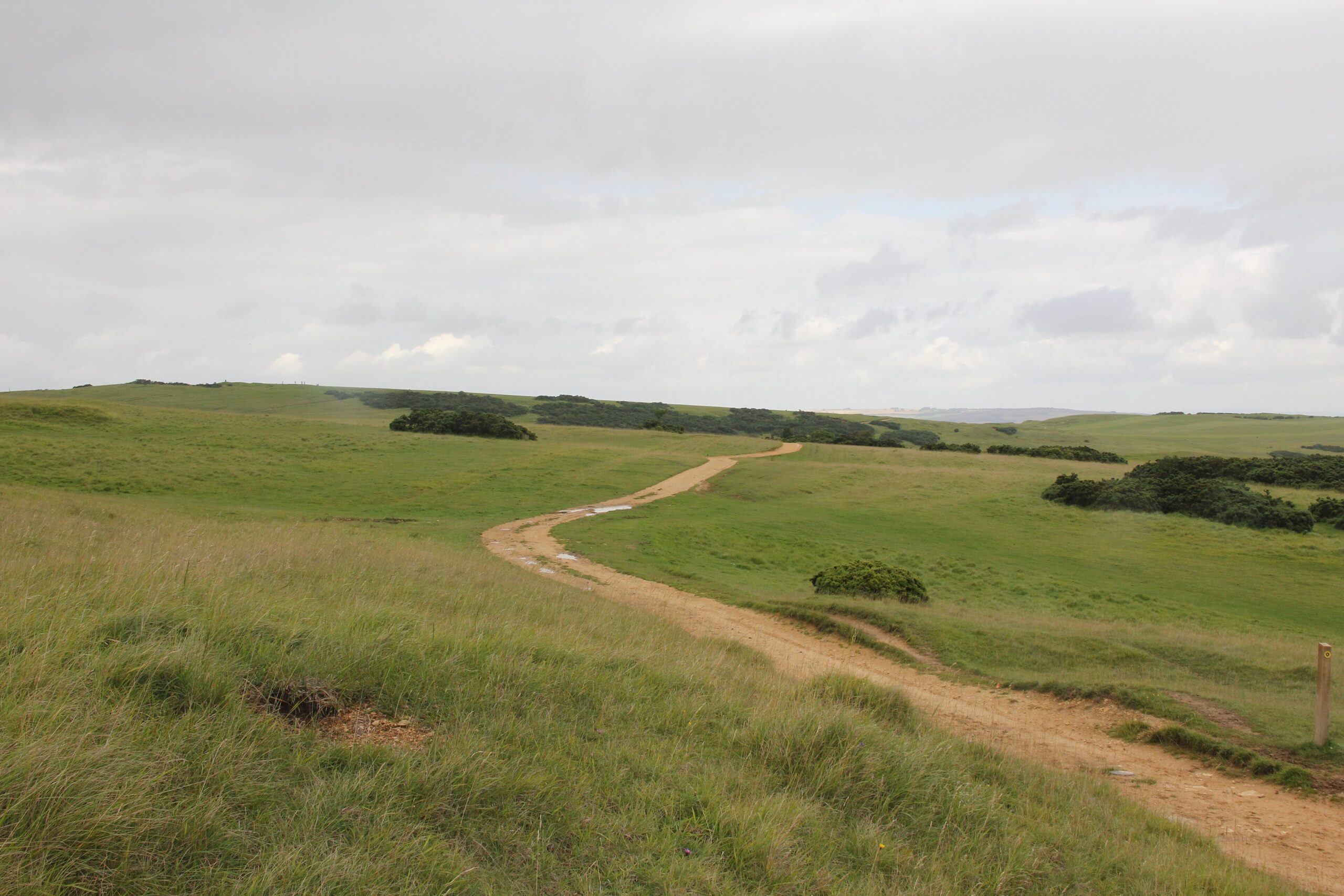
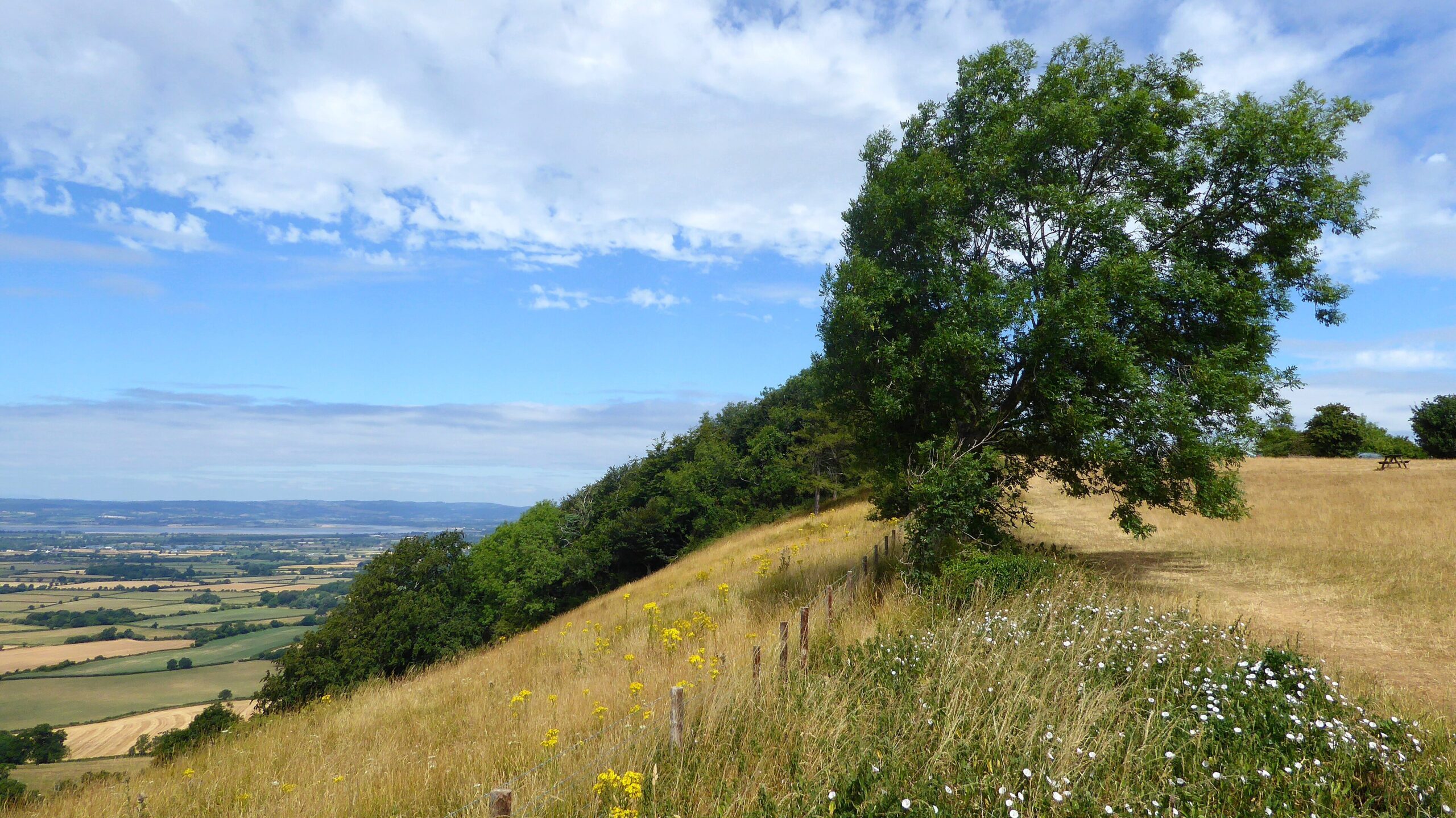
At 330 metres, Cleeve Hill is the highest point in the Cotswolds, and the common that sprawls across its top is a vast, open sweep of grassland and old quarry hollows. It has the feel of upland moor more than lowland pasture: sheep and cattle, a golf course threaded through the middle, Iron Age earthworks on the scarp, and views west to the Malverns and the Black Mountains. The Cotswold Way crosses it. Skylarks and meadow pipits are everywhere in spring, there are orchids and butterflies on the steep slopes in summer, and on a clear winter evening the sunsets over Cheltenham are spectacular. It is a big, exposed place — the weather on top can be several degrees colder and a lot windier than in Cheltenham or Winchcombe below.
The escarpment commons: Crickley, Leckhampton, Painswick Beacon and Selsley
Strung along the western edge between Cheltenham and Dursley is a chain of smaller commons and hill forts, all on or near the Cotswold Way. Crickley Hill has a country park, an Iron Age hill fort, older Neolithic remains and one of the best views on the whole escarpment. Leckhampton Hill and Charlton Kings Common, right above Cheltenham, combine flowery grassland with old quarry faces and the Devil’s Chimney, a stack of limestone left standing by the quarrymen. Painswick Beacon has its hill fort and a golf course over the top of it; Selsley Common above Stroud is grazed, open and quiet; Coaley Peak, further south, adds a picnic site, a Neolithic long barrow and a wide view down the Severn. Our guide to walking the Cotswold Way strings most of them together.
Beechwoods and ancient woodland
The second great Cotswold habitat clings to the escarpment. Beech grows magnificently on limestone, and along the western scarp — especially around Cranham, Painswick and Stroud — it forms steep, tall, cathedral-like hangers. These are among the finest beechwoods in Britain and some of the most species-rich of their kind, which is why the best of them are protected as part of the Cotswold Commons and Beechwoods National Nature Reserve.
Cranham, Buckholt and Cooper’s Hill
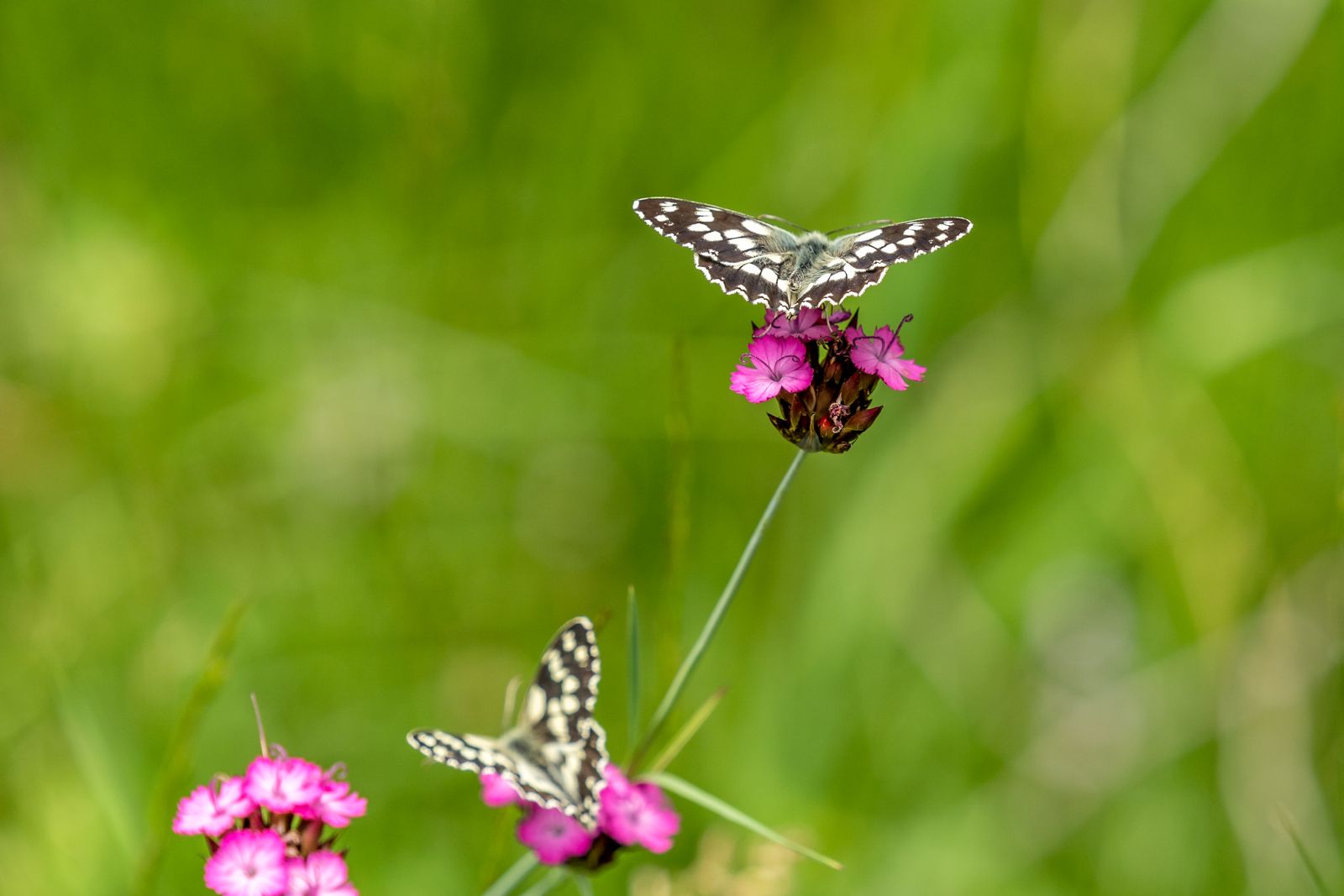
The National Nature Reserve is a cluster of woods and small commons between Painswick, Cranham and Brockworth, threaded with footpaths and the Cotswold Way. Buckholt Wood alone has recorded more than 780 species of fungi, which makes it worth a visit in October and November even after the leaves have turned. The woods hold tawny owls, buzzards, nuthatches and, in a few places, the wood warbler, whose shivering trill is one of the sounds of a beechwood in May. In summer, look for silver-washed fritillaries gliding along the rides and white-letter hairstreaks high in the elms. The open commons between the woods add another 130-plus species of wildflowers and fifteen kinds of orchid.
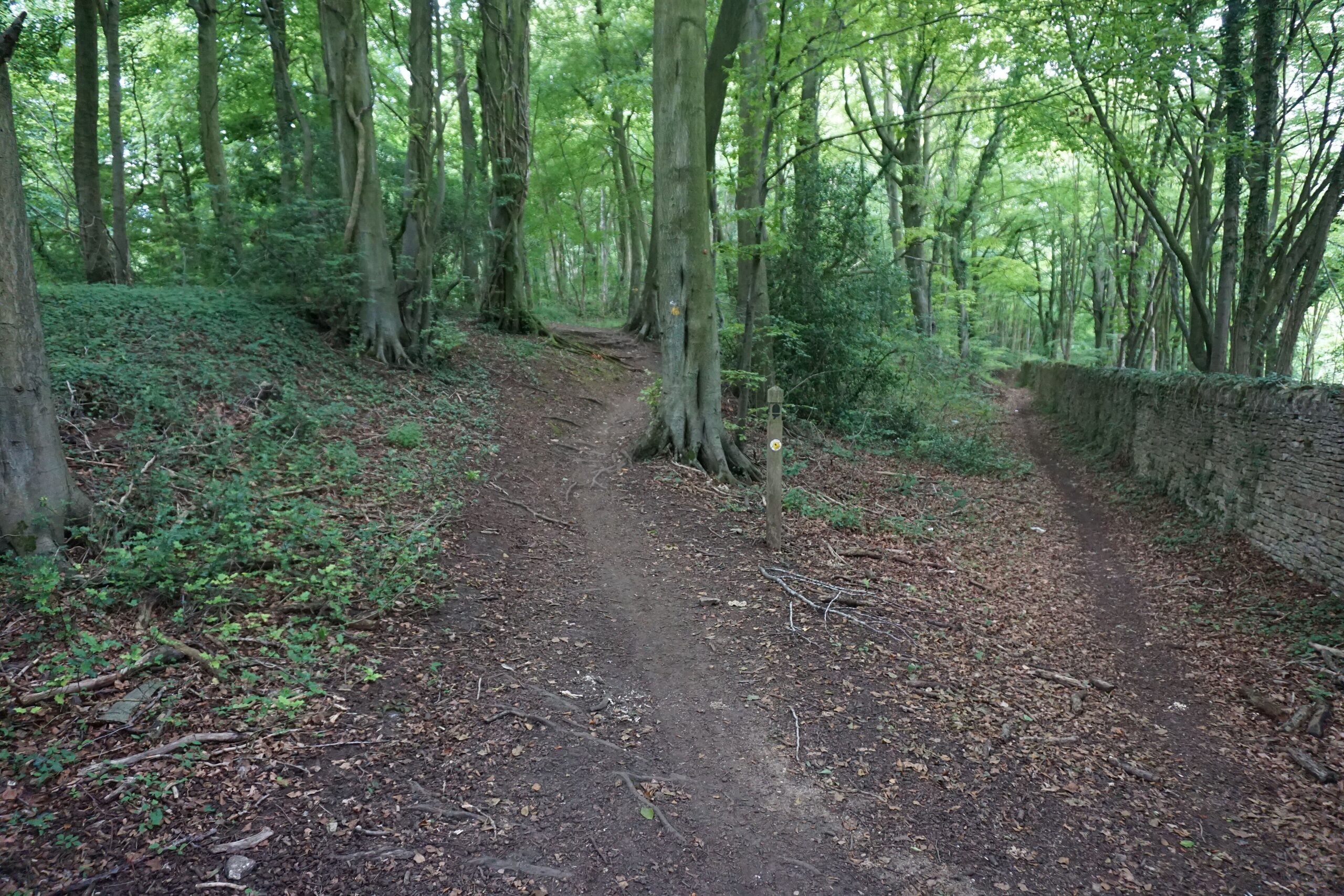
Cooper’s Hill, at the northern end, is the slope of the famous cheese-rolling race on the late May bank holiday. On any other day it is a quiet, steep, wooded hill with a maypole at the top and a view across Gloucester to the Malverns. Parking around the reserve is in small lay-bys and roadside spaces rather than proper car parks; Cranham village and the lanes towards Painswick are the easiest starting points. Our guide to Painswick has the village and its pubs.
Woodchester Park
Woodchester is a hidden valley south of Stroud, owned by the National Trust: a chain of lakes in a steep wooded combe, waymarked trails through beech and oak, and, at the bottom, one of the strangest buildings in England. Woodchester Mansion was begun in the 1850s and abandoned unfinished, with ceilings never plastered, floors never laid and gargoyles staring at nothing. It is run by its own trust rather than the National Trust and opens on set days, when a free minibus runs hourly from the Buckholt car park, from 11:00 with the last return at 16:40.
The mansion matters for wildlife because its roof spaces hold breeding colonies of greater and lesser horseshoe bats — two of Britain’s rarest bats — which visitors can watch on CCTV from a first-floor bat observatory on open days. The park itself is good for bluebells in late April and early May, for herons and kingfishers on the lakes, and for autumn colour in the beeches. Parking is pay and display at £4 for non-members (free for National Trust members) at two car parks: Tinkley Gate, off Tinkley Lane, and Buckholt, on the Nympsfield road. Bluebell Sundays fill both — go on a weekday or arrive before 10am.
Wychwood, Foxholes and the Oxfordshire woods
The eastern Cotswolds have fewer beech hangers but more of the old oak-and-ash woodland that once covered lowland England. Wychwood, north of Witney, was a royal hunting forest; much of what remains is private estate land, but public footpaths cross the edges and the villages around it still carry the name. In the Evenlode valley near Bruern, the Berks, Bucks and Oxon Wildlife Trust’s Foxholes reserve is an ancient wood famous locally for its bluebells, with deer, woodpeckers and a pleasant walk in from the lane. Our round-up of Cotswold woodland walks has routes through all of these, with distances and parking.
What to look for in Cotswold woods through the year
- February–March: snowdrops in old estate woods, hazel catkins, drumming great spotted woodpeckers, frogspawn in woodland ponds.
- April–May: wild garlic in the damp valley bottoms (you will smell it before you see it), wood anemones, then bluebells from late April into the first week or two of May.
- June–August: deep shade under the beech canopy, silver-washed fritillaries in sunny clearings, fallow and roe deer at dawn and dusk, bats over the woodland rides on warm evenings.
- October–November: copper and gold beech leaves, fungi everywhere, jays burying acorns, redwings and fieldfares arriving from Scandinavia.
Rivers, streams and water meadows
Cotswold rivers are small, clear and spring-fed, which makes them very good for wildlife and very easy to underestimate. Kingfishers are widespread — you are most likely to see one as a blue streak low over the water and a thin, high whistle as it goes. Grey wagtails flick around the mill races, moorhens potter along the banks, and on summer afternoons banded demoiselles — iridescent blue damselflies — flutter over the reeds. Otters have returned to most of the river systems, though you are far more likely to find their spraint on a stone under a bridge than to see one; dawn on a quiet stretch of the Windrush or the Coln is your best chance. Wild brown trout rise in all of them, and the mayfly hatch in late May and early June is an event in its own right, with clouds of insects over the water and every trout and swallow on the river feeding at once. Our guide to fishing in the Cotswolds covers the famous beats on the Coln and Windrush.
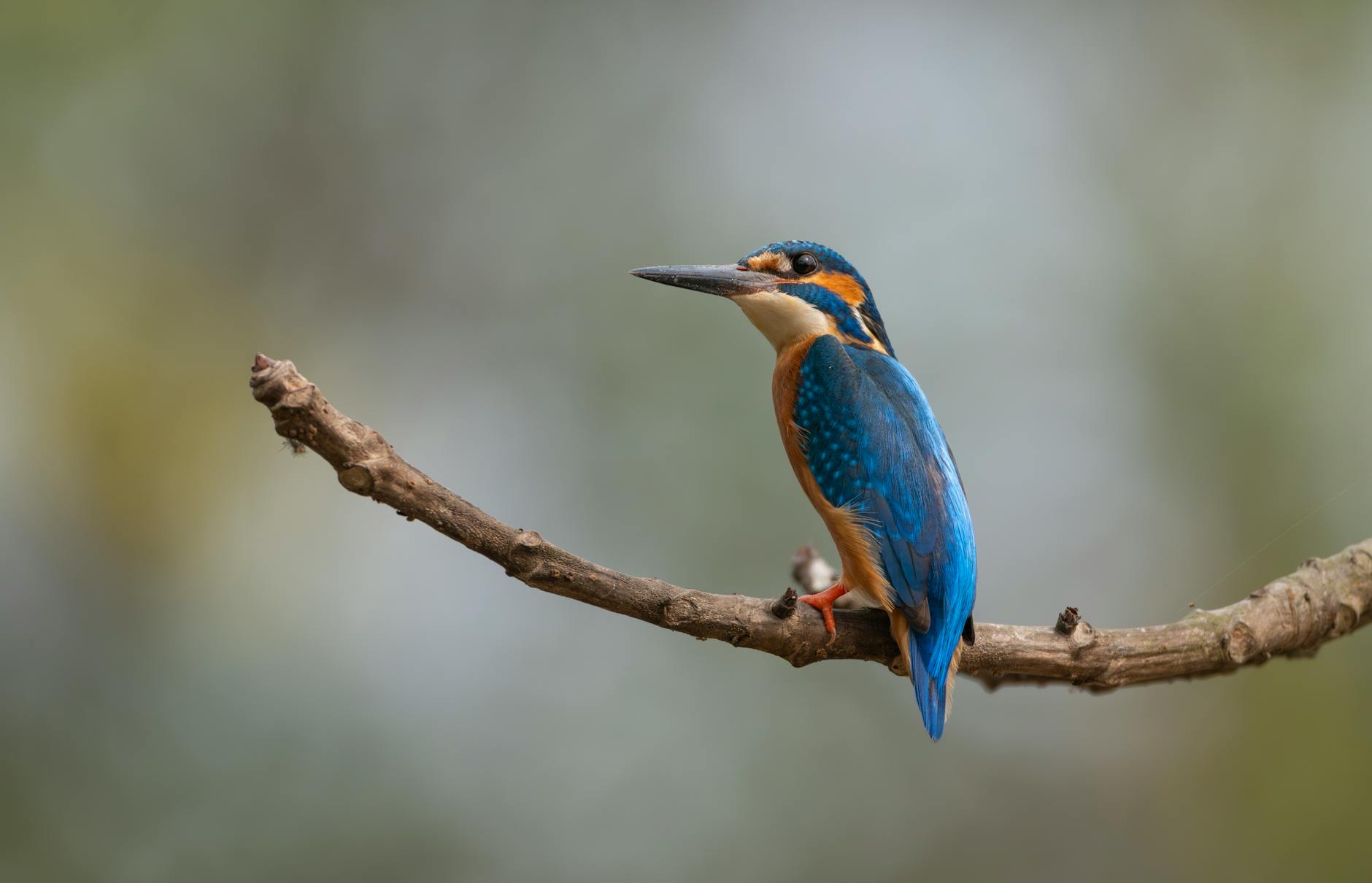
A word of honesty about Bourton-on-the-Water. The Windrush through the village is lovely to look at, but in August it is a shin-deep paddling pool full of children and labradors, and there is not much wildlife watching to be done there. Walk twenty minutes out along the river towards the Slaughters, or out to Gloucestershire Wildlife Trust’s Greystones Farm on the edge of the village — a working farm and nature reserve with flower meadows by the river and an Iron Age camp — and it becomes a different place entirely.
Two other riverside spots are worth knowing. At Bibury, Rack Isle — the marshy water meadow in front of Arlington Row — is a small National Trust wildlife refuge, and it is often busier with moorhens and wagtails than the street is with tourists, at least early in the morning. And on the Thames at Cricklade, just beyond the southern edge of the Cotswolds, North Meadow National Nature Reserve holds around four-fifths of Britain’s wild snake’s-head fritillaries. For a week or two in late April the meadow is purple and white with them — one of the great wildflower sights in England, and free to walk through on the public paths.
The Cotswold Lakes
The Cotswold Water Park, now branded the Cotswold Lakes, is the least Cotswold-looking place in the Cotswolds: more than 150 flooded gravel pits spread across the flat land around South Cerney, Ashton Keynes and Somerford Keynes on the Gloucestershire–Wiltshire border. It is not pretty in the chocolate-box sense. Many lakes are ringed with holiday lodges, sailing clubs and fishing pegs, and the landscape between them is flat and scrubby. But for birds it is the most important site in the region, and in midwinter it holds more of them than anywhere else for miles.
From November to February the lakes fill with wintering ducks and grebes — great crested grebes, goldeneye, goosander, tufted duck, pochard and wigeon, with the occasional rarity that sends local birders racing down the lanes. In spring and summer the reedbeds and scrub fill with warblers, common terns fish the open water, and hobbies — small, fast falcons — hunt dragonflies over the lakes on warm afternoons. Wiltshire Wildlife Trust’s Lower Moor Farm has hides and easy paths, and its neighbour Clattinger Farm is an old hay meadow that has never been ploughed or fertilised, full of fritillaries and orchids in spring. Our guides to the Cotswold Water Park and to bird-watching in the Cotswolds go into more detail, including Slimbridge on the Severn estuary, just below the escarpment, where wild swans and geese spend the winter.
Farmland, hedges and dry-stone walls
Most of the Cotswolds is farmland, and it is easy to dismiss the big arable fields of the high wold as a wildlife desert. They are not, quite. The Cotswold countryside on the plateau between Stow, Northleach and Burford is good brown hare country — in March and April you can watch them chasing and “boxing” in the young barley, which is usually a female fending off an over-keen male. Red kites and buzzards are constant overhead, kestrels hover over the verges, and yellowhammers sing their “little-bit-of-bread-and-no-cheese” song from the hedge tops all summer. At dusk, a barn owl quartering a field margin is a common enough sight that locals will tell you which field to watch.
The dry-stone walls are a habitat in themselves. The older ones are crusted with lichens and mosses, wall rue and other small ferns root in the joints, and the gaps shelter wrens, insects, slow-worms and small mammals. The walls also explain a lot of Cotswold history — they went up when the open sheepwalks were enclosed, and the sheep they once penned, the long-woolled Cotswold Lion, made the region rich in the Middle Ages. You can still see the breed at Cotswold Farm Park near Guiting Power, and in a few fields around the villages.
The National Trust’s Sherborne Park estate, in the Windrush valley east of Northleach, is a good place to see how farmland can be run with wildlife in mind: estate walks through water meadows, parkland and woods, with free access to the waymarked paths. For a farmland walk that also takes in a village or two, the lanes and footpaths around Naunton, Guiting Power and the Slaughters are hard to beat.
Deer parks and veteran trees
Wild deer are widespread across the Cotswolds — roe deer on field edges, the small, barking muntjac in almost every wood, and fallow deer in the larger estates — but they are shy and mostly seen at dawn and dusk. For a guaranteed sighting, head for a deer park.
- Broadway Tower keeps a herd of red deer in the parkland around the folly, and in October you may hear the stags roaring across the hill. Entry to the tower is paid; the surrounding footpaths and the Cotswold Way are free.
- Dyrham Park, a National Trust house on the southern scarp near Bath, has a large herd of fallow deer roaming its steep hillside parkland.
- Blenheim Palace at Woodstock has some of the oldest oak trees in England in its park, many of them centuries older than the palace itself — they were already old when Capability Brown was landscaping around them. Our Blenheim Palace guide covers tickets and the park-only option.
The rut — when the stags and bucks fight for females — runs through October. Keep a long way back: stags are dangerous at this time of year, and a zoom lens or binoculars will get you a far better view than walking towards them.
Arboretums and gardens with a wild streak
Strictly, these are not wild places — every tree was planted — but they are some of the best places in the region to see nature at its showiest. Westonbirt, the National Arboretum near Tetbury, is the big one: thousands of trees from around the world, with peak autumn colour usually in mid-to-late October when the Japanese maples in Old Arboretum and Silk Wood go up like bonfires. It is also very busy then, especially at weekends and in half term; go on a weekday as soon as it opens. Our Westonbirt Arboretum guide has prices, parking and the best routes.
Batsford Arboretum near Moreton-in-Marsh is smaller, steeper and quieter, with a wonderful collection of Japanese maples and flowering cherries on the hillside below Batsford House. In late winter, the snowdrop gardens take over — Colesbourne Park near Cheltenham calls itself the home of snowdrops and grows more than 300 varieties, and Painswick Rococo Garden and Cerney House are both lovely in February. Our round-up of the best gardens in the Cotswolds covers opening seasons for each.
The Cotswolds nature calendar, month by month
| Month | Highlights | Where to go |
|---|---|---|
| January | Wintering ducks and grebes, first snowdrops, hare tracks in frost, long dark nights | Cotswold Lakes; Colesbourne; the high wold |
| February | Snowdrops at their peak, hazel catkins, frogspawn, skylarks starting to sing | Painswick Rococo Garden; Colesbourne; Cleeve Common |
| March | Boxing hares, first chiffchaffs, early primroses; dogs on leads on access land from 1 March | Farmland around Stow and Northleach |
| April | Cowslips, wild garlic, early purple orchids, fritillaries in late April, bluebells from the last week | North Meadow, Cricklade; Siccaridge; Woodchester |
| May | Bluebells into early May, Duke of Burgundy butterflies, the mayfly hatch, cattle out on the commons from 13 May | Cranham woods; Rodborough; the Windrush and Coln |
| June | Orchids at their peak, large blues from mid-June, glow-worms from late June, lavender from mid-June | Daneway Banks; Rodborough; Cotswold Commons and Beechwoods |
| July | Marbled whites, wild thyme, flower meadows, first chalkhill blues, hobbies over the lakes | Cleeve Common; Crickley Hill; Cotswold Lakes |
| August | Chalkhill blues, harebells, banded demoiselles, swifts leaving | Rodborough; Leckhampton Hill; the river valleys |
| September | Hedgerow fruit, gathering swallows and house martins, the first fungi | Any hedged lane; Buckholt Wood |
| October | Peak autumn colour mid-to-late month, the deer rut, fungi, redwings and fieldfares arriving | Westonbirt; Batsford; Broadway Tower; Dyrham |
| November | Last leaves on the beeches, ducks building up on the lakes, misty mornings in the valleys | Cranham woods; Cotswold Lakes |
| December | Winter thrushes in the hedges, winter wildfowl, frosty commons and the darkest skies of the year | Cotswold Lakes; Slimbridge; the open wold |
For a broader look at what each season is like to visit — crowds, prices and what is open — see our guides to the Cotswolds in spring, summer, autumn and winter.
Four days out for wildlife lovers
If you only have a day or two, these combinations give you the most variety for the least driving. All of them are better started early.
The Stroud commons and beechwoods
Start on Rodborough Common at 8am for skylarks and the view, then drive ten minutes to Woodchester Park and walk the lakes loop through the beechwoods. Lunch in Nailsworth, then finish with a late-afternoon walk on Minchinhampton Common as the light drops and the cattle drift across the turf. In June, swap Woodchester for Daneway Banks in the middle of the day to look for large blues.
The escarpment above Cheltenham
Walk the Cotswold Way from Crickley Hill along the scarp towards Leckhampton Hill and the Devil’s Chimney, with buzzards and the odd raven riding the updraughts below you and the whole Severn Vale laid out to the west. In late spring, carry on into the Cranham beechwoods. Cleeve Common makes an alternative on another day, or an evening walk for sunset.
The Windrush valley
Park outside Bourton-on-the-Water before 9am and walk the river path to Lower and Upper Slaughter and back, watching for kingfishers, wagtails and trout. Spend the afternoon on the farmland walks around Sherborne or Naunton looking for hares and kites, and finish in a village pub. It is a gentle day, and one that shows how much more there is to the Cotswold river valleys than the famous postcards.
A winter day on the lakes
Spend a cold, bright morning at the Cotswold Lakes with binoculars, working round the hides at Lower Moor Farm and the bigger lakes near South Cerney, then warm up in Cirencester. If you have the energy, drive to Slimbridge for the afternoon feed on the Severn. Wrap up properly: the wind across open water in January is bitter.
For more route ideas, our Cotswolds walking guide covers everything from short strolls to multi-day routes, and our guide to outdoor activities in the Cotswolds covers cycling, riding and the rest.
Watching wildlife without a car
It is harder, but not impossible. Stroud has direct trains from London Paddington and sits right below the commons and beechwoods: Rodborough Common is a steep walk up from the town, and buses run towards Nailsworth and Minchinhampton. Kemble, also on the Paddington line, is about a mile’s walk from the source of the Thames and a taxi ride from the Cotswold Lakes. Moreton-in-Marsh station, on the Cotswold Line from Oxford, is within walking distance of Batsford Arboretum. Bus services through the rural Cotswolds are thin, especially on Sundays, so check the timetable before you rely on one. Our guide to the Cotswolds without a car has the routes and the honest limitations.
Wildlife-watching etiquette and practicalities
- Dogs: on open access land, the law requires dogs to be on a short lead (no more than two metres) from 1 March to 31 July to protect ground-nesting birds, and at all times near livestock. Many commons and reserves ask for the same all year. Some reserves ban dogs altogether; check before you go.
- Livestock: cattle graze many of the best grassland sites, and on Minchinhampton and Rodborough they wander over the roads. Walk calmly around them, never between a cow and her calf, and let go of a dog’s lead if cattle chase you.
- Flowers: do not pick wild orchids or dig up bluebells — uprooting wild plants without the landowner’s permission is illegal, and bluebells are specifically protected. Photographs last longer anyway.
- Ticks: long grass and bracken carry ticks in summer. Wear long trousers, check yourself in the evening and remove any tick promptly with a proper tool.
- Timing: almost everything is easier to see early in the morning or in the last two hours of daylight. A noon visit to anywhere popular in summer is mostly about other people.
- Kit: a pair of binoculars matters more than any camera. A wildflower guide or an identification app makes the grassland come alive.
- Guided walks: the Cotswold Voluntary Wardens lead free guided walks all year, many of them themed on wildlife, wildflowers or history. Our guide to guided walks in the Cotswolds has the details.
Walking with a dog? Our guide to dog-friendly walks in the Cotswolds picks routes where dogs are welcome and livestock is less of an issue.
Captive wildlife: worth the ticket?
Several of the region’s most popular days out involve animals, and none of them is the wild Cotswolds — but some are very good at what they do. The Cotswold Wildlife Park near Burford is a proper zoo in the grounds of a manor house, with rhinos, giraffes and penguins, and it is excellent with children. Cotswold Farm Park near Guiting Power, run by television farmer Adam Henson, is the place to meet rare breeds, including the Cotswold Lion sheep. Birdland in Bourton-on-the-Water has penguins and flamingos, and the Cotswold Falconry Centre at Batsford flies its birds of prey in daily displays through the season.
Our honest view: if you have young children, any of these is a good day out and a reliable answer to a wet afternoon. If you are an adult who wants to see Cotswolds wildlife, spend the same money on a good breakfast and go out to Rodborough at dawn instead. Our guides to the Cotswold Wildlife Park and the best animal attractions in the Cotswolds compare prices and what each is like.
Where to stay for a nature break
Base yourself according to the habitat you most want to explore. The Stroud valleys — Painswick, Nailsworth, Minchinhampton and Stroud itself — put you within minutes of the best grassland and beechwoods, and they are cheaper and less crowded than the north Cotswolds. Winchcombe is ideal for Cleeve Common and the northern escarpment. Cirencester and South Cerney suit the Cotswold Lakes, and the Windrush valley villages suit river walks and farmland. For dark skies, owls and dawn starts, a farm cottage, campsite or glamping site on the high wold will do far more for you than a hotel in a busy village. Our guides to where to stay in the Cotswolds and to glamping in the Cotswolds cover the options, and the Stroud guide covers the town at the centre of the wild south-west.
Frequently asked questions about Cotswolds wildlife
What wildlife can you see in the Cotswolds?
Red kites, buzzards, skylarks, brown hares, roe and muntjac deer, kingfishers and badgers are all widespread. With a little effort you can add otters, barn owls, horseshoe bats, glow-worms, wild orchids and rare butterflies including the large blue and the Duke of Burgundy. The Cotswold Lakes add thousands of wintering ducks and grebes.
Is the Cotswolds a national park?
No. It is a National Landscape — the new name, since 2023, for an Area of Outstanding Natural Beauty — and it is the largest in England. National Landscapes have similar protection for their scenery but no national park authority.
Where can you see deer in the Cotswolds?
For a guaranteed sighting, visit the deer parks at Broadway Tower (red deer) or Dyrham Park (fallow deer). Wild roe, muntjac and fallow deer live across the region but are best seen at dawn or dusk in quiet woodland and field edges.
What are the best nature reserves in the Cotswolds?
Rodborough and Minchinhampton Commons, Daneway Banks, the Cotswold Commons and Beechwoods National Nature Reserve around Cranham, Woodchester Park, Cleeve Common, Crickley Hill and, for birds, the reserves at the Cotswold Lakes.
When is the best time of year for wildlife in the Cotswolds?
Late April to early July is the richest period, with bluebells, orchids, butterflies and birdsong all at their peak. October is excellent for autumn colour, fungi and the deer rut, and winter is best for wildfowl on the lakes.
Can you see otters in the Cotswolds?
Otters have returned to most Cotswold rivers, including the Windrush and the Coln, but they are shy and mostly active at night. Your best chance is a quiet riverbank at dawn; signs such as tracks and spraint are far easier to find than the animals themselves.
Are there wild boar in the Cotswolds?
Not in any meaningful number. The wild boar people often ask about live across the River Severn in the Forest of Dean, which is a different area altogether.
Can I take my dog onto Cotswold nature reserves?
On most commons and many reserves, yes, on a lead. On open access land, dogs must be on a short lead from 1 March to 31 July and near livestock at all times, and a few sensitive reserves do not allow dogs at all.
The wild Cotswolds reward slow travel more than almost anything else in the region: an early start, a pair of binoculars and the willingness to walk half a mile beyond the car park. For the walks themselves, start with our short walks in the Cotswolds and circular walks; for the best light on the hills, our guide to Cotswolds photography spots; and if you are still deciding when to come, our guide to the best time to visit the Cotswolds weighs up every season.
Late April is when the beechwoods earn their keep. Woodchester Park, Siccaridge Wood, Standish Wood and Foxholes all turn blue for a week or two either side of May Day, and the exact timing shifts with the spring. Our guide to bluebell woods in the Cotswolds covers when each usually peaks, where to park and the best walk through each.
The Cotswold year starts earlier than you might think. From late January, naturalised snowdrops whiten churchyards, stream banks and the edges of old estate woods, and a handful of gardens turn the season into an event. Our guide to snowdrops in the Cotswolds covers Painswick Rococo Garden, Colesbourne, Cerney House and Rodmarton, with dates and prices.
October is when the woods steal the show. Westonbirt and Batsford light up with Japanese maples, the escarpment beechwoods turn copper, and the fungi come up in their hundreds. Our guide to autumn colour in the Cotswolds covers where to go, when the colour peaks and the best walks.
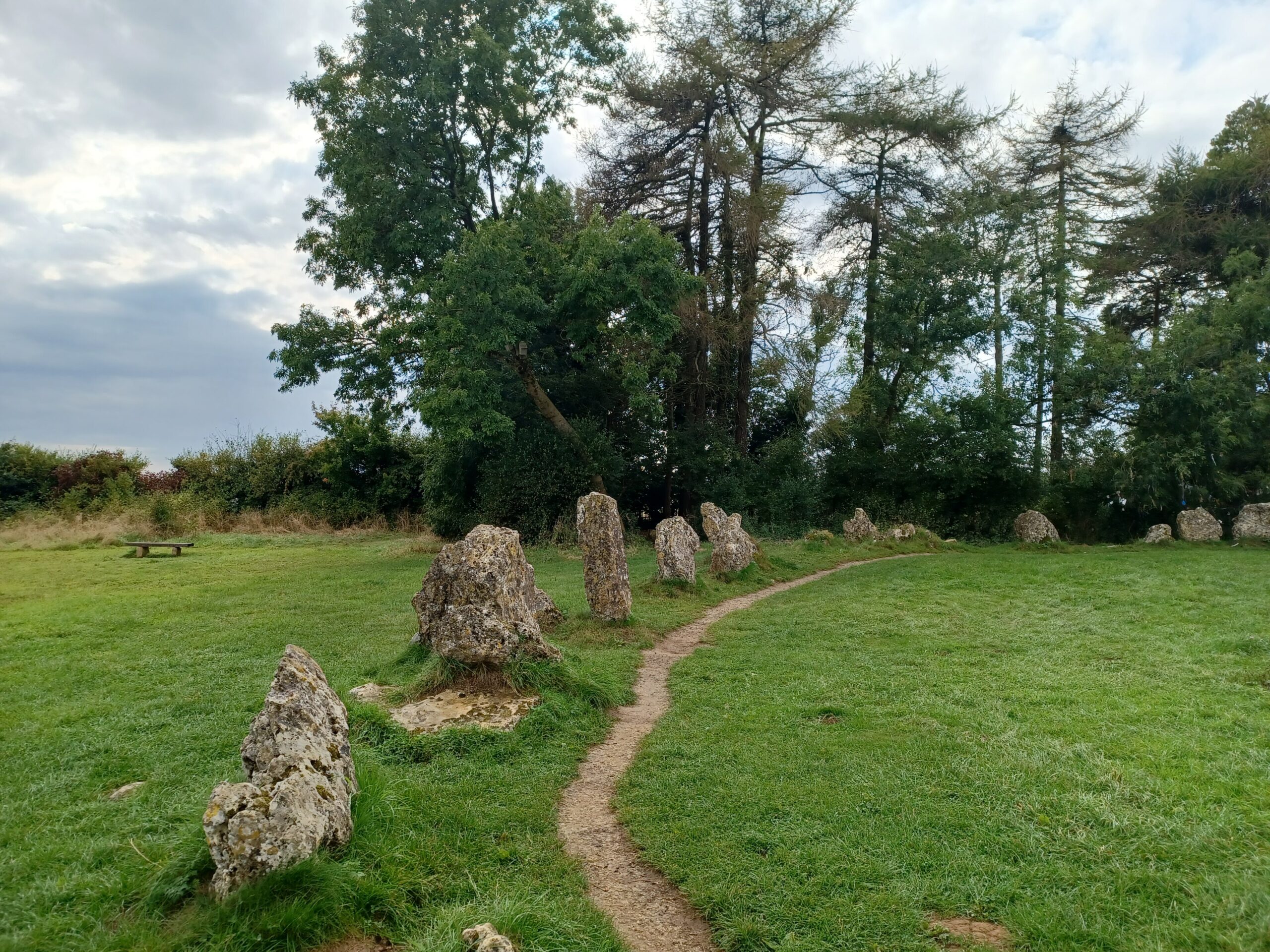
The wild Cotswolds do not stop at sunset. On clear, moonless nights the high wold around Northleach is dark enough to show the Milky Way, and the Rollright Stones are an official Dark Sky Discovery Site. Our guide to stargazing in the Cotswolds covers the darkest spots, the best months and what to look for.
Most of the places in this guide are nature reserves, and each has its own character, season and parking quirks. Our guide to Cotswolds nature reserves goes through them one by one — Crickley Hill, Coaley Peak, Chedworth, Daneway Banks, Rodborough and the Cotswold Lakes reserves among them — with a reserve for every month.
If the limestone grassland is the habitat that matters most, June is the month to see it. Swift’s Hill, Prestbury Hill and Selsley Common hold more than a dozen orchid species between them, and the hay meadows at Clattinger Farm and Cricklade are purple with fritillaries in April. Our guide to Cotswolds wildflower meadows covers the sites, the orchids and when each peaks.
Photo Credits
View from Rodborough Common across the wooded Stroud valleys: Rodborough Common – geograph.org.uk – 3973923 by Philip Pankhurst, CC BY-SA 2.0, via Wikimedia Commons.
Track across the open grassland of Cleeve Common: Track across Cleeve Common – geograph.org.uk – 3070453 by Terry Jacombs, CC BY-SA 2.0, via Wikimedia Commons.
Grassland bank at Daneway Banks nature reserve: Daneway Banks – geograph.org.uk – 5437748 by don cload, CC BY-SA 2.0, via Wikimedia Commons.
The Cotswold Way through the beeches of Buckholt Wood: The Cotswold Way in Buckholt Wood – geograph.org.uk – 4756741 by Bill Boaden, CC BY-SA 2.0, via Wikimedia Commons.
Leave a Reply