This article contains advertising. My booking links are routed through a partner that adds commission tracking automatically, so if you book through one I earn a commission from the provider, at no extra cost to you. It never affects what I recommend. Affiliate disclosure
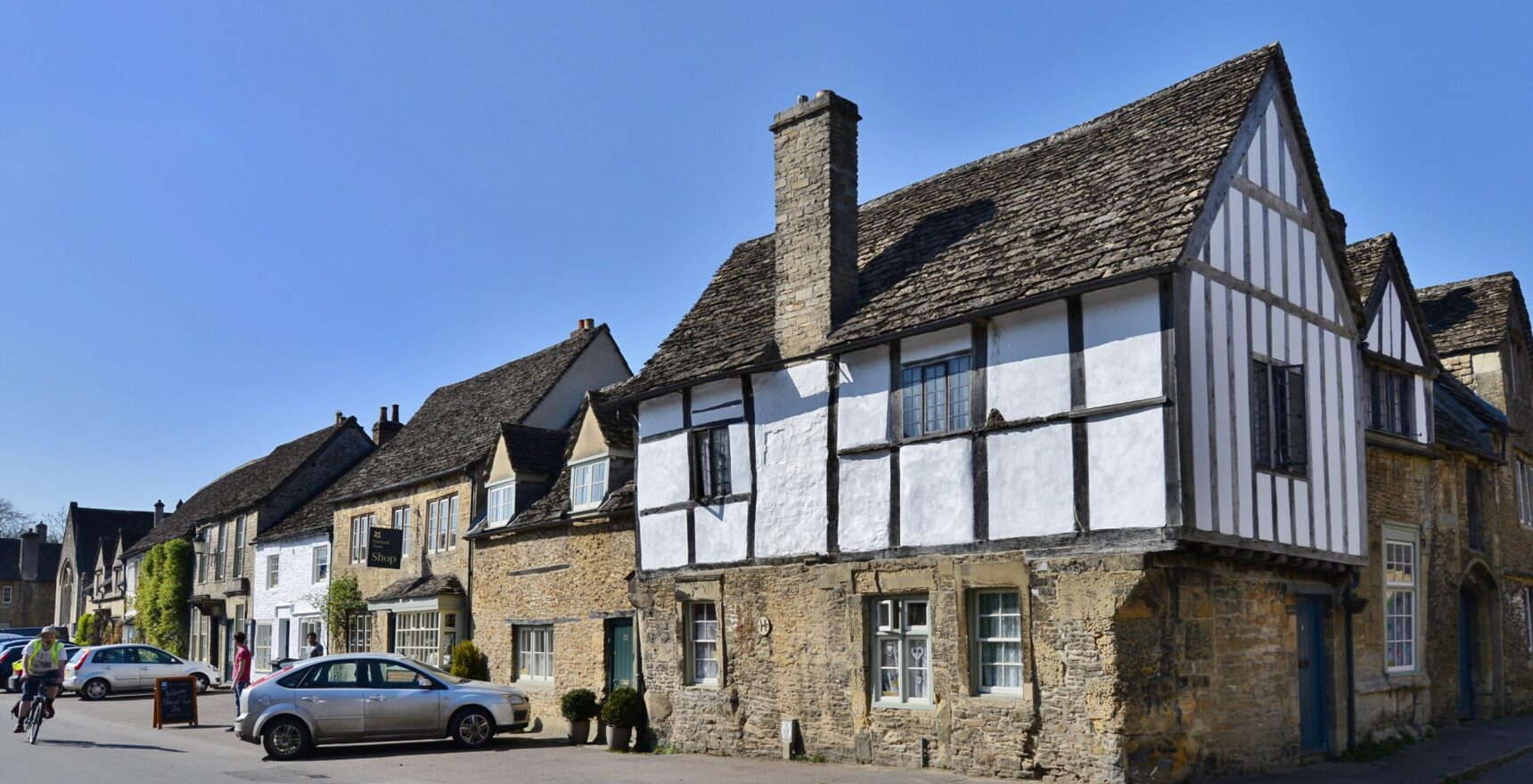
The first thing location managers notice about Lacock is what is missing. Look along the rooflines of the High Street and there are almost no satellite dishes or aerials on the front elevations, no plastic windows, no shop signs louder than a painted board, and hardly a building later than the eighteenth century. Cover the yellow lines with a load of gravel and the whole street is ready for 1540, 1790 or 1850 in an afternoon. That is why the Lacock village you walk through today is so often described as the most filmed in Britain — and why, even with no camera in sight, it feels faintly unreal.
Almost the whole village belongs to the National Trust, which has kept it much as it was when the Talbot family handed it over in 1944. At its heart is Lacock Abbey, a medieval nunnery turned Tudor house, where the earliest surviving photographic negative was made in 1835. Around it are four short streets of timber-framed and stone houses, a medieval tithe barn, a fine church, a packhorse bridge and a ford. This guide covers the lot: what to see, what it costs, where Harry Potter and Pride and Prejudice were filmed, where to eat, and how to see Lacock before the day visitors arrive.
Lacock at a glance
| Detail | |
|---|---|
| Where | Wiltshire, off the A350 between Chippenham and Melksham, at the southern tip of the Cotswolds |
| Owned by | The National Trust — the Abbey, the museum and most of the village |
| Village | Free to walk around |
| Abbey, cloisters and Fox Talbot Museum | Adult £21.00, child £10.50, family £52.50 (£23.10 / £11.60 / £57.80 with Gift Aid); National Trust members free |
| Parking | Hither Way car park, under 400 m from reception — £5 a day, free for National Trust members |
| Nearest station | Chippenham, about 3 miles |
| Time needed | An hour for the village; half a day with the Abbey and museum |
Prices and times checked September 2026 on the National Trust’s website — they change seasonally, so confirm before you travel.
Why Lacock looks the way it does
Lacock was a prosperous wool and cloth village in the Middle Ages, on the road between Bath and London and close to the abbey that dominated its life. It grew rich, built well in stone and timber, and then — as trade moved elsewhere and the railway passed it by — simply stopped changing. For centuries the village and the Abbey were owned by the same family, and when Matilda Talbot gave both to the National Trust in 1944, the Trust inherited a place where almost nothing had been knocked down or rebuilt since the Georgian period.
That continuity is unusual even in England. Most historic villages have a garage, a modern estate on the edge or a row of 1960s shopfronts. Lacock has none of them, and the National Trust, as landlord of most of the houses, keeps it that way. The result is a working village — people live here, children go to school, the pubs serve locals — that happens to look like a film set.
Walking the village
Lacock’s four main streets — Church Street, East Street, High Street and West Street — form a rough square, and a slow walk around all four takes about half an hour. Allow longer: the pleasure is in the detail.
- High Street is the widest, lined with stone and timber-framed houses, the Red Lion and the village shop, with a medieval village cross along its length.
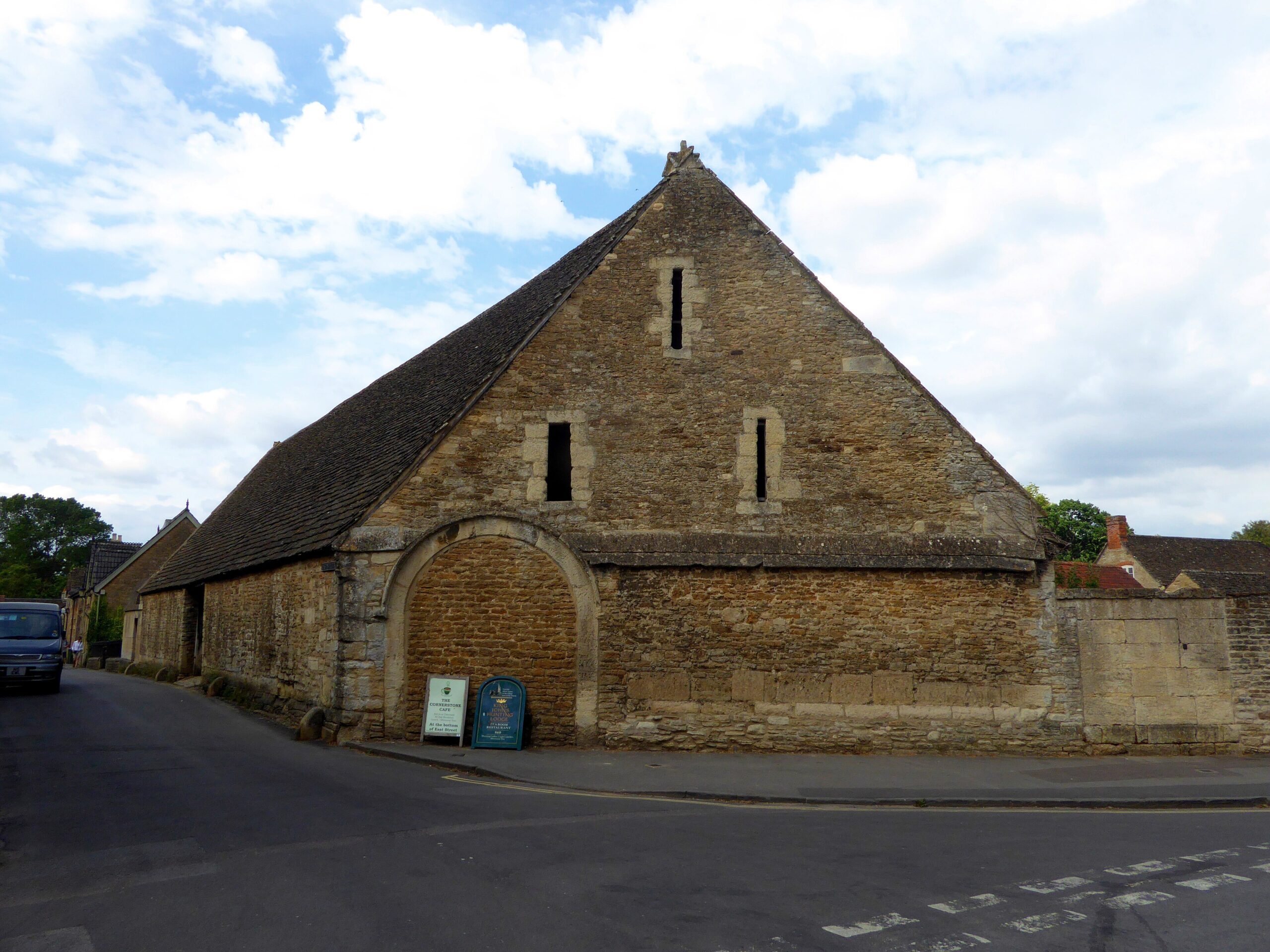
- East Street is home to the great tithe barn, a fourteenth-century stone barn with a vast roof, and the small village lock-up beside it, where drunks and petty offenders were once held overnight.
- Church Street leads to St Cyriac’s Church, worth ten minutes for its Tudor monuments to the family who took over the Abbey after the Dissolution, and past some of the oldest houses in the village.
- West Street has the George Inn, one of the oldest pubs in the area.
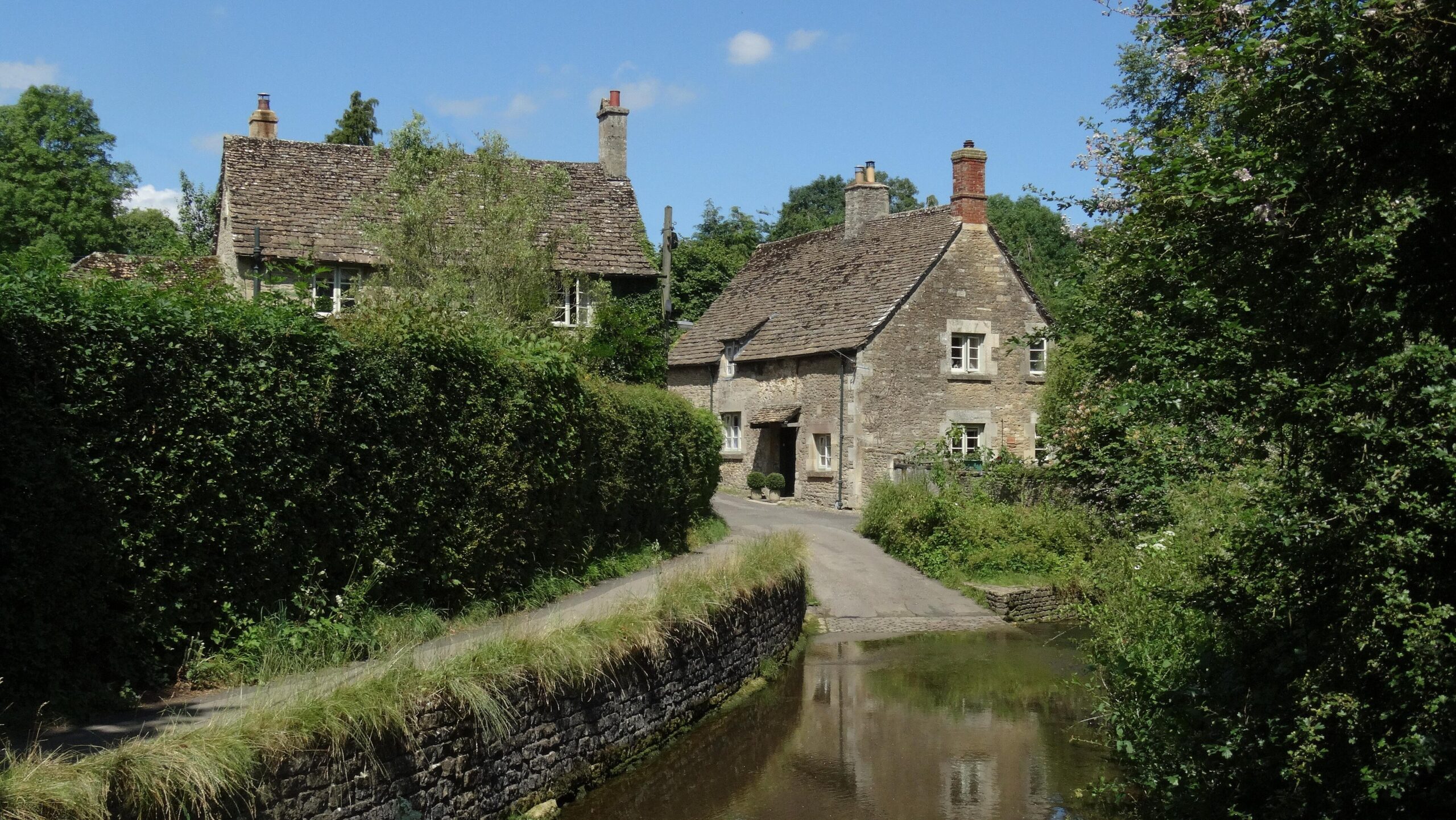
From Church Street, walk down past the church to the Bide Brook, where a narrow packhorse bridge crosses the stream beside a ford on Nethercote Hill. It is the prettiest corner of the village and one of the most photographed, and on a wet day you can watch cars edge through the water while walkers keep dry on the old bridge.
A 45-minute walk around Lacock
This loop takes in everything worth seeing in the village, and works best before 10am.
- From the Hither Way car park, follow the path into the village and turn onto the High Street. Walk its length slowly, looking up at the rooflines and the village cross.
- Turn into East Street for the tithe barn and the lock-up, then carry on to the corner where East Street meets the High Street — the timber-framed house there is the classic Lacock photograph.
- Head along Church Street, past the Sign of the Angel and the bakery, to St Cyriac’s Church.
- From the church, drop down the lane to the Bide Brook, the packhorse bridge and the ford on Nethercote Hill. Pause here: it is the quietest and loveliest corner of the village.
- Walk back up and round into West Street, past the George Inn, and finish at the Abbey gates just as the grounds open.
If you have longer, a footpath leads out across the fields from the village to the River Avon at Reybridge, a tiny riverside hamlet — an easy, flat stroll that takes you away from the crowds and gives you a view back to the Abbey across the meadows. Expect mud after rain.
Lacock Abbey
The Abbey is really three buildings in one. It was founded in 1232 by Ela, Countess of Salisbury, as a house for Augustinian nuns, and the medieval cloisters, sacristy, chapter house and warming room survive almost intact. At the Dissolution it was bought by Sir William Sharington, who turned it into a country house, adding the octagonal tower that still stands at the south-east corner. In the eighteenth century the Great Hall was remodelled in the Gothic Revival style by Sanderson Miller, giving the house its theatrical entrance.
Visiting, you move from the cool, vaulted medieval rooms of the nunnery into the lived-in rooms of a family house, full of the Talbots’ furniture, pictures and books. The contrast is the point: you are walking through seven centuries of one building.
The Harry Potter rooms
The cloisters and the rooms off them are the ones that fans come for. The Sacristy was Snape’s potions classroom, the Warming Room was Professor Quirrell’s classroom and the Chapter House was the room of the Mirror of Erised. Our guide to Harry Potter in the Cotswolds covers exactly which scenes were filmed where, and how to combine Lacock with Gloucester Cathedral.
Opening times
| Part | Typical hours (September 2026) |
|---|---|
| Abbey grounds | 10:00–17:00 |
| Abbey cloisters | 10:15–16:45 |
| Abbey rooms | From 10:30, last entry 15:45 |
| Fox Talbot Museum | 10:00–17:00 |
| Hither Way car park | 09:00–17:00, or dusk if earlier |
Hours vary through the year, and the house rooms in particular can close in winter, so check the National Trust website before you go. Dogs on short leads are welcome in the gardens all year. The Abbey has steps and uneven floors; Blue Badge parking is available in the Hither Way car park, and there are accessible toilets in the courtyard and in the village.
The Fox Talbot Museum: where photography began
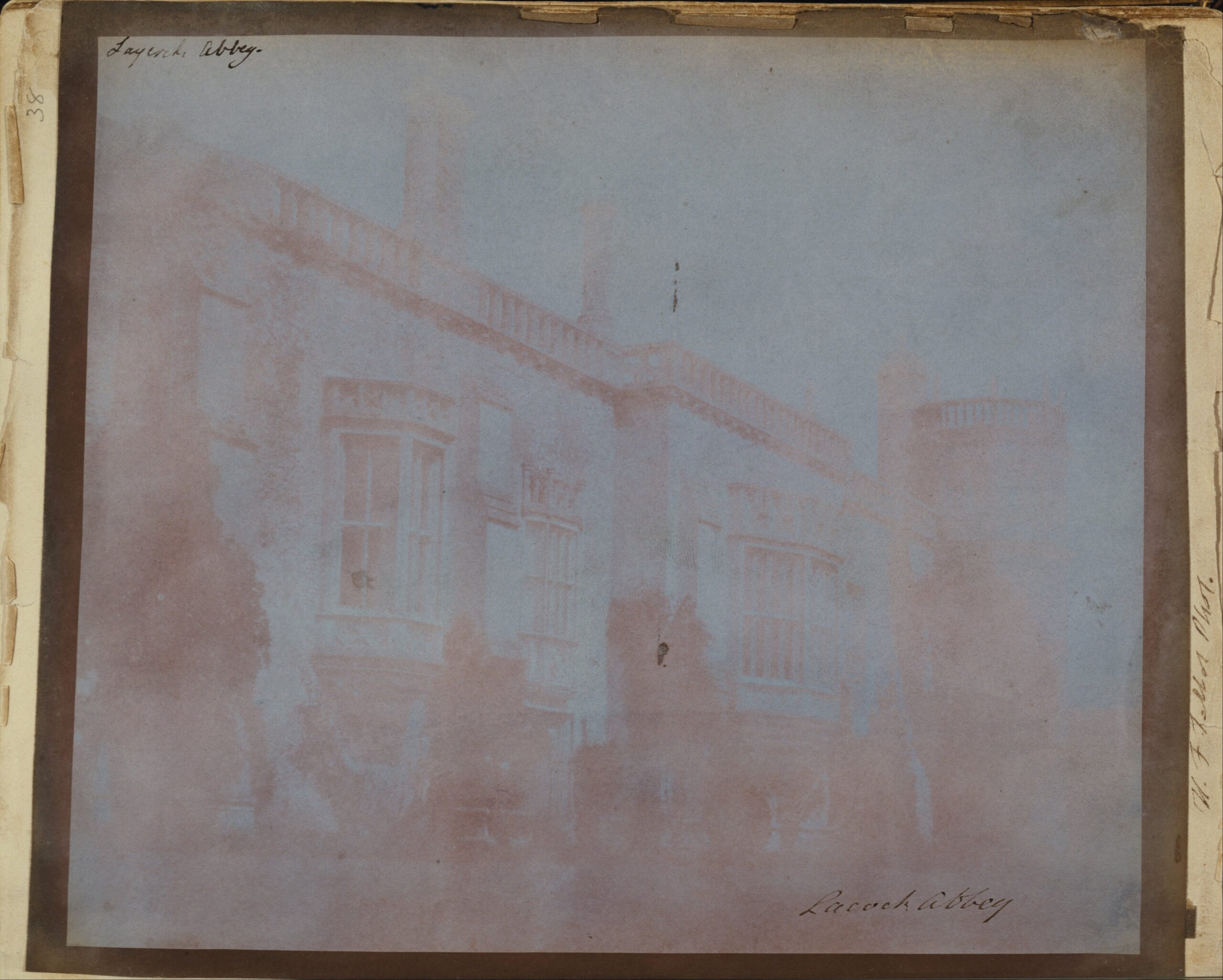
In 1835, William Henry Fox Talbot, who lived at the Abbey, placed a small camera in the south gallery and made an image of one of its latticed oriel windows. The result, about the size of a postage stamp, is the earliest surviving photographic negative — and the process he went on to develop, which allowed any number of positive prints to be made from a single negative, became the foundation of photography for the next century and a half.
The Fox Talbot Museum, in a converted barn by the Abbey gates, tells the story with his cameras, early prints and changing exhibitions. It is small and well done, and it gives the whole village a second layer of meaning: the place that looks like a period film set was also where modern image-making began. Inside the Abbey you can stand in the south gallery and look at the same window he photographed. Our guide to Cotswold museums puts it alongside the region’s other collections.
Britain’s most-filmed village
Lacock has appeared in so many films and series that the National Trust publishes a leaflet of village filming locations. Among the best known:
| Production | What Lacock played |
|---|---|
| Pride and Prejudice (BBC, 1995) | Meryton, the town the Bennet sisters walk into; the Red Lion was the assembly rooms |
| Emma (1996) | Village scenes in the Kate Beckinsale version |
| Moll Flanders (1996) | A market scene in front of St Cyriac’s Church |
| Harry Potter | Hogwarts classrooms and corridors in the Abbey; the Potters’ house in Godric’s Hollow; Budleigh Babberton in Half-Blood Prince |
| Cranford (2007) | The town’s streets; Lacock Bakery was the Cranford bakery |
| The Other Boleyn Girl (2008) | Scenes in and around the Abbey |
| Wolf Hall (2015) | The Abbey stood in for parts of Henry VIII’s palaces |
| Downton Abbey | The 2015 Christmas special, and the royal parade in the 2019 film |
| Fantastic Beasts: The Crimes of Grindelwald | Village streets |
Filming still happens most years. If you arrive to find a street dressed with hay and horse manure and a sign asking for quiet, that is why — and it is usually worth watching from a polite distance. For the wider picture, see our complete guide to Cotswolds filming locations.
Where to eat and drink
For a small village, Lacock has a good choice, most of it in historic buildings.
- Sign of the Angel, Church Street — a fifteenth-century inn with a two-AA-rosette restaurant cooking local, seasonal food, and rooms. The best meal in the village.
- The Red Lion, High Street — the big coaching inn that played Meryton’s assembly rooms, serving lunch and dinner, with rooms.
- The George Inn, West Street — a fourteenth-century pub, low-beamed and characterful.
- Lacock Bakery, Church Street — cakes and bakes, and the Cranford bakery in a previous life.
- Lacock Village Shop and Deli, High Street — homemade snacks and local produce, good for picnic supplies.
- The Stables Café and the Courtyard Tea-room at the Abbey — light lunches, cakes and tea, with picnic tables in summer.
Lacock fills up at lunchtime in summer and on weekends, so book the pubs or plan an early or late lunch.
When to visit
- Early morning is Lacock’s best time. The car park opens at 9am; walk the village before the Abbey opens at 10am and you will have the streets almost to yourself.
- Spring brings crocus and snowdrop displays in the Abbey grounds and a village that is green but not yet crowded.
- Summer is busiest, particularly weekend afternoons and school holidays. Come early or late.
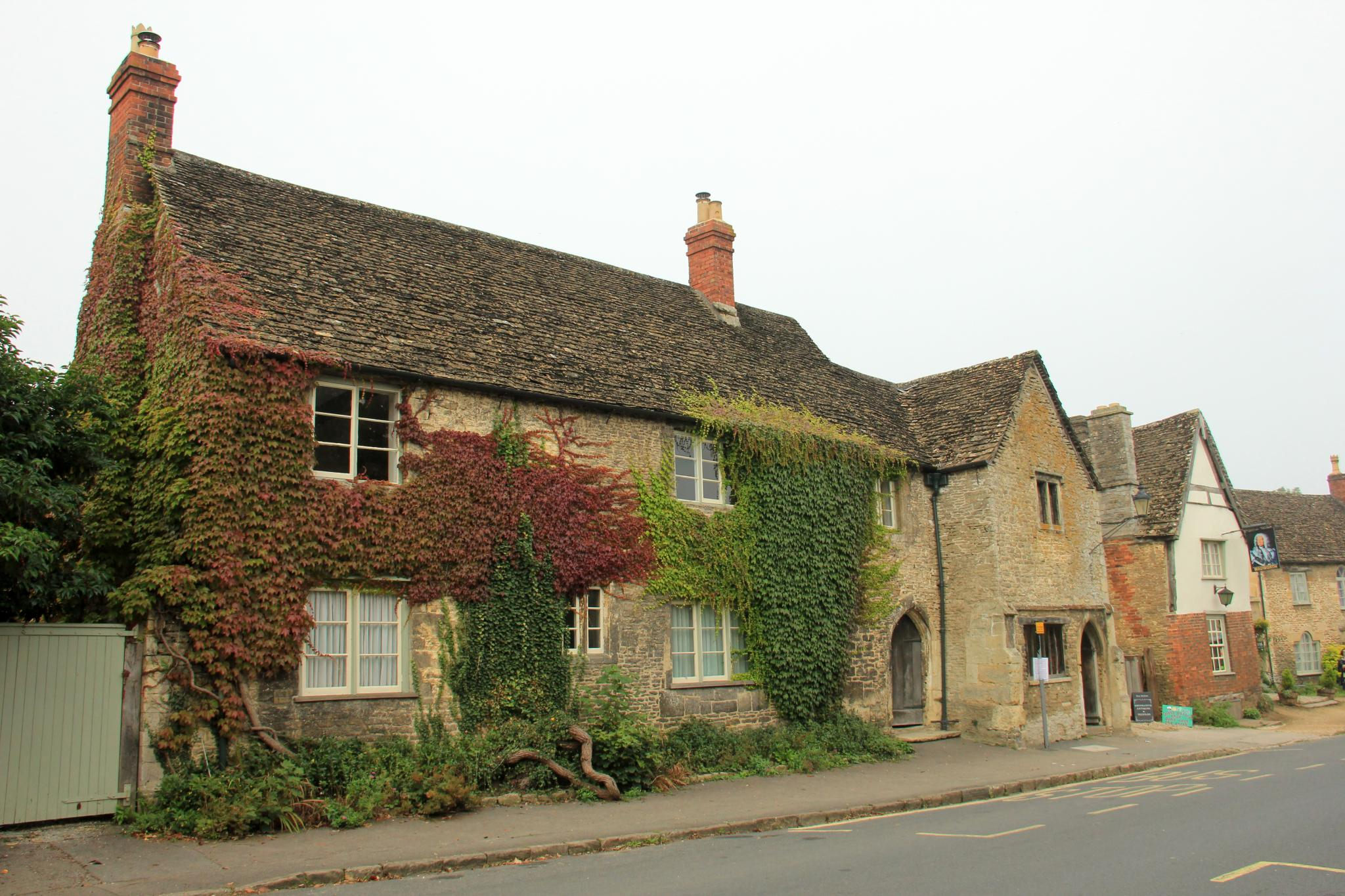
- Autumn and winter are quieter and very atmospheric, with creeper turning red on the houses and, on frosty mornings, a village that looks like an old Christmas card — though check which parts of the Abbey are open.
Getting there
By car
Lacock is signposted from the A350 between Chippenham and Melksham, about 15 minutes from junction 17 of the M4. Use the Hither Way car park on the edge of the village; the village streets are for residents, and visitors cannot park there. From the car park it is a short, level walk into the centre.
Without a car
The nearest station is Chippenham, about three miles away, on the main line from London Paddington and Bath. From there a taxi takes around ten minutes. Local buses connect Chippenham and Lacock, but services are limited, so check the current timetable before relying on one. Our guide to the Cotswolds by train explains the rail network.
Nearby
- Castle Combe, about ten miles north, is another screen favourite and often called the prettiest village in England — see our Castle Combe guide.
- Corsham, a few miles west, played Georgian Truro in Poldark and has a handsome high street of its own.
- Bath, about half an hour south-west, has the Roman Baths, the Royal Crescent and the Bridgerton locations.
- Malmesbury, twenty-five minutes north, has half a Norman abbey and some of the best Romanesque carving in England — see our Malmesbury guide.
Where to stay
Staying in Lacock itself — at the Sign of the Angel or the Red Lion — gives you the village in the evening and early morning, when it is at its most magical and nearly empty. Otherwise, Chippenham and Corsham are practical bases, and Bath offers the widest choice. For more characterful places across the region, see our guide to where to stay in the Cotswolds.
Lacock with children
Lacock is a good family day out, particularly for children who know the Harry Potter films. Spotting the Potters’ cottage on Church Street, standing in Snape’s classroom and finding the great cauldron in the Warming Room tends to go down well, and the Abbey grounds give younger children space to run. The ford is a highlight in its own right — watching cars splash through the Bide Brook is surprisingly absorbing — and the bakery supplies the bribes. The National Trust often runs family trails and holiday activities at the Abbey; check what is on before you go. Keep a close eye on small children on the village streets, which have narrow pavements and through traffic.
What a visit costs
Lacock can be very cheap or surprisingly expensive, depending on what you do. The village, the church, the tithe barn and the ford cost nothing. For non-members, a family of two adults and three children pays £52.50 for the Abbey, cloisters and museum, plus £5 for parking — close to £60 before lunch. National Trust members get in and park free. If you are planning more than two or three National Trust visits in a year, membership usually pays for itself; check the current rates before you decide. Either way, the village alone is one of the best free experiences in the south of the region.
Is Lacock worth visiting?
Yes, and more than most of the famous Cotswold villages. It combines an extraordinary village with a genuinely interesting house, a museum with a real story, and a list of screen credits that adds fun without taking over. Unlike many honeypot villages, it still feels lived in rather than preserved purely for visitors.
The honest caveats: it is small, it gets very busy by late morning in summer, and the Abbey admission is not cheap for non-members at £21 per adult. If you are not a National Trust member and are only interested in the village and a Harry Potter photo, you can see the streets, the barn, the church and the ford for nothing, and save the Abbey for another visit. If you have any interest in history or photography, though, the Abbey and the Fox Talbot Museum are worth the money.
Frequently asked questions about Lacock village
Is Lacock village free to visit?
Yes. The village streets are free to walk around. The Abbey, cloisters and Fox Talbot Museum have an admission charge for non-members, and parking in the Hither Way car park costs £5 a day unless you are a National Trust member.
Is Lacock in the Cotswolds?
It sits at the southern tip of the Cotswolds, in Wiltshire, and is usually included in the region by visitors and guidebooks.
What was filmed in Lacock?
Harry Potter, Pride and Prejudice (1995), Cranford, Emma, Moll Flanders, The Other Boleyn Girl, Wolf Hall, Downton Abbey and Fantastic Beasts: The Crimes of Grindelwald, among many others.
Can you park in Lacock village?
Not in the streets. Visitors must use the Hither Way car park on the edge of the village, a few minutes’ walk from the centre.
How long do you need in Lacock?
An hour for the village alone, or half a day with the Abbey, cloisters and Fox Talbot Museum.
For the full Hogwarts trail, see our guide to Harry Potter in the Cotswolds; for the grand houses of the region, our round-up of Cotswold stately homes; and for Lacock’s rivals for the title of prettiest village, our guide to the best Cotswold villages.
Photo Credits
Lacock where East Street joins the High Street: Lacock, where East Street joins the High Street – geograph.org.uk – 5370883 by Michael Garlick, CC BY-SA 2.0, via Wikimedia Commons.
Creeper-covered houses in Lacock: Lacock Village-13495013774 by Karen Roe, CC BY 2.0, via Wikimedia Commons.
Cottages and the ford on Nethercote Hill: Lacock – Cottages ^ ford on Nethercote Hill – geograph.org.uk – 5232722 by Colin Park, CC BY-SA 2.0, via Wikimedia Commons.
The tithe barn, Lacock: Southern end of the Lacock Tithe Barn by Ethan Doyle White, CC BY-SA 4.0, via Wikimedia Commons.
The south front of Lacock Abbey, photographed by Fox Talbot: The South Front of Lacock Abbey with Sharington’s Tower by William Henry Fox Talbot, public domain, via Wikimedia Commons.
Leave a Reply