This article contains advertising. My booking links are routed through a partner that adds commission tracking automatically, so if you book through one I earn a commission from the provider, at no extra cost to you. It never affects what I recommend. Affiliate disclosure
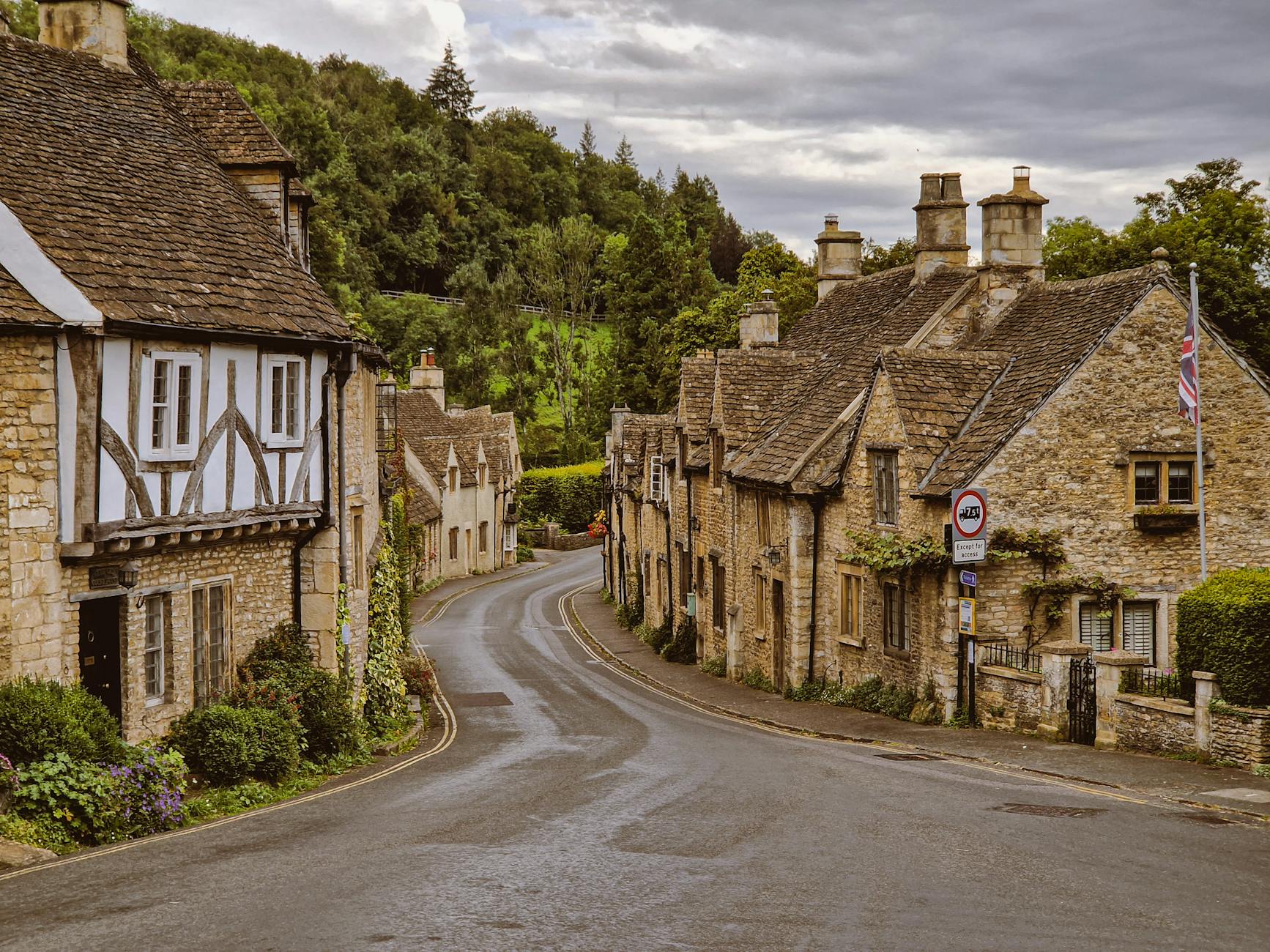
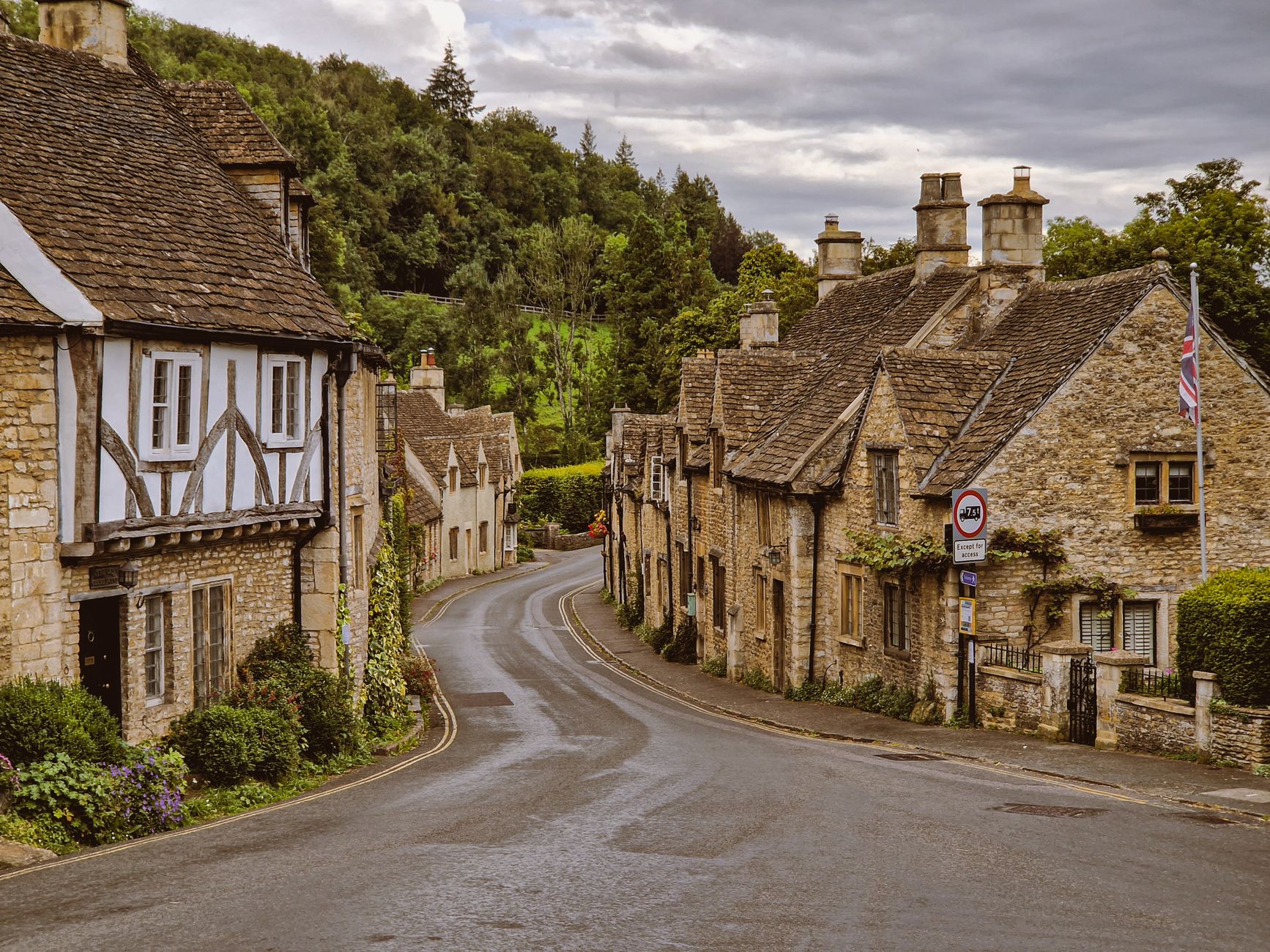
Castle Combe is the village people mean when they say a place looks like a film set, mostly because it has been one. A single street of weavers’ cottages drops down a wooded valley to a low stone bridge over the By Brook, and almost nothing in the frame is younger than the seventeenth century. There are no aerials, no satellite dishes and no overhead wires, because the cables were buried out of sight years ago. The result is a village that has been voted the prettiest in England more than once, and you will not need long to see why.
It is also tiny, with barely 350 residents, and it is not built for traffic. You cannot drive in and park by the bridge; the village is effectively car-free, so you leave the car at the top of the hill and walk down. Get that right, come outside the midday rush, and Castle Combe is a genuine pleasure. This guide covers what to see, where to eat, the best walks and the practical details that make a visit run smoothly.
What makes Castle Combe so special
The magic of Castle Combe is its completeness. The village sits in a narrow combe, an old word for a steep valley, with one main street running down past a tight row of immaculate Cotswold stone cottages to the bridge at the bottom. Every building is the same warm, honey-gold limestone under stone-tiled roofs furred with moss and lichen, and there is nothing modern to break the spell: no chain shops, no plastic windows, no clutter on the skyline. That visual purity is exactly why film crews keep coming back.
It is small enough to walk end to end in twenty minutes, but the density of good-looking corners in that space is remarkable. Wisteria over a doorway, a cat asleep on a warm wall, the church tower framed by old trees, the bridge reflected in the brook; you find yourself stopping every few steps. Castle Combe regularly tops lists of the prettiest villages in the Cotswolds, and unlike some honeypots it does not disappoint in the flesh.
The bridge and the By Brook
The view from and of the old stone bridge over the By Brook is the photograph everyone comes for, and it deserves the queue it sometimes attracts. The bridge, the clear water, the overhanging trees and the cottages stepping up the slope behind line up into a near-perfect composition. On a still morning the reflections do half the work for you. This is the spot you will recognise from a hundred calendars, and it is genuinely lovely when you have it to yourself.
The By Brook itself is a gentle, clear-flowing stream that supports trout, dippers and grey wagtails. A footpath leads off from the bridge along the bank into woodland, and within a couple of minutes you have swapped the crowd at the bridge for quiet countryside. It is the easiest way to escape the bottleneck and see another side of the village.
The Market Cross and St Andrew’s Church
Where the village’s lanes meet stands the medieval Market Cross, an unusual covered structure with a stone canopy on columns rather than the plain pillar you see in many towns. It marks the spot where Castle Combe was granted the right to hold a weekly market in 1440, in the days when the village grew rich on wool. Film fans may recognise the cross from War Horse, where Steven Spielberg staged a horse fair around it after covering the road in mud to turn the village back into 1914.
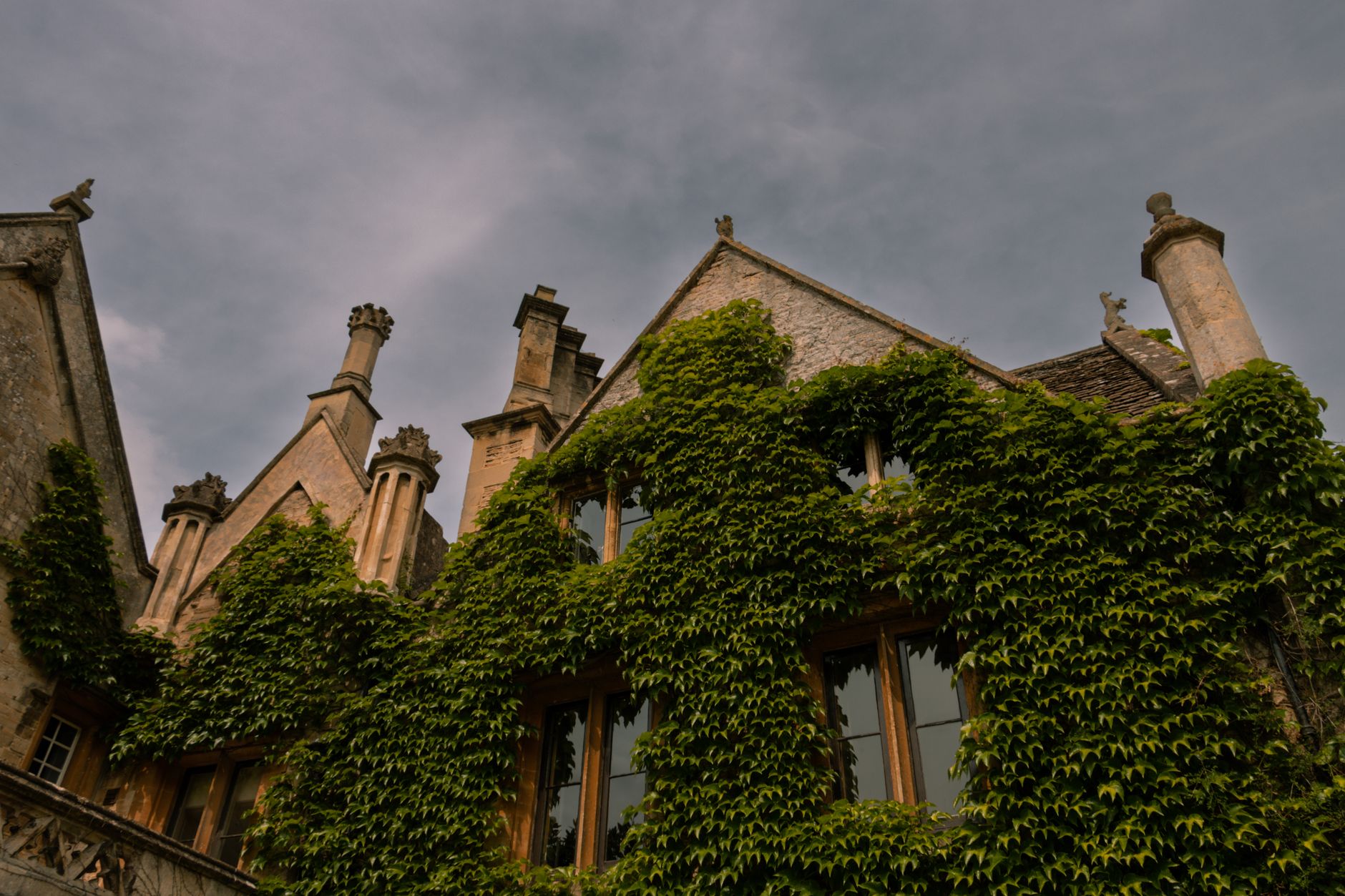
A few steps away, St Andrew’s Church is the village’s other great set piece. Founded in the thirteenth century, it gained its tall Perpendicular tower in the fifteenth when wool money was at its height. Inside you will find the memorial brasses of wool merchants, a fine fifteenth-century stone font and one of the oldest working faceless clocks in the country, thought to date from the fourteen hundreds. The churchyard, with its yews and table tombs, looks out across the valley. For the wider wool-town story, our guide to Cotswolds history and heritage sets it in context.
Castle Combe on screen
Castle Combe’s untouched look has made it irresistible to film-makers, and spotting the locations adds a layer to a visit. It stood in for the fictional village of Wall in the fantasy Stardust, with the main street and bridge clearly on show. Spielberg’s War Horse transformed it into a wartime English village around the Market Cross. The original Doctor Dolittle with Rex Harrison filmed here back in the sixties, the horror film The Wolfman used it more recently, and a string of television productions have done the same over the years.
None of this has turned the village into a theme park, which is to its credit. There are no themed gift shops or marked selfie spots, just the same lanes the cameras used, going quietly about their business. If you are travelling with an eye for locations and photographs, Castle Combe earns its place in our guide to the best Cotswolds photography spots.
The Manor House and the Castle Inn
Even if you are not staying, the Manor House is worth a look. This fourteenth-century country house sits in a 365-acre estate with an Italian garden, a golf course and the By Brook running through the grounds, and it is one of the more romantic hotels in the region. Its restaurant, the Bybrook, has held a Michelin star and offers serious, multi-course cooking built on local and home-grown produce; expect to pay accordingly and book well ahead. The grounds make a pleasant stroll if you are taking afternoon tea.
Down in the village, the Castle Inn is the obvious spot for lunch or a drink. The handsome old inn is now run as part of the Manor House estate, with a kitchen carrying a couple of AA rosettes and a menu leaning on local ingredients, a step up from standard pub fare. In summer the setting at the heart of the village is hard to beat. Booking is wise at weekends, as Castle Combe has very few tables for the number of visitors who would like one.
Castle Combe Circuit
In complete contrast to the medieval calm below, the plateau above the village is home to the Castle Combe Circuit, a well-known motorsport venue laid out on a former wartime airfield. It hosts car and motorcycle racing through the year, from historic meetings to modern championships, and runs track days and driving experiences if you fancy putting your own car, or a borrowed supercar, through its paces. It is a surprising neighbour for one of England’s prettiest villages, and worth knowing about if engine noise on a race day is not what you came for.
The best walks from Castle Combe
Castle Combe is surrounded by good walking country, and the paths are the best way to see beyond the bridge. The most popular outing is the gentle three-and-a-half-mile circuit downstream along the By Brook through ancient woodland to the hamlet of Ford, where the White Hart makes a welcome refreshment stop, returning on field paths and quiet lanes. Allow around an hour and a half to two hours over easy terrain.
For more, a five-mile loop climbs out of the wooded valley onto the wolds for wide views, passing the quiet hamlet of Long Dean and offering fine birdwatching in the riverside trees. Castle Combe also sits on the Macmillan Way, a long-distance path running from Lincolnshire to the Dorset coast, so you can pick up short sections in either direction for a linear walk through the south Cotswolds. For routes graded by distance and effort, see our guide to walking and hiking in the Cotswolds.
A short history of Castle Combe
The village takes its name from a Norman castle that once stood on the hill above the valley. Built soon after the Conquest of 1066 as a motte-and-bailey fortification, it controlled the surrounding land; only grassy earthworks survive today, visible on the slope above the village and a worthwhile short detour for the historically minded.
Castle Combe’s golden age came in the fourteenth and fifteenth centuries, when it was one of the most prosperous wool villages in the Cotswolds. Its weavers, under the influential Fastolf family, produced fine red-and-white broadcloth that was exported across Europe, and the profits paid for the church tower, the Market Cross and the stone cottages that line the street today. When the wool trade declined in the sixteenth century the village went quiet, and that, paradoxically, was its salvation: with no new money there was no reason to rebuild, so the medieval village survived almost intact. By the twentieth century its preservation was drawing admirers, and in 1962 it was formally voted the prettiest village in England, a title it has worn ever since.
Where to eat and drink
For its size, Castle Combe is short on places to eat, so plan ahead. The Castle Inn, now part of the Manor House estate, is the village pub and a good one, serving rosette-level cooking and well-kept drinks in a setting you will struggle to better; book at weekends. For a special occasion, the Bybrook at the Manor House offers Michelin-starred dining and a tasting menu showcasing the best of the region, at country-house prices.
If both are full, or you simply want a walk with your lunch, the White Hart at Ford is a traditional pub about twenty minutes away on foot along the brook, with a warm welcome and honest food. Beyond that, you are into the wider area, where there is far more choice. Our roundups of the best pubs in the Cotswolds and the wider Cotswolds food and drink scene will point you onwards.
Where to stay
The standout place to stay is the Manor House itself, a fourteenth-century country-house hotel with grounds, a golf course and one of the region’s best restaurants on site; it is a destination in its own right. Beyond the hotel, the village has only a handful of cottages and bed and breakfasts, so options inside Castle Combe are very limited and book up early. Many visitors base themselves in nearby villages or in Bath, a short drive away, and come in for the day.
Staying close also means you can walk down into the village early or late, when the day-trippers have gone and the place is at its most magical. To compare areas and budgets across the region, see our guide to where to stay in the Cotswolds.
Getting there and parking
Castle Combe lies about twelve miles from Bath, a thirty-minute drive, and roughly six miles from Chippenham. From London it is around two hours via the M4. The nearest railway station is Chippenham, ten minutes from Bath Spa and about seventy-five minutes from London Paddington; from there an infrequent bus runs to the village, so check times, but for most visitors a car or taxi is the practical choice.
The crucial thing to know is that you cannot park in the village. Castle Combe is effectively car-free, wardens are vigilant, and the lanes are far too narrow for visitor traffic. The visitor car park is on Dunns Lane at the top of the hill, about a ten-minute walk down into the centre, and it is cheap: a couple of hours costs only a little over a pound, with all-day rates lower still on Sundays. Pay by phone is the easiest option, so download the app before you arrive. Come early in peak season, because the car park fills quickly. For the bigger picture on trains, buses and driving, see our guide to getting to and around the Cotswolds.
The best time to visit Castle Combe
Castle Combe is lovely in any season, but timing makes the difference between magic and crush. A weekday morning outside the school holidays is ideal; arrive before 10am or come in the late afternoon for the best light and the fewest people. Spring brings bluebells to the surrounding woods, summer fills the cottage gardens with roses and wisteria, autumn turns the valley gold, and a winter frost on the stone roofs is quietly spectacular. Our month-by-month guide to the best time to visit the Cotswolds goes through the year in detail.
Because the village is so compact, it can feel full surprisingly fast. The same view that is serene at half past eight can be three-deep with photographers by lunchtime, so the earlier you can get there, the better your day will be.
Combining Castle Combe with nearby places
Castle Combe sits in the southern Cotswolds, handy for some excellent neighbours. Lacock, another beautifully preserved village owned largely by the National Trust and a regular film location in its own right, is about six miles away and pairs naturally for a full day. Georgian Bath, with its crescents, abbey and Roman baths, is half an hour off and makes an easy base or contrast.
To see how the prettiest-village title looks elsewhere, the broad High Street and hilltop tower of Broadway show off the northern Cotswolds, while Bibury offers another strong claim to the crown. To string several places into a sensible route without backtracking, our Cotswolds itineraries map out days that flow.
How to plan a smooth visit
Castle Combe is a small village that receives a large number of visitors, so a little planning goes a long way. Leave the car on Dunns Lane at the top, walk down, and resist the temptation to nose into the village by car, because there is genuinely nowhere to go and you will only block a lane. Wear sensible shoes, as the hill down and back is steeper than it looks and the cottage lanes are cobbled and uneven in places. If you want the classic empty-bridge photograph, you really do need to be there in the first hour after opening or late in the afternoon.
Set your expectations to match the place. This is a village to wander, photograph and linger over a meal in, rather than a day packed with paid attractions, so it works best paired with somewhere else or treated as a relaxed couple of hours. Bring cash or a phone for the car park, book a table if you want lunch, and remember that the cottages are private homes; admire them, but give the people who live in them their privacy.
Accessibility and facilities
Be honest with yourself about mobility before you visit, because Castle Combe is not the easiest village to get around. The walk from the Dunns Lane car park is downhill on the way in and uphill on the way back, on a narrow road without a continuous pavement, and the older lanes have uneven stone surfaces. Visitors with limited mobility can sometimes be dropped closer to the centre, but there is no public parking down in the village to rely on, so plan any drop-off carefully and arrange to be collected.
Facilities are limited, in keeping with the size of the place. There is a public toilet, the Castle Inn for refreshments, and very little in the way of shops, so do not count on stocking up here. Bring water on a warm day, and if you are making a full outing of it, plan to eat at the inn, at the White Hart in nearby Ford, or further afield in Lacock or Bath.
Frequently Asked Questions
Why is Castle Combe called the prettiest village in England?
It was formally voted the prettiest village in England in 1962 and has kept the reputation since. The title reflects its unusually complete medieval streetscape: honey-stone cottages, a single street down to an old bridge, and no aerials, wires or modern clutter to break the scene.
Where do you park in Castle Combe?
You cannot park in the village, which is effectively car-free. The visitor car park is on Dunns Lane at the top of the hill, a ten-minute walk down into the centre. It is inexpensive, with cheaper rates on Sundays, and pay by phone is easiest. Arrive early in peak season as it fills quickly.
How long do you need in Castle Combe?
You can walk the village itself in about twenty minutes, but to enjoy it properly, taking in the church, the bridge, lunch and a short riverside walk, allow two to four hours. It combines well with nearby Lacock or a day trip from Bath.
What films were shot in Castle Combe?
The village has appeared in War Horse, Stardust, the original 1967 Doctor Dolittle and The Wolfman, among other films and television productions. Its untouched, wire-free streets make it a natural stand-in for historic England.
Is there much to do in Castle Combe?
It is a small village rather than a packed day out, so manage your expectations. The pleasures are the streetscape, the bridge, St Andrew’s Church, the Market Cross and the walks along the By Brook, plus lunch at the Castle Inn. Combine it with a nearby village or town for a fuller day.
Related guides
Castle Combe is one of many in our roundup of the prettiest villages in the Cotswolds. To plan the wider trip, start with our complete guide to visiting the Cotswolds, then compare it with northern Broadway or the much-photographed cottages of Bibury.
Castle Combe’s screen career is only one chapter of a much bigger story. Lacock, a few miles south, has been used even more often, Blenheim has hosted James Bond and Bridgerton, and a quiet Oxfordshire village has spent more than a decade as Downton. Our guide to Cotswolds filming locations puts them all on one map.