This article contains advertising. My booking links are routed through a partner that adds commission tracking automatically, so if you book through one I earn a commission from the provider, at no extra cost to you. It never affects what I recommend. Affiliate disclosure
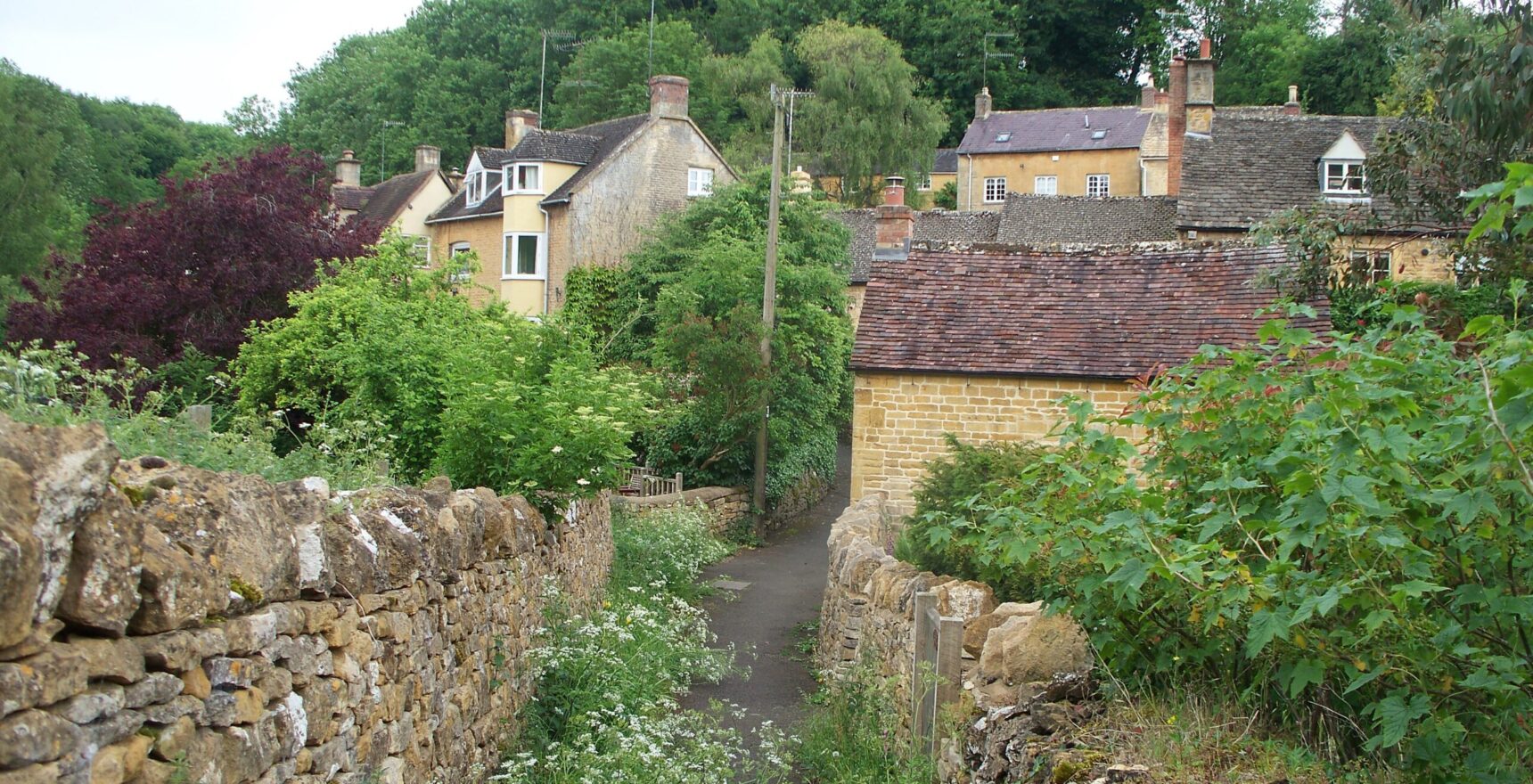
Walk down the steep lanes of Blockley on a weekday morning and you will pass dry-stone walls, silk-mill cottages and the churchyard gate that Father Brown pushes open in almost every episode — and very probably nobody else. That is the odd thing about the Father Brown filming locations: the BBC’s gentle 1950s mystery has been filmed here for well over a decade, watched by millions around the world, and yet Blockley remains one of the quietest villages in the north Cotswolds. There is no gift shop, no signpost to Kembleford and no queue. There is just the church, the presbytery wall and a village that looks exactly the way it does on screen.
Father Brown is only the longest-running of the period dramas that have made the Cotswolds their backlot. Wolf Hall found its Tudor England at Chastleton House and Broughton Castle, Pride and Prejudice and Cranford filled Lacock’s streets, and Poldark turned Corsham into Georgian Truro. This guide covers each of them — which scenes were filmed where, which places you can visit, how to get to each one and which are worth the drive — so you can build your own period-drama day.
Cotswold period drama locations at a glance
| Production | Real location | Plays | Can you visit? |
|---|---|---|---|
| Father Brown | Blockley | Kembleford — St Mary’s church and the presbytery | Village and church, yes; presbytery is private |
| Father Brown | Winchcombe station | Kembleford’s railway station | Yes — Gloucestershire Warwickshire Steam Railway |
| Father Brown | Sudeley Castle, Guiting Power, Upper Slaughter, Stanway House, Broadway Tower | Various episodes | Yes — Sudeley, Stanway and Broadway Tower are paid |
| Wolf Hall | Chastleton House | Cromwell’s childhood home in Putney | National Trust — limited opening, book ahead |
| Wolf Hall; Father Brown; Shakespeare in Love | Broughton Castle | Tudor interiors and more | Limited summer opening |
| Wolf Hall | Lacock Abbey; Great Chalfield Manor | Wolf Hall itself; Austin Friars | National Trust |
| Pride and Prejudice (1995), Cranford, Emma | Lacock | Meryton; Cranford | Village free |
| Poldark | Corsham | Georgian Truro | Town streets, free |
Opening arrangements checked September 2026 — several of these houses open only on selected days, so confirm before a special trip.
Father Brown: Kembleford in the north Cotswolds
The BBC’s Father Brown, starring Mark Williams as G. K. Chesterton’s quietly brilliant Catholic priest, moves Chesterton’s stories to the fictional Cotswold village of Kembleford in the 1950s. It has been filmed almost entirely in and around the north Cotswolds since the first series in 2013, and it has become one of the BBC’s most successful exports.
Blockley — Kembleford itself
Blockley is the heart of it. The village’s Church of St Peter and St Paul plays St Mary’s, Father Brown’s Catholic church, inside and out, and the vicarage beside it plays his presbytery — the house where Mrs McCarthy presides over the kitchen table and half the cases are solved over tea and cake. The churchyard, the gate and the lane outside all appear again and again.
The vicarage is a private home. Photograph from the churchyard or the lane, keep out of the garden and never knock. The church itself is usually open during the day; it is a working parish church, so be quiet if there is a service, and leave a donation.
Blockley is worth the visit whether or not you watch the show. It sits in a steep, wooded valley a few miles from Chipping Campden and Moreton-in-Marsh, and in the nineteenth century the stream that runs through it powered a string of silk mills, which is why so many of its cottages climb the valley sides in terraces. Walk up and down the lanes, look out for the old mill buildings and finish at the community-run village shop and café. Batsford Arboretum is a short drive or a pleasant walk away.
The Father Brown studio
Father Brown’s kitchen, his study and Kembleford police station are sets, built inside the former hospital in Moreton-in-Marsh that serves as the production base. It is a working studio and cannot be visited. For the town itself, see our Moreton-in-Marsh guide.
Winchcombe station
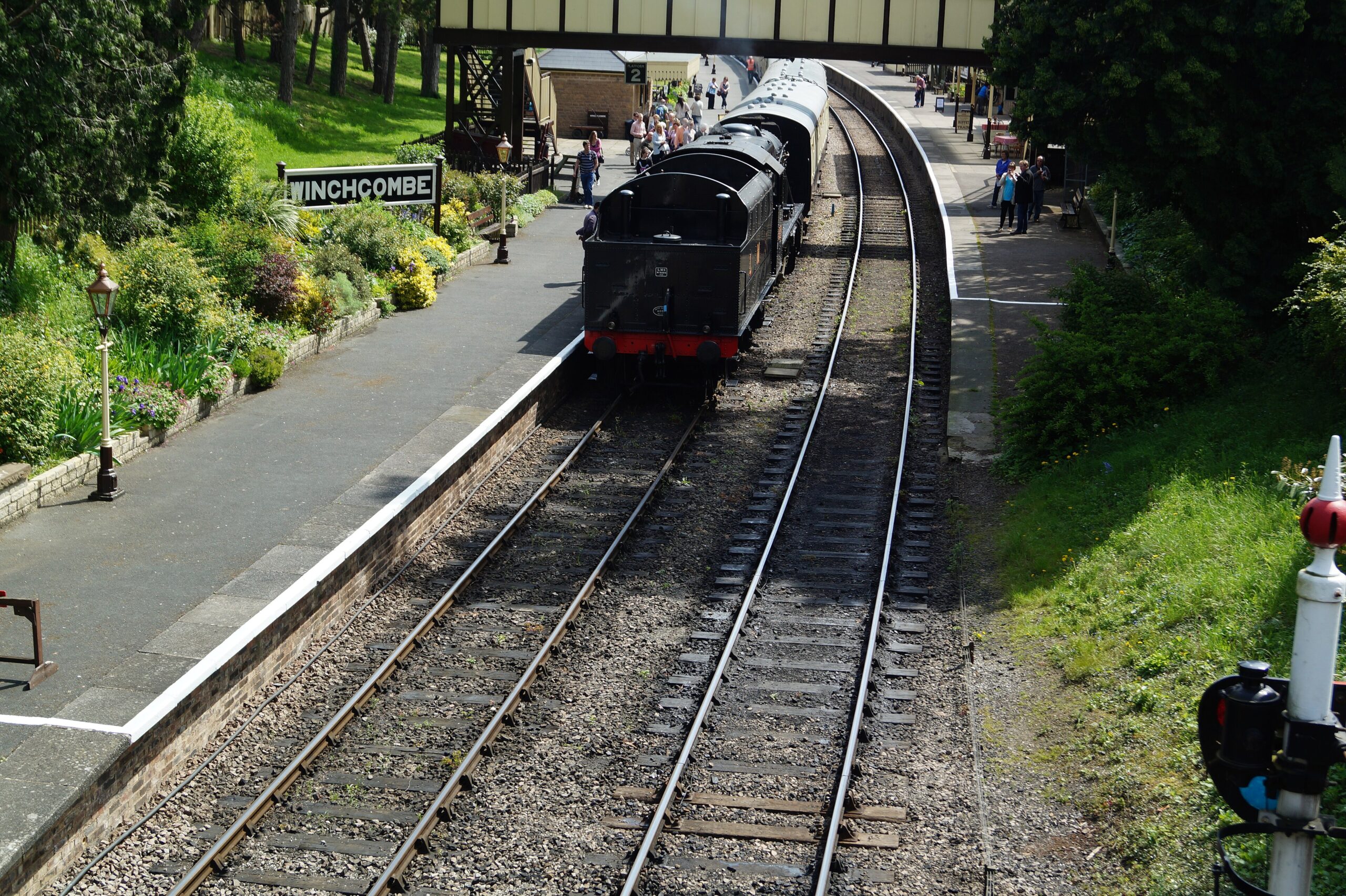
Whenever a character in Father Brown catches a train, there is a good chance they are standing at Winchcombe station on the Gloucestershire Warwickshire Steam Railway. The heritage line runs for fourteen miles between Broadway and Cheltenham Racecourse, and its stations have been restored to their mid-twentieth-century look, which is exactly why period productions love them. You can buy a ticket and ride the line yourself on operating days — easily the best way to feel you have stepped into an episode. Our Winchcombe guide covers the town and the railway.
Sudeley Castle
St Mary’s Church at Sudeley Castle, on the edge of Winchcombe, was the main location for an episode in the very first series. It is the burial place of Katherine Parr, Henry VIII’s sixth wife, and the castle and gardens are one of the finest paid attractions in the north Cotswolds — see our Sudeley Castle guide.
Other Father Brown villages
- Guiting Power and Upper Slaughter have both been used for village scenes. See our guide to the Slaughters.
- Stanway House, the Jacobean manor near Stanton with its golden gatehouse and extraordinary fountain, has appeared too. It opens on a limited number of summer afternoons — see our Stanton and Stanway guide.
- Broadway Tower was used as a tower in one episode — see our Broadway guide.
- Bourton-on-the-Water’s model village starred in an episode built around a model village — see our Bourton-on-the-Water guide.
- Broughton Castle, near Banbury, has also played its part — more on it below.
A note on Sister Boniface
The spin-off, The Sister Boniface Mysteries, is also set in the Cotswolds, but its convent, St Vincent’s, is filmed at Princethorpe College near Rugby in Warwickshire. You will not find it in the Cotswolds.
Seeing Father Brown being filmed
If you are lucky, you may come across the crew at work — the giveaways are vintage cars parked in a row, 1950s shop signs and a village street cleared of modern vehicles. Watch quietly from a distance, follow any instructions from the crew, and do not photograph the actors or post pictures that give away plot details. Filming schedules are not published in advance.
Wolf Hall: Tudor England at Chastleton and Broughton
The BBC’s adaptations of Hilary Mantel’s novels — Wolf Hall in 2015 and Wolf Hall: The Mirror and the Light in 2024 — needed houses that looked as though nothing had changed since Henry VIII. Most of the filming took place in the West Country, but two of the most important houses are on the Cotswold edge.
Chastleton House
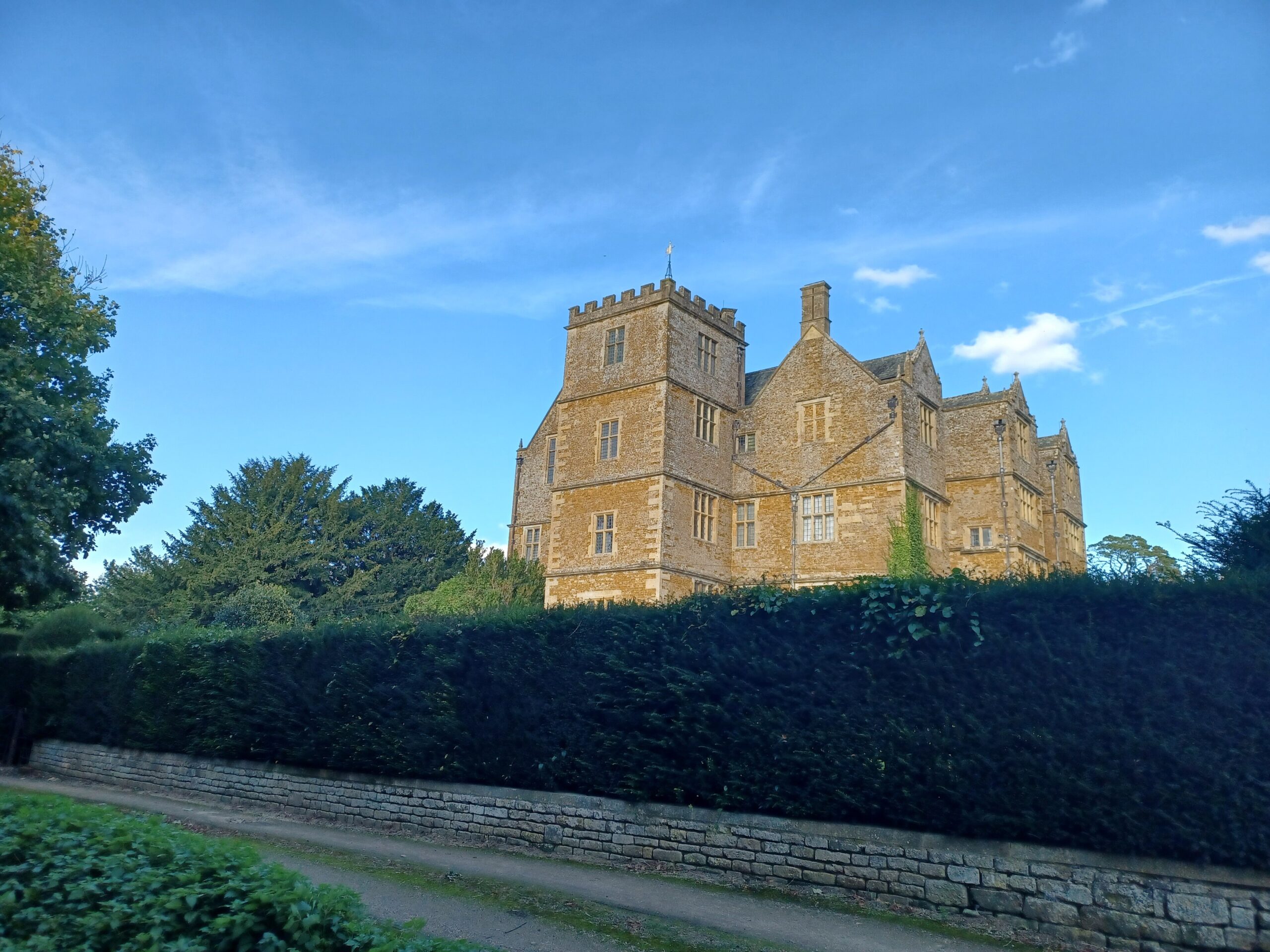
Chastleton House, a few miles from Moreton-in-Marsh, is a Jacobean manor built in the early seventeenth century for a prosperous wool merchant, Walter Jones, and then left almost untouched for four hundred years as the family’s money ran out. When the National Trust took it on, it made the unusual decision to conserve it exactly as it found it — faded, worn, dusty in the corners and utterly atmospheric — rather than restoring it to a showroom finish. That authenticity is what drew Wolf Hall: the house’s small stone courtyard became the setting for the scenes of Cromwell’s brutal childhood in Putney.
Chastleton has another claim to fame. The rules of croquet were codified here in the 1860s, and the croquet lawn is still there. Next door, the little church of St Mary is worth a look on the way in.
Visits are limited to protect the fragile interiors, and the house opens on selected days in the season. Book ahead through the National Trust and check opening days carefully; this is not a house to turn up at on spec. National Trust members get in free.
Broughton Castle
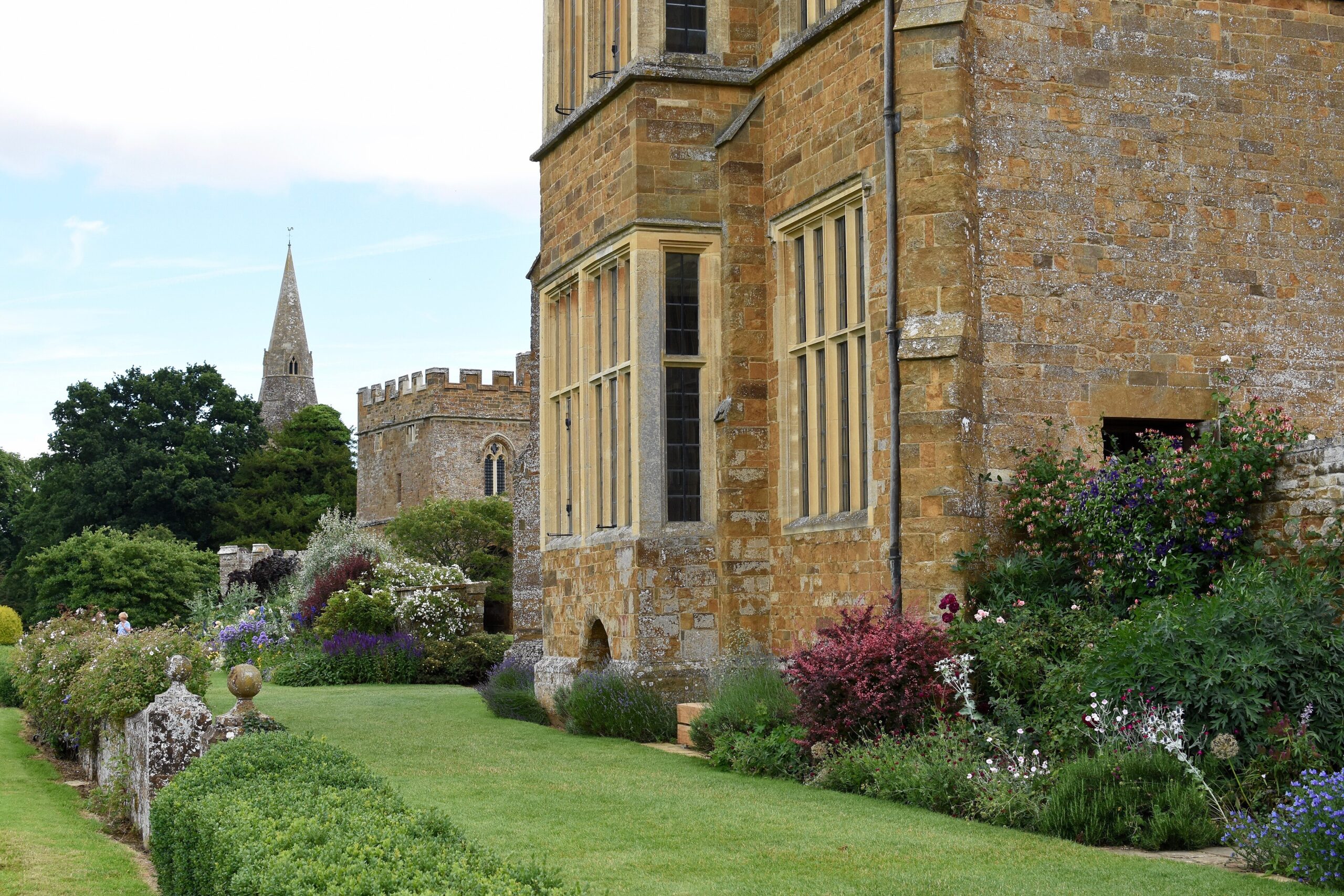
Broughton Castle, a moated medieval manor house just outside Banbury, has been the home of the same family, the Fiennes, Lords Saye and Sele, since the fifteenth century. It appeared in the original Wolf Hall and returned for The Mirror and the Light, and its film career goes back much further: Shakespeare in Love was shot here, and Father Brown has visited too. The house, surrounded by its moat and gardens, is one of the most romantic in the region.
Broughton is a family home and opens to the public on a limited number of afternoons, mostly in summer. Check the castle’s own website for dates before you travel. It is about half an hour’s drive from Chipping Norton or Moreton-in-Marsh.
Lacock Abbey and Great Chalfield Manor
At the southern tip of the region, the exteriors of Lacock Abbey play Wolf Hall itself, the Seymour family seat — see our Lacock village guide. Fifteen minutes away, near Bradford-on-Avon, the National Trust’s Great Chalfield Manor, a moated manor house built between 1465 and 1480 for Thomas Tropenell, stood in for Austin Friars, Thomas Cromwell’s London home, in both series. It is small, perfect and far less visited than Lacock.
Other key Wolf Hall houses, including Montacute in Somerset, which played Greenwich Palace, are further west and beyond the scope of a Cotswold trip.
More period dramas filmed in the Cotswolds
Pride and Prejudice, Cranford and Emma — Lacock
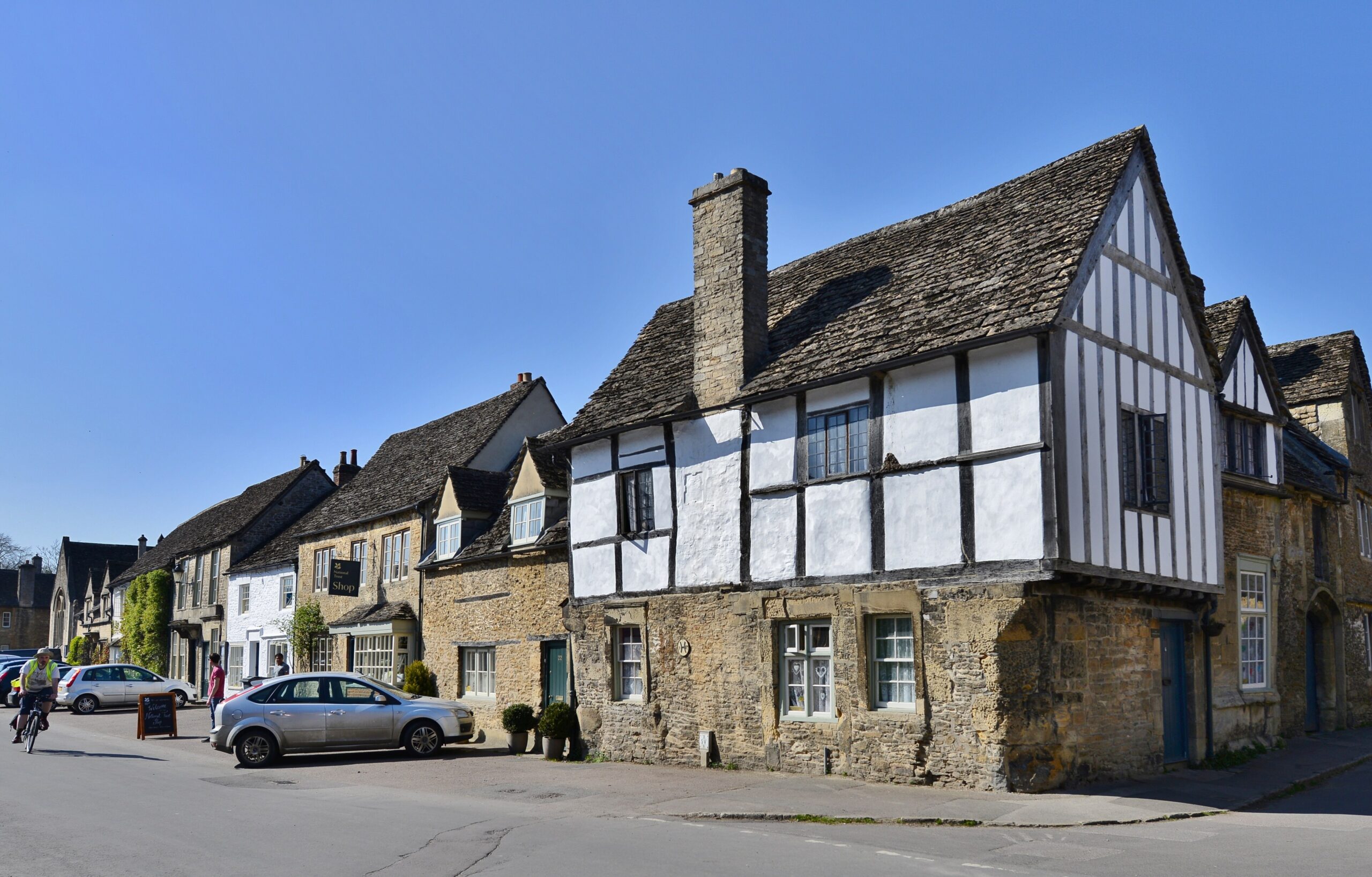
The BBC’s 1995 Pride and Prejudice, with Colin Firth and Jennifer Ehle, made Lacock into Meryton, with the Red Lion playing the assembly rooms. Cranford used its streets for Mrs Gaskell’s Victorian town, with the village bakery playing Cranford’s, and the 1996 Emma with Kate Beckinsale also filmed here. The Other Boleyn Girl used the Abbey. Lacock is the single best place in the region for period-drama fans; our Lacock village guide covers it in full.
Poldark — Corsham
Most of Poldark was filmed in Cornwall, but the handsome Wiltshire town of Corsham, a few miles from Lacock, doubled for Georgian Truro, with its high street briefly dressed back to the eighteenth century. It is well worth a stroll, and pairs easily with Lacock and Castle Combe.
Downton Abbey and Bridgerton
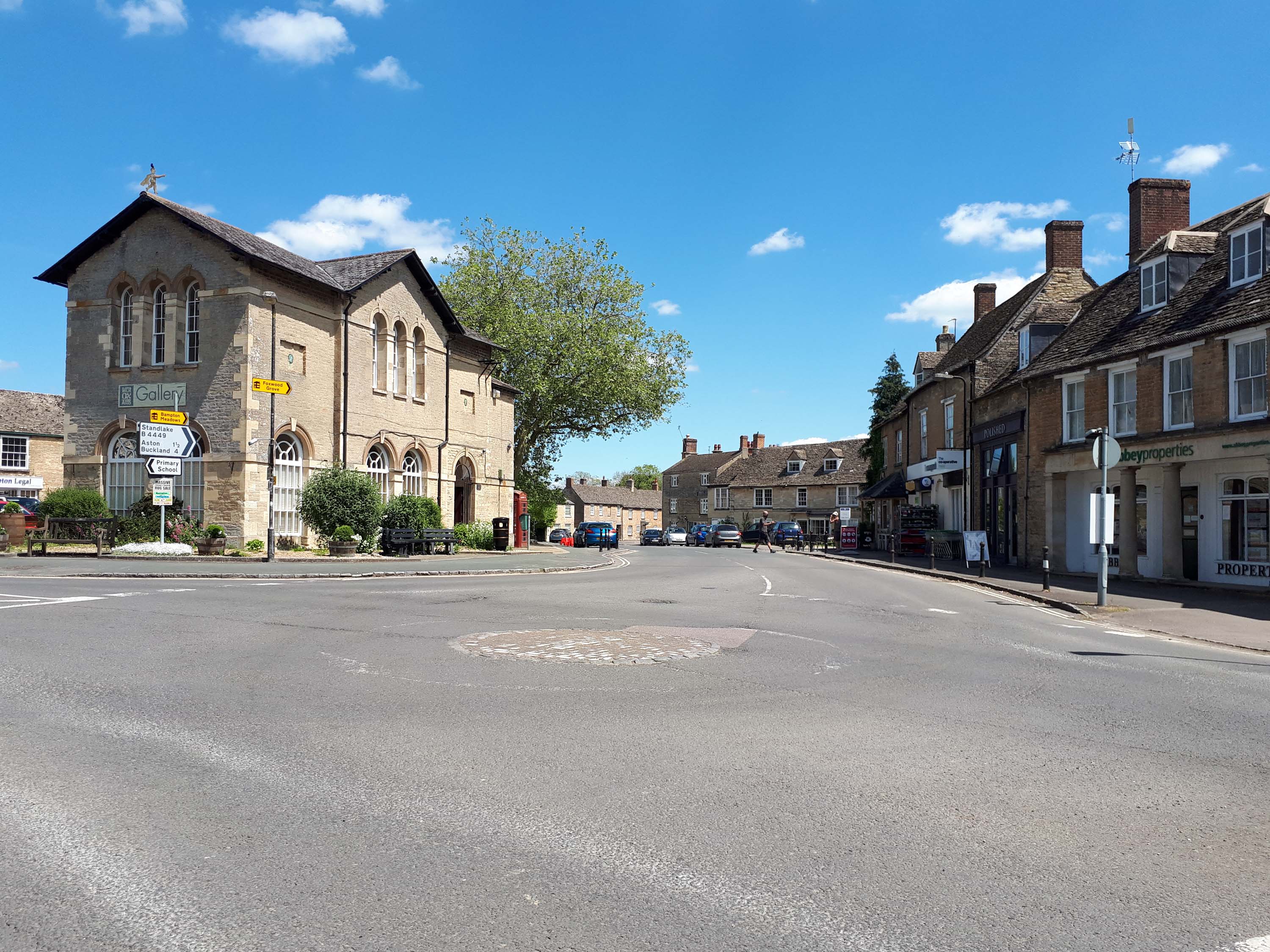
The two biggest period dramas of recent years both filmed in the region. For Downton’s village at Bampton and Yew Tree Farm at Cogges, see our guide to the Downton Abbey filming locations; for Blenheim and Badminton, our guide to the Bridgerton filming locations.
Why period dramas love the Cotswolds
The reason is in the stone. Most Cotswold villages were built in the local limestone between the fourteenth and eighteenth centuries, during and just after the great wool boom, and then — as the trade moved north — changed very little. Whole streets survive with their original roofs of stone slates, their mullioned windows and their dry-stone boundary walls, and a production can dress them back to any century from the Tudors to the 1950s with a load of gravel and a few period cars. Our guide to Cotswold stone architecture explains how the buildings developed, and our guide to Cotswolds history and heritage tells the story behind them.
Directions to each location
| Location | Where to find it | From Moreton-in-Marsh |
|---|---|---|
| Blockley | Off the B4479, between Moreton-in-Marsh and Chipping Campden | About 10 minutes |
| Chastleton House | Off the A44 between Moreton-in-Marsh and Chipping Norton | About 10 minutes |
| Winchcombe station | At Greet, about a mile north of Winchcombe | About 35 minutes |
| Sudeley Castle | On the southern edge of Winchcombe | About 35 minutes |
| Stanway House | On the B4077 near Stanton, north-east of Winchcombe | About 25 minutes |
| Broughton Castle | On the B4035, just south-west of Banbury | About 35 minutes |
| Lacock | Off the A350 between Chippenham and Melksham | About 1 hour 15 minutes |
| Great Chalfield Manor | Near Bradford-on-Avon, about 15 minutes from Lacock | About 1 hour 30 minutes |
| Corsham | On the A4 west of Chippenham | About 1 hour 15 minutes |
Moreton-in-Marsh has a railway station on the line from London Paddington, but most of these locations are awkward without a car.
A period-drama day in the north Cotswolds
| Time | What to do |
|---|---|
| 09:30 | Blockley — the church, the presbytery lane and a coffee at the village shop |
| 11:00 | Chastleton House, on a pre-booked opening day |
| 13:00 | Lunch in Moreton-in-Marsh or Stow-on-the-Wold |
| 14:30 | Drive west to Winchcombe; a return trip on the steam railway from Winchcombe station |
| 16:30 | Sudeley Castle gardens, or a drink in Winchcombe |
On a Broughton Castle opening day, swap the afternoon for the drive east to Banbury instead.
Walking Kembleford
Blockley rewards anyone who leaves the car behind. From the church, the lanes climb steeply out of the valley in every direction, and footpaths over the hill lead to Bourton-on-the-Hill and on to Batsford Arboretum, with big views back over the village roofs on the way. It is a satisfying morning’s walk of a few miles, hilly rather than long, and it gives you the landscape the Father Brown cameras keep returning to: small stone villages folded into green valleys, linked by field paths and dry-stone walls. Bring boots — the paths are muddy after rain — and allow time for lunch at the end. Our Cotswolds walking guide has more routes in the north of the region.
Tips for visiting the houses
- Check the calendar first. Chastleton, Broughton and Stanway all open on limited days, and those days change from year to year. Build your route around them rather than the other way round.
- Book Chastleton. Numbers are limited to protect the interiors, and popular days fill. Arrive in good time for your slot.
- Expect low light and old floors. Chastleton in particular is deliberately unrestored, which means dim rooms, uneven floors and steep stairs. Wear flat shoes and take it slowly.
- Stanway’s fountain — among the tallest in Britain — runs only at set times on open days, so ask on arrival when it is next due.
- Combine a house with a village. Chastleton pairs with Blockley and Stow, Broughton with Chipping Norton and Banbury, Stanway with Stanton and Winchcombe.
Where to stay
For the Father Brown and Wolf Hall locations in the north of the region, base yourself in Chipping Campden, Moreton-in-Marsh or Stow-on-the-Wold. Chipping Campden is the handsomest of the three and a few minutes from Blockley; Moreton has the railway station and plenty of inns; Stow puts you within easy reach of Chastleton and the Slaughters. Blockley itself has a small amount of self-catering, and staying there lets you see Kembleford in the early morning and after the day visitors have gone. For the southern locations — Lacock, Great Chalfield and Corsham — a night in Lacock or Bath makes more sense. Our guide to where to stay in the Cotswolds compares the bases.
Is a period-drama trip worth it?
More than most screen tourism, yes — because the places are worth seeing for their own sake. Blockley is one of the quietest and most rewarding villages in the north Cotswolds, Chastleton is among the most atmospheric houses in England, and a steam train from Winchcombe is a good day out for anyone. Even if you have never seen an episode of Father Brown, this is a very good route through some of the least crowded parts of the region.
The honest caveats: several of the best houses — Chastleton, Broughton and Stanway — open only on limited days, so plan around them rather than hoping to find them open, and the Father Brown studio in Moreton is not visitable at all.
Frequently asked questions about Father Brown filming locations
Where is Father Brown filmed?
Mainly in Blockley, near Moreton-in-Marsh, which plays Kembleford, with interior sets in Moreton-in-Marsh and scenes at Winchcombe station, Sudeley Castle, Guiting Power, Upper Slaughter, Stanway House, Broughton Castle and elsewhere in the north Cotswolds.
Is Kembleford a real place?
No. Kembleford is fictional; its church and presbytery are in Blockley.
Can you visit Father Brown’s church?
Yes. The Church of St Peter and St Paul in Blockley is a working parish church that is usually open during the day. The presbytery next door is a private home.
Where was Wolf Hall filmed in the Cotswolds?
At Chastleton House near Moreton-in-Marsh, Broughton Castle near Banbury and, at the southern tip of the region, Lacock Abbey and Great Chalfield Manor.
Can you visit Chastleton House?
Yes, on selected days, through the National Trust. Visits are limited, so book ahead.
Was Poldark filmed in the Cotswolds?
Mostly not — it was filmed in Cornwall — but Corsham, in Wiltshire near Lacock, played Georgian Truro.
For every other film and series made in the region, from Harry Potter to Clarkson’s Farm, see our complete guide to Cotswolds filming locations. To base yourself near Blockley and Chastleton, our Chipping Campden guide covers the handsomest town in the north of the region.
Photo Credits
A lane in Blockley: Cottages in Blockley-geograph-1939835-by-Michael-Dibb by Michael Dibb, CC BY-SA 2.0, via Wikimedia Commons.
Chastleton House: Chastleton House, Chastleton 01 by Simon Burchell, CC BY-SA 4.0, via Wikimedia Commons.
A steam train at Winchcombe station: Black 5 8F – 8274 at Winchcombe May 2014 by Maccer, CC BY-SA 3.0, via Wikimedia Commons.
Broughton Castle, Oxfordshire: Broughton Castle-28087595610 by Dave_S., CC BY 2.0, via Wikimedia Commons.
Leave a Reply