This article contains advertising. My booking links are routed through a partner that adds commission tracking automatically, so if you book through one I earn a commission from the provider, at no extra cost to you. It never affects what I recommend. Affiliate disclosure
On Church Green in Bampton there is nearly always someone standing very still with a phone held at arm’s length, trying to line up the church gate with a screenshot on the screen. They are finding the exact spot where the Crawleys walked to Sunday service, and when they get it right they tend to laugh out loud. That small moment — the fictional place snapping into focus over the real one — is the whole appeal of the Cotswolds filming locations, and there are more of them within a couple of hours’ drive of each other here than almost anywhere else in England.
Downton Abbey’s village, Bridgerton’s palace, Hogwarts’ corridors, Clarkson’s farm shop, Father Brown’s parish and Thomas Cromwell’s Tudor England are all here, along with a century of film sets from Doctor Dolittle to Spectre. Some are major paid attractions with film trails and gift shops. Others are ordinary villages where people live, park their cars and occasionally put up with a lorry of fake 1920s shopfronts. This guide covers the lot: what was filmed where, what you can actually see, what it costs and — just as usefully — which ones are not worth the detour.
Cotswolds film and TV locations at a glance
| Production | Main location | County | Can you visit? |
|---|---|---|---|
| Downton Abbey | Bampton; Cogges Manor Farm, Witney | Oxfordshire | Village free; Cogges is a paid attraction |
| Bridgerton | Blenheim Palace; Badminton House | Oxfordshire; Gloucestershire | Blenheim paid; Badminton private tours by arrangement |
| Harry Potter | Gloucester Cathedral; Lacock Abbey and village | Gloucestershire; Wiltshire | Cathedral free (donation); Lacock Abbey National Trust |
| Clarkson’s Farm | Diddly Squat Farm Shop, Chadlington; The Farmer’s Dog, near Burford | Oxfordshire | Yes — expect queues |
| Father Brown | Blockley (Kembleford); Guiting Power; Sudeley Castle; Winchcombe station | Gloucestershire | Villages free; Sudeley and the railway paid |
| Wolf Hall | Chastleton House; Lacock Abbey | Oxfordshire; Wiltshire | National Trust, booking advised |
| War Horse, Stardust, The Wolfman | Castle Combe | Wiltshire | Village free; pay-and-display car park |
| Bridget Jones’s Diary | Snowshill | Gloucestershire | Village free |
| Spectre, Mission: Impossible – Rogue Nation, Cinderella | Blenheim Palace | Oxfordshire | Paid — film trail on site |
| Pride and Prejudice (1995), Cranford | Lacock | Wiltshire | Village free |
Opening days and access checked September 2026 — confirm before you travel, as private estates and National Trust houses change their calendars every year.
Why the Cotswolds keeps turning up on screen
Location managers talk about the region the way estate agents talk about a south-facing garden. It solves problems. The first is period: whole villages here were built in local stone between the fourteenth and eighteenth centuries and then, when the wool money dried up, barely touched again. A street in Lacock or Blockley needs very little dressing to become 1540 or 1920 — hide the satellite dishes, cover the double yellow lines with gravel, park a horse where the Volvo was.
The second is ownership. The National Trust owns almost all of Lacock, and large estates hold great swathes of countryside elsewhere, which means one conversation can secure a whole street or a whole valley. Film offices at places like Blenheim deal with productions constantly and know exactly what a crew needs.
The third is geography. The big studios at Leavesden, Pinewood and Shepperton are within about two hours, close enough for a day’s location shoot. Throw in a landscape that reads instantly as “England” to audiences worldwide and it is not surprising that the region has been lending itself to the camera since the 1960s.
For travellers the result is a strange but enjoyable overlap: many of the places you would visit anyway — Blenheim, Lacock, Castle Combe, Snowshill — double as film sets, while a few otherwise quiet villages, Bampton above all, owe most of their visitors to a single programme.
Downton Abbey: Bampton and Cogges
The house itself is not here. Highclere Castle, which plays Downton Abbey, is in Hampshire, about an hour and a quarter’s drive south of the Cotswolds, and opens to the public only on selected days, mostly in summer. But the village the family looked down on — the church, the green, the cottage hospital, Isobel Crawley’s house — was filmed almost entirely in Bampton, a small, unshowy Oxfordshire village on the flat land south-west of Witney.
- St Mary’s Church plays St Michael and All Angels, the scene of Downton’s weddings, funerals and one memorably abandoned altar. The church is usually open during the day; a donation is welcome.
- Church Green is Downton’s village square.
- Churchgate House is Crawley House, where Isobel and Matthew live. It is a private home — look from the lane.
- Bampton Library, a handsome old building by the church, is the exterior of the Downton Cottage Hospital.
What surprises most visitors is how ordinary Bampton is, in the best sense. It is a working village rather than a showpiece, with a mix of old stone and later buildings, a handful of shops and pubs, and very little Downton merchandise. The production chose it precisely because a few streets around the church could be dressed back to the 1910s with minimal fuss, and residents have been remarkably patient through years of filming for the series and the feature films that followed. Treat it as somebody’s home and you will be welcome.
Cogges Manor Farm, a historic farm museum on the edge of Witney, played Yew Tree Farm, home of the Drewe family in the later series. It is a paid attraction with animals, a walled garden and a café, open seasonally — a good stop if you have children in tow as well as a Downton fan.
Worth it? Bampton is charming but small, and once you have stood on Church Green there is not a great deal more to do unless you time your visit for the village’s famous Morris dancing on the Spring Bank Holiday Monday. Allow an hour, have lunch in one of the pubs and combine it with Cogges and Blenheim rather than making it a day in itself. Our day trip from Oxford shows how easily this corner fits into a day.
Bridgerton: Blenheim Palace and Badminton
Netflix’s Regency London is a stitched-together place, and a good deal of its grandeur comes from two Cotswold-edge houses.
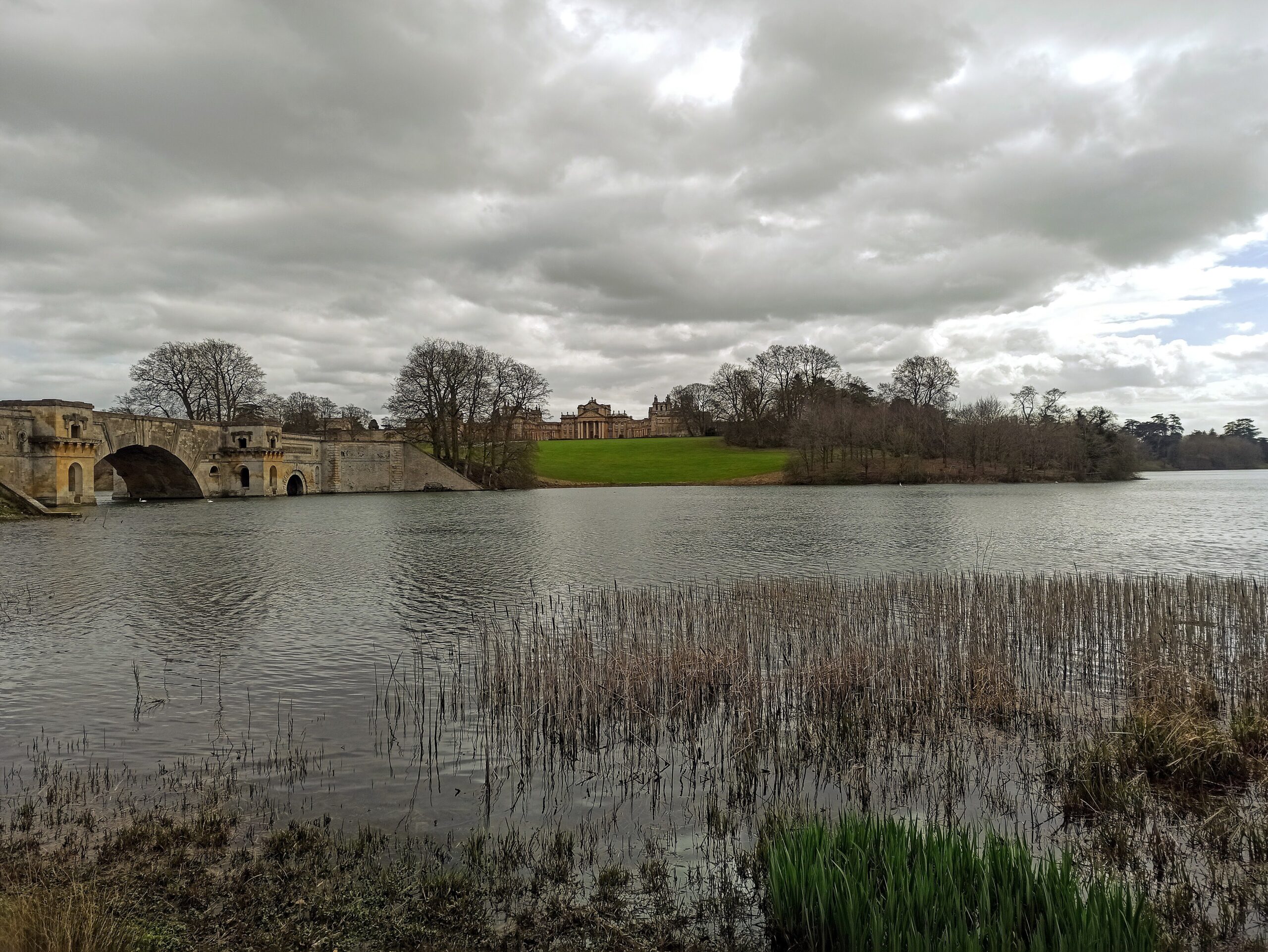
Blenheim Palace, just outside Woodstock, plays Buckingham House, Queen Charlotte’s residence. The Water Terraces, the Long Library, the Great Hall and Saloon and the Great Court all appear. Blenheim is a UNESCO World Heritage Site and Winston Churchill’s birthplace, so the Bridgerton connection is a bonus rather than the point — but it is one of the few places where you can walk the same rooms the cast did, with the film trail to guide you. See our Blenheim Palace guide for tickets, timings and parking.
Badminton House, seat of the Dukes of Beaufort in south Gloucestershire, supplied several of the show’s great interiors, including rooms used for the Duke of Hastings’ and Lady Danbury’s houses and the Foundling Hospital. It is a private family home rather than a visitor attraction, although the estate says private tours of the house and gardens can be arranged. Otherwise, the way to see it is from the park during the Badminton Horse Trials in May, when the grounds fill with spectators.
Bath, half an hour south of the Cotswolds’ southern edge, provided many of the Regency street scenes, so a Bridgerton day can reasonably run Blenheim in the morning and Bath in the afternoon if you do not mind the driving.
Harry Potter: Gloucester Cathedral and Lacock
The Cotswold edge supplied some of the most memorable Hogwarts interiors. None of them is a themed attraction, which is exactly why they are rewarding: you get the real medieval building, not a set.
Gloucester Cathedral
The cloisters at Gloucester stood in for Hogwarts corridors in the first two films. The South Cloisters Corridor is the walk to the Gryffindor common room, and the cloisters also hosted the scene in which the warning about the Chamber of Secrets is found daubed on the wall. The fan vaulting — the earliest to survive anywhere, dating from the fourteenth century — is breathtaking in its own right, and most visitors who come for Harry Potter leave talking about the architecture.
Entry to the cathedral is free, with a suggested donation. Gloucester station is a ten-minute walk away, which makes this the easiest of all the locations to reach without a car.
Give it longer than you think. Beyond the cloisters the cathedral holds the tomb of Edward II, murdered at Berkeley Castle in 1327, whose shrine drew so many pilgrims that their offerings helped pay for the rebuilding you see today. The Great East Window, glazed around 1350, is one of the largest medieval windows anywhere — roughly the size of a tennis court — and the Norman nave, with its enormous drum columns, is a different building in feel from the lacy Gothic of the choir. Services take priority over sightseeing, so parts of the building can be closed on Sundays and during special events; check the cathedral’s calendar before a long drive. If you want to make an afternoon of it, Gloucester Docks is a ten-minute walk south, with the National Waterways Museum and cafés in converted Victorian warehouses.
Lacock Abbey and village
Lacock Abbey, in Wiltshire at the southern tip of the region, provided several Hogwarts classrooms, including Snape’s potions classroom, with its cloisters and chapter house serving as corridors. In the village, which the National Trust owns almost entirely, a cottage became the Potters’ home. The Abbey has a second claim to fame as the place where William Henry Fox Talbot made the earliest surviving photographic negative, of one of its own windows, in 1835 — the Fox Talbot Museum by the entrance tells the story.
And the Echo Tree
Blenheim also has a Potter moment: on the bank of the Great Lake is the tree beneath which the young Snape sits in the Pensieve memory in Harry Potter and the Order of the Phoenix. Blenheim’s own film trail marks it.
Worth it? Gloucester Cathedral is free, magnificent and unmissable whether or not you care about wizards. Lacock is one of the most beautiful villages in the south of England. Put the two together and you have a very good day — though they are about an hour apart by car. Note that the Great Hall exterior shots, the flying lessons and the Hogwarts Express were filmed elsewhere in Britain, and the Warner Bros Studio Tour is at Leavesden, north of London.
Clarkson’s Farm: Diddly Squat, The Farmer’s Dog and Hawkstone
No location in this guide draws more people than a farm shop in Chadlington. Jeremy Clarkson’s Amazon Prime series about running his Oxfordshire farm has turned Diddly Squat Farm Shop into one of the most visited attractions in the county.
- Diddly Squat Farm Shop — Chipping Norton Road, Chadlington, OX7 3PE. Open Tuesday to Sunday, 09:30–16:30, including bank holidays; closed Mondays. The Google Maps pin for “the farm” sits well away from the shop, so use the postcode.
- The Farmer’s Dog — Clarkson’s pub, formerly The Windmill, just outside Burford, open to the public since August 2024. The Grand Tour Tent alongside it, with a Diddly Squat pop-up, Hops & Chops and Hawkstone, opens Tuesday to Sunday, 09:30–17:30.
- Hawkstone — the beer, brewed near Bourton-on-the-Water in collaboration with the Cotswold Brewing Company. You will find it in the farm shop and at the pub.
All three are within about half an hour of each other. The nearest station is Charlbury, around an hour and ten minutes from London Paddington.
Worth it? Honestly, it depends how much you love the show. At weekends and after a new series drops, queues of up to two hours are normal and the car park is usually full by noon. The shop itself is small; the fun is in the atmosphere and in spotting things you have seen on screen. Go on a weekday, arrive for opening, and combine it with Chipping Norton — our Chipping Norton guide covers the town — and Burford. For shopping without the queue, our guide to farm shops in the Cotswolds lists excellent alternatives.
Father Brown: Blockley and the north Cotswolds
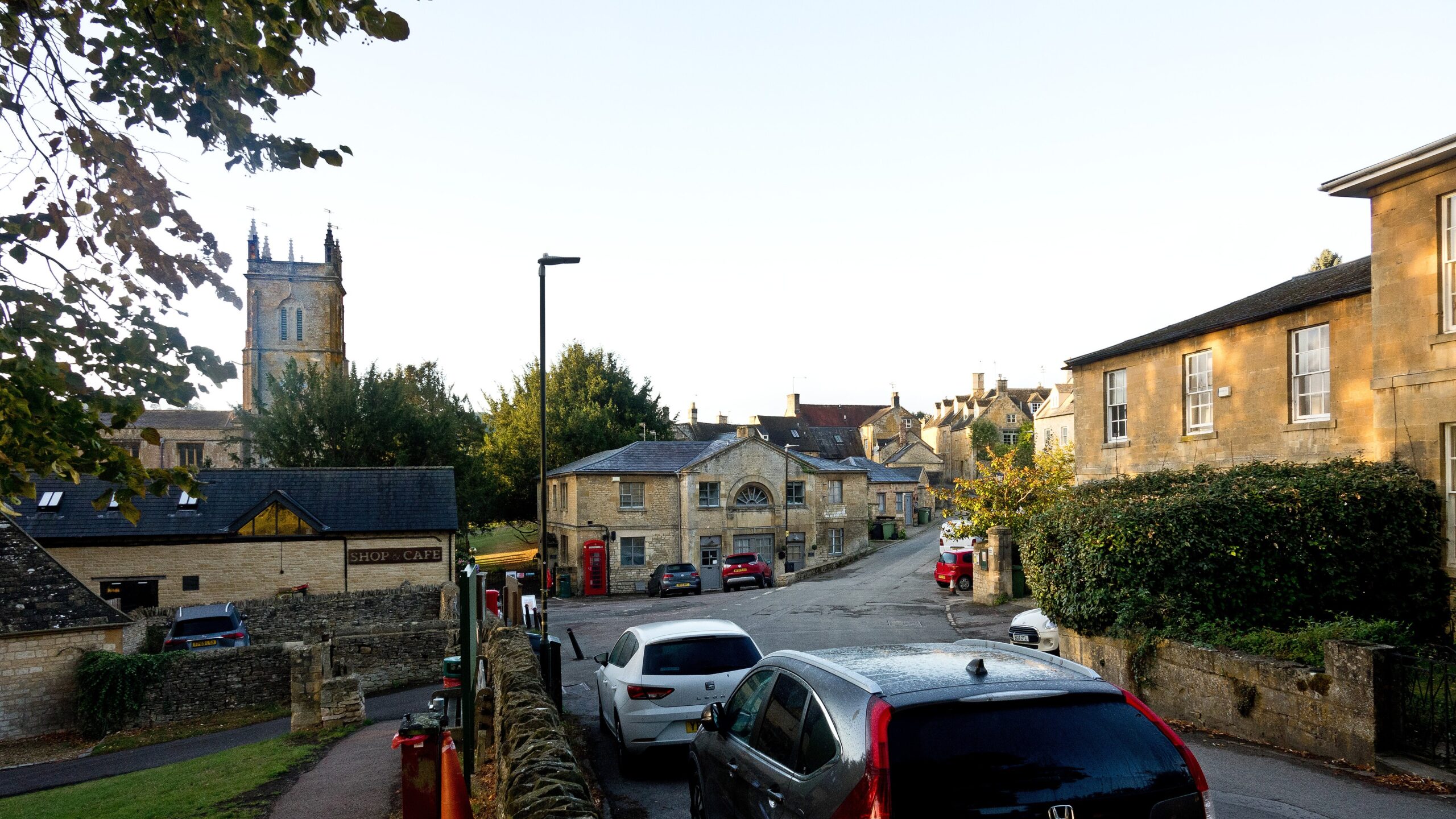
The BBC’s long-running mystery series, with Mark Williams as G. K. Chesterton’s crime-solving priest, is set in the fictional village of Kembleford and filmed almost entirely around the north Cotswolds.
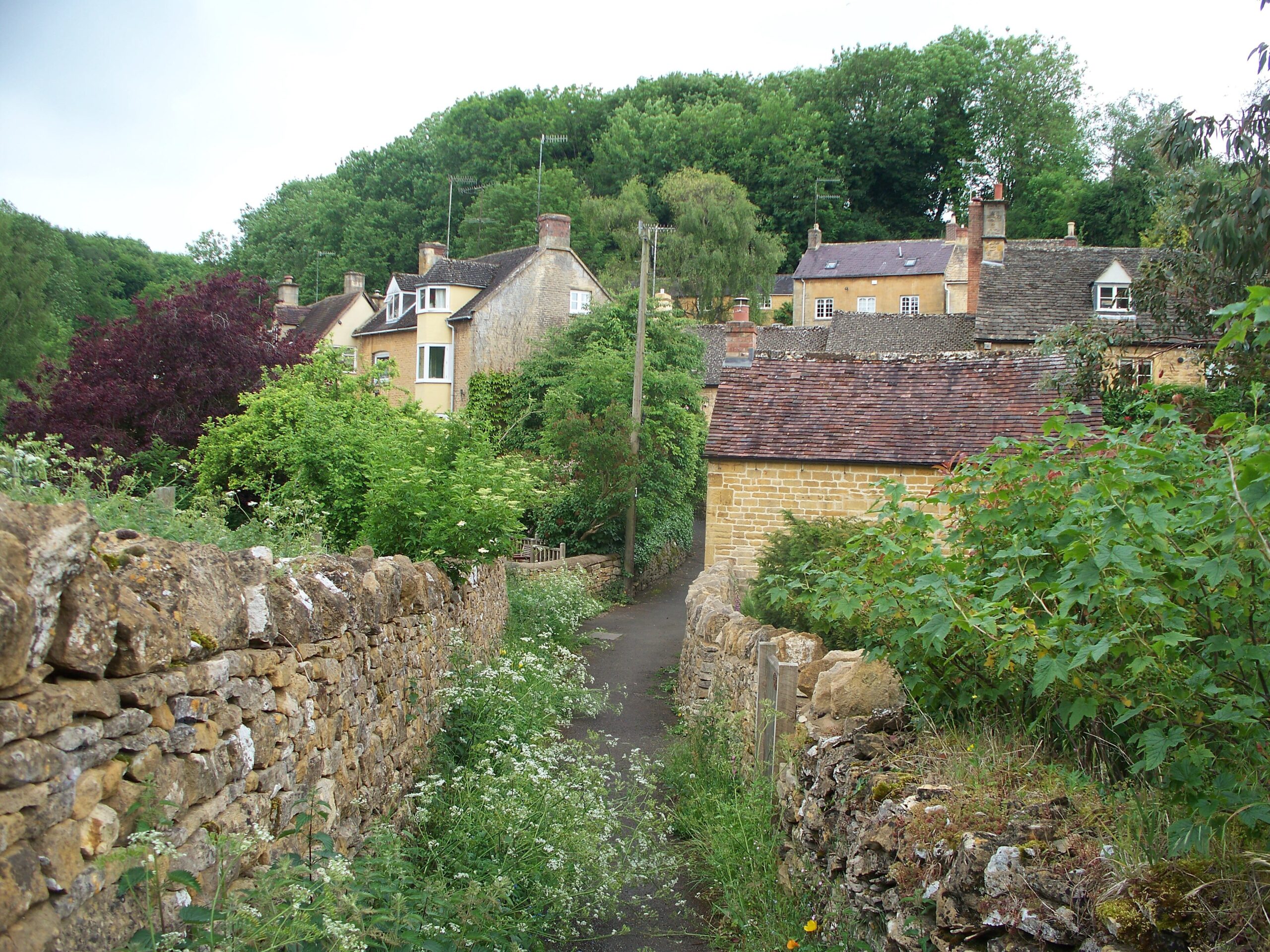
- Blockley is Kembleford. The Church of St Peter and St Paul plays Father Brown’s St Mary’s Catholic Church, and the vicarage beside it is his presbytery — a private house, so look from the churchyard.
- Guiting Power and Upper Slaughter have both been used for village scenes. See our guide to the Slaughters for the latter.
- The old Moreton-in-Marsh hospital houses the interior sets — Father Brown’s kitchen, his study and Kembleford police station. It is a working base rather than an attraction and cannot be visited.
- Sudeley Castle‘s St Mary’s Church appeared in the very first series. The castle and gardens are a paid attraction — see our Sudeley Castle guide.
- Winchcombe station, on the Gloucestershire Warwickshire Steam Railway, turns up whenever a character needs to catch a train.
Worth it? Yes, because Blockley is lovely whether you watch the show or not: a steep, quiet village of silk-mill cottages with a good café-shop and far fewer visitors than its neighbours. Pair it with Chipping Campden and a trip on the steam railway.
Wolf Hall and the Tudor houses
The BBC’s adaptation of Hilary Mantel’s novels needed houses that looked as though nothing had changed since Henry VIII, and the Cotswolds had the perfect candidate.
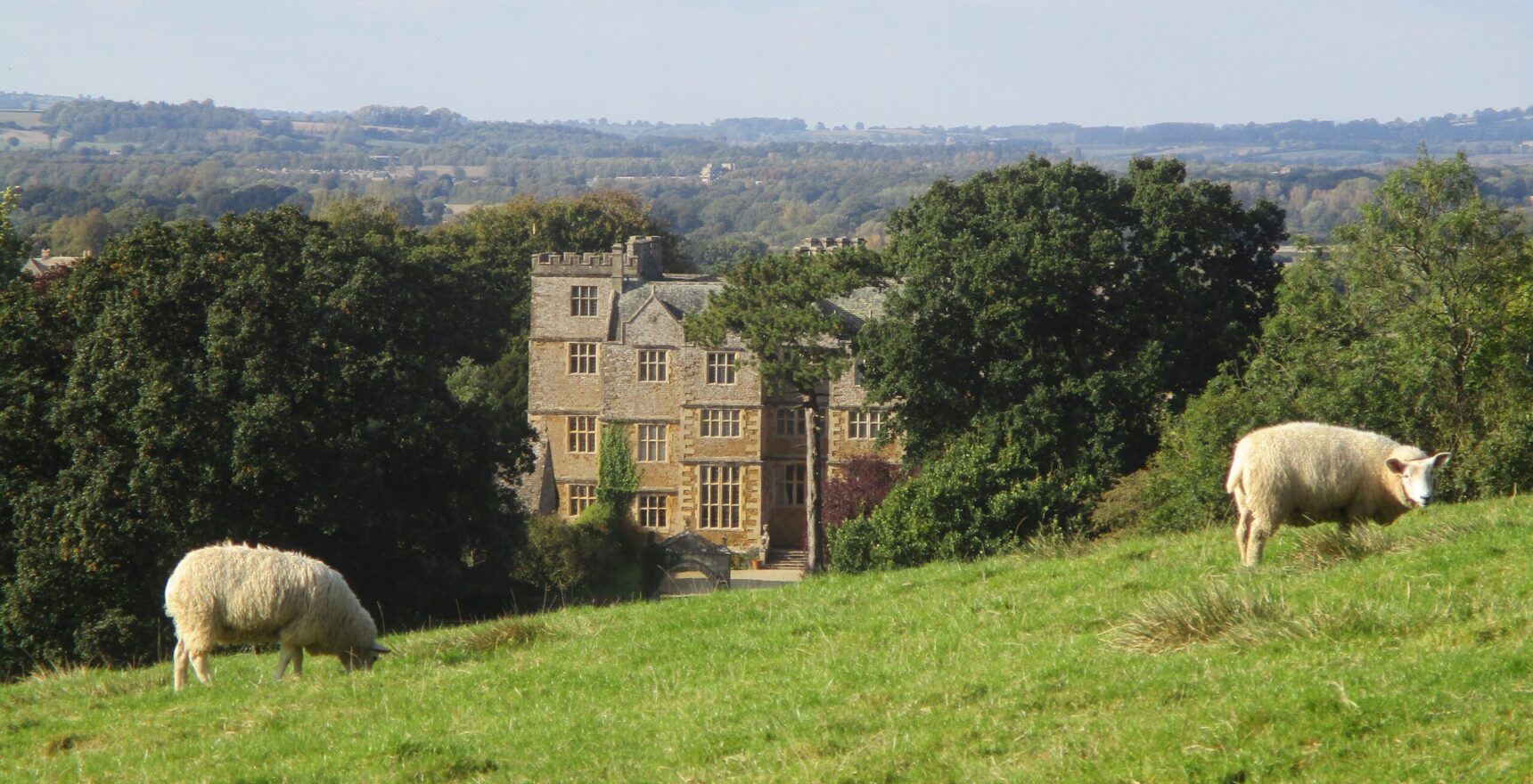
Chastleton House, near Moreton-in-Marsh, is a Jacobean house built in the early 1600s for a wealthy wool merchant and then left, remarkably, almost untouched for four centuries as the family’s fortunes declined. The National Trust has conserved it as it found it — worn, dusty in places and utterly atmospheric — rather than restoring it to a showroom finish. That same authenticity is what the Wolf Hall crew wanted. It is also where the rules of croquet were codified in the 1860s, and there is a lawn to prove it. Visits are limited, so book ahead and check the opening days.
Lacock Abbey also appears in Wolf Hall, adding to its already long screen CV, and other Tudor scenes were shot at houses just beyond the southern edge of the region.
Castle Combe: War Horse, Stardust and a sabotaged dam
The village often called the prettiest in England has one of the longest screen histories in the region.
- War Horse (2011) — Steven Spielberg used the village for the horse fair where Joey is sold to the army.
- Stardust (2007) — Matthew Vaughn’s fantasy used Castle Combe for its magical village scenes.
- The Wolfman (2010) — the village became the superstitious hamlet of Blackmoor.
- Doctor Dolittle (1967) — the one everyone locally still talks about.
The Doctor Dolittle shoot is a legend in its own right. The production built a dam across the Bybrook to create a harbour, the weather was terrible, relations with villagers deteriorated and the film eventually moved to Hollywood, where the village was recreated on a soundstage. Along the way, a young army officer named Ranulph Fiennes — later the polar explorer — was so incensed by what the film had done to the village that he tried to blow up the dam, an escapade that ended his career in the SAS.
Visitors must use the car park at the top of the village and walk down; parking in the village itself is not allowed. Our Castle Combe guide has the details.
Blenheim Palace: the film star of the Cotswolds
Beyond Bridgerton and Harry Potter, Blenheim has an extraordinary filmography. In Spectre (2015), its Great Court stands in for a Roman palazzo during the SPECTRE meeting, and Bond’s car chase begins by racing through its archways. In Mission: Impossible – Rogue Nation, the Long Library and Green Writing Room host a charity auction. Cinderella (2015) and Transformers: The Last Knight were filmed here too, and more recent productions such as Ridley Scott’s Napoleon and Netflix’s The Diplomat have been added to the palace’s film trail.
Blenheim runs a self-guided film trail around the palace and grounds — check whether it is included with your ticket when you book. With a car or on the S3 bus from Oxford, it combines easily with Bampton and Cogges for a Downton-and-Bridgerton day. Our Woodstock guide covers the town at the palace gates.
Snowshill: Bridget Jones’s Diary
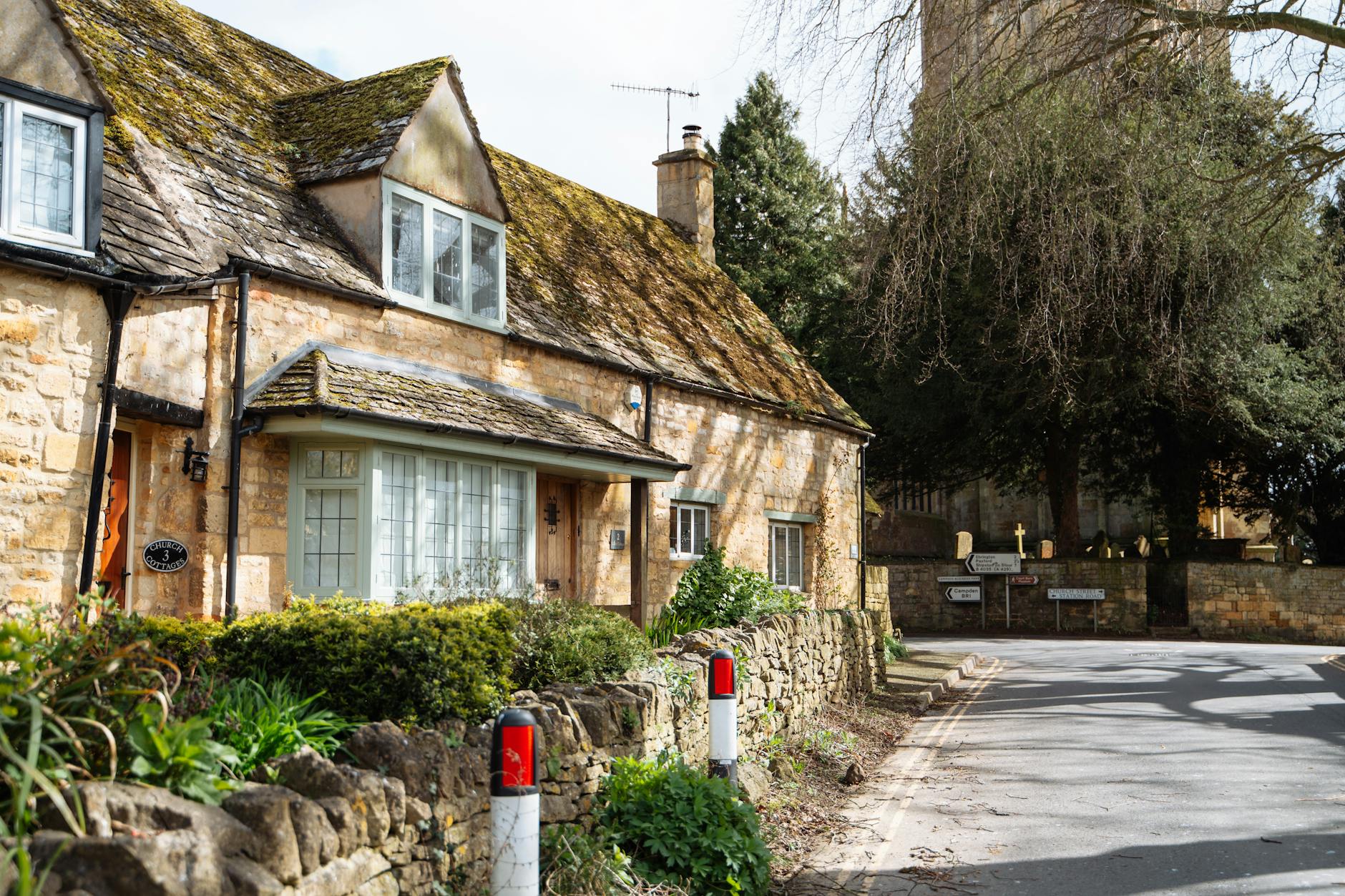
Tiny Snowshill, high on the hills above Broadway, played the village where Bridget’s parents live in Bridget Jones’s Diary (2001) — the setting for the turkey curry buffet and the infamous reindeer jumper. The cottage used is a private home, so look but do not linger. The village also has Snowshill Manor, the National Trust house crammed with Charles Wade’s eccentric collections, and in summer the lavender fields nearby. See our Snowshill guide.
Lacock: Britain’s most-filmed village
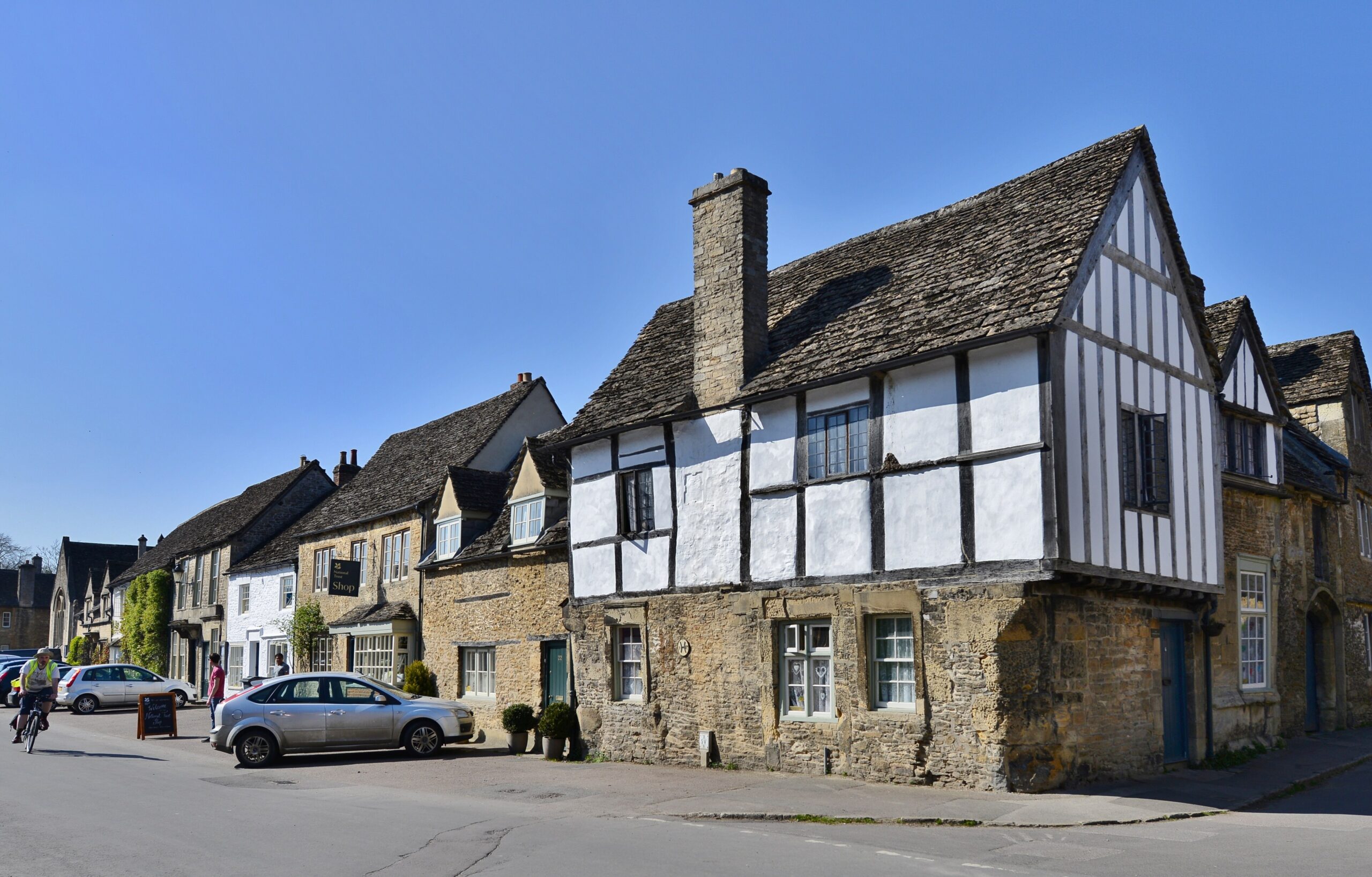
Lacock deserves its own section as well as its Harry Potter entry. Because the National Trust owns almost the whole village and keeps modern clutter to a minimum, it has been used for more period dramas than anywhere else in Britain. The BBC’s Pride and Prejudice (1995) made it Meryton, where the Bennet sisters meet the officers. Cranford used its streets for Mrs Gaskell’s Victorian town. Harry Potter and Wolf Hall both filmed here, and it continues to host productions most years.
The village is free to walk around; the Abbey, museum and grounds are National Trust, with an admission charge for non-members. Arrive early — Lacock gets busy by late morning in summer — and use the main visitor car park on the edge of the village.
The joy of Lacock is that it rewards you even when nothing is being filmed. Four main streets form a rough square — Church Street, East Street, High Street and West Street — lined with timber-framed and stone houses from the thirteenth century onwards, a fourteenth-century tithe barn and a small lock-up. The church of St Cyriac is worth ten minutes for its Tudor monuments to the family who took over the Abbey. Walk down past the church to the packhorse bridge and the ford for the view that location scouts love, then back up to the Abbey, whose medieval cloisters, sacristy and chapter house survived when the rest of the nunnery was turned into a country house in the sixteenth century. If you only have time for one location in this whole guide, make it Lacock.
Other screen connections worth knowing
- Poldark — Corsham, just south of Castle Combe, doubled for Georgian Truro, with its high street briefly returned to the eighteenth century.
- Agatha Raisin — the Sky series about a PR executive turned village sleuth in the Cotswolds was filmed largely in Biddestone, near Chippenham, which plays Carsely.
- The GWSR — the Gloucestershire Warwickshire Steam Railway’s stations and locomotives turn up regularly in period dramas; a ride from Broadway to Cheltenham Racecourse feels like stepping into one.
The ones that were not filmed here
Every guide to Cotswold film locations has to deal with the myths. A few productions are regularly claimed for the region but were shot elsewhere:
- The Holiday — Kate Winslet’s Rosehill Cottage was built as a set in a field in Surrey. No Cotswold village, however much it looks the part.
- Midsomer Murders — filmed mostly in the villages of Buckinghamshire and Oxfordshire’s Chiltern and Thames Valley country, not the Cotswolds.
- Downton Abbey’s house — Highclere Castle, Hampshire.
- Hogwarts’ exterior and the flying lessons — Alnwick Castle in Northumberland, plus studio sets. Oxford’s Christ Church, just beyond the Cotswolds, inspired the Great Hall and lent its staircase.
- Pride and Prejudice (2005) — the Keira Knightley film used houses in Derbyshire, Lincolnshire and elsewhere; it is the 1995 BBC version that belongs to Lacock.
Cotswolds film locations by area
The locations cluster into four groups. If you are planning a route, work within one or two rather than zigzagging across the region.
| Area | Locations | Drive times between them |
|---|---|---|
| West Oxfordshire | Bampton, Cogges (Witney), Blenheim (Woodstock), Diddly Squat (Chadlington), The Farmer’s Dog (Burford) | 15–25 minutes between each |
| North Cotswolds | Chastleton, Blockley, Snowshill, Guiting Power, Upper Slaughter, Sudeley and Winchcombe | 15–20 minutes between each |
| South Cotswolds and Wiltshire | Lacock, Castle Combe, Corsham, Biddestone, Badminton | 10–25 minutes between each |
| Cotswold edge | Gloucester Cathedral | About 35 minutes from Winchcombe, an hour from Lacock |
Our Cotswolds photography spots guide overlaps with several of these, and is useful for timing: the villages that films choose are the same ones that look best at 8am before the car parks fill.
Planning your film locations trip
By car
A car makes this straightforward. Two days is enough to see the headline locations — one day for west Oxfordshire and the north Cotswolds, one for the south — with a night in somewhere central such as Burford, Stow or Moreton-in-Marsh in between. Village parking is tight everywhere; use official car parks rather than residential streets, particularly in Bampton, Blockley and Castle Combe, where the locations are people’s front doors.
By public transport
It is possible, but choose your targets. Gloucester Cathedral is a short walk from Gloucester station. Blenheim is reached on the S3 bus from Oxford. Lacock is best from Chippenham station by taxi or bus. Charlbury station is the nearest to Diddly Squat, but you will need a taxi from there. Bampton, Blockley, Chastleton and Snowshill are awkward without a car. Our guide to the Cotswolds by train explains the rail network.
On a tour
Several operators run film-themed day tours from London and Oxford, most commonly combining Downton’s Bampton with Highclere Castle, or Harry Potter locations with Oxford. If Highclere entry is the draw, check it is actually included — the castle opens only on selected days. Our guide to Cotswolds tours covers the options and what to look for.
Etiquette
Crawley House, the Father Brown presbytery, Bridget’s parents’ cottage and many other locations are private homes. Photograph from the street, do not knock, and do not stand in people’s gateways re-enacting scenes. Churches rely on donations, and a pound or two in the box is the right way to say thank you for letting you walk in Downton’s aisle.
When to go
The locations do not all peak at the same time of year, and a little timing makes a big difference.
- Spring (April–May). The Badminton Horse Trials in early May are the only real chance to see Badminton House, even from a distance. Bampton’s Morris dancers take over the village on the Spring Bank Holiday Monday, a tradition far older than any television series. Lacock and Castle Combe are still manageable before the school holidays begin. New series of Clarkson’s Farm have tended to arrive in late spring, and the Diddly Squat queues grow for weeks afterwards.
- Summer (June–August). Highclere Castle’s main opening season falls in summer, so this is when a Downton day combining Hampshire and Bampton works best. Snowshill’s lavender is in bloom — the Cotswold Lavender fields open from 17 June to 5 August in 2026. But this is also when Lacock, Castle Combe and Blenheim are at their busiest; arrive at opening time or late in the afternoon.
- Autumn (September–October). The best all-round season. Blenheim’s parkland turns gold, weekday queues at Diddly Squat shrink, and the villages empty after the summer rush. National Trust houses including Chastleton typically start winding down for winter at the end of October, so check before you plan around them.
- Winter (November–February). Blenheim’s Christmas market and light trail run from 13 November to 20 December 2026, and Lacock looks exactly like a Christmas card on a frosty morning. Days are short, though, so limit yourself to two or three locations a day and expect some houses to be closed.
Three one-day film location routes
Each of these works as a self-contained day by car. Timings assume a mid-season weekday; add an hour at weekends.
Downton, Bridgerton and Clarkson: west Oxfordshire
| Time | Stop |
|---|---|
| 09:30 | Diddly Squat Farm Shop, Chadlington — arrive for opening to beat the queue |
| 11:00 | Blenheim Palace — the Great Court, Long Library, Water Terraces and the Echo Tree |
| 14:30 | Cogges Manor Farm, Witney (if open), for Yew Tree Farm |
| 16:00 | Bampton — Church Green, St Mary’s and Crawley House from the lane |
| 18:00 | Dinner in Burford or at The Farmer’s Dog — check food times and book |
Father Brown and Wolf Hall: the north Cotswolds
| Time | Stop |
|---|---|
| 09:30 | Blockley — the church, the presbytery and a coffee in the village |
| 11:00 | Chastleton House — pre-booked, on an opening day |
| 13:30 | Lunch in Stow-on-the-Wold or Moreton-in-Marsh |
| 15:00 | Snowshill for Bridget Jones, or Sudeley Castle and a steam train from Winchcombe |
Hogwarts and period drama: Gloucester and the south
| Time | Stop |
|---|---|
| 09:30 | Gloucester Cathedral — the cloisters before the tour groups arrive |
| 12:00 | Drive south to Lacock (about an hour); lunch in the village |
| 13:30 | Lacock Abbey, cloisters and the Fox Talbot Museum |
| 16:00 | Castle Combe, walking down from the top car park to the bridge |
Where to stay for a film locations trip
Base yourself where two of the clusters meet, so that neither day starts with a long drive. Burford is ideal for the Oxfordshire locations: ten minutes from The Farmer’s Dog and within half an hour of Bampton, Blenheim and Diddly Squat — see our Burford guide. Woodstock lets you walk to Blenheim’s gates in the morning. For Blockley, Chastleton and Snowshill, Moreton-in-Marsh has the added advantage of a railway station — our Moreton-in-Marsh guide covers where to stay.
In the south, Lacock itself has a couple of old inns with rooms, which means you can walk the village before the day visitors arrive, and Castle Combe has the grand Manor House hotel if you want a splurge. For a broader comparison of bases, see our guide to where to stay in the Cotswolds.
Which locations are actually worth it?
Being honest about it:
- Unmissable, fan or not: Gloucester Cathedral, Lacock, Blenheim Palace, Chastleton House. Great places that happen to be on screen.
- Lovely, and the screen link is a bonus: Castle Combe, Blockley, Snowshill, Sudeley Castle.
- For fans: Bampton and Cogges. Worth an hour or two if you love Downton; a pleasant but unremarkable village if you do not.
- Only if you really love the show: Diddly Squat. The queues are long, the shop is small and the joy is mostly recognition. Go midweek at opening time.
- Hard to visit: Badminton House — private tours by arrangement, or the park during the Horse Trials. Not visitable at all: the Moreton-in-Marsh Father Brown studio.
For everything else to do between the locations, our list of things to do in the Cotswolds is the place to start.
Frequently asked questions about Cotswolds filming locations
What has been filmed in the Cotswolds?
Downton Abbey, Bridgerton, Harry Potter, Clarkson’s Farm, Father Brown, Wolf Hall, Pride and Prejudice (1995), Bridget Jones’s Diary, War Horse, Stardust, Spectre and Mission: Impossible – Rogue Nation, among many others. Lacock alone has appeared in dozens of productions.
Where is the Downton Abbey village?
Bampton, in west Oxfordshire, about 15 miles west of Oxford. The house itself, Highclere Castle, is in Hampshire.
Can you visit Clarkson’s farm?
You can visit Diddly Squat Farm Shop at Chadlington, Tuesday to Sunday, 09:30–16:30. The working farm itself is private. The Farmer’s Dog pub near Burford is also open to the public.
Where was Harry Potter filmed in the Cotswolds?
Gloucester Cathedral’s cloisters, Lacock Abbey and Lacock village, and the Echo Tree by the lake at Blenheim Palace.
Is the Father Brown village real?
Kembleford is fictional, but its church and presbytery are in Blockley, a real village near Moreton-in-Marsh and Chipping Campden.
What is the most-filmed village in the Cotswolds?
Lacock, in Wiltshire, is widely described as the most-filmed village in Britain, with Castle Combe close behind.
Can you do a Cotswolds film locations tour without a car?
Partly. Gloucester Cathedral, Blenheim and Lacock are all reachable by train and bus or taxi. The smaller villages need a car or an organised tour.
For the villages behind the screen, see our guide to the best Cotswold villages; for the grand houses, our round-up of Cotswold stately homes; and for the real people who have made the region their home — actors, authors and a few genuine celebrities among them — our guide to famous Cotswolds residents. If you are putting together a full trip, start with our Cotswolds travel guide.
Clarkson’s Farm draws more visitors than any other production on this list, and it rewards a little planning: the right day, the right time and a fallback if the car park is full. Our guide to visiting Diddly Squat, The Farmer’s Dog and Hawkstone has the hours, the queue patterns and the trick for buying the merchandise without the wait.
Downton is the production that sends most visitors looking for a specific church gate, and the locations are easier to see than the scattered geography suggests: the village, the church, Crawley House and the cottage hospital are all within a few minutes’ walk in Bampton, with Yew Tree Farm fifteen minutes away at Cogges. Our guide to the Downton Abbey filming locations maps each one and explains how to add Highclere Castle.
Bridgerton’s Cotswold connection runs deeper than Blenheim. Badminton House, the Duke of Beaufort’s seat in south Gloucestershire, supplied the interiors of Hastings House, Clyvedon and Lady Danbury’s home, while Bath lent the first three series Lady Danbury’s front door and the modiste’s street. Our guide to the Bridgerton filming locations in the Cotswolds covers which scenes were shot where and which houses you can actually get into.
Harry Potter fans get more for their money here than almost anywhere outside the studio tour: Gloucester’s cloisters are free, and at Lacock Abbey you can walk into the actual rooms that played Snape’s and Quirrell’s classrooms. Our guide to Harry Potter in the Cotswolds sets out which corridor appears in which film, and a one-day route linking the two.
If you only visit one screen location in this guide, make it Lacock. It has played Meryton, Cranford, Hogwarts and Henry VIII’s palaces, it costs nothing to walk around, and the Abbey at its heart is where the earliest surviving photographic negative was made. Our Lacock village guide covers what to see, current Abbey prices, where to eat and how to arrive before the crowds.
For the quieter end of the region’s screen story, follow the period dramas: Father Brown’s Kembleford is Blockley, Wolf Hall found Cromwell’s childhood in Chastleton’s courtyard, and Broughton Castle has hosted everyone from Shakespeare in Love to Thomas Cromwell. Our guide to Father Brown and Cotswold period drama locations has directions to each and a day’s route between them.
If you want to see as many of these places as possible in one trip, the geography helps: the west Oxfordshire locations sit within half an hour of each other, and the Fosse Way links the north Cotswolds to Lacock in little more than an hour. Our two-day Cotswolds film locations road trip puts them in order, with timings, parking and what to book.
Photo Credits
Chastleton House seen across its sheep-grazed parkland: Chastleton House, Chastleton 03 by Simon Burchell, CC BY-SA 4.0, via Wikimedia Commons.
Blockley village square and the Church of St Peter and St Paul: The village square in Blockley – geograph.org.uk – 8142529 by Roger A Smith, CC BY-SA 2.0, via Wikimedia Commons.
Leave a Reply