This article contains advertising. My booking links are routed through a partner that adds commission tracking automatically, so if you book through one I earn a commission from the provider, at no extra cost to you. It never affects what I recommend. Affiliate disclosure
On the late May bank holiday Monday, the first sound in Bampton is not traffic but a fiddle, somewhere down a side street before nine in the morning, followed by the jingle of bells strapped to men’s shins. By mid-morning three separate teams of Morris dancers are working their way around the village — outside pubs, on the market square, in private gardens — and they will keep going until dusk, as dancers here have done for at least two and a half centuries. Most people know Bampton Oxfordshire as the real Downton village. The people who live here tend to think of it first as the place where the Morris never stopped.
Both identities are worth a visit, and neither takes long to find. Bampton is a small, unshowy place on the flat land of the upper Thames, five miles south-west of Witney, with a church far too big for it, four pubs, a handful of shops and a surprising number of eccentric traditions. This guide covers what to see beyond the Downton filming spots, when to come for the dancing and the other annual customs, where to eat and drink, the walks down to the Thames and how to get here without a car.
Bampton at a glance
| Detail | |
|---|---|
| Where | West Oxfordshire, about 5 miles south-west of Witney and 15 miles west of Oxford |
| Known for | Downton Abbey’s village; one of England’s oldest Morris dancing traditions |
| Main sights | St Mary’s Church, Church Green, the market square, the Thames a couple of miles south |
| Pubs | Four — the Morris Clown, the Horse Shoes, the Talbot and the Romany Inn |
| Big days | Morris on the late Spring Bank Holiday Monday; the Shirt Race on the Saturday before; the Mummers on Christmas Eve |
| Nearest station | None in the village — Oxford or Hanborough, then bus or taxi |
| Cost | Free to wander; the church welcomes donations |
| Time needed | One to three hours; all day on Morris day |
Checked September 2026 — confirm pub opening times and event dates before a special trip.
Bampton-in-the-Bush: a short history
Bampton looks like a village, but for most of its history it behaved like a town. It was the site of an Anglo-Saxon minster — a mother church serving a large surrounding district — and a substantial royal manor at the time of the Domesday survey. It held a market, grew into a small regional centre and, in the fourteenth century, acquired a castle: a fortified manor house built by Aymer de Valence, Earl of Pembroke, whose surviving gatehouse is now part of a private farmhouse called Ham Court.
The old name, Bampton-in-the-Bush, is usually explained as a reference to its once remote, scrubby surroundings, before decent roads crossed the low-lying land between the Windrush and the Thames. That isolation is also why so many of its customs survived. Bampton was far enough off the beaten track that its Morris, its mummers and its pub-crawling races were still going when the same traditions had died out in better-connected places.
The market eventually faded, the railway never arrived and Bampton settled into life as a large village. It kept its big church, its broad main streets and its coaching-inn architecture, which is exactly why, eight centuries later, a television production could look at it and see Edwardian England.
The Downton Abbey connection
Bampton played Downton village from the first series in 2010 to the feature films, and its four main filming locations are all within a few minutes’ walk of each other: St Mary’s Church as St Michael and All Angels, Church Green as the village square, Churchgate House as Crawley House, and the library building as the cottage hospital. Our guide to the Downton Abbey filming locations covers each of them in detail, together with Cogges Manor Farm and Highclere Castle.
The short version for visitors: the church is usually open, Church Green is public, and both the library and Churchgate House can be seen from the street. Churchgate House is a private home. Parking around the church is very limited, so leave the car on the main street and walk.
St Mary’s Church beyond the screen
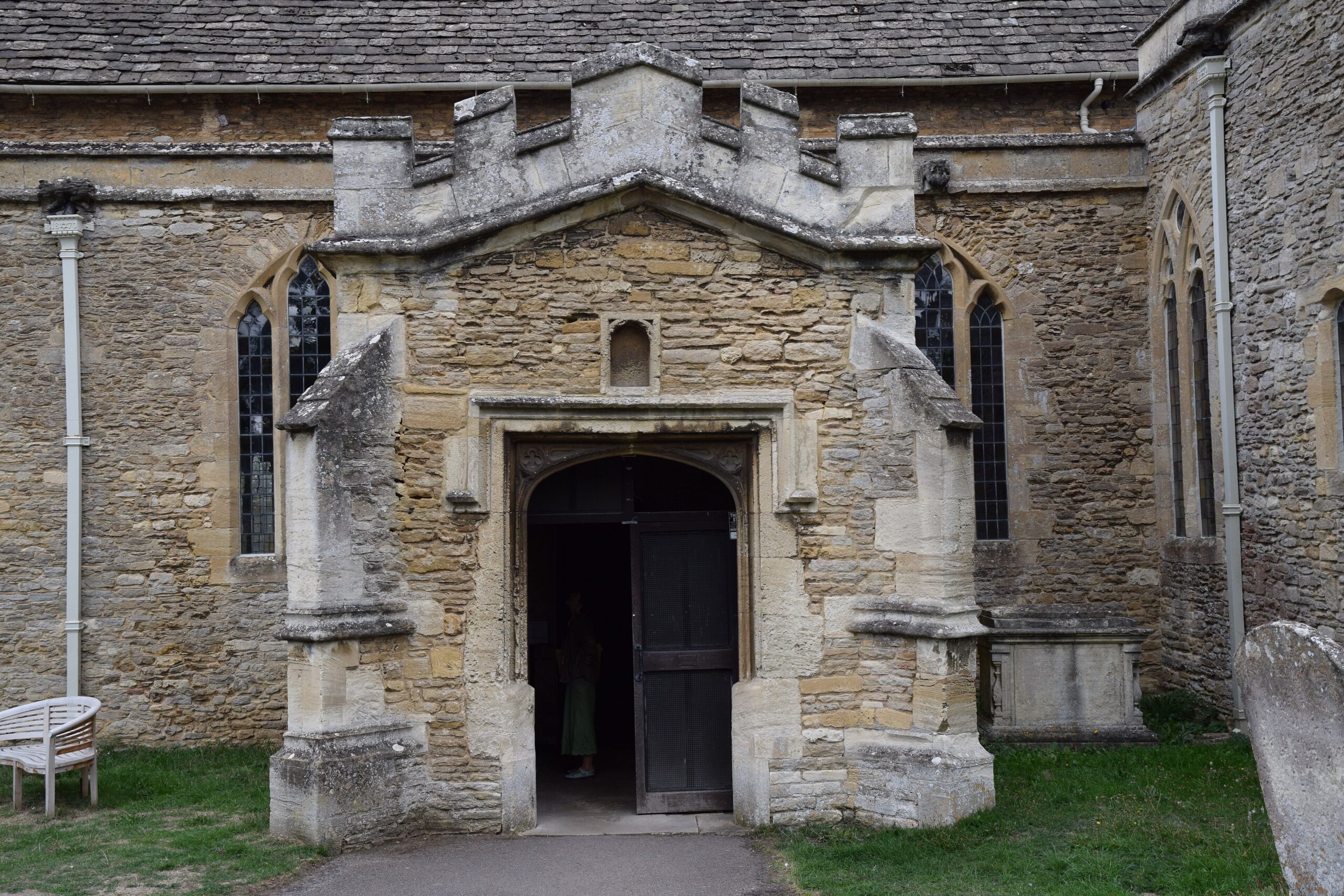
Television made St Mary’s famous, but it would be worth seeing without a single frame of Downton. It is a large cruciform church, its tall stone spire visible for miles across the flat fields, built on the site of the old minster and added to over several centuries. Walk around the outside first to understand its size, then go in: the scale of the nave and crossing tells you how important Bampton once was.
Inside, take your time over the medieval carved stonework, the monuments to local families and the light from the crossing. There is usually information in the church about both its history and its screen career, and the volunteers who look after it are used to questions about both. It is a working parish church, so be quiet during services and leave a donation — the upkeep of a building this size falls on a small community.
The market square and the village streets
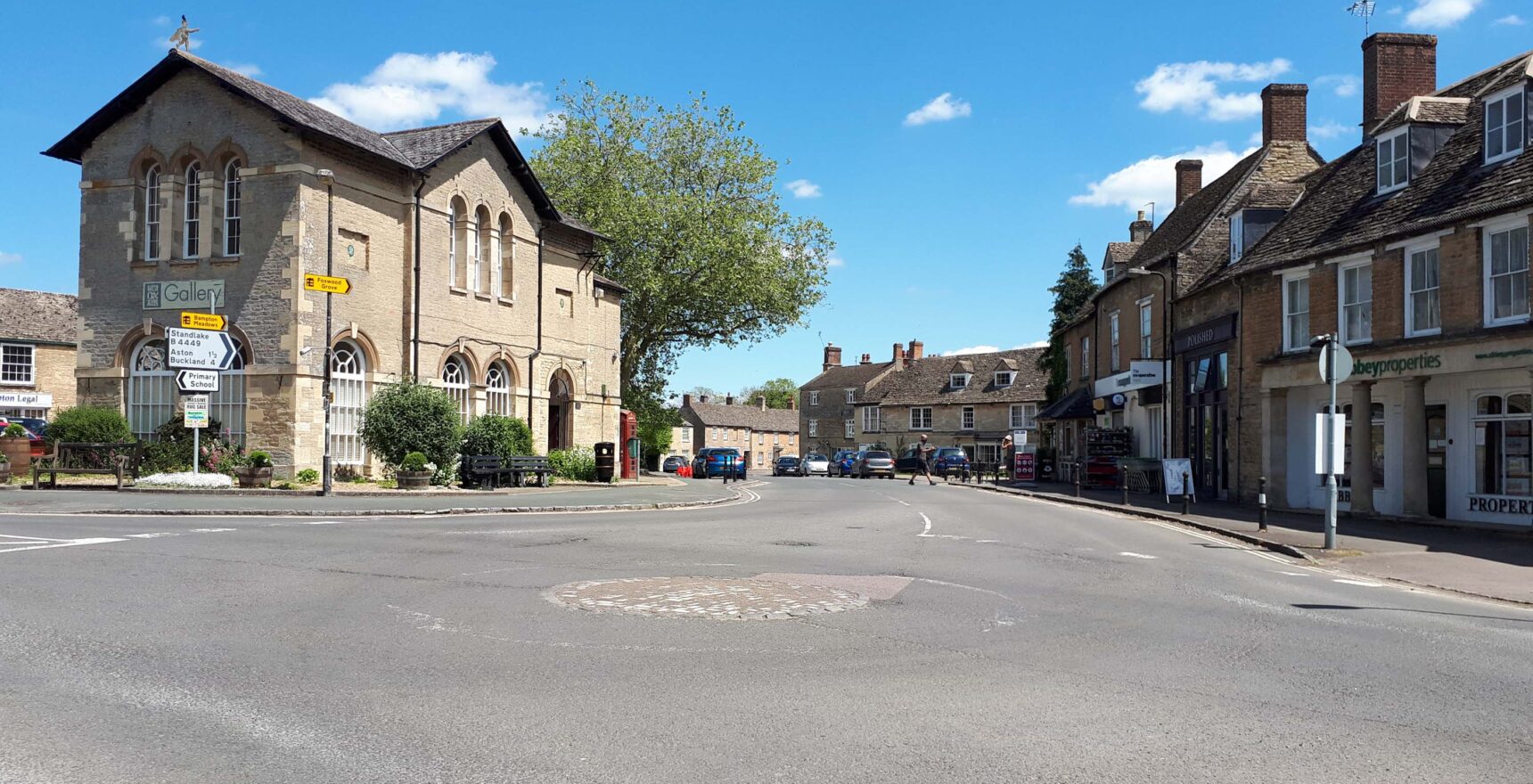
Bampton’s centre is its market square, where the main roads meet by the old town hall — a handsome Victorian building with arched windows that now houses West Ox Arts, a gallery showing work by local artists. Check the gallery’s opening days before making a special trip. Around the square and along the High Street, Bridge Street and Broad Street are long runs of stone houses, Georgian fronts and former coaching inns that hint at the prosperous market town Bampton used to be.
It is not a village for shopping — there are a few everyday shops and small businesses rather than boutiques — and it is not a chocolate-box set piece in the way that Bibury or Lower Slaughter are. What it offers is an unusually intact, lived-in small town that has been left alone, and a very pleasant hour’s wander.
Morris dancing day
If you can choose when to visit Bampton, choose the late Spring Bank Holiday Monday at the end of May — traditionally Whit Monday — when the village gives itself over entirely to Morris dancing.
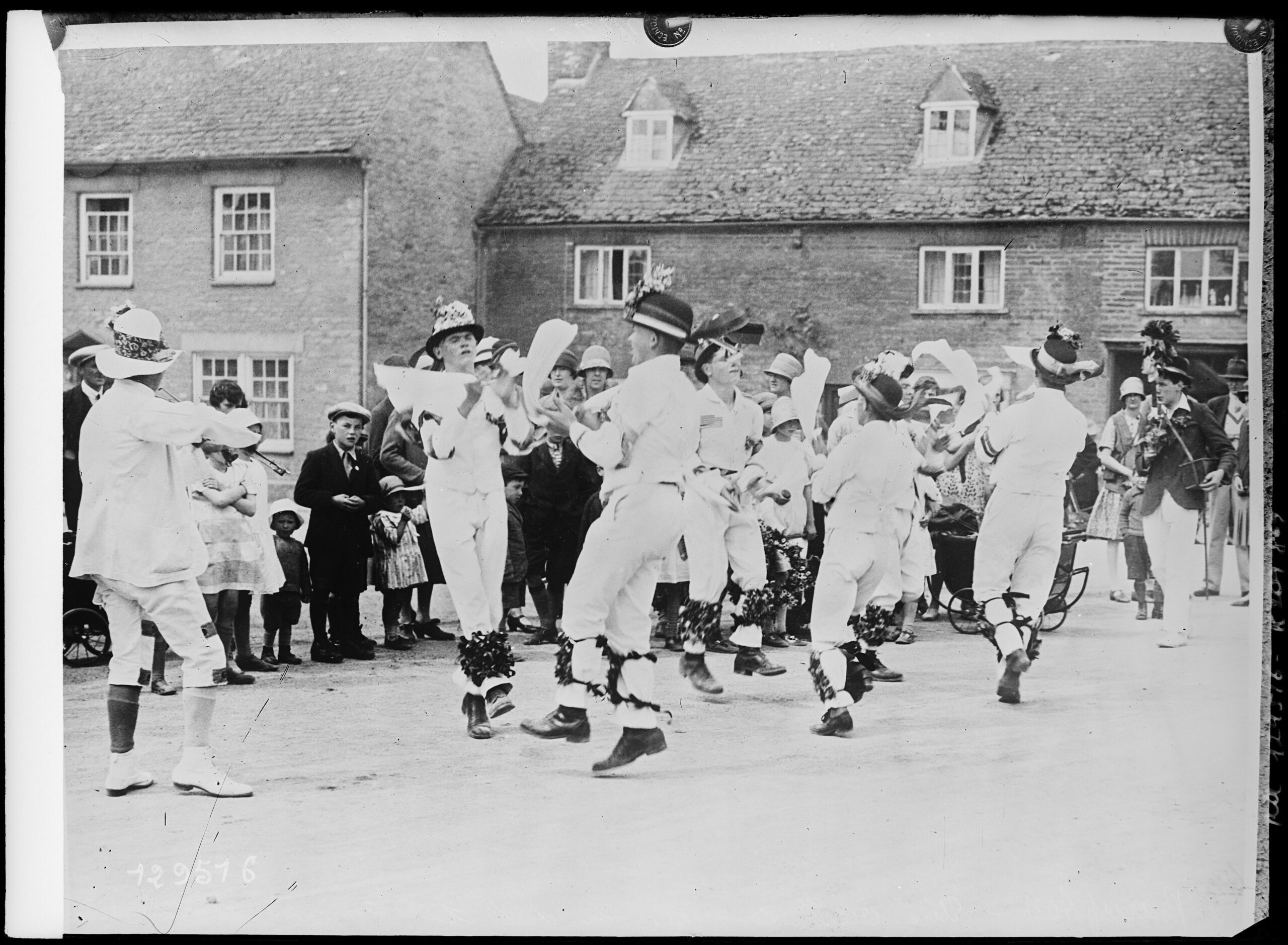
Bampton has three sides, or teams, and on the day each works its own route around the village, dancing in the streets, outside pubs, on the square and in the gardens of private houses whose owners have hosted them for generations. The dancing starts around half past eight or nine in the morning and runs until late afternoon, to fiddles, melodeons and the old pipe and tabor, with dancers in white and hats trimmed with flowers. In the evening, invited guest sides join them and the dancing moves to the pubs.
Written records of Morris in Bampton go back to the late eighteenth century, and local tradition claims dancing here as far back as the sixteenth. It is one of the very few places in England where the Morris has been danced in an unbroken line rather than revived — which is why folklorists and dancers from all over the country come to watch. Look out, too, for the traditional cake-bearer who accompanies the dancers, carrying a cake in a tin that is shared with the crowd for luck.
Tips for Morris day
- Arrive early. Parking fills quickly and some roads become congested. Park on the edge of the village and walk in.
- Follow a side. Rather than waiting in one spot, pick a team and follow it for an hour — you will see far more dancing and far more of the village.
- Bring cash for collections and a coat for the inevitable shower.
- Be respectful in the gardens. Many of the dances are in private gardens by invitation; spectators are welcome to watch, but do not wander into houses or flowerbeds.
- Stay for the evening if you can. The pub dancing is looser and livelier than the daytime programme.
For more of the region’s odder customs — cheese-rolling, woolsack races and the Cotswold Olimpicks among them — see our guide to Cotswold cheese-rolling and traditions, and for the full calendar, our guide to Cotswolds events and festivals.
The Shirt Race and the Mummers
Morris day is not Bampton’s only eccentric fixture.
On the Saturday of the Spring Bank Holiday weekend, the Great Original Shirt Race sees teams of two, dressed in nightshirts, race through the village with some kind of home-made vehicle: one pushes, the other rides. They stop at strategic points along the way — notably the pubs — to down a measure of ale before carrying on. It is organised by the Society for the Preservation of Ancient Junketing, which tells you most of what you need to know about the tone.
On Christmas Eve, the Bampton Mummers go round the village performing their traditional play in houses and pubs from early evening until late. Until the 1950s they visited the big houses on Christmas Eve and all eleven of Bampton’s pubs on Boxing Day; these days both happen on the same night. If you are staying nearby over Christmas, it is one of the most unexpected and charming things you can see in the region.
Where to eat and drink
For a village of its size, Bampton is unusually well served with pubs — four of them, down from the eleven it once supported.
- The Morris Clown, High Street — a Grade II listed, single-bar free house, family-run, with murals, a log fire, changing guest ales and cider in summer. The most characterful of the four and the natural home of the dancers.
- The Horse Shoes — a traditional village local.
- The Talbot — a former coaching inn from the seventeenth or early eighteenth century, with a small bar and lounge. It is said to be haunted by a former member of staff.
- The Romany Inn — an early-nineteenth-century building, once a house and shop, now run as a small hotel and pub.
Food service and opening hours vary between them and through the week, so check before you come for lunch, particularly on a Monday or Tuesday. For a wider choice, Witney is ten minutes away, and there are good riverside pubs on the Thames a couple of miles south.
Walks from Bampton: down to the Thames
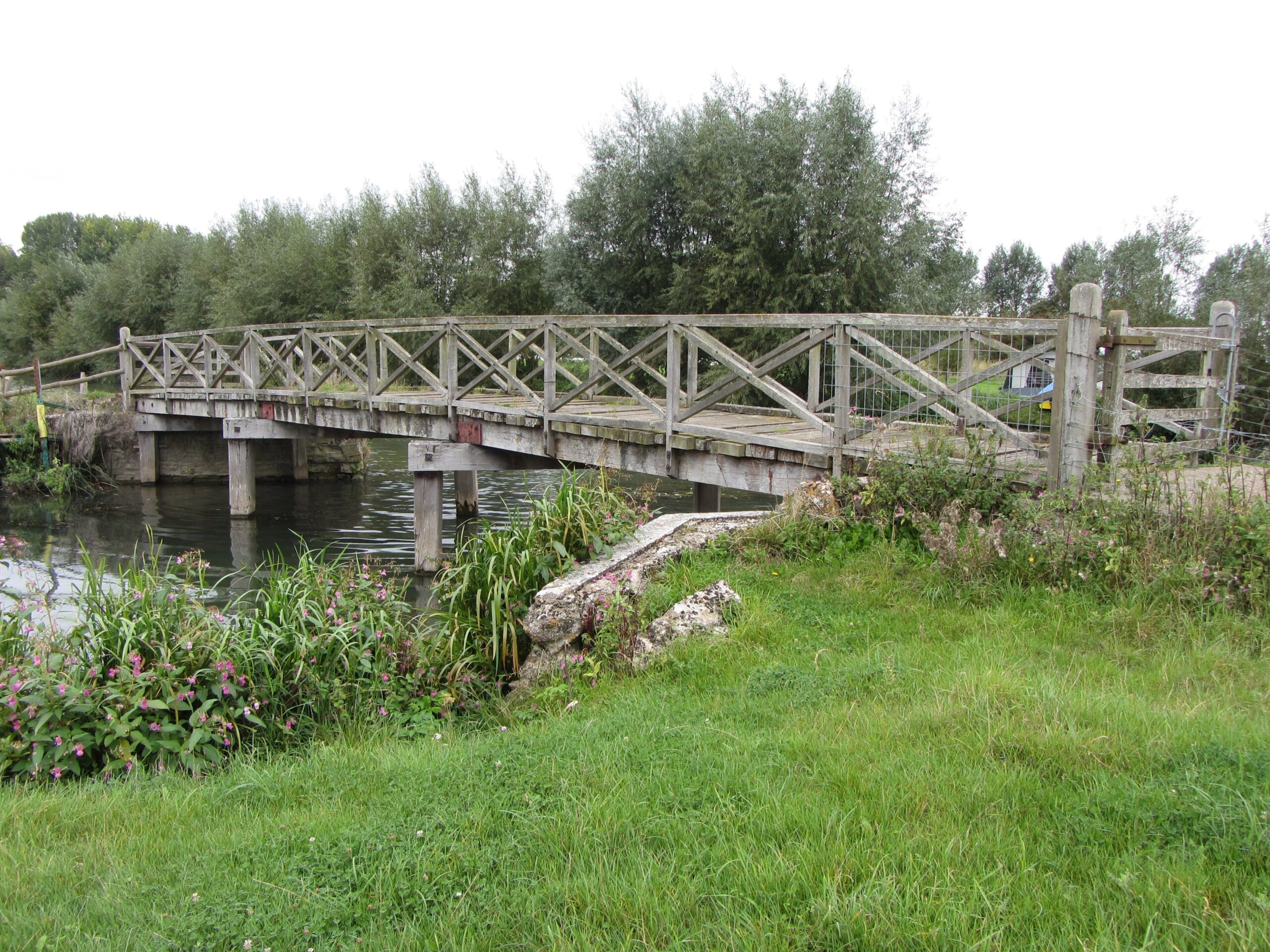
Bampton sits in the flat, open country of the upper Thames, and the river is only a couple of miles to the south. It makes for easy walking, very different in character from the hills of the central Cotswolds: big skies, water meadows, willows and very few people.
- Tadpole Bridge, about two miles south, is where the Thames Path crosses the river beside the Trout, a riverside inn. A walk down, a drink by the water and a walk back makes a gentle half-day.
- Radcot, a few miles to the west, has a stone bridge often described as the oldest surviving on the Thames, a pub by the river and good walking along the Thames Path in either direction.
- Chimney Meadows, a nature reserve on the Thames to the south-east, protects some of the finest remaining wildflower meadows in the region, with birdlife in winter and flowers in early summer.
The land here is low-lying and floods in wet winters, so check conditions and expect mud from November to March. Our Cotswolds walking guide covers the wider region’s routes.
Nearby: Kelmscott, Witney and Burford
- Kelmscott Manor, about six miles west near Lechlade, was the country home of William Morris, the designer and writer — no relation to the dancers — and is open to visitors on selected days in the season. It pairs beautifully with a Morris-day visit for anyone who likes a pun.
- Witney, five miles north-east, is the local market town, with Cogges Manor Farm (Downton’s Yew Tree Farm) on its edge and markets on Thursdays and Saturdays.
- Burford, about eight miles north, is one of the loveliest small towns in the Cotswolds and the best nearby base — see our Burford guide.
Getting to Bampton
By car
Bampton is on the A4095 south-west of Witney, about twenty-five minutes from Oxford and fifteen from Burford. There is no large visitor car park; use on-street spaces on the main streets and avoid blocking driveways near the church.
Without a car
Bampton has no railway station. The simplest option is to take one of Stagecoach’s frequent S-route buses from Oxford to Witney and then a local bus or a taxi for the last five miles. Bus services to Bampton itself are limited and change from time to time, so check the current timetable before relying on one — our guide to Cotswolds bus routes explains how the network fits together. The land around Bampton is flat, and it is easy cycling country if you bring or hire a bike in Oxford or Witney.
Where to stay
Bampton has a small amount of accommodation, including rooms at its pubs and inns and some self-catering cottages, and the Trout at Tadpole Bridge has rooms by the river. Staying in the village means you can see the church and green in early morning before any visitors arrive — the best time for photographs — and, on Morris day, that you can enjoy the evening dancing without worrying about the drive. Otherwise, Witney is the practical base and Burford the prettiest; our guide to where to stay in the Cotswolds compares them.
A day in Bampton
| Time | What to do |
|---|---|
| 10:00 | St Mary’s Church and Church Green — the Downton sites, before the day visitors |
| 11:00 | Wander the market square, West Ox Arts and the old streets |
| 12:30 | Lunch at one of the village pubs |
| 14:00 | Walk down to the Thames at Tadpole Bridge |
| 16:00 | Drive to Kelmscott Manor (on an open day) or Burford for tea |
Is Bampton worth visiting?
For Downton fans, of course — it is the heart of the story, and seeing it in person is a genuine pleasure. For everyone else, it depends on when you come. On an ordinary weekday, Bampton is a pleasant, quiet village with a fine church, a couple of good pubs and easy walks to the Thames, worth an hour or two if you are passing but not a destination in itself. On Morris day, it becomes one of the most memorable places in England to spend a bank holiday, and it is worth planning a whole trip around.
What it will not give you is the classic honey-stone Cotswold scene. Bampton sits on the edge of the region, in flatter, more open country, and its charm is quieter and more authentic than picturesque. That is exactly why many visitors like it.
Frequently asked questions about Bampton, Oxfordshire
Is Bampton the real Downton village?
Yes. Bampton played Downton village throughout the television series and in the films. St Mary’s Church, Church Green, Churchgate House and the library were the main locations.
Is Bampton in the Cotswolds?
It sits on the edge. Bampton is in West Oxfordshire, in the flat upper Thames valley just beyond the hills, and is usually included in the wider Cotswolds area for visitors, though its landscape is more river valley than wold.
When is the Bampton Morris dancing?
On the late Spring Bank Holiday Monday at the end of May, from around 9am until dusk, with evening dancing in the pubs.
How do I get to Bampton without a car?
Take a bus from Oxford to Witney, then a local connection or a taxi for the last five miles. Check timetables before you travel, as services to Bampton are limited.
How long do I need in Bampton?
An hour or two for the village and church, half a day with a Thames walk and a pub lunch, and a full day on Morris day.
For the full Downton story, see our guide to the Downton Abbey filming locations, and for every other screen location in the region, our complete guide to Cotswolds filming locations. If you are coming from the city, our day trip from Oxford shows how Bampton fits into a wider day, and our guide to the best Cotswold villages covers the prettier picture-postcard alternatives.
Photo Credits
The market square in Bampton with the old town hall: Bampton High Street – geograph.org.uk – 6859692 by Vieve Forward, CC BY-SA 2.0, via Wikimedia Commons.
Bampton Morris dancers in the 1920s: A Bampton, une vieille coutume qui date de 450 ans s’est renouvelée (CNews) by Central News, public domain, via Wikimedia Commons.
The south porch of St Mary’s Church, Bampton: Bampton Church (Saint Mary) (42765628170) by Hugh Llewelyn from Keynsham, UK, CC BY-SA 2.0, via Wikimedia Commons.
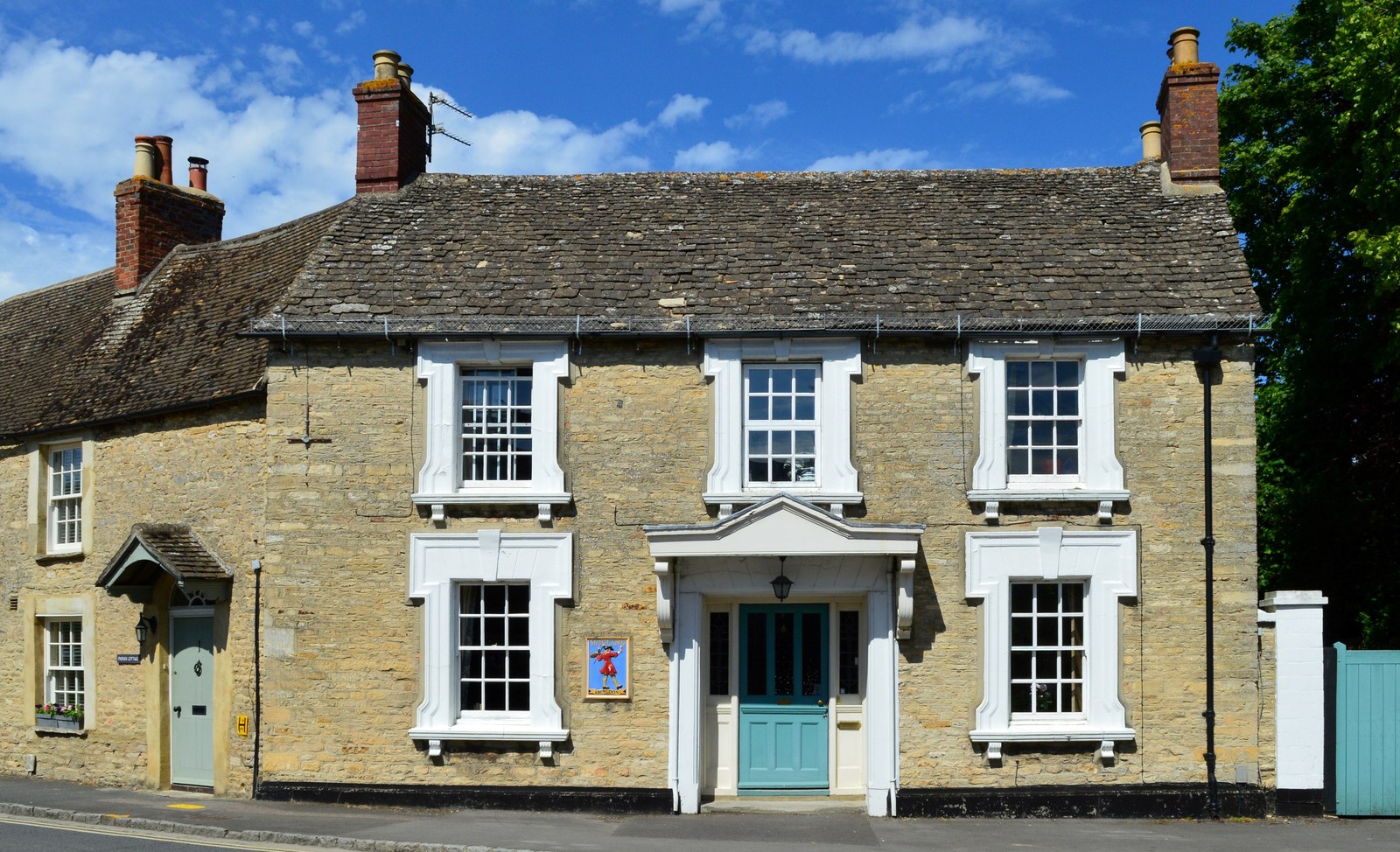
The Old George, Bampton: The Old George, Bampton, Oxfordshire – geograph.org.uk – 4533247 by Oswald Bertram, CC BY-SA 2.0, via Wikimedia Commons.
A footbridge over the Thames near Radcot: Bridge across the River Thames at Radcot – geograph.org.uk – 5124517 by Gareth James, CC BY-SA 2.0, via Wikimedia Commons.
Leave a Reply