This article contains advertising. My booking links are routed through a partner that adds commission tracking automatically, so if you book through one I earn a commission from the provider, at no extra cost to you. It never affects what I recommend. Affiliate disclosure
Of all the ways to experience the Cotswolds, none beats walking the Cotswold Way. This 102-mile National Trail runs the length of the Cotswold escarpment, from the perfect wool town of Chipping Campden in the north to the golden Georgian city of Bath in the south, stringing together honey-stone villages, ancient hillforts, ruined abbeys and some of the finest views in England. Walk it end to end and you will see the very best of the region, one glorious ridge-top mile at a time.
This complete guide to walking the Cotswold Way covers everything you need to plan your trek: the route and how long it takes, which direction to walk, a stage-by-stage breakdown, the highlights along the way, how hard it really is, the best time to go, and how to get to the start and home from the end. For the practical side of booking beds and moving your bags, see our companion guide to Cotswold Way accommodation and logistics. It all sits within our wider guide to walking and hiking in the Cotswolds.
The Cotswold Way at a Glance
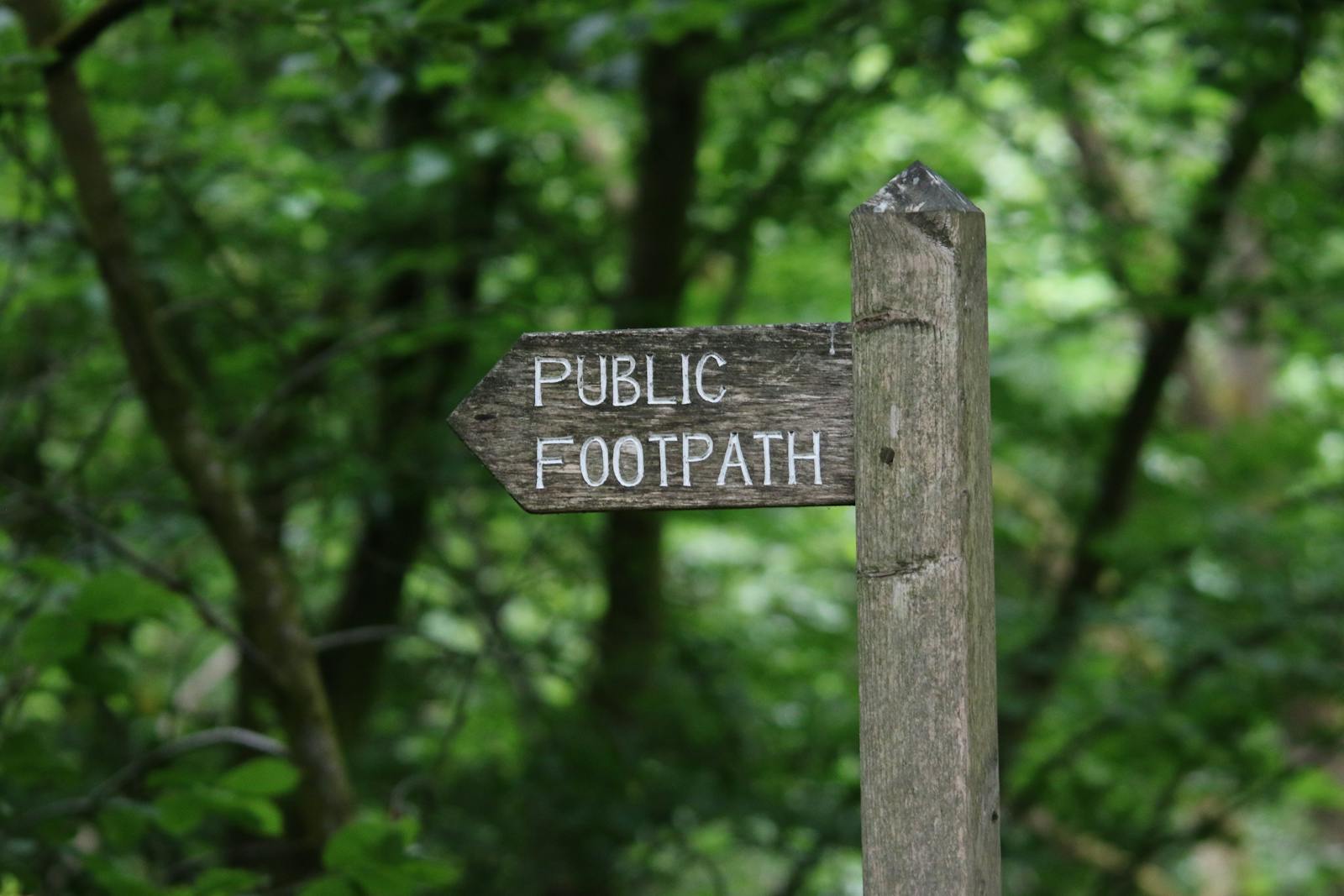
The Cotswold Way is a National Trail, officially designated in 2007 (though the route itself dates back to 1970). It runs for 102 miles (164 km) between Chipping Campden and Bath Abbey, following the western edge of the Cotswold hills. It is waymarked throughout with the distinctive white acorn symbol used on all National Trails, alongside “Cotswold Way” signs, so navigation is refreshingly straightforward.
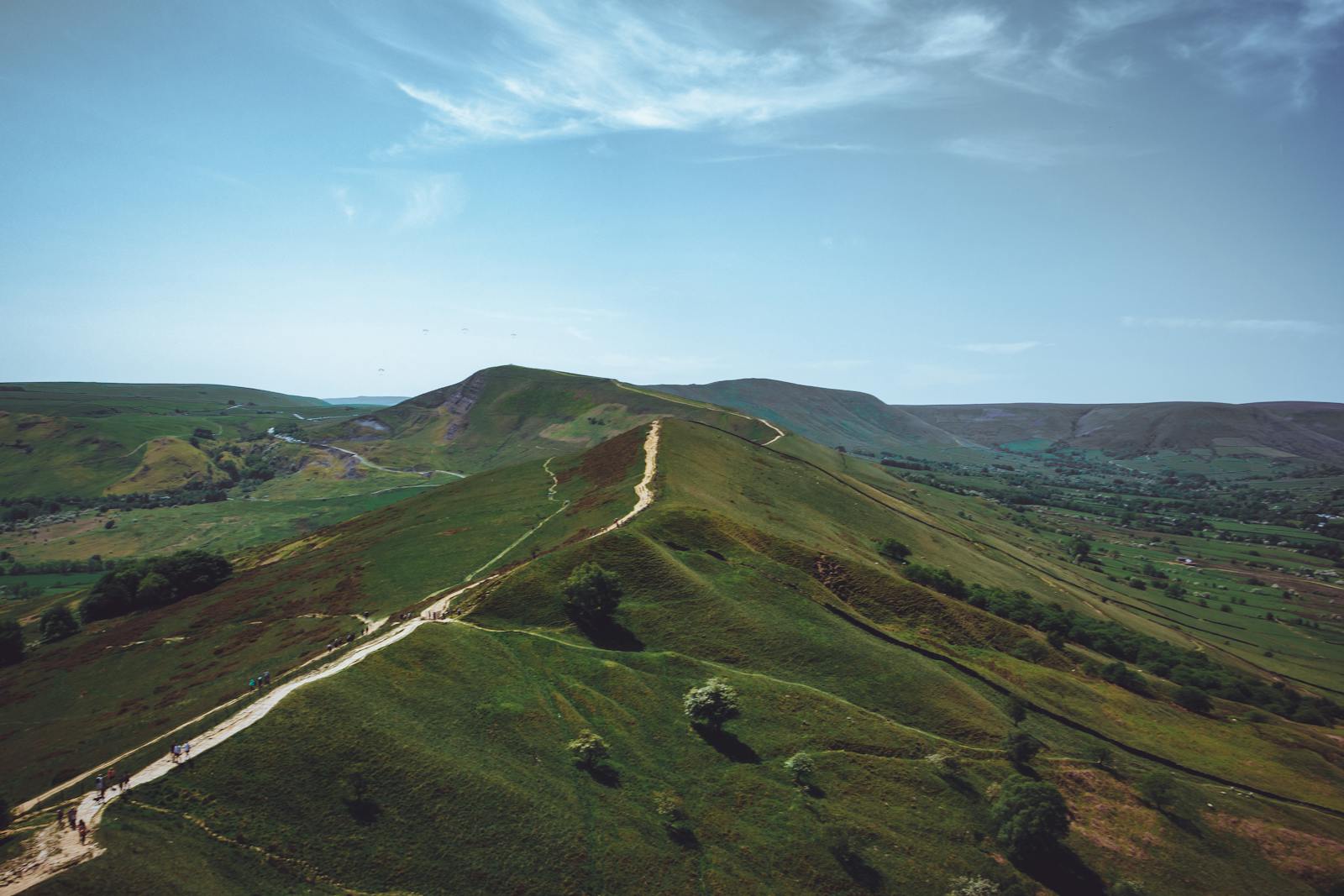
Most walkers complete it in seven to ten days, though fit, fast walkers manage it in less and those who want to linger take a fortnight. There is no scrambling or technical ground, but do not underestimate it, as the trail repeatedly climbs onto and drops off the escarpment, racking up a great deal of total ascent over its length. The reward for all that climbing is a near-constant succession of spectacular views.
Which Direction Should You Walk?
The Cotswold Way is signposted in both directions, but the great majority of walkers go north to south, from Chipping Campden to Bath, and this guide follows the same direction. There are three good reasons. First, the views: walking south, the escarpment falls away to your right across the Severn Vale, giving you the best of the long-distance panoramas. If the Cotswold Way whets your appetite, our guide to long-distance walks in the Cotswolds covers the Windrush Way, the Macmillan Way and the rest. Second, almost every guidebook is written in this direction, so you will find it easier to follow. And third, you finish in Bath, a glorious World Heritage city with excellent rail and coach links to get you home, which makes for a far more satisfying and practical end than finishing in a small town.
There is also something psychologically pleasing about saving the grand finale of Bath for last, descending from the hills into the honey-coloured crescents at journey’s end. Unless you have a specific reason to do otherwise, walk it north to south.
How Many Days Do You Need?
How long you take depends on your fitness and how much you want to see. A seven-day itinerary means averaging around 14 to 15 miles a day, which is demanding given the constant climbs, and leaves little time for sightseeing. A more relaxed ten-day plan brings the daily distance down to a very manageable 9 to 11 miles, with time to explore the villages, castles and viewpoints along the way. For most people, I think eight to ten days is the sweet spot.
You do not have to walk the whole thing in one go, either. The trail passes close to railway stations at Cheltenham and Stroud, and near Moreton-in-Marsh and Bath, which makes it perfectly possible to walk it in sections over several weekends or short trips, returning to the same spot each time. This is a great option if you cannot spare a full week or two.
Cotswold Way Stage-by-Stage
Here is a popular ten-stage plan, with the typical overnight stops and approximate distances. Mileages vary slightly between sources, so treat these as a guide.
- Chipping Campden to Broadway — ~6 miles, via Dover’s Hill and Broadway Tower.
- Broadway to Winchcombe — ~12 miles, via Stanton, Stanway and Hailes Abbey.
- Winchcombe to Cleeve Hill — ~5½ miles, via Belas Knap long barrow to the highest point in the Cotswolds.
- Cleeve Hill to Birdlip — ~16 miles, via Leckhampton Hill and the Devil’s Chimney; check the National Trail website for the current Birdlip diversion before setting out.
- Birdlip to Painswick — ~7–9 miles, via Cooper’s Hill and the beechwoods.
- Painswick to King’s Stanley / Middleyard — ~8 miles, via Haresfield Beacon.
- King’s Stanley to Dursley — ~7 miles, via Coaley Peak and Uley Bury hillfort.
- Dursley to Wotton-under-Edge — ~7 miles, via Stinchcombe Hill and the Tyndale Monument.
- Wotton-under-Edge to Tormarton — ~15 miles (7.4 to Hawkesbury Upton, then 7.7 more), via the Somerset Monument and Old Sodbury.
- Tormarton to Bath — ~16.8 miles (6.6 to Cold Ashton, then 10.2), via Dyrham, Cold Ashton and the dramatic descent into Bath.
Fitter walkers can combine stages into a seven-day plan, while those wanting a gentler pace can split the longer days, for example overnighting at Stanton, Tormarton or Cold Ashton. Our guide to Cotswold Way accommodation covers where the beds (and the gaps) are.
The Best Highlights Along the Trail
The Cotswold Way is a greatest-hits tour of the region. Among the unmissable highlights are Broadway Tower, the hilltop folly on the Cotswolds’ second-highest point; the ruined Hailes Abbey and nearby Sudeley Castle; Belas Knap, a remarkable Neolithic long barrow thousands of years old; and Cleeve Hill, the highest point in the Cotswolds, with far-reaching views.
Further south you pass the dramatic Devil’s Chimney rock pillar above Cheltenham, the Iron Age hillforts of Crickley Hill and Uley Bury, the “Queen of the Cotswolds” village of Painswick with its famous yew-filled churchyard, and the Tyndale Monument commemorating the Bible translator William Tyndale. The grand finale is the descent into Bath itself, finishing at the abbey in one of the most beautiful cities in Britain. Many of these spots also feature in our guide to the best things to do in the Cotswolds.
How Hard Is the Cotswold Way?
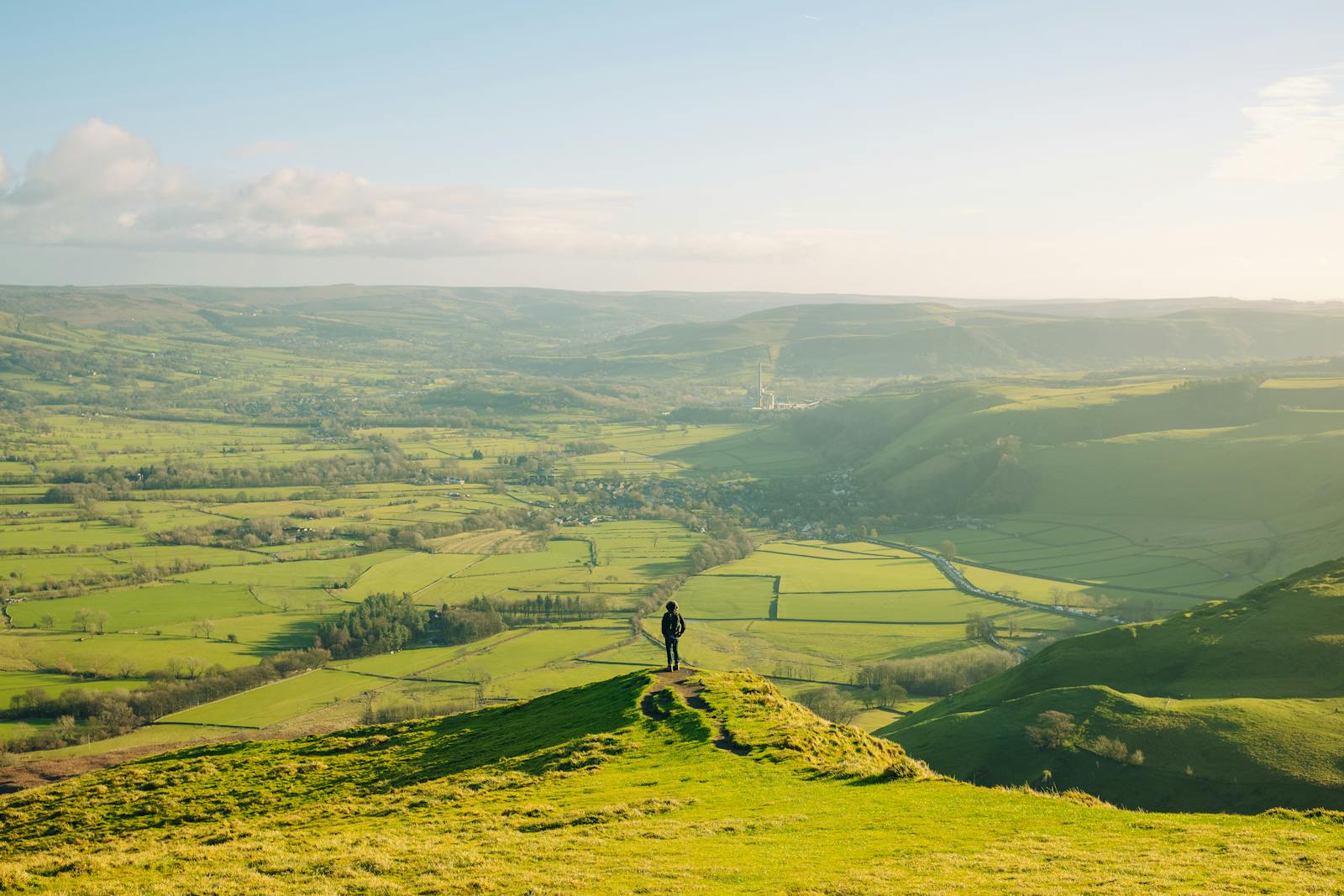
The Cotswold Way is best described as moderate. There is nothing technical, no scrambling and no exposure, and the paths are well-maintained and clearly waymarked. What catches people out is the cumulative climbing: the trail repeatedly hauls itself up onto the escarpment and back down again, so although no single climb is huge, the total ascent over the whole route is significant. A reasonable level of fitness and some training walks beforehand will serve you well.
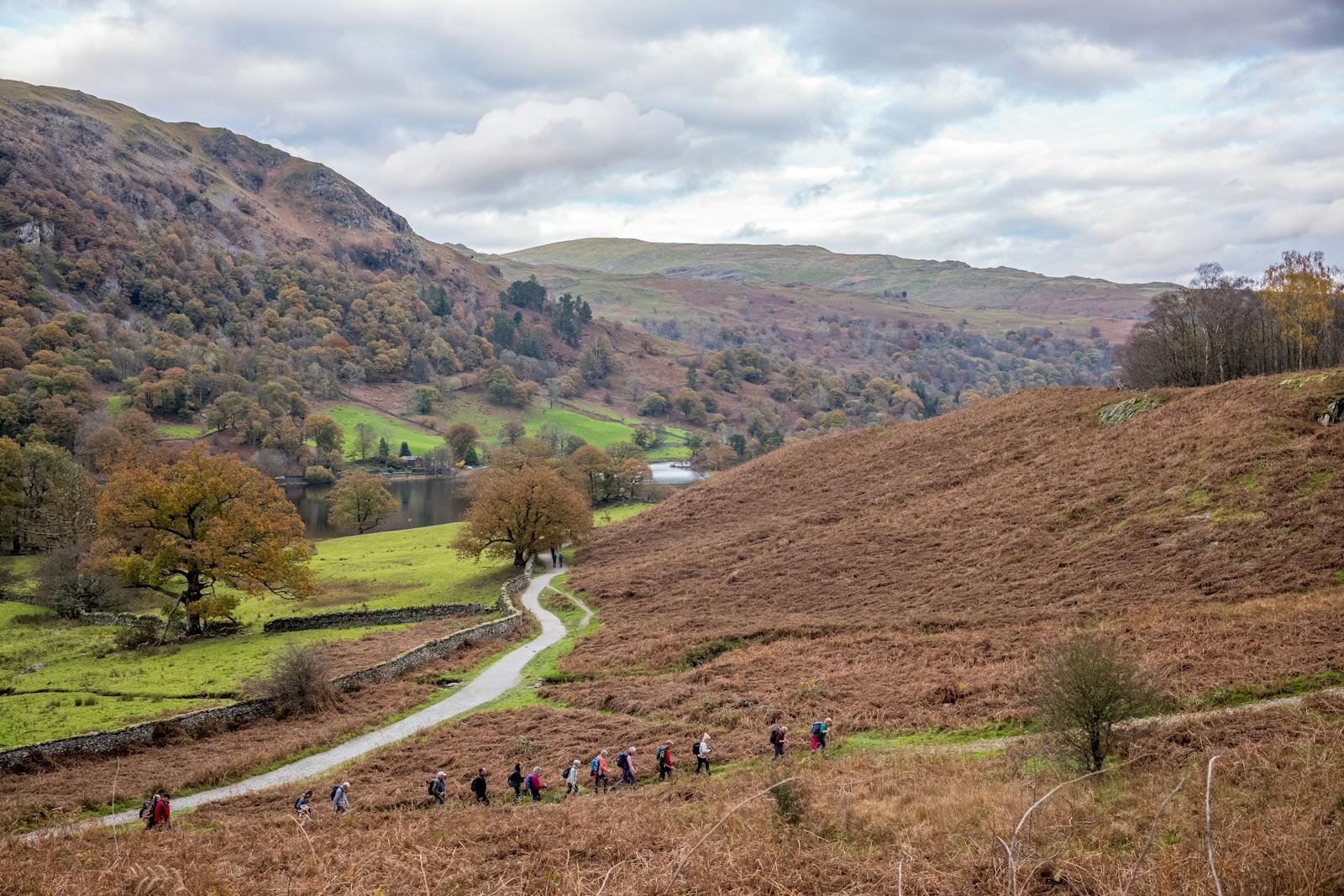
Underfoot you will encounter grassy paths, woodland tracks, the occasional muddy stretch after rain, and a fair number of gates and stiles. Good, broken-in walking boots are essential, as are waterproofs, since the weather can change quickly. If you are newer to walking, build up your distance first; our guide to Cotswolds walks for beginners is a good place to start before tackling the whole trail.
Best Time of Year to Walk the Cotswold Way
The Cotswold Way can be walked all year round, but the best months are generally late spring to early autumn (May to September), when the days are long, the weather is at its most settled, and the woodlands and wildflower meadows are at their best. May and June are particularly lovely, though also the busiest, so book accommodation well ahead.
Autumn brings golden colour and crisp, clear days with the best long-distance visibility, though the daylight is shorter and the ground muddier. Winter walking is possible for the hardy, with bare-tree views and quiet trails, but short days and wet conditions make it more challenging. Our guide to the best time to visit the Cotswolds goes through the year in detail.
Getting to the Start and Home from the End
Reaching the start at Chipping Campden is easiest by train to Moreton-in-Marsh, on the direct London Paddington line, followed by a local bus or a pre-booked taxi (there is no taxi rank at the station, so arrange one in advance) for the final few miles. Cheltenham and Oxford are also useful gateways with onward coach and bus connections.
Getting home from Bath could hardly be easier: Bath Spa station has frequent direct trains to London, Bristol, Cardiff and the Midlands, plus National Express coaches, which is one more reason to walk the trail north to south and finish there. Our guide to getting to and around the Cotswolds has more on travel.
Maps, Guidebooks and Navigation
Although the white-acorn waymarking is excellent, it is wise to carry a map or guidebook as backup. The whole route is covered by a single waterproof Harvey strip map, or by a sequence of OS Explorer maps if you prefer the detail. Popular guidebooks include the Cicerone and Trailblazer guides, both regularly updated, and the official National Trail website offers route information and a downloadable GPX track for your phone.
A navigation app such as OS Maps or komoot, with the route downloaded for offline use, is a great companion, but do not rely on your phone alone, as signal is patchy on the hills and batteries fade. A paper backup is always worth having. Before you set off, it is also worth checking the National Trail website for any current diversions, as occasional path closures and reroutes do occur.
What to Pack for the Cotswold Way
Packing well makes a long-distance walk far more enjoyable. The essentials are sturdy, broken-in walking boots, good walking socks, and layered clothing you can adjust as the weather changes, plus a reliable waterproof jacket and overtrousers, since rain is always a possibility on the escarpment. A comfortable daypack, plenty of water and high-energy snacks, sun protection, a hat and a basic first-aid kit (including blister plasters) round out the basics.
If you are using a luggage-transfer service, you only need to carry a light daypack each day, with your main bag moved ahead to your next stop, which transforms the experience. Walking poles are worth considering for the steeper descents, and a power bank keeps your phone (and your navigation app) going. Crucially, pack light: every extra kilo is felt over 102 miles. Our guide to Cotswold Way accommodation and logistics covers luggage transfer in detail.
The Cotswold Way as a Walking Holiday
For many people, walking the Cotswold Way is the holiday of a lifetime, and it can be tackled in several ways. The most independent option is to plan and book everything yourself, carrying your own gear or arranging luggage transfer. Alternatively, a self-guided package from a specialist operator takes the hassle out of it, booking your accommodation, moving your bags and supplying route notes and maps, while still letting you walk at your own pace, alone or with friends.
If you would prefer company and a leader, a guided group holiday handles everything and adds the sociable pleasure of walking with others. Whichever you choose, the Cotswold Way makes a wonderful, achievable long-distance walk for reasonably fit first-timers, precisely because it is well-waymarked, well-supplied with villages and pubs, and never far from a road or railway if plans change. Our guide to guided and self-guided walking holidays in the Cotswolds compares the options.
Combining the Walk With Sightseeing
One of the joys of the Cotswold Way is how much history and beauty it packs in, so it pays to build in time to stop and explore rather than simply racing for the next bed. A relaxed itinerary lets you wander around Chipping Campden and Broadway, climb Broadway Tower, visit Sudeley Castle or Hailes Abbey near Winchcombe, crawl inside Belas Knap long barrow, and savour Painswick’s churchyard and the Devil’s Chimney, before finishing with time to enjoy Bath itself.
The villages and towns along the route are also superb for food and drink, from cosy pubs to tearooms, so the Cotswold Way is as much a cultural and culinary journey as a physical one. Our guides to the best Cotswolds pubs and things to do in the Cotswolds will help you make the most of the stops along the way.
Walking the Cotswold Way in Sections
If a full week or two is more than you can spare, walking the Cotswold Way in sections is a brilliant alternative, and one many locals favour. Because the trail passes close to the railway stations at Cheltenham and Stroud, and near Moreton-in-Marsh, Kingham and Bath, you can tackle a stretch at a time on day trips or weekends, returning to pick up where you left off. This spreads the cost, lets you choose good weather, and means you can save the most scenic stages for when conditions are best.
The northern stages around Chipping Campden, Broadway and Winchcombe are especially rewarding as standalone walks, packed with villages and views, and many of them double as superb day walks in their own right. Our guides to the best circular walks and short walks in the Cotswolds include several routes that sample stretches of the Cotswold Way without committing to the whole thing.
Frequently Asked Questions
How long is the Cotswold Way?
The Cotswold Way is 102 miles (164 km) long, running between Chipping Campden in the north and Bath Abbey in the south along the Cotswold escarpment.
How many days does it take to walk the Cotswold Way?
Most walkers take seven to ten days. Seven days means averaging around 14–15 miles a day, while a more relaxed ten-day plan brings it down to a comfortable 9–11 miles, with time to explore along the way.
How much climbing is there on the Cotswold Way?
A great deal of total ascent over the full route. There is no technical terrain, but the trail repeatedly climbs onto and drops off the escarpment, so it is more demanding than the gentle scenery suggests.
Which way should I walk the Cotswold Way?
Most people walk north to south, from Chipping Campden to Bath, for the best views, because the guidebooks are written that way, and to finish in Bath, which has excellent transport links for getting home.
Is the Cotswold Way well signposted?
Yes. It is waymarked throughout with the white acorn National Trail symbol and “Cotswold Way” signs, so navigation is straightforward, though carrying a map or guidebook as backup is still recommended.
Start Planning Your Cotswold Way
The Cotswold Way is one of the great walks of England, and walking it end to end is an unforgettable way to experience the region. Once you have decided on your direction and timescale, the next step is to plan your accommodation and logistics. For that, see our detailed guide to Cotswold Way accommodation and logistics, and our roundup of guided and self-guided walking holidays in the Cotswolds if you would rather have it all arranged for you.
Of all the towns on the route, one is worth breaking the walk for. Winchcombe sits roughly a third of the way down from Chipping Campden, has a free Neolithic long barrow on the ridge above it and more B&Bs used to muddy four o’clock arrivals than anywhere else on the trail — see our Winchcombe guide for what to do with a rest day.