This article contains advertising. My booking links are routed through a partner that adds commission tracking automatically, so if you book through one I earn a commission from the provider, at no extra cost to you. It never affects what I recommend. Affiliate disclosure
Walk out of the market square, past the Bear, through a modest stone arch at the end of the street — and the ground drops away into a valley with a lake in it, a bridge the size of a village, and Vanbrugh’s enormous grey palace sitting on the far slope. It takes about four seconds. There is no queue at that point, no ticket barrier in your eyeline and no car park, and it is comfortably the best arrival at any English country house.
That gate is the argument for Woodstock Oxfordshire. Most visitors drive to Blenheim’s main entrance, park in a field and walk in past a visitor centre. The town exists to be walked out of, and the eight hundred years of history that put it there — a royal hunting manor, a medieval palace, a glove trade, and then the Marlboroughs — have left a small, elegant, expensive Georgian town that is worth an afternoon in its own right.
Get one thing straight before you book anything: this is Woodstock in Oxfordshire, eight miles north-west of Oxford. The festival was in New York State, four thousand miles away. Among the Cotswold towns, this is the courtly one.
Woodstock at a glance
| Detail | |
|---|---|
| Population | About 3,100 |
| Main draw | Blenheim Palace, at the end of the street |
| Free to see | The Oxfordshire Museum, the town centre, St Mary Magdalene, Churchill’s grave at Bladon |
| From Oxford | S3 bus, roughly every 30 minutes, about 30 minutes |
| Nearest station | Hanborough, 2 miles — about 1h15 from London Paddington |
| Typical double room | £150–£210 mid-range — among the priciest in the region |
| Time needed | A full day with Blenheim; two hours for the town alone |
| Best approach | On foot through the Woodstock Gate, not by the main car park |
Prices and times checked September 2026 — confirm before you travel.
Blenheim Palace
Blenheim was a gift from a grateful nation to John Churchill, first Duke of Marlborough, for beating the French at Blindheim in Bavaria in 1704. Vanbrugh designed it, Hawksmoor executed a great deal of it, Duchess Sarah fought everybody involved about the cost, and the result is the only non-royal, non-episcopal house in England called a palace. It went onto the UNESCO World Heritage list in 1987.
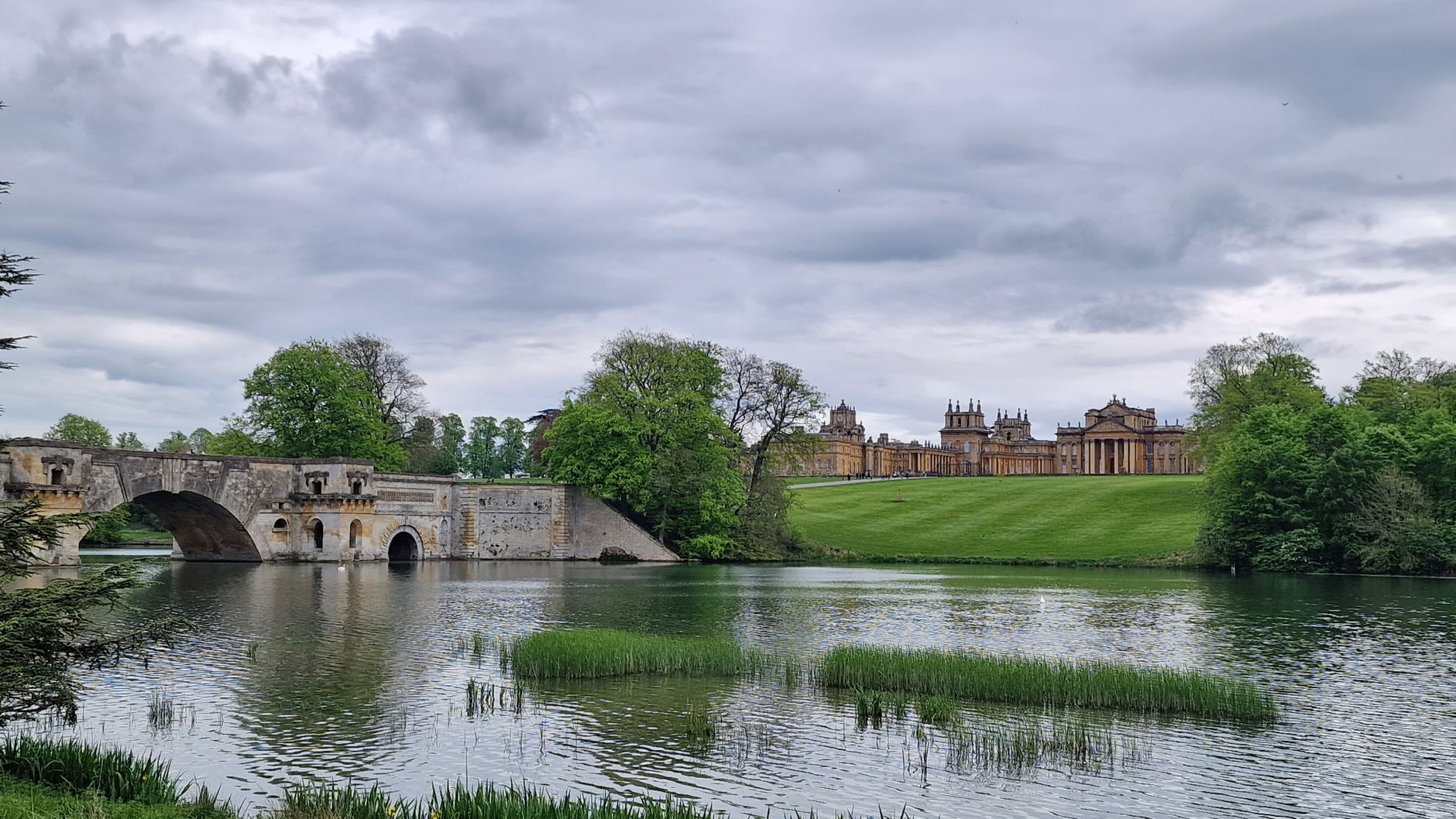
The house is Baroque on a scale that is genuinely difficult to photograph — the Great Court, the Long Library at 180 feet, the Saloon painted by Louis Laguerre, and the room in which Winston Churchill was born in 1874. Outside, Capability Brown flooded the valley in the 1760s to create the lake, which is the single greatest improvement ever made to an English landscape and drowned half of Vanbrugh’s bridge in the process — the bridge has rooms in it, now underwater.
Bridgerton used Blenheim as Buckingham House: the Water Terraces, the Long Library, the Great Hall and the Great Court all appear. Our Blenheim Palace guide has ticket types, timings, what to skip and how to do the park without the house.
How to arrive properly
The Woodstock Gate at the end of Park Street is a triumphal arch of 1723, designed by Hawksmoor and built by the Duchess in her husband’s memory, and walking through it gives you the view the whole landscape was composed for. Pedestrian access from the town is the way in that the eighteenth century intended, and it costs you a five-minute walk from the market square instead of a drive round to the main gate.
If you are staying in Woodstock, this is the single best reason to be here. Go at eight in the morning when the park opens and you will have the view to yourself.
Churchill’s grave
Winston Churchill is buried a mile south at Bladon, in the churchyard of St Martin’s, in a family plot that is deliberately and strikingly modest — a plain stone slab among ordinary graves, chosen in preference to Westminster Abbey. It is free, it is a twenty-five-minute walk from Woodstock along the edge of the park, and it lands harder than the birth room does.
The town itself
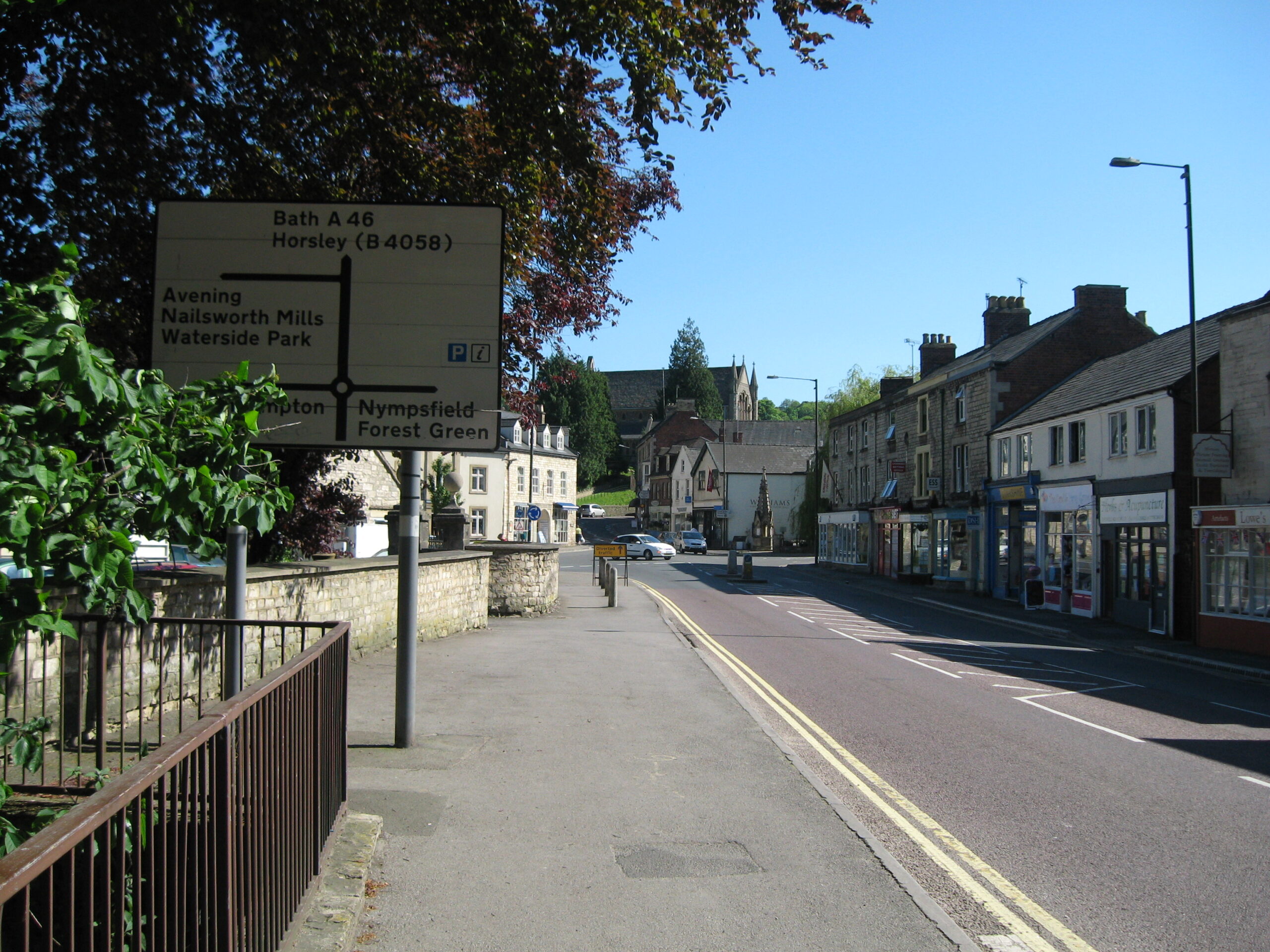
Woodstock is small — three thousand people — and almost entirely built of the same warm Oxfordshire limestone, mostly between 1700 and 1830, when the Marlborough estate was employing half the county and the coaching trade was at its peak. The two main streets are Park Street and High Street, meeting at the market square.
The Town Hall
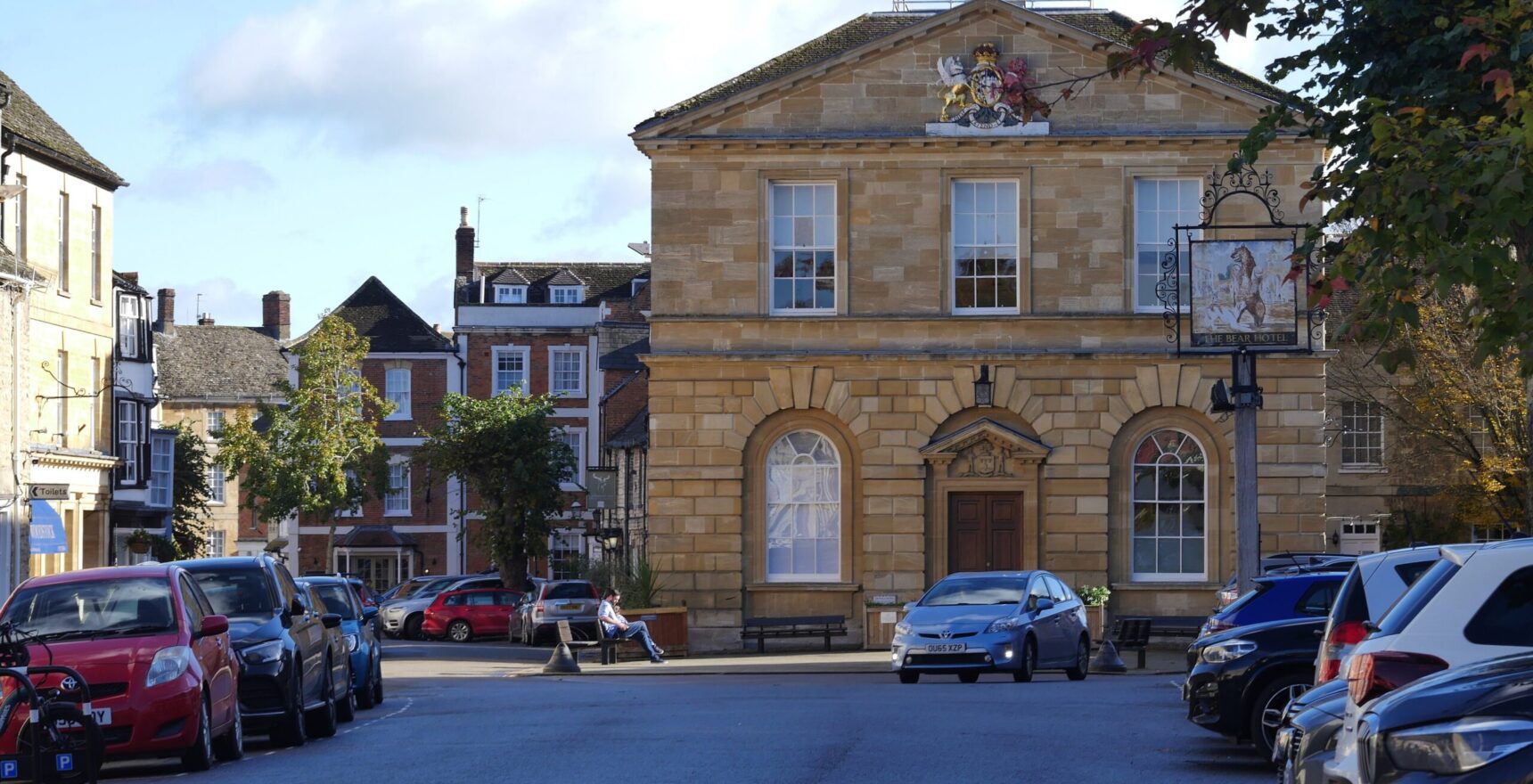
The classical block in the square was designed by Sir William Chambers in 1766 and paid for by the fourth Duke of Marlborough. Chambers built Somerset House in London; getting him for a town hall in a place this size tells you how much the estate cared about the approach to its front door. The royal arms sit in the pediment and the ground floor was originally an open market space.
The Oxfordshire Museum
In Fletcher’s House on Park Street, free to enter, with a walled garden and a café. It covers the county’s archaeology, landscape and industry, and the standout is the dinosaur gallery — Oxfordshire has some of the best sauropod trackways in the world, quarried out of the local limestone. It is a comfortable ninety minutes and much better than a small county museum has any right to be.
St Mary Magdalene
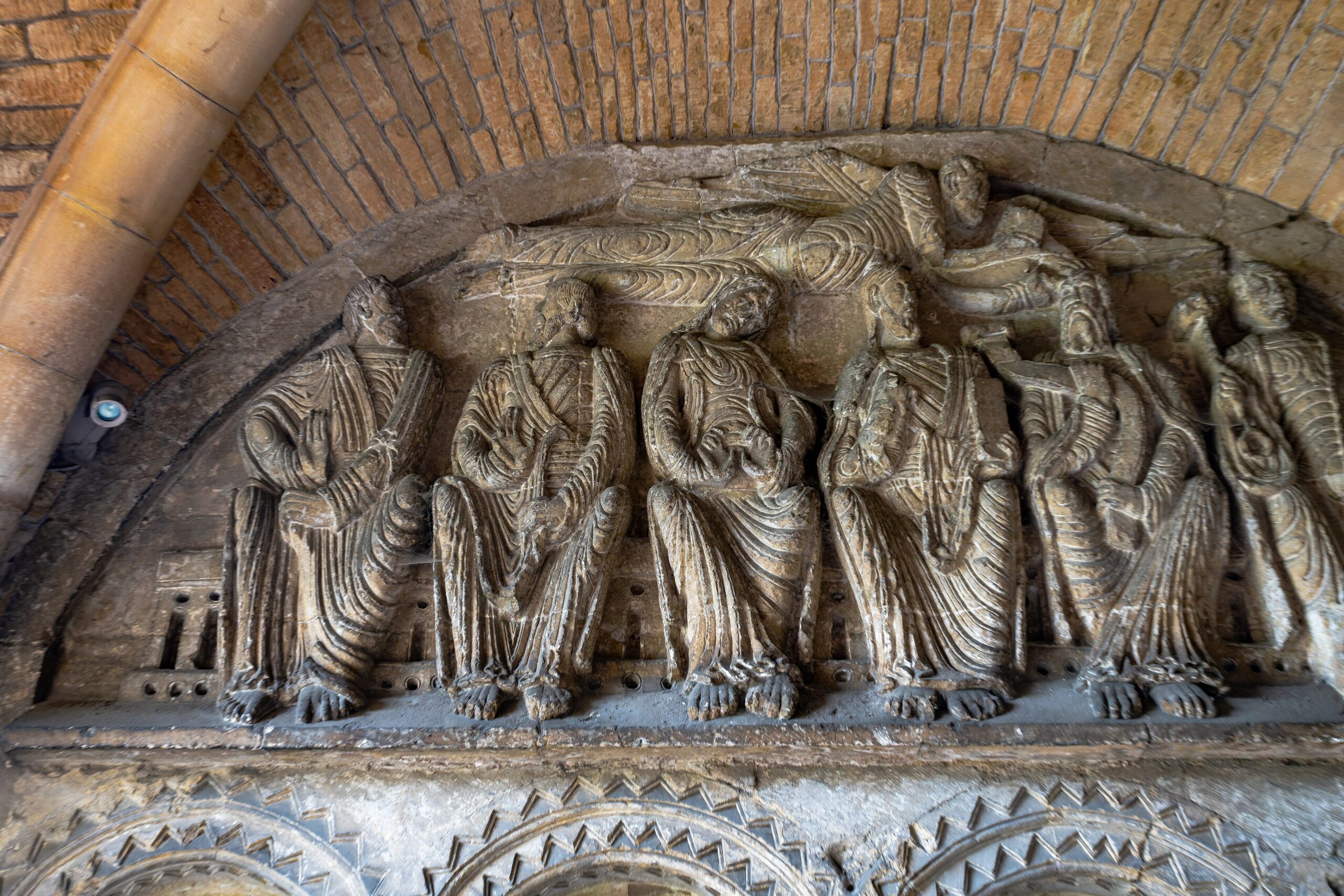
The parish church on the square has a Norman south doorway and a great deal of nineteenth-century rebuilding on top of it. Worth ten minutes; the tower is the thing you see from the park.
Gloves and steel
Woodstock’s own industries were unexpected. From the seventeenth century it made leather gloves — the trade survived here into the twentieth century, long after it had gone everywhere else — and it produced Woodstock steel, faceted cut-steel jewellery that was fashionable across Europe in the eighteenth century and made, of all things, from old nails. There are examples in the museum.
Before the palace: the royal manor
There was a royal residence at Woodstock for five hundred years before Blenheim, and it stood in what is now the park, near the bridge. Henry I kept a menagerie there. Henry II kept Rosamund Clifford there, and the legend of Fair Rosamund, the bower and the maze grew out of it. The Black Prince was born there in 1330. And in 1554 the young Princess Elizabeth was held there under guard for nearly a year by her half-sister Mary — she is said to have scratched a verse on a window with a diamond.
The old palace was ruinous by 1700 and Vanbrugh wanted to keep it as a picturesque ruin in the view. Duchess Sarah had it demolished. There is now a plinth in the grass where it stood, and that is all — a fair summary of how the Marlboroughs handled the past.
Woodstock through the year
The town’s calendar is Blenheim’s calendar, and that is worth planning around because the palace runs large events that make the whole area either much better or much worse depending on what you wanted.
| Season | What happens |
|---|---|
| Winter | The Christmas market and light trail run from mid-November to just before Christmas — 70 to 80 chalets in the Great Court. Beautiful, and the town is completely booked out on those evenings |
| Spring | The quietest good time. The park’s daffodils and the lake circuit at their best, the house open, no event crowds |
| Summer | The Horse Trials in September and a full events programme through July and August; the park is busy near the house and empty half a mile from it |
| Autumn | The best light on the palace and the lake, and rooms come down after October half term |
Our Christmas in the Cotswolds guide covers the light trail and market, and the best time to visit guide compares the region month by month.
Eating, drinking and shopping
For its size, Woodstock eats extremely well and charges for it. There are two long-established coaching inns on the main streets doing serious dining, several good pubs, a couple of cafés and a deli, and the standard is driven by Oxford day-trippers and Blenheim visitors with money. Book weekends and any date near a Blenheim event; the town has fewer tables than you think.
Shopping is a short, high-quality run — antiques, a good bookshop, galleries, a couple of clothing independents — and it will take you forty minutes. It is a browsing street rather than a functional one; there is no supermarket in the centre and the nearest big shops are in Witney or Kidlington. Our best restaurants guide, pubs guide and market towns shopping guide cover the area.
Getting to Woodstock
By bus. The S3 runs from Oxford city centre and Oxford Parkway roughly every thirty minutes and takes about half an hour, stopping in the market square. This is the easiest public-transport access to any town in the Cotswolds and it makes Woodstock the obvious first stop on a day trip from Oxford. Check the bus routes guide for timings.
By train. Hanborough station is two miles south-west with direct services to London Paddington in about an hour and a quarter, and a taxi or a walk into Woodstock at the other end. Oxford is the alternative, with the S3 from outside the station. Our Cotswolds by train guide compares them.
By car. Woodstock is on the A44 eight miles from Oxford. Parking in the town is limited and time-restricted; there is a car park off Hensington Road. If you are visiting Blenheim by car you may as well use the palace car park, but you will miss the gate approach.
Day trips from Woodstock
| Destination | Distance | By bus? |
|---|---|---|
| Oxford | 8 miles | Yes, S3 every 30 min |
| Bladon (Churchill’s grave) | 1 mile | Walkable |
| Witney | 8 miles | Yes |
| Burford | 14 miles | Change at Witney |
| Chipping Norton | 12 miles | Yes, S3 |
| Bampton (Downton Abbey village) | 16 miles | Difficult |
| Stow-on-the-Wold | 21 miles | No |
Walking around Woodstock
The park is the walking. Blenheim’s grounds cover more than two thousand acres and an annual pass, if you are staying locally, pays for itself in about three visits — the lake circuit, the Grand Cascade, the Column of Victory and the Great Park are all well beyond the crowds that stay near the house.
Outside the wall, the walk south to Bladon and back along the estate boundary is about four miles, and there is good level going along the Glyme north of the town. Nothing here is hilly; this is the gentlest walking in this guide. More in our circular walks guide and walks for beginners guide.
Woodstock with children
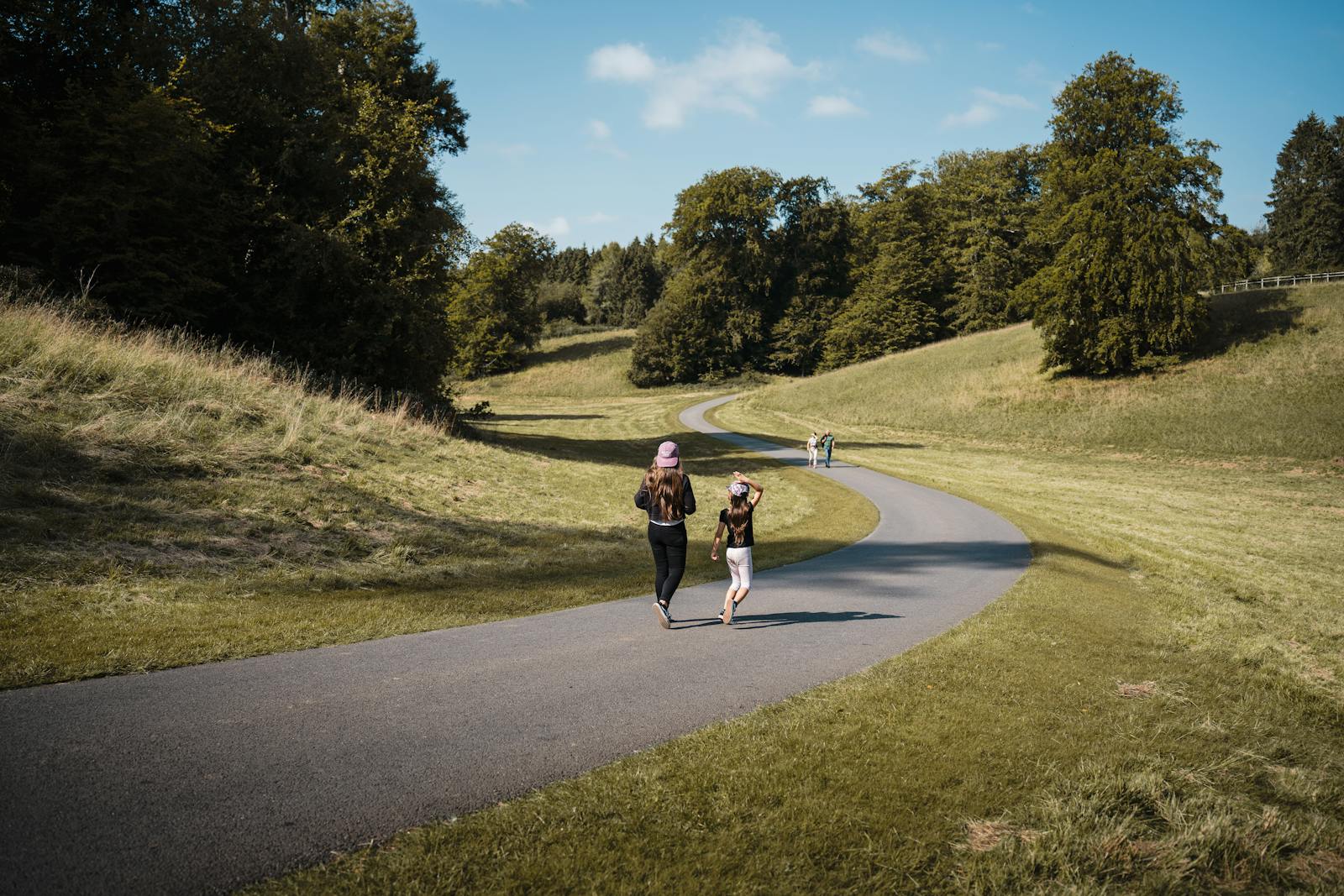
Blenheim does the heavy lifting. The park has an adventure playground, a butterfly house, a maze and a miniature railway in the pleasure gardens, and — more usefully — two thousand acres of grass to run across, which is the actual point of a day like this. A park-only ticket is much cheaper than the full palace admission and, with under-tens, is the better buy.
In town, the Oxfordshire Museum’s dinosaur gallery is free and genuinely good; the trackways it is built around were quarried a few miles away. Our family days out guide and family holidays guide have more options within half an hour.
Where to stay
Woodstock has two of the better-known historic inns in Oxfordshire on its main streets, a handful of small hotels and B&Bs, and rooms at the top end that compete with anything in the region. Expect £150–£210 for a mid-range double with breakfast, rising sharply for Blenheim event weekends and during Oxford graduation and conference season.
It is a good base if your trip is weighted towards Oxford, Blenheim and eastern Oxfordshire, and a poor one for the classic Cotswold villages — Bourton, Bibury and Broadway are all forty-five minutes to an hour away. Our luxury hotels guide, boutique hotels guide and where to stay guide cover it.
Is Woodstock worth visiting?
Yes, but be honest with yourself about why. Nobody comes to Woodstock for Woodstock. The town is elegant, compact and genuinely handsome, and you will have exhausted it in two hours — one for the museum, one for the streets and the church. There is no market to speak of, no river, no view and no hill.
What it does better than anywhere else is host Blenheim. Staying here converts the palace from a car-park day out into something you walk into through a Hawksmoor arch at eight in the morning, and that is a materially different experience. Add Oxford half an hour away by bus and Churchill’s grave a mile down the lane, and you have two days of genuinely first-rate content without ever needing a car.
The price is the price. Woodstock is among the most expensive places to sleep in this guide and there is no budget end. If that matters, stay at Witney or Chipping Norton and bus in.
Frequently asked questions about Woodstock, Oxfordshire
Is Woodstock in the Cotswolds?
It sits on the eastern edge of the Cotswolds in Oxfordshire, and is generally counted in — the stone, the street pattern and the landscape all belong to the region, though it is more Georgian estate town than wool town.
Is Woodstock, Oxfordshire the same as Woodstock the festival?
No. The 1969 festival was held near Bethel in New York State, and took its name from the town of Woodstock, New York. This Woodstock is eight miles from Oxford and predates it by about nine hundred years.
Can you walk to Blenheim Palace from Woodstock?
Yes, and you should. The pedestrian entrance through the Woodstock Gate at the end of Park Street is a five-minute walk from the market square, and the view of the lake and palace as you come through the arch is far better than the approach from the main car park.
Where is Winston Churchill buried?
In the churchyard of St Martin’s at Bladon, a mile south of Woodstock — a deliberately plain family grave rather than a monument. It is free to visit and about twenty-five minutes on foot from the town.
How do you get from Oxford to Woodstock?
The S3 bus runs from Oxford city centre and Oxford Parkway roughly every thirty minutes and takes about half an hour, stopping in Woodstock market square. It is the easiest public-transport connection to any town in this guide.
How long do you need in Woodstock?
Two hours for the town itself. A full day if you are visiting Blenheim, and two nights if you want the palace, the park, Bladon and a day in Oxford without hurrying.
Is the Oxfordshire Museum free?
Yes, entry to the Oxfordshire Museum on Park Street is free, and it has a walled garden and café. The dinosaur gallery, built on the county’s internationally important sauropod trackways, is the highlight.
Is Woodstock a good base for the Cotswolds?
For Blenheim, Oxford and eastern Oxfordshire, yes — and it is the easiest base in the region to reach without a car. For the classic villages of the north and west it is forty-five minutes to an hour each way, and it is expensive, so consider Witney, Chipping Norton or Burford instead.
Stay the night, walk through the gate at eight in the morning and have the lake to yourself — that is the whole case for Woodstock, and it is a good one. From here, our Blenheim Palace guide covers tickets and what to see inside, the guide to the Cotswold towns compares Woodstock with the fifteen others, the stately homes guide sets Blenheim against Sudeley and Chastleton, and the Oxford day trip guide shows how to build a day around it without a car.
Many of the visitors walking up Woodstock’s streets towards the palace gate now come for Bridgerton as much as for Churchill. Blenheim’s Water Terraces hosted Queen Charlotte’s final ball, and the palace runs a film trail marking the scenes — our Bridgerton filming locations guide has the details and a full day’s plan starting from the town.
Photo Credits
Woodstock Town Hall and the market square: Woodstock Town Hall – geograph.org.uk – 8190115 by Oscar Taylor, CC BY-SA 2.0, via Wikimedia Commons.
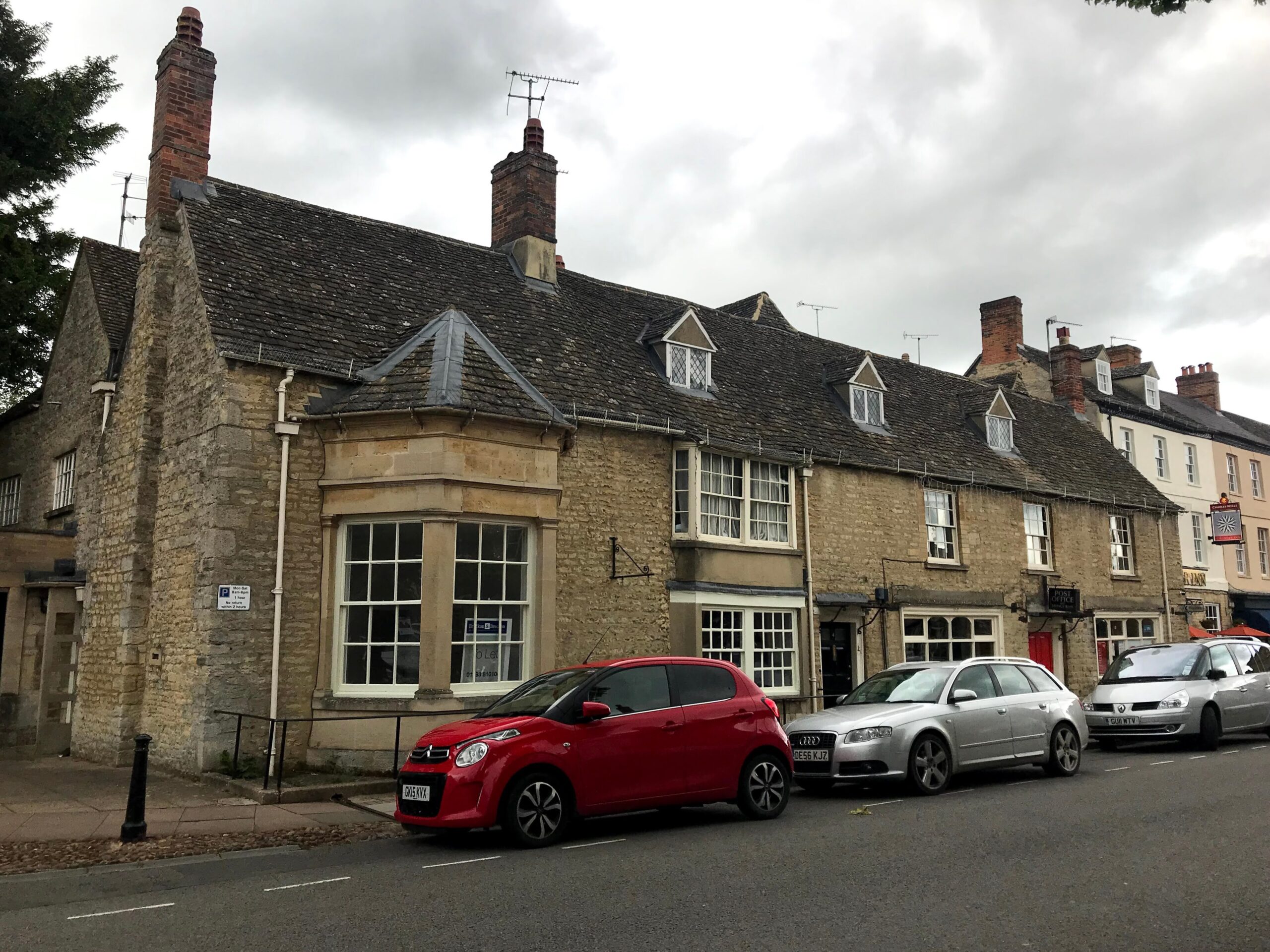
Park Street, Woodstock: ENG Woodstock Park Street 02 by -wuppertaler, CC BY-SA 4.0, via Wikimedia Commons.
Leave a Reply