This article contains advertising. My booking links are routed through a partner that adds commission tracking automatically, so if you book through one I earn a commission from the provider, at no extra cost to you. It never affects what I recommend. Affiliate disclosure
Most Cotswolds villages sit politely in their valleys. Painswick clings to a hillside above one, a tumble of pale stone houses, narrow lanes and tall church spire pinned to the slope between Stroud and Gloucester. Come up the hill on a clear evening, when the limestone turns the colour of clotted cream, and you understand why people have called it the Queen of the Cotswolds for the best part of two centuries.
It is famous for three things: a churchyard of 99 yew trees that is widely held to be the finest in England, the only complete Rococo garden left in the country, and a tangle of seventeenth- and eighteenth-century streets built on the fortunes of the wool trade. But Painswick rewards the visitor who slows down. Give it half a day, walk to the Beacon, and you will see a side of the Cotswolds that the coach parties at Bourton never reach.
A wool town built on a hill
Painswick made its money the way most of these towns did, on the backs of sheep. From the fifteenth century the steep streams running off the hills powered fulling mills, and the cloth they produced was sold across England and into Europe. The merchants who grew rich on it built the houses you see today: square, confident, gabled, with mullioned windows and the occasional date carved over a doorway. Walk along Bisley Street, the oldest in the village, and you pass former wool lofts and a fourteenth-century house with the worn remains of a “spectacle” lock once used to shackle wrongdoers.
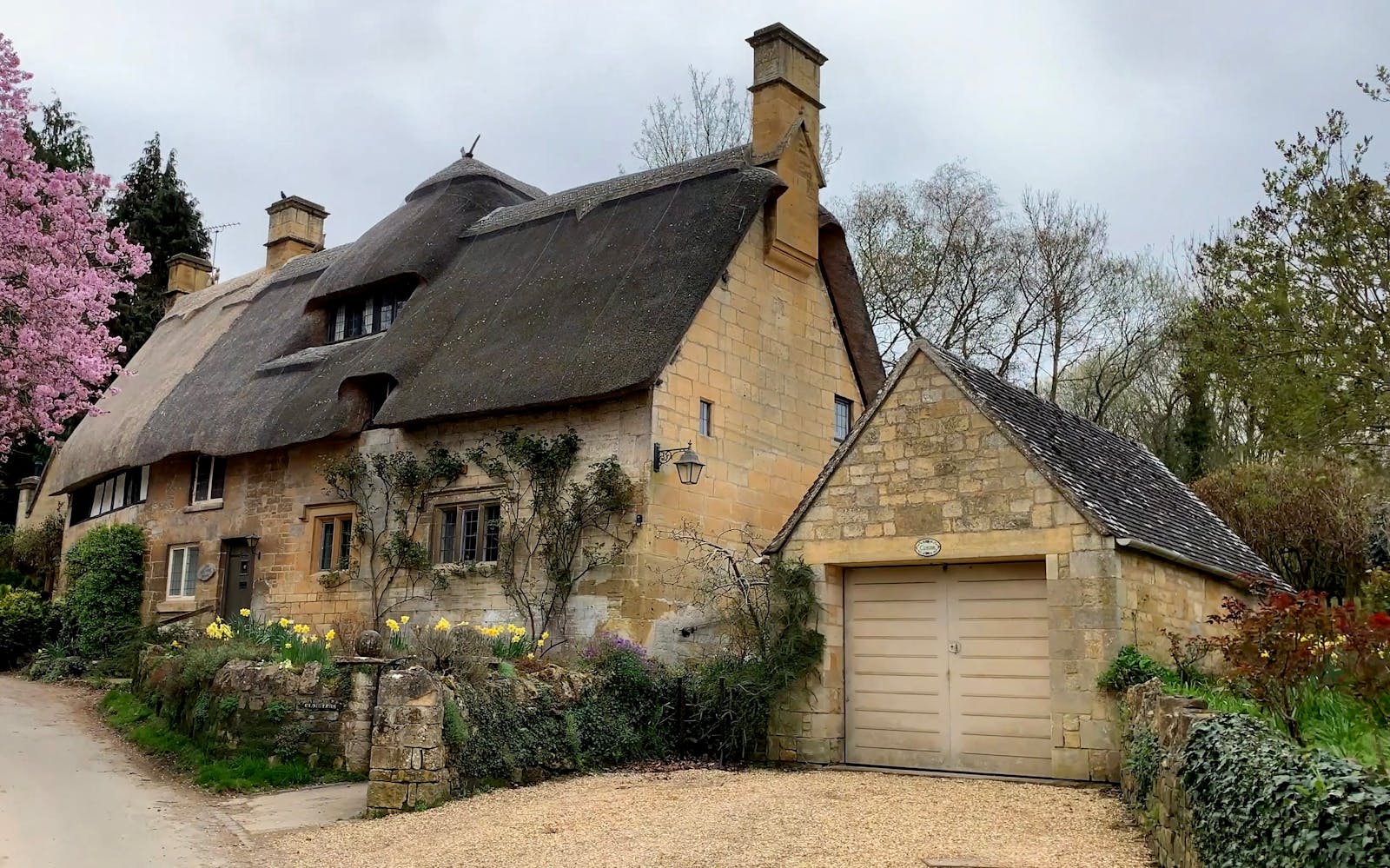
What sets Painswick apart from prettier-on-a-postcard villages is the stone itself. The local quarries produced a pale, almost silvery limestone rather than the honeyed gold of the southern Cotswolds, and the whole village shares that cool, refined tone. It is no accident that artists and the Arts and Crafts movement loved the place. The painter and designer who restored much of its character in the early twentieth century understood that Painswick’s beauty lies in its restraint.
St Mary’s Church and the 99 yew trees
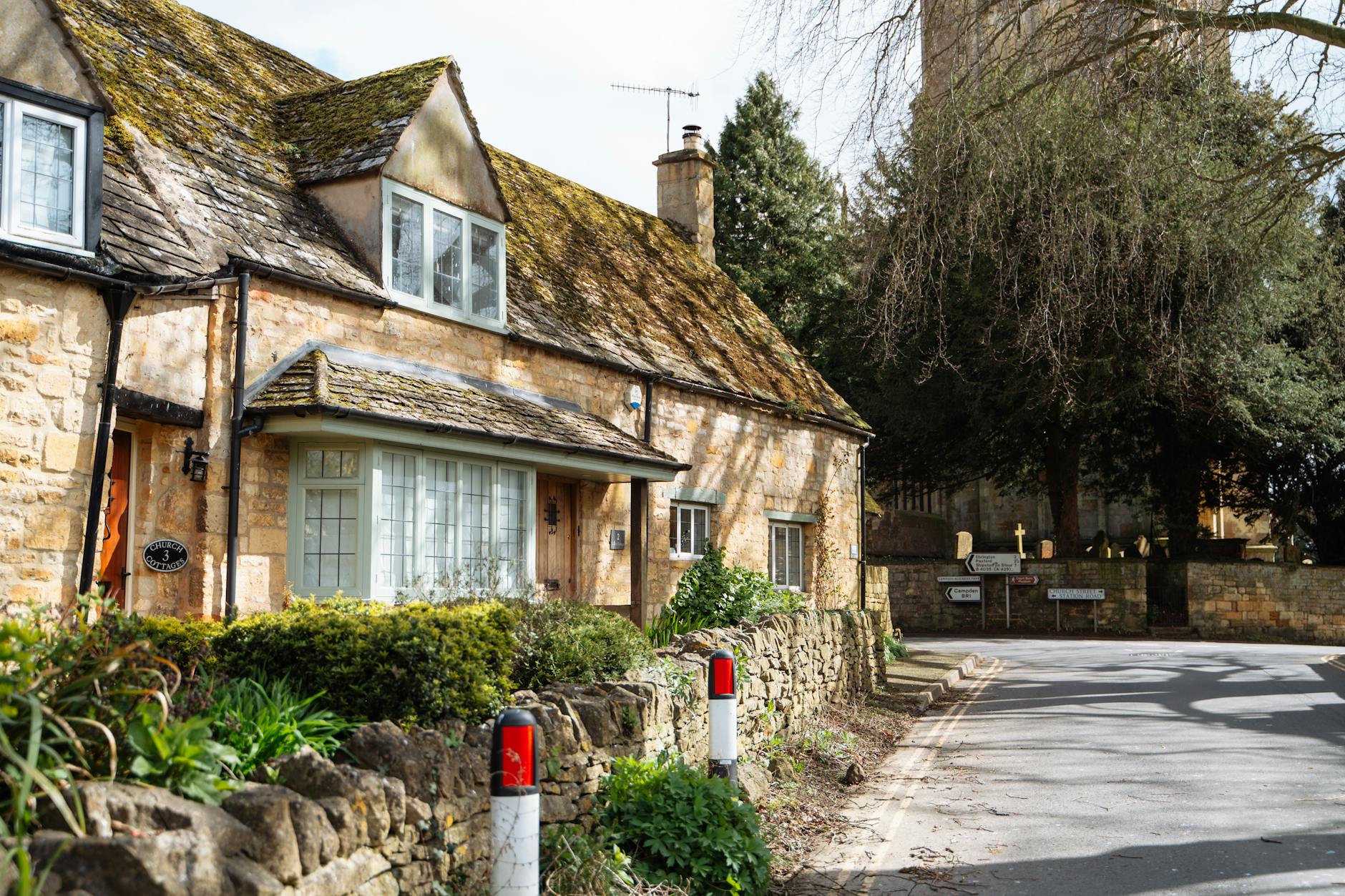
The churchyard of St Mary’s is the reason most people come, and it deserves the reputation. The architectural historian Alec Clifton-Taylor called it “the grandest churchyard in England”, and standing among the tombs you can see his point. Wealthy clothiers spent freely on their memorials, and local masons obliged with an extraordinary gallery of table tombs, pedestal tombs and chest tombs carved with cherubs, skulls, scrolls and swags. Many date from the seventeenth and eighteenth centuries. It is, in effect, an open-air museum of English funerary sculpture, and entry is free.
Then there are the yews. Clipped into rounded, billowing shapes and arched over the paths, they give the churchyard the feel of a green cathedral. Tradition insists there are 99 of them, and that the Devil pulls out any hundredth before it can take root. It makes a good story, though honest counters have reached 100 or even 103 over the years, and the trees have been replanted and renewed many times. The yews are clipped every autumn, which keeps the legend alive and the paths walkable.
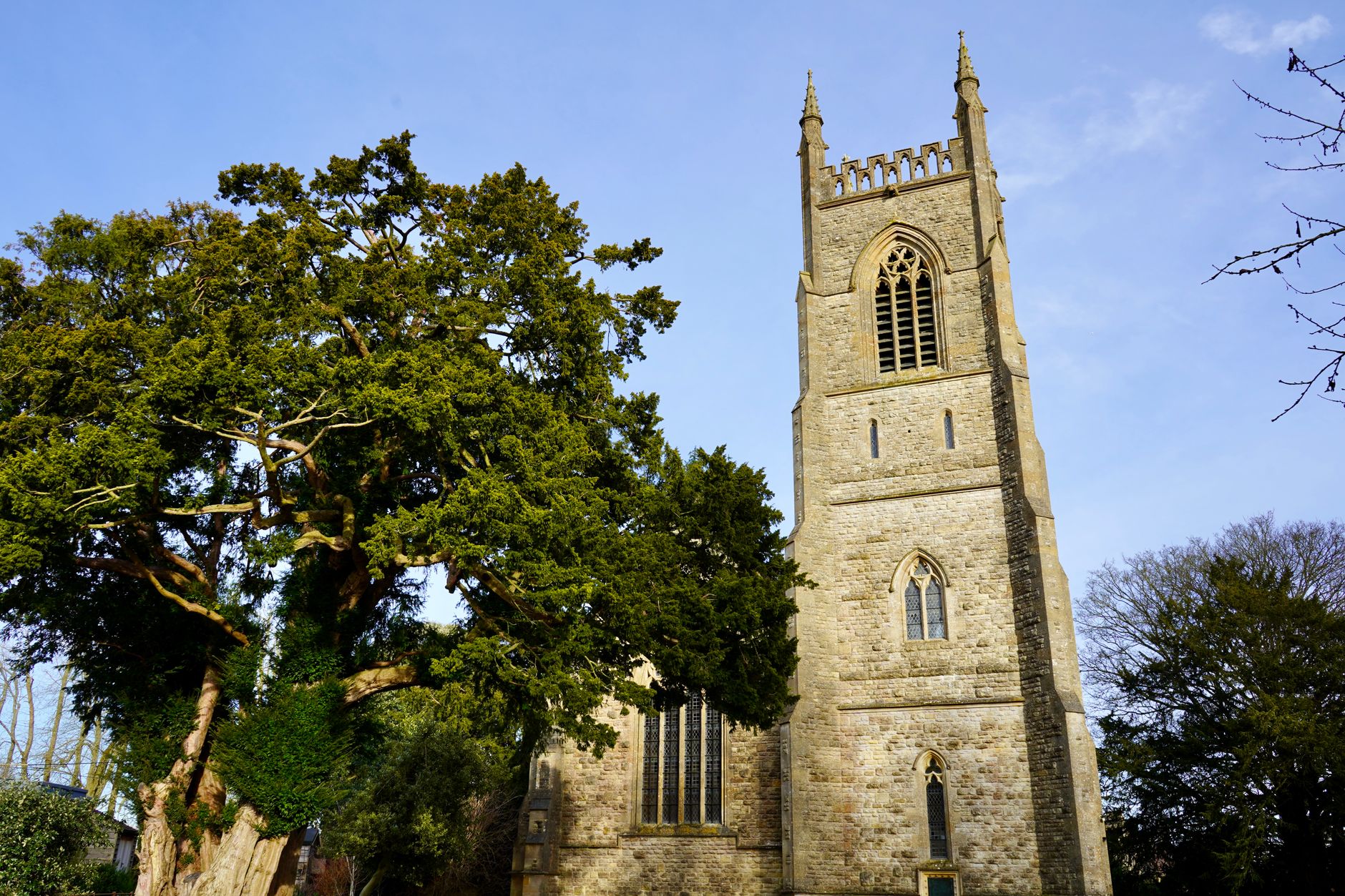
The church itself is worth stepping inside. The spire, rebuilt after a lightning strike, rises 174 feet and is a landmark for miles. During the Civil War the village was caught up in fighting, and you can still see scars said to have been left by cannon and musket fire on the church walls. If you have any interest in how these towns grew, the whole site is a lesson in the wealth and faith of the wool era; our guide to Cotswolds history and heritage sets it in context.
The Clypping ceremony and Painswick Feast
If you can time your visit for mid-September, you may catch one of the oldest living traditions in the Cotswolds. On the Sunday nearest the 19th, the village holds the Clypping ceremony, when children in flower garlands and the wider congregation join hands to form a complete ring around the church and “clyppe” it. The word is old English for embrace, nothing to do with hedge-clipping, and the service is genuinely moving rather than a staged-for-tourists affair.
Clypping forms part of the wider Painswick Feast, a tradition revived in recent years that once involved eating “puppy dog pie”, a raised pie supposedly baked with a small china dog inside. The dog was a joke at the expense of Painswick folk by neighbouring villages, and the modern version is, reassuringly, just a good beef pie. It is the kind of small, sincere local custom that makes a place feel lived-in rather than preserved under glass.
Painswick Rococo Garden
A short walk north of the village sits one of the most unusual gardens in Britain. Painswick Rococo Garden was laid out in the 1740s, in the brief, flamboyant moment between formal gardens and the natural landscape style, and it is the only complete garden of its kind to survive. It was rescued from woodland in the 1980s after a contemporary painting of it turned up, and restored to its original eccentric design of winding paths, hidden vistas, follies, a plunge pool and a curious red Eagle House.
Go in late winter and you will find one of the great snowdrop displays in the country, with millions of flowers carpeting the slopes from late January into February. The maze, planted to mark the garden’s 250th anniversary, keeps younger visitors busy, and the café does a proper slice of cake. At the time of writing admission is around £13.50 for adults and £6 for children aged four to sixteen, with under-fours free; opening is usually 10am to 5pm with last entry an hour before, though days vary by season, so check the garden’s website before setting out. RHS members generally go free between March and November. For more gardens in the same trip, see our roundup of the best gardens in the Cotswolds.
Walking to Painswick Beacon
For my money, the walk up to Painswick Beacon is the best reason to visit. The Beacon rises to around 280 metres on common land just north of the village, crowned by the earthworks of an Iron Age hillfort known as Kimsbury. From the top you get a genuine panorama: the Severn Vale spread out below, the Forest of Dean and the Welsh hills beyond, and on a clear day the Malverns away to the north. It is one of the finest viewpoints in the southern Cotswolds and, unlike many, you can drive most of the way and walk the last stretch if knees demand it.
The Cotswold Way National Trail passes right through Painswick, so the village makes an excellent base for a day on the long-distance path. Head north and you climb the Beacon; head south and the trail drops towards Stroud through beechwoods that are spectacular in autumn. A golf course shares the Beacon common, so keep an eye out for play, and stick to the obvious paths. If you want to plan a longer outing, our guide to walking and hiking in the Cotswolds covers routes for every level.
Wandering the streets
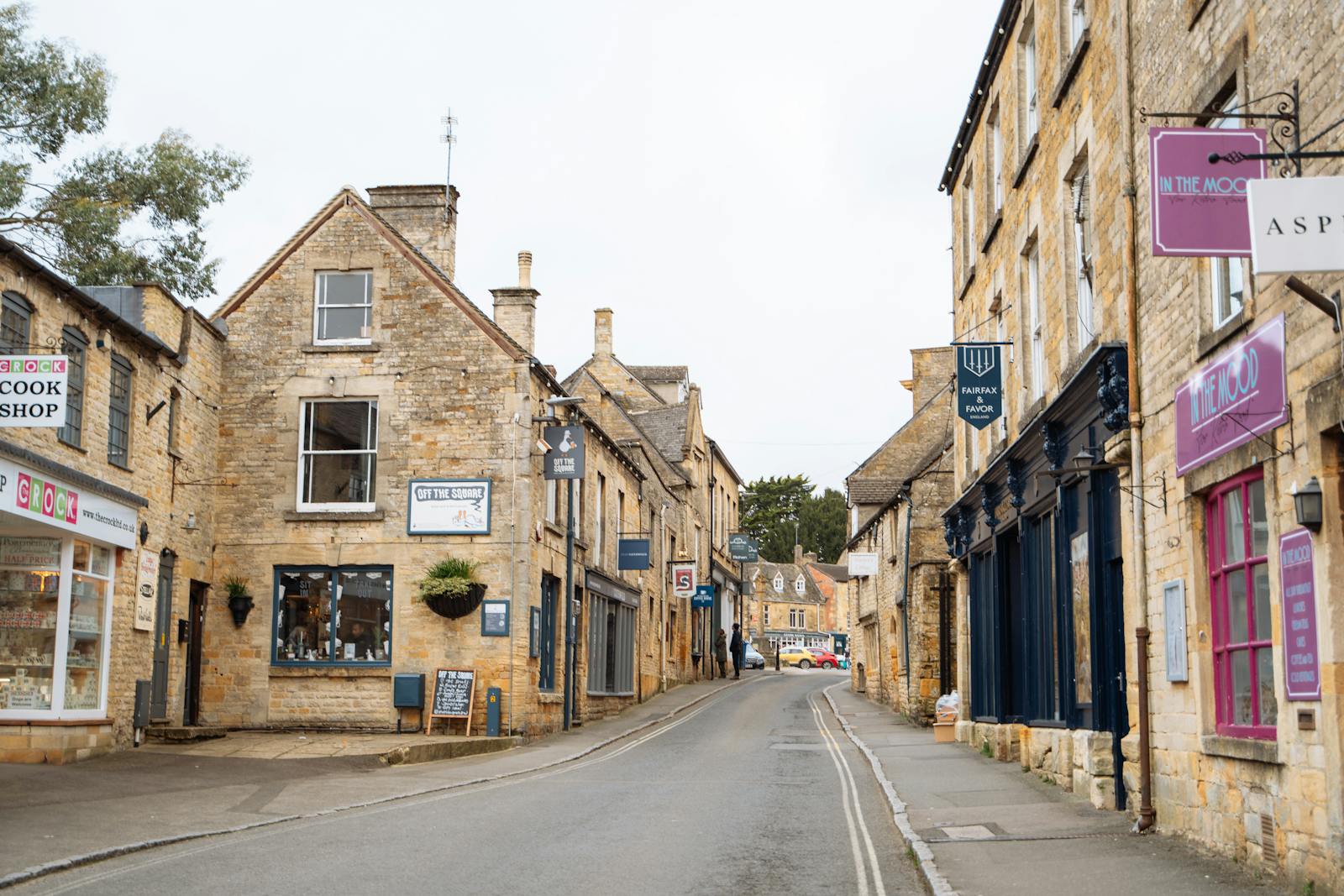
Painswick is small enough to explore on foot in an hour, and that is the right way to see it. Start in the centre by the church and work outwards. New Street, despite the name, has been here since the thirteenth century and holds some of the village’s grandest houses, including the Falcon and what is reckoned to be one of the oldest surviving post offices in the country. Tibbiwell and Vicarage Street drop steeply away with views over the valley, and Bisley Street keeps the medieval bones of the place.
Look out for the iron “spectacle” stocks near the churchyard wall, a rare set with round eye-holes for the wrists rather than the usual ankle stocks, and the many carved date-stones over doorways. Painswick rewards a slow eye. This is a working village, not a film set, so you will share the lanes with people going about their day, which is rather the point. If you are gathering ideas for photographs, it earns its place in our guide to the best Cotswolds photography spots, especially the churchyard in low morning light.
Where to eat and drink
The Falcon Inn on New Street is the obvious choice and a good one. The building dates to the sixteenth century, served as a courthouse for two hundred years, and now does proper pub food, a couple of well-kept cask ales and a handful of rooms if you want to stay over. It sits directly opposite the church, so you can combine lunch with the churchyard easily. For something smarter, St Michael’s Restaurant has a strong local reputation for modern British cooking, and there are a couple of cafés and a village shop for picnic supplies before a walk.
Painswick punches above its weight for food given its size, but options are limited, so book ahead at weekends and check opening days off-season, when some places close midweek. If you are building a food-led trip around the area, our guides to the best pubs in the Cotswolds and wider Cotswolds food and drink scene point you to more in the valleys around Stroud.
Where to stay in and around Painswick
Painswick suits a quieter, more grown-up sort of stay. The Painswick, a country-house hotel and spa on the edge of the village, is the headline address, with valley views and a well-regarded restaurant. The Falcon offers simpler rooms in the heart of the village, and there are bed and breakfasts and self-catering cottages scattered through the surrounding lanes. Because the village is so central, you can easily base yourself here and reach Stroud, Cheltenham, Gloucester and the southern villages within half an hour.
If you would rather compare areas before booking, our guide to where to stay in the Cotswolds breaks the region down by character and budget, and Painswick falls firmly in the calm, scenic, walkers’ corner of it.
How to get to Painswick
Painswick sits on the A46 between Stroud and Cheltenham, about ten minutes from the M5 at Junction 13. There are two small village car parks, the most useful being the Stamages Lane car park just below the centre, which is a short, steep walk from the church. Spaces are limited and fill quickly on summer weekends, so arrive earlier rather than later. The Beacon has informal roadside parking on the common to the north.
Without a car, the nearest railway station is Stroud, on the main line from London Paddington and Gloucester, about three miles away. Regular buses run between Stroud, Painswick and Cheltenham, though services thin out in the evenings and on Sundays, so check times if you are relying on them. For the bigger picture on trains, buses and driving, see our guide to getting to and around the Cotswolds.
The best time to visit Painswick
Painswick is a year-round village, but it shows different faces with the seasons. Late winter brings the snowdrops at the Rococo Garden and bare-branch views from the Beacon. Spring and early summer are quietest and arguably loveliest, with blossom in the churchyard and long evenings on the hill. September brings the Clypping ceremony and the first turn of the beechwoods, and autumn on the Cotswold Way is genuinely special. Even in poor weather the churchyard and the pubs make a rewarding couple of hours. For help planning around the calendar, our guide to the best time to visit the Cotswolds goes month by month.
Arts, crafts and a quiet kind of fame
Painswick has long drawn artists and makers, and it shows. The village sits at the heart of the Stroud valleys, which became a centre of the Arts and Crafts movement in the late nineteenth and early twentieth centuries, when designers fled the cities for the honest materials and slow craftsmanship of the Cotswolds. That sensibility lingers in the careful restoration of the houses, the hand-lettered signs and the studios tucked down side lanes. It is a place that takes craft seriously without making a fuss about it.
The village has also had its share of the screen. Its streets and churchyard have stood in for period England in television and film over the years, and you may find a corner that looks oddly familiar. Painswick wears this lightly. There are no themed gift shops or queues for selfie spots, and that restraint is exactly why people who know the Cotswolds well send first-time visitors here rather than to the honeypots. If you are building a route that balances famous names with quieter finds, our Cotswolds itineraries weave villages like this into manageable days.
Combining Painswick with the Stroud valleys
One of Painswick’s advantages is its position on the western edge of the Cotswolds, away from the busier eastern villages. That makes it easy to pair with places most visitors miss. Drop down into Stroud for its award-winning Saturday farmers’ market, one of the best in the country, then climb back up for an afternoon on the Beacon. The valleys around Slad, made famous by Laurie Lee’s Cider with Rosie, lie just to the east and are gorgeous walking country, with the Woolpack pub at Slad a fitting reward at the end.
Further afield, the southern Cotswold villages of Bibury and Castle Combe are within an hour’s drive, as are Cheltenham and Gloucester with their racecourse, regency architecture and cathedral. Painswick works equally well as a peaceful base for a longer stay or as a half-day stop on a touring route. If you only have limited time in the region, it slots neatly into our guide on how many days you need in the Cotswolds without adding much of a detour.
Frequently Asked Questions
Why is Painswick called the Queen of the Cotswolds?
The nickname dates from the nineteenth century and reflects Painswick’s refined hilltop setting, the quality of its pale stone architecture and its celebrated churchyard. Where some villages are pretty, Painswick has a certain dignity, hence “queen” rather than simply “prettiest”.
Are there really 99 yew trees at Painswick church?
Tradition says 99, with the legend that the Devil destroys any hundredth tree. In practice counts have reached 100 or more, and trees are regularly replanted, so the exact number changes. The figure 99 is best enjoyed as folklore rather than fact.
How long do you need in Painswick?
Half a day covers the churchyard, a wander through the streets and lunch. Add the Rococo Garden and a walk up Painswick Beacon and you can happily fill a full day. Many visitors combine it with nearby Stroud or the southern Cotswold villages.
Is Painswick Rococo Garden worth visiting?
Yes, particularly for the snowdrops in late winter and for anyone interested in garden history, as it is the only complete Rococo garden in the country. Allow one to two hours. Check opening days before travelling, as they vary through the year.
Is Painswick a good base for walking?
Excellent. The Cotswold Way passes through the village, Painswick Beacon offers one of the best viewpoints in the area, and the beechwoods towards Stroud are beautiful. It suits walkers who want scenery and quiet over crowds and gift shops.
Is Painswick easy to get around on foot?
The village centre is compact and walkable, but be ready for gradients: Painswick is built on a hillside, and streets like Tibbiwell and Vicarage Street are genuinely steep. Sturdy shoes help, especially after rain when the pavements can be slick. The churchyard paths are mostly level and accessible, and there are benches with valley views if you need to pause. Anyone with limited mobility may prefer to park at Stamages Lane and focus on the church and the level streets nearby rather than tackling the steepest lanes.
Can you visit Painswick without a car?
Yes, though it takes a little planning. The nearest station is Stroud, about three miles away on the London Paddington line, and regular buses link Stroud and Cheltenham with the village. Services are thinner on Sundays and in the evenings, so check return times before you set off. Once you arrive, everything worth seeing is within walking distance.
Related guides
Painswick is one of many in our roundup of the prettiest villages in the Cotswolds. To plan the wider trip, start with our complete guide to visiting the Cotswolds, then pair Painswick with the nearby Slaughters or the riverside village of Bourton-on-the-Water for a fuller day out.