This article contains advertising. My booking links are routed through a partner that adds commission tracking automatically, so if you book through one I earn a commission from the provider, at no extra cost to you. It never affects what I recommend. Affiliate disclosure
You may have noticed the signs changing. Where the road into the hills once welcomed you to the “Cotswolds Area of Outstanding Natural Beauty,” it now reads “Cotswolds National Landscape.” It is a small change of wording with a big story behind it, and it points to something many visitors never quite think about: that this beloved patchwork of golden villages, rolling wolds and flower-strewn commons is not simply pretty by accident. It is a protected landscape, deliberately cared for, with a legal status and a dedicated organisation working to keep it special.
If you have ever wondered what that protection actually means — why the Cotswolds look so consistently lovely, who decides what can and can’t be built, and how it differs from a National Park — this guide is for you. Understanding the Cotswolds National Landscape adds a real depth to any visit, because once you know what you are looking at, you start to appreciate just how much thought and effort goes into keeping these hills the way they are.
What is the Cotswolds National Landscape?
The Cotswolds National Landscape is a nationally protected area, designated for its outstanding natural beauty. It was first given this protected status back in 1966, as an Area of Outstanding Natural Beauty (AONB), and its boundaries were extended in 1990 to take in more of the surrounding country. For more than half a century, in other words, the nation has formally recognised that this landscape is something worth safeguarding for everyone.
The change of name came on 22 November 2023, when all 46 of the AONBs across England, Wales and Northern Ireland were rebranded as “National Landscapes.” It is important to understand that this was a change of name and ambition, not of law: in legal terms, the area is still an Area of Outstanding Natural Beauty, with exactly the same statutory protections. The new name was chosen to better reflect the national importance of these places and to signal a more ambitious mission for nature recovery and public access. So if you see the term “Cotswolds AONB” and “Cotswolds National Landscape” used interchangeably, that is why — they mean the same thing. You can read a little more on the existing designation in our overview of the Cotswolds AONB.
How big is it, and where does it stretch?
The scale surprises most people. At around 790 square miles (some 2,038 square kilometres), the Cotswolds is the largest National Landscape, or AONB, in England, and the third-largest protected landscape in the country once you include the National Parks. This is no small pocket of countryside; it is a vast, sweeping region.
It also refuses to respect county boundaries, spilling across no fewer than six of them: Gloucestershire, which holds the heart of it, along with Oxfordshire, Warwickshire, Wiltshire, Worcestershire and a corner of Bath and North East Somerset. It runs in a long, broad diagonal band roughly from the area near Stratford-upon-Avon in the north-east down to the edge of Bath in the south-west, taking in the dramatic western escarpment, the gentler eastern dip slopes, and hundreds of villages, farms and market towns along the way. When people argue about exactly where the Cotswolds are, the National Landscape boundary is the nearest thing to an official answer.
Why was it given protected status?
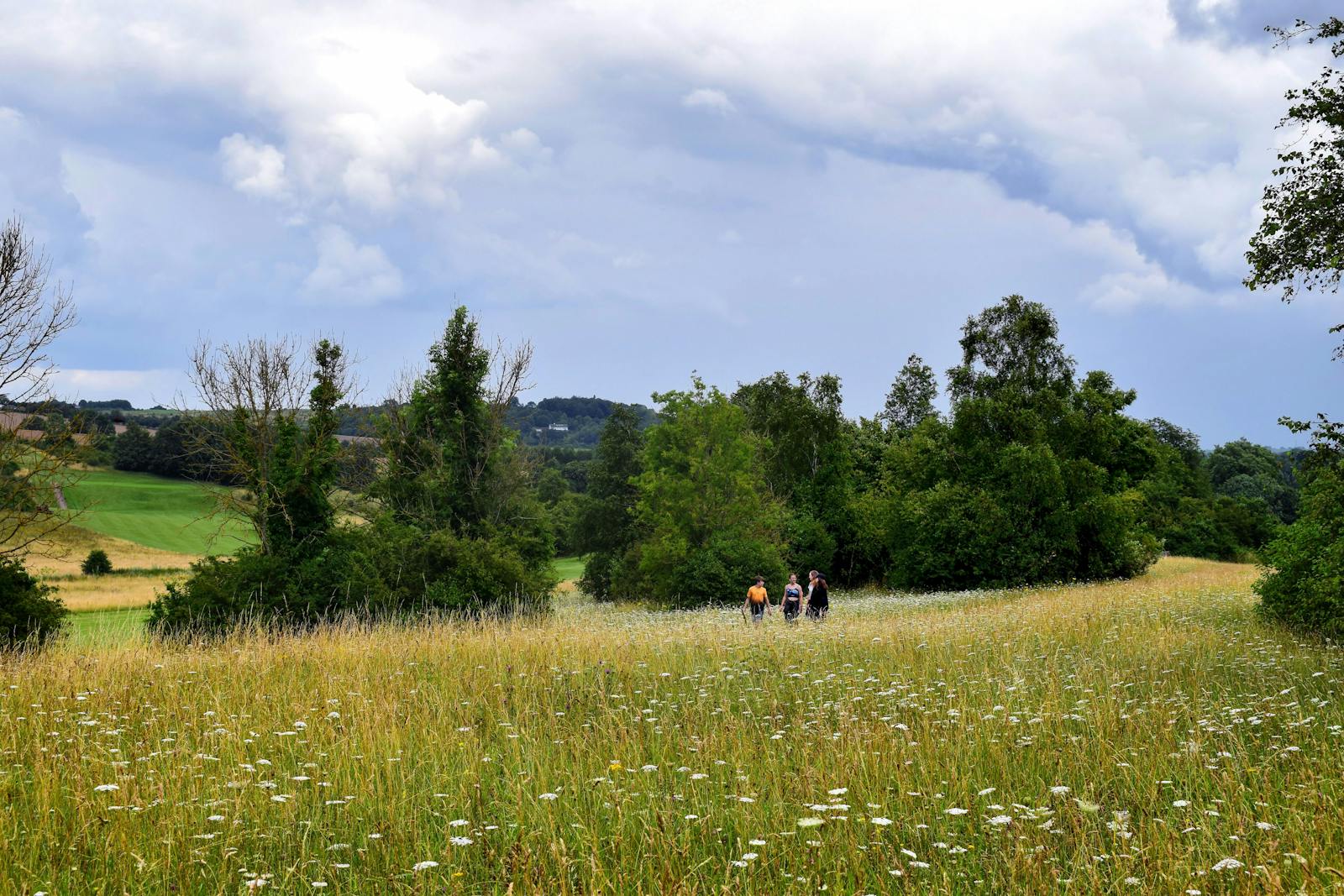
The Cotswolds were protected for one overriding reason: their outstanding natural beauty. But that beauty is a particular blend of the natural and the human, and that is what makes the place so special. It is the rolling limestone uplands and the steep, beech-hung escarpment; the flower-rich grasslands and the clear chalk-and-limestone streams; but it is also the drystone walls, the honey-coloured villages and the field patterns that centuries of farming have woven into the hills.
This is why the buildings matter as much as the meadows. The local Cotswold stone architecture is considered an integral part of the natural beauty the designation protects, which is precisely why planning policies work so hard to keep new development in sympathy with the old. The landscape and the villages are not two separate things here; they are a single, harmonious whole, and protecting one means protecting the other.
How the Cotswolds came to be protected
The idea of protecting landscapes like the Cotswolds is surprisingly recent. It grew out of a great wave of post-war idealism, the same spirit that gave Britain the National Health Service, when people decided that the countryside should be safeguarded and made accessible for everyone, not just the privileged few. The landmark National Parks and Access to the Countryside Act of 1949 created both National Parks and the new category of Area of Outstanding Natural Beauty, and over the following decades the most cherished landscapes in the country were designated one by one.
The Cotswolds had to wait until 1966 for its turn, by which point the case was overwhelming. The designation recognised what locals and visitors had long felt: that this was one of the finest surviving examples of a lowland English landscape, where geology, wildlife, farming and architecture had combined over centuries into something of national, even international, importance. The 1990 extension added further land, bringing the protected area close to the shape we know today, and cementing the Cotswolds’ place among the country’s most treasured countryside.
The many faces of the Cotswold landscape
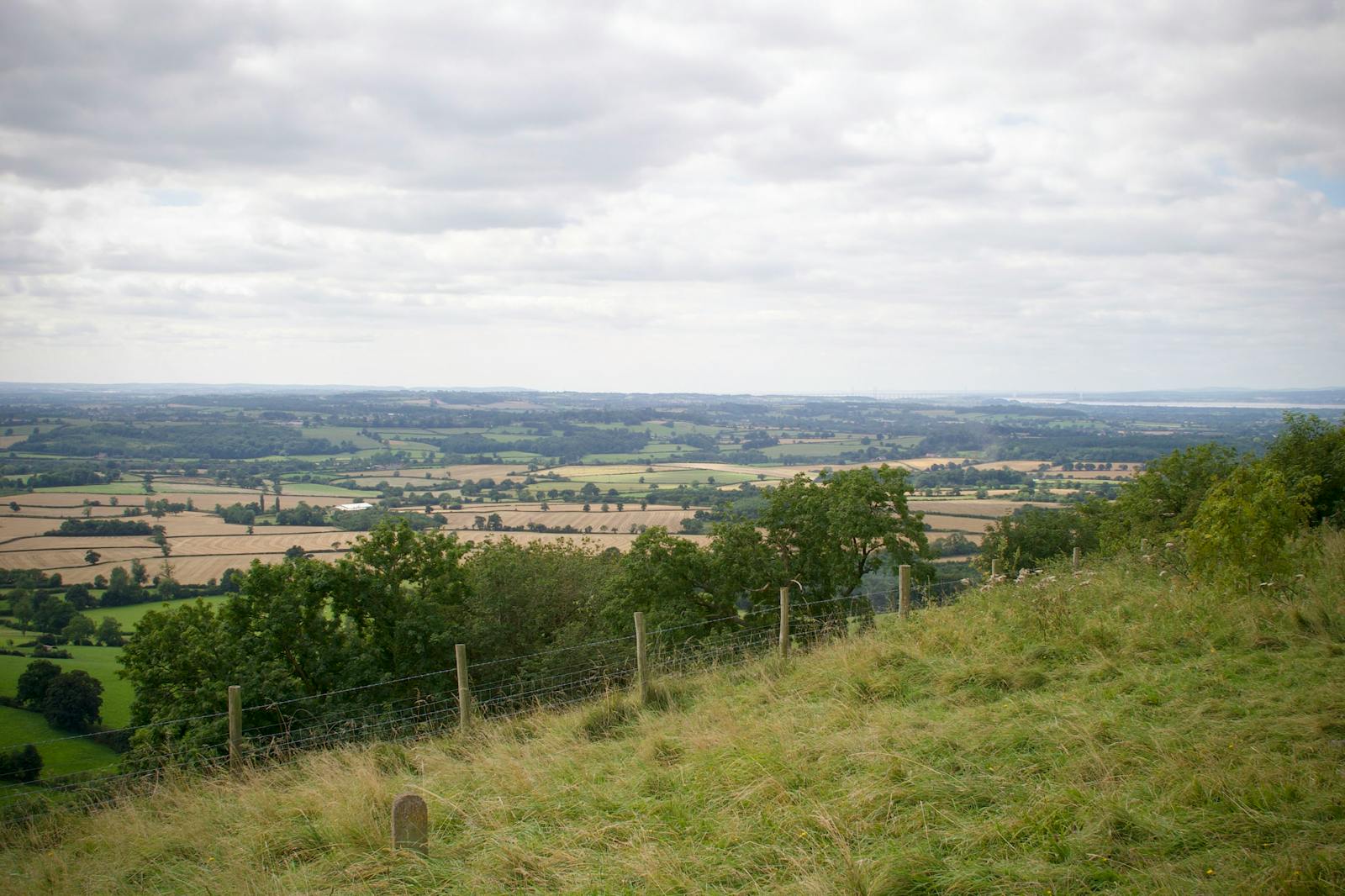
One of the joys of the National Landscape is how much it varies as you travel across it. The most dramatic feature is the western escarpment, or “edge,” a steep limestone scarp that drops away towards the Severn Vale and offers some of the grandest views in southern England. It rises to the region’s highest point at Cleeve Hill, above Cheltenham, at around 330 metres, where the open common feels almost mountainous on a windy day.
Behind the edge lie the high wolds themselves — broad, open, big-skied farmland crossed by drystone walls — while to the east the land falls away in gentler dip slopes, grooved by a series of beautiful river valleys. The valleys of the Coln, the Windrush, the Eye and the Leach are the Cotswolds of the picture books, threading clear streams past honey-stone villages and old mills. Tucked into the slopes are ancient beech “hangers,” woodlands that turn spectacular shades of copper and gold in autumn, sheltering bluebells in spring.
And then there are the commons — the great unenclosed grasslands like Cleeve, Rodborough and Minchinhampton — where you can walk freely among grazing cattle, wildflowers and Iron Age earthworks, with the whole landscape laid out below you. This variety, packed into a relatively compact area, is a large part of what makes the Cotswolds so rewarding to explore slowly, and so worthy of the protection it now enjoys.
National Landscape or National Park? The key difference
This is the question I am asked most often, and it is a good one. National Landscapes and National Parks are both protected for their outstanding natural beauty, and both enjoy broadly similar, strong protection from inappropriate development. To the casual visitor, the experience can feel much the same. But there are real differences under the surface, mostly to do with how they are run.
The biggest difference is planning power. A National Park has its own dedicated authority that acts as the planning body for the whole area, with strong, centralised control. A National Landscape does not: planning decisions remain with the ordinary local councils, advised — but not overruled — by the body that looks after the landscape. There is also a difference of purpose. National Parks have a dual mission, to conserve natural beauty and to actively promote public enjoyment and understanding. National Landscapes have a single primary purpose: to conserve and enhance natural beauty, with public access and recreation as a secondary consideration. In practice, National Landscapes also tend to be closer to where people live, and are more obviously lived-in, farmed, working countryside — which describes the Cotswolds perfectly.
Who looks after the Cotswolds National Landscape?
The body responsible is the Cotswolds National Landscape Board, established by Parliament in 2004 as the Cotswolds Conservation Board. It is one of only two AONBs in the country to be run by such a board, which gives the Cotswolds an unusually strong and well-resourced guardian. The Board has two statutory purposes: first and foremost, to conserve and enhance the natural beauty of the area; and second, to foster the social and economic wellbeing of the communities who actually live and work within it.
That second purpose matters enormously, and it is what stops the National Landscape from being treated as a museum under glass. The Board, funded largely by the government’s environment department and local authorities, does practical work right across the region — supporting wildlife and habitat projects, running a respected volunteer warden scheme, helping farmers access funding for nature-friendly land management, producing the statutory management plan, and advising councils on planning. It is the quiet, unglamorous machinery that keeps the magic running.
The hidden jewel: Cotswold limestone grassland
If you want to understand why conservation here is so urgent, look down at your feet on one of the high commons in early summer. The Cotswolds hold a habitat of international importance: unimproved limestone grassland, the flower-rich turf that develops on thin soils over the Jurassic limestone. It is one of the most biodiverse habitats in Britain, and one of the rarest.
The figures are sobering. Only around 1.5 per cent of the Cotswolds’ grassland habitat now survives in this precious unimproved state — roughly 3,000 hectares — the rest long since ploughed or “improved” for agriculture. And yet that small surviving fragment still accounts for around half of all the limestone grassland left in the entire country. It is a habitat hanging on by its fingertips, and it is gloriously alive: wild orchids and rare wildflowers, and butterflies such as the Adonis blue, the Duke of Burgundy and the marbled white, many of which depend on exactly this kind of grazed, flowery turf. Places like Cleeve Hill above Cheltenham, and the great open commons at Rodborough and Minchinhampton, are among the best places to experience it.
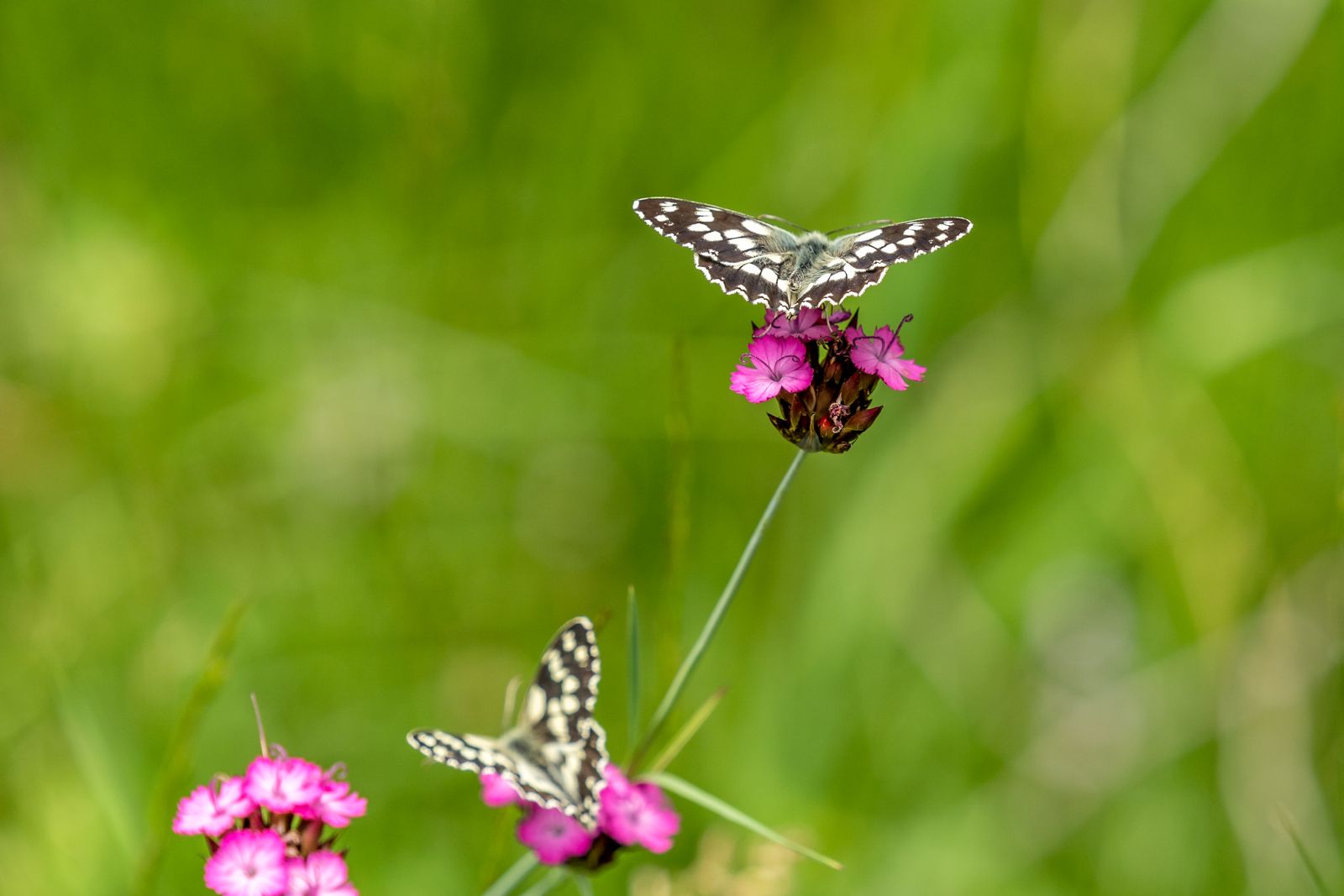
This is also why you will see cattle and sheep grazing the commons. That grazing is not just picturesque; it is essential conservation work, keeping the coarse grasses and scrub in check so the delicate wildflowers can thrive. The animals are, in a real sense, the gardeners of the Cotswolds’ rarest landscape.
A living, working landscape
It is worth stressing how much of the National Landscape is private, working farmland rather than public open space. This is not a wilderness; it is a landscape shaped by, and dependent on, the people who farm it. The way those farms are managed has an enormous effect on the wildlife, the look of the countryside and even the water in the rivers, which is why so much of the Board’s effort goes into helping farmers and landowners look after the land well.
That same human dimension brings real tensions. Protecting a beautiful area increases the pressure on it: house prices soar, young local people struggle to afford to stay, and there is constant debate about how to balance conservation with the need for affordable homes, decent jobs and thriving communities. The National Landscape designation does not freeze the region in time — it tries to manage change thoughtfully, so that the Cotswolds remain a living place and not just a postcard.
What it means for you as a visitor
The good news for visitors is that protected status and public enjoyment go hand in hand. The National Landscape is laced with thousands of miles of public footpaths and bridleways, and includes large areas of “open access” land — most famously the great commons — where you are free to roam. The 102-mile Cotswold Way National Trail, running along the western escarpment, is one of the finest ways to experience the protected landscape on foot; our Cotswold Way walking guide covers it in detail, and there is more inspiration in our overview of walking and hiking in the Cotswolds.
With that freedom comes a little responsibility. Following the Countryside Code — closing gates, keeping dogs under control around livestock and ground-nesting birds, taking your litter home and sticking to paths across farmland and fragile grassland — is how each of us helps keep the place special. Choosing to support local businesses, travelling thoughtfully and visiting honeypot villages outside the busiest times all count as responsible tourism, too. The protection works best when visitors see themselves as part of it.
The challenges ahead
The Cotswolds National Landscape faces real pressures in the years to come. Its position close to major towns and within easy reach of London brings constant development pressure, while its very popularity creates challenges of traffic, parking and footpath erosion at the most famous spots. Add the longer-term threats of climate change and the broader national decline in wildlife, and the work of conserving and, increasingly, restoring nature here has never been more important.
The shift from “Area of Outstanding Natural Beauty” to “National Landscape” was partly about rising to exactly these challenges — signalling a renewed commitment not just to protect what survives, but to help nature recover and to connect more people with the countryside. Whether the designation succeeds will depend, in the end, on landowners, communities, councils and visitors all pulling in the same direction. The fact that you are reading this, and thinking about it, is a small part of that effort.
Frequently asked questions about the Cotswolds National Landscape
Is the Cotswolds a National Park?
No. The Cotswolds is a National Landscape, the protected area formerly and legally known as an Area of Outstanding Natural Beauty (AONB). It enjoys strong protection from development similar to a National Park, but it is managed differently: planning decisions stay with local councils rather than a single park authority, and its primary purpose is to conserve and enhance natural beauty.
When did the Cotswolds AONB become a National Landscape?
The Cotswolds AONB was renamed the Cotswolds National Landscape on 22 November 2023, when all AONBs in England, Wales and Northern Ireland adopted the new name. The change was about identity and ambition; the legal designation, first made in 1966, and its protections remain exactly the same.
How big is the Cotswolds National Landscape?
It covers around 790 square miles (about 2,038 square kilometres), making it the largest National Landscape (AONB) in England and the third-largest protected landscape in the country including National Parks. It spreads across six counties, with its heart in Gloucestershire.
Can you visit and walk freely in the Cotswolds National Landscape?
Yes. The area has thousands of miles of public rights of way and large areas of open-access land, including the famous commons, plus the 102-mile Cotswold Way National Trail. Much of the land is privately owned and farmed, though, so visitors should stick to paths, follow the Countryside Code and respect the working countryside.
The Cotswolds National Landscape designation is the invisible framework that holds all the region’s beauty in place — the reason the villages still glow, the meadows still flower and the views still take your breath away. It is a story of deliberate care stretching back to 1966 and forward into an uncertain future. To see how this protected landscape grew out of the region’s long history, return to our pillar guide on Cotswolds history and heritage, or discover the golden stone that defines it in our guide to Cotswold stone architecture. For a darker angle on the same villages and lanes, see our guide to haunted Cotswolds.