This article contains advertising. My booking links are routed through a partner that adds commission tracking automatically, so if you book through one I earn a commission from the provider, at no extra cost to you. It never affects what I recommend. Affiliate disclosure
At half past nine on a Saturday morning there is a queue outside a cheese stall in Stroud that runs twenty deep, and not one person in it is holding a camera. That is the tell. This is a town where the market is for the people who live here, the mills have been turned into workshops rather than boutique hotels, and nobody has ever thought to plant a hanging basket for the benefit of a coach party.
Which makes the things to do in Stroud a completely different proposition from the rest of this region. There is no honey-stone High Street curving photogenically downhill. There is a steep, scruffy, argumentative town at the point where five valleys meet, with a Victorian industrial skeleton, the best food market in the west of England, Laurie Lee’s countryside starting at the end of the bus route, and a population that has spent two hundred years being interestingly out of step with everyone else.
If you have three days in the Cotswolds and you want the version that has not been curated, this is where you come. Among the Cotswold towns, Stroud is the one that is still doing something.
Stroud at a glance
| Detail | |
|---|---|
| Population | About 26,000 in the town, more across the Five Valleys |
| Farmers’ market | Saturday, Cornhill Market Place — the main event |
| Other markets | Shambles market Friday and Saturday |
| Station | Stroud, direct to London Paddington in about 1h35 |
| Free to see | Museum in the Park, Rodborough and Minchinhampton Commons, Selsley church, the canal towpath |
| Typical double room | £85–£125 mid-range — among the cheapest in the Cotswolds |
| Best day to come | Saturday, without question |
| Time needed | A day for the town and market; three nights for the valleys |
Prices and times checked September 2026 — confirm before you travel.
The farmers’ market
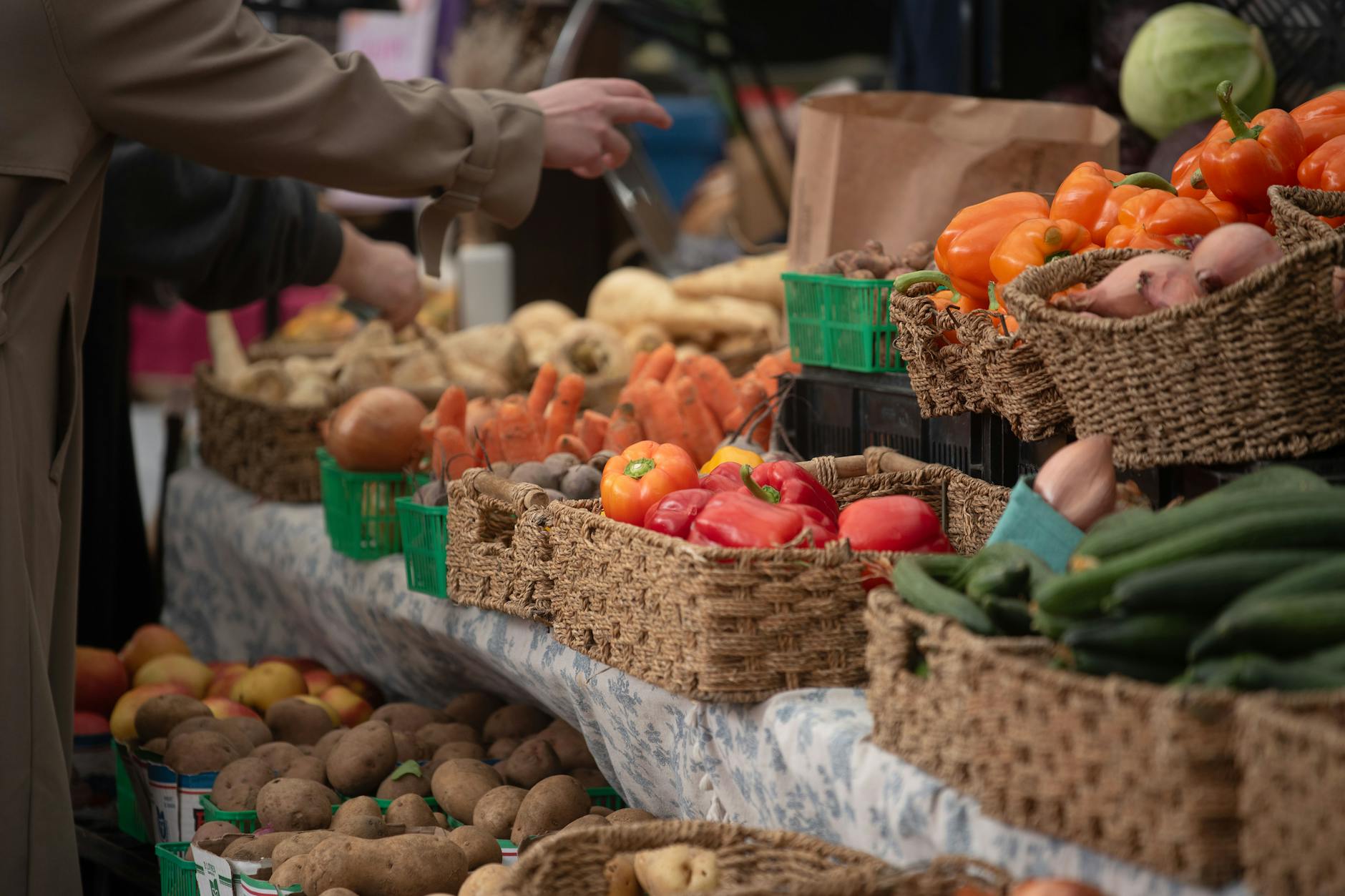
Start here, and come on a Saturday. Stroud Farmers’ Market runs in Cornhill Market Place from around nine to two, has been going since 1999, and has been voted the best farmers’ market in the country more than once. Roughly fifty stalls, all producers rather than resellers, all from within a defined radius of the town — which in this part of Gloucestershire means small dairies, market gardens, a couple of very good bakers, an organic butcher, apple juice from the Severn Vale orchards and cheese made within fifteen miles.
What separates it from the region’s other markets is that it is not a heritage exercise. It is where a substantial number of Stroud households do their weekly shop, and it is priced accordingly. Bring a bag, bring cash as well as a card, and get there before ten if you want the good bread.
The Shambles market, in the narrow lane behind the Old Town Hall, runs Friday and Saturday and is the older survival — fruit and veg, plants, bric-a-brac, under the seventeenth-century Town Hall arches. Our Cotswolds farmers’ markets guide compares it with Cirencester, Chipping Norton and the rest.
What Stroud made, and why the town looks like this
Stroud is not a wool town in the way Northleach and Chipping Campden are wool towns. Those places sold raw fleece and got rich as middlemen. Stroud took the wool and turned it into cloth, which needed water for the fulling mills, and the five valleys that meet here have fast-running streams and steep sides. By the eighteenth century there were more than a hundred and fifty mills in these valleys.
The town’s speciality was Stroudwater Scarlet, a brilliant red broadcloth dyed with local water that happened to be perfect for the job, and it went into British army uniforms for a couple of centuries. When the army stopped wearing red, the industry adapted: Stroud mills went on to make the green baize for billiard and snooker tables and the woven cloth used on tennis balls, which is why a town of 26,000 people in Gloucestershire is quietly attached to Wimbledon and the Crucible.
The result is a landscape unlike anywhere else in the Cotswolds — tall stone mill buildings sitting in wooded valley bottoms, weavers’ cottages stepped up the slopes in rows, mill ponds, leats and a canal. Most of the mills now hold studios, workshops, small manufacturers, a climbing centre and a brewery. Very few of them have been turned into flats with a gym.
The canals
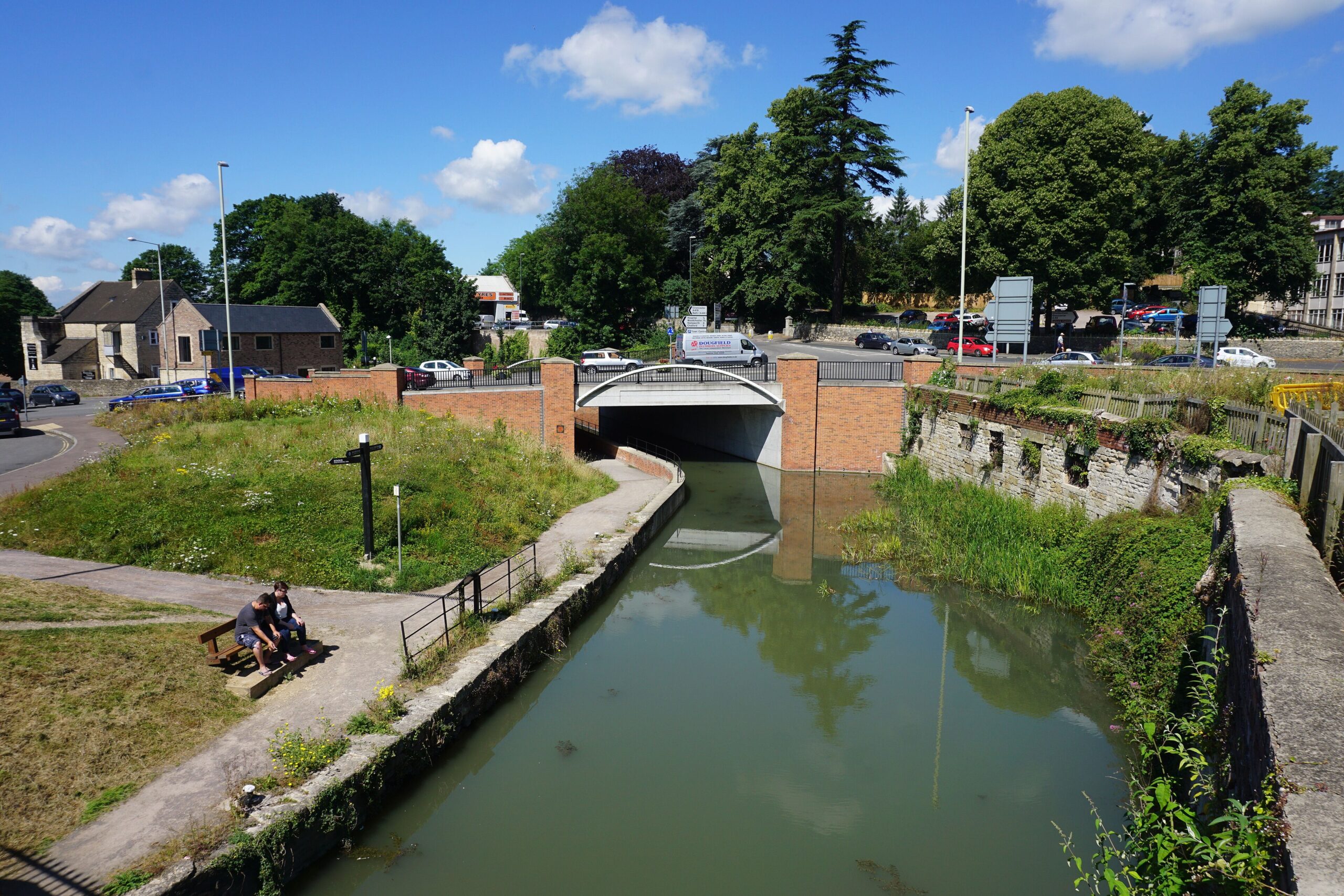
The Stroudwater Navigation and the Thames and Severn Canal together once linked the Severn to the Thames, which meant Stroud cloth could reach London by water. Both were derelict for most of the twentieth century and have been under long, patient restoration since; sections through the town and out towards Stonehouse are now in water, with a towpath you can walk or cycle for miles.
It is an honest piece of Stroud: a genuinely impressive engineering revival running past a supermarket car park, with volunteers doing most of the work. Follow the towpath east and you eventually reach the Sapperton Tunnel portal in the woods — a classical stone arch swallowing the canal, and one of the strangest sights in Gloucestershire.
Things to do in the town centre
- Museum in the Park, Stratford Park — free, in a seventeenth-century wool merchant’s mansion, and genuinely charming. The star exhibit is the world’s first lawnmower, invented in Stroud by Edwin Budding in 1830. Budding also invented the adjustable spanner, which tells you something about the kind of town this was.
- The Subscription Rooms — the Regency assembly rooms on George Street, still the town’s main venue, with gigs, comedy and film. The steps outside are Stroud’s unofficial living room.
- The Old Town Hall and the Shambles — the sixteenth-century core of the town, a tight lane of stone arches behind the church, and the best five minutes of architecture in the centre.
- St Laurence’s church — a medieval tower with a Victorian body, and a good deal of nineteenth-century glass.
- Lansdown and the independent shops — the town has an unusually high concentration of secondhand bookshops, record shops, wholefood co-operatives and repair cafés. Nothing here is polished; several things are excellent.
You will notice the politics. Stroud has produced more than its share of environmental campaigning, community energy schemes and land-rights arguments, and the noticeboards reflect it. Take it as part of the character rather than a nuisance — it is why the mills are workshops rather than second homes.
Laurie Lee and the Slad Valley
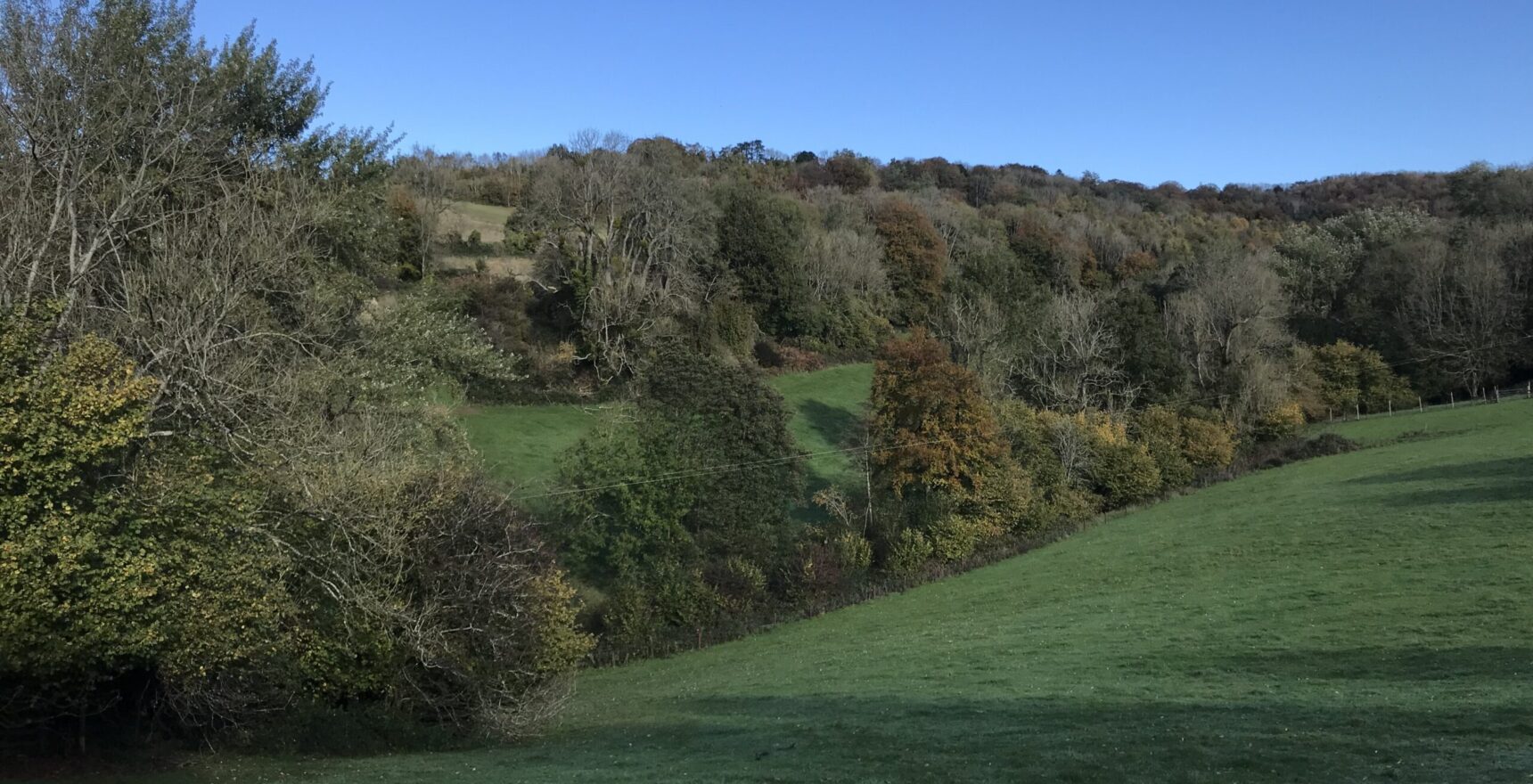
Two miles north-east of the town, the Slad Valley is the landscape of Cider with Rosie, and it has changed remarkably little since Laurie Lee wrote it in 1959. He grew up in the valley, bought fields in it later to stop them being built on, drank in the Woolpack at Slad for most of his adult life, and is buried in the churchyard at Holy Trinity across the road — between the pub and the church, as he wanted.
The pub is still a pub rather than a shrine: small, busy, no bookings for the bar, good beer and a view down the valley from the back windows that is worth the walk on its own. There is a waymarked Laurie Lee Wildlife Way looping through the valley with poetry posts along it, and the Slad Valley nature reserves — Swift’s Hill in particular — are among the best limestone grassland sites in the country for orchids in June.
The walk from Stroud up to Slad and back is about five miles and steep in both directions. Do it in that order and have lunch at the top. Our pub walks guide has more routes of this shape.
The Five Valleys
Stroud sits at the junction of five valleys, and each has a distinct character. This is the real reason to stay more than a day.
| Valley | What it holds | Best for |
|---|---|---|
| Slad | Laurie Lee country, the Woolpack, Swift’s Hill | Walking and lunch |
| Painswick | Painswick, the Rococo Garden, the 99 yews | Snowdrops and gardens |
| Nailsworth | Nailsworth, Forest Green, the Ladder | Food and cycling |
| Golden Valley (Chalford) | Cliff-side cottages, the canal, Sapperton | Canal walks |
| Toadsmoor | Woodland, mill ponds, almost nobody | Quiet |
Painswick
The “Queen of the Cotswolds”, three miles north — a compact grey-stone village with a churchyard famous for its ninety-nine clipped yews and its table tombs, and the Rococo Garden just outside, the only complete survivor of the brief English rococo garden period and the finest snowdrop site in Gloucestershire in February. See our Painswick guide.
Nailsworth
Four miles south and much the best place to eat in the Five Valleys — Hobbs House Bakery began here, and there is a run of delis, a fishmonger and a couple of serious restaurants around the centre. Above the town is Forest Green Rovers, the world’s first entirely vegan football club and, by UN reckoning, the greenest. The Nailsworth Ladder is a road climb of up to one in two that cyclists come from other counties to fail on.
Chalford and the Golden Valley
Chalford’s cottages are stacked up an almost vertical south-facing slope with donkey paths instead of roads — the milk was delivered by donkey into living memory. The canal runs along the valley floor, and the walk from Chalford to the Sapperton Tunnel portal and back is four flat, wooded, entirely lovely miles.
Commons, hills and the Cotswold Way
The escarpment above Stroud is the best walking country in the southern Cotswolds and almost all of it is open access.
- Rodborough and Minchinhampton Commons — National Trust, 600 acres of unfenced limestone grassland directly above the town, with cattle wandering across the roads all summer and views over the Severn to the Forest of Dean. Drive slowly; the cows have right of way and know it.
- Selsley Common — a steep scarp with a long-barrow on top. In the village below, All Saints church holds the first stained-glass commission ever given to Morris & Co, in 1862, with panels by William Morris, Rossetti, Burne-Jones and Ford Madox Brown. It is free, it is usually empty, and it is one of the most important things in the Cotswolds that nobody visits.
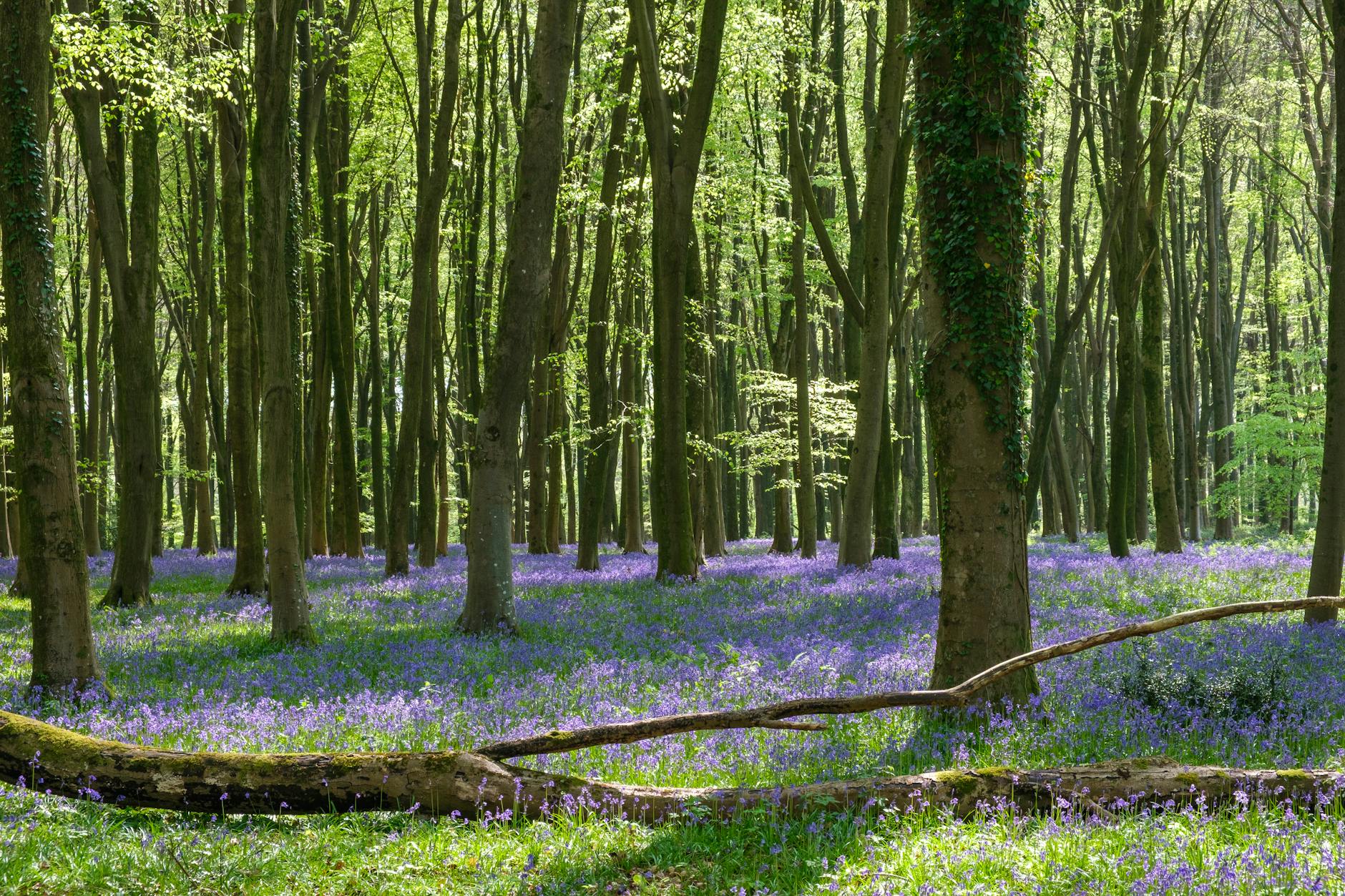
- Woodchester Park — a National Trust valley with a chain of five lakes and one of the great bluebell woods of the region in late April. At the head of it sits Woodchester Mansion, a Victorian Gothic house abandoned mid-build in the 1870s with the scaffolding effectively still up: floors missing, fireplaces hanging in mid-air, and a nationally important bat roost in the attic. It opens on limited days — check before you go.
- The Cotswold Way runs along this escarpment through Painswick, Haresfield Beacon and Selsley. The Haresfield Beacon section has the best single view on the whole 102 miles.
Our Cotswold Way guide, walking and hiking guide and woodland walks guide have routes.
Eating, drinking and festivals
Stroud eats well in an unshowy way: independent cafés, a good deal of vegetarian and vegan cooking, wood-fired pizza in a mill yard, and the sort of pub that has four local ales and a folk night. Stroud Brewery, organic and certified B Corp, has a taproom out at Thrupp on the canal. There are two or three genuinely good restaurants in the town and several more in Nailsworth.
The town’s festival calendar is unusually busy for its size — a book festival, a fringe festival, an open-studios season across the mills in spring, and the food festivals that the market naturally spawns. Check dates before booking; the town fills up for the fringe.
Eight miles north, incidentally, is Cooper’s Hill, where the cheese rolling happens on the late May bank holiday. It is closer to Gloucester than to Stroud but Stroud is the more sensible place to sleep.
Getting to Stroud
By train. Stroud is on the Golden Valley line with direct Great Western services to London Paddington in about an hour and thirty-five minutes, plus Gloucester, Cheltenham and Swindon. The station is a five-minute walk from the market place — this is the best-connected small town in the Cotswolds and one of very few where you genuinely do not need a car. See our Cotswolds by train guide.
By bus. Frequent services up the valleys to Painswick, Nailsworth, Chalford and Dursley, and across to Gloucester, Cheltenham and Cirencester. Better than the regional average, though still thin on Sundays — see the bus routes guide and our car-free guide.
By car. M5 junction 13, then the A419. Parking in the town centre is easier than in the honeypot villages but the streets are steep and narrow; use the multi-storey off Merrywalks.
Where to stay
Rooms in and around Stroud run £85–£125 for a mid-range double with breakfast, which makes it one of the two or three cheapest bases in the Cotswolds — you are paying valley prices rather than postcard prices. The best options are small hotels and pubs with rooms up the valleys, particularly around Painswick, Nailsworth and Amberley, where you get a view and a walk from the door.
The town centre itself has fewer beds than you would expect for its size, so book ahead for market weekends and festival dates. Our pubs with rooms guide and where to stay guide cover the area.
Is Stroud worth visiting?
It depends entirely on what you came for, and this is worth being blunt about.
If you want the Cotswolds of the calendars — thatch, packhorse bridges, tea rooms, geese on a green — Stroud will disappoint you and you should go to Bourton, Bibury or Castle Combe instead. The town centre has empty units, a busy road through it and a general air of getting on with things. It is not pretty.
If you want somewhere real, it is the best town in the region. The market alone justifies the trip, the Five Valleys are the finest walking country in the southern Cotswolds, Selsley’s Morris glass and Woodchester Mansion are two of the most interesting things in Gloucestershire, and you can eat, drink and catch a train without planning around anybody’s coach schedule. Rooms are a third cheaper than Stow.
The honest summary: come on a Saturday, walk up to Slad in the afternoon, and decide for yourself over a pint at the Woolpack.
Frequently asked questions about Stroud
Is Stroud in the Cotswolds?
Yes — it sits in the valleys on the western edge of the Cotswolds, and the Cotswolds National Landscape boundary runs around and above it. It does not look like the honey-stone villages further east because it was an industrial cloth town rather than a wool market.
What day is Stroud Farmers’ Market?
Saturday, in Cornhill Market Place, from around 9am to 2pm. The separate Shambles market runs on Friday and Saturday. Saturday is much the better day to visit the town.
What are the Five Valleys?
The Slad, Painswick, Nailsworth, Golden (Chalford) and Toadsmoor valleys, which meet at Stroud. Each has its own character — Slad for Laurie Lee and walking, Painswick for gardens, Nailsworth for food, the Golden Valley for the canal.
Where is Cider with Rosie set?
In the Slad Valley, two miles north-east of Stroud. Laurie Lee grew up there, drank at the Woolpack in Slad and is buried in the churchyard opposite. The valley is still recognisably the one he described.
Can you visit Stroud without a car?
More easily than anywhere else in the Cotswolds. Direct trains from London Paddington take about an hour and thirty-five minutes, the station is five minutes from the market, and buses run up all five valleys. Sundays are the weak point.
Is Stroud a good base for the Cotswolds?
For the southern and western Cotswolds, yes — Painswick, Nailsworth, Berkeley, Slimbridge, Tetbury and Westonbirt are all within half an hour, and rooms are cheap. It is a long way from Broadway, Stow and the northern villages.
What is Stroud famous for?
Its farmers’ market, its cloth — Stroudwater Scarlet went into British army uniforms and the mills later made snooker baize and tennis-ball cloth — Laurie Lee and the Slad Valley, and a long tradition of environmental and community politics.
How long do you need in Stroud?
A Saturday covers the market, the town centre and a valley walk. Three nights lets you do all five valleys, Woodchester, Selsley and Painswick properly.
Come for the market and stay for the valleys — that is the order that works. From here, our Painswick guide covers the village three miles up the hill, the guide to the Cotswold towns compares Stroud with the fifteen others, the southern Cotswolds itinerary strings the area into a route, and the independent shops guide is the natural follow-on for a town like this one.
Photo Credits
The Slad Brook valley near Stroud: Slad Brook valley – geograph.org.uk – 7007866 by don cload, CC BY-SA 2.0, via Wikimedia Commons.
The Stroudwater Canal at Stroud: The Stroudwater Canal at Stroud – geograph.org.uk – 5061949 by Bill Boaden, CC BY-SA 2.0, via Wikimedia Commons.
Leave a Reply