This article contains advertising. My booking links are routed through a partner that adds commission tracking automatically, so if you book through one I earn a commission from the provider, at no extra cost to you. It never affects what I recommend. Affiliate disclosure
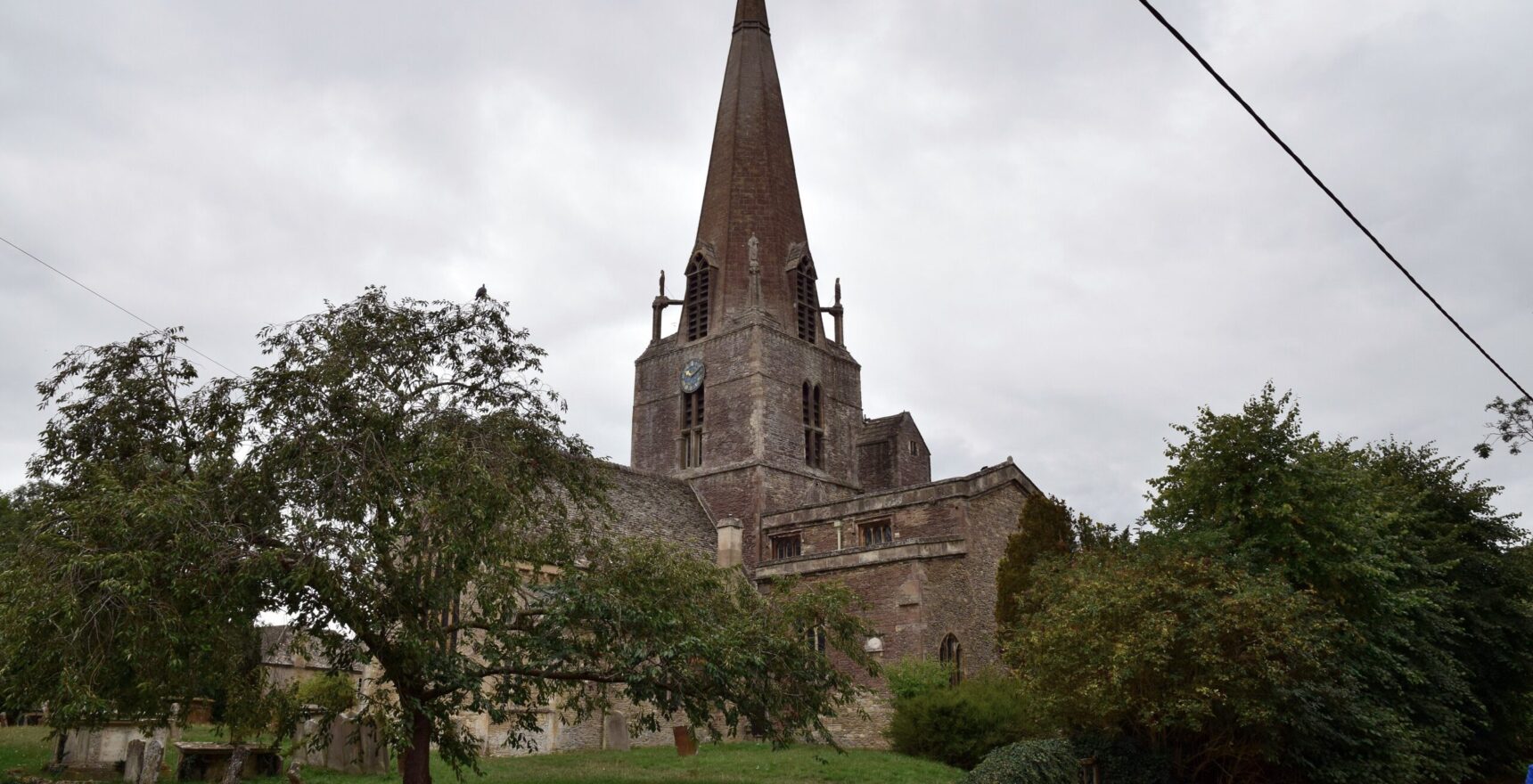
Drive into Bampton from the Witney road and the first thing you see is the spire of St Mary’s rising over the flat fields of the upper Thames — and if you watched Downton Abbey, you will know it at once, because the camera looked at it several hundred times over six series and three films. Park up, walk to Church Green and it becomes almost comical how little the place has changed. The lych gate, the wall, the churchyard yews: all exactly where Matthew and Mary left them. That jolt of recognition is what brings people to the Downton Abbey filming locations in and around the Cotswolds, and it is surprisingly strong even for casual fans.
The geography, though, is confusing. The series is set in Yorkshire. The great house is in Hampshire. The servants’ hall was a studio set in west London. And the village that the Crawleys looked down on — the church, the cottage hospital, Isobel Crawley’s house — is a small, unassuming place in west Oxfordshire. This guide untangles it: which scenes were filmed where, what you can actually see today, how the Cotswold locations fit with Highclere Castle, and how to see the lot in a day or two without spending most of it in the car.
Downton Abbey locations at a glance
| Real place | Plays | Where | Can you visit? |
|---|---|---|---|
| St Mary’s Church, Bampton | St Michael and All Angels, Downton’s church | West Oxfordshire | Usually open in daytime; donation welcome |
| Church Green, Bampton | Downton village square | West Oxfordshire | Yes, public |
| Churchgate House, Bampton | Crawley House | West Oxfordshire | Private home — view from the lane |
| Bampton Library | Downton Cottage Hospital | West Oxfordshire | Exterior from the street; open as a library |
| Cogges Manor Farm, Witney | Yew Tree Farm | West Oxfordshire | Yes — paid attraction, open daily from 09:30 |
| Lacock | Village scenes in series 6 and the 2019 film’s royal parade | Wiltshire | Village free; Abbey National Trust |
| Greys Court | Appeared in the series | Near Henley, Oxfordshire | National Trust |
| Basildon Park | Grantham House, the Crawleys’ London home | Berkshire | National Trust |
| Highclere Castle | Downton Abbey itself | Hampshire | Selected days only, tickets in advance |
Checked September 2026 — opening days for Highclere and the National Trust houses change every year, so confirm before you travel.
Where was Downton Abbey filmed?
Julian Fellowes set his story in fictional Yorkshire, but the production spread across southern England for practical reasons. Highclere Castle, the Earl of Carnarvon’s seat near Newbury, provided the house: its exterior, its great hall, its library and drawing rooms and the upstairs bedrooms. The servants’ quarters, kitchens and much of the “downstairs” world were built as sets at Ealing Studios in west London, because Highclere’s own basements look nothing like a working Edwardian service wing.
For the village, the producers needed somewhere with a handsome church, a green and a cluster of period buildings that could be dressed back to 1912 with minimal fuss, all within reasonable reach of London and Highclere. They found it in Bampton, and kept coming back from the first series in 2010 to the feature films more than a decade later.
Around those three fixed points — Highclere, Ealing and Bampton — the production borrowed dozens of other places for single episodes: London streets, Scottish castles, heritage railways, National Trust houses. A handful of those are in or very close to the Cotswolds, and they are what this guide focuses on.
Bampton: the real Downton village
Bampton, sometimes still called Bampton-in-the-Bush, sits on the flat, open land south-west of Witney, roughly fifteen miles west of Oxford. It is not the kind of honey-stone showpiece that fills Cotswold calendars. It is a working village with a market-town past, a mix of stone and later buildings, a few shops and pubs, and a church far grander than a place its size would normally have — a legacy of its medieval importance. That grandeur is exactly what caught the location scouts’ eye.
St Mary’s Church — St Michael and All Angels
The church is the centre of Downton’s village life, and of Bampton’s. It is where Mary married Matthew, where Edith was abandoned at the altar by Sir Anthony Strallan, and where the family gathered for christenings and funerals across six series. The exterior, with its tall spire and ancient churchyard, is instantly recognisable; interior scenes were also filmed here, and the building will feel familiar the moment you walk in.
It is a real, working parish church, usually open during the day. Please treat it as one: be quiet if a service or a group is inside, and put something in the donations box on the way out. The upkeep of a medieval church with a spire this size costs a small fortune every year, and television fame does not pay for the roof.
Church Green — the village square
The little open space by the church plays Downton’s village square, the scene of countless arrivals, departures and meaningful conversations. Stand by the church gate and look back across the green and you are exactly where the camera stood. It takes about thirty seconds to see and several minutes to get the photograph right, which is why there is often someone there doing just that.
Churchgate House — Crawley House
The home of Isobel Crawley and Matthew, where so much of the middle-class Crawley story plays out, is Churchgate House, a handsome period house close to the church. It is a private home. Look and photograph from the lane, do not go through the gate, and resist the temptation to knock on the door and ask whether Mrs Crawley is at home.
Bampton Library — Downton Cottage Hospital
The old building that plays the cottage hospital, where Isobel and Dr Clarkson clashed over medical progress, is Bampton’s library. From the street it looks just as it did on screen. If it is open, go in — it remains a community building rather than a set, and the people inside are used to explaining that yes, this really is the hospital.
Seeing Bampton properly
All four locations are within a few minutes’ walk of each other, and you can see them in half an hour. Stay longer and walk the village: the older lanes around the church, the market square and the houses along Bridge Street give a good sense of a place that has quietly got on with life while being famous on television. If you can, time your visit for the Spring Bank Holiday Monday, when Bampton’s Morris dancers perform around the village as they have for centuries — one of the oldest continuous Morris traditions in England, and a far older claim to fame than Downton.
Parking is on-street and limited, and the village gets busy on filming days and summer weekends. Park considerately, keep driveways clear and walk.
Cogges Manor Farm — Yew Tree Farm
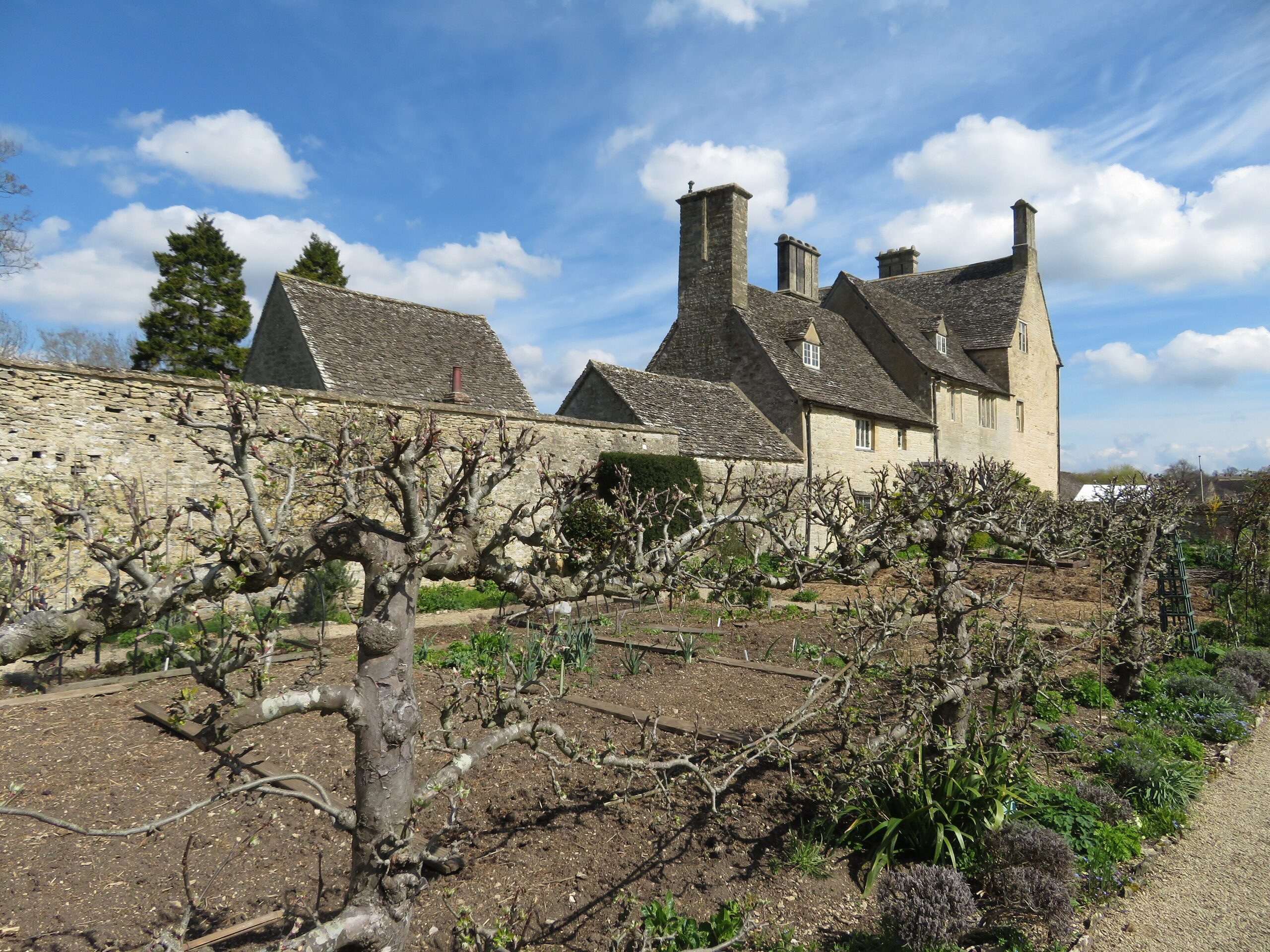
On the edge of Witney, about fifteen minutes’ drive from Bampton, Cogges Manor Farm played Yew Tree Farm, home of the Drewe family — the tenant farmers who took in Edith’s daughter Marigold in one of the series’ most emotional storylines. Its old farmhouse, barns and yard needed very little work to become an early-twentieth-century farm.
Today Cogges is run as a historic farm and manor house open to the public, with a walled kitchen garden, farm animals, play areas for children and the Cogges Kitchen café. It is open daily from 09:30, and parking is free (postcode OX28 3FR). It makes a good family stop: children who have no interest in Downton will happily spend an hour with the animals while their parents pick out the spot where Mr Drewe mended his fences. Check the Cogges website for current admission prices and any seasonal changes to opening.
Witney itself, a former blanket-making town, has a good market on Thursdays and Saturdays and a useful choice of places to eat, and is the easiest base for Bampton and Cogges together.
Lacock and the royal parade
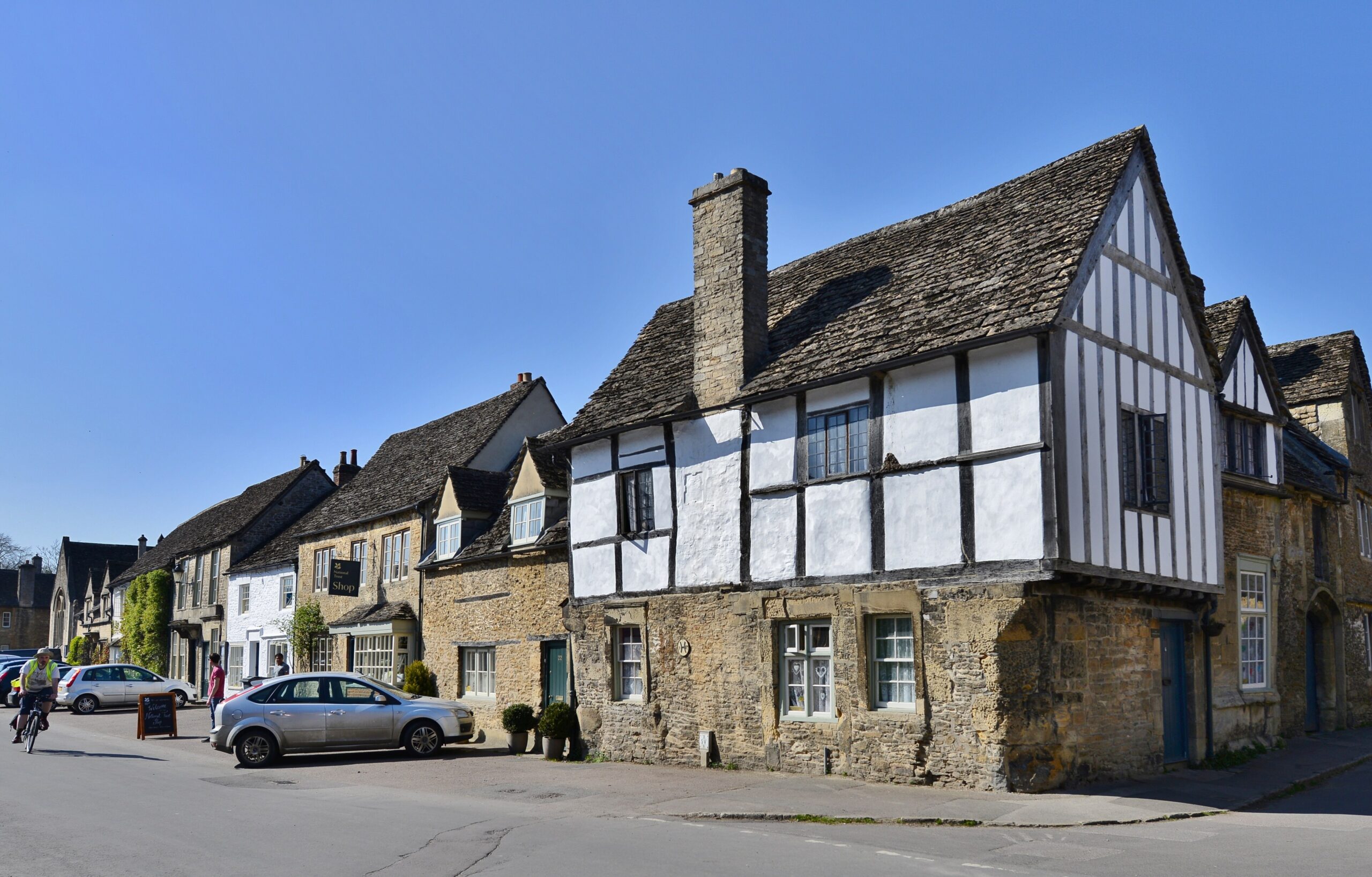
When the first feature film, released in 2019, brought King George V and Queen Mary to Downton, the production needed a bigger village than Bampton for the royal parade — and turned to Lacock in Wiltshire. The parade through Lacock’s streets involved around 350 extras, 80 soldiers on horseback and a royal carriage, and it remains one of the grandest set pieces in the franchise. Lacock had already appeared in the sixth series of the television show.
Lacock is in the far south of the Cotswolds, about an hour and a quarter from Bampton by car, so it does not fit easily into the same day. But it is one of the most beautiful and most filmed villages in Britain — Harry Potter, Pride and Prejudice and Wolf Hall have all been made there — and it deserves a day of its own. The village is free to walk around; the Abbey and museum belong to the National Trust.
Greys Court and Basildon Park
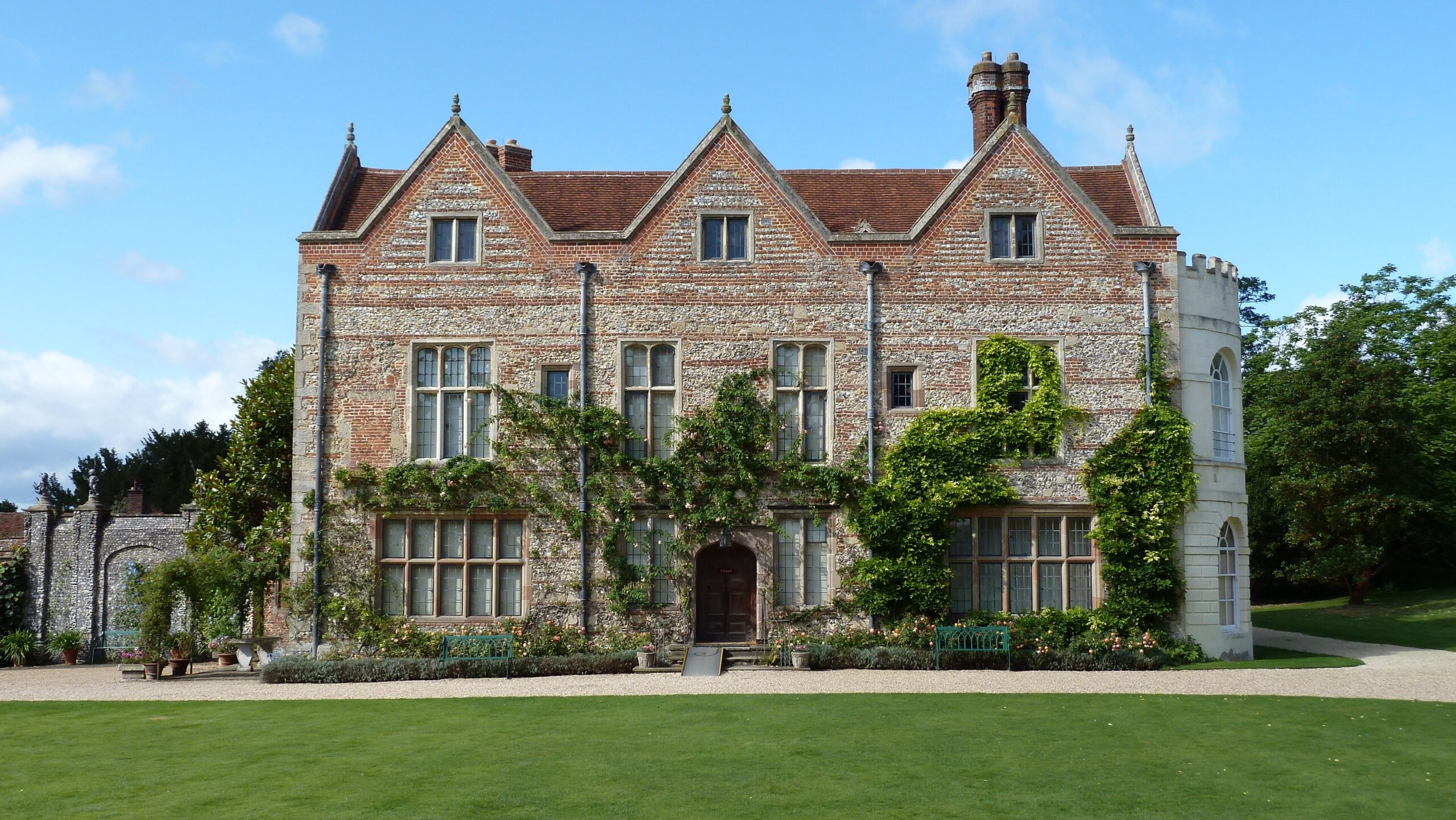
Two National Trust houses in the Thames Valley, between the Cotswolds and London, also played their part.
Greys Court, a Tudor house of brick and flint in the Chiltern hills near Henley-on-Thames, appeared in the television series. It is beautiful in its own right, with walled gardens, a wisteria-hung courtyard and a donkey wheel for drawing water from a deep well.
Basildon Park, an elegant Palladian house above the Thames near Pangbourne in Berkshire, had even more screen time: it played the interior of Grantham House, the Crawleys’ London home, in the fourth and fifth series and in the films. Its grand staircase and drawing rooms are recognisable instantly.
Neither is strictly in the Cotswolds, but both lie close to the M4 and M40 routes from London, which makes them easy stops on the drive west. Both are National Trust houses with an admission charge for non-members; check opening days before going.
Highclere Castle: the real Downton Abbey
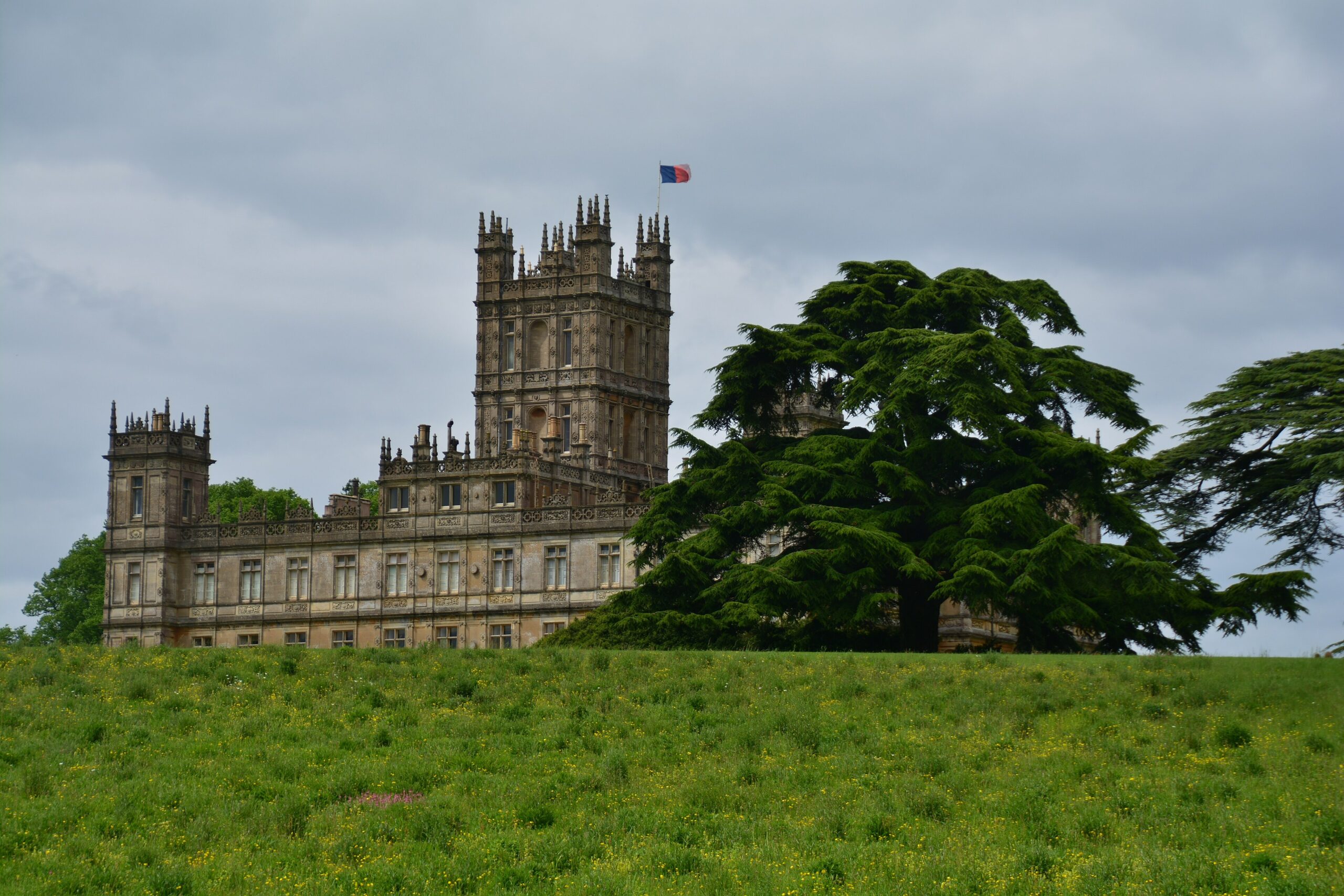
No guide to Downton locations would be complete without the house itself, even though it is not in the Cotswolds. Highclere Castle stands in a vast park near Newbury in Hampshire, about an hour’s drive south-east of Bampton. It is the home of the Earl and Countess of Carnarvon, and it looks, if anything, more imposing in person than on screen.
The house opens to the public only on selected days, mostly in summer and around Easter and Christmas, plus special events such as its “Castle Tours and Movie Magic” weekend in mid-September 2026. Tickets are sold in advance through the castle’s own website and popular dates sell out, so book as soon as your plans are fixed and do not turn up hoping to buy at the gate.
Inside you walk through the rooms familiar from the series — the saloon, the library, the drawing room, the dining room and several of the bedrooms — and the gardens and parkland are spectacular. Highclere also has a second story to tell: the 5th Earl of Carnarvon financed Howard Carter’s search for Tutankhamun’s tomb, and the castle’s Egyptian Exhibition explains the discovery. Many visitors come for Downton and leave talking about Egypt.
Honest advice: if you are a serious Downton fan, Highclere is the one place worth building a trip around, and Bampton is the perfect second act. If you are a casual viewer, the combination of Highclere’s limited opening days and long drives may not be worth it — Blenheim Palace, much closer to Bampton, offers a similar sense of aristocratic scale with far more flexible opening. Our Blenheim Palace guide explains the tickets.
Other Downton locations further afield
If you are chasing the complete set, the rest of the series’ location list is spread across England and Scotland:
- Horsted Keynes station on the Bluebell Railway in Sussex played Downton station.
- Byfleet Manor in Surrey played the Dower House, Violet’s home.
- Alnwick Castle in Northumberland was Brancaster Castle in the 2014 Christmas special.
- Inveraray Castle in Argyll played Duneagle, the Scottish home of Lady Rose’s family.
- West Wycombe Park in Buckinghamshire and various London streets appeared across the series and films.
None of these is within easy reach of the Cotswolds; they are for dedicated completists.
Planning a Downton day from the Cotswolds
The Cotswold Downton day
This works as a relaxed day from Burford, Witney or Woodstock, and adds Blenheim for anyone who wants a stately interior.
| Time | What to do |
|---|---|
| 09:30 | Cogges Manor Farm at opening — Yew Tree Farm and the walled garden |
| 11:00 | Drive fifteen minutes to Bampton; walk the church, Church Green, Crawley House and the library |
| 12:30 | Lunch in Bampton, or in Burford, twenty minutes north |
| 14:30 | Blenheim Palace, thirty minutes away — Bridgerton’s Buckingham House and Churchill’s birthplace |
| 17:30 | Dinner in Woodstock |
The full Downton journey from London
For a two-day trip that includes the house, drive west from London on day one via Basildon Park or Greys Court to Highclere Castle (on a pre-booked opening day), then continue north to stay near Witney or Burford. On day two, see Bampton and Cogges in the morning and head into the Cotswolds proper in the afternoon. Our day trip from Oxford covers the same corner if you are starting from the city instead.
Getting there without a car
Bampton has no railway station; the nearest are Oxford and Hanborough. Buses run to Bampton from Witney and Oxford, but frequencies are modest and change from time to time, so check the current timetable before you set out. Our guide to Cotswolds bus routes explains the network. Highclere is best reached by taxi from Newbury station on open days.
On a tour
Many operators run Downton-themed day tours from London, usually combining Highclere with Bampton or with Oxford. They save a lot of driving and some include guaranteed Highclere tickets on open days, which can otherwise be hard to secure — but check exactly what is included before booking, because “Downton tour” can mean anything from a full castle visit to a photo stop at the gates. Our guide to Cotswolds tours covers what to look for.
Photographing the Downton locations
Half the point of a Downton pilgrimage is the photograph that lines up with the screen, and a little planning makes that far easier.
- Go early. Church Green and the lane by Crawley House are small, and by late morning on a summer weekend there are cars parked along every edge. Before 09:30 you can usually frame the church without a hatchback in the shot.
- Use the spire. The most recognisable image of Downton village is the church spire seen over the rooftops and trees. Walk a little way out along the lanes to the south and west of the church and look back for the long view the production used as an establishing shot.
- Grey days work. The series was filmed in all weathers and much of it under soft, overcast English light. A flat grey sky flatters stone and suits the period mood better than harsh midday sun.
- At Cogges, the walled garden and the farmyard are at their best in spring, when the fruit trees are coming into blossom and the vegetable beds are freshly planted.
- At Highclere, the classic view of the house is from the lawn in front of the main entrance, with the great cedars framing it; arrive at opening to take it before the crowds spread out.
- Be considerate. Crawley House and many houses around the green are homes. Photograph from public spaces, keep off doorsteps and never point a camera through windows.
If you enjoy this kind of trip, our guide to Cotswolds photography spots covers the region’s best viewpoints, with the times of day when each looks its best.
Where to stay
For the Cotswold locations, Witney is the practical base and Burford the prettiest, with some of the region’s best old coaching inns — our Burford guide has the details. Woodstock, at Blenheim’s gates, gives you a lovely small town for the evenings; see our Woodstock guide. There is limited accommodation in Bampton itself, mostly pubs with rooms and self-catering cottages, but staying there lets you see the church and green in the quiet of early morning, which is when they look most like the series.
Is it worth it?
For Downton fans, genuinely yes. There is something oddly moving about standing at the church gate in Bampton, and the small number of locations makes it a satisfying, completable pilgrimage. Pair Bampton with Cogges and you have a gentle half-day; add Highclere on an open day and you have covered the heart of the story.
For everyone else, Bampton on its own is a pleasant but unremarkable village, and not worth a long detour. Put your time into the showpiece villages instead — our guide to the region’s grand houses, Cotswold stately homes, has the most rewarding alternatives.
Frequently asked questions about Downton Abbey filming locations
Where is the real Downton village?
Bampton, in west Oxfordshire, about fifteen miles west of Oxford. St Mary’s Church, Church Green, Churchgate House and the library were all used.
Is Downton Abbey filmed in the Cotswolds?
Partly. The village scenes were filmed in Bampton, on the eastern edge of the Cotswolds, and Cogges Manor Farm near Witney played Yew Tree Farm. The house itself, Highclere Castle, is in Hampshire.
Can you go inside the Downton church?
Usually, yes. St Mary’s in Bampton is a working parish church that is normally open during the day. A donation towards its upkeep is appreciated.
Can you visit Highclere Castle?
Yes, but only on selected opening days, with tickets bought in advance from the castle’s website. Dates are announced each year and sell out.
How far is Bampton from Highclere Castle?
About an hour by car, depending on traffic. Combining the two in a single day is possible but makes for a lot of driving.
Where was the Downton Abbey film parade filmed?
In Lacock, Wiltshire, which hosted the royal parade in the 2019 film with around 350 extras and 80 mounted soldiers.
Downton is only one of the productions that have made this corner of England famous on screen. For Bridgerton at Blenheim, Harry Potter in Gloucester and Lacock, Father Brown in Blockley and much more, see our complete guide to Cotswolds filming locations. For the real families behind the region’s great houses, and some of the better-known names who live here now, see our guide to famous Cotswolds residents.
If Bampton charms you, there is more to it than a church gate and a green. It has one of the oldest unbroken Morris dancing traditions in England, a nightshirt pub race, mummers on Christmas Eve and easy walks down to the Thames. Our Bampton village guide covers the village beyond the filming spots, including how to get there without a car.
Photo Credits
St Mary’s Church, Bampton, which plays Downton’s church: Bampton Church (Saint Mary) (43665704625) by Hugh Llewelyn from Keynsham, UK, CC BY-SA 2.0, via Wikimedia Commons.
Cogges Manor House and its walled garden: Cogges Manor House and garden – geograph.org.uk – 7454340 by Gareth James, CC BY-SA 2.0, via Wikimedia Commons.
Greys Court, Oxfordshire: Greys Court Oxfordshire in sunshine by John of Reading, CC BY-SA 3.0, via Wikimedia Commons.
Highclere Castle, Hampshire: Basingstoke and Deane , Highclere Castle – geograph.org.uk – 5411036 by Lewis Clarke, CC BY-SA 2.0, via Wikimedia Commons.
Leave a Reply