This article contains advertising. My booking links are routed through a partner that adds commission tracking automatically, so if you book through one I earn a commission from the provider, at no extra cost to you. It never affects what I recommend. Affiliate disclosure
Planning a first trip to the Cotswolds? Most of what goes wrong here is avoidable, and almost all of it comes down to a handful of things first-timers simply do not know until they have been. Where to park without paying a fortune. Which villages to skip on a Saturday. Why your phone will abandon you halfway up a hill.
These are 25 practical Cotswolds travel tips, the sort a local friend would give you over a pint rather than the kind a brochure prints. They cover getting here, getting around, parking, timing, what to pack, how to behave in villages that are also people’s homes, and how to come away having seen the real thing rather than a crowded car park. Whether you have a day, a weekend or a week, sort these and the rest of the trip looks after itself. For the bigger picture first, see our complete guide to visiting the Cotswolds.
Getting here
1. The Cotswolds is far bigger than you think
The Cotswolds is not a town or a single village — it is a region of nearly 800 square miles spread across parts of six counties: Gloucestershire, Oxfordshire, Wiltshire, Warwickshire, Worcestershire and a sliver of Somerset. It runs roughly 90 miles north to south and about 25 across. You cannot “see the Cotswolds” in one stop, and trying to means a holiday spent mostly in the car. Get your head round the geography before you come and you will plan a realistic trip rather than an exhausting one. Our guide to where the Cotswolds actually is maps it out properly.
2. Moreton-in-Marsh is your station if you come by train
Arriving by rail from London, Moreton-in-Marsh is the most useful station by a distance. Great Western Railway runs direct from Paddington via Oxford and the trip takes about an hour and a half. From Moreton you can pick up buses to Stow-on-the-Wold, Bourton-on-the-Water and beyond. Book advance tickets and the fare can drop to roughly £7 to £15 each way against £30 or more on the day. Kingham, Honeybourne and Cheltenham Spa are other handy stations depending on where you are headed. The full rundown is in our transport guide.
3. A car gives you the best of it
Public transport handles the big villages, but a car opens up the rest — the quiet hamlets, the back lanes, the scenic drives, the freedom to stop wherever a view catches you. Many of the loveliest spots, Stanton, Snowshill, the Duntisbournes and Guiting Power among them, have no bus at all. If you do not normally drive, it is worth hiring a car for the duration even so. That said, a car-free trip is perfectly doable if you base yourself well and lean on the trains and buses — you just plan around them rather than the other way round.
Driving and parking
4. Hire the smallest car you can live with
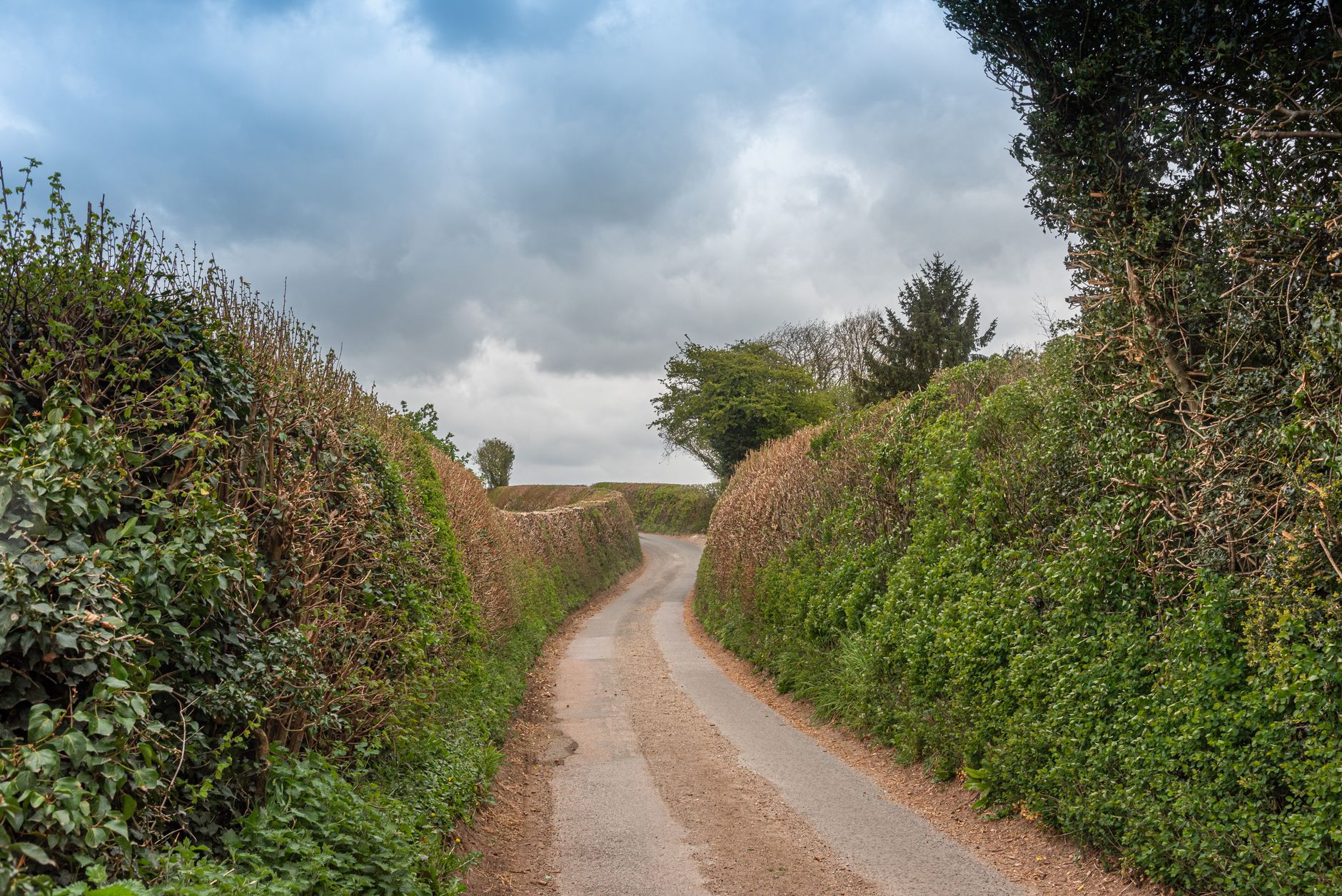
This is one of the most practical tips here. The lanes between villages are narrow — sometimes barely a car and a half wide, with stone walls hard up on both sides and no room for error. A compact car makes the whole thing far less stressful than anything large, and if the hire company offers parking sensors, take them; you will use them. Drivers in big SUVs spend a lot of the Cotswolds breathing in and reversing.
5. Learn the single-track lane etiquette
When you meet an oncoming car on a single-track lane, one of you reverses to a passing place. The convention is that whoever is nearer a passing place backs up; on a hill, the car going downhill usually gives way, as reversing uphill is harder. A raised hand or a flash of the headlights says thank you. Stay calm and take your time — the locals drive these lanes every day and will generally be the confident ones to manoeuvre, so let them. Panic is the only thing that turns a tight squeeze into a scrape.
6. Sort out cashless parking before you arrive
Many council-run car parks in the Cotswolds now take payment by phone app rather than coins, and some are app-only. Download whichever app the local car parks use and register a card in advance so you are not standing at a machine with no signal trying to set it up. Charges are typically a few pounds for a couple of hours. At the busiest villages, Bourton-on-the-Water and Bibury especially, aim to arrive before about 9.30am to be sure of a space at all.
7. Know where the free parking is
Not everything costs. Moreton-in-Marsh has a large free car park. Several smaller villages — Stanton, Guiting Power, Naunton, the Duntisbournes — have free roadside parking, and Broadway has free spaces up by the church at the top of the village. Wherever you leave the car, never block a driveway, gateway or field entrance, and do not park directly opposite another car on a narrow road. If a village looks full, drive on; the next one along is almost always quieter, and the walk back can be the best part of the day.
When to go
8. May and September are the sweet spot
If you can choose, aim for May or September. Both bring decent weather, fine scenery and far thinner crowds than the school holidays. May gives you bluebells, wildflowers and the countryside at its greenest; September brings harvest produce, the first hint of autumn colour and warm days without the summer crush. Our month-by-month guide goes through the trade-offs season by season.
9. Midweek beats the weekend, always
This applies to nearly everything. Villages are quieter midweek, accommodation is cheaper, restaurants are easier to book, parking is easier to find and the lanes are less congested. If you can possibly come Tuesday to Thursday rather than Friday to Sunday, you will have a noticeably better time, and the difference is sharpest at the famous honeypot villages where weekends can feel overrun.
10. Arrive early or stay late
The busiest window at popular villages is roughly 11am to 3pm, when the day-trippers and coach tours are in. Turn up before 9.30am and you will often have the place to yourself; come back after 5pm and the crowds melt away, the light goes golden on the stone and the village feels like the one in the photographs. The same scene, minus the queue, simply by shifting your timing a couple of hours.
What to pack and wear
11. Pack waterproofs whatever the forecast
The Cotswolds weather can change several times in a day. Even in July a sunny morning can turn drizzly by mid-afternoon. Bring a lightweight waterproof and dress in layers you can add or shed; in winter, throw in a warm fleece and a hat. The rule is simple — if you are ready for rain, you can enjoy whatever the day actually does, and a wet afternoon just becomes an excuse for a pub.
12. Bring proper footwear
Even if you are not planning serious walks, wear shoes with decent grip. Village pavements are often uneven stone or cobbles, churchyard paths get slippery, and any footpath between villages turns muddy after rain — which is most of the time. Waterproof walking shoes or boots will save you a damp, uncomfortable day. Trainers and smart flats will not. If you mean to walk any stretch of the Cotswold Way or the field paths, proper boots are not optional.
13. Carry an offline map
Phone signal is patchy across much of the rural Cotswolds, and a mapping app that loses signal mid-walk will strand you at a field junction with three identical gates. Download Ordnance Survey maps for offline use, or carry a paper OS Explorer sheet — the OL45 covers a good chunk of the region. For driving, download your route on Google Maps or Waze before you head off and lose coverage. It sounds fussy until the first time it saves you.

Village etiquette
14. Remember these are real villages, not film sets
People live and work here. The pretty cottages are private homes, not attractions, and the charm of the Cotswolds depends entirely on it staying a living, working place. Do not peer through windows, wander into private gardens, block driveways with the car, or treat someone’s front door as a photo backdrop. Keep the noise down, be friendly, and behave as you would want strangers to behave outside your own house. It is not much to ask and it makes a real difference.
15. Most shops and cafés shut by 5pm
This is not a late-night part of the world. Most village shops, tea rooms and cafés close around 5pm or 5.30pm, earlier still in winter. Pubs and restaurants generally serve dinner from about 6pm to 9pm, and many want a booking. Plan your meals around that rather than assuming you can find something at 8.30pm in a small village — because often you cannot.
16. Book pubs and restaurants ahead
The best Cotswolds pubs and restaurants are popular with locals and visitors alike, and at weekends in summer the renowned ones fill up days or even weeks in advance. Always book dinner. For lunch, a call on the morning usually does the trick, though Friday and Saturday lunches are worth reserving too. Do not assume you can walk in anywhere — the village with one good pub is exactly the village where it is full. Our wider food and drink guide has more on where to aim.
Money and practicalities
17. Carry a bit of cash
Cards work almost everywhere now, but some smaller places — farm shops, market stalls, the odd café and car park — still prefer or need cash, and village churches keep a donation box rather than a card reader. Keep £20 or £30 in small notes and coins as a backstop. Cash machines exist in the larger towns such as Moreton-in-Marsh, Stow, Bourton, Chipping Campden and Cirencester, but are scarce in the smaller villages, so draw out before you need it.
18. Do not count on phone signal
Plenty of valleys, lanes and even some village centres have weak or no mobile coverage. It is part of the charm and a frequent surprise. Download maps, directions and booking confirmations before you head into the countryside, and if you are arriving somewhere late, tell your hosts in advance, since you may not be able to ring from the road. Treat a strong signal as a bonus rather than a given.
19. It does not have to be expensive
The Cotswolds has a reputation for being pricey, but the best of it is free — walking, villages, churches, markets. Hostels, camping and self-catering keep beds affordable, and a picnic from a market or supermarket saves a fortune over eating out. Our Cotswolds on a budget guide sets out how to do the region well for roughly £30 to £50 a head a day, which is a long way short of the headline hotel prices.
20. Taxis and ride-hailing are thin on the ground
Ride-hailing apps are not reliably available in the rural Cotswolds — you might find a driver in Cheltenham or Cirencester, rarely in the villages. Local taxi firms are the alternative, and they are limited, so book ahead for any evening pickup rather than expecting to flag one down. Your accommodation host will usually have a trusted local number; ask when you arrive, before you need it at 10pm in the dark.
Seeing the real Cotswolds
21. Go beyond the famous three
Bourton-on-the-Water, Bibury and Broadway are the headline names, and they are lovely — but they are also the busiest, and they should not be your whole trip. For every famous village there is a quieter, equally fine alternative. Try Stanton instead of Broadway, a beautifully preserved village with a fraction of the visitors. Visit Naunton instead of Bourton, tucked in its own valley. Walk into Guiting Power instead of Bibury, a working village with a cracking pub. The less-visited places are very often the ones you remember. Our guide to the prettiest Cotswolds villages has the full list, famous and hidden.
22. Walk between villages wherever you can
The single best way to experience the Cotswolds is to walk between villages rather than drive. The Bourton-on-the-Water to the Slaughters circuit (about three miles, easy), Broadway up to Snowshill (a couple of miles, a bit of a climb) and Chipping Campden to Broadway along the Cotswold Way (around six miles) are all superb. Walking hands you the views, the birdsong, the field paths and the quiet that driving between car parks skips entirely. It is the difference between seeing the Cotswolds and actually being in it.
23. Catch a market
The weekly markets are a highlight that a lot of visitors miss. The Tuesday market at Moreton-in-Marsh stretches the length of the high street with dozens of stalls. Stroud Farmers’ Market on a Saturday morning is one of the finest in the country. Cirencester holds markets on Mondays and Fridays. They are free to browse, ideal for picnic supplies, and they give you a slice of ordinary local life that the tourist villages cannot. Our roundup of Cotswolds farmers’ markets lists the lot with days and times.
24. Do not rush — and stay over if you can
This is perhaps the most important tip of all. Do not try to cram six or eight villages into a day. Pick two or three, walk between them if you can, take a long pub lunch, sit in a churchyard and enjoy the quiet. The Cotswolds rewards slow travel more than almost anywhere — the slower you go, the more you see and the better you feel. And if you possibly can, stay overnight. A day trip gives you a taste, but the magic comes when the day-trippers leave: evening light on the stone, silent villages, a morning walk with mist in the valleys. Even one night transforms the trip. Our guide to how many days you need helps you pitch it right, and the accommodation guide covers every option from camping to boutique hotels.
25. Come back
Almost nobody sees the whole Cotswolds in one trip, and that is fine. First-timers usually explore the north — Chipping Campden, Broadway, Stow, Bourton. A return visit opens up the south, around Cirencester, Tetbury, Castle Combe and Malmesbury, and the western escarpment. Different seasons hand you different landscapes: spring bluebells, summer roses, autumn beechwoods, winter frost. The Cotswolds is a place you return to, not one you tick off, and the best first trips are the ones that leave you already planning the second. Our day trips and itineraries are a good place to start mapping the next one.
A few more things worth knowing
Those 25 cover the essentials, but a handful of smaller points trip people up too. None is a dealbreaker; all are easier to handle if you know them going in.
The Cotswolds is very dog-friendly
This is good walking-dog country and the region knows it. A great many pubs welcome dogs in the bar, often with a water bowl and a biscuit behind the counter, and plenty of cafés and accommodation do too. The countryside is laced with footpaths, though you will cross fields with livestock — keep dogs on a lead around sheep and cattle, especially in spring lambing season, and close gates behind you. If you are travelling with a dog, our guide to dog-friendly hotels and cottages picks out the places that genuinely mean it.
It works well with children, with a little planning
Pretty villages alone will not hold a small child’s attention for long, so it pays to build in something active. The model railway and the river at Bourton-on-the-Water, a rare-breeds farm, a wildlife park, an easy circular walk with a picnic at the end — string a few of those together and the day works for everyone. Our family holiday guide has the practical version, with the attractions that earn their keep with younger visitors.
Electric car charging is improving but patchy
If you are driving an electric car, do not assume a charger in every village. Provision is growing, with rapid chargers at some supermarkets, larger car parks and the bigger hotels, but it thins out in the smaller places. Plan your charging stops around the towns — Cirencester, Cheltenham, Moreton-in-Marsh and the like — rather than counting on topping up in a hamlet, and download a charging-network app before you set off, since you will want it where the phone signal is weakest.
Tipping is the same as the rest of the UK
No special Cotswolds rules here. In restaurants, around 10 to 12.5 per cent is normal for good service, though check whether it has already been added to the bill as a service charge before you tip again. You do not tip at the bar in a pub, where you simply pay for your drinks, and rounding up a taxi fare is welcome rather than expected. Nobody will chase you down the lane for getting it slightly wrong.
Pick villages that are different from each other
One reason people complain that the villages “all look the same” is that they string together three that genuinely are similar. Mix it up instead. Pair a classic stone village with a market town like Cirencester or Tetbury, a riverside spot like Bourton with a hilltop one like Stow, somewhere famous with somewhere quiet. Each has its own feel if you give it room, and a varied day reads as far richer than four near-identical photo stops in a row. Our things to do guide helps you balance the variety.
Frequently Asked Questions
What is the single best tip for visiting the Cotswolds?
Go beyond the famous villages. Bourton-on-the-Water, Bibury and Broadway are beautiful but crowded. The quieter places — Stanton, Guiting Power, Naunton, the Duntisbournes — are where the real Cotswolds magic lives. Split your time between the famous and the hidden and you get the best of both.
Do I need a car in the Cotswolds?
A car gives the best experience and the most flexibility, especially for the quieter villages with no bus service. You can manage without one using the train to Moreton-in-Marsh and buses to the bigger villages, and guided tours are another option, but allow extra time and accept you will not reach everywhere. Our transport guide is honest about the limits.
How many days should I spend in the Cotswolds?
Three days suits most first-time visitors — long enough to see the highlights, fit in a walk and take meals at an unhurried pace. A weekend works for a highlights trip; five to seven days is ideal for walkers or anyone wanting to explore the south as well as the north. Our trip-length guide has sample itineraries.
Is the Cotswolds safe?
Very. Crime is low and the villages are welcoming. The main practical concern is driving, since the narrow lanes need care, especially if you are not used to driving on the left. On walks, stick to marked paths, tell someone your route and carry a charged phone with offline maps downloaded, given the patchy signal.
Are the Cotswolds wheelchair accessible?
It varies. Many villages have uneven pavements, cobbles and steep hills that are hard going for wheelchair users. Some attractions, including most National Trust properties, have made real accessibility improvements, and a few stretches of path are suitable for all-terrain wheelchairs. Contact specific villages and attractions ahead of time for current access information, as it differs a lot from place to place.
When is the cheapest time to visit the Cotswolds?
January and February are cheapest, with the lowest room rates and no peak-season premium, and November is not far behind. You trade away long days and warm weather, but the villages are peaceful and the pubs have their fires lit. Whatever the month, midweek almost always beats the weekend on price. Our budget guide has the detail.
Related guides
Pair these tips with our complete guide to visiting the Cotswolds and a look at whether the Cotswolds is worth visiting at all. Then dig into the practicalities: getting around, the best time to visit, what to expect from the Cotswolds weather, and how to do it all on a budget.