This article contains advertising. My booking links are routed through a partner that adds commission tracking automatically, so if you book through one I earn a commission from the provider, at no extra cost to you. It never affects what I recommend. Affiliate disclosure
England has no shortage of beautiful countryside, but two regions tend to top everyone’s list: the Cotswolds and the Lake District. Both pull in millions of visitors a year, both feel quintessentially English, and both turn up on practically every bucket list for a UK trip. Yet they could hardly be less alike. One is soft, pastoral and dotted with honey-stone villages; the other is rugged, mountainous and wild.
So if you are torn between a Cotswolds and a Lake District holiday — maybe you only have time for one, maybe you simply cannot decide — this guide weighs them up honestly, factor by factor: scenery, villages, walking, food, history, getting there, weather and cost. There is no universal winner here, only the right fit for what you want from a trip. By the time you reach the verdict you should know which one is yours. If it turns out to be the Cotswolds, our complete Cotswolds travel guide will take it from there.
The quick comparison
Before the detail, here is the shape of the thing at a glance — how the two regions stack up across the factors most people actually weigh when choosing.
| Factor | Cotswolds | Lake District |
|---|---|---|
| Landscape | Gently rolling hills, farmland, honey-stone villages | Mountains, glacial lakes, rugged fells |
| Size | ~790 sq mi — England’s largest National Landscape | ~912 sq mi — England’s largest National Park |
| Status | National Landscape (AONB since 1966) | UNESCO World Heritage Site (2017) |
| Best for | Villages, food, history, gentle walks, photography | Mountains, serious hiking, watersports, literary heritage |
| From London | ~100 mi, 1.5–2 hrs by train | ~260 mi, 2.5–3 hrs by train |
| Getting around | Hard without a car | Easier without a car (buses and lake steamers) |
| Weather | Milder and drier; ~760–800mm rain a year | Wetter; some valleys top 3,000mm a year |
| Best months | April–October | May–September (rain likely year-round) |
Landscape and scenery
This is where the two part company most sharply, and for many people it settles the question on its own. Work out which kind of scenery makes your heart lift and you are most of the way to a decision.
The Cotswolds: England at its most pastoral
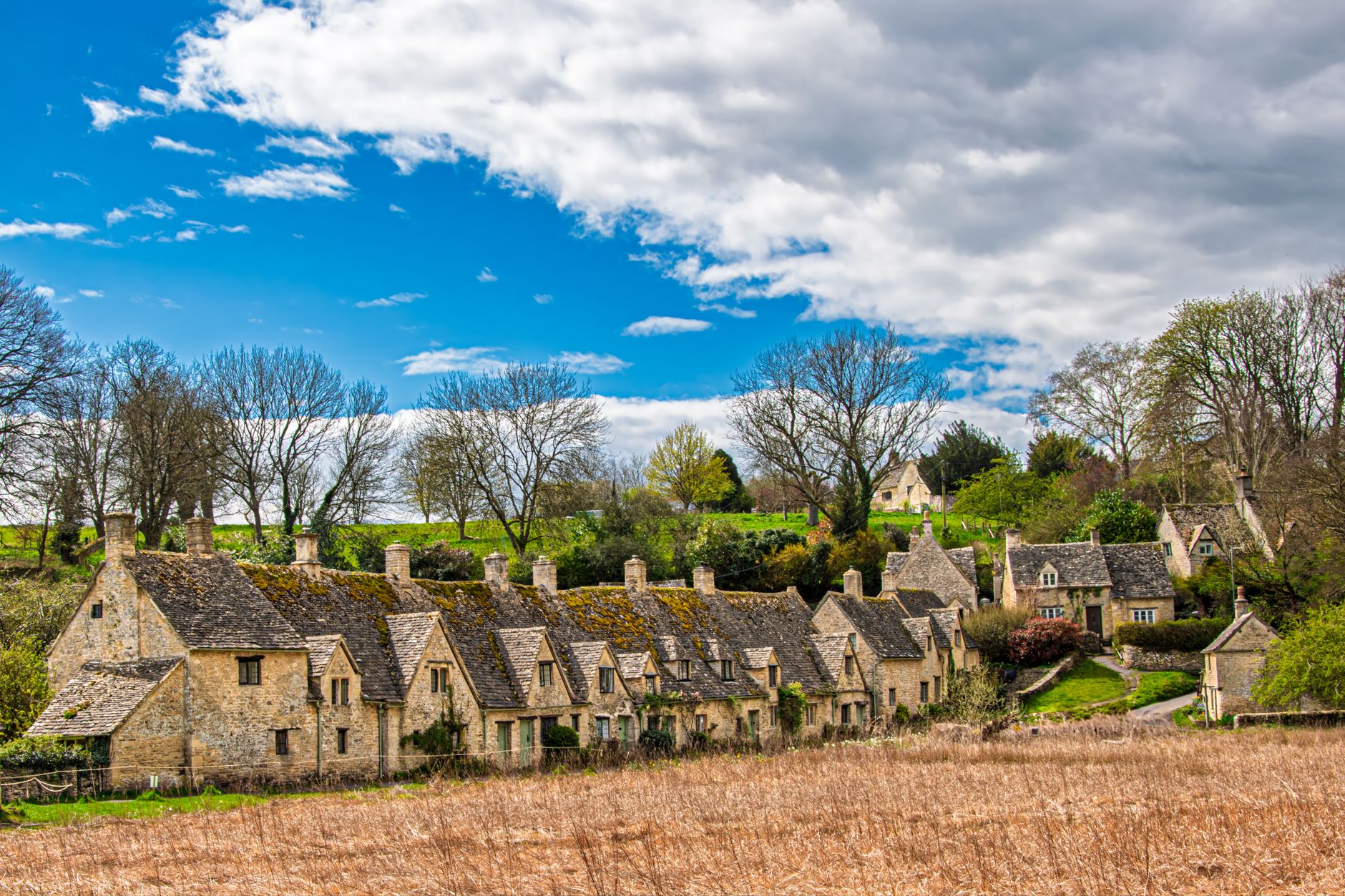
The Cotswolds is a region of gentle limestone hills — the “wolds” — draped in a patchwork of farmland, wildflower meadows and ancient beechwood. The highest point, Cleeve Hill above Cheltenham, reaches just 330 metres, so this is undulating country rather than mountainous. Rivers like the Windrush, the Coln and the Evenlode wind through shallow valleys, often slipping right through the middle of the villages.
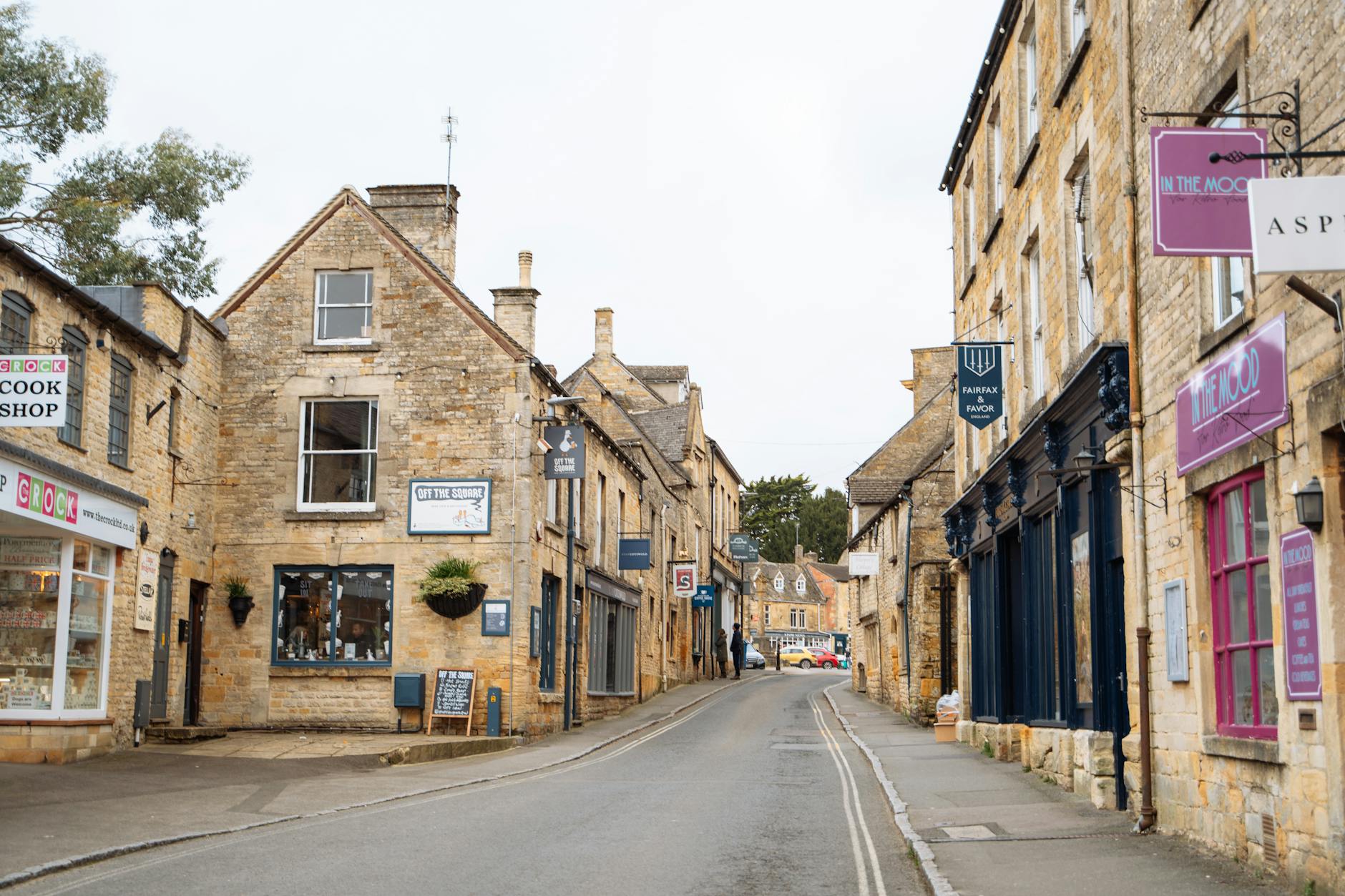
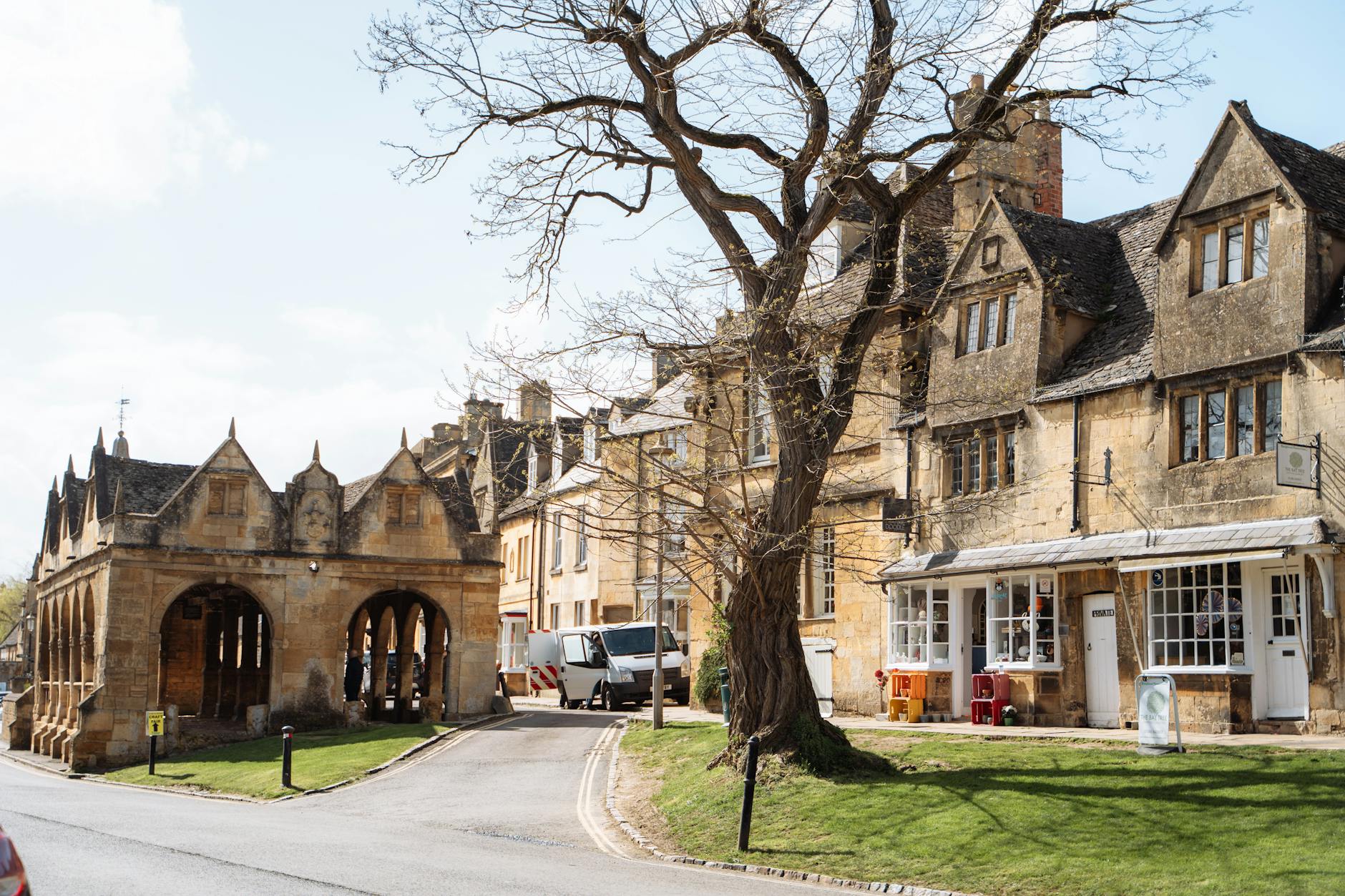
What really sets the Cotswolds apart is the building. Villages and towns are made almost entirely from local oolitic limestone, which weathers to that warm, honey-gold colour. Rows of stone-tiled cottages, medieval churches with tall perpendicular towers, old manor houses and drystone walls running across the hillsides combine into a landscape that looks almost too neat to be real, like a film set or a watercolour. The appeal is less about wild nature than about the easy harmony between people and place. This is a made beauty, ordered and serene, and it photographs beautifully.
The Lake District: England’s mountain country
The Lake District is a different animal entirely. Up in the far north-west, in Cumbria, this is a landscape carved by glaciers over successive ice ages, and the result is a compact but astonishingly varied terrain of high fells, deep valleys, sparkling lakes, tumbling waterfalls and open moor. England’s highest mountain, Scafell Pike at 978 metres, sits at its heart, surrounded by famous peaks — Helvellyn, Skiddaw, Great Gable, Blencathra.
And then there is the water. The region holds sixteen major lakes, among them Windermere, England’s longest at eleven miles, and Wast Water, its deepest at 79 metres and arguably its most dramatic, ringed by screes and high fells. On a still day, with the mountains mirrored in the surface, it is some of the finest scenery anywhere in Britain. The Lake District earned UNESCO World Heritage status in 2017, recognised for both its natural beauty and the cultural landscape shaped by farming, the Romantic poets and the early conservation movement. It is wild, moody and, on its best days, genuinely awe-inspiring.
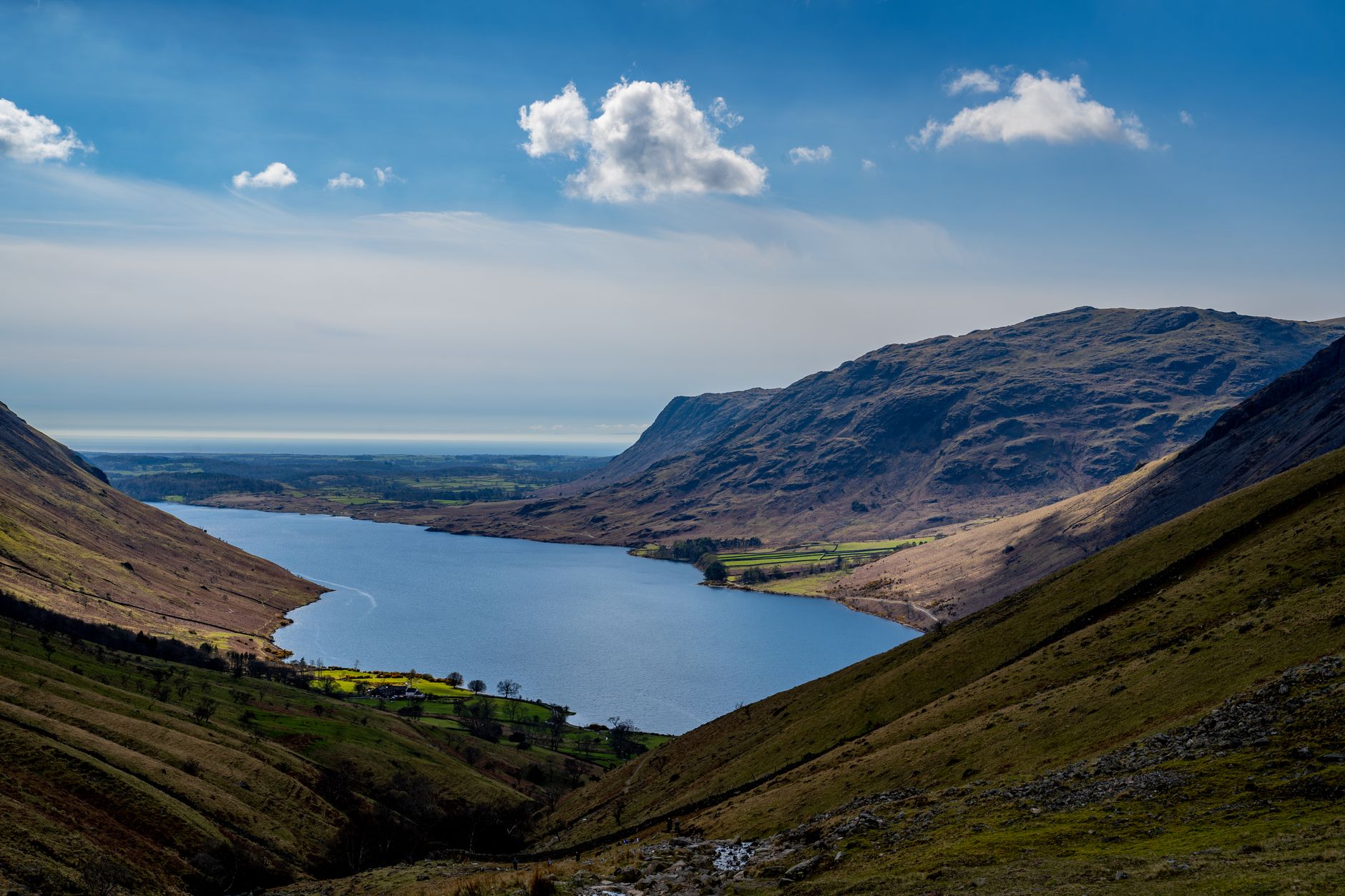
Scenery verdict: for drama — mountains, ridges, water at every turn — the Lake District wins, no contest. For a softer, warmer, more intimate kind of beauty built around stone villages and rolling hills, the Cotswolds is your place. Neither is better. They simply do different things.
Villages and towns
Both regions are famous for their settlements, but the character and the role those settlements play could not be more different.
Cotswolds villages
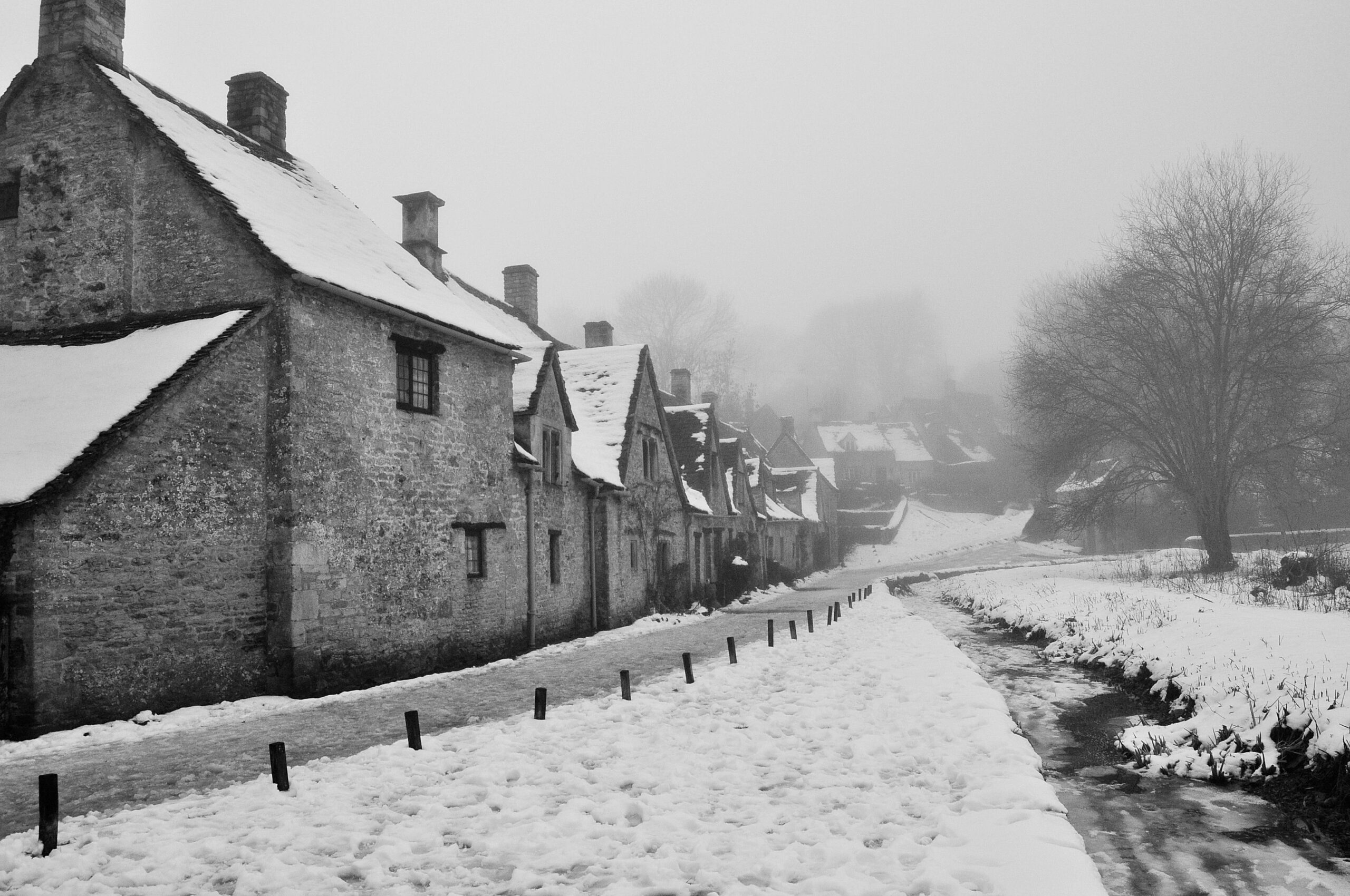
The Cotswolds has an embarrassment of riches here. Bibury, with its much-photographed Arlington Row; Castle Combe, often crowned the prettiest village in England; Bourton-on-the-Water, the “Venice of the Cotswolds” for its low bridges over the Windrush; Broadway, with its wide, golden high street — these are known the world over. What ties them together is an extraordinary visual consistency: nearly every building made from the same local stone, so whole streetscapes share one warm tone. Beyond the famous names lie dozens of quieter gems — Snowshill, the Slaughters, Stanton, Guiting Power — just as lovely and far less trampled. There are lively market towns too, like Cirencester, Stow-on-the-Wold, Chipping Campden and Moreton-in-Marsh, mixing village charm with independent shops, antiques and good places to eat. Our guide to the prettiest Cotswolds villages covers the lot.
Lake District villages
The Lake District’s settlements are smaller, greyer and more functional, built from the slate and dark volcanic stone of the fells. The key towns — Keswick, Ambleside, Windermere and Bowness — are bases more than destinations, stuffed with outdoor-gear shops, cafés and pubs, lively and welcoming but without the chocolate-box looks. The genuinely charming villages tend to be tiny: Grasmere, forever tied to Wordsworth and famous for its gingerbread; Hawkshead, car-free and rich in Beatrix Potter connections; Coniston, on the shore of its lake; and Cartmel, with its medieval priory and a celebrated restaurant. These smaller places have real character, but you generally visit them as the start of a walk rather than as the point of the day.
Villages verdict: for sheer density and postcard beauty of villages, the Cotswolds is very hard to beat — you can happily spend days hopping from one to the next. The Lake District’s villages are lovely but tend to be gateways to the fells and lakes beyond, not the main event.
Walking and outdoor activities
Both are outstanding for walking, but the kind of walking — and the wider range of things to do outdoors — differs enormously. Be honest about your fitness and your appetite for effort here.
Walking in the Cotswolds
The Cotswolds is laced with thousands of miles of footpaths and bridleways, including the 102-mile Cotswold Way, which runs from Chipping Campden to Bath along the western escarpment. Walking here is mostly gentle and unhurried: rolling hills rather than steep climbs, meadows rather than exposed ridges, villages rather than remote mountain shelters. That makes it ideal for casual walkers, families and anyone who prefers an amble to a slog. The classic Cotswolds outing is a three-to-eight-mile circular linking two or three villages, with a pub stop somewhere in the middle. The ground is kind, the signposting generally good, and there is little that is genuinely exposed or risky. Our guide to walking and hiking in the Cotswolds grades routes by effort, and our outdoor activities guide covers cycling, riding and the rest.
Walking in the Lake District
The Lake District is one of Britain’s great hiking destinations and draws serious walkers from around the world. Alfred Wainwright’s celebrated Pictorial Guides to the Lakeland Fells catalogue 214 separate summits, and “bagging” the lot is a lifetime’s project for many. Routes run from easy lakeside strolls to full-day mountain scrambles with hands on rock, knife-edge ridges and real navigation when the cloud comes down. Classics include Helvellyn by Striding Edge, the Old Man of Coniston, the family-friendly Catbells ridge above Derwentwater, and the long-distance Coast to Coast, which crosses the heart of the Lakes. There are gentler options too — the loop around Tarn Hows, the short pull up Latrigg above Keswick, the flat circuit of Buttermere. Beyond walking, the range of activities is far wider: sailing, kayaking, paddleboarding, wild swimming, mountain biking, rock climbing, ghyll scrambling and fell running.
Activities verdict: for serious hikers and adventurers, the Lake District wins clearly, with far more varied terrain and a much broader spread of activities. For gentle, accessible walking through gorgeous countryside with a pub at the end, the Cotswolds is hard to better.
Food, drink and dining
Both regions punch above their weight at the table, though the emphasis differs. One leans gastropub-and-farm-shop; the other has the single biggest culinary heavyweight in the north.
The Cotswolds food scene
The Cotswolds has quietly become one of England’s best food destinations. The region is thick with award-winning gastropubs, farm shops, artisan producers and, increasingly, proper restaurants. Places like the Wild Rabbit at Kingham and 5 North Street in Winchcombe have put Cotswolds dining on the national map, while the Daylesford farm shop near Kingham has grown into a destination in its own right and the Stroud farmers’ market ranks among the best in the country. The cooking leans refined and seasonal: local lamb, Gloucester Old Spot pork, artisan cheeses including the pungent Stinking Bishop, craft ales from breweries such as Hook Norton and Donnington, and a fast-growing crop of vineyards turning out very decent English sparkling wine. Our pillar on Cotswolds food and drink rounds it up, and the best pubs guide handles the drinking.
The Lake District food scene
The Lake District holds the trump card at the very top. L’Enclume in Cartmel, under Simon Rogan, carries three Michelin stars and is regularly named among the best restaurants in the UK; the same stable’s nearby Rogan & Co adds another string to the bow, and together they have pushed the region to the front of modern British cooking. Below the rarefied end, the Lakes does hearty, warming food brilliantly — exactly what you crave after a day on the fells. Look out for Cumberland sausage, Herdwick lamb from the native fell sheep, Kendal Mint Cake for the rucksack, Grasmere gingerbread, and sticky toffee pudding, a dish the region has long claimed and made its own. Real ale from breweries like Hawkshead and Keswick is everywhere.
Food verdict: both eat well. The Cotswolds edges it on sheer density of gastropubs, farm shops and foodie days out. The Lake District takes the very top end thanks to L’Enclume, and shines at honest, hearty cooking that suits a walking holiday.
History, culture and attractions
If you want to mix the outdoors with a bit of culture, both deliver — but they pull in different directions, one towards grand houses and Roman ruins, the other towards poets and painters.
Cotswolds history and culture
The Cotswolds is unusually rich in history. Its wealth was built on the medieval wool trade, and the legacy is everywhere: grand “wool churches” with soaring towers, prosperous market towns, and the manor houses of rich wool merchants. The Roman layer is strong too, especially around Cirencester — Roman Corinium, one of the largest towns in Roman Britain — and along the old Fosse Way. Major attractions sit close at hand: Blenheim Palace, a World Heritage Site and Churchill’s birthplace; Sudeley Castle, linked to six monarchs; the famous gardens at Hidcote and Kiftsgate; and the city of Oxford on the doorstep. Shakespeare’s Stratford-upon-Avon lies just north and makes an easy day out. Our guide to Cotswolds history and heritage goes deeper, and the pillar on things to do in the Cotswolds lists the attractions.
Lake District history and culture
The Lake District’s cultural identity is bound up with English Romanticism. William Wordsworth lived here most of his life and drew on the landscape for some of the greatest poetry in the language; his homes, Dove Cottage in Grasmere and Rydal Mount, are open to visit, and the Wordsworth museum at Grasmere is among the most visited literary attractions in England. Beatrix Potter lived at Hill Top in Near Sawrey, now a National Trust property kept much as she left it, with a gallery of her original illustrations in nearby Hawkshead. John Ruskin, the Victorian critic, spent his last years at Brantwood on Coniston Water. Add the deep tradition of fell farming and the iconic Herdwick sheep, with country shows through the summer, and the culture here feels rooted in the land itself.
Culture verdict: the Cotswolds wins for breadth and variety, with grand houses, Roman ruins and major sites within easy reach. The Lake District wins for literary heritage and for the deep bond between the landscape and the writers and artists who celebrated it.
Getting there and getting around
Practicalities can tip the balance, especially if you are coming from abroad or hoping to manage without a car. The two regions almost reverse each other here.
Reaching the Cotswolds
The Cotswolds gains hugely from its central position in southern England. London is about 100 miles away, an hour and a half to two hours by train from Paddington to stations such as Moreton-in-Marsh, Kemble or Charlbury. Bristol, Birmingham and Oxford are all within an hour or so, and the M4, M5 and M40 skirt the region, so driving in is straightforward. Getting around once you are there, though, is the catch. Buses between the smaller villages are infrequent — sometimes only a handful a day — and many run little or nothing on Sundays. A car gives you the freedom to explore properly, with guided tours and taxis as the fallback. Our transport guide sets out the realistic options.
Reaching the Lake District
The Lake District is a fair bit further from London — roughly 260 miles, about two and a half to three hours by train from Euston to Oxenholme or Penrith, or four to five hours by car up the M6. For anyone based in the north or in Scotland, though, it is far handier, with quick motorway links from Manchester, Liverpool and Edinburgh. And here is the surprise: getting around inside the Lakes without a car is actually easier than in the Cotswolds. A reasonable bus network connects the main towns and valleys, and the lake steamers on Windermere, Ullswater, Coniston and Derwentwater can form part of circular walks. A car still helps for the remote western valleys like Wasdale and Eskdale, but you can manage a good trip without one.
Transport verdict: the Cotswolds is easier to reach from London and the south but harder to explore without a car. The Lake District takes longer to get to from the south but is more forgiving once you arrive if you are relying on public transport.
Weather and the best time to go
English weather is famously fickle, but the difference between these two regions is real and worth factoring in, especially if reliable dry days matter to you.
Cotswolds weather
The Cotswolds enjoys a relatively mild, moderate climate by English standards. Summer highs sit around 20 to 22°C, and the region gets noticeably less rain than the north and west — annual rainfall lands at roughly 760 to 800mm. Rain is always possible, but the Cotswolds sees many more dry, bright days than the Lakes, particularly in late spring and summer. It is lovely year-round: bluebells and lambs in spring, long warm days and village fêtes in summer, golden beechwoods in autumn, and cosy log fires with few crowds in winter. Our Cotswolds weather guide breaks it down month by month, and the guide to the best time to visit helps you pick your window.
Lake District weather
The Lake District is one of the wettest places in England, and there is no point pretending otherwise. Seathwaite in Borrowdale records around 3,300mm of rain a year, roughly four times the Cotswolds figure. The mountains force damp Irish Sea air upwards, wringing the moisture out of it over the fells, so even in summer you should expect rain, low cloud and conditions that change fast at altitude. The flip side is that the Lakes is spectacular in all weathers — mist curling round the peaks, dramatic skies mirrored in still water, the extraordinary clarity of the light after a shower. And when the sun does break through, which it does often enough, the scenery is among the finest in Europe. You just need waterproofs and the right attitude.
Weather verdict: for drier, more dependable weather the Cotswolds wins comfortably. The Lake District asks you to accept rain as part of the bargain — but with the right kit, the changeable weather only adds to the drama.
Accommodation and cost
Both offer the full range, from cheap and cheerful to seriously grand. The difference is subtle but matters if you are watching the budget.
Staying in the Cotswolds
The Cotswolds is known for charming B&Bs, boutique hotels and self-catering cottages. A good mid-range B&B tends to start somewhere around £80 to £120 a night, a quality boutique hotel £150 to £300, and the headline luxury addresses well beyond that. Cottages are hugely popular and range widely with size and location. The Cotswolds can be expensive, especially in the famous villages from May to September, and eating out and attraction entry sit a touch above the national average. But budget options exist — campsites, hostels and more affordable B&Bs in the lesser-known villages all help. Our accommodation guide sorts it by area, and the budget guide keeps costs down.
Staying in the Lake District
The Lake District offers an equally broad spread, from hostels and camping barns in superb spots to grand lakeside hotels, and it is particularly well served at the budget and mid-range end. A decent B&B in Keswick or Ambleside often starts a little lower than its Cotswolds equivalent, while the high-end hotels match anything in the south. The Lakes also has a strong tradition of independent hostels and bunkhouses, which makes it friendlier for walkers and younger travellers on a budget. Wild camping is tolerated high on the fells under certain conditions, which is not the case in the Cotswolds.
Cost verdict: overall costs are broadly comparable, but the Lake District has a slight edge for budget travellers thanks to more hostels, camping and cheaper dining. The Cotswolds leans a little pricier, especially in peak season, though careful planning makes either affordable.
Who should choose the Cotswolds?
The Cotswolds is your trip if you love impossibly pretty villages and architecture, and could happily spend days wandering honey-stone streets and medieval churches. It suits anyone who enjoys gentle walking and cycling through rolling country with frequent pub stops, foodies drawn to farm shops, gastropubs and markets, and history lovers who want Blenheim, Oxford and Stratford within easy reach. If you prefer warmer, drier weather and a relaxed pace, it fits. It is also a strong choice for couples after a romantic break, families with younger children who need gentler ground, and first-time visitors to the English countryside chasing that classic chocolate-box experience. Our Cotswolds itineraries turn all that into a workable plan.
Who should choose the Lake District?
The Lake District is your trip if you are a keen hiker or fell walker after challenging routes, varied terrain and real mountain scenery. It is made for water lovers — sailing, kayaking, swimming, or just sitting by a lake — and for anyone drawn to literary heritage who wants to follow Wordsworth, Potter and Ruskin. Budget travellers do well here, with affordable hostels, camping and hearty pub food, and so do those who relish wild landscapes and dramatic weather and do not mind packing waterproofs. It particularly suits active families with older children, solo travellers and backpackers, and anyone who values outdoor adventure over architectural prettiness.
Can you do both?
If you have two weeks or more in England, there is no reason not to. A popular plan pairs the Cotswolds with a London base at the start of a trip, since it is so close, then heads north to the Lakes for the second half. The journey between the two takes roughly three to four hours by car via the M5 and M6, or by train with a change around Birmingham. With a single week you could split it — three or four days in each — and the contrast actually heightens the pleasure of both, the gentle south against the wild north. For a long weekend, though, pick one and do it justice rather than burning half your time on the road. If you are still settling the basics, the Cotswolds FAQ answers the practical questions, and our guide to how many days you need helps you carve up the time.
The verdict
There is no wrong answer. Both rank among the most beautiful places in England, and the choice comes down to the kind of trip you are after.
Choose the Cotswolds if you dream of wandering honey-stone villages, browsing antiques and farm markets, settling in for long lunches at country gastropubs, and exploring at a gentle, civilised pace through soft green hills.
Choose the Lake District if you want mountain drama, demanding hikes with big summit views, water adventures on glacial lakes, and the thrill of a genuinely wild landscape that has stirred poets and painters for two centuries.
Either way you are in for a memorable English countryside trip. And if this has made the decision harder rather than easier — well, perhaps that just means you need to see both.
Frequently Asked Questions
Is the Cotswolds or the Lake District better?
Neither is objectively better; they suit different tastes. The Cotswolds wins for pretty villages, food, history and gentle walking in milder, drier weather. The Lake District wins for mountains, serious hiking, watersports and wilder scenery, at the cost of a longer journey from the south and a good deal more rain.
Which is easier to reach from London?
The Cotswolds, comfortably. It is about 100 miles from London and 90 minutes to two hours by train, against roughly 260 miles and two and a half to three hours for the Lake District. If you are short on time or based in the south, the Cotswolds is the more convenient choice.
Which is better for walking?
It depends on the walking you want. The Lake District is the destination for mountains, ridges and challenging fell days, with 214 Wainwright summits to aim at. The Cotswolds is better for gentle, low-level walking between villages, with the 102-mile Cotswold Way as its centrepiece and a pub never far away.
Which is cheaper to visit?
Costs are broadly similar, but the Lake District has a slight edge for budget travellers, with more hostels, camping and bunkhouses and generally cheaper dining. The Cotswolds can be pricier in peak season and in the famous villages, though both regions can be done affordably with planning.
Can you visit both in one trip?
Yes, if you have a week or more. The two are about three to four hours apart by car. A common approach is the Cotswolds first, paired with London, then north to the Lakes. For a short weekend it is better to choose one and explore it properly rather than spend half the time travelling.
Which has better weather?
The Cotswolds, clearly, if you mean drier and milder. It receives roughly a quarter of the rainfall of the wettest Lake District valleys and enjoys far more dry, bright days, especially in late spring and summer. The Lakes is wetter but spectacular in all weathers if you come prepared.
Plan your Cotswolds trip
If the Cotswolds has won you over, we have everything you need to plan it. Start with the complete Cotswolds trip-planning guide, check the best time to visit, browse our 25 essential travel tips, and work out how many days you need. From there, pick your villages from the prettiest in the region and sort out a base with the accommodation guide.