This article contains advertising. My booking links are routed through a partner that adds commission tracking automatically, so if you book through one I earn a commission from the provider, at no extra cost to you. It never affects what I recommend. Affiliate disclosure
There is a field on the south-west edge of Cirencester with some grassy humps in it. Dog walkers cross it without stopping. It is a Roman amphitheatre that seated around eight thousand people, it is free, there is no ticket office and there is usually nobody there. That single fact tells you most of what you need to know about this town: it is sitting on one of the most important archaeological sites in Britain and it is entirely unbothered about it.
The best of the things to do in Cirencester follow from that. This was Corinium Dobunnorum, the second-largest town in Roman Britain after London and later the capital of the province of Britannia Prima, and the modern street plan still runs on Roman lines. Then the wool trade made it rich all over again and paid for a parish church so large it embarrasses several cathedrals. And then, crucially, nothing much happened — no industrial revolution, no bombing, no ring road through the middle — so what you get is a working market town of about twenty thousand people with two thousand years stacked underneath it.
It calls itself the Capital of the Cotswolds, and among the Cotswold towns it has the strongest claim.
Cirencester at a glance
| Detail | |
|---|---|
| Population | About 20,000 — the largest town inside the Cotswolds proper |
| Market days | Monday 10:00–16:00 and Friday 09:00–15:00, Market Place |
| Farmers’ market | Second and fourth Saturday, 09:00–14:30 |
| Corinium Museum | Adult £8.70, child £4.00, family £23.10; Mon–Sat 10:00–16:00, Sun 14:00–16:00 |
| Free to see | The amphitheatre, St John Baptist church, Abbey Grounds, the Market Place |
| Nearest station | Kemble, 4 miles — about 1h20 from London Paddington |
| Typical double room | £100–£150 mid-range |
| Time needed | A full day; two nights as a base for the southern Cotswolds |
Prices and times checked September 2026 — confirm before you travel.
Roman Cirencester
The Corinium Museum
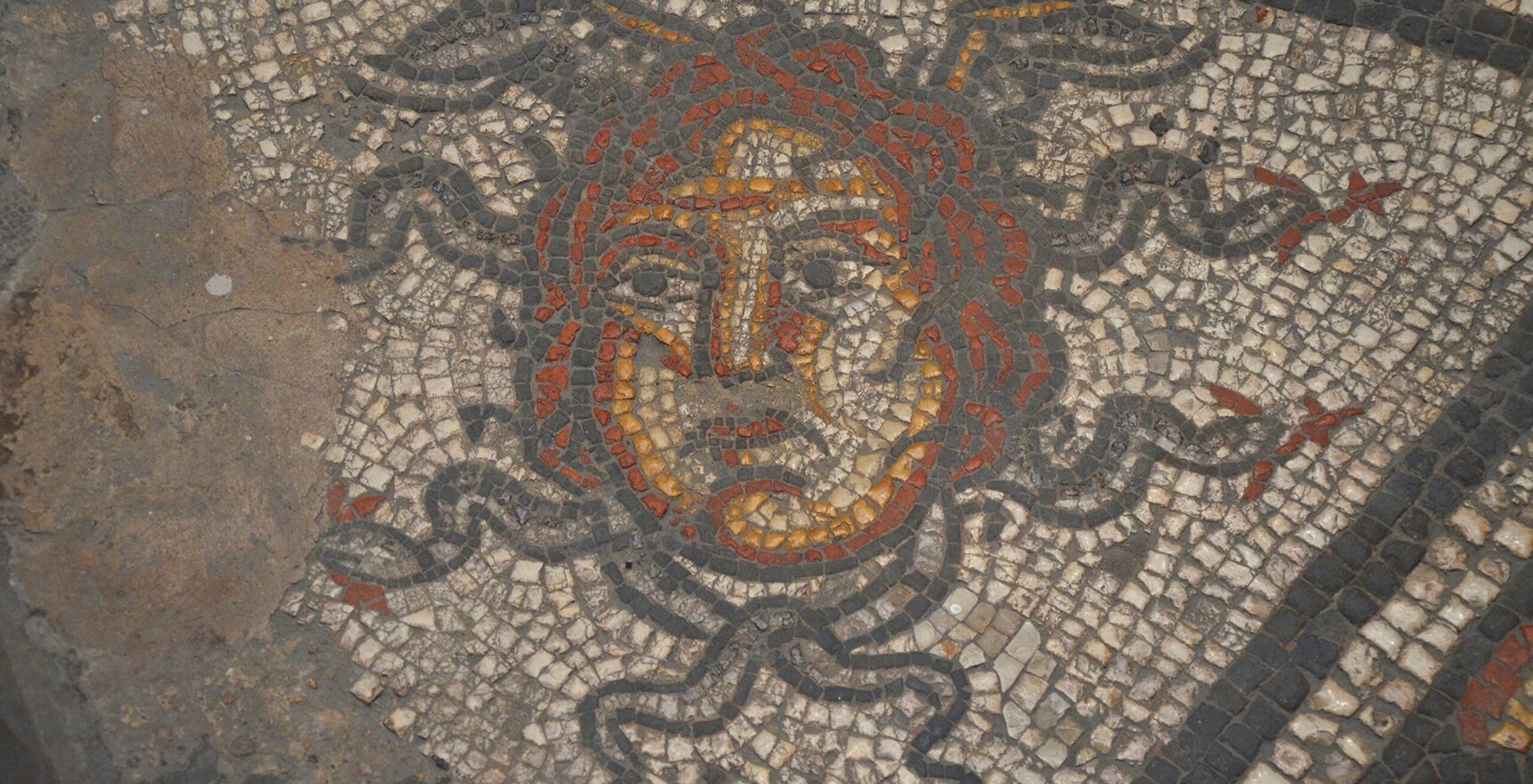
This is the best museum in the Cotswolds and it is not a close contest. The collection comes almost entirely out of the ground beneath and around the town, and the mosaics are the reason to come: the Hunting Dogs mosaic, lifted from a town house on Dyer Street, with a head at its centre usually read as Oceanus, hair and beard running out into tendrils; and the Four Seasons mosaic, with a personification of Autumn that is one of the finest pieces of Romano-British figure work anywhere.
Beyond the mosaics there is the Jupiter column capital, a set of tombstones including cavalrymen from the earliest fort, and — a genuine curiosity — a scratched word-square from a wall in the town that may be one of the earliest pieces of Christian evidence in Britain. The Anglo-Saxon and medieval galleries are good too, and there is a proper Roman garden outside.
Adult entry is £8.70, children 5–16 are £4.00 and a family ticket is £23.10, with the museum open Monday to Saturday 10am–4pm and Sunday afternoons only. Allow ninety minutes rather than the hour the museum suggests; the mosaic room takes longer than people expect.

The amphitheatre
Ten minutes’ walk from the Market Place, off Cotswold Avenue, and free at any hour. What survives is the earthwork — two great banks enclosing an oval arena, with the entrance passages still readable — rather than any standing stone, which was quarried away centuries ago. It is one of the largest surviving Roman amphitheatres in Britain and it has the atmosphere of a place nobody has got round to monetising. Go in low winter light when the banks throw shadows and the shape is obvious.
The rest of the Roman town
Corinium’s walls enclosed about 240 acres, and fragments of the circuit survive in the Abbey Grounds along the eastern edge. Two Roman roads — Ermin Street and the Fosse Way — met here, which is why the town existed at all, and the Fosse Way still runs north-east out of town dead straight for twenty miles. For the wider picture, and for Chedworth Roman Villa twenty minutes north, see our Roman Cotswolds guide.
The church, the market and the town centre
St John Baptist
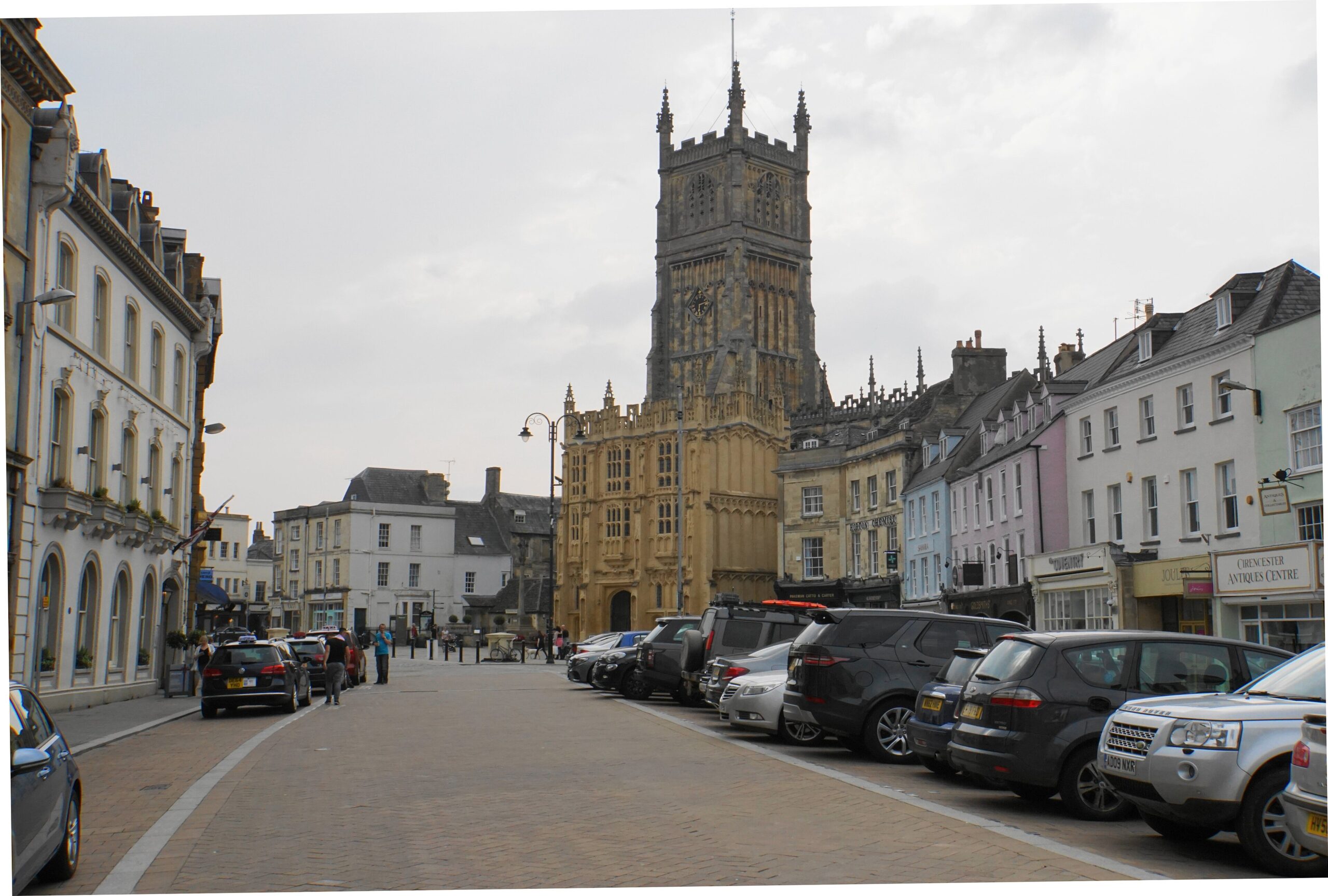
The largest parish church in Gloucestershire, and from the Market Place it looks less like a church than like a civic statement, which is exactly what it is. The three-storey south porch facing the square was built in the 1490s as the town hall — the abbey ran the town and the townspeople wanted somewhere of their own — and it was only later absorbed into the church. It is the largest church porch in England.
Inside, the nave is high Perpendicular with a wall of clerestory glass, there is a fifteenth-century wineglass pulpit, medieval glass in the east window and the famous Boleyn Cup, a gilt goblet made in 1535 for Anne Boleyn and given to the church a few years after her execution. Entry is free. Give it twenty minutes and look up.
How the wool money worked
The church is a receipt. In the fourteenth and fifteenth centuries Cirencester was the biggest wool market in England, sitting at the point where fleeces from the whole southern Cotswolds were graded, weighed and sold on to Flemish and Italian buyers, and the merchants who made their fortunes on that trade spent a good deal of it on rebuilding St John Baptist chapel by chapel. Each of the side chapels was paid for by a different guild or family; the Trinity Chapel was built by the town’s weavers.
The relationship with the abbey was not a happy one. The abbot held the market rights, the profits and effectively the town’s government, and the townspeople spent two centuries petitioning, litigating and occasionally rioting to get a borough charter of their own. They never won. When Henry VIII dissolved the abbey in 1539 the town got its independence by accident, and demolished the abbey buildings so completely that today a single Norman arch is all that stands. Our Cotswolds wool trade guide follows the money across the region.
Market days
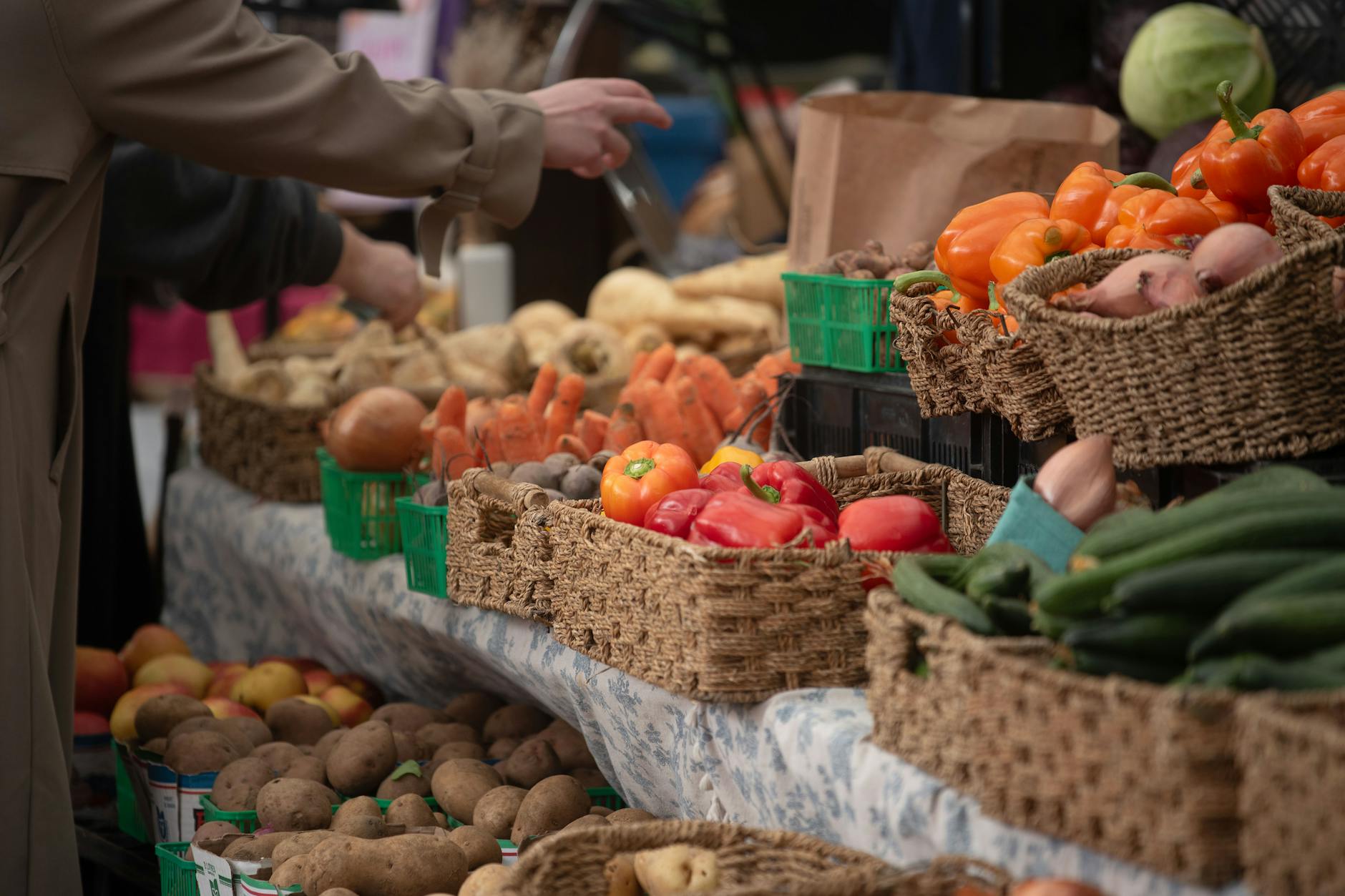
The charter market runs Monday from 10am to 4pm and Friday from 9am to 3pm, filling the Market Place under the church porch. The Friday market is the better of the two — a proper mixed market of produce, plants, fabric and household stuff, priced for people who live here. The farmers’ market takes over on the second and fourth Saturday of the month, 9am to 2.30pm, and is smaller and more producer-led.
There is also an antiques and craft market in the Corn Hall on most Fridays and Saturdays, which is the covered Victorian hall on the Market Place and worth putting your head into whatever is on.
Shopping in brief
Cirencester’s independents cluster on Black Jack Street, Castle Street, Cricklade Street and the little courts running off them — good delis, a couple of proper butchers, a bookshop, and the antiques centre on the Market Place. There is a modern shopping precinct off Cricklade Street that you can skip. New Brewery Arts on Brewery Court is the pick of it: a crafts centre with a dozen resident makers’ studios you can walk into, a shop selling their work and a decent café. For the wider comparison with Stow, Tetbury and Burford, our market towns shopping guide does the detail.
Cirencester Park and the Abbey Grounds
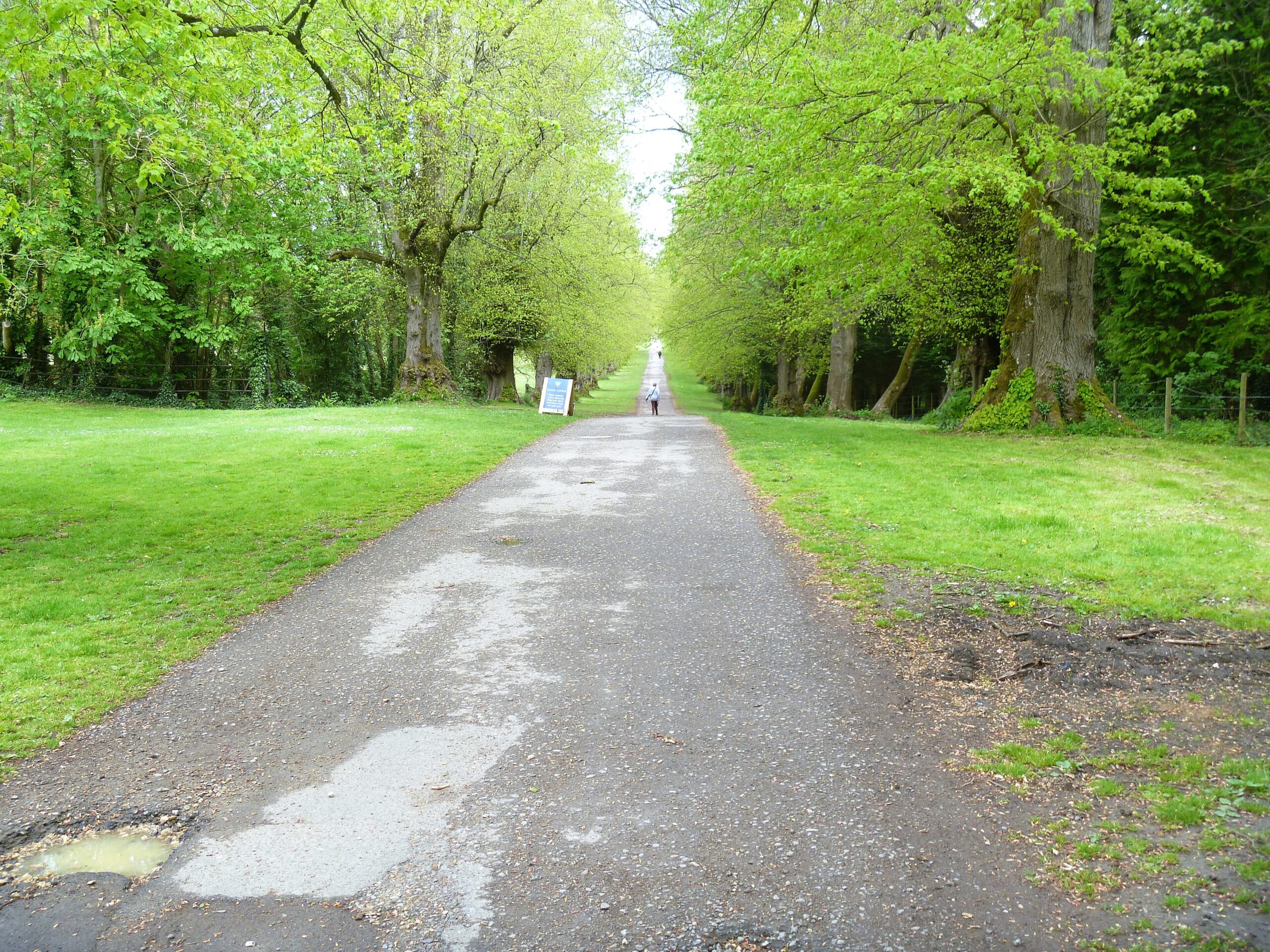
Behind the town, and startlingly close to it, sits Cirencester Park — three thousand acres of the Bathurst estate, laid out from 1714 by the first Earl Bathurst with advice from the poet Alexander Pope, who spent enough time here to have a folly seat named after him. The Broad Ride runs five miles dead straight from the edge of town, and there are follies scattered through the woods, including Alfred’s Hall, one of the earliest mock-Gothic ruins in England.
The important practical note: public access to the park changed in recent years and now runs through a paid membership rather than the old open gate on Cecily Hill. Check the current arrangement on the estate’s own site before you build an afternoon around it — this is the single most common source of disappointment in Cirencester, and it caused a good deal of local feeling when it changed.
The Abbey Grounds, by contrast, are free and always open. This is where Cirencester Abbey stood until Henry VIII had it pulled down in 1539 so thoroughly that almost nothing is left except a Norman arch and some earthworks. What you get now is a lake with a lot of confident waterfowl, a stretch of the Roman town wall and the best short walk in the town centre — five minutes from the church and almost nobody on it.
Other things to do in Cirencester
- Cirencester Open Air Pool — one of the oldest open-air swimming pools in the country, dating from 1869, heated, community-run and open through the summer season. A genuinely lovely survival and much cheaper than a spa.
- The Royal Agricultural University — founded in 1845 on the western edge of town, the first agricultural college in the English-speaking world. The Victorian Gothic buildings are worth the walk out along Stroud Road even though you cannot go in.
- Cirencester Parish Church tower tours — run occasionally and give the best view over the town and the park. Ask at the church.
- The Barn Theatre — a small producing theatre near the Market Place, programming year-round.
- Cotswold Lakes — the rebranded Cotswold Water Park, four miles south, with 150-odd lakes, watersports and the country’s largest inland sandy beach. Our Cotswold Water Park guide covers it.
Walks from the town centre
Cirencester is unusually good for walking straight out of the door, because the countryside starts at the end of the streets rather than a drive away.
- The Abbey Grounds circuit — twenty minutes, flat, past the lake and the surviving stretch of Roman town wall. The obvious pre-breakfast walk.
- Cirencester to the amphitheatre and back by Querns Lane — about forty-five minutes, taking in the earthworks and the hospital ground where a good deal of the Roman town has been dug.
- The Duntisbournes — five miles north-west, a chain of four tiny hamlets along a stream with a Saxon church at Duntisbourne Rouse perched on a slope, plus a ford you can drive through. One of the loveliest short valley walks in the region.
- The Thames Path — the official source of the Thames is at Thames Head, three miles south-west near Kemble, marked by a stone in a field that is dry for most of the year. It is a slightly anticlimactic pilgrimage and it is still worth doing once.
- Sapperton and the canal tunnel — seven miles west, where the derelict Thames and Severn Canal disappears into a spectacular classical tunnel portal in the woods. Bluebells here in late April.
More routes in our circular walks guide and the woodland walks guide.
Eating and drinking
Cirencester eats better than its size suggests, largely because twenty thousand residents plus an agricultural university generate real weekday demand. The concentration is around Black Jack Street, Castle Street and the Market Place — bistros, a couple of good pubs with proper kitchens, an excellent independent bakery and enough cafés that you never have to queue.
The practical advantage over the villages is the same as Cheltenham’s, in miniature: things are open on Mondays and in February. Book Friday and Saturday evenings in summer. Our best restaurants guide, cafés guide and pubs guide all cover the town.
Getting to Cirencester
By train. There is no station in Cirencester — the line closed in 1964. Kemble is four miles south-west, with direct Great Western services to London Paddington in around an hour and twenty minutes and to Swindon, Stroud and Gloucester. Buses and taxis run into town from the station forecourt; check the connection times before you commit, because the gaps can be long. See our Cotswolds by train guide.
By bus. The 51 runs to Cheltenham, the 881 to Stroud, and services reach Tetbury, Fairford, Lechlade and the Water Park villages. Sunday is thin. Timetables in the bus routes guide.
By car. The A419 links Swindon and the M4 to Stroud and the M5; the A429 is the Fosse Way north. There are large pay-and-display car parks at the Waterloo and Forum, both a two-minute walk from the Market Place and much easier than hunting for a bay on Market Place itself.
Day trips from Cirencester
| Destination | Distance | Why |
|---|---|---|
| Chedworth Roman Villa | 10 miles | The best Roman villa in Britain; free guided tours on Mondays, March–October |
| Bibury | 7 miles | Arlington Row; go before 9am |
| Tetbury | 11 miles | Antiques, Highgrove, Westonbirt |
| Cotswold Lakes | 4 miles | Watersports, beach, birdlife |
| Fairford and Lechlade | 9–12 miles | Fairford’s medieval glass; the upper Thames |
| Northleach | 10 miles | The Cathedral of the Cotswolds and no crowds |
| Cheltenham | 17 miles | Regency architecture and restaurants |
Where to stay
The town centre is the place to be — a handful of old coaching inns and townhouse hotels within a few minutes of the Market Place, plus B&Bs on the Victorian streets to the north and west. Expect £100–£150 for a mid-range double with breakfast, which is meaningfully cheaper than Stow, Broadway or Bourton for a town with far more in it.
As a base, Cirencester covers the southern Cotswolds well — the Water Park, Bibury, Chedworth, Tetbury, Fairford and the Thames head are all within half an hour — but it is a long way from Broadway, Chipping Campden and the northern villages. If your list is weighted north, base yourself at Stow or Moreton instead; our areas to stay guide and where to stay guide compare them.
Is Cirencester worth visiting?
Yes, with one honest caveat. Cirencester is not picturesque in the way Bibury or Castle Combe are picturesque. It is a handsome, busy, slightly workaday town with traffic and chain stores and people going about their Tuesday, and if you have come for the chocolate-box version you may find it underwhelming for the first half-hour.
Stay past the first half-hour. The museum is genuinely first-rate, the church is one of the great English parish churches, the amphitheatre is free and empty, and the Friday market is the most honest hour you will spend in the region. It is also the only place in the southern Cotswolds where you can eat well, buy a book, see a play and catch a bus, which matters more on day three of a trip than it does on day one.
What to skip: the modern shopping precinct, and the park if you have not checked the access arrangements first.
Frequently asked questions about Cirencester
Why is Cirencester called the Capital of the Cotswolds?
Partly size — at around 20,000 people it is the largest town inside the Cotswolds proper — and partly history. As Corinium Dobunnorum it was the second-largest town in Roman Britain and the capital of the province of Britannia Prima, and it was the region’s chief wool market in the Middle Ages.
How do you pronounce Cirencester?
“Siren-sester” is the standard modern pronunciation and nobody will blink at it. Older Gloucestershire usage clipped it to “Sissiter”, which you will still occasionally hear from people who have lived here a long time.
How much is the Corinium Museum?
£8.70 for adults, £7.15 for over-65s, £4.00 for children aged 5–16, £5.50 concessions and £23.10 for a family of two adults and up to four children. Under-5s and carers go free. Open Monday to Saturday 10am–4pm and Sunday 2pm–4pm; checked September 2026.
Can you see the Roman amphitheatre for free?
Yes. It is open access, unstaffed and unfenced, on Cotswold Avenue about ten minutes’ walk south-west of the Market Place. There is no charge and no opening time.
What day is Cirencester market?
Monday, 10am to 4pm, and Friday, 9am to 3pm, in the Market Place. The farmers’ market runs on the second and fourth Saturday of the month from 9am to 2.30pm. Friday is the biggest of them.
Is Cirencester a good base for the Cotswolds?
For the southern half, yes — Bibury, Chedworth, Tetbury, the Water Park and Fairford are all within half an hour, and rooms cost less than in the honeypot villages. For Broadway, Chipping Campden and the north it is an hour each way, so consider Stow-on-the-Wold or Moreton-in-Marsh instead.
How long do you need in Cirencester?
A full day does the museum, the church, the amphitheatre, the Abbey Grounds and the town centre without rushing. Two nights makes sense if you want to use it as a base.
Can you visit Cirencester without a car?
Yes, with planning. Kemble station is four miles away with a bus connection, and buses run to Cheltenham, Stroud, Tetbury and the surrounding villages — though Sunday services thin out badly. Our car-free guide has the detail.
Come on a Friday if you can — the market, the museum and the church in one morning is as good a half-day as the Cotswolds offers. From here, the Roman Cotswolds trail runs north to Chedworth, our guide to the Cotswold towns compares Cirencester with the other fifteen, the wool churches guide puts St John Baptist in context alongside Northleach and Chipping Campden, and the southern Cotswolds itinerary strings the whole area into a route.
Photo Credits
The head at the centre of the Hunting Dogs mosaic, Corinium Museum: Hunting Dogs Mosaic, Corinium Museum (Cirencester) (16593772487) by Carole Raddato from FRANKFURT, Germany, CC BY-SA 2.0, via Wikimedia Commons.
The Broad Ride in Cirencester Park: A walk through Cirencester Park and Stratton (3) by Michael Dibb, CC BY-SA 2.0, via Wikimedia Commons.
Cirencester Market Place: Market Place, Cirencester – geograph.org.uk – 5877603 by Bill Boaden, CC BY-SA 2.0, via Wikimedia Commons.
Leave a Reply