This article contains advertising. My booking links are routed through a partner that adds commission tracking automatically, so if you book through one I earn a commission from the provider, at no extra cost to you. It never affects what I recommend. Affiliate disclosure
There is a shop in Tetbury selling a single Georgian mahogany bureau for more than the annual rent of most of the units around it, and two doors down there is a charity shop where the stock has arrived from the same houses. That is the town in one street. Tetbury has been the trade counter for the grander end of the southern Cotswolds for three hundred years, and it has the peculiar quality of a place where a great deal of money passes through without much of it staying.
The best of the things to do in Tetbury Cotswolds follow from that: the antiques, obviously — this is the antiques capital of the region and has been for decades — but also a seventeenth-century market house standing on stone legs in the middle of the road, one of the tallest church spires in England hiding a Georgian Gothic interior nobody expects, Highgrove a mile and a half down the lane, and Westonbirt Arboretum three miles the other way.
It is also, of the Cotswold towns, the quiet one. Nothing here is queued for.
Tetbury at a glance
| Detail | |
|---|---|
| Population | About 5,500 |
| Market day | Wednesday under the Market House, around 09:00–15:00 |
| Best known for | Antiques, Highgrove, Westonbirt, the Woolsack Races |
| Free to see | St Mary’s church, the Chipping Steps, the Market House, the town centre |
| Nearest station | Kemble, 8 miles — about 1h20 from London Paddington |
| Typical double room | £120–£180 mid-range |
| Time needed | Half a day for the town; a full day with Westonbirt |
| Come on a | Wednesday for the market, or a Sunday in October for Westonbirt |
Prices and times checked September 2026 — confirm before you travel.
The town centre
The Market House
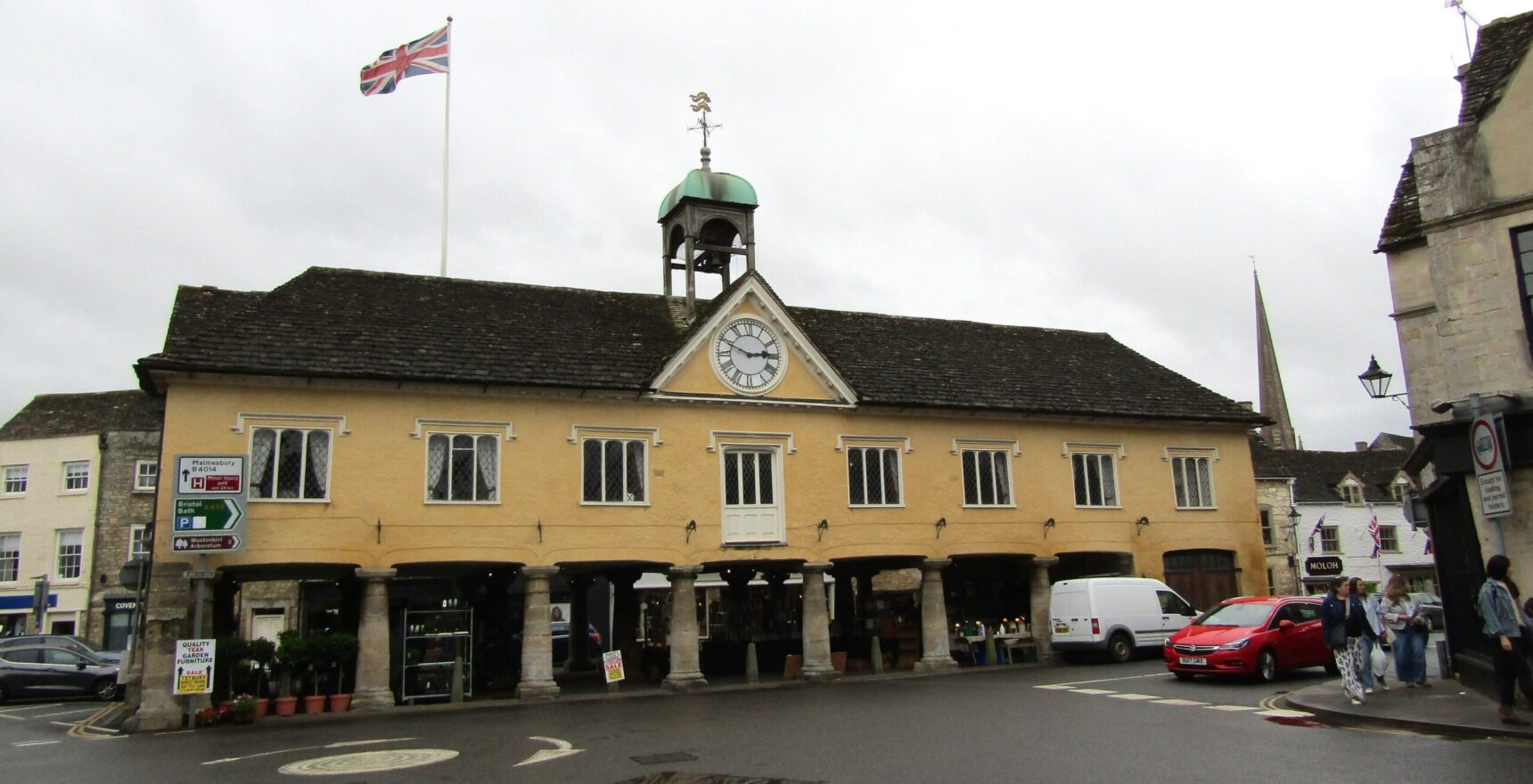
Built in 1655 and standing in the middle of Market Place on three rows of stone pillars, with the open ground floor still used for the Wednesday market exactly as intended. Upstairs is a hall; underneath, on a wet Wednesday, the stalls tuck in between the columns and it works as well as it did three hundred and seventy years ago. It is one of the three best market houses in the Cotswolds, alongside Chipping Campden’s and Minchinhampton’s, and the only one still doing its original job weekly.
St Mary the Virgin
The spire is 186 feet and among the tallest on any parish church in England, and it looks entirely conventional from outside. Then you go in, and it is a complete Georgian Gothic interior of 1781 — slender clustered columns, enormous windows, a flat panelled ceiling and box pews you can shut yourself into, all of it pale and light and much closer in spirit to an eighteenth-century assembly room than a medieval church. It is one of the most surprising buildings in Gloucestershire. Entry is free.
The churchyard is unusually deep because the ground level has risen around it — the path runs below the graves rather than between them.
The Chipping and the Chipping Steps
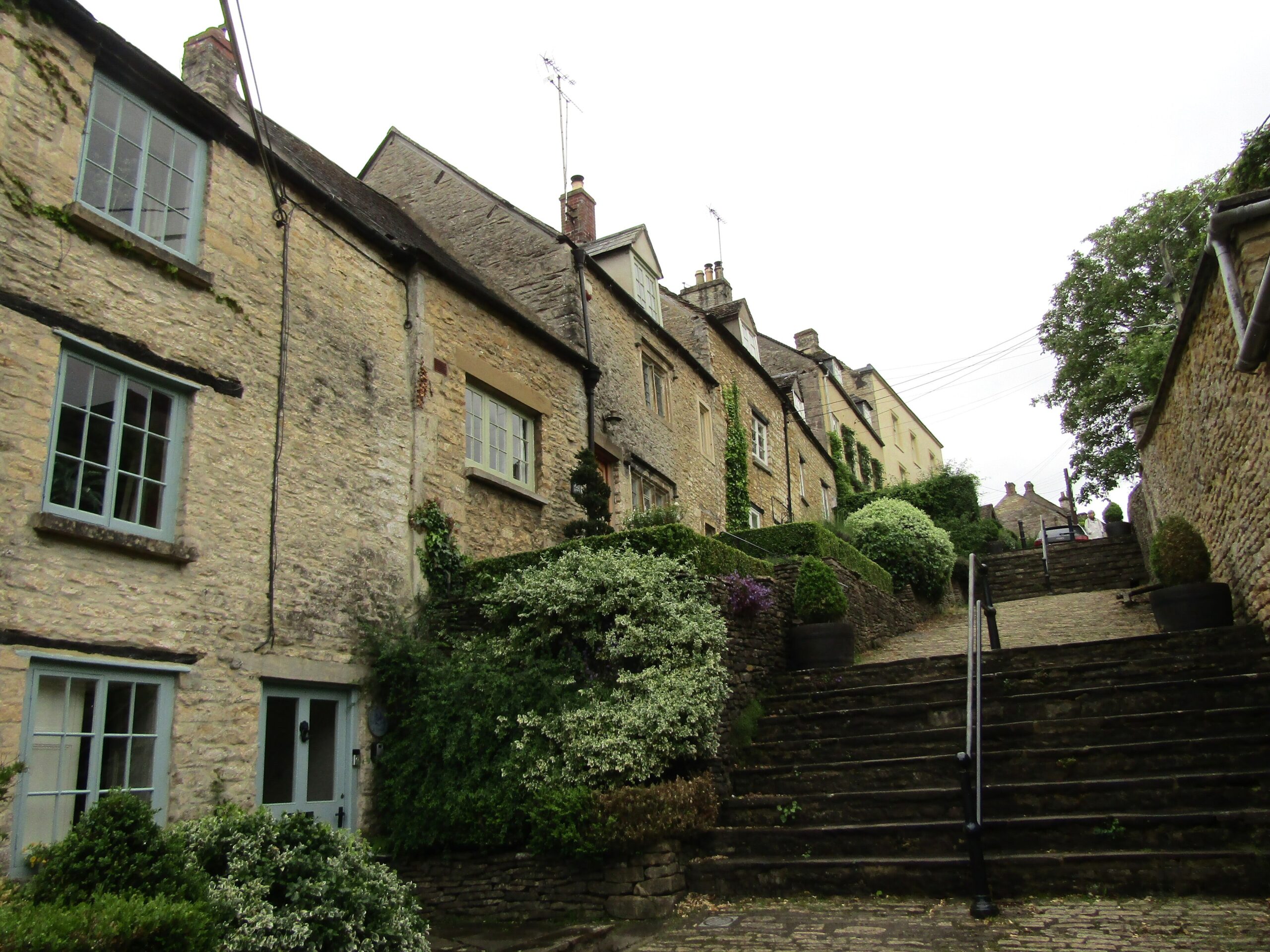
The Chipping is the upper market square, where the mop fairs were held, and the Chipping Steps drop steeply away from it: a broad flight of worn stone steps between a stepped terrace of weavers’ cottages, and the single best photograph in the town. Go down them and back up rather than just looking; the cottages get better the lower you get.
Antiques and shopping
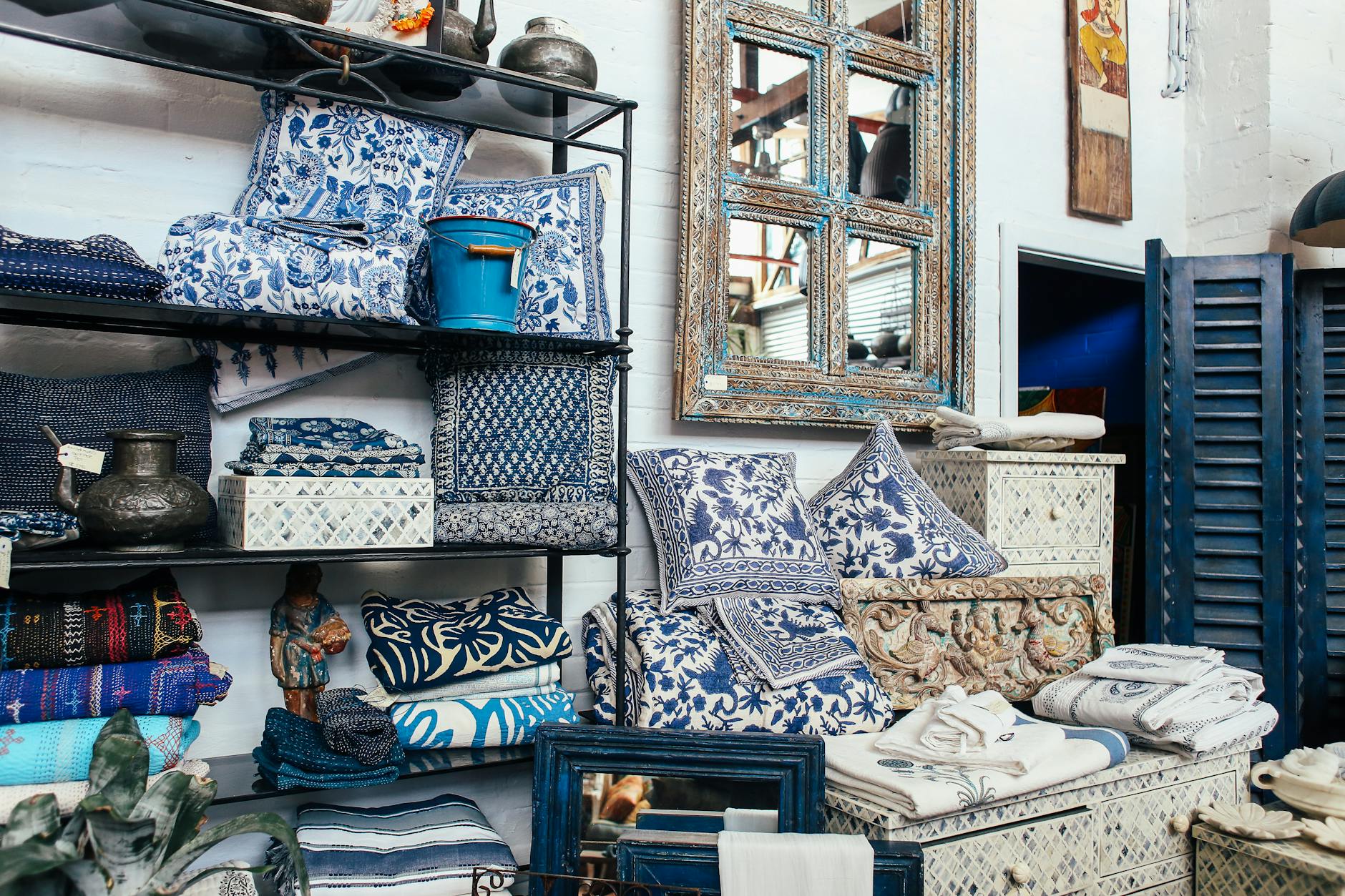
Tetbury has around a dozen dealers and two large multi-dealer centres, concentrated on Long Street and around the Market Place, and the range runs from serious Georgian furniture and clocks down to decorative garden and architectural salvage. Long Street is where the good ones are.
What makes it work as a day out rather than a specialist errand is the density: you can cover the whole trade on foot in ninety minutes, the dealers are used to browsers and will talk, and the mid-market stuff — brown furniture, glass, prints, kitchenalia — is genuinely well priced compared with London. The very top end is not, and it does not pretend to be.
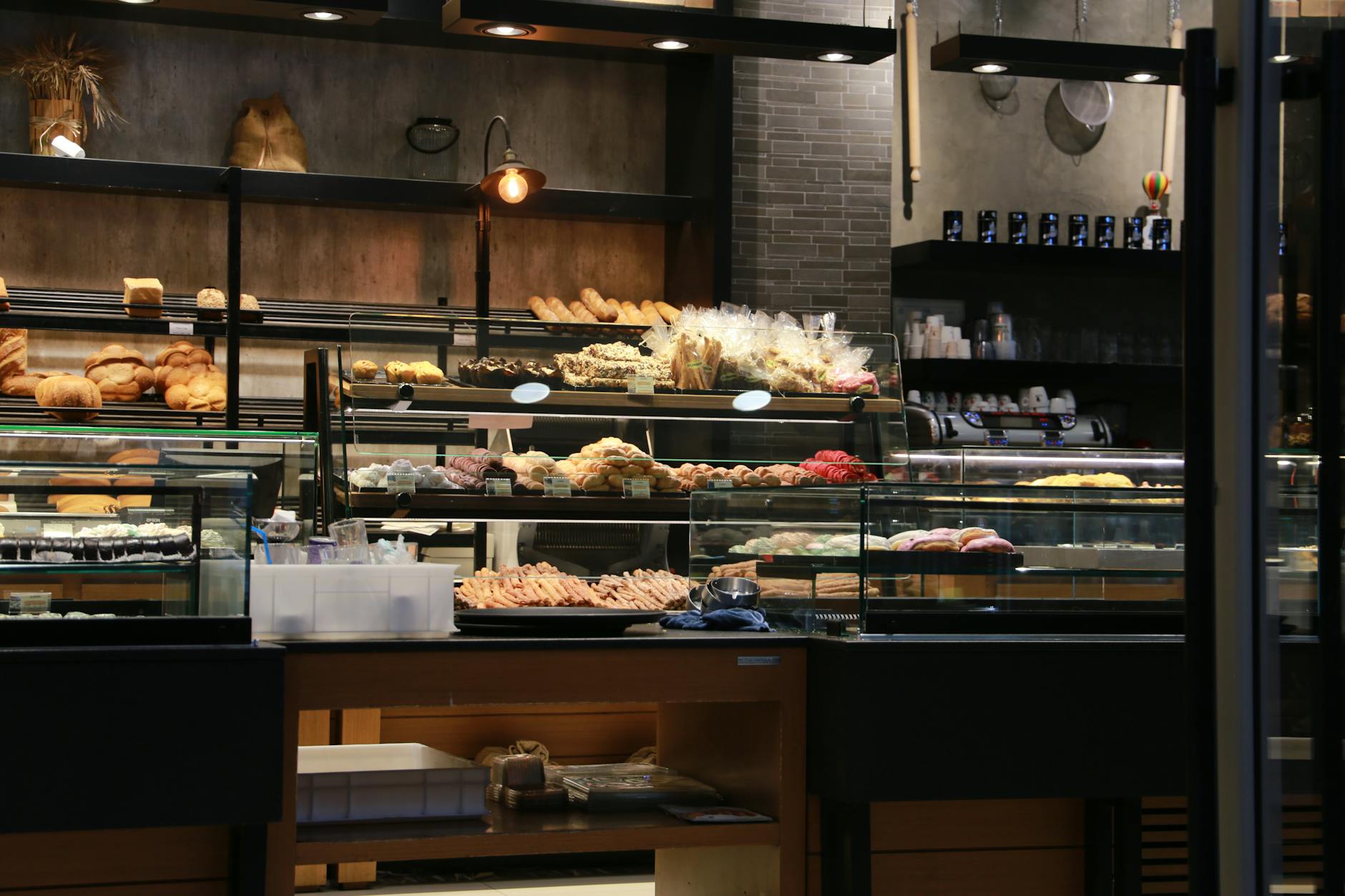
Beyond antiques there is a good run of interiors and homeware shops, two decent delis, an excellent bakery and the Highgrove shop on Long Street, which sells the estate’s own produce and garden goods with no booking required. Our Tetbury shopping guide covers the individual shops, the Cotswolds antiques guide compares Tetbury with Stow and Burford, and the market towns guide sets it against the wider region.
An honest note on prices
Tetbury’s proximity to Highgrove and Gatcombe has done what you would expect to the town’s sense of its own worth. Lunch costs a third more than it does in Stroud, twelve miles away, for roughly the same food. The antiques are fairly priced; the coffee is not.
How Tetbury got rich, and then got quiet
Tetbury sits on a spur above the upper Avon, which put it at a natural crossing of drove roads, and by the sixteenth century it was one of the two or three biggest wool and yarn markets in the west of England. The Feoffees — a body of townsmen who bought the market rights from the lord of the manor in 1633 and still exist — ran the town for centuries and built the Market House out of the proceeds. That is unusually early self-government for a place this size, and it explains the confidence of the buildings.
Then the trade moved. The cloth-making went west to the Stroud valleys where the water was, the wool market drifted to Cirencester, and the railway that eventually arrived in 1889 was a branch line off a branch line. Tetbury spent the twentieth century as a quiet agricultural town, which is precisely why the seventeenth- and eighteenth-century street pattern survived intact: nobody had the money to knock it down.
The antiques trade filled the gap from the 1960s onwards, feeding off the country houses around it, and the royal connection did the rest. Long Street’s dealers are, in a real sense, the descendants of the wool merchants — same street, same business model, different commodity. Our Cotswolds wool trade guide follows the same money across the whole region.
Eating and drinking
Tetbury eats well for its size and charges accordingly. There are two long-established inns on Long Street doing proper dining-room cooking, a couple of good cafés around Market Place, an excellent bakery and a deli or two. The best value is at lunchtime; the best cooking within fifteen minutes is arguably out of town altogether, in the country-house hotels towards Easton Grey and in Nailsworth.
Practical notes: several places close on Sunday evening and on Mondays out of season, kitchens stop earlier than you would expect, and Wednesday lunchtime is busy with market traders. Book ahead in the last two weeks of October, when Westonbirt fills every table in the town. Our best restaurants guide and pubs guide cover the area.
Highgrove
Highgrove Gardens, a mile and a half south-west at Doughton, open for pre-booked guided tours in the warmer months — typically April to October — in small groups, with no photography allowed inside the garden. The gardens are organic, unusually informal for a royal property and genuinely interesting on their own terms: the Wildflower Meadow, the Stumpery, the Thyme Walk and the Carpet Garden.
Two practical points. First, tours sell out months in advance and release dates matter, so book long before you plan the trip rather than after. Second, if you have not booked, the Highgrove shop in Tetbury is open to anyone and is the consolation prize — it sells the estate’s own honey, plants, preserves and garden tools, and the profits go to the same charitable foundation.
You cannot see the house or the gardens from the road, and the lanes around Doughton are narrow. Do not go looking.
Westonbirt Arboretum
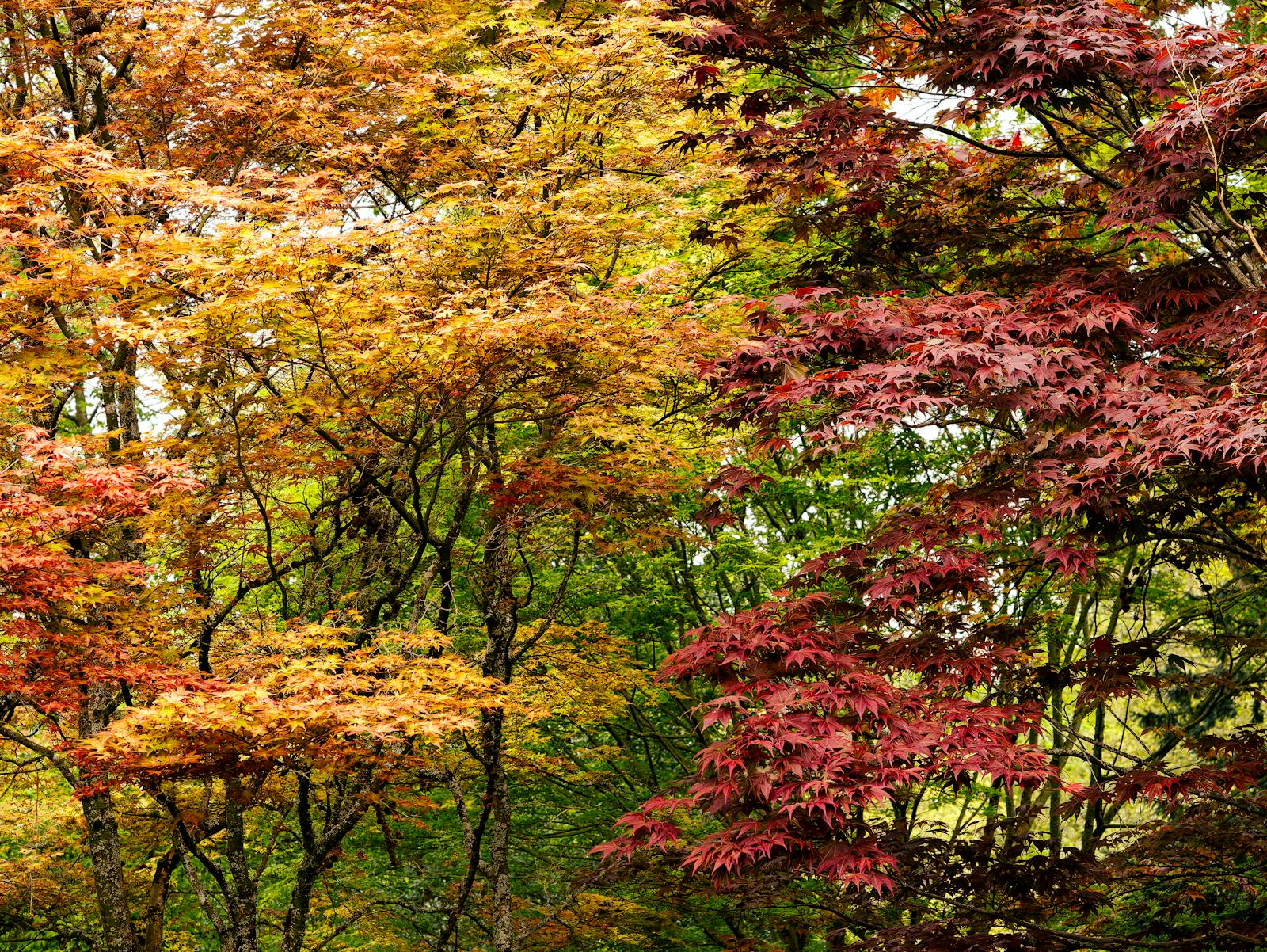
Three miles south-west on the A433 and the best single reason to be in this corner of the Cotswolds. Westonbirt holds one of the finest tree collections in the world across 600 acres, laid out from the 1850s as a Victorian landowner’s private collection and now run by Forestry England. There are two halves: the Old Arboretum with the Japanese maples, the acer glade and the Grade I landscape, and the wilder Silk Wood across the valley with the largest small-leaved lime coppice stool in Britain, thought to be around two thousand years old.
The autumn colour peaks mid-to-late October and is the best in the country. It is also, at that point, extremely busy — book a timed entry slot, come on a weekday or come at four in the afternoon when the light is better anyway and the coaches have gone. Spring for the magnolias and bluebells is the underrated alternative, and the treetop walkway is open year-round.
Full detail in our Westonbirt Arboretum guide and the Cotswolds in autumn guide.
The Woolsack Races
On the late May bank holiday, competitors run up Gumstool Hill — the steepest street in the town, at a gradient of about one in four — carrying a woolsack weighing 60lb for men and 35lb for women. It is a relay, it is genuinely brutal, and it dates in its modern form from the 1970s though the tradition it revives is much older: the story is that seventeenth-century drovers ran the hill with woolsacks to impress the local women.
The town closes the street, the pubs open early and several thousand people watch. It is one of the two best surviving Cotswold eccentricities, the other being the cheese rolling at Cooper’s Hill — our cheese rolling and traditions guide covers both, and the events and festivals guide has the rest of the year.
Around Tetbury
The southern Cotswolds around Tetbury are noticeably emptier than the north and the villages are less photographed, which is the point of coming here.
- Malmesbury, 6 miles — the ruined abbey and Abbey House Gardens, and England’s oldest borough.
- Badminton, 7 miles — the estate and village, home of the Horse Trials in May and, in Bridgerton, the Duke of Hastings’ house.
- Nailsworth and the Five Valleys, 9 miles — the best food and the best walking within half an hour. See our Stroud guide.
- Cirencester, 11 miles — the Corinium Museum, the Roman amphitheatre and two market days. Our Cirencester guide has the detail.
- Bath, 24 miles — closer than most visitors realise, and an easy day out.
- Cotswold Lakes, 12 miles — watersports and the inland beach; our Cotswold Water Park guide covers it.
Walking from Tetbury
The Tetbury Rail Lands, the old branch line into town, is now a green walking route, and the Tetbury Trail runs out through the fields to the west. The best short walk is out to Beverston, two miles, where a ruined thirteenth-century castle sits beside a farm and is visible from the lane. The Macmillan Way passes through the town. More in our circular walks guide.
Getting to Tetbury
By car. Tetbury sits at the junction of the A433 and A4135, half an hour from the M4 at junction 18 and forty minutes from the M5. There is a large free car park off the Old Railway Yard and pay-and-display closer in.
By train. Kemble is the nearest station at eight miles, with direct services to London Paddington in about an hour and twenty minutes; Stroud is twelve miles. Neither has a frequent bus connection to Tetbury, so budget for a taxi. Our Cotswolds by train guide sets out the options.
By bus. Services run to Cirencester, Stroud, Malmesbury and Bath, but they are infrequent and largely absent on Sundays. Tetbury is one of the harder Cotswold towns to reach without a car — check the bus routes guide carefully before committing.
Where to stay
Tetbury has two well-known coaching inns on Long Street and a scatter of good B&Bs and self-catering in the town and surrounding villages, plus a couple of serious country-house hotels within ten minutes’ drive. Expect £120–£180 for a mid-range double with breakfast — more than Cirencester, less than Stow in high season.
As a base it covers the southern Cotswolds, Bath and the Wiltshire edge well and the northern villages badly. It is also quiet in the evening in a way that suits some people and bores others. Our luxury hotels guide and where to stay guide cover the area.
Is Tetbury worth visiting?
For a half-day, yes, and for a full day if you pair it with Westonbirt. The Market House, the church interior and the Chipping Steps are all genuinely good and all free, the antiques are the best in the region, and the town is handsome without being crowded.
Be realistic about the scale, though. Tetbury is small. If you are not interested in antiques, you will exhaust the shopping in an hour, and there is no museum, no castle and no river. The honest verdict is that Tetbury is an excellent second or third stop and a thin first one — come for Westonbirt or Highgrove and let the town be the lunch, rather than the other way round.
And skip it entirely on a Sunday in winter, when a good proportion of the town is closed.
Frequently asked questions about Tetbury
What is Tetbury famous for?
Antiques — it is the antiques capital of the Cotswolds — along with its 1655 Market House, its proximity to Highgrove and Westonbirt Arboretum, and the Woolsack Races up Gumstool Hill on the late May bank holiday.
What day is Tetbury market?
Wednesday, under the Market House in Market Place, roughly 9am to 3pm. A mixed market also runs on Saturdays with more bric-a-brac, books and crafts.
Can you visit Highgrove?
The gardens open for pre-booked guided tours in the warmer months, typically April to October, in small groups and with no photography. They sell out months ahead. The Highgrove shop in Tetbury needs no booking and is open to everyone.
How far is Westonbirt from Tetbury?
Three miles south-west on the A433, about eight minutes by car. Book a timed slot for peak autumn colour in the second half of October, when it is the busiest place in the southern Cotswolds.
Is Tetbury worth visiting for antiques?
Yes, if you want mid-market furniture, decorative pieces, clocks, prints and architectural salvage — the concentration on Long Street is the best in the region and the dealers are approachable. It is less compelling if you want a bargain, and the top end is priced accordingly.
How long do you need in Tetbury?
Two to three hours covers the Market House, St Mary’s, the Chipping Steps and the antiques. A full day if you add Westonbirt or a Highgrove tour.
Is Tetbury a good base for the Cotswolds?
For the southern Cotswolds, Bath and the Wiltshire border, yes. For the northern villages — Broadway, Chipping Campden, Bourton — it is an hour or more each way, so Stow-on-the-Wold or Moreton-in-Marsh would serve you better.
Can you get to Tetbury without a car?
It is one of the more awkward Cotswold towns for this. Kemble station is eight miles away with no frequent connecting bus, and services to Cirencester, Stroud and Bath are infrequent with little or nothing on Sundays. Plan on a taxi from Kemble.
Come on a Wednesday, do the market and the antiques in the morning and drive out to Westonbirt for the afternoon — that is the day this town is built for. From here, our Tetbury shopping guide goes shop by shop, the guide to the Cotswold towns compares Tetbury with the fifteen others, the best gardens guide covers Highgrove alongside Hidcote and Painswick, and the southern Cotswolds itinerary puts the whole area into a route.
Photo Credits
The Market House, Tetbury: Tetbury – Market House – geograph.org.uk – 8076079 by Colin Smith, CC BY-SA 2.0, via Wikimedia Commons.
The Chipping Steps, Tetbury: Tetbury – Chipping Steps – geograph.org.uk – 8076139 by Colin Smith, CC BY-SA 2.0, via Wikimedia Commons.
Leave a Reply