This article contains advertising. My booking links are routed through a partner that adds commission tracking automatically, so if you book through one I earn a commission from the provider, at no extra cost to you. It never affects what I recommend. Affiliate disclosure
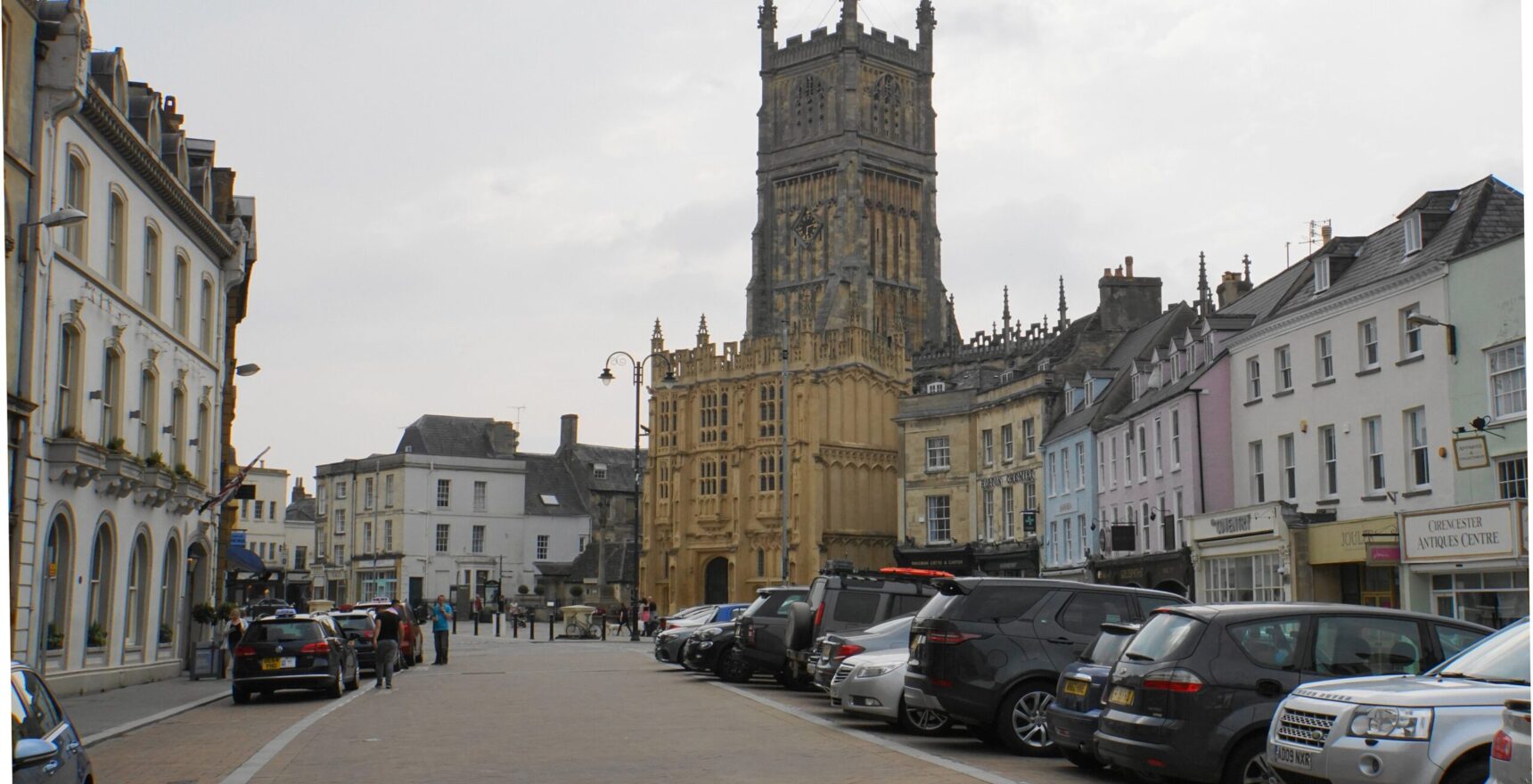
Stand in Cirencester Market Place on a Friday morning and you will understand the difference between a Cotswold town and a Cotswold village in about ninety seconds. There is a butcher arguing about the price of lamb. There is a queue at the cheese van. There is a man in high-vis unloading crates outside a shop that has been selling ironmongery since before anyone thought the honey-coloured stone was picturesque. Nobody is photographing anything. Six miles up the road, Bibury is doing brisk business in coach parties and no business at all in ironmongery.
That is the case for the Cotswold towns. The villages are what people come for and they are genuinely lovely, but they are small, they empty out at five o’clock, and by August they belong to the day-trippers. The towns have market days, bus stations, GP surgeries, independent bookshops, decent restaurants that are open on a Monday and pubs where the conversation is not entirely about parking. They are also where you should almost certainly be sleeping, because a town gives you somewhere to walk to after dinner.
This is the complete guide to the towns of the Cotswolds — which ones are worth a day, which are worth a base, which are frankly a bit dull, and how to string them together. It sits above our individual town guides and alongside the villages guide, which covers the other half of the picture.
The Cotswold towns at a glance
Sixteen places have a reasonable claim to being a Cotswold town. Here is the honest summary, with market days checked in September 2026 — confirm before you travel, because charter markets do occasionally move for bank holidays.
| Town | County | Rough size | Market day | Best for | Worth a base? |
|---|---|---|---|---|---|
| Cheltenham | Gloucestershire | 117,000 | 3rd Sat, Promenade | Regency architecture, food, festivals | Yes — the best restaurants and trains |
| Cirencester | Gloucestershire | 20,000 | Mon & Fri | Roman history, real town life | Yes — best for the southern Cotswolds |
| Witney | Oxfordshire | 29,000 | Thu & Sat | Blanket-making heritage, Oxford access | Only if price matters |
| Stroud | Gloucestershire | 26,000 | Fri & Sat | Farmers’ market, valleys, counterculture | Yes — if you want the un-touristed version |
| Tetbury | Gloucestershire | 5,500 | Wed | Antiques, Highgrove, Westonbirt | Yes — quiet and well-fed |
| Malmesbury | Wiltshire | 5,800 | Fri | Abbey ruins, gardens, hilltop setting | Yes, for two nights |
| Chipping Norton | Oxfordshire | 6,300 | Wed | Theatre, Rollrights, Clarkson country | Yes — cheapest of the good ones |
| Winchcombe | Gloucestershire | 4,500 | Farmers’ only | Walking, Sudeley Castle, steam railway | Yes — the walker’s choice |
| Woodstock | Oxfordshire | 3,100 | Farmers’ only | Blenheim Palace, Georgian streets | Yes, but expensive |
| Moreton-in-Marsh | Gloucestershire | 3,500 | Tue | The big Tuesday market, mainline trains | Yes — best rail base in the north |
| Stow-on-the-Wold | Gloucestershire | 2,000 | Farmers’ only | Antiques, the famous yew door | Yes — central, pretty, busy |
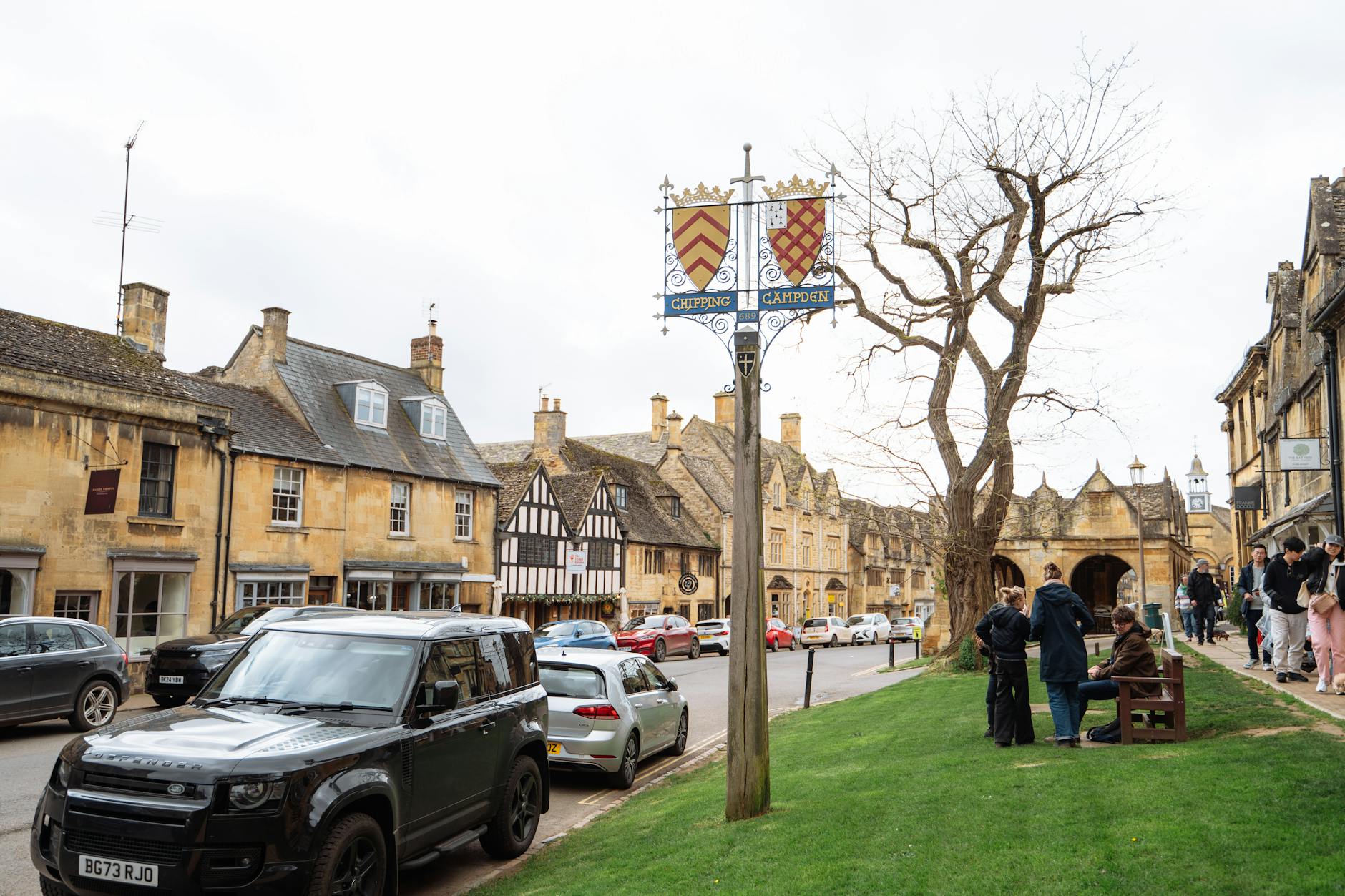
| Chipping Campden | Gloucestershire | 2,300 | None | The finest High Street in England | Yes — start of the Cotswold Way |
| Burford | Oxfordshire | 1,400 | None | The hill, the antiques, the wildlife park | Yes — but traffic-heavy |
| Northleach | Gloucestershire | 2,000 | Wed | The “Cathedral of the Cotswolds”, quiet | Yes — underrated and cheap |
| Nailsworth | Gloucestershire | 5,800 | Farmers’ only | Food, cycling, the Five Valleys | Yes — a foodie base |
| Painswick | Gloucestershire | 1,800 | None | Rococo Garden, the 99 yews | Small but lovely |
If you read only one row: Cheltenham for a first visit with good food and trains, Moreton-in-Marsh if you are arriving by rail and want to be in the north Cotswolds, Cirencester if you want a real town in the south.
What actually counts as a Cotswold town?
This is less pedantic than it sounds, because it determines what you will find when you arrive.
The Cotswolds National Landscape — the protected area formerly called the AONB — covers about 790 square miles across five counties. Its boundary was drawn around landscape, not around settlements, so several of the towns everybody thinks of as Cotswold towns sit just outside it. Cheltenham is the obvious case: it is pressed right up against the escarpment, most of its visitors are there for the Cotswolds, and the National Landscape boundary runs along the hills behind it rather than through it. Stroud is similar. Nobody except a planning officer cares, but it explains why the “largest town in the Cotswolds” question has two answers.
The largest town in the Cotswolds is Cheltenham, with roughly 117,000 people, if you count the escarpment towns — and everyone does. If you insist on the towns inside the protected boundary, Cirencester takes it at around 20,000, which is why it has been calling itself the Capital of the Cotswolds since long before marketing departments existed.
Town versus village
The working distinction is a market charter. Almost every town on this page was granted the right to hold a market in the medieval period, usually because it sat on a wool route, and the shape of the place still shows it: a wide High Street or a square that could take pens and stalls, a market house or a market cross in the middle of it, and a church built with money that came off the backs of sheep. Chipping Campden, Chipping Norton and Chipping Sodbury all carry the Old English cēping, meaning market, in their names.
Villages — Bibury, the Slaughters, Snowshill, Bourton-on-the-Water — never had that, and never grew the infrastructure that came with it. Bourton is the exception that proves the point: it has more visitors than several of these towns and still has no market, no cinema and a High Street that runs out after four minutes.
The big three: Cheltenham, Cirencester and Stroud
Cheltenham — the Regency one
Cheltenham is not what people picture when they picture the Cotswolds, and that is exactly why it is useful. It is a proper Regency spa town: cream stucco rather than honey limestone, wrought-iron balconies, wide tree-lined promenades, and a scale that comes from being a fashionable resort in the 1820s rather than a wool market in the 1420s. Montpellier and the Suffolks are the good bits — genuinely elegant streets of independent shops, wine bars and restaurants, with the caryatids along Montpellier Walk holding up the shopfronts.
What Cheltenham gives you that no other town here does is choice. It has the region’s best concentration of restaurants, a mainline-adjacent station with direct trains to London Paddington and Bristol, a bus network that actually reaches the villages, and four major festivals — jazz in April, science in June, music in July and the enormous literature festival in October. The racecourse at Prestbury Park runs the Cheltenham Festival in March, at which point every hotel room within thirty miles triples in price and the town stops being a sensible base.
The honest verdict: stay here for food, transport and rain-proofing, not for the Cotswolds themselves — you have to drive fifteen minutes uphill before the view starts. Full detail is in our Cotswolds festivals guide and the best restaurants round-up.
Cirencester — the Roman one
Cirencester was Corinium Dobunnorum, the second-largest town in Roman Britain after London, and the modern street plan still runs along Roman lines. The Corinium Museum is the best museum in the Cotswolds by a distance and holds the mosaics — including the Hunting Dogs and the Four Seasons — that were pulled out of the fields around the town. The parish church of St John Baptist has a three-storey porch on the Market Place that was built as the town hall and is the largest church porch in England.
Behind it all sits Cirencester Park, the Bathurst estate, with a five-mile beech avenue you can walk into from the top of Cecily Hill. Access to the park now requires a modestly priced annual pass rather than the old free open gate, which caused a certain amount of local feeling; check the current arrangement on the estate’s own site before you build a day around it.
The market runs Mondays 10am–4pm and Fridays 9am–3pm in the Market Place, with the farmers’ market on the second and fourth Saturday of the month. That Friday market is the single best hour in the southern Cotswolds if you want to see a working town rather than a visited one — pair it with the Roman Cotswolds trail and Chedworth Roman Villa, twenty minutes north.
Stroud — the awkward, interesting one
Stroud will not appear in a Cotswolds calendar and it is the most genuinely alive town in this guide. It sits where five valleys meet, it made its money from broadcloth rather than raw wool, and the mills along the Frome are now studios, breweries and climbing walls. The town centre is scruffy in patches. The Stroud Farmers’ Market on a Saturday morning has been voted the best in the country more than once and deserves it — around fifty producers, all from within a defined radius, and a queue for the Woefuldane raw-milk cheese by half past nine.
Up the Slad Valley is Laurie Lee country, more or less unchanged from Cider with Rosie, with the Woolpack at Slad as the obvious lunch. The Five Valleys give you the best short walking in the southern Cotswolds without a single coach park.
The honest verdict: if you want stone cottages and cream teas, Stroud will disappoint you badly. If you want somewhere with an actual population under 70, it is the pick of the region.
The market towns of the north Cotswolds
This is the classic postcard belt, and it is also where the traffic is. Everything here is within twenty minutes of everything else.
Chipping Campden
The best High Street in England, and one of the few superlatives on this site we are not going to hedge. It runs in a long gentle curve of unbroken seventeenth-century stone, with the pillared Market Hall of 1627 standing in the middle of it, and there is not a single modern shopfront to break the line. The wool church of St James is one of the great Cotswold “wool churches”, paid for by William Grevel, and the almshouses on Church Street are the finest set in the region.
Campden is also the northern terminus of the Cotswold Way, which starts at the Market Hall and runs 102 miles to Bath, and it is a short walk from Dover’s Hill, where the Cotswold Olimpick Games have been held since 1612. Our Chipping Campden guide has the full picture. Get the spelling right — Campden, not Camden.
Stow-on-the-Wold
The highest of the wool towns at about 800 feet, arranged around a large square that used to hold twenty thousand sheep at the annual fairs. Now it holds antiques dealers — Stow is the most concentrated antiques town in the north Cotswolds — plus tea rooms and a reliable stream of visitors photographing the north door of St Edward’s church, where two ancient yews have grown around the doorway into something that looks unmistakably like a Tolkien illustration. Expect a queue for that photograph between April and September; go before nine.
Stow has no weekly retail market any more, which surprises people. See the Stow-on-the-Wold guide and the shopping guide for the dealers worth your time.
Moreton-in-Marsh
Moreton is the practical one. It sits on the Fosse Way, it has the only mainline station in the north Cotswolds with direct London Paddington trains, and its Tuesday market is the biggest in the region — well over a hundred stalls filling the wide High Street, 9am to 3pm from November to March and until 3.30pm from April to October. It is a proper mixed market: work boots, plants, fish, phone cases, fabric by the metre. Nothing about it is curated for visitors, which is its charm.
The town itself is handsome rather than beautiful, and that wide High Street is also the A429, so there is a constant rumble of lorries. As a base it is unbeatable if you are travelling without a car. Details in the Moreton-in-Marsh guide and the dedicated market guide.
Broadway
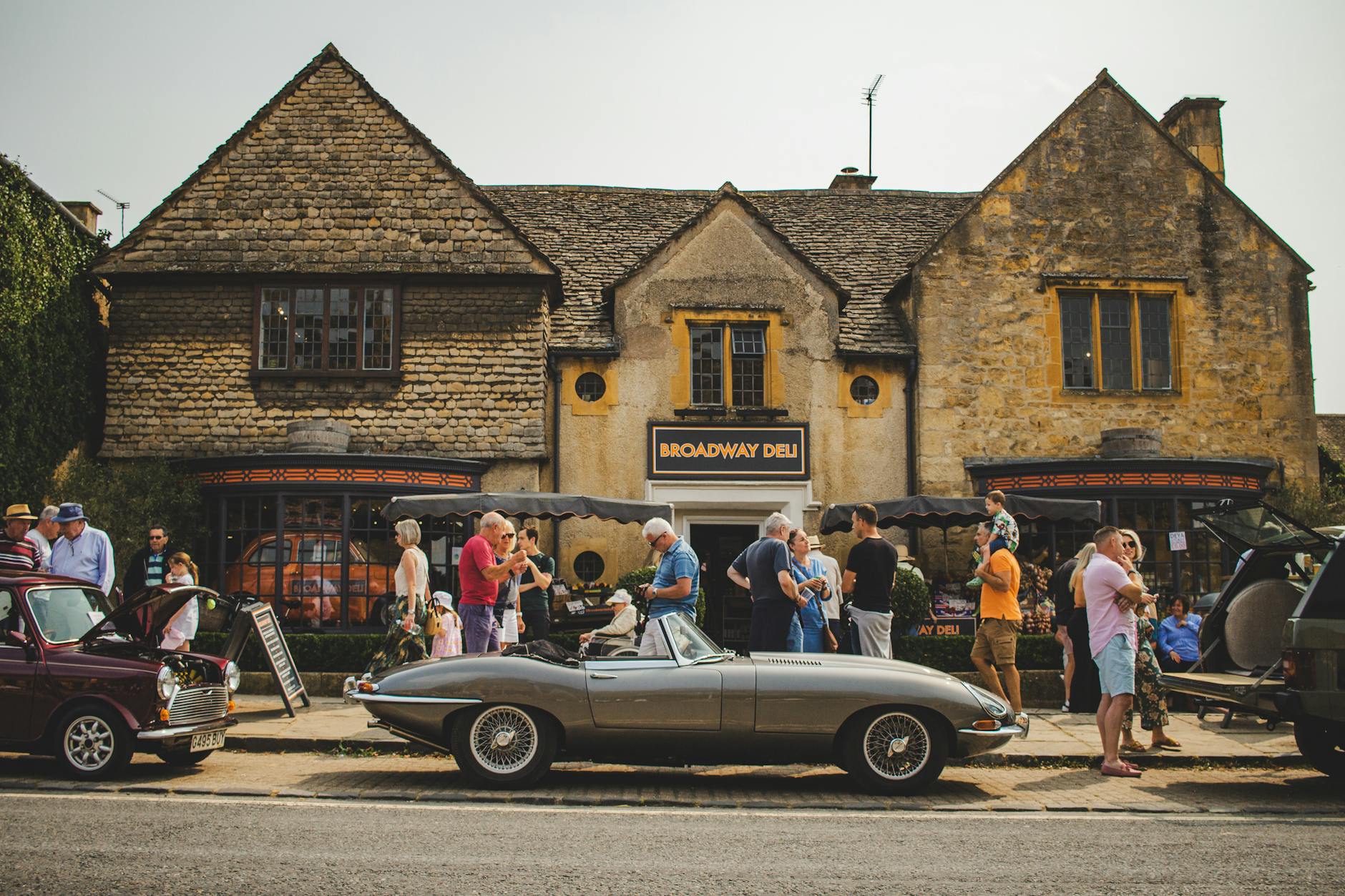
Strictly a village, universally treated as a town, and included here because visitors always ask. Broadway has a very wide green High Street lined with chestnut trees and expensive galleries, the Lygon Arms at the top of it, and Broadway Tower — a folly of 1794 on the second-highest point of the Cotswold ridge, later a Cold War nuclear monitoring post, now a viewpoint with a café and a red deer herd. It is beautiful and it knows it; on a summer Saturday the High Street parking is a blood sport. See the Broadway guide.
Winchcombe
Winchcombe calls itself the walking capital of the Cotswolds and has the credentials: the Cotswold Way runs through the middle of it, the Winchcombe Way and the Gloucestershire Way cross here, and there are more waymarked routes out of this town than out of anywhere else in the region. Sudeley Castle — Katherine Parr’s home, and her burial place — is a ten-minute walk from the High Street, and Belas Knap, a Neolithic long barrow with a false entrance, sits on the hill above.
The Gloucestershire Warwickshire Steam Railway stops here on its fourteen-mile run between Broadway and Cheltenham Racecourse. The High Street has a decent butcher, two good pubs and a pace that is noticeably slower than Broadway’s, eight miles north. Our Sudeley Castle guide covers the castle in detail.
The Oxfordshire towns
Burford
Burford’s High Street drops down a steep hill to a narrow medieval bridge over the Windrush, and the view from the top of it — stone rooflines stepping down to the water meadows — is one of the most photographed in Oxfordshire. The street is a museum of building periods, from Tudor timber to Georgian brick refronting, and the antique shops and delis are good. The Tolsey, the little pillared market house halfway down, holds the town museum.
The problem is that the High Street is also the road, and the hill is on the route between the A40 and everywhere north. Come mid-week or come early. Cotswold Wildlife Park is two miles south and is the single best family day out in the region. Full detail in the Burford guide and the wildlife park guide.
Chipping Norton
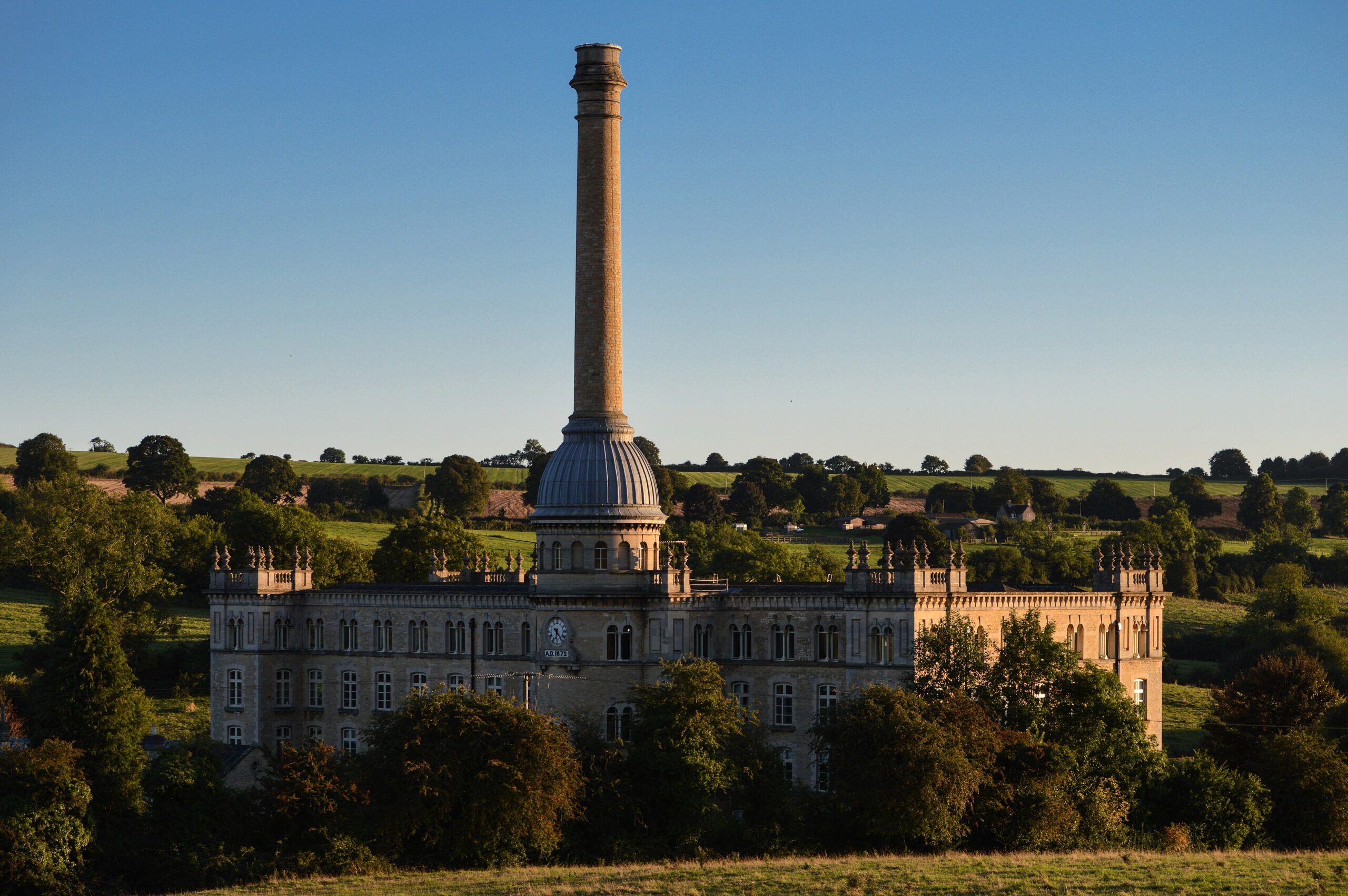
The highest town in Oxfordshire, at around 700 feet, and a working town with a theatre. “Chippy” has a sloping market square, a tall Victorian tweed mill on the edge of town that looks like it wandered in from Lancashire, and a genuinely good small theatre that programmes year-round. The Rollright Stones — a Neolithic circle, a single standing stone and a burial chamber, spread over a ridge four miles north — are the most atmospheric prehistoric site in the Cotswolds and cost a couple of pounds in an honesty box.
Chipping Norton is also the nearest town to Diddly Squat, and the Clarkson effect on local traffic is real. Market day is Wednesday, with the farmers’ market on the third Saturday.
Woodstock
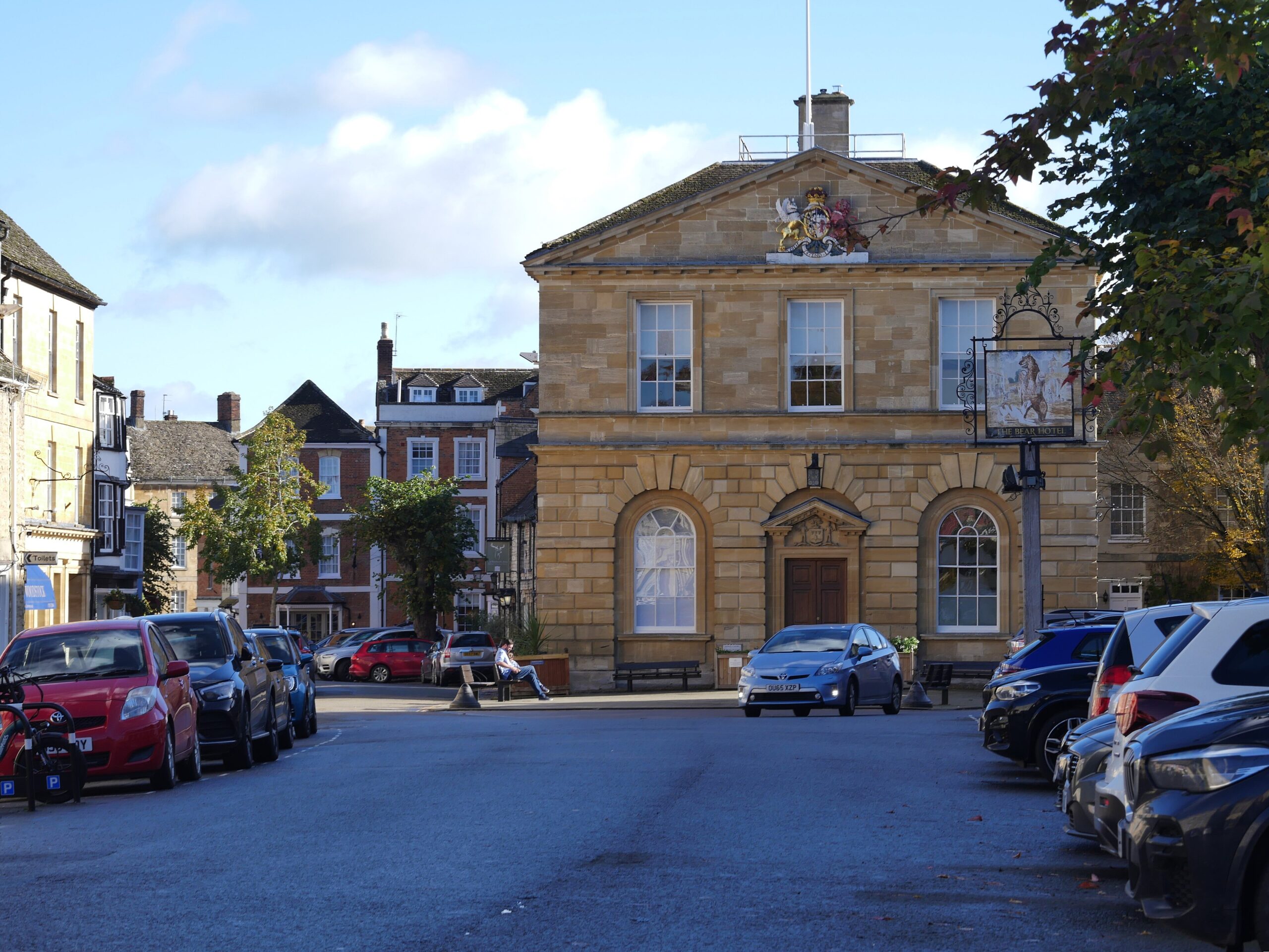
Woodstock exists in the shadow of Blenheim Palace, and it has the good sense to make a virtue of it. You walk out of the town square, through the Triumphal Gate, and the whole Vanbrugh pile with its Capability Brown lake opens in front of you — a better arrival than the main car park by some margin. The town itself is small, expensive and unusually elegant, all Georgian stone and coaching inns, with the Oxfordshire Museum on Park Street and a couple of the region’s better hotels.
It is eight miles from Oxford on the frequent S3 bus, which makes it the easiest Cotswold town to reach without a car — see our Oxford day trip guide. Note that this is Woodstock, Oxfordshire; the festival was in New York State.
Witney
Witney made blankets for three hundred years, and the Blanket Hall on the High Street is still there. It has a long green with two churches at the end of it, a fine seventeenth-century Buttercross, markets on Thursday and Saturday, and a large modern shopping area behind. Nobody bases a Cotswolds holiday here for the charm, but rooms are markedly cheaper than in the stone villages and the bus links to Oxford and Burford are good. Cogges Manor Farm, on the edge of town, played Yew Tree Farm in Downton Abbey.
The southern Cotswolds
Tetbury
Tetbury is the antiques capital of the Cotswolds and a noticeably prosperous little town, largely because Highgrove is a mile and a half down the road and Gatcombe Park is not much further. The pillared Market House of 1655 stands on stone legs in the middle of Market Place, the Chipping Steps drop away below it, and the church of St Mary the Virgin has the fourth-tallest spire in England and a Georgian Gothic interior with box pews that comes as a genuine surprise.
Highgrove Gardens open for pre-booked tours between April and October and sell out months ahead; the Highgrove shop in town needs no booking. Westonbirt Arboretum is three miles away and is the best autumn destination in the region. The Woolsack Races — competitors run a 60lb woolsack up Gumstool Hill on the late May bank holiday — are exactly as brutal as they sound. See the Tetbury shopping guide, the antiques guide and the Westonbirt guide.
Malmesbury
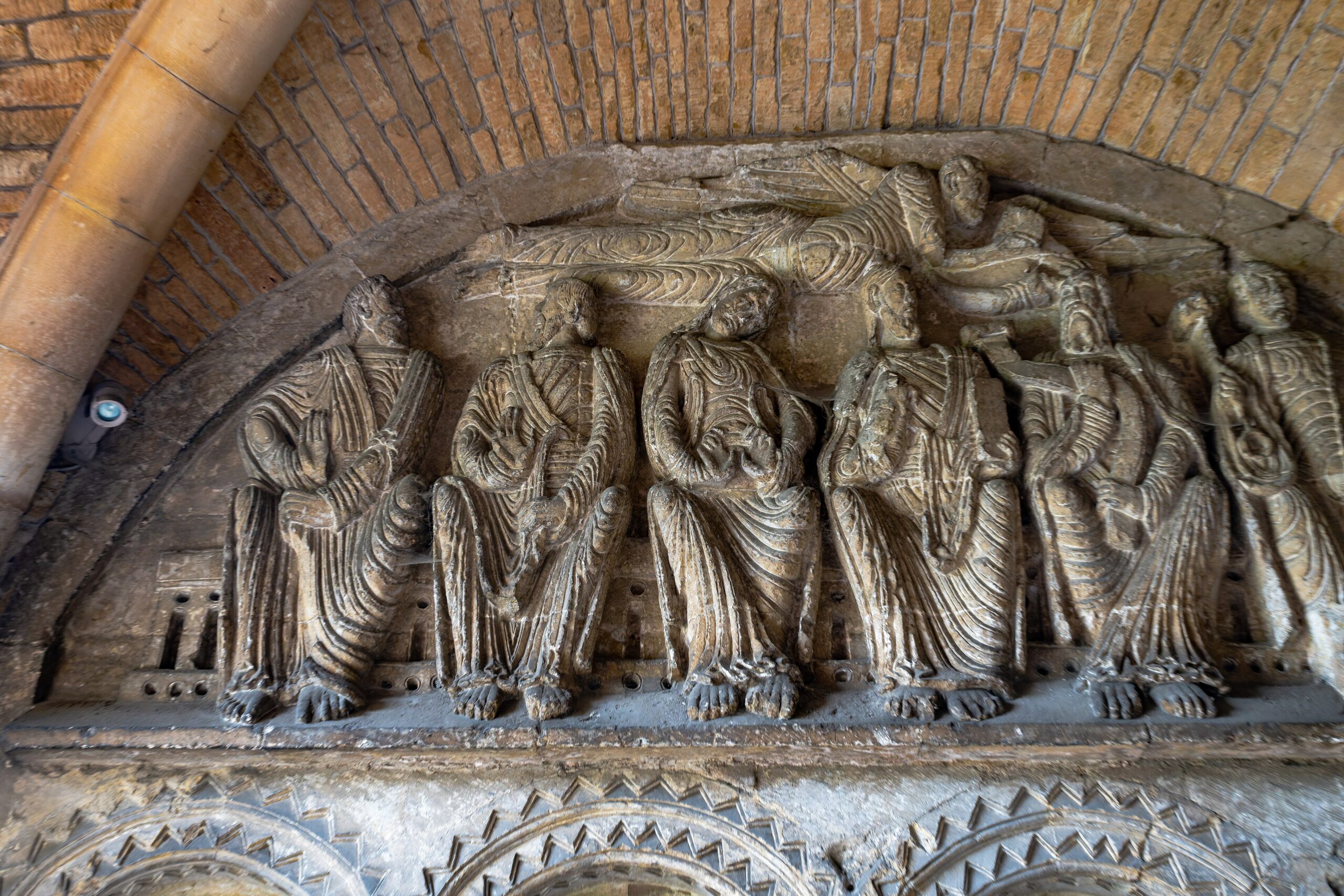
Malmesbury claims to be the oldest borough in England, on the strength of a charter from Alfred the Great in 880, and it has the best ruin in the Cotswolds to back the claim up. The abbey is half a church: the nave survived the Dissolution and is still the parish church, while the crossing tower collapsed in a storm and the transepts stand open to the sky. The Norman south porch has a carved doorway of biblical scenes that is among the finest Romanesque sculpture in the country. Eilmer, an eleventh-century monk here, strapped on wings and jumped off the tower — he broke both legs and blamed the lack of a tail.
Abbey House Gardens next door are five acres running down to the Avon. The town sits on a hill nearly ringed by two branches of the river, so almost every approach is a climb. Friday is market day at the Market Cross.
Nailsworth and Painswick
Nailsworth, at the bottom of three of the five valleys, punches far above its size on food — Hobbs House Bakery started here, and William’s Food Hall is one of the better fishmonger-delis in the west of England. It is also the foot of the notorious W-shaped Nailsworth Ladder, a cycling climb of up to 1 in 2.
Painswick, the “Queen of the Cotswolds”, is really a large village but behaves like a small town. The churchyard holds ninety-nine clipped yews and a set of table tombs, and the Rococo Garden just north is the only complete survivor of the brief English rococo period — and the best snowdrop site in the county in February. Our Painswick guide has more.
Northleach
The great overlooked one. Northleach was Cirencester’s rival in the medieval wool trade and spent the proceeds on the church of St Peter and St Paul, which is so out of proportion to the town that it is called the Cathedral of the Cotswolds. Inside are some of the finest memorial brasses in England — wool merchants standing with their feet on woolsacks and sheep, which is about as clear a statement of where the money came from as medieval England produced.
The market square is intact, the A40 was diverted around the town years ago, and there are almost no coaches. Wednesday is market day. If you want a north Cotswolds base at a sensible price with everything within twenty-five minutes, this is the sleeper pick.
Which town should you stay in?
Base choice matters more here than in most regions, because the roads are slow and the villages are small. Twelve miles can take forty minutes behind a tractor.
| If you are… | Stay in | Why |
|---|---|---|
| Coming by train | Moreton-in-Marsh or Cheltenham | Direct London Paddington services; buses from the door |
| On a first visit, driving | Stow-on-the-Wold or Burford | Central for the classic villages, everything within 30 minutes |
| Here to eat | Cheltenham or Nailsworth | The only two places with real depth of choice |
| Walking | Winchcombe or Chipping Campden | On the Cotswold Way, with routes from the High Street |
| Travelling with children | Burford or Bourton | Wildlife park, Farm Park and the river within reach |
| Watching the budget | Witney, Chipping Norton or Northleach | Rooms 30–40% below the honeypot villages |
| Avoiding crowds | Stroud, Northleach or Malmesbury | Working towns; nobody comes on a coach |
| Doing Blenheim and Oxford | Woodstock | The palace is at the end of the street |
Our where to stay guide and the area-by-area breakdown go further, and the market towns shopping guide covers the retail side of Cirencester, Stow, Tetbury, Campden, Moreton, Burford and Cheltenham in detail rather than the two or three sentences they get here.
What a room actually costs
Prices below are typical mid-range doubles with breakfast, checked September 2026. Everything rises by a third in July and August, and Cheltenham’s March race week is its own weather system.
| Town | Typical mid-range double | Peak-season equivalent |
|---|---|---|
| Cheltenham | £110–£160 | £180–£260 (£400+ race week) |
| Stow-on-the-Wold | £140–£190 | £200–£280 |
| Broadway | £150–£220 | £230–£320 |
| Woodstock | £150–£210 | £220–£300 |
| Cirencester | £100–£150 | £150–£210 |
| Moreton-in-Marsh | £100–£145 | £150–£200 |
| Northleach / Chipping Norton | £85–£130 | £130–£180 |
| Stroud | £85–£125 | £120–£170 |
Getting between the towns
There is no single Cotswolds railway. Two lines clip the edges — the Cotswold Line from London Paddington through Charlbury, Kingham and Moreton-in-Marsh to Worcester, and the main line to Cheltenham Spa and Gloucester — and everything between them is bus or car. Our Cotswolds by train guide and the bus routes guide have the timetable detail.
- By car — the only way to link more than two or three towns in a day. The Fosse Way (A429) is the spine of the north Cotswolds and runs dead straight past Moreton, Stow and Northleach to Cirencester. Park-and-walk: almost every town has a pay-and-display car park behind the High Street that is emptier and cheaper than the on-street bays.
- By train — Moreton-in-Marsh, Kingham and Charlbury for the north; Cheltenham Spa, Stroud and Kemble (for Cirencester) for the south. Kemble is four miles from Cirencester with a connecting bus.
- By bus — the 801 and 802 link Moreton, Stow, Bourton and Cheltenham; the 51 and 55 run out of Cirencester; the S3 connects Oxford and Woodstock every half hour. Sunday services are thin to non-existent outside the main corridors.
- On foot — the Cotswold Way links Chipping Campden, Broadway, Winchcombe, Painswick and Wotton-under-Edge in a single 102-mile walk. It is the only way to travel between these towns without a timetable.
A three-day towns route
If you want the towns rather than the villages, this works and involves no backtracking. It pairs neatly with our three-day itinerary, which weights things the other way.
- Day one — the north. Chipping Campden in the morning for the High Street and the Market Hall, Broadway Tower at midday, Winchcombe and Sudeley in the afternoon. Sleep in Winchcombe or Cheltenham.
- Day two — the middle. Moreton on a Tuesday for the market, then Stow for antiques and Northleach for the wool church. Sleep in Burford or Northleach.
- Day three — the south. Cirencester for the Corinium Museum and the Market Place, then Tetbury for antiques, finishing at Westonbirt or Malmesbury Abbey.
The best market days, ranked
If you can only build one day around a market, these are the ones worth planning for. Times checked September 2026.
- Stroud Farmers’ Market, Saturday morning — around fifty producers, all local, in Cornhill Market Place. The best food market in the west of England and not remotely a tourist attraction.
- Moreton-in-Marsh, Tuesday — the biggest general market in the Cotswolds, over a hundred stalls the length of the High Street.
- Cirencester, Friday — a proper charter market in a superb setting under the church porch, 9am to 3pm.
- Tetbury, Wednesday — small, produce-led, under the Market House pillars.
- Chipping Norton farmers’ market, third Saturday — 8.30am to 1.30pm, and the town is at its liveliest.
- Northleach, Wednesday — tiny, 8.30am to 3.30pm, and you will be one of very few visitors.
Which towns are overrated?
Somebody has to say it.
Bourton-on-the-Water is not a town and, between eleven and four in August, is not much of a village either — it is a queue with a river running through it. Go at eight in the morning, when it is genuinely one of the loveliest places in England, or go in February.
Broadway is a beautiful street with very little behind it. An hour is plenty unless you are going up the Tower.
Stow-on-the-Wold is lovely and has been comprehensively discovered. If the yew door photograph is the only thing drawing you, know that you will be waiting behind eight other people for it.
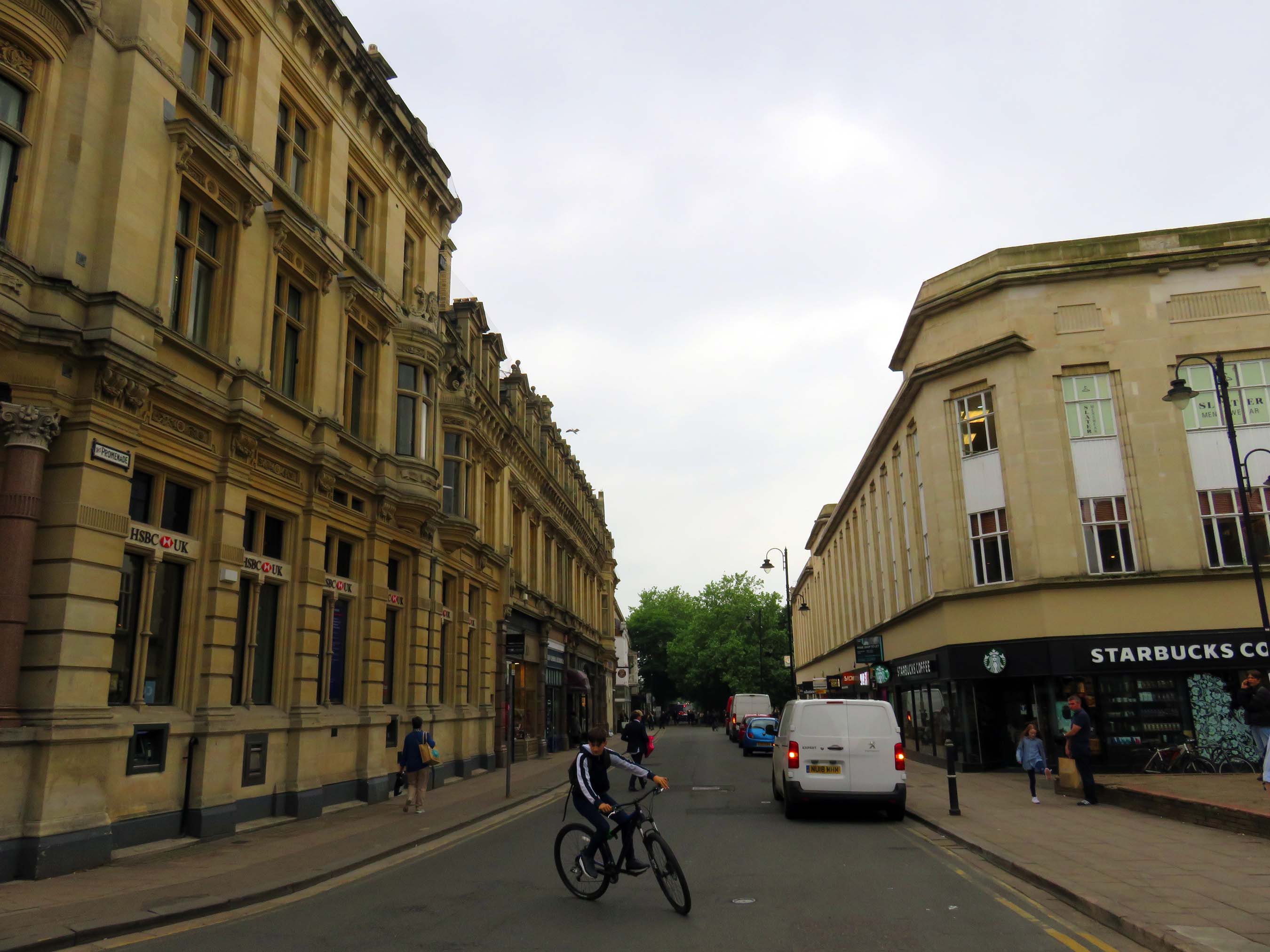
And Cheltenham’s High Street, as opposed to Montpellier and the Suffolks, is an ordinary British high street with the same chains as everywhere else. Walk five minutes further.
Conversely, the towns that reward a visit far beyond their reputation are Northleach, Malmesbury and Stroud — all three have something genuinely first-rate (a wool church, an abbey ruin, a food market) and none of them has a coach park.
Frequently asked questions about Cotswold towns
What is the largest town in the Cotswolds?
Cheltenham, at around 117,000 people, is much the largest town associated with the Cotswolds, though it sits on the escarpment edge rather than inside the National Landscape boundary. Cirencester, at about 20,000, is the largest town within the Cotswolds proper and has called itself the Capital of the Cotswolds for centuries.
What is the prettiest Cotswold town?
Chipping Campden, without much argument — an unbroken curve of seventeenth-century stone with the 1627 Market Hall in the middle and no modern shopfronts. Burford’s High Street running down to the Windrush is the best single view, and Painswick is the most atmospheric.
Which Cotswold town is best to stay in?
Moreton-in-Marsh if you are arriving by train, Stow-on-the-Wold or Burford if you are driving and want to be central, Cheltenham if you care about food and rainy-day options, and Northleach or Chipping Norton if you want the same access for thirty per cent less.
How many Cotswold towns can you see in a day?
Three, comfortably, if they are close together — Moreton, Stow and Northleach, say, or Cirencester, Tetbury and Malmesbury. Four is possible and starts to feel like a car park tour. The roads are single-carriageway and slow.
What is the difference between a Cotswold town and a Cotswold village?
A market charter, and everything that followed from it: a square or wide High Street built for stalls, a market house or cross, shops that serve residents rather than visitors, and a church funded by the medieval wool trade. Villages such as Bibury and the Slaughters never had a market and never grew that infrastructure.
Are the Cotswold towns walkable between each other?
Some are. The Cotswold Way connects Chipping Campden, Broadway, Winchcombe, Painswick and Wotton-under-Edge on foot, and Winchcombe to Cheltenham is a good day’s walk. Most other pairs are eight to fifteen miles on lanes without pavements, so a bus or car is the sensible choice.
Which Cotswold towns have a Sunday market?
Effectively none. The charter markets run Monday to Saturday and the farmers’ markets are Saturday events. Sunday in the Cotswolds is for pubs, gardens and walks — plan accordingly, and check bus timetables, which thin out badly.
Do you need a car to visit the Cotswold towns?
Not if you pick your base. Moreton-in-Marsh, Cheltenham, Stroud, Charlbury and Woodstock are all reachable by public transport and have onward buses. Linking five towns in three days without a car is difficult but possible — our car-free guide sets out how.
Start with one town and let it lead you outward — that is how the region works best. If you want the other half of the picture, our guide to the best Cotswolds villages covers the small stone places the towns sit between, the complete Cotswolds travel guide is the place to start planning a whole trip, and the best time to visit will tell you which month suits the kind of trip you have in mind. For the shopping side of these same towns, head to the market towns guide.
Cheltenham gets a section above, but it earns a page of its own: our full Cheltenham guide walks the Regency town from the Promenade through Montpellier’s caryatids to the Pittville Pump Room, sets out the five festivals worth planning a trip around, and is straight with you about what race week in March does to the whole county.
In the far south-west, two small places a steep mile and a half apart make an unexpectedly good pair. Nailsworth is a valley mill town with one of the best bakeries in the region; Minchinhampton is a hilltop wool town with a 1698 market house and 600 acres of common on its doorstep. Our Nailsworth and Minchinhampton guide covers both and the walk that links them.
Photo Credits
Cirencester Market Place and the church of St John Baptist: Market Place, Cirencester – geograph.org.uk – 5877603 by Bill Boaden, CC BY-SA 2.0, via Wikimedia Commons.
The Promenade in Cheltenham: The Promenade in Cheltenham – geograph.org.uk – 5791261 by Steve Daniels, CC BY-SA 2.0, via Wikimedia Commons.
Leave a Reply