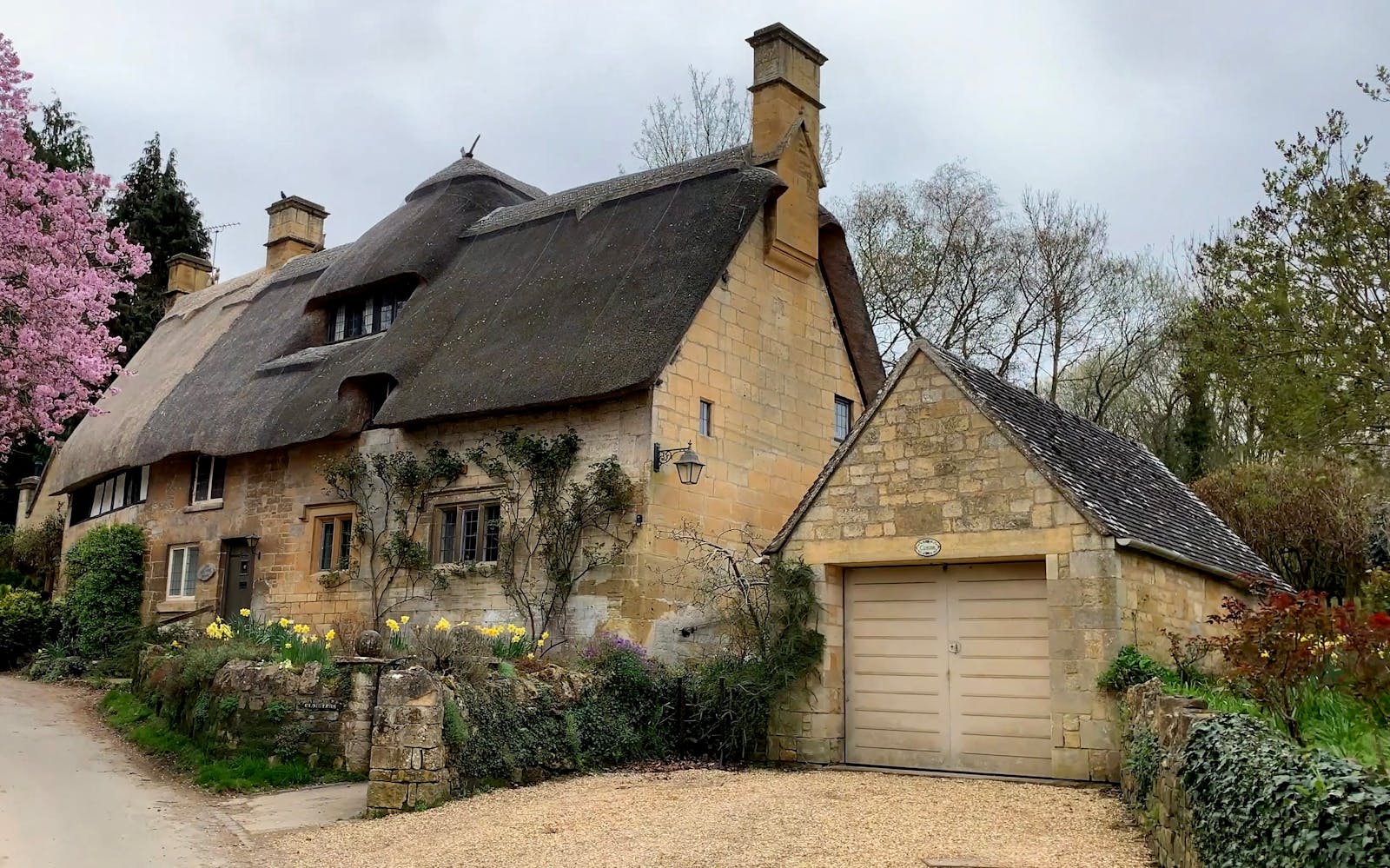
There is a moment, walking into Stanton, when you genuinely wonder whether someone has built a film set. The honey-coloured cottages line up along a gently climbing street, their mullioned windows and steeply pitched roofs almost too perfect to be real. There are no parked cars cluttering the verges, no garish signs, no overhead tangle of wires. Just stone, gardens, and the soft sound of the wind moving over the escarpment above. If you have spent a day battling the crowds in Bourton-on-the-Water or queuing for a photograph in Bibury, arriving in Stanton feels like stepping through a door into the Cotswolds as it used to be.
Together with its neighbour Stanway, barely a mile down the lane, Stanton is one of the great secrets of the North Cotswolds. These are two of the prettiest villages in the Cotswolds, yet they receive a tiny fraction of the visitors who descend on their famous cousins. This guide covers everything you need to plan a visit: the history that shaped these villages, the remarkable Stanway House and its record-breaking fountain, the best walks, where to eat, where to stay, and the practical details that will help you make the most of a quiet corner of the countryside that, in my opinion, captures the spirit of the region better than almost anywhere else.
Where Are Stanton and Stanway?
Stanton and Stanway sit at the foot of the Cotswold escarpment in Gloucestershire, tucked between the well-known village of Broadway to the north and the small town of Winchcombe to the south. Stanton lies roughly three miles south-west of Broadway and about four miles north-east of Winchcombe, while Stanway is a mile or so further south again. The two villages are linked by a quiet country lane that runs along the base of the hills, with the green wall of the escarpment rising on one side and the wide, fertile Vale of Evesham spreading out on the other.
The easiest way to reach Stanton village in the Cotswolds is by car. There is no railway station here, and bus services are sparse, so a car gives you by far the most freedom. From Broadway, follow the B4632 towards Cheltenham and turn off at the signpost for Stanton; the village is reached by a short no-through-road that climbs gently from the main road, which is part of the reason it has stayed so peaceful. Parking is limited and informal, so arrive early on a summer weekend and be considerate about where you leave your car. If you are travelling without a vehicle, the most practical approach is to base yourself in Broadway or Winchcombe and walk in along the Cotswold Way, which is a genuinely lovely way to arrive.
Stanton: The Most Perfect Village in the Cotswolds?
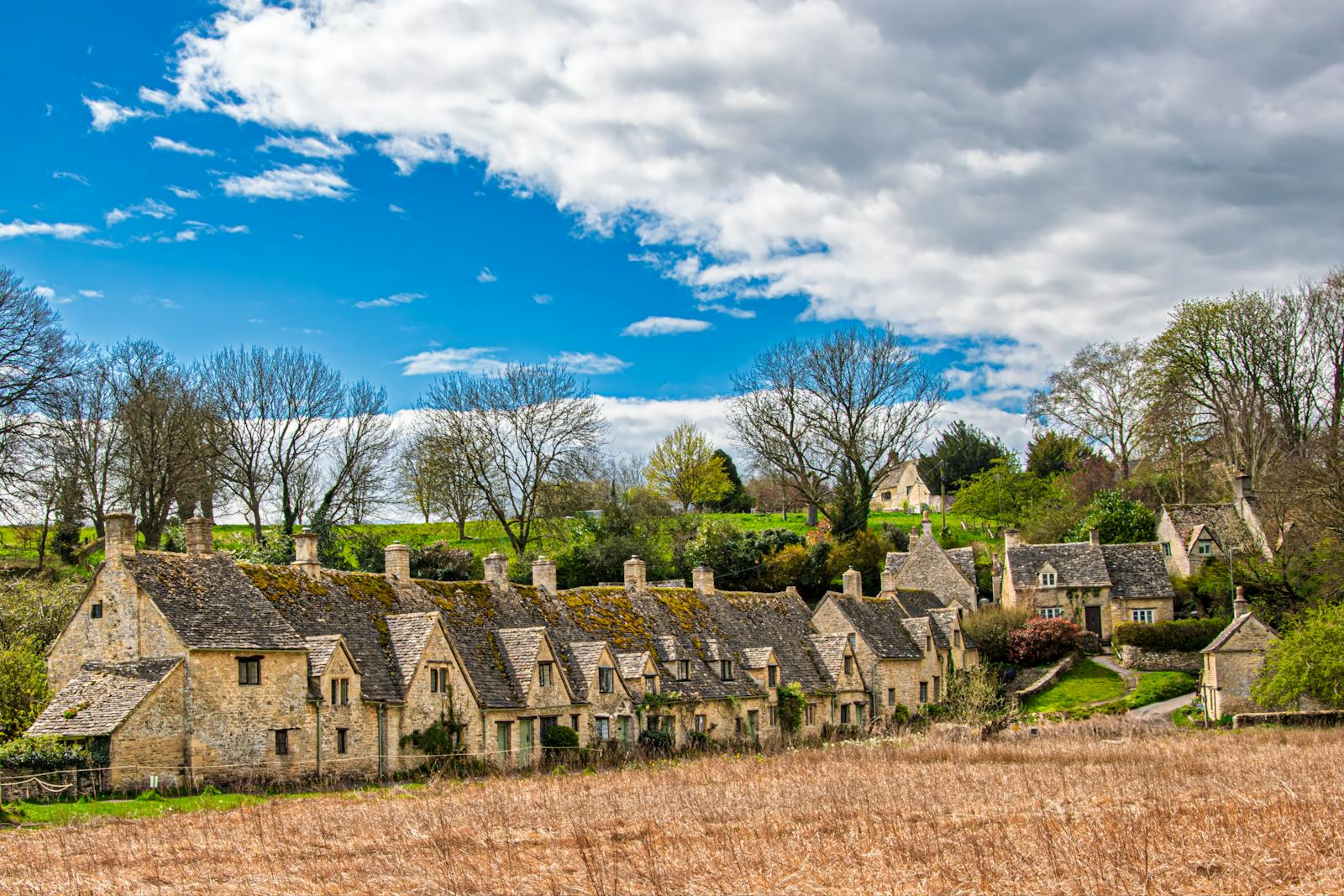
The architectural historian Nikolaus Pevsner, never a man to hand out praise lightly, called Stanton “architecturally, the most distinguished of the smaller villages in the North Cotswolds.” Spend half an hour wandering its single main street and you will see exactly what he meant. The cottages are built from the warm golden limestone quarried on nearby Shenberrow Hill, and the village presents an almost unbroken run of seventeenth-century houses, with the occasional older, half-timbered or thatched survivor adding texture to the scene. Climbing roses, clematis and wisteria spill over doorways and garden walls, and in late spring the whole place seems to be in bloom at once.
One building you should not miss is Sheppey Corner, a beautifully preserved thatched house near the top of the High Street. Built around 1650 and now divided into three cottages, it is one of the most photographed corners of the village, and for good reason. Pause here and look back down the street: the composition of stone, thatch, garden and hillside is about as close to the picture-postcard ideal of an English village as you will find anywhere.
The Man Who Saved Stanton: Sir Philip Stott
Stanton’s remarkable state of preservation is not an accident. By the end of the nineteenth century, like many agricultural villages, it had fallen into disrepair. Its rescue is owed almost entirely to one man: Sir Philip Sidney Stott, an architect and engineer who had made a considerable fortune designing cotton mills in Lancashire. Stott bought much of the village in 1906 and devoted the rest of his life to its careful restoration, moving permanently to Stanton Court in 1913 and continuing his work until his death in 1937.
Stott’s approach was unusually sensitive for its era. Rather than demolish and rebuild, he repaired cottages using traditional materials and techniques, improved the church, extended the village school, and added a reservoir, a swimming pool and a cricket field. He even installed the village’s own street lighting, powered by a generator in his own house, and you can still spot his distinctive wrought-iron “Stott lamps” today. It is thanks to this quiet, decades-long labour of love that Stanton feels so harmonious, so free of the visual clutter that creeps into most modern villages. Walking here, you are essentially seeing one man’s vision of the perfect Cotswold village, preserved in stone.
The Church of St Michael and All Angels
At the heart of Stanton stands the church of St Michael and All Angels, and it richly rewards a few minutes inside. Its origins date back to the twelfth century, when it was built to serve the monks of Winchcombe, and it has been added to and adapted across the centuries without ever being heavily over-restored. The result is a building where you can read the history in the fabric, from the medieval core to the slender Perpendicular tower and broach spire that announce the village from a distance.
Look closely and you will find two charming details that connect the church to the everyday life of the medieval village. There are fragments of early fourteenth-century wall paintings, faded but still visible, and on some of the medieval pews you can see deep grooves worn into the woodwork. These were made by the leads of shepherds’ dogs, tied up while their owners attended the service. It is exactly the kind of small, human detail that makes the Cotswolds so rewarding to explore slowly. The church also contains some twentieth-century work by the noted ecclesiastical architect Sir Ninian Comper, including the rood screen, repaying a careful look upwards as well as down.
The Mount Inn: Stanton’s Hilltop Pub
Every great village needs a great pub, and Stanton’s is a beauty. The Mount Inn sits at the very top of the village, reached by a short climb up Old Snowshill Road, and the effort is repaid handsomely. The building dates from the seventeenth century and began life as a farmhouse before being bought by the Donnington Brewery in 1897. Donnington is one of the smallest and most characterful breweries in the country, brewing its ales just a few miles away near Stow-on-the-Wold, so a pint here is about as local as it gets.
What makes the Mount truly special, though, is the view. From its garden and terrace you look out over the rooftops of Stanton and across the patchwork of the Vale of Evesham, with the Malvern Hills rising on the horizon and, on a clear day, the distant Black Mountains of Wales beyond. Time your walk so you arrive as the sun begins to drop, order a pint of Donnington and find a seat in the garden, and you will understand why so many walkers consider this one of the finest pub views in England. The Mount sits directly on the Cotswold Way, which makes it a natural and very welcome resting point.
Horse Riding in Stanton
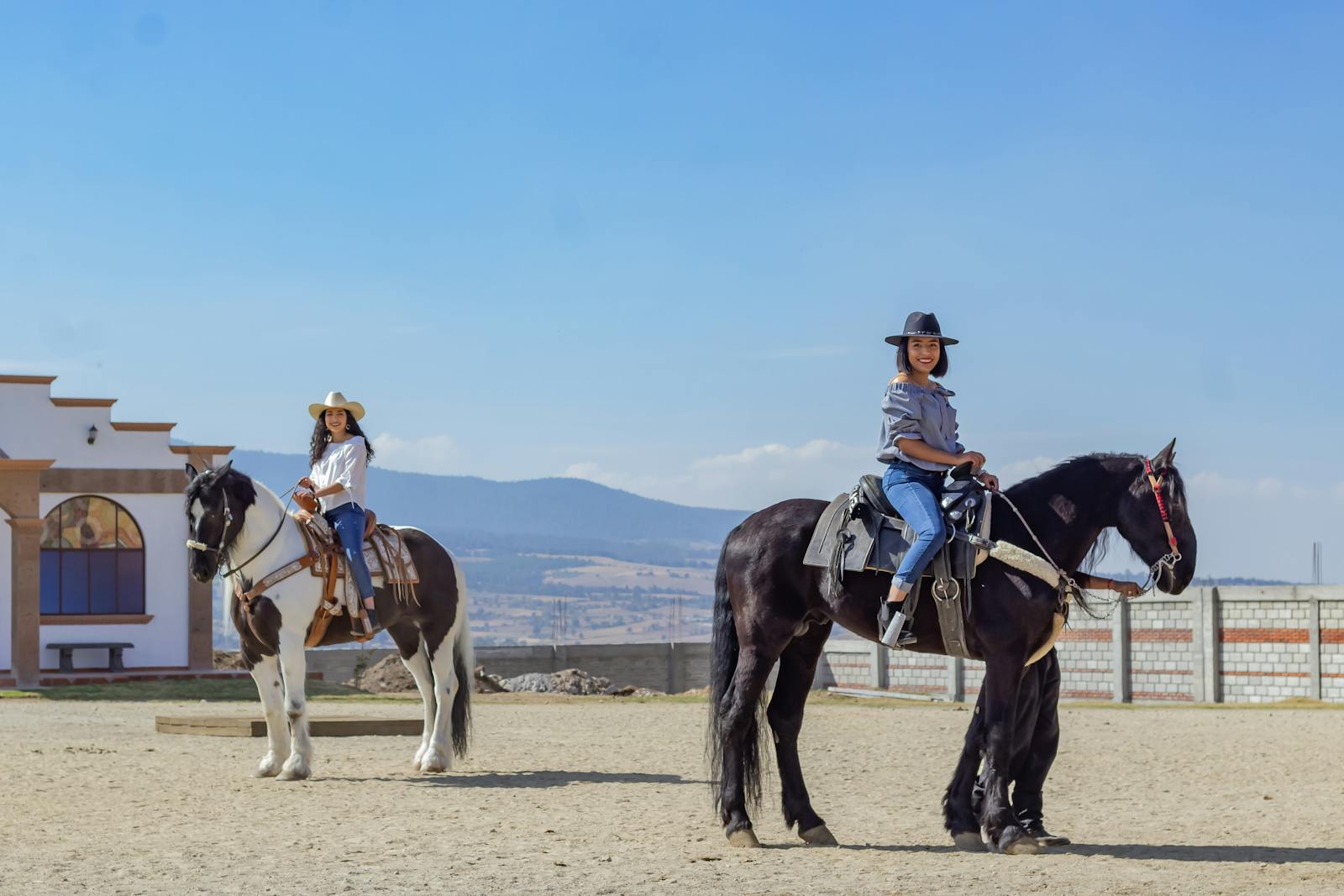
Stanton has a particular reputation among riders, and it is well deserved. The village is home to a long-established riding school run by Jill Carenza, who has been offering riding and bed-and-breakfast accommodation from her seventeenth-century stone house, The Vine, since the 1970s. With decades of experience and a stable of well-schooled horses, the centre offers everything from lessons for complete beginners to longer hacks up onto the escarpment for confident riders.
There can be few more memorable ways to experience the Cotswolds than from the saddle, climbing the green slopes above Stanton with the whole vale opening up below you. The centre is particularly well known for its guided hacks across the surrounding hills, including a legendary “pub ride,” and it caters for all ages and abilities. If you have ever fancied seeing this landscape the way it would have been seen for centuries, this is the place to do it. Booking ahead is essential, and stout footwear and sensible clothing are advisable whatever your level.
Walking Around Stanton: The Cotswold Way and Shenberrow Hill
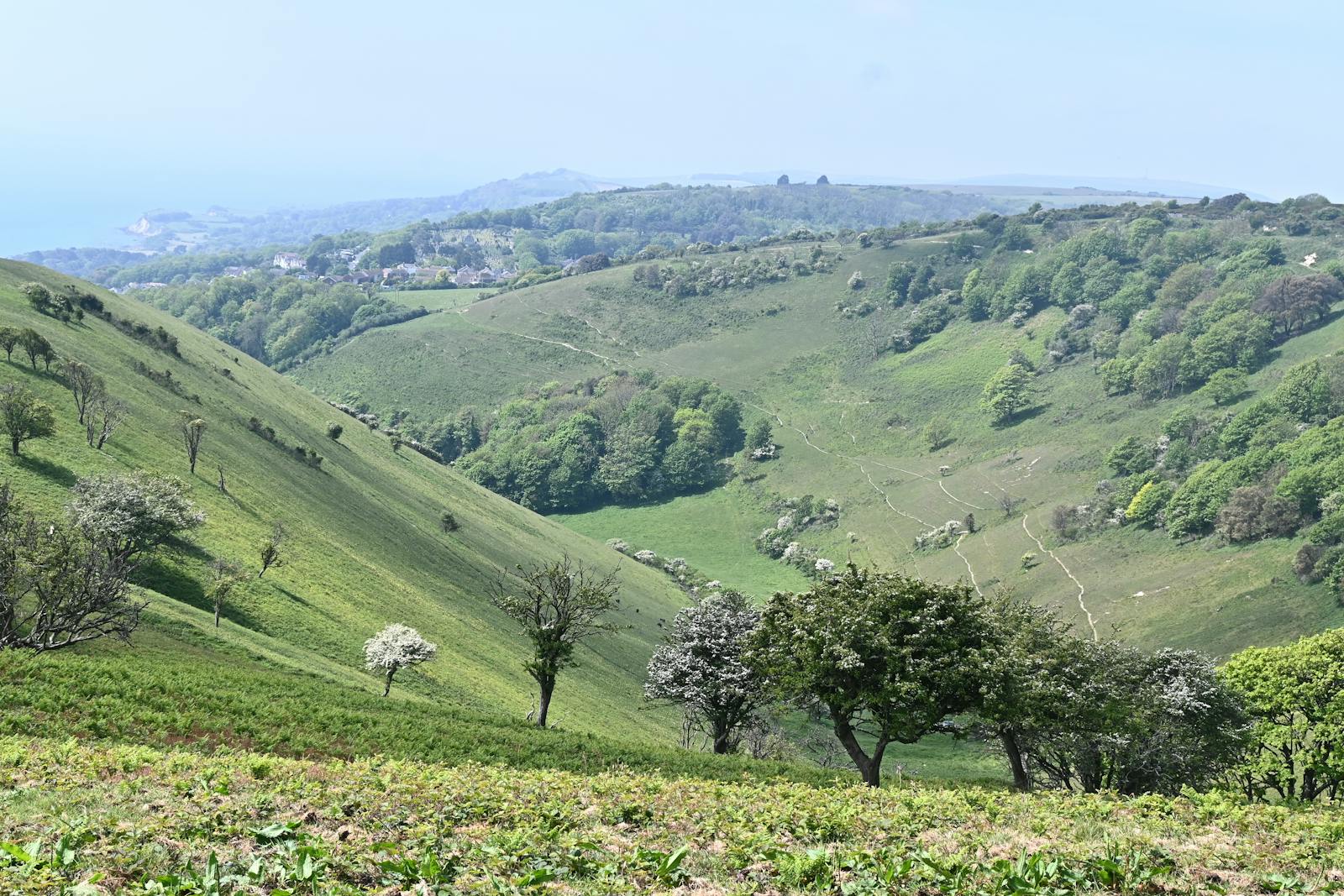
Stanton is a walker’s village. The Cotswold Way, the 102-mile National Trail that runs along the escarpment from Chipping Campden to Bath, passes right through it, which means some of the finest walking in the region is quite literally on the doorstep. You can find more inspiration in our full guide to walking and hiking in the Cotswolds, but Stanton makes an excellent base in its own right.
The classic local outing is the walk between Stanton and Broadway, a glorious stretch of the Cotswold Way of around three and a half miles that can easily be turned into a circular route via the lanes and field paths. It is one of the most rewarding short walks in the area, with sweeping views over the vale almost the whole way. For something a little more energetic, climb up behind the village to Shenberrow Hill, where you will find the earthworks of Shenberrow Camp, an Iron Age hillfort whose ramparts still ripple across the hilltop. The reward for the climb is a tremendous panorama and the quiet thrill of standing somewhere people have gathered for well over two thousand years.
Stanway: Home to a Record-Breaking Fountain
A mile south of Stanton, the hamlet of Stanway is even smaller and quieter, gathered around the gates of one of the most atmospheric country houses in England. Stanway House is a glorious Jacobean manor built of warm golden limestone, and unlike the grand, polished stately homes of the tourist trail it has the wonderful, slightly faded, lived-in feeling of a place that has been a family home for centuries rather than a museum.
The history runs deep. The manor of Stanway belonged to Tewkesbury Abbey for some 800 years until the dissolution of the monasteries, after which it passed to the Tracy family and their descendants, the Earls of Wemyss and March, who have held it for around 500 years since. Work on the present house began about 1580, and the building is approached through a spectacular and much-photographed Jacobean gatehouse, a riot of gables and shell-shaped ornament that is one of the most beautiful in the country. Inside, the great hall, with its shuffleboard table and family portraits, sets the tone for a house that feels genuinely inhabited rather than curated.
The Tallest Gravity Fountain in the World
Stanway’s most extraordinary feature is hidden behind the house, in a restored eighteenth-century water garden that climbs the hillside in a series of terraces and cascades. At its centre is the Stanway fountain, and the statistics are genuinely jaw-dropping. Fed entirely by gravity from a reservoir high on the hill above, it shoots a single jet of water more than 300 feet into the air. That makes it the tallest fountain in Britain, the second tallest in Europe (after the turbine-driven Jet d’Eau in Lake Geneva), and, most remarkably of all, the tallest gravity-fed fountain in the world.
To watch it is to watch a feat of pure hydraulic engineering, achieved with no pumps or electricity at all, just the weight of water falling from the hilltop. The fountain runs at set times on open days, typically at 2.45pm and 4.00pm for around half an hour each, so it is worth planning your visit around these slots. Standing in the water garden as the jet climbs higher and higher against the green backdrop of the escarpment is one of those genuinely surprising Cotswold experiences that almost nobody outside the area seems to know about.
The Watermill, Tithe Barn and Cricket Pavilion
The Stanway estate has more to offer than the house and fountain. Just outside the grounds, the restored Stanway Watermill has been returned to full working order and once again grinds wholemeal and sifted flour using traditional methods, a rare chance to see a piece of rural machinery doing exactly what it was built to do. Nearby stands the magnificent medieval tithe barn, built around 1370 for Tewkesbury Abbey to store the tithes paid by local farmers and sensitively restored in the twentieth century. It is still used today for village events and gatherings.
My favourite Stanway curiosity, though, is the thatched cricket pavilion beside the village pitch. It was paid for by J.M. Barrie, the creator of Peter Pan, who was a passionate cricketer and a regular guest at Stanway House in the years after the First World War. The little timber pavilion, clad in larch poles and raised up on staddle stones, is a delightful reminder of the literary and artistic visitors this quiet corner of the Cotswolds once drew. It is the kind of detail that turns a simple sightseeing trip into a proper story.
Visiting Stanway House: Opening Times and Tickets
Stanway House keeps famously limited opening hours, which is part of its charm but does require a little planning. It is generally open to the public only in the summer months of June, July and August, on Tuesdays and Thursdays, from 2.00pm to 5.00pm. At the time of writing, admission to the house and fountain is around £12 for adults, £9 for senior citizens and £5 for children under 14, with a family ticket available. Because these details can change from season to season, always check the official Stanway House website before you set out, especially if you are travelling some distance specifically to see the fountain play.
If your schedule does not line up with the house’s opening days, do not despair. The village of Stanway itself, the church of St Peter beside the house, and the surrounding countryside are all freely accessible year-round, and the gatehouse alone is worth the short detour from Stanton. Combining a morning in Stanton with an afternoon at Stanway House makes for an almost perfect, unhurried Cotswold day out.
Where to Stay near Stanton and Stanway
Because both villages are so small, accommodation within them is limited, which is exactly why they stay so peaceful. Stanton has a handful of bed-and-breakfast rooms and self-catering cottages, including rooms at The Vine alongside the riding centre, and staying overnight lets you experience the villages at their most magical, in the soft light of early morning and evening once the few day visitors have gone.
For a wider choice, nearby Broadway and the town of Winchcombe both make excellent bases, each just a few minutes’ drive away and well supplied with hotels, inns and guesthouses. From either, Stanton and Stanway are an easy day trip, and you will also be perfectly placed to explore hidden gems like Snowshill and the wider North Cotswolds. For more options across the region, see our complete guide to where to stay in the Cotswolds.
The Best Time to Visit
Stanton and Stanway are beautiful in every season, but the timing of your visit will shape your experience. Late spring and early summer (May and June) are arguably the loveliest, when the gardens are in full bloom, the climbing roses are out across the cottage fronts, and the hedgerows along the Cotswold Way are thick with wildflowers. This is also the only window in which to catch Stanway House and its fountain, so if seeing the water garden is a priority, plan for June, July or August on a Tuesday or Thursday.
Autumn brings golden light and quieter lanes, perfect for walkers, while winter strips the villages back to their essentials: bare stone, woodsmoke and the warm glow of the Mount Inn against a frosty afternoon. Whenever you come, aim for a weekday or an early start at the weekend. These are not places that can absorb large crowds, and they are at their best when you have the street more or less to yourself. For help planning the wider trip, our guide to the best time to visit the Cotswolds breaks the year down month by month.
Practical Tips for Visiting Stanton and Stanway
- Arrive early and travel light: Parking in Stanton is limited and informal. Come early in the day, park considerately, and explore on foot — both villages are tiny and easily walkable.
- Check Stanway’s opening days: Stanway House only opens on summer Tuesdays and Thursdays. Confirm times and fountain displays on the official website before you travel.
- Time the fountain: The Stanway fountain typically plays at 2.45pm and 4.00pm on open days. Arrive in good time to get a spot in the water garden.
- Wear proper footwear: The best of the area is found on foot, on the Cotswold Way and up to Shenberrow Hill, where paths can be muddy after rain.
- Bring cash: Smaller rural attractions, honesty boxes and the village pub may not always have card facilities, so a little cash is handy.
- Respect that people live here: These are working villages, not open-air museums. Keep noise down, don’t peer into windows, and leave gates as you find them.
Frequently Asked Questions
Is Stanton worth visiting?
Absolutely. Stanton is widely regarded as one of the most perfectly preserved and least spoilt villages in the entire Cotswolds, praised by architectural historians and beloved by walkers. If you want to experience a classic honey-stone Cotswold village without the crowds, coaches and souvenir shops, Stanton is one of the very best places to do it.
How tall is the Stanway fountain?
The Stanway fountain reaches a height of more than 300 feet, making it the tallest gravity-fed fountain in the world and the tallest fountain of any kind in Britain. It is powered entirely by gravity, with water fed from a reservoir high on the hillside above the house, and uses no pumps or electricity.
When is Stanway House open?
Stanway House is usually open to the public only in June, July and August, on Tuesdays and Thursdays, from 2.00pm to 5.00pm. The fountain typically plays at 2.45pm and 4.00pm. As opening times and prices can change, it is always best to check the official Stanway House website before visiting.
Is there anywhere to eat in Stanton?
Stanton’s main option for food and drink is the Mount Inn, a seventeenth-century Donnington Brewery pub at the top of the village with excellent views and a good menu. The village has no shops or tea rooms, so for a wider choice of cafés and restaurants you may want to head to nearby Broadway or Winchcombe.
Can you walk between Stanton and Broadway?
Yes, and it is one of the best short walks in the area. The Cotswold Way connects Stanton and Broadway via a beautiful stretch of around three and a half miles along the foot of the escarpment, with wonderful views over the Vale of Evesham. It can easily be walked as a circular route and makes a perfect half-day outing.
Explore More of the Cotswolds
Stanton and Stanway are at their best as part of a slower, more curious exploration of the region. If you enjoyed these quiet corners, you will love the equally unspoilt Snowshill and elegant Broadway just up the road, or the bustling market town of Moreton-in-Marsh for a complete contrast. For the full picture, browse our pillar guide to the prettiest villages in the Cotswolds, and start mapping out your perfect trip.