The single most important decision you will make when planning a Cotswolds trip is not which hotel to book, but where to base yourself. Get it right and you will spend your days exploring instead of driving; get it wrong and you will burn hours crawling along narrow lanes between you and everything you came to see. The Cotswolds covers a surprisingly large area, stretching nearly 90 miles from near Stratford-upon-Avon in the north down to Bath in the south, and the famous honey-stone villages are not evenly spread across it.
After years of helping people plan their visits, I have learned that the “best” area depends entirely on you: whether you are driving or coming by train, travelling as a couple or a family, here to walk the hills or to hop between villages. This guide breaks the region down area by area and traveller by traveller, so you can choose your perfect base with confidence. It sits alongside our complete guide to where to stay in the Cotswolds, which covers the different types of accommodation in detail.
How to Choose: North, Central or South Cotswolds
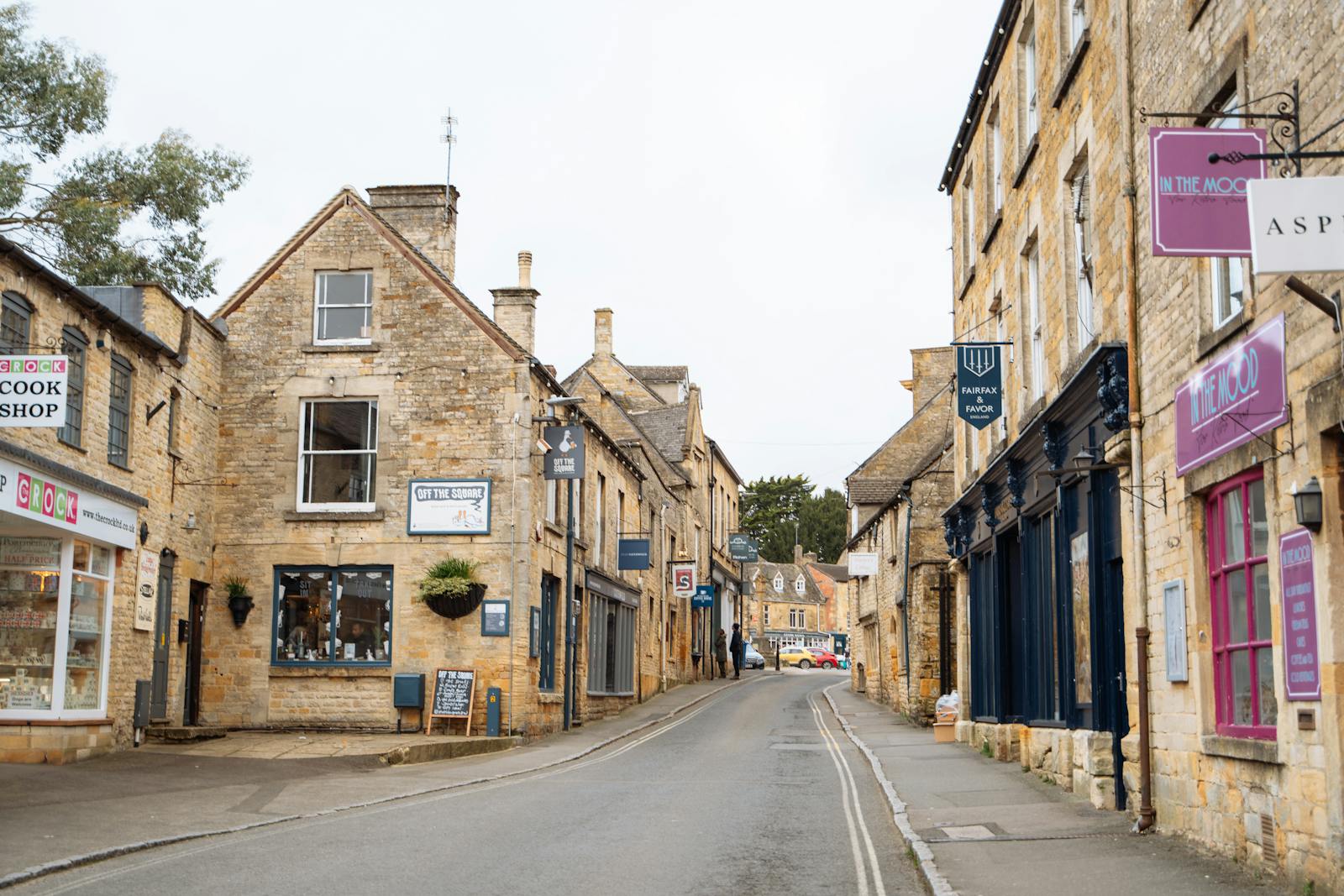
It helps to think of the Cotswolds in three broad bands. The North Cotswolds is where most of the famous picture-postcard villages cluster together: Broadway, Chipping Campden, Stow-on-the-Wold, Bourton-on-the-Water, the Slaughters and Moreton-in-Marsh all sit within a short drive of one another. For most first-time visitors chasing the classic Cotswold scenery, this is the area to aim for.
The Central Cotswolds around Burford, Bibury and Northleach makes an excellent touring base, especially if you are arriving from Oxford or London by car. The South Cotswolds, taking in Tetbury, Cirencester, Painswick and the Stroud valleys, is quieter, less crowded and well placed for Westonbirt Arboretum, the Cotswold Water Park and the city of Bath. As a rule of thumb, the north is the most scenic and the most popular; the south is the most peaceful and often the best value. If you only have two or three nights, basing yourself in the north puts the greatest number of highlights within easy reach.
The Best Base for First-Time Visitors
If you are visiting for the first time and travelling by car, my top recommendation is Stow-on-the-Wold. This handsome hilltop market town sits almost exactly in the middle of the most-visited part of the Cotswolds, which means you can reach the Slaughters, Bourton, Broadway, Chipping Campden and Burford all within about twenty to thirty minutes. It has a large market square, plenty of pubs, restaurants and antique shops, and a good spread of accommodation, from cosy inns to comfortable hotels. In short, it is the ideal “do everything from one place” base.
If you would prefer a larger town with more restaurants, nightlife and culture, consider Cheltenham, an elegant Regency spa town on the western edge of the hills. It has its own mainline railway station, a superb food and festival scene, and easy access to the western Cotswolds, though purists may feel it lacks the chocolate-box charm of the villages. For a sense of how long to give yourself wherever you base, see our guide to how many days you need in the Cotswolds.
The Best Areas to Stay Without a Car
This is the question I am asked most often, and the answer is clear: if you are travelling car-free, base yourself in Moreton-in-Marsh. It is the only town actually within the Cotswolds to have its own mainline railway station, with direct trains from London Paddington in around an hour and a half and from Oxford in about 35 minutes. From Moreton you can reach Stow, Bourton and beyond by local bus, and the town itself is flat, walkable and home to the largest open-air market in the Cotswolds every Tuesday.
Other useful car-free bases include Kingham and Charlbury (both on the same Cotswold Line), Cheltenham and Stroud in the west, and Cirencester, which is a short hop from Kemble station. One honest word of warning: rural bus services are limited, and many do not run on Sundays or into the evening, so always check current timetables and plan your return journeys carefully. Our guide to getting to and around the Cotswolds has the full details on travelling here without a car.
North Cotswolds: The Classic Bases
This is the heart of the Cotswolds for most visitors, and each of its main towns and villages has its own personality.
- Stow-on-the-Wold — the most central and best all-round base for drivers; full of character, pubs and antique shops.
- Bourton-on-the-Water — the “Venice of the Cotswolds”, riverside and brilliant for families thanks to its Model Village, Motoring Museum and Birdland; very busy by day, so stay overnight to enjoy it after the coaches leave.
- Broadway — the “Jewel of the Cotswolds”, with a wide, elegant high street and the greatest concentration of top hotels; ideal for couples and a touch of luxury.
- Chipping Campden — a beautifully preserved wool town and the start of the Cotswold Way; calmer and less coach-heavy, perfect for walkers and slow travel.
- Moreton-in-Marsh — the car-free champion thanks to its railway station, with good value and a famous Tuesday market.
Wherever you choose in the north, you will be within easy reach of the prettiest villages, and you can spend your days exploring our pick of the prettiest villages in the Cotswolds without long drives.
Central & South Cotswolds: Quieter Alternatives
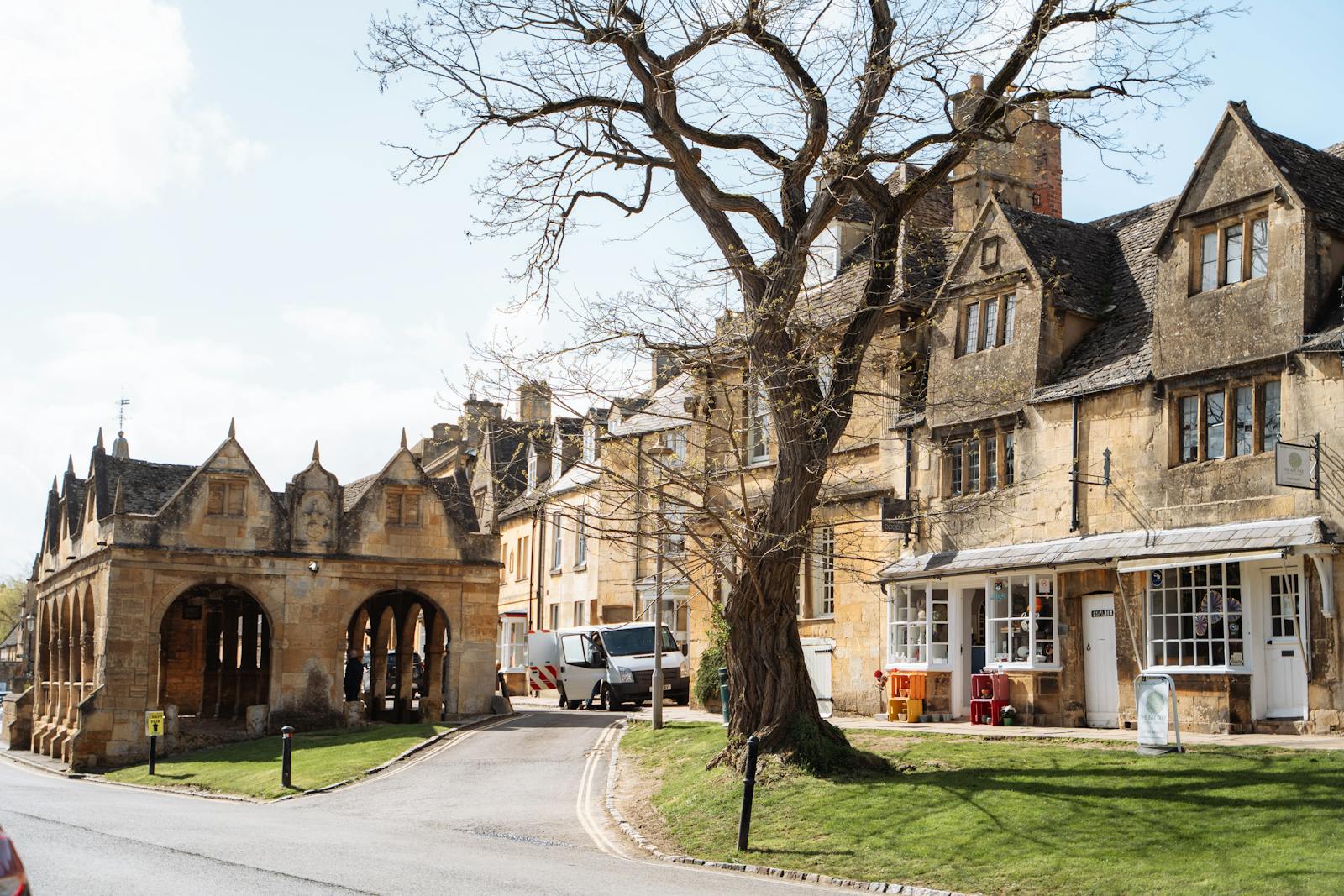
If you would rather escape the busiest honeypots, the central and southern Cotswolds reward you with quieter lanes and, often, better value.
- Burford — the “Gateway to the Cotswolds”, with a magnificent sloping high street; easy to reach from Oxford and perfectly placed for Cotswold Wildlife Park and the Windrush valley.
- Tetbury — an elegant antiques town close to Westonbirt Arboretum and Highgrove, and handy for the south and for Bath.
- Cirencester — the “Capital of the Cotswolds”, a larger town with Roman heritage, good shops and restaurants, near Kemble station and the Cotswold Water Park.
- Painswick — the “Queen of the Cotswolds”, a steep, atmospheric hill village that is quieter and very romantic.
- Winchcombe — a friendly market town beloved of walkers, with Sudeley Castle on the doorstep and far fewer crowds than Broadway.
- Stroud — an artsy, un-touristy valleys town with its own station and a famous Saturday farmers’ market, great for foodies and independent travellers.
These southern bases are particularly good if you want to combine the Cotswolds with a trip to Bath, Bristol or the Forest of Dean, or simply to feel a little further off the beaten track.
Best Areas for Couples
For a romantic escape, it is hard to beat Broadway, with its smart hotels and grand manor houses, or the impossibly pretty twin villages of Upper and Lower Slaughter, home to some of the region’s most elegant country-house hotels. Painswick offers boutique style and sweeping valley views in a quieter setting, while Burford combines romance with plenty of lovely places to eat and shop. Couples will find plenty more inspiration in our guide to the romantic Cotswolds, and in our roundups of the best luxury hotels and spa hotels in the region.
Best Areas for Families
Families are best served by bases close to the big child-friendly attractions. Bourton-on-the-Water is the obvious choice, with the Model Village, Birdland and the Motoring Museum all within walking distance and the shallow River Windrush perfect for paddling. Burford is ideal for visiting Cotswold Wildlife Park, while the area around Guiting Power suits a trip to Cotswold Farm Park. The Cotswold Water Park in the south is another strong family base, with lakeside lodges and watersports. For more, see our guides to the Cotswolds with kids and the best family hotels in the Cotswolds.
Best Areas for Walkers
If your trip revolves around walking, base yourself on or near the Cotswold Way, the 102-mile National Trail that runs along the escarpment. Chipping Campden (the northern start of the trail), Winchcombe (the self-styled “walking capital” of the Cotswolds) and Painswick are all superb walking bases with the hills and the trail right on the doorstep. From any of them you can step out of your accommodation and straight onto a footpath. Our guide to walking and hiking in the Cotswolds has routes to match your base.
Beautiful to Visit, but Tricky to Base Yourself
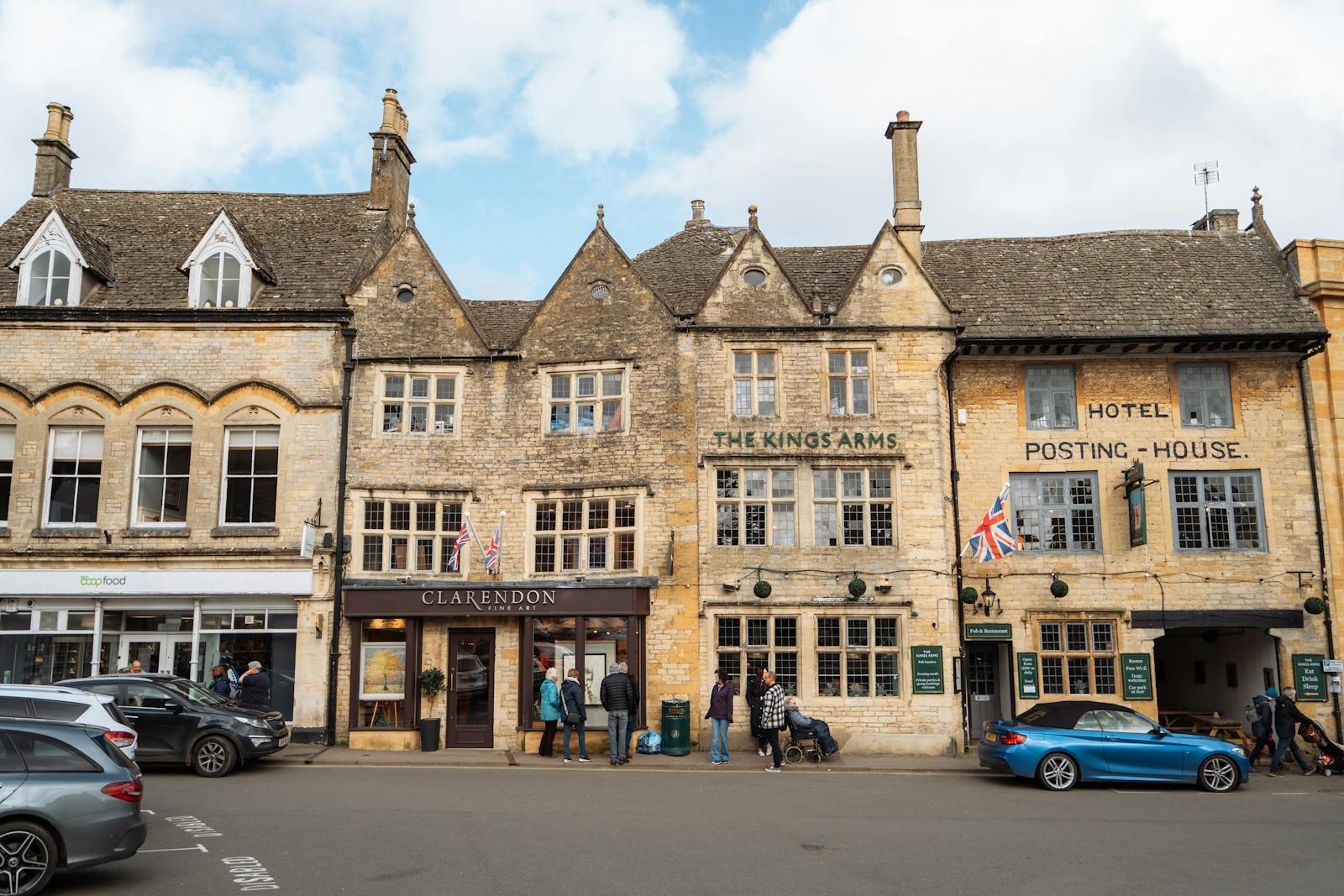
A couple of the most famous villages are, in my honest opinion, better visited than based in. Bibury, often called the prettiest village in England, is tiny and gets utterly overwhelmed by coach tours and photographers in the middle of the day, with very limited accommodation and amenities. Castle Combe is similarly small and sits off to the south-west, far from the main cluster of villages and closer to Bath. Both are absolutely worth seeing, ideally early in the morning before the crowds arrive, but you will generally have a more practical and enjoyable trip basing yourself in a larger, better-connected town nearby and visiting them on a day out.
Practical Tips for Choosing Your Base
- Match your base to your transport: drivers should pick a central town like Stow; car-free visitors should choose Moreton-in-Marsh or another town with a station.
- Stay where the crowds leave: the honeypot villages are magical in the early morning and evening, so an overnight stay lets you enjoy them at their best.
- Consider a two-centre trip: on a longer holiday, split your stay between a northern base (for the classic villages) and a southern one (for Westonbirt, Bath and the quieter south).
- Book early for summer and festivals: the best places sell out months ahead for peak season, bank holidays and events like the Cheltenham Festival.
- Check parking before you book: village-centre inns and B&Bs may have limited parking, which matters if you are driving.
What to Expect From Cotswolds Accommodation
Wherever you base yourself, it helps to know what the Cotswolds does well and where it is more limited. This is a region that excels at character: honey-stone coaching inns with crooked staircases and log fires, elegant country-house hotels in their own grounds, cosy owner-run B&Bs and beautifully converted barns and cottages. What it has very little of is large modern chain hotels, which tend to cluster on the edges in Cheltenham, Cirencester and Witney rather than in the villages themselves. If you want a pool, a gym and a lift, you will usually be looking at one of the bigger hotels or spa resorts rather than a village inn.
Prices reflect the Cotswolds’ popularity, and this is not a budget destination, particularly in the prettiest northern villages and at weekends. You will generally get more for your money in the southern Cotswolds, in the larger towns, and by travelling midweek or out of peak season. Our guides to the different accommodation types, from luxury hotels and boutique hotels to B&Bs, self-catering cottages and budget options, will help you find the right style and price for your trip.
Planning a Two-Centre Cotswolds Trip
On a longer holiday of five nights or more, one of the smartest things you can do is split your stay between two bases. The Cotswolds is large enough that no single location is convenient for absolutely everything, and a two-centre trip lets you cut down on driving while experiencing two very different sides of the region. A classic combination is a few nights in the north, around Stow, Broadway or Chipping Campden, to explore the famous villages and gardens, followed by a few nights in the south, around Tetbury, Cirencester or Painswick, for Westonbirt Arboretum, the Water Park and the quieter valleys.
This approach also works beautifully if you are combining the Cotswolds with a city break: pair a northern base with a day in Oxford or Stratford-upon-Avon, or a southern base with Bath, Bristol or Cheltenham. You will spend less time in the car and more time actually enjoying each area, and you get the pleasure of settling into two completely different places. Our Cotswolds itineraries suggest several routes that work well across two bases.
When to Book and How to Get the Best Value
The Cotswolds is a year-round destination, but demand and prices swing dramatically with the seasons. Summer, school holidays, bank holidays and major events such as the Cheltenham Festival in March see the best accommodation booked up months in advance and prices at their highest, so if you are travelling then, reserve as early as you can. For better value and quieter villages, aim for late spring, early autumn or midweek stays, when you will find more availability and lower rates while the countryside still looks wonderful. Our guide to the best time to visit the Cotswolds breaks this down month by month.
Finally, do not underestimate the value of staying just outside the most famous villages. A B&B or inn in a lesser-known village a few minutes’ drive from the honeypots is often markedly cheaper, quieter and more authentic, while still putting all the highlights within easy reach. Some of my most memorable Cotswolds stays have been in places I had never heard of before I booked them.
Frequently Asked Questions
What is the best town to stay in the Cotswolds for first-timers?
Stow-on-the-Wold is the best all-round base for first-time visitors travelling by car, thanks to its central location and full range of shops, pubs and accommodation. If you do not have a car, Moreton-in-Marsh is the best choice, as it has the area’s main train station.
Can you visit the Cotswolds without a car?
Yes. Base yourself in Moreton-in-Marsh, Kingham, Charlbury, Cheltenham, Stroud or Cirencester (near Kemble), all of which have stations, and use local buses, taxis and guided tours. Just check timetables carefully, as rural buses are limited and many do not run on Sundays.
Which Cotswolds villages have train stations?
Within or near the Cotswolds, the stations are Moreton-in-Marsh, Kingham and Charlbury (on the Cotswold Line), plus Kemble (for Cirencester and Tetbury), Stroud and Cheltenham Spa. Stow, Bourton, Broadway, Burford, Bibury and Castle Combe do not have stations.
Is it better to stay in Bourton-on-the-Water or Bibury?
Bourton-on-the-Water has far more to do and more places to stay, making it the better base, especially for families. Bibury is tiny and best enjoyed as a short visit. Both are very busy by day, so staying overnight nearby lets you see them after the crowds have gone.
Where should couples stay in the Cotswolds?
Broadway, the Slaughters, Painswick and Burford are all wonderfully romantic bases, with the greatest concentration of luxury and boutique hotels found around Broadway and the Slaughters in the north Cotswolds.
Find Your Perfect Cotswolds Base
There is no single “best” place to stay in the Cotswolds, only the best place for your kind of trip. Match your base to how you are travelling and what you most want to see, and you will set yourself up for a wonderful visit. Once you have chosen your area, explore our full guide to where to stay in the Cotswolds to pick the perfect hotel, cottage or B&B, and start planning with our Cotswolds itineraries.