Here is the first thing to understand about Cotswolds weather: it is rarely dramatic, but it is almost never still. This is gentle, temperate, maritime country, warmed and dampened by Atlantic air that rolls in from the west. You will not face blizzards or heatwaves that stop the trains, as a rule. What you will get is change — a grey, drizzly start that burns off into a blue lunchtime, then clouds over again for a soft golden hour. Pack for that, and you will be happy whatever the sky does.
This guide goes month by month with real average temperatures and rainfall, explains why the western escarpment is wetter than the eastern wolds, and finishes with a proper packing list for each season. The figures here are drawn from long-term Met Office averages for the area around Cheltenham, which sits right on the edge of the hills and is the usual benchmark for the region. Treat them as a reliable guide, not a promise — and check the forecast the night before you set out, because in the Cotswolds the forecast genuinely matters.
The Cotswolds climate in brief
The Cotswolds occupies a band of limestone hills in south-central England, well inland but open to weather from the Atlantic. The defining feature for weather, as for so much else, is the escarpment: the steep western edge that drops away towards the Severn Vale around Cheltenham, Winchcombe and Painswick. Air pushed up over that ridge cools and drops its moisture, so the western fringe is reliably wetter and a touch cooler than the sheltered eastern side around Burford, Stow-on-the-Wold and Chipping Norton. It is not a huge difference, but it is real, and it can decide whether your morning walk is damp or dry.
In round numbers, the annual average temperature sits near 10°C. Summer highs usually top out around 21 to 22°C, with the odd heatwave pushing into the high twenties or low thirties for a few days. Winter rarely turns truly savage; overnight lows hover around freezing and dip a little below it in the valleys on clear nights, where cold air pools. Annual rainfall lands at roughly 760 to 800mm, spread across every month of the year rather than concentrated in a wet season. Sunshine totals — around 1,400 to 1,500 hours a year — are typical for lowland England. None of this is extreme. That moderation is exactly why the countryside stays so green.
Set against the rest of the country, the Cotswolds is milder than the north, drier than Devon and Cornwall, and far drier than the western hills. It is not noticeably wetter than London, despite what some visitors expect of “the countryside”. If you want the fuller picture of how the seasons shape a visit, our guide to the best time to visit the Cotswolds goes through the calendar in detail, and the broader Cotswolds travel guide sets the weather alongside everything else you need to plan.
Spring in the Cotswolds (March to May)
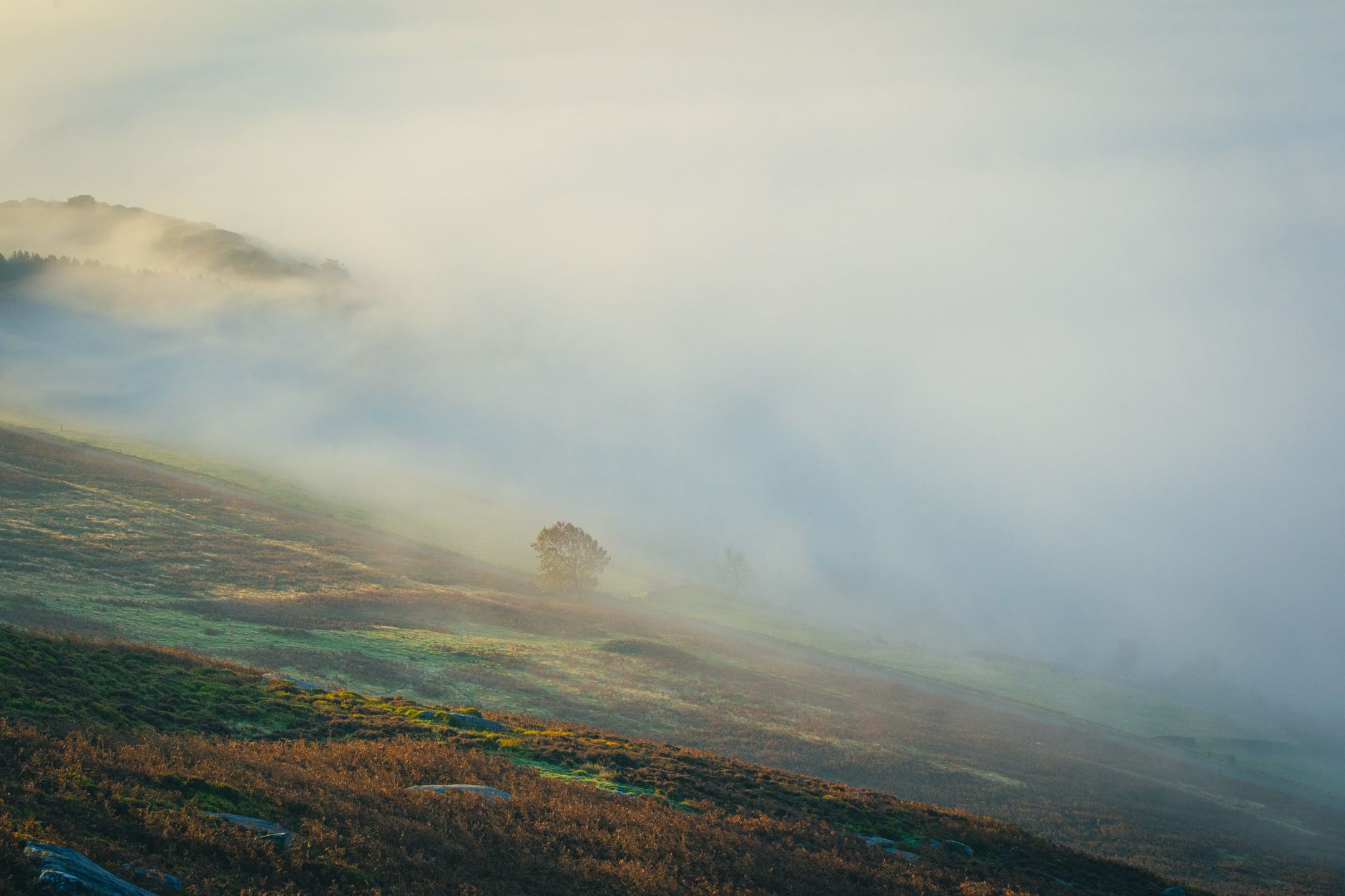
Spring is when the place wakes up, though it does so unevenly. March can still feel like winter holding on, while a warm spell in May can feel like early summer. The light lengthens fast through these three months, the hedgerows green over, and the famous bluebell woods come and go. It is a lovely, unpredictable time to visit, and it rewards anyone willing to carry an extra layer they might not need.
March
Average high around 10°C, average low near 2°C, with roughly 55mm of rain across the month and daylight stretching from about 11 to 12.5 hours. March is, statistically, one of the driest months of the year here, which surprises people. Mornings are often frosty, especially down in the valley villages, and the wind off the hills still has a bite. Daffodils line the verges and churchyards. Dress as you would for the tail end of winter and add a layer for the exposed tops.
April
Average high around 13°C, low near 4°C, about 50mm of rain, daylight from roughly 13 to 14.5 hours. April earns its showery reputation. You can get bright sun, cold rain, a sharp wind and a genuinely warm afternoon inside a single week, sometimes a single day. Blossom appears, the first bluebells show in the beechwoods, and Easter brings the first proper wave of visitors. There is no sensible way to predict April, so plan for indoor options as well as walks and keep the waterproof to hand.
May
Average high around 16°C, low near 7°C, about 55mm of rain, and long days running from 15 to over 16 hours by month’s end, with the sun up past 8.30pm. For many regulars, this is the Cotswolds at its absolute best. The countryside hits peak green, cow parsley froths along the lanes, the bluebells usually peak in the first half of the month, and the evenings are long enough for a proper after-dinner walk. Rain happens, but the dry, bright days outnumber the wet ones more often than not. If you can only come once, May is hard to beat.
Summer in the Cotswolds (June to August)
Summer brings the warmest weather, the longest days and the most reliable sunshine — though “reliable” is doing some heavy lifting in an English sentence. Expect warm rather than hot, with the occasional short, sharp thunderstorm to clear the air. The villages are busiest now, the lavender flowers near Snowshill, and the gardens are at their fullest. Carry water and a hat on the open hilltops, where there is often no shade for miles.
June
Average high around 19°C, low near 10°C, about 50mm of rain, with the year’s longest days and sunsets after 9pm. June is, to my mind, the best walking month of all: warm enough to be comfortable, rarely hot enough to be uncomfortable, and blessed with light that seems to last forever. Roses spill over cottage walls, the lavender begins to colour up, and showers tend to be brief and passing. The summer solstice around the 21st gives you nearly seventeen hours of daylight to play with.
July
Average high around 21°C, low near 12°C, about 50mm of rain. July is usually the warmest month, and during a heatwave the mercury can climb to 25 to 30°C for a few days, occasionally higher. It is also the month most prone to thunderstorms — dramatic, sometimes torrential, but generally short-lived. The honey-stone soaks up the heat and the lavender near Snowshill is at its peak, a haze of purple against the green. Even on a hot day, slip a light waterproof in your bag, because a July storm arrives fast.
August
Average high around 21°C, low near 12°C, about 55mm of rain, with the days beginning to shorten noticeably by month’s end. August reads much like July but with the first hints of the turn. The harvest gets under way, gilding the fields, and the evenings cool more sharply once the sun is down. Late August can feel almost autumnal after dark, so a fleece for evening walks earns its place even in high summer. School holidays mean the honeypot villages are at their most crowded; the quieter corners reward an early start.
Autumn in the Cotswolds (September to November)
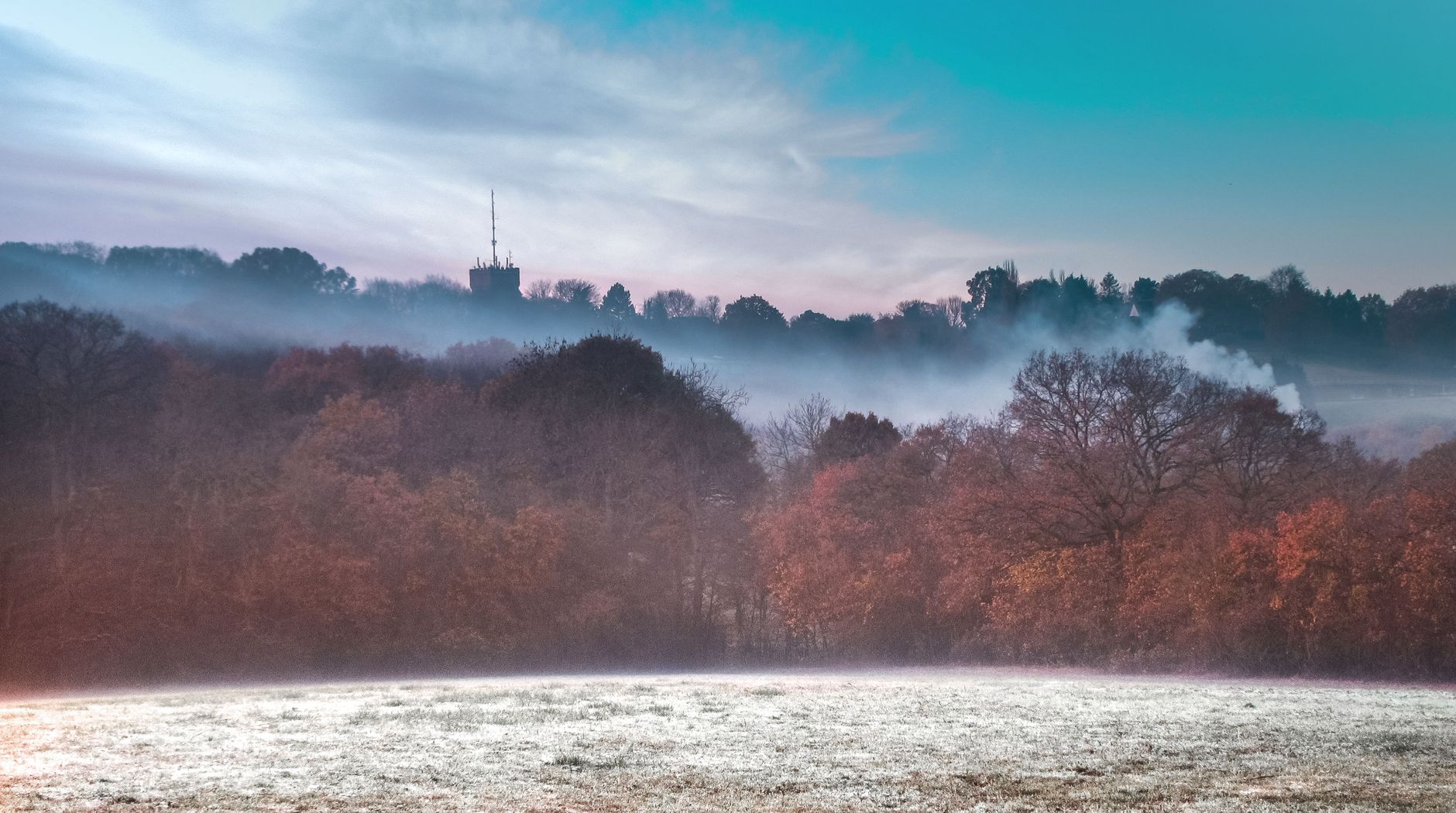
Autumn is the season the Cotswolds quietly does best, and the one most visitors overlook. The light turns soft and golden, the beechwoods catch fire, and morning mist pools in the valleys before the sun lifts it away. The crowds thin after the August rush. Rainfall creeps up as the season goes on, and the clocks change at the end of October, which suddenly shortens your afternoons. Pack a warm layer and embrace the murk — it makes for the most photogenic weather of the year.
September
Average high around 18°C, low near 10°C, about 55mm of rain, daylight from roughly 12 to 13.5 hours. September often hands you the best of both worlds: summer warmth without the summer crowds, and that lovely low, honeyed light. Valley mornings can start misty before clearing to bright, mild afternoons. Visibility is usually excellent, which makes it a fine month for the long views from the escarpment. Walking conditions are about as good as they get all year.
October
Average high around 14°C, low near 7°C, and about 70mm of rain — this is the wettest month of the year, on average. Daylight shrinks from about 12 hours to 10.5. October is peak autumn colour: Westonbirt and Batsford arboreta are extraordinary from mid-month, and the wild beechwoods on the hills are nearly as good and free to wander. Mist and fog become more frequent, especially first thing. The clocks go back on the last Sunday, so plan walks to finish in good light. For seasonal ideas, our roundup of Cotswolds events and festivals tracks what is on through the year.
November
Average high around 9°C, low near 4°C, about 70mm of rain, and short days that see the sun set before 4.30pm by month’s end. November is cold, damp and atmospheric, and it has the countryside almost to itself. The last leaves drop early in the month, the first proper frosts arrive, and a stark, bare-branch beauty takes over. This is the season for a long muddy walk followed by a pint by a pub fire. Bring a torch if you are out late, because dusk comes early and the lanes have no streetlights.
Winter in the Cotswolds (December to February)
Winter here is cold but seldom severe. Frost, fog and short days are the norm rather than deep snow. The reward is a quiet, dramatic landscape, the lowest accommodation prices of the year, and pubs at their cosiest. When snow does fall on the honey-stone villages it is genuinely magical, though it rarely lasts and can make the minor lanes treacherous. Come prepared for the dark and the damp, and winter becomes one of the most rewarding times to have the place to yourself.
December
Average high around 7°C, low near 2°C, about 65mm of rain, and the shortest days of the year — under 8 hours around the solstice on the 21st. December is cold and damp with frequent overnight frost on clear nights. Snow is possible but never guaranteed; in many years it barely shows. What the month does have is atmosphere: Christmas markets, festive lights strung across the high streets, and carols in candlelit churches. The short days are part of the charm if you lean into long lunches and early fires.
January
Average high around 6°C, low near 1°C, about 65mm of rain, daylight slowly lengthening from 8 to 9 hours. January is usually the coldest month. Hard overnight frosts are common, and temperatures dip below freezing in the valleys where the cold air settles. The landscape is at its most stripped-back and dramatic. By late January the first snowdrops appear, the earliest hint that spring is on its way. Minor lanes can ice over, so drive with care and allow extra time.
February
Average high around 7°C, low near 1°C, about 55mm of rain, and days lengthening encouragingly to between 9.5 and 11 hours. February feels like the bridge between winter and spring. The snowdrops peak — the displays at Painswick Rococo Garden and Colesbourne Park are among the finest in the country — and the first crocuses follow. A mild, sunny late-February day can feel genuinely spring-like, then a cold snap reminds you winter is not quite finished. It is an underrated month for a quiet visit.
Rain in the Cotswolds: the honest truth
Rain is the thing visitors worry about most, and the thing they most often pack badly for. So here is the honest version, stripped of brochure optimism.
It rains in every month. There is no dry season to aim for. Even the driest months, March and the early summer, still average around 50 to 55mm. The wettest stretch runs from October through to January, peaking in October at about 70mm. None of this is unusual for lowland England, and the totals are comfortably lower than the western hills and the Lake District.
What matters more than the totals is the pattern. All-day, soaking rain is relatively uncommon. Far more typical is a day of passing showers with dry, bright spells in between. A grey, drizzly morning very often clears to a fine afternoon, and the reverse happens just as readily. This is precisely why a packable waterproof beats an umbrella here: you want something you can pull on for ten minutes and stuff back in your bag when the sun returns.
And here is the part nobody tells you. Wet weather makes the Cotswolds beautiful. The limestone glows a deeper honey when it is damp. Mist clings to the valleys, streams run full and loud, and the air after rain smells of wet earth and cut grass. Some of the best walks I have had here were in light drizzle, with the lanes empty and the views coming and going through the cloud. Do not let a forecast of showers put you off. Let it tell you what to wear.
Snow, frost and dark skies
Snow in the Cotswolds is occasional rather than dependable. A typical winter might bring a handful of snowy days, sometimes none at all, and the higher ground around Cleeve Hill and Stow-on-the-Wold tends to catch more than the sheltered valleys. When it does settle on the stone roofs and drystone walls, it is one of the loveliest sights in England — and it sends every photographer in the county outdoors. The flip side is practical: the steep, narrow lanes get slick and are rarely gritted, so if snow is forecast, plan to stay put or stick to main roads.
Frost is far more common than snow and arrives on any clear, still night from autumn through to spring. Cold air drains downhill and pools in the valley bottoms, so villages like Bourton-on-the-Water can wake up white over while the hilltops stay clear. Frosty mornings are superb for photography and walking, just slippery underfoot on shaded paths and wooden stiles. One quiet bonus of all this rural darkness: because development and lighting are tightly controlled across the Cotswolds National Landscape, the night skies are genuinely dark, and a clear winter night away from the villages can deliver a remarkable show of stars.
What to pack for the Cotswolds, season by season
Get your kit right and the weather stops being a problem. The single principle that covers every season is layering: a base layer, a warm mid-layer and a waterproof shell, adjusted up or down for the time of year. Below is what actually earns its place in the bag.
Essentials for any time of year
A lightweight, breathable waterproof jacket with a hood is the most important thing you will pack, full stop. It needs to be compact enough to live in your day bag when the sun is out. Pair it with waterproof footwear that grips: village pavements are uneven stone, field paths turn to mud after rain, and ordinary trainers will let you down. Add a small day bag to carry the jacket, water and a snack, plus sunglasses and a bit of sunscreen, which you will want more often than you would think on bright days in open country.
Spring (March to May)
Add a warm fleece or light down jacket for the cold end of the season, particularly March and early April. A hat and thin gloves are worth having for frosty early mornings. An umbrella can help on village days, though it is next to useless in wind on the open tops, so do not rely on it. A spare pair of dry socks is never a bad idea this time of year.
Summer (June to August)
Bring a sunhat for hot, shadeless hilltops and insect repellent for summer evenings near rivers and woodland, where midges gather. Pack a light jumper or cardigan for after dark, because the temperature drops once the sun is down even in July. Lighter shoes are fine for pottering round villages, but always have proper walking shoes available too. And keep that thin waterproof in the bag regardless of the forecast — summer storms come from nowhere.
Autumn (September to November)
Step up to a warmer fleece or jumper, as evenings cool sharply from late September. Hat and gloves come back into play from October. Warm, ideally merino, socks make muddy walks far more pleasant, and waterproof overtrousers are well worth it for October and November when the paths are properly wet. A headtorch is genuinely useful once the clocks go back and dusk arrives mid-afternoon.
Winter (December to February)
Now you want a warm, insulated coat, plus a hat, scarf and proper gloves for frosty mornings and short days. Thermal base layers transform a cold walk. Warm socks and waterproof overtrousers are close to essential if you plan to be out in the wet, and a torch or headtorch is a must for early and late outings, when daylight is in short supply. Indoors, the Cotswolds is built for winter — log fires, low beams and long lunches — so do not feel you have to spend every hour on the hill.
Planning around the weather
A little planning turns changeable weather from a frustration into a non-issue. Keep a flexible itinerary that mixes outdoor and indoor options each day, so a wet morning sends you to a museum, a farm shop or a long pub lunch rather than ruining the plan. Build your serious walking around the better-looking part of the day; if the forecast promises a bright afternoon, do your sightseeing in the drizzly morning and save the hills for later. The free things to do in the Cotswolds are mostly weatherproof too, from village churches to gallery-hopping in the market towns.
Check the forecast the night before and again at breakfast, and trust it more than you might at home — local conditions here can swing within a couple of hours. Carry an offline map or downloaded route, because phone signal is patchy across the hills and you do not want to be relying on a spinning loading icon when the cloud comes down. If you are walking the escarpment in poor visibility, stick to obvious, waymarked paths. And remember that the wettest, mistiest days are often the most memorable, so plan to be out in them rather than hiding indoors. For routes graded by effort and exposure, see our guide to walking and hiking in the Cotswolds.
Frequently Asked Questions
Does it rain a lot in the Cotswolds?
Rainfall is moderate, around 760 to 800mm a year, spread fairly evenly across every month. That is typical for southern England and no wetter than London. Rain usually comes as passing showers rather than all-day downpours, and even in the wettest months you can expect plenty of dry, bright spells. A packable waterproof handles it comfortably.
What is the warmest month in the Cotswolds?
July is usually the warmest, with average highs around 21°C and the occasional heatwave nudging into the high twenties or low thirties for a few days. June and August are only marginally cooler. None of the summer months is reliably hot, so do not bank on lounging weather.
Does it snow in the Cotswolds?
Sometimes, but not dependably. A typical winter brings a few snowy days, and some winters barely any. The higher ground catches more than the valleys. When snow does settle on the stone villages it looks wonderful, but the steep minor lanes get slippery and are rarely gritted, so travel can be tricky.
What should I wear in the Cotswolds?
Smart-casual clothing with outdoor layers covers almost everything. You only need anything formal for a high-end restaurant. The key is layering — base layer, warm mid-layer, waterproof shell — plus waterproof shoes with grip, whatever the season. See the season-by-season packing list above for the details.
Is the weather better in the Cotswolds than the Lake District?
Generally, yes, if “better” means drier and milder. Parts of the Lake District record several times the Cotswolds’ rainfall, and Cotswold winters are gentler. Summer temperatures are broadly similar in both. For a full head-to-head on scenery, cost and crowds as well as climate, see our comparison of the Cotswolds versus the Lake District.
When is the best weather for walking in the Cotswolds?
Late spring and early autumn tend to offer the best combination of comfortable temperatures, long-enough days and reasonable chances of dry weather. May, June and September are the standouts. July and August are warmer but busier and more prone to storms, while winter walks are rewarding but cold, muddy and short on daylight.
Related guides
Now you know what the sky is likely to do, plan the rest of the trip. Start with our complete guide to visiting the Cotswolds and our month-by-month look at the best time to visit. Work out how many days you need, pick up our essential Cotswolds travel tips, and if you are watching the pennies, the Cotswolds on a budget guide pairs neatly with the cheaper, quieter winter months. Common questions are answered in our Cotswolds FAQ.